La Famiglia VC Judith Dada on Providing Excellent Service As An Investor | Seed To Harvest Ep30
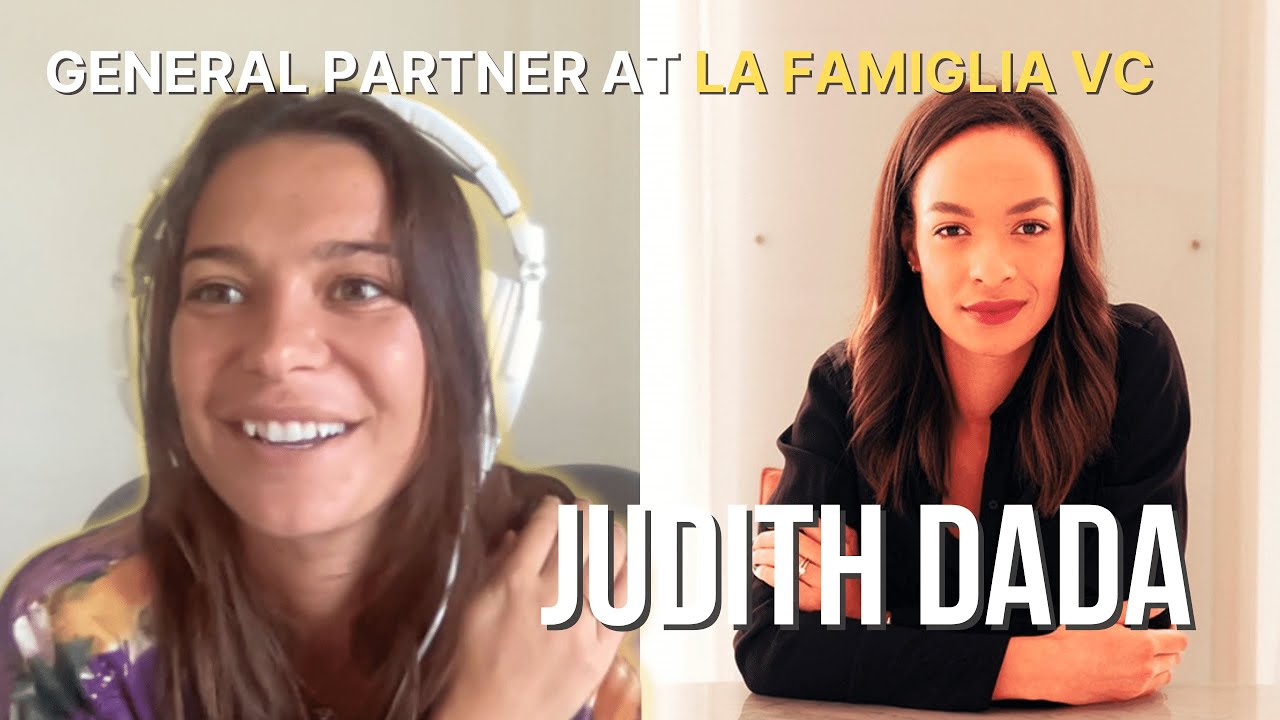
In this episode of Seed to Harvest, host Paige Finn Doherty interviews Judith Dada, General Partner at La Famiglia, an early‑stage venture firm. Judith shares how a supportive, immigrant family background gave her both ambition and a safety net, and how a non‑linear career—journalism, medicine aspirations, Facebook solutions manager—led her to venture through a chance meeting with a founding partner. She explains that the core skills of journalism and social science—pattern recognition, qualitative‑quantitative analysis—are essential to VC, and that her motivation stems from the privilege of learning from founders rather than the other way around. Judith discusses La Familia’s focus on applied AI, emphasizing the shift from hype to practical, human‑augmented tools, and highlights the firm’s distinctive creative branding rooted in Italian design. She frames the firm’s role as a curator of breakthrough B2B “painkiller” startups, stressing that human curation will remain vital even as venture firms develop productized services and data tools. The conversation turns to the European ecosystem, where Judith describes Berlin as a talent‑dense hub, notes market fragmentation challenges, and points to the “mafia” effect of talent spinning out from European unicorns like Revolut and N26. Finally, she advocates for concrete actions to improve diversity—supporting mothers, showing measurable outcomes, and embracing uncomfortable conversations—and offers advice to aspiring investors: patience, humility, and a service‑oriented mindset.
Chapters
Hello everyone and welcome back to Seed to Harvest with your host Paige Finn Doherty. I'm a founding partner behind Genius Ventures and author of Seed to Harvest, an illustrated children's book about venture. Today I have the opportunity to introduce you to Judith Dada, general partner at La Familia, an early-stage venture firm backed by leading tech entrepreneurs across Europe and the US. Previously, she worked as a solutions manager for Facebook and also led Facebook's venture program. She's passionate about creating an ecosystem based on creativity, equity, and inclusion for all. Judah, thank you so much for joining today.
Thanks so much for having me.
Of course. So would love for us to start off with a quick introduction in terms of, would love to hear more about what part of your youth most impacted your identity today. And that can be from a professional standpoint, or that can be like the way that you approach problems. But I'm curious, like, what are some of the key parts of your journey that have impacted who you are today?
I think for me it's less, you know, a specific moment in time, but really just the overall setup and ecosystem. I have an extremely loving family, even though we also went through some really rough patches. My parents got divorced and everything when I was a teenager. That definitely does something to you. But I think, you know, I have the amazing privilege of having amazing siblings and just a really loving mother and father. And so I think for me, I always found kind of the closest confidence and supporters and sponsors for anything I wanted to do within the family that I had at home. And, you know, my father is a Nigerian immigrant. He was always the one who made me kind of push harder, work harder, you know, jump higher, aim higher. And my mother is just this really loving person who, you know, no matter what I would do in my life, I could just be a complete, you know, dropout of everything. She would still, you know, love and accept me the way I am. And the same goes for my siblings. So I think that was just a really special mix. And gave me, I think, the right level of paranoia and ambition, but also knowing that I have this kind of loving safety network of a family that I can always come back to. And I think that really for me was what gave me the strength and the ambition and endurance to, you know, go on the various adventures that I've gone on since and just know that they, I always have their support.
Yeah, I love that. I think that's something that we share as well. I feel like having a really strong support network, whether that's your biological or chosen family, really allows you to take risks that you might not have been able to had you not had that like support and loving safety net. So I'm curious, like on your path of stumbling, and I say that with quotes because I'm sure it wasn't exactly a stumble, what was that path like for you into venture and was investing always in your life plan?
No, I think stumbling actually hits the nail on the head. I definitely stumbled into this industry. Back when I was still a lot younger, I wanted to be a journalist and then I wanted to be a doctor and then I wanted to work somewhere in the media and then I wanted to be an entrepreneur. So I went through, you know, the different ups and downs of like types of careers that you think you should be having at any point in time. And then at the, at the end, I ended up at Facebook, which I really thought was like a fantastic company, really great support, amazing opportunity. And working as a venture capitalist really was not on my radar. And I know that.
Yeah.
That can almost sound like an insult today because it's such a hot industry and there's so many people trying to break in.
I had no idea what it was before I watched Silicon Valley. I was like, I thought it was just like retired people, like with a bunch of money.
Oh, it's good. It's good. Exactly. So I definitely stumbled into this and, you know, at the end of the day, it was just meeting the founding partner of the firm who I just found incredible, like found to be incredibly inspiring. And I still remember it was like a half-hour conversation. I was really only taking the call to kind of, you know, just out of a favor to someone else. I thought, you know, this job was never gonna be for me, but I just found her so incredibly inspiring and just thought, you know, I wanna work with this woman. So it wasn't necessarily the fact that I really wanted to work in venture. It was more the fact that I wanted to work with a person. I think I tend to be someone who just lets myself be drawn through life through kind of people I meet and just the energy that they give me and the ambition that they make me, make me feel. And so that's very much also how I ended up. Being fortunate and landing in this job.
That's super interesting. So when I was growing up, I always wanted to like host secret dinner parties and do creative work and like work on interior design. And those are still passions of mine. And I find surprisingly that I'm able to incorporate them into my work as a, as a venture capitalist and running my own fund. You mentioned that you wanted to be a journalist and be in the media and, and go to med school to be a doctor. I'm curious. What are the small aspects of those parallel lives that you find popping up in your role as a fund manager?
You know, I think, I mean, I never got to explore those careers to the fullest, so I never even made it through kind of my internship, you know, that is required to do kind of, you know, go to medical school or, you know, the same for kind of working in journalism. I did that for a while, but then stopped quite briefly. I think However, at the end of the day, you know, I would rather say kind of social science and I would include journalism, right? Like as in truth finding and trying to report stories about the world. I actually think that a lot of social science is like at the core skillset of what makes venture capital funds successful. 'Cause at the end of the day, it's about pattern recognition, weighing qualitative and quantitative data to really try and, you know, find patterns and structures behind things that might otherwise seem just really chaotic and kind of out there.
Yeah.
And so I think, you know, be it psychologists or just social scientists, sociologists, ethnologists, whatever it might be, like they all kind of try and deconstruct the world around them. And at the end of the day, I think that's what venture capitalists do as well. I think for med school, it's just like I had really good grades in school and I just taught myself to work really hard and just, you know, work really long nights and like read tons of books. So I think it's just that stamina maybe, and that like not being afraid to just like, you know, just get in there and just do the hard work that's required to to be excellent at something. I think that's maybe like another part that, that's definitely kind of helping me in my day-to-day job of trying to always step up my game and kind of keep up with the founders that are so much more excellent than I could ever hope to be.
Yeah, I, I joke about it a lot, but like, that is why we ended up calling our firm like Behind Genius. Like some people like mistake it as Beyond, and I'm like, no, no, no, no, no. Like we're behind the geniuses. And one of the things that you mentioned that I think is really interesting is you talk about sociology, and I think that venture at its core is very much like applied sociology. You're trying to like pull out trends that you're seeing and also like your decisions in venture can impact the way that the future looks. So I'm curious, like with this in mind, what motivates you as an investor and what are you excited about in the future, whether that's startups or the way venture is shifting? I'm curious to hear more about that.
Yeah, I think what motivates me, I mean, just really broadly speaking, I think it's just the greatest privilege on earth to be able to do this job, right? Like seek out amazing finders of truth and doers or kind of creators of a new reality, which I think founders are at the end of the day and getting to be inspired by them, getting to learn from them. I actually think, you know, the market has it completely, completely wrong. We always think that founders learn from venture capitalists. Like it's definitely the other way around. And so I think we're the, we're the lucky ones, right? We're on the receiving end of a lot of the stuff that goes on in this industry. And so You know, also kind of, I come from a working class family, you know, my, my parents had jobs that they did to kind of put food on the table and, you know, just kind of make ends meet. And so I think I also grew up not necessarily understanding the privilege of doing something that you just absolutely love doing and can't, can't possibly understand why people are actually paying you to do that job. And so I really don't take that for granted, you know, a single second. And it's just, that's a deep source of just drive and motivation. I think when it comes to excitement, then what I think is going to be super interesting going forward, I mean, a lot of our work is focused on kind of automation and, you know, AI more broadly speaking. And I think AI is a buzzword that we've heard so many times, but if you actually ask just a random person in any random job out there, how many days, how many times a day does, you know, some AI model impact the work that you do? The answer would probably be some number close to zero, right? So a lot of this kind of applied AI promise has kind of been something very theoretical and not something that we've really seen kind of work in reality. But now with kind of the You know, recent advancements, especially on that kind of natural language processing side, we're really getting so much closer to the actual promise of what kind of a supercharged human can look like and really thinking about, you know, how can we make AI work, you know, work for us. And it's, I always use this example of like, if you were to compare your Googling skills with the skills of your mother, like you're probably 10 times more effective in Googling than your mother because you've learned to use Google effectively and to kind of ask questions in such a way that. kind of cool, gives you the right results. And so I think it's a little bit similar with AI and kind of the new trends that we're going to see going forward. You know, humans are going to understand how to use that technology effectively. And I think that's just a really, really beautiful promise and something that we're very excited about as a fund.
Whoa, that's super cool. I, yeah, I guess like, I, I think that that's a really great analogy of, of like, how does the symbiotic relationship develop? And then how over time do we start to use this technology better and in more applied situations? Switching over bit to the more like creative side. I think that one of the things that really stood out to me about your firm specifically was like, you go to the website and I'll like show it in the video for the podcast, but it's like just so unique and creative.
Out there.
So out there. I love it so much. So it's very clear that you prioritize creative branding and messaging. So I'm curious how your, how like that personal sense of design taste or sharing content, how has that impacted your journey as an investor and, and La Familia Yeah, I think we all share, or most of us at La Familia share your knack for interior design.
I think it's just design is something that we just find very, very interesting, not just from kind of a UX/UI perspective of the functionality of it, but also the aesthetic side of it and kind of La Familia also with the Italian theme and going back to, I don't know, you know, just, you know, Italy and kind of the arts and the, all of the vibrancy that came out of the country. I think that's just, I think something that we embrace is our DNA. I think also we just wanted to be different from all the other funds out there, and this was just a really cool way of doing it, right? We just didn't want to be the classic, like, you know, rocket startup, launch tech. Maybe the same weird image.
Exactly. Like, just, ooh.
Exactly. And this was just a great way.
Yeah, I love that you said that. Like, I think that I was reading somewhere and I think there's actually like a gene that is linked really closely to appreciation for beauty. And so people who have that gene who are naturally predisposed— I'll find my way around that word— they have like a higher attention to like detail and beauty, and it, it like irritates you if it's like not in a place where you're like, oh, this is really in accordance with like my taste and what I want to put out there. So what, like, one of the pieces that I read recently was my friend Gabby Goldberg. We had her on the podcast earlier, but She talked about curators being the new creators. So I'm curious how you think about your journey as an investor, maybe from the curator lens, because you're building a portfolio of companies that represent, you know, the, the best founders that you've had an opportunity to back and also your view of the future. So I'm curious how you think about like your role as a curator, and that can be like in or out of startups, but I'm curious about that. Yeah.
So I think it's a really interesting question because, you know, I think there, there's a couple of things that come to mind there. I think curator is a great way of describing the service that we bring to founders. I think one of the trends in the future is venture funds turning more and more into actual products and the difference between a service and a product kind of being the more scalable nature of how you can package and scale, you know, kind of the value that you're bringing to customers without, you know, associating that to the, the human service that's required to deliver that. And so I think You know, one big question that we are asking is like, what role will, you know, kind of data, well, you know, just tools that we actually build as venture firms that could be for deal flow sourcing or that could also be for portfolio support. Like what role will those play in the future? I think that's definitely something that we're thinking about because we have so far, you know, completely embraced the more human side of curation. And I think that's also, you know, very core to the DNA of La Familia. Like we're not one of those like AI, you know, completely automated type funds that, you know, do everything with VCs and just—
Yeah.
You know, kind of crawl a bunch of data and then put something out and think, you know, and that's the work that they do. So that's just something that we're thinking about and trying to evaluate and see, you know, what that means for our, for our role and our relevance going forward. I think there's always going to be a big relevance for just the human aspect of this job. I mean, at the end of the day, we're investing pre-seed and seed. I mean, that's the core strategy of the fund. We have 70 portfolio companies so far, the majority of which are based in, in Europe. And just building an early stage company is a lot of hard work and it's a lot of, you know, late night calls and could be a crisis or it could be a moment of celebration. I think it's very difficult to see that, you know, kind of significantly changing its human side. I think at the end of the day, you'll still need someone to be able to offer maybe a different perspective or just offer some guidance or just some data that might be helpful for a founder's decision-making. And so in the way that we think about curation, I mean, at the end of the day, we look for breakout B2B tech companies across Europe and the US. We look for painkillers rather than vitamins. So we don't want to invest in You know, something that's just marginally better. We really want to see something that's a breakthrough. We typically say something that's like on the list of top 3 to 5 pain points of whoever the buying persona at the other side of the table is. And so, you know, taking that together with just founders that, you know, have this reality distortion field, just want to work on a problem, you know, really, really, really ambitiously and just, you know, with, with an insane amount of energy and just force applied over time. I think at the end of the day, that role and that aspect of curation and the service that we bring is not going to change, or I can't see that changing much over the next decade or even the next several decades, even if the underlying nature of companies that we support might change drastically.
Yeah, it's a question that I've been thinking about a lot because I feel like bootstrapping a venture firm, I kind of moved from this position of like, okay, I'm a capital allocator as a role, as like a venture capitalist. And then making the switch to like capital allocator in a business where it's like, as the AUM of a fund grows, then you have more resources in terms of like the management fee. And then how do you allocate those resources becomes a really interesting question. And I think that we're going to continue to see venture firms like release products. But like you said, I think that human nature is always going to be at the core of this business. So it's been really interesting seeing what, what different folks have been doing in terms of like building out like these unique venture firm products. And I, I think one thing that is unique about your firm is your focus on the European market, and it's, it's been a market that's been garnering a lot of attention recently and funding. So I'm curious, like, how would you describe the European market and the types of opportunities that are like erupting from companies domiciled in Europe?
I mean, listen, I have to say this, being based in Berlin, it's the promised land, you know, like it's, it's the single It's the single, you know, I think most interesting region in the world right now and has been for a while. I think Europe has so much to offer, not just from a talent perspective, but also from a cultural perspective. We have so many different perspectives. We have amazing universities. We have, you know, amazing industries as well. Like a lot of the, you know, former world market leaders were European companies.
Yeah.
I know that's changing more and more, and that's something that we are quite concerned about. And that's also part of the reason for why we're doing this job is we want to make sure that, you know, 2, 3, 4 out of the 10 biggest companies in the world are European companies and companies with European DNA. Doesn't come without its challenges. You know, very often Europe is seen as the land of regulation much more as the, than the land of opportunity. And I think also when it comes to the fragmentation of our market, you know, just to give you an example, I spoke to a founder, I think about a year ago, that's who was creating a marketplace for sustainable beauty and yeah, beauty products essentially.
Mm-hmm.
And he was describing like the changes that he needs to make for offering these products in France versus Spain, because they like sweet, like sweet, you know, kind of smelling stuff. And the others like stuff that's like more, I don't know, it has a different scent. And then the other guys like powder and these guys like creams. And it was just like, I was like, oh my God, like you haven't even gone to market and already you're making kind of like 10 different adaptations to rolling out these products based on, you know, kind of the end market that you're serving. So I think on the consumer side. Europe has always struggled more just because of the fragmentation and the fact that we don't all speak the same language. But I think especially on the B2B side, there's no reason for why a company coming out of a European country shouldn't be able to get to the same scale as a company coming out of the US or coming out of Asia. And so I think there's just so much promise and ambition that's being unlocked now. Plus I think the talent density and base is just much more interconnected, right? And so before, I think for a lot of the positions, like the product managers or really amazing tech leaders, had to relocate people from the US because these people knew how to do that because they'd done it before. And now we have, you know, just a range of amazing unicorn, decacorn companies in Europe and talent that has gone through that learning curve. And so we can now, you know, kind of just use that to give back to the community. They go out to found companies themselves and so on and so forth. So kind of this, this virtuous cycle and these network effects are now really starting to kick in big time. And they have been for some, for some time, but I think it's really over the last couple of years that we've seen You know, kind of things coming to a point where stuff gets really, really interesting. And I think that's just something to be really excited about.
That's super interesting. One of our investors, Heather Honneth, she's the founding partner at Human Ventures in New York. And one of the themes that she's talked to me a lot about is like the diasporas from different companies where they go public or they get acquired, but they've had these really interesting journeys where it's been really difficult. And I think that you see this happening in different markets, and that's what creates like a lot of like bubbles within the startup ecosystem. So for example, like Rappi in LATAM, and you have like Artsy in New York. So I'm curious, like, what are the companies that have kind of either like popped or getting close to it in Europe that have, that have led to a lot of like founders with that scaling opportunity, like scaling experience coming back into the market and building teams? Yeah.
I think there's several. I think Revolut and N26 on the fintech side, we've seen several teams come out of those companies that are fantastic and building really interesting things. I think the N26 mafia, the Revolut mafia, like obviously same as the Rappi mafia, terms that we've borrowed from the US. Then Forto is another one. It was a company founded by my husband and I've just seen the insane amount of like engineering talent or product managers that he's hired that like over time have been gone on to start their own company. So I really, I really do think if you have a unicorn company in Europe, You'll likely see these stories of, you know, amazing talent that then spun out to start something. I think that's not necessarily a story that's unique to one company. I really see that as a more kind of horizontal trend across all the different companies that, you know, just had amazing talent join their ranks.
But definitely impacts like the, the amount of like talent that either like a city or geography can draw is like folks that have had A, like exit opportunities, they have the resources to you know, pursue something they're like deeply interested in and also have like the deep network and experience of scaling a business. So I, I was curious to ask about what had really stood out in your experience. So super cool to hear more about that. And as we wrap up, I wanna touch on recently you were featured on the NASDAQ board in Times Square representing first movers in equity and venture capital. So I'm curious, what steps do you think can be taken to make sure that the ecosystem provides more opportunities?
Yeah, I mean, it's one of my favorite topics or kind of passion topics. I think there's so many things that need to be done. I mean, if I had to focus on a couple of things, I think one, support mothers. And I think typically, I'm not sure why, but that always is a subject where people are either in camp, oh, you support them to go back to work super quickly, or they're in camp, oh, you support them to go on maternity leave for a really long time. And I think it's not either or, it's like just support mothers in whatever it is they want to do. I think that's still one of the biggest blockers to Women founding startups or just really taking on leadership positions with people assuming that they can't do the job because they're also, you know, just taking care of children or they themselves are, you know, kind of hindered from doing that because of that. I think the other thing is setting examples. I think, you know, all of the diversity is important and look at all the, you know, everyone's kind of putting up, I don't know, you know, flags for pride or, you know, kind of, you know, just celebrating diversity or, you know, Black History Month and these things. Like, it's great to do that, but at At the same time, just show the results, right? At the end of the day, just concretely speak about the meaningful changes that you've made to achieve more diversity and how that's leading to, you know, successful outcomes across your companies. I think that's so much more important. There's so many studies from Kauffman and so on and so forth that show that a female founder at the top leads to, you know, a significantly higher number of female operators across all levels of an organization. And so it's really kind of, it needs to come from the top and we just need to you know, kind of come to a point where we show results. And I think the last thing is just like the, just embrace the fact that it, you need to go above and beyond, right? It's like the same as when you are training for sports. Like, you know, if you want to build muscle, that's not gonna come without some degree of stretching yourself and some degree of pain even. And so I, I just still feel like, you know, diversity or ESG more broadly is this thing that we think we can just all achieve by filling out some questionnaires and, you know, like putting up some flags and no one's Oh, not, not known. That's, that's, that's not fair. But like, I think especially in venture, and this is speaking more for the European venture market, but I think really embracing the fact that a lot of hard work is involved and really also leaning into the fact that it's hard and just also letting it be hard and not wanting everything to be easy and kind of being comfortable being uncomfortable and having uncomfortable conversations. I think there's just a lot more that needs to happen on that front. So those would be the things I would be focusing on.
I love that. Yeah, I was really curious to hear your perspective because I know that you've just spent a lot of time thinking about it and it's a deep passion of yours. So thank you for sharing your perspective. I really appreciate it. And then to close this out, what advice would you give to other aspiring investors to help set themselves up for career success?
Yeah, so I think, I mean, patience. This is not new advice. Every investor will get that. This is a marathon. It's not a sprint. So I don't think I need to say much more about that, but it's something I, you know, I think you can only really learn the hard way. And I think the other thing is humility. You know, I think increasingly with, you know, I don't know, VC becoming a lifestyle and, you know, people kind of really celebrating working in VC, I think at the end of the day, I really truly believe that, you know, this is a, this is a service industry. We're serving founders. And so I, I just really always try and ask myself if I think about the most amazing services that I encounter, it might be my favorite restaurant or it might be, the bus driver or the doctor that I go to? What makes that service excellent? Like what makes the service from one person more excellent than the service from another person? And what are the attributes that makes the service at the restaurant or the service from my doctor so excellent? I think there's so many learnings we can take from that within the role of, you know, of us as VCs. I think we're not doing that enough because it's kind of, you know, the industry getting carried away sometimes, you know, in itself. And so it's just at the end of the day, keeping that humility and just trying to do better service for our founders and just really trying to find these examples of stepping up our game every day.
I love that. Well, Judith, thank you so much for joining us today. And thank you to everyone listening. New episodes out every Monday, and we share stories from a diverse group of folks that are founders, creators, investors, and a lot of fellow fund managers, which is always a pleasure. And then if you would like to connect with Judith, I'll drop her link I'll put links to connect in the show notes, but really appreciate you coming on, Judith. I had so much fun.
Thanks so much, Paige.
Thanks so much for tuning in today to Seed to Harvest. If you enjoyed this episode, be sure to subscribe wherever your favorite podcast listening platform is. I'll be releasing new episodes weekly, and if you have any questions or comments, feel free to let me know on Twitter. That's Paige Finn, Paige and then Finn with 3 N's. Thanks, and see you again next week.
More from Paige



Paige of Behind Genius driving an AI electric train in St. Louis (Intramotev Visit)





