Lightspeed Partner Mercedes Bent on Tips for Investors in the Current Market | Seed To Harvest Ep52
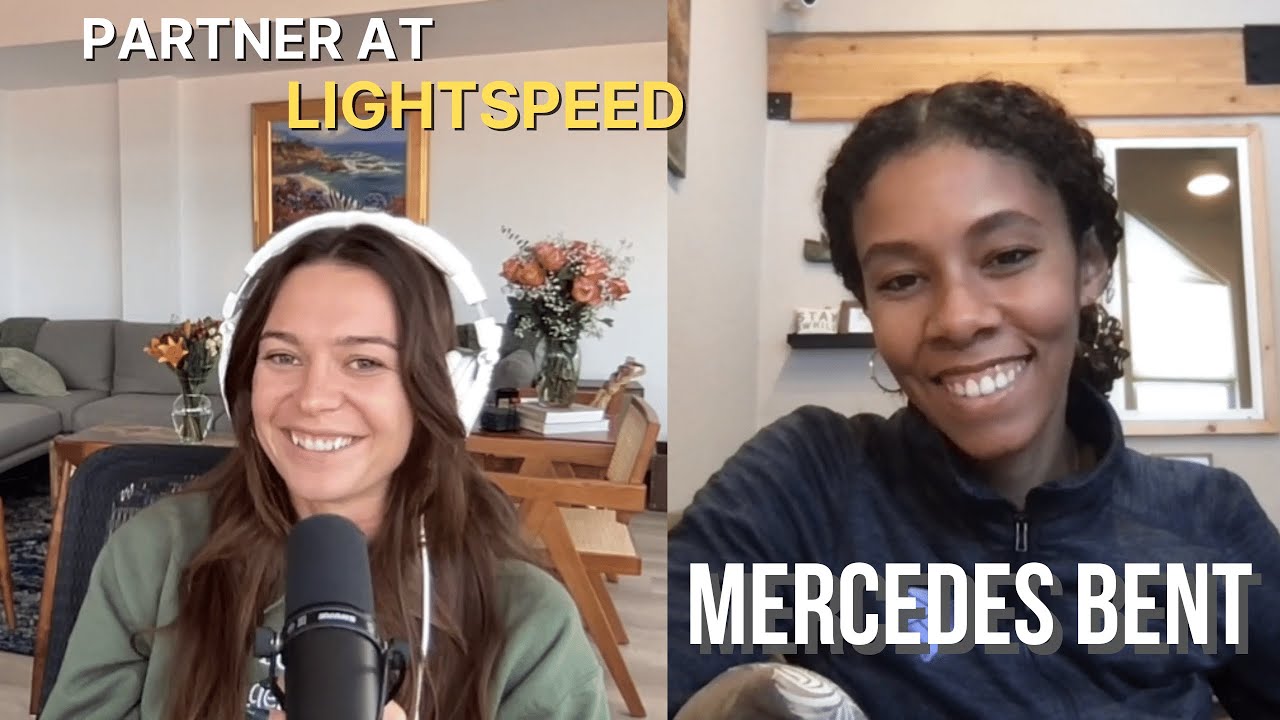
Lightspeed partner Mercedes Bent discusses what VCs look for in seed-stage companies: runway, retention, CAC, and growth loops. She warns about "zombie" companies, explains how she builds investment theses, and advises founders to have realistic valuations and clear defensibility in a slower capital market.
Chapters
Welcome back to Seed to Harvest, a podcast with founders, investors, and creators. I'm your host, Paige Finn Doherty. I'm the founding partner behind Genius Ventures and author of an illustrated children's book for adults about venture called Seed to Harvest. And today I am honored to be joined by Mercedes Bent. Mercedes, hello. I'm gonna give you a short intro, but I wanted to make sure you said hi.
Hello.
So Mercedes is a partner at Lightspeed focusing on fintech and consumer. I'm really excited to chat with her today. a bit more about not just like the whats and hows of investing, but also the why and some of the conversations that have been coming up for both of us. So Mercedes, welcome to the show.
Thanks for having me. I always love chatting.
I know. Yeah, me too. Okay, so to start, you've been thinking a lot about like in this market, founder-friendly terms versus fiduciary duty. So I'd love to hear more If you can expand on that and like, yeah, just share a bit more about that.
Yeah, I've been thinking about this a lot because, you know, there, you've probably heard the term zombie companies and I think a lot of us after the 2021 years have these companies that are really well funded, have a lot of cash, and could kind of keep going for a really long time. But there isn't necessarily like a lot of progress on like the revenue front. Like, could they raise another venture round? Like, not with the current metrics and they're, and some of 'em, have they even found like product market fit? Like not necessarily. And so for me, I've been thinking a lot about, you know, people are sometimes, you know, I've had even investors say to me like, the next few years are gonna be like a total reversal from what all investors were taught the last 10 years, which was like, you gotta be super family friendly. You gotta like, you know, keep them focused and like just help them find like product market fit, just keep 'em on the experimentation path. And other folks being like, this is the, the type of investor that's gonna be required is like more asking for money back. Like, not because we need the money, but because it's like, is this the best use of everybody's time? And so, you know, just spending a lot of time like thinking through this and trying to really ask myself like, is the investment thesis still intact? Like a lot of times the opportunity a company was going after is still there, but then asking yourself the question, like, is this the team to capture the opportunity and have they proven that?
Yeah.
It's not always clear. Like, how much time are you supposed to give for that? Is it—
yeah, 18 months, years? I guess this is, I don't know if this is really a situation that you've run into, but I'm curious if you've seen any, uh, situations in which founders have asked for their money back and then invested in a competitor, which feels like wouldn't really be a great situation, but Since that was something that you mentioned around like, is this the right team to attack that opportunity? Is that anything that you've seen before?
I hadn't really like seen it, but I haven't really seen that and hopefully they wouldn't be so silly to do it so close that we would notice. But I mean, like, like these really big firms, like of course they're going to like invest in somebody else probably with the thesis like somewhat time in the future. But no, I haven't seen that yet.
Dang. Yeah, I don't know. I feel like that would be like not a great situation, but I was kind of curious if that was something that you had seen before. Okay. Well, I would love to dive a bit into what initially sparked your interest for venture.
You know, I first got interested in venture probably like 2017, 2018. In 20— like, I remember in college, like 2009, 2010, like I had no idea what venture was. Like, I remember telling my dad and I, I was like, this venture capital thing. He's like, that's vulture capitalist. 'Cause like he was an entrepreneur. And so I was like, oh, that's a bad thing. Okay, I won't go do that. And then I went into finance for a little while. I was at Goldman, I was working at the Federal Reserve. Then I went to the startup world in 2012 and I started to get more exposure to it. And I was like, oh, okay, this is what people are talking about. Um, but I still thought as recently as 2015, like I knew startups got funded by VCs, But I thought you said like wrote up a business plan in like a Word document.
Mm-hmm.
And you just emailed it to them and they would give you funding. Like I was like extremely naive and like ignorant about what was actually required to raise money. And probably maybe by like 2016, 2017, I realized like pitch decks were involved and like, oh, you need to already have traction and metrics like in order to get funding for a lot of companies. And so anyway, yeah, like I finally, my interest got piqued when I was like looking around at like who else is getting funded? And I was just like, would I have given money to these people? Like, I don't know if those founders are like really smart, like, or like really like, that's, is that the best founder market fit? Like, are they the people? Like, frankly, I was just like unimpressed. And so, Yeah. then I thought, okay, you know, if that's who's getting funding, like maybe I should go be a funder because like, I just feel like I would have a different perspective. Like, I really felt like what I saw was a lot of like, boys club, like people giving each other money. And it seemed like people were mistaking like social connections for due diligence or for like a strong investment thesis. And so like, I was like, let me try my hand at it. You know, I was at Stanford, I was meeting a lot of VCs and I was like, if anyone's gonna do it, I might as well raise my hand. And yeah, that was 2018. When I finally, and that's when I got an offer at Lightspeed.
Dang. Yeah, I feel like that's an experience that resonates with a lot of people. I feel like a lot of folks that I've chatted with have had quite negative impressions of venture before you get into it, cuz I think there's a lot, there's quite a bit of like negative coverage around venture. I think it's like the impact that it has on economic creation within the US is incredible and we definitely need more. funders from different perspectives, making sure that those dollars are deployed in a more, like, in a way that just, like, better represents the changing nature of the world, I would say. Um, and then to, to come to this, like, optimism and become a funder yourself is such an incredible journey. I'm curious to hear what, who are the investors that really have inspired you in your journey, or who could be someone you directly learn from, or it could be someone who you've looked up to.
I got hired by a guy named Jeremy Liu who was at Lightspeed for a really long time. He was the, one of the original investors who invested into Snapchat. And honestly, he is like one of the people I admire most in venture, I think because really how he thinks about cultivating new venture investors and like the amount of time and energy and effort he puts into training people. Like, mm-hmm, people told me venture, like, oh, get ready. No one's gonna look out for you. Like, you're not gonna like, Have like time of day. It's super solo. And, you know, it kind of still amazes me to this day how the guy was so busy, like on so many boards, had huge successes. Like he was on the firm's board while it was going public and still is on their board. And like he had like, he had Jessica Alba's company getting sold. He had like all these like sales happening and like big companies going public and still somehow like always made time for me. Like if I said I had a company that was interesting, like would somehow find an hour like the very next day every single time. And now looking back on that and realizing how busy we all are, like how did he even do that? You know?
Yeah.
And not making me feel stupid about questions as well, you know, in terms of, um, I'm really embarrassed when I think back on some of the questions that I asked back in the day and like the things I thought were good deals, but like Speaking to you like an equal, treating you like an equal, and just talking you through your decision process. And just like he would explain, like, I don't think it's as interesting and this is why. And, you know, that's, I, I think that's pretty rare. The more, the longer I've been in venture, the more I've realized how rare that is. So yeah, my admiration comes from probably like a particular part of venture that's a little abnormal.
Yeah.
There's definitely a lot of investors I admire for like what they invest in and like the brand they stand for. But I thought his like attention to his like interest in mentorship just like is what I really admire.
Yeah. Were there any like specific trainings that he went through with you that were helpful? Like as I think about like training investors and things, I, I guess I'd be curious, or anything that you learned from him that you carry on now in your own work?
All sorts of, he had all sorts of like little phrases and things that he would like say and do. I mean, like the biggest thing was just like the, like having time. There was also a thing about like he, his, his expert skill was like getting to the heart of like the, what mattered for that company extremely quickly. He could always get there in like 5 minutes with like any company. And I was like, how, like, how do you, how do you figure this out? I'm like trying to like figure out what's the big issue with them. And so like learning that skillset a bit. Which is like just thinking through where is the, like, where's the pressure point in the company? Like, where is the bottleneck? Like, what's the element, the thing that like holds up everything else? Like, is, is the acquisition or is it retention or is it the regulatory? Like, just thinking through that was really helpful. Another thing he would always point out was like, in consumer social companies, like more often you're going to see If you see lots of young women and lots of like, honestly, like underrepresented Black and Latino users of the product, like that's probably a strong sign of product market fit. And so, and then also how he would talk about like the way to go from seed to like Series A, like founders need to follow the cow paths that their users are already, you know, making for them and they just need to go along and pave those roads. So it was like so many little, like, kind of like tips and tricks and techniques that I think a lot of 'em were super helpful.
Yeah. Well, yeah, going back to like the first thing that you said about him, like having time, what did, what did you mean by that?
Literally, like, I, I don't know how he did it, but he just had a lot of time to answer questions and like somehow magician moved around his schedule. to just always make time like the next day. I don't, I don't know how.
That's awesome. I love that.
And another thing I think that he also did, sorry, that was like really supportive of, of like newer investors was, you know, I remember I was pretty interested in Latin America when I first joined and him and also my partner Alex Tausig and also my partner Nicole Quinn, they were all very supportive of like, yeah, look into this brand new geo. Lightspeed hadn't invested there before. And I remember, you know, if someone would ever question, well, like, well, why are we looking into this market? Like he would always say like, we hired this person who's really smart and really competent. If they see an opportunity and they think there's something there, like we should be listening, like, and we should really be trying to figure out what it is that's so special that they see there. And so there was always this kind of just like belief that like you are smart and you, if you are excited about something, there's a good reason for it. Wow.
Well, I love that. He sounds, he sounds incredible. I haven't had the pleasure of meeting him, but he sounds really great. I guess one of my questions that's like less related to investing, but more like I very much view myself as a creative and an investor, and that like comes through in the work that I do. But I'd be curious to hear, are there certain like creatives that have inspired you? It could be like recently or very early on.
Creatives, meaning like creative people?
Yeah. Yeah.
Okay. Well, I'm obsessed with sci-fi fantasy and like I'm obsessed. I don't know if you know the author. Yeah. I like, I write it in my free time. I read it all the time in my free time. I don't know if you know the author N.K. Jemisin. She's like amazing, but she taught me. Ooh. Not like I spoke to her, but you know, I listened to a podcast and she taught me this concept of world building, which I was like, oh, I didn't know that's how writers write. But like the idea that like you set down the foundations, like the rules of a society, the fabric of it, and then you just like imagine, okay, well if this one thing would be different, then what would all be all of the second order or third order or fourth order effects? Of like that one thing being different. For example, there's this book she wrote, like the Broken Earth trilogy, and in that book, like a certain number, like a subset of, of the, of the people can control the tectonic plates with their mind.
Wow.
And so then she like thinks through, okay, so like what would their jobs be? And like, you know, they would be, they were in like earthquake colors and like, okay, where would their stations be set up on the country and how would they be trained? And just like all this interesting stuff, it's actually really good training for VC because when we see a new like tech innovation or new regulatory innovation, we need to stop ourselves and ask like, okay, what's the second order effect? What's the third order effect? Like what would be true given this new thing that's coming? And I actually find that skill pretty hard to do. And so in a weird way, like sci-fi is helping me with this.
Dang, that's awesome. I had no idea that you're so into science fiction. I've been reading a lot of Iain Banks recently, like the Culture series.
And I feel like, how nice.
Yeah, I had this idea that science fiction was for nerds when I was younger, and then I was like, oh wait, I am a nerd. And then I started reading science fiction. I was like, this is fire. And I can't believe this was my own perception was keeping me from this. So it's been a, a recent addition. So that's so cool that they write and consume it.
I mean, this is like my whole dream is like post-VC is like retire and like start writing like a novel in like Paris or something. Like that would be goals.
Dang, that sounds pretty awesome. I feel like you could definitely take a, a bit of time and go do that.
Yeah, maybe, maybe when I'll, maybe later. I'm like, I'm gonna be so slow at that.
That's awesome though. To go, to go back to venture, I, I'd be curious to, we were talking about this a bit before the show, but to hear some of your thoughts on like feminine leadership, specifically like your experiences in investing in a lot of women-led companies and, and how that's been beneficial in, in both your career and, or like, would love to hear some stories of how feminine leadership has really shown up in your life.
Yeah, I, uh, it's an interesting question. Like I, so I've invested in a bunch of women founders and I have one company that we just announced recently, Beek, B-E-E-K, and the founder's name is Pamela. And, you know, she is just like 10 outta 10 founder, like super phenomenal, hard charging, like high energy, really sharp understanding of like growth loops and like how to create network effects in a flywheel. And she's like taught all of this to her team in a way that's just like, it's so awesome to see the learning permeate through the whole company. She's also just like such a learning machine. And uses like every resource around her to learn as much as possible. And I feel like, you know, it's an interesting question if I stop and think like, what's her like feminine leadership? I think she's very open at just bringing like emotion into the conversation at work in terms of like, we all have lives, we all have families, we like rally around for each other. And also thinking through like, we need to keep the voice of the customer like front and center. And I, you know, lots of people do this, but I think She does it in a way that is very caring. And yeah, I think like probably like the, that's one of the ways I've seen it show up.
I love that. That sounds, that sounds amazing. I, I also am curious to hear more about like what your recommendation for founders raising in this like 2023 tumultuous market would be. I think specifically at the early stage.
Okay. The good thing is for seed, it's not that bad. Right now, like you can still fund raise, like seeds are actually seeing a decent amount of inflow. Like it's starting, it gets worse the later you go on, like Series A, Series B, by the time you're getting to like Series C and D, it's like crickets. And so my main advice is just like have some traction, have some numbers to show about like, uh, early signs of product market fit, have a really timely why now. Like a regulatory trend or a technical innovation, or even, and then also have like, the thing I often see a lot of seed stage founders maybe not having enough of is like market awareness in terms of what's been tried before already, like in your industry and having a thesis on why it did or didn't work. Because if you don't have that, then people, then you could be trying something that was tried like 3 months ago, you know, but you maybe you just haven't, and it's hard to like know all of the companies out there, but doing as much research as possible on that. Like, I think every seed stage founder should be writing an investment thesis, like an investment memo, the same way an investor would be writing one.
Mm-hmm.
And so like writing it out and in your investment thesis section, like have a comparables and competition section and like go through and like, why is my wedge, why is this like approach to the market so much better? And it That, if you can't answer that, like, definitely spend more time there. I think in maybe 3 years ago, 2 years ago, folks were a lot more comfortable with, okay, you just have some signs of like growth. And now it's like, no, you really need to have like more insight on the defensibility of why.
Yeah. Are there like specific metrics that you're recommending folks hit, like for a seed stage? I feel like I've seen a range get done, but I've seen it like, you know, up to $1 million, $2 million in, in runway, and some are still raising like pre-product. So I, I would be curious to hear if there's any metrics that you're seeing or if they've changed at all.
$1 million to $2 million in runway, I feel like would be high for a seed in terms of like for, yeah, if it's like real revenue. But I, I would say like it depends what the company is, but having like strong retention, ideally having more than like 2 to 3 months data of it, but like Having 4 to 6 months of data of strong retention, like depending on the category, you know, over 50% might be good for like subscription businesses. It'll depend if you're like SaaS or something else, but basically like, do you show that you have a scalable, repeatable way to grow, which is like an acquisition flywheel that continuously works, has a high organic percentage, results in fairly low blended CAC. And then do you also have a, like, signs of consumer tailwinds, which is going to also be reflected in the acquisition channel. But then you also have, do you have staying power? Like, repeatable way to grow is that it's not a leaky bucket. Like, is your bucket, you know, retentive? So that's, I always look for just mostly like engagement and retention at the seed stage with like growth.
Yeah. Yeah. And for the 50% retention, is that mainly on like the consumer side for subscriptions?
Yeah.
Yeah. Okay, cool. Yeah, that's super interesting. I really appreciate you diving into like those specific areas of acquisition, retention, and I think regardless of the stage of the company, those show up again and again as like the foundational metrics of the business. So I feel like those are valuable not only at the seed stage, but also, yeah, later on. Okay, well, I've been trying something new on some of these episodes is like having the guests I have on ask me like a question or two. So do you have anything that you're curious about? From my perspective.
I'm curious, like, what you've seen change the most in terms of seed stage funding in the last 6 months, because I just gave you my idea. Yeah, I'm not as much of a seed stage founder as you. Is there anything you've seen change a lot in the last 6 months?
Yeah, I think like timeline has shifted a lot, and I, and I think from a founding partner perspective, this is something that I see like all the way up the value chain. So if you look at the flow of capital. It originates at like pensions, endowments, like larger sources of capital that flows through to fund of funds, which then flows down to funds that are both emerging and established. And then finally that goes down to founders. So as I look like at that capital value chain, because a lot of endowments and like larger institutions were overallocated on venture as a result of more like the public market swinging down, their like numbers got skewed. And so they started allocating a less to venture, and then fund-to-funds were taking longer to close, which meant that funds were taking longer to close, which means that rounds are now taking longer to close. I think that the volume of deals, it, and it hasn't impacted, as you were saying, the seed stage as much as Series A and beyond. But I do think that the timeline has seen the, the most remarkable change. You know, like you were seeing stuff close in like a couple days, a couple hours, like people are like doing deals really quickly. I think the timelines have definitely shifted dramatically. And then I think also the valuation has come down, and I think that founders are now seeing the aftereffects. Like we were talking before the show about zombie companies, which are like really well-funded companies in search of product-market fit. Now those founders are, you know, struggling with really, really high valuations that they have to live up to or grow into. And it's very challenging to raise another round of funding when, you know, your last round was raised at a valuation that makes it So that you're forced to raise a down round based on the, based on the numbers that you have today. So I think that more founders are being cautious of the valuations that they are asking for or pushing for in hopes that they are able to grow at a more sustainable, or basically like have more sustainable expectations for what they're doing and grow into their metrics and numbers versus like growing into their valuation. So I think those are 2 of the biggest changes is like the founder expectations of valuation.
Yeah.
Um, I, and then, and then also like the timeline of rounds as a result of like that trickle down of the capital swing. But I mean, definitely still super active. Yeah.
In this, in this space. Yeah. We've been seeing something, we've been seeing something similar with like the kind of like denominator effect in the private equity market. Another thing I was curious, because you asked this earlier, like in terms of women-led leadership styles, like you're leading your own company, what do you think Is different about what you do, given it's a women leadership style. Do you see that reflected at all in any of the founders that you invest in that are women? Like, do they have similar, you know, traits?
Yeah, I think it's funny. I think like in, I was talking with my executive coach about this, but there is a very like oppressive nature to patriarchal leadership in that the way that most men lead is very evangelical. And it's like you see it in hustle culture on Twitter, everyone's like, This is the way I do it. This is the way everyone should do it. And I think as women, we're much more like open and collaborative to different styles of leadership. And so I think that there's an incredibly diverse range of how people like to run companies. I think the way that it shows up in my own work, and this is definitely something that I've struggled with or like questioned, but it's like, what works best for me? Like, how much work-life balance do I want to have? Like, I Encourage found the founders that we back. Like I want them to take vacation. I want them to spend time with their families. Like it is a long haul, and like ultimately there will be days with long hours. But I think for me at least, like I've had some of the most well, I'll take it back step as as an investor. The majority of your work is making decisions, and I think as a founder, a lot of the work too is making decisions. And so having that space where you're not in the working in the business, but you're working on the business, and that could be like. You on vacation with your family, like taking a moment to think about something you've really been struggling with or thinking about can be really powerful. So I think that's definitely something that I've that I am hold in high importance, and I want to make sure our founders do as well. And then also just like growing the firm in a way that aligns with what I want. I think before I was like, oh, I want to build like. A billion-dollar fund. And I, I think like part of that was more me compensating for how small that I felt. And, and I think like now it's like we built a team, we have an office, I manage over $11 million now. And I think like the biggest change is I'm like, okay, I just want the founders that I back to feel comfortable enough to me to come to me with like whatever they're thinking about in the business and feel cozy. Like that's Cozy is kind of like the word that I'm manifesting, but I think taking like metrics more out of the equation and replacing that with like the feeling that I want people to have has been powerful. But yeah.
Yeah, no, that's super interesting. Thanks for sharing that. I think the element of like the, I think the element of having like being accepting of many different leadership styles, that really resonates. Because I think of women, I don't know if this is just women, but like, I do find the idea of being able to hold like many different possibilities as all being like equally valid and true is something I find myself doing a lot.
Yeah.
I'm almost kind of surprised by like how much tech Twitter, VC Twitter, and like—
It's so binary.
It's so binary. And like, what?
Where does the context go?
Yeah, it's super strange to me. And I've been thinking about this topic a lot from the perspective of the question of conviction. And, you know, it's something that in VC partnerships, like you are asked to present your deal with a lot of conviction because they have, you know, there's lots of investors, lots of investors are asking for capital to be allocated and Mm-hmm. You know, the investment committee, its job is to push back on, you know, the, the merit of the deal, but also in a way almost like your conviction in the deal of like, are you really sure? Because if you're not really, really sure, then like why invest? And I have found that something that's a really interesting learning curve for me because I feel like as a woman, we're all, when we grew up as girls, like we're always kind of taught like, You know, are you sure? Are you sure? Are you really, really sure? Like if someone asks you a billion times, like, okay, the answer is I'm supposed to say no, or I'm supposed to eventually say like, yeah, yeah, yeah. I know multiple things could be true. Like it's not like pounding the table is like the answer per se.
Yeah. But yeah, I think like that's, it's something I've gone back and forth on is like, I think it's a style of my investing that's changed like since working with Josh on the first fund and, and we were always like bouncing back and forth between like the conviction that we both had on deals since we invested, you unanimously versus now being a solo GP, it's more like collective. So if there's something specific I'm thinking about, I'll ask like a certain person about it. But I do think that it is very much built into the culture of venture of like, oh, you're like sharpening your decision-making sword by like pushing back against that conviction. But I think the truth is like some conviction is just like, like very emotional and like a gut intuitive feeling. And that's very challenging to like be in a Socratic discussion and be like, bring the facts right now, especially in early-stage investing. So I found that to be an interesting, like, line to, to play with for sure. Well, I know we're coming up on time, and I so appreciate it. I'll drop your socials in the show notes if folks want to follow Mercedes and what she's working on, or if you're a founder, reach out. But thank you so much for your time. I had a blast chatting with you.
So great to catch up.
Special thank you to producer Riley Jennings and podcast editor Kate Doherty for your help on this episode. If you're listening and you'd like to connect with me, follow me on Twitter or LinkedIn, Paige Finn with 3 N's. Thanks again for listening. I really appreciate it. You can look out for new episodes every Monday at 5 PM PST. And if you'd like to learn more about the strategies and tactics of seasoned institutional investors and rising venture stars, check out our YouTube channel at Seed to Harvest. Also, my TikTok channel is Seed to Harvest, where I post a lot of behind the scenes. Um, and if you like this episode, please rate and review this podcast wherever you get your podcasts, if that's on Apple or Spotify. Anyways, thank you so much for listening. I hope you have an awesome rest of your day.
Bye.
More from Paige



Paige of Behind Genius driving an AI electric train in St. Louis (Intramotev Visit)





