Nathan Beckord, CEO of Foundersuite.com On Memorable Founder Pitches | Seed To Harvest Ep 27
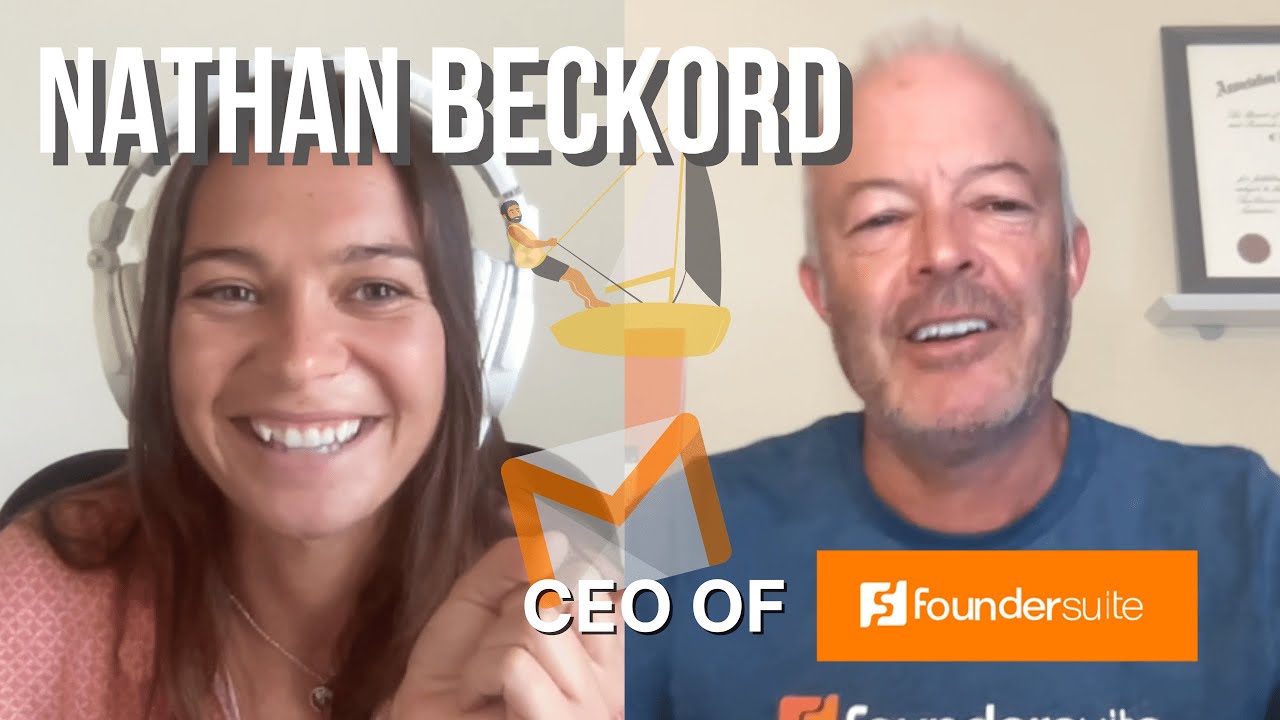
In this Seed to Harvest episode, host Paige Finn Doherty interviews Nathan Beckord, CEO of Foundersuite, about his adventurous background, the leadership lessons he draws from sailing and travel, and how those metaphors translate to startup life. Beckord recounts sailing across the Pacific, describing squalls, doldrums, and tide changes as analogues for market cycles and founder resilience. He then shifts to fundraising, emphasizing the need for memorable pitches that blend storytelling (pathos) with data (logos), and critiques generic decks. The conversation moves to product development at Foundersuite, where Beckord explains their "undeniable" feature‑driven roadmap: starting with an investor CRM, then adding databases, update tools, data rooms, and other modules based on direct customer demand. He shares practical advice on investor updates—regular scheduling, concise TL;DR, metrics, narrative, and visual elements. The duo discusses warm introductions, proactive networking, and systematic founder‑to‑founder outreach that seeds future fundraising relationships. Beckord also reflects on insights gained from his own podcast, "How I Raised It," noting surprising tactics like high‑volume LinkedIn outreach and structured cold‑email funnels. The episode closes with career advice centered on building relationships well before you need them, illustrated by a story about a founder named Bijou who cultivated investor connections months ahead of a raise.
Chapters
Hello everyone and welcome back to Seed to Harvest. Today I'm super excited to have Nathan Beckard, is the CEO of Foundersuite.com, a software platform for raising capital and managing investors. He's the host of Foundersuite's podcast, How I Raised It. He leads a life full of adventure, including climbing Mount Kilimanjaro in Africa, touring Vietnam, Cambodia, and Nicaragua on a motorcycle, and is a competitive sailor for a Canard team in San Francisco Bay. Nathan, thanks so much for joining us today.
Thanks for having me here. I'm so excited.
Of course. Of course. So I would love to dig in on where your passion for sailing and traveling first began.
So traveling and sailing are related, but slightly different. The traveling came from my dad. We grew up in a little mountain town in Colorado, and I remember little tiny town. We were like a big, he was a doctor and we were big fish in a little town. And one day over dinner, he came back from work and said, we're going to move to Saudi Arabia. And we're all just like, you know, jaws drop, knives and— or forks and knives drop on the plate and, you know, dead silence. And he had got a job with Aramco, Arabian American Oil Company. And so we moved off to Saudi Arabia and then lived there for a little while. And then on the way back from there, stopped off at like Singapore and Philippines and Hong Kong and like all just all these amazing places around the world. And so that's where the love of traveling came from. And then he would take each of us 4 kids on big adventures. He took my sister to go visit the gorillas in Rwanda. He took me and we climbed Mount Kilimanjaro and did some other fun stuff. So that's where that came from. The sailing is a completely different story. And the story there is I was always in trouble in high school, like, like getting in various, never really like juvenile detention so much, but you know, a couple little run-ins with the law.
Yeah. Cutting the edges a little close there. Yeah.
Just, A few, you know, had a, had my mugshot taken once or twice. But my mom brought home a summer camp book, you know, big thick book from whatever, Barnes& Noble or somewhere that had like 1,000 camps in there. And she's like, if you stay outta trouble for a whole year, you can pick any camp to go to next summer. I flip it open and there's a picture of like, hopefully this is PC enough to say, couple girls in bikinis on a sailboat in the, in the Virgin Islands. I'm like, I wanna go to sailing camp, mom. And, you know, stayed outta trouble for a year and somehow got to go from Colorado to a sailing camp. And, and then just really got into sailing. Like just fell in love with it because it's so, you know, you're just one with nature. I could go on and on about sailing, but I won't.
Yeah, I know. I wanna, I wanna hear more about how, like, what are some of the lessons that you have learned from sailing that you've applied to your role as a CEO?
I think there's actually a lot. So we, my, my wife and I, uh, in 2008, actually, like after working in Silicon Valley for a while, we decided let's just take off. And we bought a boat and sailed out the Golden Gate and down the coast of California, down into Mexico. And then we sailed across the Pacific to French Polynesia, like Tahiti and Moorea.
Whoa.
And really intense. I mean, lots of adventures there, but like a couple things, like I actually lean on that experience many times during startup life because, you know, when you're out there sailing, especially when you're out in the middle of the ocean, you can't stop. You have to keep going no matter what, right? There's a squall.
Yeah.
There's a mini, I wouldn't say a tornado, but like a squall coming. You gotta just kind of ride it out and deal with it. You got to batten down, hunker down the hatches and, you know, kind of adjust your sails, adjust your course, kind of ride through it. And sometimes staying up for 24 hours, you know, going through some heavy stuff and just going through that. Then you're back on land and starting a startup and it's like, okay, I did that. Like, I can handle anything, right? I mean, just go through any experience.
Yeah.
I'm sure people have fought in, in the military and stuff like that have similar experiences. Like, I can do anything now. I lived through that. I can do anything, right? So that's, that's one thing. And I think also just that sort of like, you know, that's patient, slow. I mean, sailing is slow, right? The bad joke is like, it's the most expensive, most uncomfortable, slowest way to get around, right? And, but it's also really fun. And I think startups are kind of the same way. And sometimes too, right? You just gotta have the patience. stick to it and, you know, kind of ride out the squalls.
Yeah. When you think back to your trip sailing with your wife, what are some of the— what were some of the scariest moments that you encountered?
I mean, there were, there were a few periods of pretty heavy, heavy weather, heavy wind where, you know, it's like it's uncomfortable. You're like, these are big seas behind us. Like, I don't want to look around. If I look back, I'm going to, like, freak myself out. So just, you know, hold the— hold steady, steady at the helm kind of thing.
Yeah.
And keep going and go through it. And then there are other times, like around the equator, when you're making that crossing from Mexico to French Polynesia, you have to cross the equator and kind of go through the doldrums where there's like no wind. And so you'll have days, days and days and days. I forget our longest stretch, maybe 4 or 5 days of no wind. And you don't want to like burn up your, your, your gas because you don't have that much fuel on a sailboat, right? You have some, but you can't power 5 days through the doldrums. So that's also a separate thing where you're just like flopping back and forth for days and it's just like, okay, we gotta just hang in here. And, you know, and then a few days in, like, you're like, oh, I think I felt a little breeze.
I think I felt a little pop. A little tiny breeze.
Yeah. And it's like, you know, and then you're, you're off. So those were, I guess, 2, 2 things. Yeah.
Yeah. Uh, yeah. So, so it sounds like when there's crazy seas, being really steady at the helm and kind of similar lessons going through the doldrums of when nothing much is happening and you're kind of like waiting for something to happen. It's the same, like, you know, steady at the helm and stay the course.
And, and knowing that. Eventually things will change, right? I mean, no one has ever been in the doldrums for a year. I mean, right? It's like—
I want to like put that on my wall and like frame it. No one's ever been stuck in the doldrums for a year.
I mean, I hope that's true. I think it's true. I'm pretty sure it's true. But it's, you know, it's just like, it's like, like things will change. Things will. And I think I've also, of sailing, like another metaphor there. It's like, you know, sometimes you're fighting the tide, right? Especially like in San Francisco Bay. You have— I went out sailing on Sunday and we had like a 3-knot flood tide. So 3 knots and boats only go 6 knots, right? So, you know, half of your speed, if you're trying to get— if you're going against that, is taken away and you're kind of sailing to go nowhere. But eventually the tides change and you slack and then it's ebb tide, right? Or whatever.
I mean—
Wow. Eventually things change. And sometimes I guess the lesson is just, even if you're going nowhere, if you're kind of just running to stay in place, that's good because eventually things will kind of turn back in your favor. I think that's a little applicable to like, you know, the market today is a little, getting a little tougher for startups, a little harder to raise capital. The macro environment, you know, we keep hearing words about recession, but like you gotta sometimes just ride out the recession, right? And then you're ready for the next boom.
Yeah.
Boom.
So anyway, yeah, to, to go into that, like the, the startup insights, I'm curious what insights have you discovered through your work with Foundersuite about the way that emerging managers and LPs work, seeing like the whole spectrum across it?
Yeah, I mean, you know, it's interesting. I think for founders raising money, they're like, okay, I'm gonna go pitch all these funds and, And I just need to talk to a lot of them and, you know, understanding kind of what's on the other side of the table when you're talking to a VC. Like, they're human too. They're people too. They want to go home and see their families at some point, and they're getting constantly pitched. And it's like actually a hard job. I think being a VC— I've only interned at VCs. I haven't been one myself, but like, I think the job is hard, right? They're— it's hard to find good companies. That's what they're, they're To be a successful VC, they've gotta find the good companies either before everyone else or get into the good companies, you know, somehow better than other people can. And that's really hard. And they're constantly getting hit by people pitching them day in, day out, you know, morning, noon, and night over LinkedIn, over email, over Twitter, right? You're just getting pitched constantly. And so I think that's a hard job. I think You know, I guess the lesson is like recognizing what that's like to be on the other side of the table. And I think that's why it's so important to kind of stand out and be different and memorable as a founder, having something that's going to like stick in that investor's mind 6 days later, 10 days later after they've seen another 50 pitches, right?
Mm-hmm.
Um, I tell a lot of founders like using our platform, like, I'll look at their pitch and like, your pitch just, nothing grabs me. Nothing's memorable. Nothing like moves me in this. You know, it's pretty dry and generic and boring, frankly.
What moves you? I'm curious. Like, have there been patterns in that? Yeah.
Oh God, it's hard to pinpoint. You sort of know it when you see it, right? Like, I mean, I think a lot of good founders can tell a good story, right? They're like really good about, Even on the opening slide, the opening minute or two during a pitch, going in and be like, imagine if XYZ happened, right? And they're kind of pulling you along into a story, or they start with their own personal story. When I was seven, I was you know forced out of Russia. Da da da. And like they're they're weaving a story around why they're doing what they're doing that kind of pulls you in. Ideally, maybe you see yourself in the narrative. You've had that problem, or. issue along the way at some, some point so you can see yourself in the, in the plot line a little bit. I think those are what were so memorable, right? So yeah.
I think that's super interesting seeing like the narrative come together where it weaves together both personal aspects of your own story and then also trying to either— Eric Bond at Hustle Fund has a really great like pitch resource, but he talks about like some investors are attached more to logos and some are more attached to pathos. So it's like the Logic or the emotions. I think the best stories draw on both of those.
That's interesting. Logos or pathos, is that what it—
Yeah, yeah, yeah.
Yeah, I like that. I mean, I think that's true, right? You get them in with the heartstrings and then maybe, you know, get them on the logic side with your financials and your metrics and then close them back on the heartstrings, right? Kind of bring it all back around, like helping them envision this better world.
Yeah. So I, I'm curious, like on the, on the product side, like what's your approach to product development and, and finding new ways to support the like venture founder ecosystem at the earliest stages?
So we, we kind of are a funny animal. We started off Foundersuite, when I launched Foundersuite, it was actually a bunch of tools, all a whole bunch of tools for founders. We actually started with an investor CRM, a competitive tracker, a PR tool. Uh, an idea validation tool, like a bunch of different things and realized that like people weren't using anything except the investor CRM. So we killed off all these products, focused in on the investor CRM as a way to manage a pipeline of investors. And then really we just listen really, really closely to patterns that our, our customers are asking us. Like we put out the CRM out there and they're like, how do I populate it with investors? Okay, let's build an investor database and then, You know, they, they get the CRM, they're like, okay, I've just raised some money. I guess I need to cancel your service. And I'm like, oh, well, let's build investor update tools so you can stay on and, you know, communicate and update these investors. And then it's, this is how it's happened with all our products. We have a pitch deck hosting, we have email follow-up tools, we have a data room we launched most recently because—
Mm-hmm.
Same thing. Like, we're getting a lot of questions like, okay, I'm having great success with my fundraise. I'm getting some momentum with my pipeline. in the CRM. Now I need to get into diligence stage. Do you have a data room? I'm like, nope, but I guess we should build it. It almost sounds like we're not thoughtful in this, but we actually are.
No, I feel like it's kind of like coming up with what the most pressing concerns are for your customers and focusing on the core of your product as you're iterating. And then when something becomes undeniable that you have to add it to the product, then you invest the resources into building and iterating on that.
I like that word undeniable because that's totally it. We're still small, we're like 15 people, we don't have huge resources, we have 7-person engineering team, right? We can't build everything, so it has to be that like 9 out of 10 people are saying, where's the damn data room?
Yeah, yeah, yeah, exactly, exactly. When I was at WorkOS, we would get like a customer request for different things, we'd be like, oh, well, like think about incorporating that into our long-term product roadmap, but it had to be like at least 10 to 15 customers requesting something and being like, if I don't have this, I can't close this deal. This is like mission critical. Because then you can really sort out like what your target customer demographic really needs and is willing to pay for. Because I feel like if it's not undeniable, then it's easier to deny like paying for it, I would say.
I like that. I'm writing that down. Undeniable. I like that. No, that's good.
So I, I'm curious, like what I think specifically on the investor updates. So we've, I've written a monthly update for BGV for the past, geez, year and a, and a half now. We did our first close April of 2021. What advice would you have for both VCs and founders when it comes to managing their information and sending investor updates and like building trust that way?
First advice is just do it. You, I mean, I'm sure you know this, like So many founders have good intentions. They just don't ever get around to doing investor updates on a regular basis, or, or they do one and then they, they never do another one. I think, so I guess, you know, make it a habit. And one little hack there I've mentioned to founders is like, actually schedule it on your calendar. So it's like the 3rd week of every month at Friday at 2 o'clock, block off 2 hours.
Mm-hmm.
And make that a recurring, you know, event occurring, recurring. So it's always there. And so you just have dedicated time to do it because there's so many advantages to doing it. So valuable, helping build relationships, strengthen relationships, activating your investors, getting them to work for you, helping them solve, helping you solve challenges. I think other things, you know, keeping it pretty digestible. What's it going to look like on an iPhone or whatever?
Android? That's a good, like, what's it going to look like on an iPhone? Yeah, I feel like having the TLDR of like, how are things going? You know, overall you get this like list of things that have happened and changes in metrics, but I think getting a sense for like the overall feel of business of like, how are things going on a top level? Are you kind of like hitting your targets and feeling good? Are you in the doldrums? Are you, you know, full steam ahead and things are flying off the wheels as like you're keeping up with demand? I feel like that's It's been super helpful across our portfolio to get 'em because we like receive them as, as—
Yeah.
It's cool.
Do you, what, how long do you, what's your desired length beyond just the summary? Like how, how much depth do you like to see?
It's funny because I got feedback from one of our investors that our updates are like really long and I'm a writer, so I suffer from that. I would say that like the investor updates that I really love reading are, I think, I think we invested in a company called Pallet and they just do an incredible job of like, they list the metrics, they list how the feeling, like how they're feeling, they list, talk about their team, and then they go in at the end and talk about like any key decisions that they made. So they're like, here's a key decision that we made. Here are the aspects that we thought around to make that decision. Here's why, here's what we think could happen on the short, medium, and long-term view of the business. Like, They made a product pivot that they're like, in the short term, this will stall our growth on our other product, but long term, we think it opens up the market. And it was really interesting because if you see those predictions, then you could compare the next month and be like, oh yeah, like what you predicted that would happen is happening, and I know why it's happening because you told me last month. So I don't know, I like reading long updates. I think that all investors are different in the amount of information, but I always find having a lot of context for where a business is, is helpful because like I want to go and brag about what the teams that we back are doing to our investors or folks who like ask me about it. And so having a lot of context for the business helps me do that and not feel like I'm gonna like run out of things to say. So yeah.
I like it. I, I wrote one last week for our investors. We have an overview, which is 3 sentences, and that's kind of like what you're saying. This is just the Key talking points, the TL;DR, and then recent highlights. And that's about 6 bullet points under recent highlights. Challenges/advice, there's a couple things we're dealing with. And then KPIs, our metrics. And then looking ahead, what I'm kind of excited about next quarter. And then a couple images of us at South by Southwest and an image of our—
Love that. Some team photos.
Some team photos and a picture of our We're launching a kind of an enterprise version of Founder Suite onto its own separate brand. So I've got a sneak peek of that. So, and that's it. That's all it is. It's very short.
I love that. You run a podcast as well. So I'm curious like how that podcast has evolved your perspective as a CEO and maybe if you could share like what surprised you most in your interviews, I would love to hear more about that. Yeah.
So the, the podcast is called How I Raised It and it's just interviews with founders. Actually, I should get you on there. It's interviews with founders, Like 230 founders, but then we've started interviewing some VCs and even a couple fund-to-funds. So we're starting to interview like other people who raise capital. But what's been surprising is like, I thought I knew everything about raising capital before starting this podcast, 'cause I had worked in investment banking. I had spent quite a few years like helping companies raise capital and then launching a startup that builds tools for raising capital. I thought I knew it all. And then I get these people on the podcast and I'm like, I've learned so much. Like I had no idea you could—
Wait, tell me more. What have you learned? I'm curious, like also for the little tidbits, like we've had investors be like, here's the call to action you should end your like fundraising email with. And it's like crazy conversion. But I'm curious, like what, what specific tactics have you seen work really well?
Not all. Now to be clear, not all of this I would necessarily do myself.
Yeah, yeah, yeah.
But like I had one guy on there that was, You know, everyone says cold email doesn't work, but he had a whole system and I think he had some offshore folks doing like LinkedIn blasting. Like he would—
Oh yeah, yeah, yeah.
And somehow it generated enough like intro calls and his whole funnel. He was like, I don't remember the numbers, but it was like 3,000 or 5,000 LinkedIn invites and messaging led to like 300 calls led to like 30, you know, diligence meetings. Yeah.
That's just that, like that switch from being proactive to reactive. Like, as you said, like, especially, especially in venture where it's like very reactive where you're receiving pitches all the time and like my, you know, my inbox rarely goes to zero. I think carving out that time to be proactive and like send a couple cold emails or like look within your network and see who could be connected that might be interesting.
Yep.
It's a consistent balancing challenge, but I've found it to be quite helpful in our journey.
Interesting.
Yeah.
Yeah. So that was one. Another guy had this whole system for— he was going to different angel groups, but he would first go look up the people on LinkedIn, reach out to the lieutenants at the angel group, not the top people, kind of connect with them and say, hey, When I get in with a group and they say, oh, you really should go to Bob or Jennifer at the top. And then he would reach out to Bob and say, oh, Sally recommended I contact you. And so it was, it was a little bit of that gray area of like, oh boy, I don't know if I'd feel comfortable with that. But it was implying that like, I'm using silly names, but Sally had referred the, the guy.
Yeah. But it's like a warm intro. I think that like, I feel like warm intros are super helpful because then Like there's this whole motion of like banning warm intros in Silicon Valley, but I do think that like they're on, like if, if I'm going out to fundraise, like getting a warm introduction to someone that could be a really strong connection.
Yep.
Has helped in like all of the instances where I've gotten one. And I feel like it's, it's definitely useful to like find ways to like orchestrate warm intros.
What? So let's talk on that. One of the—
Yeah.
My favorite little hacks there is, and I've heard this from quite a few people on the show actually, where, you know, they didn't have a strong network in Silicon Valley or in the venture world at all. And so they spent 6 months, sometimes a year reaching out to other founders. They made a list of their desired investors and then figured out who they had invested in and then reached out to those founders, usually cold, and took them out to coffee, got on Zooms with them, and just built this whole network of founders who had been funded by the investors they wanted to get to.
Yeah.
Which ultimately led to intros to those investors. It's like, like, wow. And they're really methodical about it, you know, like really precise.
Yeah.
I thought it was really cool.
That's super cool. I think like for any founder listening, that's really great advice for how to build a really thoughtful network because like the founders that you're talking with will have useful lessons for you and good connections, but there's less of a transactional aspect to the relationship 'cause you're just like getting to know them and learning more about them and their business. And like later on it parlays, but like you have a really thoughtful foundation around that.
And if they like what you're doing, and if you've got a good pitch, if you're gonna make them look good by making an intro, Then it's a win-win, right? It's not a hard sell.
Yeah, exactly. Well, Nathan, we're wrapping up our interview. I have one last question. What is the best piece of advice that others can use to set themselves up for career success?
Yeah, it's a bit of a riff off what we just talked about, and this is something I've found true in my own life and proven true over and over again with— I just got off a podcast with a founder And it's building these relationships with the people you might need. Now that sounds very transactional, but people you might need way in advance, 6 months, a year in advance. And I'll give his example. Guy's name is Bijou. He's got this startup called Radius Agent, but every—
Oh my God, I know Bijou.
Oh, you know Bijou?
Yeah, yeah, yeah. We just went to, I saw him in Italy. I was there for a wedding and He was like part of the wedding party. He's like one of my good friends. No way.
What a small world. Hilarious.
Yeah, it's so funny.
So he's very good about kind of what we talked about of like even a year before when they're not raising money at all, he's getting intros, reaching out to sometimes cold intros to 2 or 3 investors per month that he wants to get to know. And, you know, he, He had a whole little format where like that first talk, he's like, hey, I just want to get to know you. You know, I'm not raising money right now. I'm not pitching you for money. I just want to kind of start a relationship. And that first interaction you and I have, I kind of just talk about like the macro trends and my vision of the macro. And then the next one's a little bit, you know, next time we have coffee or meetup or whatever, it's more about my vision for what I'm doing. And then the third time we meet up, it's like, about the numbers, you know, that's going on in my business. And by the time I'm actually ready to raise money, you've sort of got my whole— I've educated you about my industry, about my business, you know how it's going with my metrics. And so, you know, when it's time to raise money, you've, you're already kind of like pre-sold.
That's so funny that Bijou is your example for that. But what a, what a fun surprise to end on. Nathan, thank you so much for taking the time to come on today. I so enjoyed our conversation. We have a lot to chat about offline as well. So I'll have to connect soon. And to those of you listening, thank you so much for joining. If you'd like to connect with Mason, I'll drop his LinkedIn page and website in the show notes, and then tune in for new episodes every Monday.
Perfect. Thanks so much for having me. It was fun. I really appreciate it.
Of course. Thanks so much for tuning in today to Seed to Harvest. If you enjoyed this episode, be sure to subscribe wherever your favorite podcast listening platform is. I'll be releasing new episodes weekly, and if you have any questions or comments, feel free to let me know on Twitter. That's Paige Finn— Paige and then Finn with 3 N's. Thanks, and see you again next week!
More from Paige



Paige of Behind Genius driving an AI electric train in St. Louis (Intramotev Visit)





