Night Ventures Investor Emily Herrera on Investing as a Form of Curation | Seed To Harvest Ep37
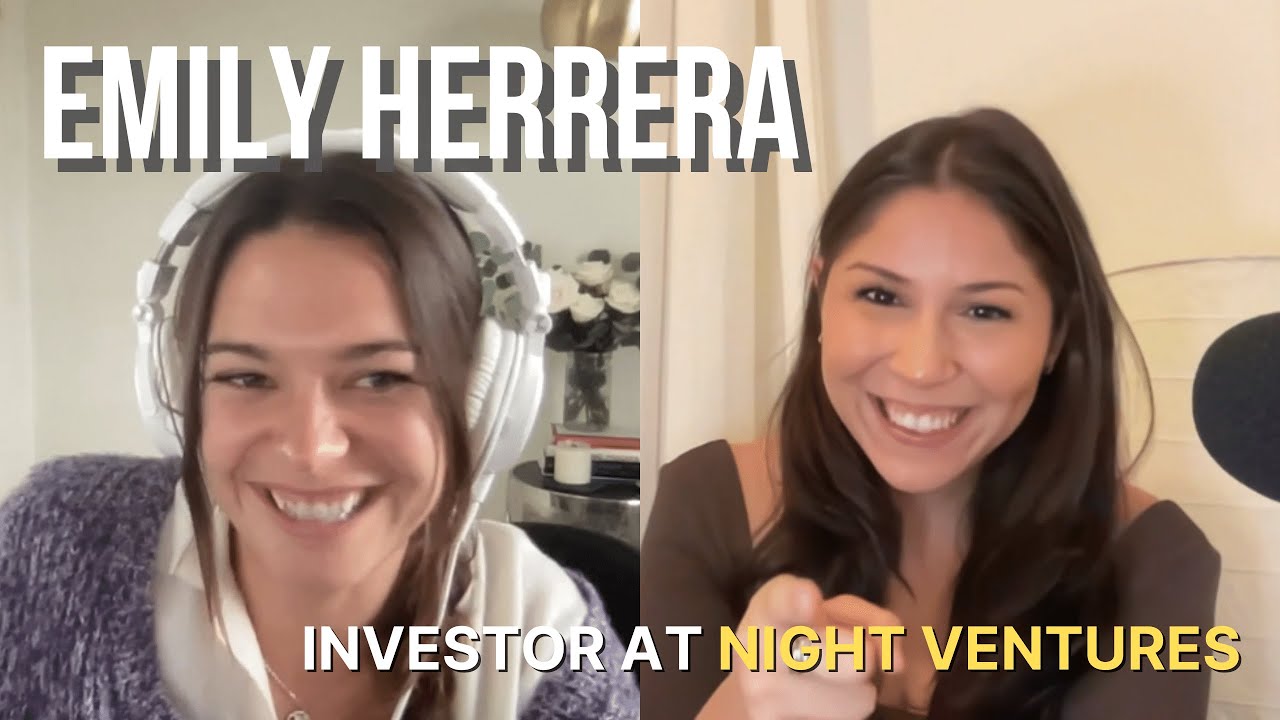
In this episode of the Seed to Harvest podcast, host Paige Finn Doherty interviews Emily Herrera, a creator‑investor at Night Ventures. The conversation traces Emily’s journey from running teenage fan‑account communities on Twitter to becoming a venture fellow at On Deck, Republic, Dorm Room Fund, and Contrary, and later an investor at Harlem Capital, BBG Ventures, and Night Ventures. Emily explains how her early immersion in online fandoms shaped her intuition for community building, vibe checks, and founder‑market fit. She discusses the creator‑investor model at Night Ventures, the concept of investing as curation, and the importance of women‑focused consumer insight. The dialogue also touches on personal quirks—astrology, “OG” creators, and favorite YouTubers—while reflecting on the pressure for young people to become creators, the challenges of hiring and building creator teams, and the mentorship she received from her boss Ben. Throughout, Emily emphasizes a non‑judgmental, observational approach to evaluating niche ideas, the value of personal networks for validation, and the evolving dynamics of the attention economy for Gen‑Z and beyond.
Chapters
Welcome back to Seed to Harvest, a podcast of founders, creators, and investors about their stories, frameworks, and tactics. Today I'm joined by Emily Herrera. I was pausing for a purr.
Hi. Hey, purr.
Creator and investor from Knight Ventures. If you don't already know Em from Twitter, you may know her from her previous roles as the regional community lead for Built by Girls and as a venture fellow at On Deck, Republic, Dorm Room Fund, and Contrary. Before becoming an investor at Knight, she worked at Harlem Capital Capital and BBG Ventures. Em is also the founder and syndicate lead for the YRS, the Women Student Startup Network for young women defining, using, and creating technology. Em, welcome to the show.
Thank you for having me. I am so excited to be here.
I'm so excited. I know we were, we were goofing off a little before the show, which I'm so excited. I feel like our friendship started as How did we get connected? Do we DM each other? Did we get introduced by someone?
It was such a DM. It was a fangirl DM from me. I actually— it was literally, I had 3 girls in my community bring up like, hey, what's the Syndicate thing that I keep hearing about? This was last year, early COVID. And I just started Googling like, what the hell is the Syndicate? I didn't even know what a Syndicate was. And immediately I found your like OG, I forgot, like the Futuristic Meme Syndicate.
No, you DM'd me about the book. You DM'd me earlier. I'm gonna fact check this. You DM'd me about Seed to Harvest November 7th, 2020. Said, not a future of work investor, but look forward to cheering on your project. And then we were talking about this.
Oh, I was a simp even back then.
I remember that. That's so true.
It was so sweet. But part of that, the next, the next interaction was me being like, hey, I love this Syndicate thing.
Oh yeah, the Republic Syndicate session or something.
The Republic Syndicate session.
That was it. Yeah, that was lit. Anyway, so Em and I go way back on the internet in internet years.
Oh yeah, early COVID.
Yeah, early COVID manic energy. So you've grown your Twitter community to now over 15K creators, founders, and investors. Can you share a little bit more about, okay, first your, your first like dopamine hit on Twitter? When you like hit, you know, that first viral tweet where you're like, and then kind of like how your tweeting has, or your like public persona has evolved over time as you, I, I think it's like, this is something I've been thinking about a lot is like when I started tweeting, I was like a college student. So I would just like tweet about like random stuff I was thinking about. And now I like, now I'll like overthink it a bit more. 'Cause I'm like, now I'm like, we're on Fund 2 and like have institutional investors. It's like. I'm no longer totally a student in college and that's not like my public perception. Yeah. But sometimes I still feel like one, which is fabulous. So I'm curious to hear more about totally your experience. First dopamine and then how it's evolved.
Yeah. So my first real dopamine hit actually didn't happen on my own account. So the, the dirty goss here is I used to run 2 different fan accounts. Which were anonymous when I was in middle school going into high school, and I think cumulative those were around like 50k followers. I will.
What were they fan clubs for?
Never. I was gonna say I'm not gonna say, but I'll just say it. It was Ariana Grande and One Direction.
Good, good target. Yeah, great big market.
Yeah, huge market, huge market. I had always been really into online communities, which makes me sound like as much. of a dork as I probably am. I loved memes. I loved kind of like the fan fiction culture. I loved, yeah, just like the niche aspects of people that I loved. I was a huge Harry Styles stan. It was just kind of like something that as a teenage girl, I just kind of just grew into.
Mm-hmm.
So I started really making memes and tweets in general through those 2 accounts. One other one I ran with one of my middle school best friends.
That we're getting into like a fight over the fan account?
No, actually it was like, even if we got into fights about middle school girl stuff, like we, we were like 2 little business people. We'd sit down and be like, we have to actually execute. You know, we have a schedule that we need to do. It was so funny. But yeah, so that was kind of my first real, real hit there. I will say that I will never publicly say what accounts those were because I was a raunchy little high schooler and I would just say the most ludicrous stuff. That I never want my parents to see. You're like, so that was like the shipping rumors and like starting something. Oh yeah, I was in all the stans. I used to write fan fiction, like the whole game. I love that, which I've actually never— I've never said on a podcast. I've never said that.
Um, stan. Yeah, businesswoman or full stan.
So that was on— that was like my first real interaction on Twitter, and that was probably Up until freshman year of college. I kind of stopped doing that. But on a— so, so yeah, so I had that. I started that in 2013. My personal account I also had in 2013, and just kind of the same language that I had used on my stan accounts, I started using on my personal accounts. And that was just because my closest—
That's super interesting.
Literally my closest friends.
Yeah, it's like different, different language. Yeah.
Yeah, I mean that language was like really encouraged in like the fan groups, and a lot of my real closest friends in middle school and high school going into college were people that also kind of grew up in those similar online communities. So I just didn't really feel the need to like change the way that I was talking. Yeah, so that that was all of that. And then also I think like kind of growing up on Twitter compared to people that maybe might be like fifteen twenty years older, it's like you just get used to internet talk and. Sometimes it just kind of kicks you in the butt, but you can't really get rid of it, which is funny.
Yeah, it was funny. I was editing your podcast questions and it's one of those things where it's a language that you can drop into and I think people can hear the difference, but it does take 2 people talking in it to be able to go deep. And so my next question would be, as a Gemini, how do you think your star sign reflects in your investing?
So as a Gemini, I used to be a journalist. Throughout college. And I basically just have always been really interested in stories. I get really lost in stories. Yeah, I think I'm really interested in timelines. I'm interested in just networks. I'm interested in just how people interact. That's very fundamental to a Gemini is how human beings are talking and interacting and the different flavors. I think they're very respectful of niche communities. It's Very much so, like a very observational kind of star sign. So, I think I'm a more observational VC. Like, if someone comes to me and presents a really niche kind of problem, I'm probably not going to off the bat say this is a stupid idea or a bad idea or a bad market or a bad problem. I'm probably just going to go and investigate that scene more. And it could be the weirdest kind of thing ever, but I think it— is probably super beneficial to my career as an investor because I'm not, I'm not judgmental. Like, I'll— the nichier, like, the cooler to me.
That's sick. Do you know much about Leos?
I do.
You do? Would you say that me as a— well, yeah, what you know about me from the internet reflects me being a Leo?
Honestly, no.
Interesting.
Well, kind of. Okay. I think, I think it is so Leo of you for being Our age. No, it's actual. I think being our age and raising your own independent fund requires a certain level of confidence and like knowing yourself that kind of like a fluttery Gemini would be very like, I don't know, maybe I get very nervous sometimes. But Leos are very much so like they fit the GP role really well. Instead of it being very like investigative, it's very like confident.
Mm-hmm.
You know, you can, you're gonna own it. Like I'm sure your LPs are absolutely in love with you because they're like, Paige just knows what she's doing. You know? So yeah, you have the confidence.
What was your like hesitation there though? Because initially you were like, huh, that's interesting.
As a Leo?
Yeah.
Well, just because you as a person, like anytime that I've interacted with you on a person-to-person basis, it's more like, how can I help you? Or how can I kind of provide something? And that's not super Leo.
Maybe that's something in like my moon signs. I feel like I should learn more about astrology. I actually don't know that much about it.
You know what's a great app? And I'm just, I'm shilling something. So Co-Star. Yeah.
But a different one.
I, I, I really like actually the Co-Star CEO, but, and I really hope that that team doesn't get mad, but Pattern.
Ooh.
Have you had Pattern?
No, I haven't downloaded it, but someone recommended it.
You have to.
Okay, cool.
It is so good, especially if you're not really into like the spirituality aspect of it.
I'd say I am. I just haven't like dove in deep into the language of astrology beyond like Googling what What my sign or like the signs of my middle school crushes were and if we were compatible.
Yeah.
You know, like that was kind of the extent that I got to. I, but yeah, I don't know.
Okay.
So on terms of, I, well, okay. So this conversation I would say is really interesting to me because like you as a creator have also grown up as a digital native and are in the venture space and investing in the companies that you really see like driving the future of culture forward. So I'm, I'm curious, like, What was the moment that you realized venture was the career that you wanted to pursue?
Yeah, the actual moment I can't really think of. I, I, I've been really passionate about getting smart people the resources that they need to keep doing whatever they wanna do in their passions. Mm-hmm. My, actually, my, my north node or ascendant node is in Leo, and that is very much so like Territorial of me. Like if I have a group of people that I really believe in, like I'm gonna get them whatever they need. Like that's, I don't know if that's very like—
No, I also, I also love that we run in star signs this. Have you ever talked about that on a podcast before?
All the guys at night are gonna be like, yeah, I'm gonna turn this one off.
Like, it's no for me.
It's not for you guys. Yeah. But yeah, I'm very much so kind of. I don't know what aspect of that me that it is, but it's, it's almost like kind of not mom-ish. I don't wanna say the word mom-ish.
No, but like maternal vibes.
Like you're like, it's very maternal.
Yeah. You're like, I want, I want the people in my community to succeed. I wanna make sure that I'm like helping them succeed. So it's kind of like that trait that carried you through. And then did you have a moment where you, like, for me it was like binge watching Silicon Valley and I was like, oh, that instinct is actually like reflective in venture, even though it kind of got a bad rap.
Yeah.
When I was like learning about it.
Yeah, yeah. So the story kind of goes, I had joined one of those venture fellow programs you mentioned before, realized a lot of the vibe was very masculine and like not very focused on consumer. Started spending a lot of time talking to the girls that were there just because my background was a lot in women's community building, etc. So that was just like a natural instinct of me. And I just realized that, yeah, a lot of the women were interested in either building stuff full-time, didn't really feel like in college they've had like the support system to kind of just let them try stuff.
Yeah.
Yeah. And, and build out their own personal networks. And that's kind of how Wires started. And, and kind of off of that too, that first venture partner program was the first time I ever realized that people get and give $1 million, probably like, you know, 100 times over every day. And that was not something that I had grown up with.
Mm-hmm.
At all. Um, I, I didn't realize how normal it was for people, and it got me like personally very frustrated that I was— that I didn't normalize that within myself. But I had—
yeah, I had like a very similar experience where I was like, people casually throw around the word million, like it's— they don't even spell it out, they just get an M. Like, that was like so not in my vocabulary growing up. Pits any of that? I— yeah, I think that like getting desensitized almost to that while like having the, the similar level of fiduciary responsibility, but it's like, oh, this is something that will be like under that, that I'll be like interacting with, not just like that I'll see and like—
Totally.
Whatever. Not on the vision board anymore.
Yeah, yeah, yeah. Now, now I'm in this bitch. Like, you know, now I, I kind of get how people get desensitized to that, but it, it hasn't, it hasn't left me yet. You know, giving and getting a million dollars in itself, even more so $100,000 is a lot to an average everyday person. But so, yeah, so, so I had this community and, and really it, it more formalized once I realized that these really smart women wanted a more feminine kind of network. Mm-hmm. And I was like, yeah, I know how to do that. And then it really started off as more like social capital.
Mm-hmm.
Just 'cause I didn't have any money.
Yeah.
And I was like an intern still. And then it just really quickly was like, hey, like, this is what we're doing. Like, you know, we have this kind of traction and blah, blah, blah. Like.
Mm-hmm.
People are raising money. I just want to raise like $100K or $500K or like a million dollars. Like, you know, how do I, who do I talk to and what do I do? And because of my experience at Girls Who Code and Built by Girls, I had been around enough people where I was like, I could chat with a couple of people and see how I could grab maybe like $10K, $20K. But I, yeah, that was kind of, that really hooked me on because it was like, Yeah. It was finding the story and finding the person. And then it was just like, I got to get you what you need because I want to see this happen and I want to see you succeed. And that, I think, especially in the larger venture sphere, people don't really want to talk about their personal relationships with founders and how they really believe in the issues. And sometimes when I think a lot of VCs roadmap and do all this kind of stuff, that's just a personal interest. You know what I mean?
Mm-hmm.
I think a lot of This stuff is really built off of maybe like 7 or 8 influential VCs that have personal interests in certain kinds of spheres. And I think that that's fine, but not many people really wanna talk about those personal relationships and personal interests. So, that was kind of the, the sticker onto there. And then kind of the jump was I ended up leaving school around a year and a half ago and took a couple of internships and contract roles. And the real flip was actually my time at BBG. Yeah. I had been, I was doing Wires with a number of different things with that. And Nisha from BBG Ventures kind of was the first person to tell me that like women are the majority consumer and also creator of basically everything in the entire world. So when you're focusing on women consumer, you're basically focusing on consumer in general. And I hadn't really realized that that would put me at such a better position than a lot of the people that were around me when it came to consumer. Like consumer is really hard to do, but I think like I have the, this, the more self-aware aspect to know that. And then also just like, I will try to figure out this in this, this niche as much as I possibly can in any way possible. And that's really where Creator kind of came in. But so I would say, I would say BBG Ventures was the moment that I realized like I, I could totally do this and I had to get my girls at WIRAS as much access as possible.
I love that. And, and I think like a lot of that goes into like growing up being Being a consumer and being a woman, it's like you build a level of intuition for products that's honed over you making like thousands of purchasing decisions in your life, whether that's like the, the like brand of like tissue that you use, or it's like the dress that you're getting for school. It's like you're considering like, sometimes it can be like tens, sometimes it can be hundreds of like different options. And you go through so many of them. So your like intuition is really fine honed. And we joke about this like a lot, but for the non-Gen Zs listening, can you define a vibe check? Because I think they're pretty close.
Yeah. Yeah. Vibe checks are, I would equate those if someone's an LP or a larger GP to like signaling funds or signaling angels. These are people who have maybe not formalized criteria for what's gonna work in a market, but have networks to kind of validate, understand.
Yeah.
Yeah.
Yeah.
They have personal networks that are gonna validate kind of both the problem and the solution. That's like a more, I guess, official way of doing that. And then also kind of the emergence of founder market fit of like a year and a half ago. I think I can meet probably any founder that's marketing for a consumer product for my, I would say age group, even probably just specific demographic and know if this is gonna create a cult following. So the equivalent there is like, I fell in love with Emily Weiss when I was like 16 years old.
Yeah.
Because I wanted to be Emily Weiss. And basically if I can present that founder to any person in like a younger demographic and they're not obsessed with that story and that founding story, then that's, that's enough of a gut check to know that that's not really gonna work. But it really comes along to like a personal network that's gonna know if that can work or not work.
I like that.
It's like, but also the vibe.
Yeah. You define it as like network driven. I guess I hadn't thought of that before. Like I've, I've thought of it as more of like an internal version, but I feel like sometimes my internal version is me being like, What would this person think of that? And then I'm usually like, yeah. Or I'll just like text. That's most of it. My brother Owen is, he's like 19 and I'll just like text him stuff and he's like, he'll text me back like, they're trying too hard. Or like, meh. Like, and I'm like, perfect.
Thank you. Well, if you think about it, if, here's the thing though, like you have that intimate relationship with your brother.
Yeah.
That you know that he's gonna tell you the truth. Mm-hmm. You know, it's not gonna be. It's not gonna be like, if my mom sends my, you know, younger cousin a founder, they're gonna be like, yeah, of course they're cool.
Yeah.
What, like, you know, like there's, there's more pressure around that rather than just me like sending it to one of my friends that maybe are still in school.
Mm-hmm.
They know that, you know, you kind of cut through any kind of intimidation when looking at a company and it's like, let me just tell you my raw opinion on this product.
Yeah.
Yeah. And I think that that's part of the gut check.
I love that.
Yeah. And also the vibe check of like, if it's a Gen Z consumer thing, like I will, I will rip if the gut check's not passing.
Uh, block. Slay.
I will block it. Okay.
So I wanna talk a little bit more about the firm that you work for. So Night Ventures serves as both a venture firm and multimedia talent management. One of those creators specifically being MrBeast. So I'm curious what creators or experiences have stood out to you since starting your position. This can be internal to Night or it can be external, but I'm curious like what. What are you thinking about? Like, who do you like following? Actually, I wanna be more specific. Who are your favorite YouTubers? Favorite 3, go. My favorite 3 YouTubers?
Yeah. Okay. So the gut is honestly Cody Ko. That's a cult following there. I'll, I'll watch any of that. I have a very niche sense of humor, so I feel like he's one of the only guys that actually gets my sense of humor. What I'll do is I'll pull up my YouTube and I'll tell you.
I love that.
My most watched right now.
Been really on home design. Um, so I, I like this Girl named Paige Wassell. And then do you watch any Lynette Adkins? She's like a spirit.
Yes. Yeah.
Yeah. Let's go. Fire.
So good.
And then Hitomi, I forget her last name, but she's like also like a—
Oh yeah. She's an OG, right?
Yeah, she is OG.
Yeah, she's an OG. I really like this guy, Drew Joyner. He's a like fashion kind of creator and he breaks down a lot of like Very nuanced fashion communities.
Mina Lee, kind of like similar editorial.
Kind of like that, but Mina, Mina, Mina's also amazing because she's a storyteller. I feel like he's more like, this is what's going on.
Best and worst, understanding fundamentals. Oh, gotcha, gotcha.
Yeah, yeah, yeah. He's a fundamentals kind of guy. That's cool. So I trust him a lot.
Who else is in my most watched?
Oh, I don't know if I'm going to say her name right. Liani.
Ozark.
She's more like editorial. Like she's kind of an OG. I think she was an OG.
How do you define OG? Like, is that like the platform they started on? That's a great question. Or is it like, like you said, Hitomi is like OG.
Yeah.
I think she started in 2015, 2016, something like that. Let me look at that.
Yeah. I mean, that's, you know, that's a real, definitely relative term. But for me, yeah, OG is around 2015 to 2018, maybe 2013 to 2018.
Like Gabby.
DeMartino, I think, like OG, you know?
Like, there's like Jenna Marbles. That's like another layer of OG, right?
That's like, that is, that is, yeah, that's, I was like 12, you know?
Yeah, but that was like another layer. This is like the OG of the folks that are like still creating content, I would say.
Yeah.
Okay, cool. I'm trying to think of who else has been super creative.
Those are kind of, oh, I've been watching a lot of Oh, what is that guy called? A lot of like hip-hop culture breakdowns.
Ooh, dang, that sounds awesome. I watch a lot of like interviews. Like I love a good, there's a really good Flatbush Zombies interview that I watched. I don't remember who interviewed them, but it was really good. You should send all of them to me.
Oh, one genre that I don't know any singular name of a creator, but I love the livestream DJ. Ooh. Kind of creator? Oof.
The Fredigan Spoiler Room. Or do you like, like, more of like in-home?
I like, like randos.
In-home randos.
Like people that are like sunset, like house mix. Like I'll watch that for sure. And I'll say that it's bad.
That's awesome.
Hold on.
There's this one guy that I, I feel like I'm really excited for the people in our demographic that are listening and 60% of them are over the age of 30. So I'm really excited for them to all learn a lot about internet culture in this.
Yeah. For sure.
Thank you for listening. Um, please let me know if you learned anything about internet culture on this episode with them.
Yeah. And also, like, I'm gonna plug myself for a second. Yeah, please do. I've been meaning to do it for a long time. I want to, I just don't know what medium to kind of put it on. Like, I wanna break down kind of like how people are looking at different kinds of creators. Yeah, that's what, well, like, it's like a personal curiosity.
Yeah. You're talking about like, oh, this person's more editorial. This person is like a fundamentalist. Like, I think that looking at creators creators from that categorization that like, that like hit something that kind of hit different. I was gonna say it hit something, it really did hit different.
Yeah, it's an online, it's an online culture that we grew up with that you just, it's like one of those things where you had to be there to really experience it. Like as an example, if we go back to MrBeast for a second, I totally admire his content, but I think everyone knows kind of at night is like, that wasn't really my core demographic. Yeah, like when I was the most online, like you're probably the most online ever when you're You know, probably 12 to like 16.
Yeah.
I would spend years with like Troye Sivan and back when like PewDiePie was like sick, I had a massive crush on him.
The crush. Yeah, that was kind of like, which is crazy. You mentioned something that I wanna like dig deeper on is like, what do you think about the pressure for young people to be creators? So there's all these stats about like people wanting to be creators.
Mm-hmm.
But can you talk a little bit about your thoughts on like, there may be like a social pressure to like be online? It's kind of like rebellious to be offline.
Let's talk about that. Yeah, totally. I think about this constantly because I think it's a similar pressure for, for, for honestly millennials, because millennials don't want to be— they don't want to be online, but then they don't want to be out of the loop. It's like they don't want to be left behind, but it's not—
it's like the online medium doesn't necessarily like— they're kind of like, okay, okay.
Yeah, I think that's more of a mishap on like general media not really covering online culture correctly. So I think people unnecessarily feel like they have to be like creating and interacting and blah, blah, blah. But realistically, you don't really have to.
It's kind of like you're just— I feel like that's like also what I— yeah, I just started being online because I was like vibing and I was just like, this is my free time. I'm gonna like tweet about random stuff and like tag people if I think things are cool and like answer people's questions that they're asking. And it's— there was no strategy, like none.
Totally, totally. I'm gonna, I'm gonna let you in on kind of the night.
Please do.
Secret.
The secret.
I'm gonna let you the secret. Dropping the secret.
ASMR.
I think we're. I just start ASMRing all of night's secrets. Just kidding. Read. He's probably gonna watch this and be embarrassed. No, I think it's it's something that we think about a lot is like you know I forgot the stat. It's like you know over seventy percent of younger people grow up and say they want to be a YouTuber or some kind of. TikToker or something like that. But the reality is like the majority, at least in like modern studies, the majority of full-time creators don't make that much money. And I think kind of there's, there's still that American, you know, sense of work versus identity thing. And I think a lot of people wanna identify as a creator, but I don't know if a lot of young people really wanna work as a creator.
Oh, that's interesting.
Because they haven't really experienced, yeah, you know, a lot of the, the work of it yet.
Would you say that like in, in terms of like your identification, oh, I'll explain like mine then. I'm curious to like hear more what yours is like. Mine is like, I'm a creator first and being in like, being an investor in venture was like the area that I am super interested in and chose to dive deep on. And so now like running a venture fund is like part of the portfolio of being a creator. But I'm curious like how you think about the categories of being a creator in terms of like your career.
Yeah.
Yeah. Yeah.
So actually off of that, you're kind of the ideal you know, person that I'm betting on in the future, like for sure. Like I had this part of this thesis for my syndicate, which was like investing as a form of curation.
Mm-hmm.
And like when you get to a point of attention, you now feel both the pressure and also the opportunity to create an experience for the people that are following you.
Yeah.
And investing is just like anything else, right? Like you wanna create a good experience to people who follow you and want for you to express your, you know, creative interests and professional interests in a way that aligns with you as a person.
Mm-hmm.
So, so yeah, so That is, that is ideal. You are like, you know, key person in this. I'd put you on a bulletin board and be like, this is investing as a form of curation.
Do you know what's funny? I feel like almost when I started, I was like, oh, this is like so new and like no one our age is on Twitter. And I was just like the, like young person in the room. And now I feel like almost like an elder statesman of like Gen Z VC.
I'm like, no, no, it's so funny. So not true.
Okay, cool. So not true.
I think there's a— wait, what was the original question? Um, you asked about, about kids.
Oh yeah, the pressure for young people to be creators.
Pressure of young people to create. Okay, so I think, you know, creator is— being a creator as a job is very, very fun. I think it's created a revolution of, of just, you know, post like 1960s industrialization, blah blah, like we now live for buying cars, etc. Like all that stuff. I think people are now like kind of over that, especially younger people are like, I don't know, I don't wanna be like depressed and hate my life. And like most people have like some form of creative expression.
Mm-hmm.
If that's in production, if that's in written word, if that's in investing, like people wanna have a personal stamp on what they're doing. I think that that's super valid in the way that America used to run.
Mm-hmm.
So this is just like kind of the exit of that. What's super cool actually is, is another part of the thesis that I, that I have is in that kind of early future of work. Pre-professional to professional transition, like colleges do not work in helping you create a career for yourself, blah, blah, blah. I'm finding a lot of younger people seeing very obviously the leverage that they have in having a social following and applying that directly to the jobs that they have and literally negotiating that into contracts and being a forward-facing person because blah, blah, blah, like the shift in the attention economy is going to younger people for a majority of brands, whether that's smart or not, I don't really know. But brands need to interact with younger people, right? Like they don't even know how to do that still in like a super meaningful way. And a lot of it is, you know, hiring a younger person to run a TikTok for the company. A lot of it is, you know, creating community of other beta testers that are around their age group. And those are experiences that I think a lot of younger people are seeing and kind of want a taste of. And then also just like a, an personal anecdote of that, like, that is something that I personally think about for my career. Like, I know that I have a really specific place in the venture community right now, and I think that my— the guys that I work with recognize that and appreciate it. And I think now the shift is going to be on managers kind of taking that power dynamic and appreciating it because it's not disrespectful. It's not anything that's going to be, like, truly impacting the way that businesses run. It's just kind of like this person has put a lot of effort into cultivating community and has access to leads for sales, for opportunities to invest, to other experts that maybe I wouldn't personally have. And I think if managers adopt that kind of mentality themselves, then they'll really be able to kind of push smaller businesses, maybe not larger. But long story short, The actual key to everything is going to be, is going to be the jobs that are around creators. I think most people are going to try to be creator full-time, realize you don't make that much money. And it's a lot of work.
Um, I think like building on a team though, like once, once you have like a team around you, for example, shout out Tate, who edits all my podcasts.
Shout out Tate.
Shout out Riley.
Love Tate.
Who writes a lot of questions.
Shout out Riley. My girl.
For the podcast, like that made it so much more manageable to be like, okay, cool, I'm gonna put out like a high-quality podcast every week on like YouTube, do social shorts. Like, I could not— I definitely couldn't do that without a team. So I feel like the teams of creators will only continue to grow as they see like traction in their viewership and revenue.
And hiring is such a like question mark for most creators.
It's super hard. Like hiring your first person as a creator, you're like, Is my job real? Like, I have a lot of work to do and it's really like scary because I'm in front of a lot of people and I don't want someone to mess it up. And this is like my whole stamp, but also like, I can't be spending my whole day editing.
Totally. Totally. And like the real, the real excitement, at least for all of us, is like that there are a lot of people who, who will continue to do their own jobs. Not everyone's going to become a creator. Not everyone's going to want to become a creator. They will keep doing that, but they will support people who have individual communities who they love, people that they love working with. And it's really just like another unlock for the gig economy. But now it's, yeah, I think that that hasn't really been discussed yet. It's like, what happens when you try to become a creator and maybe you just don't like it, or maybe it's just not for you, it's not fitting into your lifestyle. It's like you now you'd wanna work with your favorite creator. Like, would I love to be, you know, a writer, like a A jokes writer for Cody Ko, like, that'd be fire. Like, I would love that, you know what I mean? And it won't even be because of the necessarily money, it'd just be because I love it. Yeah. And that's gonna be my kind of form of expression.
I love that. Okay, well, I know we're wrapping up, but who— yeah, yeah, one last question. Who has had the greatest impact on your journey so far? Can be an— as an investor, in life, etc.
In life? Ooh, I don't want to give him the airtime, but I'm gonna give him the airtime. I'm probably gonna say my boss Ben. We love Ben.
Go Ben!
Go Ben. I think he kind of gets a lot of the stuff that I, I, I sometimes say or don't say about like how I see venture, about my interest in it, a lot of these theses and stuff. I think he actually really respects it.
Mm-hmm.
And I think he's probably one of the first people that's interacted with me as a, uh, As a both a creator, a full-time— he's the first person to ever call me a creator in my life. Which was—
I know, it's so soft.
Um, but he, he kind of got the, the gist of what I was doing. Like, I was really trying to craft an entire career and gave me the professional, like, the full apprentice offering. And he's a Scorpio and I'm a Gemini, so we fight a lot. But, but yeah, I, I think I feel super professionally fulfilled with this job, and I Give a lot of the credit. I give it to all the guys that I work with, but Ben has been really a great mentor for me, and kind of the stability of both this like apprenticeship and working on this platform and doing all stuff that we do was what really formalized my leaving school and doing this full time. Yeah, and I don't think anyone else has pushed me that hard. Like I didn't expect to be like grilled. But I've been grilled and it's been, it's been really great. It's given me a lot of confidence.
So I love that.
Shout out Ben. Yay.
Shout out Ben.
Okay.
Well, I am so happy that we got to spend this time together. I've, I feel like this was such a fabulous time with you. I hope our listeners enjoyed and I'll drop Em's Twitter links in our show notes today. Definitely go follow her on Twitter. She is tweeting some amazing things. Let me read you her most recent tweet before we hop off that I oh it's embarrassing really love.
That's embarrassing. I'm gonna say it. That's really that's really bad.
You know how in How Low by Ludacris when the little chipmunk goes get it get it get it? I really felt that, and that's today's energy, and I'll leave you with that. And thank you so much for joining us. There you go.
If you know, you know. You know.
Thanks so much for tuning in today to Seed to Harvest. If you enjoyed this episode, be sure to subscribe wherever your favorite podcast listening platform is. I'll be releasing new episodes weekly, and if you have any questions or comments, feel free to let me know on Twitter. That's Paige Finn, Paige and then Finn with 3 N's. Thanks and see you again next week.
More from Paige



Paige of Behind Genius driving an AI electric train in St. Louis (Intramotev Visit)





