Nik Sharma, CEO Of Sharma Brands, on Launching Mr. Beast’s Chocolate Bar | Seed To Harvest S2 Ep11
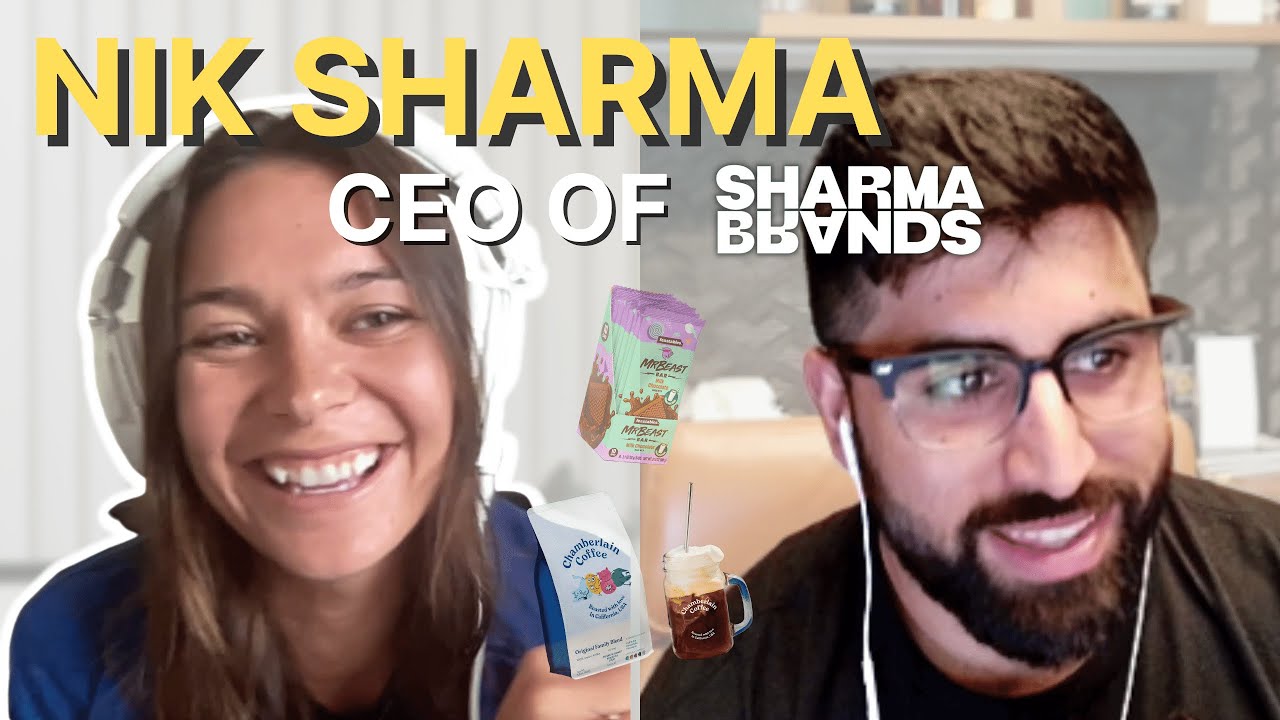
In this episode of the Seed to Harvest podcast, host Paige Finn Doherty interviews Nik Sharma, CEO of Sharma Brands and Forbes 30 Under 30 honoree. The conversation begins with Sharma’s childhood fascination with advertisements and how that sparked his interest in brands and creator marketing. He then shares his view on celebrity‑backed consumer products, emphasizing the need for genuine purpose and a clear creator‑product tie, using MrBeast’s Feastables as a case study. Sharma outlines three core investment rules he applies when evaluating D2C opportunities: being a customer of the product, ensuring his firm can step in to rescue a struggling brand, and identifying a unique competitive advantage that can drive rapid revenue growth. The discussion moves to the scaling of Sharma Brands, where he stresses intentional hiring, a culture of transparency, and empowering internal ideas, describing the company’s “unapproachable elegance” design ethos that focuses on simplicity and the “why” behind each product. Sharma also talks about his prolific presence on Twitter and his newsletter, describing a strategy of constant experimentation, sharing what works, and building relationships across industries. He cites bootstrapped D2C founders and iconic innovators like Steve Jobs as inspirations. Finally, he shares personal mental‑health practices—prioritizing sleep, regular exercise, and protecting his energy by avoiding negative influences. The episode offers practical insights into building and investing in D2C brands, cultivating a purpose‑driven culture, and maintaining entrepreneur well‑being.
Chapters
Welcome back to Seed to Harvest, a podcast with founders, creators, and investors about their stories, frameworks, and tactics, hosted by me, Paige Finn Doherty. Today I'm joined by my friend Nick Sharma, a fellow San Diegan, Forbes 30 Under 30 honoree, writer, investor, and CEO of Sharma Brands, where he scales brands like Houzz, Brightland, and Levels. He's generated over $120 million in online revenue and will be dishing some of his secrets and lessons learned on today's episode. So Nick, thanks so much for taking the time and welcome to the show.
Thank you. I'm excited to be here. Might be the first podcast I've done where it's with somebody else from San Diego.
I know we're kind of a tight-knit group. There's like a secret San Diego mafia out there.
Yeah. All 4 of us. Yeah.
So I wanted to get started honestly with like some of your roots in San Diego. So you wear a lot of different hats across your work now. Can you break down for us what you wanted to be when you were a little kid and then B, what originally sparked your interest in working with brands?
Yeah, I mean, when I was young, I wanted to be everything. Like I wanted to be a garbage truck driver. I wanted to be a UPS driver, uh, pilot for the longest time. I still kind of wanna be a pilot. But one thing that was always common was I was always like, you know, the Sunday paper comes out and it's full of ads and I would always just like, You know, back in, back in my day, we had like Circuit City and Best Buy and Fry's Electronics and a few other stores that have probably closed down, but I would compare all the products and the pricing between like the same products, but between different stores. And I was always just fascinated by, you know, like consumer products or like the marketing of it, how it's messaged, like, you know, how the ads are set up. Like, why is the washing machines towards the end of the Best Buy? booklet on Sunday versus, you know, why is there a laptop at the front? But then throughout school and, and probably more towards the end of high school, I just kind of like really, I wasn't like the best grade student in terms of like test taking and doing all the classes, but I was really fascinated by social media and how, how not necessarily just brands, but also how like musicians and artists use social media. Because I think like artists and creators are They're always on the forefront of where technology's going because, you know, many, many of them don't necessarily have these massive budgets or large org charts to go get checks and balances from. And so they have to be kind of innovative in finding the next arbitrage, which a lot, a lot of it happens with like musicians and artists when they're trying to like, you know, get big or grow.
Yeah, that's so interesting. That's like why I originally started out in like the creator space was I loved interviewing artists about their creative process And especially around how they did their marketing. And one of your recent brand launches was Feastables, which is MrBeast's new company. So I'm curious to hear more about now as, as you've had that experience, like what is your view on the future of celebrity-founded or backed brands like Feastables or Chamberlain Coffee or Aviation Gin? Any trends that you're watching there? And sounds like your interest has continued in that space.
Yeah, I mean, I've always been good friends with a lot of creators, specifically YouTubers, 'cause I think they have the best relationship with their audience just by nature of the content that's created and the length of the content and the depth. But as far as like celebrity-founded brands, I think there's, well, now it's like every celebrity is launching an alcohol or a brand or something. Many of them are going to fail, I think. But the ones that, that don't fail are essentially the ones that like, one, does it have a purpose to exist? Is it solving for a problem that consumers actually have? You know, with Feastables, it's a 4-ingredient chocolate bar. It's something moms can proud of when they give their kids. Um, and then the second reason is like, okay, well, why is this creator involved? What's the purpose or what's the role of this creator creating this product? And again, in the Feastables case, it was like, well, Jimmy has Crohn's disease, and so having a chocolate bar with less ingredients that he can actually eat makes a lot more sense.
Oh, wow. I didn't know that. That's super cool.
Yeah.
So I've been thinking about that a lot. I feel like one of the things that Gen Z is really known for is like sniffing out BS. And I feel like authenticity, it sounds like authenticity is a really core part of what you're talking about.
Yeah, definitely. Like there, there's also a lot of creators who are now investing. You know, creators could be YouTubers, but it's also NBA players and NFL players and, you know, essentially anybody with an audience. But yeah, it all comes down to what is the actual tie between this person and what they're launching. And many times there's not really a tie, like I talked to the CEO of an alcohol company this morning and, you know, it's being launched with an actress who there's like no reason that there's an actress attached to this.
Yeah.
But she is, and she's probably not gonna be that involved other than kind of being the face when it launches. But yeah, you know, I think like there's analog creators and then there's digital creators or digitally native creators.
Mm-hmm.
The digital ones are the ones where You have a real shot of building something because they, you know, they have an audience that cares and that knows about them and, and that knows them to a different level of depth than these more analog creators, which are like, you know, sure, you know Tom Cruise and who he is, but you don't like really know him. Yeah. Whereas with, you know, like, like a Danny Duncan, for example, I don't know if you know who that is.
Yeah, yeah, yeah.
Um, you like, you know everything about him, his friends, his relationships, his family, all that kind of stuff. And, and people buying where they feel a connection. And so, you know, with the Pythagorean theorem there, A equals B and B equals C, then people are gonna go buy from creators who, who have a connection with their audience.
I love that. And speaking of creators investing, you are a prolific tweeter and newsletter writer, which we'll dig into in a bit, but you've also invested in 50+ companies now. So I'm curious, now that you've had, you know, 6, 7 months to look back on that across those that you believe are succeeding now, what are the patterns that you've seen and Were those patterns that you spotted initially when you invested in the company?
Well, I think 2, 3 rules I always had when I started investing have kept me from making bad investments or investments that were, you know, maybe hyped at the time, but then not doing that well later on. So the 3 rules are, the first one is like, I have to be a customer of the product or of what they're selling or their service. And so that helps a lot because if it's a consumer product, Then I can help ideate and I'm not writing like, you know, massive checks. And so I'm usually, if not the smallest, then one of the smallest people. But I always tell founders like, I promise you, I will make up my difference there for not hitting your minimum in the help I will provide. And so, and so that's why this helps even more. 'Cause if I'm a customer, then it allows me to get creative in terms of how I think about, you know, helping the brand, whether it's through distribution or ideas for more creative marketing, things like that. The second one is it has to be something where if the brand were to not be doing so well, could my team at Sharma Brands come in, treat it like a client and help get it back on track? And the third one is, you know, if they're starting from scratch, what is their advantage in the competitive landscape that's going to get them to $10 million in revenue in the next you know, maybe a couple years? And, and why is that an advantage that only they have? And for some brands, that is they own their own fulfillment center. For some brands, it is they have phenomenal relationships with their manufacturer. And so they're always going to be in a negative cash conversion cycle. For some brands, it's like, you know, we have MrBeast. So it kind of varies depending on the brand. But those are essentially 3 roles I always look for before I really consider something of an investment and fortunately it's kept me investing in brands that do well over time.
Yeah. And you, you mentioned your team. So your team at Sharma Brands is now over 15 people, is that right?
Yeah.
Yeah. So can you talk about how you think about scaling Sharma Brands as a company and building out your team and some of the lessons that you've learned there?
Yeah, I think the, the biggest lesson I've learned is like culture is everything and You know, like every hire that we make or everybody we bring on the team is a very intentional hire. We don't ever hire people because we need to fill a spot. I would say like half, half of the team has come in when there was really no need to make a hire or there was no job description that was out there. It was mainly just like, oh, this person has values, ambitions, and ethics that are aligned with what we're doing. And, um, and they'd make a, they'd be a good culture fit here. And, uh, and I think that— Yeah.
What would you describe your culture as?
Oh man. Everybody always references Bailey's Twitter account for our culture.
I'll link it in the show notes.
Yeah. I don't know. I, I would say it's like, it's fun. It's very open, very transparent. You know, everybody knows we only work with a handful of brands as clients at any given time, but at the same time, we have our own internal projects. So we have 2 brands that we're launching. In the next 2 months, we have, you know, somebody wanted to dabble in software and see what that feels like. And so we bought a software company and we're working on building that out. You know, somebody has an idea for our 3rd brand. And so we'll probably just take that idea and run with it. I like to say like, we, we all work hard and we're very nice and we try to, or at least I try to, because it helps the business, but I try to support You know, any, any of the good ideas or empower people to come to the table with good ideas so we can all actually execute them and bring them to—
I love that. It's super cool that you're encouraging things to kind of like bubble up through your company culture and experiment. I feel like that sense of creative alignment is really difficult to get. Um, and I think one of the things that's always stood out to me about you and Trauma Brands is your taste. So I'm curious, like, what would you say that your core design principles are and where did they come from? These might be things that you think about personally when you're thinking about design or ones that you choose to share with your company? Would love to hear more about that.
Yeah, we, uh, it's funny, we have a very specific customer type that a lot of our clients focus on. You ever seen Real Housewives of OC?
Yes.
So like our customer in 99% of cases is Heather Dubrow. I mean, obviously we try to think like, what's What's elegant, what is modern, what is clean. But most of all, like, I think everything we do comes back to the lens of like, how do we make this easier for somebody? So for example, we have a brand launching soon focused around sleep.
Mm-hmm.
And everything that we put out, whether it's the products, the messaging, the content, et cetera, we focus entirely on like, how do we help people sleep better? Or how do you get somebody to understand the importance of sleep? But you know, even like we have a beauty client where The product itself makes your skin tighter. And, but then we, we focus on, like, we know the product works. Now, how do we get somebody to really understand that this product works and it can work for them? And it's just all kind of peeling back the onion or the layers in the onion where it's like, okay, if the end goal is, is to sell this product, it's like, okay, well, why does somebody need this product? Okay, well, how does somebody arrive to that need? Okay, well, how do we phrase this problem? And it's just like going back layer by layer.
Just asking like why, why, why, why, why?
Keep going back to the core. Yeah, it's all about why. Exactly. And, um, and so for us, our goal is to basically make it easier to communicate for a lot of our clients. And, um, and also keep it classy at the same time, um, where we don't feel like we are compromising, um, style and design and, you know, I guess class for like trying to make something easier to understand. If that makes sense. Mm-hmm.
Yeah, that makes sense. It's like, Unapproachable elegance almost.
Yeah.
Yeah. So speaking of communication, you're a prolific tweeter and newsletter writer. So I'm curious if you have any words of advice to budding content creators. I think you just hit like 135K on Twitter, which is pretty crazy.
Well, first it was like, all right, I'm just gonna create a Twitter account because if I put things out and they work, then I'll replicate them. This was back when I was in high school. I'll replicate them across like The people I work with for their social media accounts.
Oh, so like experimenting personally?
Yeah, exactly. And then when I got to Hint, it was a lot of, it was actually very similar. But then, you know, I started like putting out things that would work and all of a sudden, like I'd put out one thing that worked and I'd find 5 people who were really dope, you know, following me or DMing me. And then I was like, oh, this is interesting. If I just give away All the things that work or all the things that I see, I just end up interacting with really dope people like yourself or like the founder of Morning Brew back when it was starting. Or, yeah, you know, just like things that you would kind of like sit in a room and be like, all right, how do I get Mark Cuban to respond to my email? Oh, if I put out cool content and then reference it, you know, he might see that as a sign of like, oh, okay, this kid is not a crazy stalker.
It's so funny too. It's like across different industries too. I feel like one of my most Bizarre moments on Twitter was like, I was looking at my analytics and it was like your most followed follower, it shows you, and it was John Cena. And literally all I could think of is that one prank call where it's like, John Cena. And I feel like that, that things like that never would happen if you weren't putting yourself out there and just making design or like making content that's authentic to you. So it sounds like just going for it has kind of been Your journey and as a content creator?
Yeah, honestly, it's just like putting things out has just always worked. Like, and it's not just people in the business world either. Like, the more I put out about something, it's like, for example, like I'm in direct-to-consumer, CPG. I don't get just people in this world who want to Engage with me. It's also people who are maybe YouTubers that are thinking of starting a business.
Yeah.
Or they are, you know, they run massive family offices and they have so much money to invest, they don't know where to go. Or, you know, somebody who like owns a chain of barbershops in New York City and they're like, oh, I could learn from this. So it's like you meet so many just cool people.
Yeah. Who would you say some of your inspirations are both inside and outside the D2C world?
Inside the DTC world, I'm always most inspired by like bootstrappers, like people who built dope businesses without raising money. So people like Moyes who started Native, people like the founders of Iconic, which is that art company out of LA. There's this company called Solowave, these 2 guys Andrew and Eli started, you know, that, that'll do well over 8 figures this year, bootstrapped. Those to me are like my biggest inspirations. Or like, you know, like HexClad even, which is, you know, they'll do 9 figures, well over 9 figures in revenue, completely bootstrapped. Outside of D2C, I would say it's like the people who did something where they have no business doing it. I'm trying to think of names. I mean, Steve Jobs for sure. But like, I feel like everybody says Steve Jobs. Yeah. I don't know, to be honest. I can't name them on the spot. I always forget when I'm on the spot. But it's usually people who are like, they have no business doing what they should be doing.
Yeah.
And they got in and they were able to figure it out. That's partially probably because like, you know, if you look at my education, I have no business doing this.
Yeah. I feel like that, that's what makes it the most fun. I went from like writing a children's book to managing a venture fund, and I think that that's been one of the most fun things is approaching a like more entrenched industry with a unique perspective that you wouldn't have got had you like grown up within the The industry. And then to go back to when you were a kid, recently I've been researching field trips and their value in early education. And since we both grew up in the same school district in San Diego, I'd love to ask what your favorite field trip experience was when you were younger.
Ooh, the Reuben H. Fleet Science Center.
Dang.
Um, that was fast. That was, it was, yeah, that was hands down my favorite. 'Cause like a lot of our field trips were science center. The zoo, the wild animal park, Torrey Pines, like lots of hikes. But the science center was the best cuz it was like so hands-on. It was like, it, it was learning but in a very fun environment and it didn't feel like learning. I feel like that's what we try to do with our brands. Like in terms of marketing, we try to market things without it feeling like you're learning something or you're getting educated on something.
Yeah.
But yeah, Reuben H. Fleet was like, that was it.
That's awesome. I love how fast that response was. I thought you were gonna take a minute to think about it. Um, yeah, super cool. And then my last question to close this out is, you've tweeted about this quite often, but how do you prioritize your mental health as an entrepreneur?
I would have to say it's like something that I work on actively. I don't think I've like reached the point where I could say I have figured it out, although hopefully soon. But I mean, for me, what I do is like, I, sleep is a priority for me.
Mm-hmm.
Getting good sleep at night. I don't drink alcohol, so that helps a lot in making sure my sleep quality is good. I try to sweat every day or at least every other day. I try to just stay around people that keep me inspired or excited or happy or ambitious. And, you know, anytime we've had, even if we've had clients that are like negative Nancys, we basically just like let 'em go. As clients and even like friends-wise, there's a lot of people that I probably don't talk to now that I used to talk to, and it's simply because they're just a negative Nancy or a Debbie Downer.
I like that. So be super protective about your energy.
Yeah, super, super, super protective.
Cool. Well, thank you so much again for coming on Seed to Harvest, Nick. I really appreciate it. Of course. If you are listening and would like to connect with Nick, please visit his Twitter. It's Mr. Sharma. You can also look up the D2C Guy. But thank you so much for coming on, Nick. It was a pleasure to have you. And then for those of you listening, tune in every Monday for new episodes from founders, creators, and investors. Yep. Thanks so much for coming on.
Yeah, of course. Thanks for having me.
Of course. Thanks so much for tuning in today to Seed to Harvest. If you enjoyed this episode, be sure to subscribe wherever your favorite podcasts I'll be releasing new episodes weekly, and if you have any questions or comments, feel free to let me know on Twitter. That's Paige Finn, Paige and then Finn with 3 N's. Thanks, and see you again next week! Bye!
More from Paige



Paige of Behind Genius driving an AI electric train in St. Louis (Intramotev Visit)





