NJOY's Journey: From $1B Val to Bankruptcy to $2.75 Billion Dollar Exit | What It Takes Ep 1
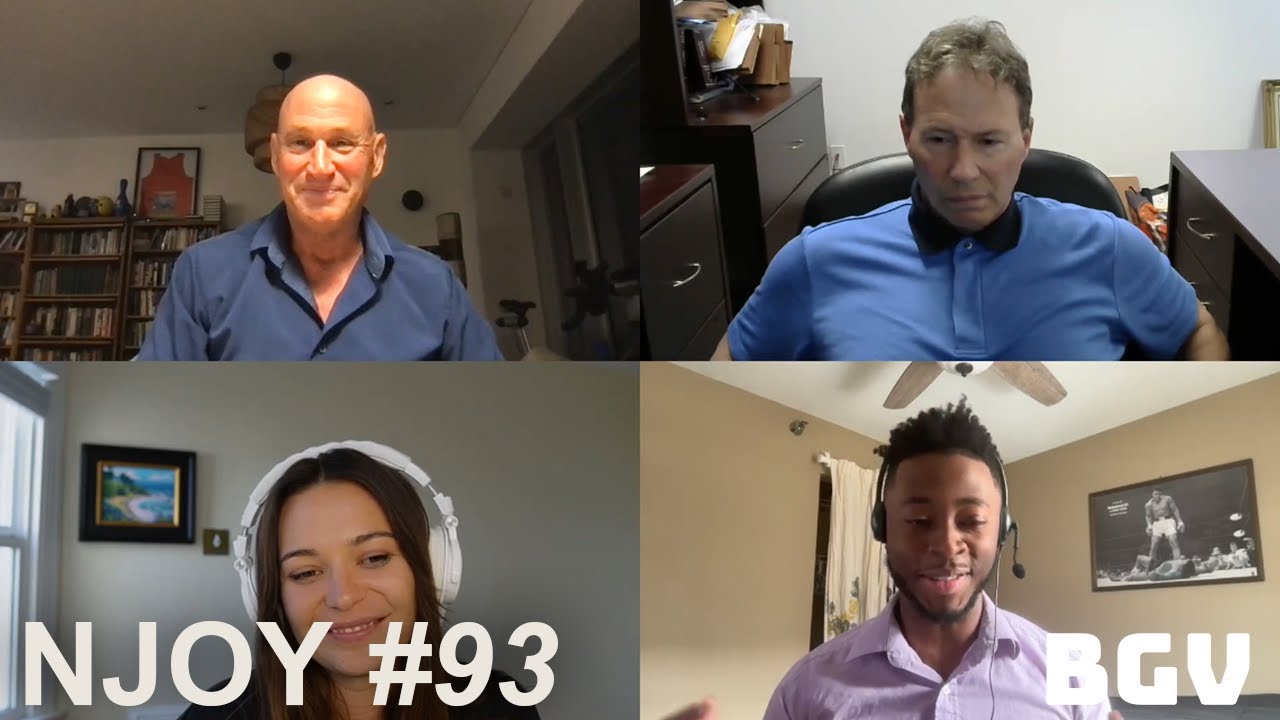
NJOY founders Mark and Jeff Wise built an e-cigarette company from a 2005 idea into a $2.75 billion acquisition by Altria in 2024, surviving an FDA lawsuit that shaped vaping law, a 2016 bankruptcy, and strategic missteps before rebuilding with flavors and nicotine salts.
Chapters
Today we have a very special episode, the first in our series of the most 100 most recent billion-dollar exits. We're joined today by Mark Wise and Jeff Wise of Enjoy, and we're really excited to share more of their story. And Chumba, our analyst at Behind Genius Ventures, is going to be leading the conversation on today's episode. So Chumba, do you want to take it away? And Jeff and Mark, thank you so much for joining the show today.
Thanks for having us.
Thanks, host.
Yeah. Thank you guys for being on. My first question was just growing up, what was it like? I, you know, one of the interviews I saw that, you know, you had 7 siblings, you guys amongst each other. And, you know, you, I think 4 of you guys ended up becoming lawyers. So was there a lot of fighting growing up? Was there entrepreneurial endeavors growing up? What was that like?
Mark, you want to, you want me to take it? Do you want to take it?
I can start and you can add. So it's interesting because there was, while there were 7 of us, there was really 5 within 5 and a half years. And then there was an 8-year gap and then another 8-year gap. I was the youngest of the first 5. Jeff was the third oldest. We had 2 older sisters and another brother in between. And so it was interesting is that we didn't really fight that much. You know, our father was a patent attorney and stuff. Our mom was a lawyer, became an immigration judge. And stuff. And so they preached education to us, but we were also athletes, all 3 of us. The boys all played tennis, played it all the way through juniors. I think Jeff played 1 year of college tennis and Farley and I played 4 years of college tennis and played a year on the pro tour and stuff. And then all 3 of us ended up going to law school. Jeff's 3 years older than me. And then eventually we all started working for my father who started a pad firm, you know? And so that's Sort of our journey to that, but there really wasn't that much, right? Just, I mean, probably normal fighting and stuff.
Yeah.
Extraordinary.
Yeah, no, there were, I think we actually were a pretty tight-knit group. And to Mark's point, it was the first 5 and then 2 much later. Our mom had at least one child every decade from the '50s to the '80s. Number 1 was born in '59 and number 7 was born in '81. So it was, it was definitely exciting to grow up in a big family. And yeah, I think our dad was the one who instilled in us a love of inventions and a love of entrepreneurship. He actually had been a managing patent attorney at IBM, left to join a startup. And I think it was something that he, it was an experience he always cherished. And I think kind of gave that bug to us as well.
Okay. And how did Android come to start, Mark? Like what was, you know, you're working as a patent attorney, like where do you get the idea to go Start an e-cigarette company.
Sure, kind of interesting. You know, I was always entrepreneurial, but I was friends with a lawyer named Bert Bentley, who was kind of a mentor to me. About, you know, he's probably like 30 years older. My dad was friends with him. I became friends with him. And one day, probably in right early to mid early summer of 2005, he showed me a brochure of his new product. It was called a Ruyan. That was the product of Pseudo, was an electronic cigarette. I'm not a smoker. You know, Jeff's not a smoker. None of us are smokers. And so I first read the brochure, I wasn't that interested in it because I'm not a smoker. You know, talk about a mist and stuff. And then I had a mutual friend that I'd— a friend of mine that introduced to Bert, and Bert actually showed him a device. And he came to me and said, hey, we can do something with this e-cigarette. And when I saw him first puff on it and saw the vapor come out, there's no smell to it really. And stuff, you know, I knew this is a product. I know that most smokers like to quit and stuff. And so I ended up starting to work with Bert. We ended up forming a corporation and we were trying to get the rights. Bert had a client that said he'd get the rights from Rion. Rion was a company founded by Han Lick. Han Lick is the guy that got some, eventually got patents and, you know, is the person that they'll give credit for the biting electronic, inventing the electronic cigarette. And so we were supposed to be able to get the contract and for regions being North America, I think even South America, they finally narrowed it down to the US only. And they just kept moving the finish line on us, you know, do a marketing plan, do different things without giving us the contract. Even when we did what they wanted, they weren't giving us the contract. And this basically went on for, you know, 9 months to a year. And so that went through to probably early to the summer of 2020. 2006, and I went online and I well I'd seen that there was another product being sold from a guy in Atlantis out of China called e-cig.com. I think it was e-cig.com, and then I found another manufacturer online in China, and a friend of mine contacted him, and we ordered like 20 units, and his price was going to be much lower. You know, Tom was like at not us to pay 72 bucks for the device, and he's going to sell just like 20. So I ordered some to see if it was similar to it. And while Rion was claiming to have the patent, they didn't have it in the US. And I was going to see if it could come out of the country, right? And stuff. And so I did one final attempt to make a meeting with Rion to do a deal, but they were totally unrealistic. I ended up getting the other devices. They worked just as well. And so we formed a new company called Sotera, doing business as Enjoy. And that's how we started. And I broke away from Bird and the other guys and just started it. And I brought in a guy named Jack Leadbeater, another guy, Chris McSherry and stuff. But one of the issues was interesting was that the product, you know, Ruyan, you know, one of the problems I had with Ruyan was the name. It's spelled R-U-Y-A-N. It's kind of a little bit hard to pronounce. It means like a smoke or something like that in China, Chinese. But to me, it was very close to the spelling of the word ruin. R-U-I-N. And I thought people would think this will ruin your life. Here's a Ruin.
And we wanted to use the name Android and they wanted us to use Ruin.
And so we ended up just breaking away, started with a manufacturer, and that's how we ended up launching, you know, and basically in 2007, we started selling product.
Okay. And what was like the— oh, Paige, were you going to ask a question?
Oh, I was wondering like, what was the attitude towards mistakes at the time? Like, was there a lot of other options on the market or is this kind of first to market after the Ruyan company?
Well, Ruyan hadn't sold in the US. They were just, they were just selling in China. They were selling in China and I sort of felt like smokers were smokers. So if the product was selling in China to smokers, there's no reason why American smokers wouldn't.
The first ones that Mark sold in the States. Under the NJOY name may well have been the very first e-cigarettes sold in the United States. Yeah.
Do you remember where the first one, like the exact first one was sold? Like what location?
I sold one at a restaurant in Phoenix, in Scottsdale.
Really?
I think it was called Tony Roma's actually. It was a Tony Roma's. A friend I went to, a guy that I knew, I went to lunch with and I sold him one for $100.
Whoa.
And I think that was like November. Of 2006.
What was the sales pitch? Like, did you just bring it out and show it to him, or were you?
Well, he was looking for new things to sell. He was an MLM guy and stuff, and you know, people ask me like any new products, and I showed him that one and told him about it and stuff, and he was the one that was he wanted to buy one. I don't think he was really a smoker either.
That's hilarious.
Show other people and stuff.
Yeah. Yeah. All right, Chumik, go ahead.
Yeah, and you know, after you. You know, got some from China. When did you think like, okay, I want to do this as a business, right? Like, what was that transitional phase from, okay, I'm a lawyer to I want to actually pursue this and, you know, grow this business?
By the time I ordered it from China, I wasn't leading the law firm. I brought in a friend of mine who originally was going to help raise money, but he had built up a software company, a hard— or sorry, some microsystem hardware company, and had gone public with it. And so I tried to get people to be a team that would run the day-to-day operations and I would help on the legal end of it and stuff and business decisions type things. So that's, you know, maybe eventually to work full-time, but I ended up never working full-time, although I was chairman of the board. I was technically, I was the first president before Jack, president and VP and treasurer for a long time.
Okay. And you know, what was the, go-to-market at the start? Like, how did you start to build the team and distribute the product and just take it to market?
What was the first part? My sound went off. Sorry.
The initial go-to-market, like when you were scaling the team and starting to really sell this thing, what was that process like and the hardships and, you know, the story behind that?
Okay. So we first started online trying to get a website built. And selling it online, and we got that going. I think the website was up in March of 2007, but that one customer I made, I got met. I sold one to in the fall of 16. They actually gave us an order for 40,000 units. Wow! Like in February of 20, 2007. So we're trying to get. Then we decided to try to get the product made in the U.S., which is another story. Duplicate because we knew the first version was a longer cigar. style product. And then we thought it would go down to the size of a cigarette as technology advanced. You know, eventually it changed to people started doing like the Juul, you know, black device and, you know, try to make it more of a, not look like a cigarette type thing. So, but we always knew it would get smaller because it was a very long device originally. I could show you one if you want to see one.
Wait, do you have a, do you have one handy? Do you have like an original demo handy?
Sorry, my— I'm not hearing you, so just—
Oh no, you're all good. I was gonna ask, do you have one of the older models?
Yeah, hold on a sec.
I can show you.
That'd be so cool. The true behind the scenes.
So this is actually first packaging.
Oh wow.
That's so cool you have it.
Yeah.
And that was originally under the name Sotera, the first ones we ordered. And so the device. Looked like this. So it kind of looked like more like a cigar, and you would unscrew this. There was a light at the end, and you'd unscrew, and there was a battery.
Yep.
It looked like a AAA, but it's actually like 3.6 volts. And this is an exchangeable cartridge that would unscrew, and there's, you know, nicotine in here. Could be At the time, they were selling with high with 18 milligrams. There's also a 12 milligram and a 6 milligram version, but the Chinese weren't very consistent. So a 6 milligram might have had 20, an 18 might have had 4. They were they didn't like a little Russian roulette of nicotine.
Yeah.
And so when I was dealing with Ruyan in 2006, they actually had a longer version that looked like this. Well, it's more slimmed down. It'll look more like a Virginia Slims type device. So we already knew the device was going to get smaller and smaller. For, you know, so for distribution, we were trying to get it, you know, we started online, but with the ultimate goal of trying to get it into retail. And our big break came in 2008, in the beginning of 2008, we went to the CES show in Vegas and you can actually see it online. Somebody Thought we were one of the top products at the CS show, and our sales guy Jim Palsetto was still on YouTube. They find it was demonstrating the e-cig, and looked more like that one, but a white version. The second one I showed you, and we met a distributor at the show. We thought they'd get us in retail, and we end up doing meetings with them. And I think by like August of '08, we signed a contract with them, and they got us into start getting us in a pilot and. TA travel stops. So we started with the travel, yeah, the travel, like truckers travel stops and stuff. And then we got into 7-Eleven, I believe it was. So it starts spreading online and we were going, sales started taking really off as we got into retail. I think by the time we got to retail, we were actually the smaller device. It was more like the size of a cigarette and things were cooking until, you know, sales had gone up like almost tenfold from 2007 to 2008.
Hmm.
And I think we did like $3 million roughly in 2008. And the first 3 months of 2009, we did like $5 million in sales. And we would have been on target to do $50 to $70 million in sales. And then in April, the FDA stopped our shipments and tried to claim we were an illegal product.
Yeah.
It stopped the— we had a fair ways to get the product in.
Okay. When did Craig get involved at this point? Because I know he was Like the CEO of the company, when did he get involved?
Craig got involved beginning in June of 2010.
Oh, okay.
Same time that I went on the board. And Craig became CEO a few months after that, I think in late 2010.
Okay. Okay. So did you guys get involved because of what was happening with the FDA or what was— and then just talk about that legal battle with the FDA too.
We got involved. There was, there was a basically a kind of a bit of an internal battle for control of the company. And there had been a dispute. There had been, there was a lawsuit with a manufacturer and there was, there was just some conflict within the company. And so we, at an annual shareholders meeting, put together enough votes to take control of the board.
Hmm.
And that happened in June of 2010. And, and again, that led to Craig becoming the CEO. And then for a couple of years, I became general counsel. At the time of the takeover, Enjoy had already secured a preliminary injunction in district court litigation in Washington, D.C. in its favor, but the case was up on appeal. The FDA had secured a stay of our injunction, which one interpretation of that was we were likely to lose the appeal. And so that was one of the first things. That, that Enjoy with Craig as CEO had to deal with was to basically, you know, basically get ourselves in the right posture in the appeals court proceeding to have a chance at succeeding. And we brought in a former Solicitor General to argue that case. Mark actually was at the hearing and, and we prevailed. And so that really saved Enjoy from being put out of business and also created an entire industry. Because after that case, the entire industry could operate legally. And then there was a path for regulation ultimately by FDA under the Tobacco Control Act based on the legal theory that we had put forward in that case.
Mark, what was it like being in the room that day? Did you feel like it was like, did you feel the gravity of the situation?
Yeah, we knew the case was, it was, you know, the life of the company was either over Or going forward, our product was basically stopped from importing. We did get some product in, there was a way around it, but not on big quantities. But we knew this was the, you know, the life of the company. Yeah. The interesting part about the appeal was a couple things. 3 of the judges, the 3 judges that wrote, that were, heard the argument, the guy that wrote the opinion was Stephen Williams, but the other 2 judges were, one was Merrick Garland, who ended up becoming Attorney General, and the third was Brett Kavanaugh. who ended up becoming the Supreme Court Justice. Based on the questions that were asked at the hearing, I was very confident we were going to win 3-0. Our lawyers thought it would be 2-1. They actually thought Garland would vote against us. I thought Garland would vote with us. The Justice Department lawyer, they actually, the judges were laughing at the Justice Department lawyer.
Really?
Because they kept, during the argument, she kept saying, this is illegal. You know, we shut down companies and stuff. And there was, I think, a company called like Niko Water that was selling nicotine water. And they were selling it like at convenience stores, you know, where you would find the beer and stuff, you know, not behind the counter. And they had basically sent a cease and desist and the company had ceased selling the product. And the judges are like, okay, but that company just voluntarily shut down your cease and desist. You don't have a, you don't win in court. Like, give us another, give us another case. And she would go, yeah, I can give you another case. They go, great. And then she'd keep coming back to that case, like in a thing.
Hmm.
And the judges finally started laughing at her. Like, okay, we know what happened. Let's give us another case. And literally at least twice she kept trying to come back to it after, instead of saying, no, there is no other case, she kept trying to say there was another case. So now the, after we won, so the hearing I think was in September. The ruling came down actually on December 7th of 2011, which is, you know, Pearl Harbor Day. But there was still now a wait, another waiting period. The FDA could have appealed, you know, to the Supreme Court, petition for certiorari to the Supreme Court. So we have sort of had to wait out that period to see if they would appeal. Our lawyers had told us, or told me that, hey, if we win at the Court of Appeals, one of the advantages, Jeff mentioned that we got this former Solicitor General. He'd gotten hired for Endroit that was at Latham Watt. And his opinion was, I was the former Solicitor General, he told us. And basically one of the reasons why some lawyers have these great winning records Is they only take cases that they can't lose.
Yeah.
And so he's like, as a solicitor general, you're not going to take a case. They need the solicitor general to sign off to appeal the Supreme Court. And if they've lost at the district court and the court of appeals, he's not signing off. So they won't be able to, they won't file the appeal because he's not going to take the case.
Wow.
So that's sort of why he's kind of hit me then that some of these guys have these great records. You know, they claim they always win. It's almost like a personal injury lawyer that Claims he never loses a case. Well, the accident already happened, just the issues, the damages, the policy claims.
Yeah. And stuff.
So, so I was, I guess I was pretty confident we had a green light after we won the case, but there's always some nervousness they could appeal and the process would go on.
Wow. So you find out that you win. What was your first order of business after winning the FDA case?
The first order of business was really to start to grow because it allowed the company to start importing products again, to start expanding distribution and really removed, no pun intended, but removed a cloud that had been hanging over the company, but the entire industry in terms of its legal status. So once that was cleared away, the company could focus on growth. Mark mentioned before the company's early success getting into some of these convenience store chains. That is where I think something like 90% of cigarettes are sold. And we wanted to be where adults who smoke are buying cigarettes because we wanted them to instead buy our products. There's a famous, although it may not truly have been said by him, but I think in the 1930s, a bank robber named Willie Sutton, and someone asked him apocryphally, why do you rob banks? And he said, well, that's where the money is. And I think based on that theory, we wanted to be in the convenience store because that's where That's where the smokers were. And so that strategy that, that Mark essentially launched at the beginning of the company, we built on and expanded substantially, got into the major convenience store distributors, got into, I think at one point, perhaps 16 of the top 20 convenience store chains. So we were in all 50 states. We were in all of the major places where cigarettes were being sold. And that's what really, I think, started to put the company on the map in a very serious way.
Hmm.
Let me just add, I want to bring back to the Court of Appeals thing.
Yeah.
You know, not only do we have our, the one part that was unfair about it is the FDA had actually seized like about half a million dollars worth of our product during the case. And while we got the product back after the case was over, the batteries and the devices dissipate. So we ended up having to toss, we lost a half a million dollars worth of product. We also probably spent like a million and a half dollars fighting the FDA. In fact, when we won at the Court of Appeals, there were other companies, some small companies that were public. They actually issued press releases as if they won the case. They didn't mention Android. So while we were fighting the battle and having products stopped, other companies were able to invest in their brands and start up. And almost everybody basically started up as a result of us copying our website, like our FAQs and different things. Some things that were very unique to what we wrote, they actually Literally copied, you know, word for word and stuff.
So I guess I'm curious as well about the financing journey, because from my understanding, like a lot of venture firms have vice clauses, so you can't invest in any like nicotine or gambling or etc. So what was the process of raising financing like for Android in the early days?
In the very early days, Mark basically oversaw the process of. Soliciting investment from essentially high net worth individuals in the Phoenix area. After Craig became CEO, the focus became the larger private equity firms. And you're right. I think a lot of them, not, I think a lot of them, but they heard Nicotine essentially said, we're not permitted to invest in that category whatsoever. But there, there were increasing numbers that were willing to do that. And, and the first big success was with a firm called Caterton. And they invested, I believe, $20 million on a, I believe, a $75 million post-money valuation. And so that was a big breakthrough and really accelerated the company's growth strategy.
Do you feel like your vision at the beginning was to build a billion-dollar business, or did that evolve as time went on?
It actually, Craig believed almost from the beginning that this could become a billion-dollar business. To the point that Mark was making earlier, that the trajectory of the technology development seemed to be in the direction of approaching the size, the appearance of a traditional cigarette, NJOY really took that to its kind of ultimate conclusion with a product called the King back in 2013. And we tried it with focus groups and the response was overwhelmingly positive. And right then, this could become a billion-dollar company. Because it really seemed like, wow, these products work for smokers. And overwhelmingly smokers want to quit, but typically it's extraordinarily difficult to quit, or at least historically it has been. And it really did seem like this is the technology that can be the game changer that can really get smokers to achieve something that existing products have not enabled them to accomplish. So yeah, I think at least as far back as 2010, And maybe even in 2012, Craig was thinking this could be a unicorn.
Were you thinking he was crazy at the time, Mark or Jeff, or were you like, he might be right?
No, I mean, the writing was, I think it was clear that we were going in a really good direction. I think the convenience store strategy clearly was the right strategy. We were growing steadily, adding doors. I think at our height, we might've been up to something like 92,000 doors. We were number one, I think market share over 40%, maybe either 44 or 46%. So everything was going in a very strong direction. So yeah, no, it seemed, it seemed quite possible. And in fact, we did hit a unicorn valuation, I believe, in 2013, if I'm not mistaken.
You were doing hundreds of millions in revenue at that point, correct?
I wouldn't say hundreds actually. I think, I think we got maybe a little over 100 or right up close to 100, but we were still growing. But yeah, we were, we had that nice sort of hockey stick kind of trajectory, but, but weren't in the hundreds.
Got it. Chima, you want to continue on?
Yeah. So then after you win the case, you guys are growing, you know, between 2011 and 2014. When did things start to get challenging that then led to the bankruptcy? Was it from competitors? Was it because you guys were more of the cigarette form and they were turning into the vape form? What kind of led to the challenges after 2014?
We had a thesis starting in probably 2012, maybe even in 2011, which was that The product that would win in the marketplace would be a disposable product that most nearly replicated the cigarette because the idea was these are products for adults who smoke, who want to quit, and we want to give them the most familiar pathway for doing that, a product that feels, that looks, feels, and is experienced just like a traditional cigarette. The phrase that we used to use was we want smokers to have a short bridge to familiarity. And so, We went all in on that. The only flavors that we had for our products were tobacco and menthol because those are cigarette flavors. And we just wanted to make this as closely as possible to replicate the cigarette smoking experience. And we were slow to recognize that a couple of things. One, smokers actually liked flavors because it made— it moved them further from the precise flavor experience of smoking a cigarette. It made them less likely to want to return. And smokers did not want to be seen as smoking. Somebody using our 2013 King product actually looked like they were using a cigarette, and they would get the same kind of contemptuous, dirty looks that, that a real smoker would be getting. So we did start to pivot in 2014 toward flavors, toward different form factors, but we were late to that game. And at the same time, we were also trying to solve the nicotine delivery issue, which was that when a smoker takes a puff of a cigarette, they're getting nicotine to the brain in something like 7 seconds. So the satisfaction is almost— the craving relief is almost immediate. And with things like gums, you're talking about something on the order of minutes, maybe 5 minutes before they're getting relief. And the early e-cigarettes were certainly faster than gums, but they weren't nearly as fast as a combustion cigarette. And we felt that was a problem that we needed to solve. We solved it with something called a nicotine salt in 2014. But that first version of it that we released, it was not a successful product at all. And we just hadn't properly engineered it. The flavor was not appealing. And we had a significant inventory of that product because we really had high hopes for it. So kind of the combination of being slow to pivot, to flavor, slow to pivot to different form factors, and the failure of a high-profile launch. I think all of those things combined to push us kind of to the brink. And so we rapidly downsized from, I think, a total of about 160 employees down to 15, and then filed for bankruptcy in September of 2016.
Wow.
And for that—
Jeff, wouldn't you also add that the California and the Attorney General's Some of that didn't help us as well dealing with those issues.
I think it was a factor in the bankruptcy. I mean, that was a nuisance, but, but I think the bankruptcy really was a result of we just lost so much market share because we really just didn't have the right products for the market. We were starting to figure it out. We were starting to figure out, and we were the first to market with the nicotine salt. We were figuring out flavors. We were figuring out different form factors, but, but we were playing catch up. And the failure of that first nicotine salt product with all that we had invested in it really kind of sealed our fate in terms of being able to stay out of bankruptcy and, and, you know, kind of pull ourselves back closer to the number one position. And so we really in the end had no choice.
Yeah.
I just had a clarifying point. In 2013, I think there was a reported like $75 million round of investment. So this was like Right before that period. And I think it was like $10 million from Sean Parker, $5 million from Peter Thiel. Like, what was the process of that financing like? Because it sounds like that was a crucial, like, pivot point right before, and there was, like, a lot of hypotheses that had to be tested with that round of funding.
Yeah, I think Craig had tremendous success with a number of blue-chip investors after the Caterton investment. There were Sean, Peter Thiel, I believe Morgan Stanley became an investor. Homewood became an investor.
Bain Capital. Bain Capital and Fidelity. It's actually Fidelity's first private investment was actually in Enjoy.
Oh yeah.
I think in 2014. Wow.
Yeah.
So there were 2 separate like $70, $75 million rounds. I think the Peter Thiel one came in at, was that like a $400 million valuation? And the Bain Capital one, Fidelity was like at a billion-dollar valuation.
And it was actually, it was Brookside, but they're connected to Bain somehow. But, but yeah, so I think in all, Craig might have raised something on the order of $200 million over a several-year period. And, you know, all of that really supercharged us. But I think part of our challenge was the flip side of escalating valuations leading to a unicorn status. All of that's great while the numbers are going up, but once the numbers start to go in the reverse direction and you need to do a down round, That becomes extraordinarily complicated because existing investors have rights and can effectively veto new money coming in if they don't like the terms. Digging out of that was just something that we could not do without the bankruptcy process.
Oh, dang. So I'm like, my assumption is that like some of the control provisions made it very challenging to like, even like you said, like raise the down round and you Had to declare bankruptcy to be able to move the company forward. Correct. Without—
wow.
To clean up all of the—
don't think, like, 150%, they were guaranteed based on what they invested before the shareholders would get money, each of those groups that came in. So while Craig raised $200 million, it might've been $350 million. The sale price had to be above that before the original shareholders or any of the, you know, any of the shareholders we brought in before that got Hmm.
Jimmy, you wanna take, I think you have some great questions on the bankruptcy and reset period of the company.
Yeah. I mean, I, a question I did have was, Jeff, when, you know, this is going on with the business and you guys are trying to figure things out and it's just not looking like it's gonna go that way, like what are you feeling as that's happening? Like, you know, your business like falling away from you right under your feet. Like what was that like emotionally?
I never lost enthusiasm for Mark's initial idea. I always believed throughout this process that electronic nicotine was going to be, at least for the near term, the future for consumption of nicotine by people who couldn't quit all use of nicotine. I always thought that Mark's idea was a powerful idea and that it would I didn't rule out the possibility that someday there might be an even better idea or there might be other options, but the idea that adults would stay with combustion cigarettes, given how lethal they are when these alternatives were available, over time I was convinced that was just a— that was a great strategy. It was a great idea and it would work. It was frustrating that we had gone from being number 1. I think we were down to like 5th in the market. We were in decline and there was sort of no clear sign that we would be able to dig our way out, but I wanted to see us dig our way out. I never gave up hope and I always enjoyed it. Honestly, I love people and I love the policy issues and I love what we were trying to accomplish. I mean, you know, I felt like what we were doing, we were involved in life-saving activity that it was always interesting because some, I think the point that you had made earlier that, you know, there are funds that would tell us, hey, this is nicotine, we won't touch it. And yet what we were doing was so profoundly important from a public health point of view. You know, there's this amazing statistic that, that we used to hear all the time when I first started, when Mark founded the company, or Mark founded it a few years earlier, but that a billion people are projected to die in the 21st century from smoking-related causes if present trends continue. And that's the prize that we were playing for, which was to change those trends and to save those lives. And so I always felt like it was incredibly important work, probably the most important thing I'll ever be part of. And I wanted to see it through. I wanted to see it succeed. And Mark and another brother, Farley, were better tennis players than me. But I think from tennis, we did develop this sense that you gotta keep fighting. You can lose the first set and come back and win the second and the third. And you just, you know, as long as you believe, you can hopefully find a way to keep, to stay in the game.
Yeah. And that kind of brings me to the reemergence. of Enjoy coming out of bankruptcy, you know, what was that process like when, you know, somebody wanted to acquire it? I think the original company, you know, just talk about that process.
Basically, I mean, my job, I was interim president through the bankruptcy process. By then I was basically the only remaining C-suite executive at the company. And I had the longest standing relationships with existing employees. So, You know, my, my task was to keep folks engaged, to preserve our key relationships with our biggest customers, with our distributor, with our manufacturer. And then when we came out, of course, the, you know, the company, the folks that, that, that purchased Enjure as a going concern out of the bankruptcy, they put in their own CEO and I was able to return to my former position as general counsel. So it was super exciting to kind of get a fresh start. And, you know, in life, how often do you get a do-over? And so we got to kind of complete our pivot to flavors, to nicotine salts, and to, you know, build on the positive aspects of our earlier strategies and to move away from the things that hadn't worked well, and primarily the cigalike products. So it was amazing. It was amazing to have a fresh start and to have an opportunity to return to relevance. In 2018, I believe we started to climb back up. We We became number 4, then we became number 3, and then briefly we were actually number 2. So from having been number 5 and perhaps trending even lower, that was a wonderful change. And we were valued, I believe, at $30 million coming out of the bankruptcy after having been a unicorn. In 2018, we became a unicorn a second time. So that was incredibly thrilling.
Yeah. Mark, what was your, you know, you're seeing all this going from A company you had started to then going bankrupt and then seeing the new reemergence. What was it like for you?
Well, that was a little bittersweet for me as a shareholder because I no longer had shares, you know, post-bankruptcy. But it was my baby that, you know, that I founded that I can still hold my hat on. And if we didn't take the battles that we did and, you know, we took, we were the front lines of all the shots being fired, not just with like the FDA, And stuff. But even like, you know, the senators had a congressional hearing, a Senate hearing on electronic cigarettes and stuff. And Craig had to testify in front of the senators and the Democratic senators attacked him and the Blue Cig, Blue E-Cig CEO at the hearing. And they were just flat wrong. I think, you know, one of the things that Jeff, I don't think mentioned was that like Public Health England, like 8, 10 years ago, 8 years ago, did a study and determined that e-cigs were at least 95% less harmful than cigarettes. And, you know, people that truly know that it's less harmful, it's not even close. And yet, you know, they make up the false game of they accuse you of what you're not doing. And everyone would say that is a terrible thing if you were doing that. And then they tell you how terrible that is. So it's like, oh, you're targeting kids, and you're gonna hook them on smoking. And you're trying to get them from nicotine, from e-cigs to cigarettes. Well, Android never sold cigarettes. So you don't get a new customer. Why would you try to get a new customer and have them move away when there's, you know, a billion people, whatever it is, you know, that smoke, hundreds of millions, and you can get them to switch to your product, your existing market with, you know, adults have more money than a teenager will and stuff.
So it's an industry that's worth it. It's not for the faint of heart. I think that, you know, if people would ask me what I did for a living, I would never not tell them But often I would let the information come out slowly. Well, I'm an in-house lawyer for a company. What kind of company? And because sometimes they wouldn't ask the follow-up question because, because I wasn't always, you know, up for policy debates with people who are going to come out with newspaper headlines. And sometimes I was more in the mood for that. But, but yeah, no, I think you needed a really stern, a sturdy constitution to survive in the space because Especially after the rise of Juul, it really became quite controversial. And then we seemed to have essentially a succession of challenges. There was Scott Gottlieb's declaration of a youth vaping epidemic. There were these EVALI cases, these lung illness cases caused by tainted THC vaping products, but the nicotine vaping industry was blamed for those. Then we had COVID and there were groups that were trying to say that vaping increased your COVID risk, which was absurd. And then we had the whole FDA process to get our authorizations. And I think that was where our strategy of really keeping our, you know, our North Star being that we need to be the most responsible company. We need to be compliance-oriented. We need to be pro-regulation because we always saw regulation as key to generating confidence for the products on the part of both of the adults who smoke And they're healthcare practitioners. And we believed that we would only ultimately get to that if FDA was reviewing the products and making findings that in fact they were, that they were safer than cigarettes for the person who completely switched to them, which ultimately we got to those authorizations in 2022, which was what enabled the sale of the company.
Yeah.
And Jeff, I think you can add also, Andrew is the only one now to get a menthol.
E-cig approved from the FDA, I believe. Correct. And in 2024, we got menthol approvals for, uh, we still, the company still has a cigalike product, but it's a different color, different color light, different color stick called the Daily. It got approvals for that and for a pod mod product called the, uh, the Ace. And in fact, Android to this day, I believe, is the only company with an approved disposable and the only company with, with menthol approvals in any type of, of form factor for nicotine vaping.
Talk about the acquisition, you know, after the reemergence and then the acquisition from Altria. I'm pretty— is that who acquired it?
Altria acquired it.
Yeah. Altria.
I think it was, I think it was this transaction, certainly from Altria's perspective, that I think made a lot of sense because I do think Altria is committed to pivoting over time to non-combustible products, progressively making those more and more of its product mix. And I suspect all of the cigarette companies recognize that at some point, probably sooner rather than later, the cigarette market is going to essentially die a natural death. And so I think the N-Droid brand is a great brand. And I think, and having those authorizations, we were one of the only companies to get them. And To Mark's point, the only one to get to the menthol flavor made us, I think, a great target. Although actually the menthol authorizations came after the acquisition. But the ones that we had were terrific and they had been a major investor in Juul. At that point, Juul had denials rather than authorizations, which put it in a dangerous position. So they walked away from their Juul investment and bought us instead.
Whoa.
Yeah. So, which was its own fascinating thing that our story in the end became somewhat tangled up with the, with the Juul story, which had been an even more spectacular rise than we had gone through. And in some ways, an even more dramatic fall from grace. And I've often thought that it was like the tortoise and hare where, you know, Juul had this blazing period of growth and then, but we sort of, you know, plotted a more steady course of growing our market share, focusing on retailers where there was kind of the best compliance in terms of selling to adults and not to youth. And making sure that our products got authorized by the FDA. And in the end, it paid off, which was nice.
Mark, is there anything you would've done differently now, you know, the business has gone from start to, you know, now we're talking about the sale. Is there anything you'd have done differently at the start of the business or while it was growing?
I wouldn't have gone to this one manufacturer we tried to go to and we got stuck in a litigation with. But cost a lot of money and time.
We didn't go into that, but it's a separate issue.
But, you know, it was, you know, I think if the company had—
Wait, Mark, you cut out, you're cutting out with sound.
I guess I can toss that question to you, Craig. Like, is there anything you would've done differently? You know, 'cause you came when things were, you know, starting to take off, then you had the FDA and then it went up again. Is there anything you would've done differently in this process?
From my point of view, I think I mean, I, in so many ways, there was, we made some really good decisions and we had a lot of really good luck. But I think looking back, you know, the big mistakes were being slow to really understand quitting behavior, switching behavior with a nicotine vaping product, and not recognizing that smokers wanted not to be seen as smoking a cigarette, wanting not to be proximate to their prior cigarette flavor experience. Other companies figured that out faster than we did. It would've been great if we had figured it out at the same speed and we could have pivoted much more quickly. I mean, I think that was the most glaring thing that, you know, hindsight is 20/20, but if we could change that, we might never have had the bankruptcy and might have been able to kind of stabilize and then regain market share without having to go through that process. I think that's the single biggest one.
Paige? Sorry.
Yeah, I mean, I think like one of the things that I'm always curious about are like, what would you say the biggest lessons that you took from the experience of building a company to this scale were? And how did that, yeah, I guess like affect your life after?
I think for me, and I don't know that I'll ever find an opportunity quite like this one again, I think what Mark put in motion was just extraordinary. I used to say that, you know, it was a company and a cause, and I loved being part of it. I loved being part of that journey. I think it was important. I think we did great things. I think we did historic things beginning with that FDA litigation. And Mark had been the one to oversee the first stages of that, our first success at the district court level. I loved being part of the team. I loved being, working with people who were also super motivated. I think that was just great. You know, my advice to folks is if you have the ability to do it, I think the startup life is a great life. It's chaotic and you may end up wearing different hats. I mean, over time I was general counsel, I was interim president, and then my final position was chief engagement officer, which was, you know, basically dealing with all of the policy issues around tobacco, nicotine, and all of the rest. And you have to be prepared to wear different hats. And that's okay. And I think that's kind of fun. And just working with highly motivated people, people who typically were much younger than me. I love the energy. I love the enthusiasm. It was fun. I mean, I really, I don't know that I had too many bad days there, even with all of the wins and all the challenges. It was always exciting. It's a lifestyle that I definitely recommend. I, years ago, I saw a famous podcast by Daniel Pink and he's talking about what it takes to motivate an employee. And he says, You need 3 things: autonomy, mastery, and purpose. Autonomy, nobody wants to be micromanaged. We want to be trusted to do our jobs well. Mastery, we want to feel like we're becoming truly proficient at a particular thing. And then purpose, we want to feel like it matters. And interestingly, of course, compensation is not one of the 3. The only requirement there is that it be sufficient, it be fair. Because otherwise, if people are not being fairly compensated, that will become a source of frustration to them. But once you get past that, those are the 3 things that you really need. And I felt like at EndurEye, I had those in spades and that was pretty amazing.
Wow.
Mark, do you have anything to add to that?
Okay.
So, I would say one thing I would say about that Jeff talked about is I think on the companies, you gotta be flexible. Like we sort of, we're in the C-store, you know, tunnel vision of cigarette version. And you gotta be aware of what the thing— and all these vape shops started popping up. And people that started with the cigarette-type product started moving on to the flavors and the liquid bottles and stuff. And you gotta be flexible to change and not just sort of be focused on one product and be headstrong that we're gonna make this work. You can sell multiple products. You know, I think Apple for a while was— the iPhone was just, we're just gonna have one size iPhone. We just think it should be handheld. And the bigger screens started coming out, part of big tobacco trying to get people onto cigarettes. And, you know, they fought us like crazy. And I thought the Republicans would be against us and they were the ones, you know, supported us, you know, in the fight. So that was surprising. But you also, you know, you have these lawsuits with the FDA stopping airports and, you know, that was a little bit, that lasted for a while and was quite expensive and stuff that was hard to, you know, You'd be like, but we'd have a battle with them. You know, they still didn't quit. Like, in essence, after we won, they started a— it's August 8th of '16 date. And now they've tried to backdoor, you know, banning a lot of products out there and stuff. So you just, you gotta be flexible and be able to change on a dime if you need to and not be stuck in your ways.
Wow. Cool. Well, I guess as we wrap up the episode, are there, yeah, anything that we didn't touch on that you think would be important?
I just, I guess I would say, you know, it really all began with Mark's original vision. I would never, had I been the one to see that first prototype, I might've thought it was interesting. And as a patent attorney, the whole concept always made sense to me. It was to me a great example of technology solving a problem, but I would never have even thought to try to form a company to make something out of it. And that was the thing, like that initial spark, that initial initiative, none of this would've happened but for that. And, you know, so for me, you know, I've, from that, I've gotten out of it, you know, basically I got like a 15-year journey that has been kind of the highlight of my professional career. So I'll always be extraordinarily grateful for that. And I think that's, you know, that's true for every great, for every successful startup, even if there are, you know, ups and downs along the way, it all begins with a founder who has an idea, who puts the whole thing in motion. And so I'm grateful that we had that here, even if he was my brother.
Well, yeah, I mean, you just don't know where hurdles are going to come. I, you know, I read the story, I was even telling my son about it. The founder of FedEx, he wrote a paper in college, I think a thesis on the business model. And I think the Professor like gave him a D or an F, thought it would never work. And at one point in time when he got the company going, he only had like $5,000 left. And it was a critical juncture and he flew to Vegas, played, and I just read he played blackjack, won like $27,000 or $37,000, made payroll. And that critical juncture, like the next week they got some deals they needed and they took off, but they were about to go under.
Wow.
So, you know, there are many ups and downs and some people just look at the person that's successful at the end of the day and said, oh, it was easy. You know, everybody has their tough hurdle to get to where they were. I even read that Elon Musk at one point, I think with Starship or Starship thing, that he was the last, the first like 2 or 3 flights failed. And if the next one failed, he would've been done and almost lost everything. And the third one was success. And look where he's at now. See, you know.
One of my favorite expressions has always been, if it was easy, everybody would be doing it. It's definitely not easy. But I do think it's fun.
What, just a quick question. What did the days look like, Jeff or Mark? Like, were you working, you know, 9 to 9? Were you just, or was it a normal schedule or? Yeah. What was that like?
It was both things at the same time. In other words, the work hours within the office weren't crazy, but I felt like I was on call as general counsel. Basically from like 5:00 AM to 10:00 PM. Like I had my phone by my side all the time. I checked it constantly and there was almost always, you know, there were news stories, there were crises, there were all sorts of things to have to deal with and we needed always to be on top of everything. And so, but that was the thing. I mean, that it took me a while actually after my last day At Android, my last day was the day that the sale closed. And for like 2 or 3 days after that, and I no longer had my Android email on my phone, but I still kept just by reflex, like every few minutes I was going to that icon and clicking and there was nothing there. And it took a while to get used to it not being there. So it's been nice since then to have a little bit less intensity, but I miss the, you know, I just miss that kind of spirit of— You know, being with an exciting company where, you know, everybody's doing their part to try to make it a success. That was a lot of fun.
Wow.
Amazing. Well, this has been such an incredible episode. I'm so happy that we get to share your story and thank you again so much for coming on. I really appreciate it.
Thanks so much. It's, as you can probably tell, it's always fun to talk about.
More from Paige



Paige of Behind Genius driving an AI electric train in St. Louis (Intramotev Visit)





