Podcast Host Landon Campbell on Interviewing Woz and How to Start a Podcast | Seed To Harvest Ep8
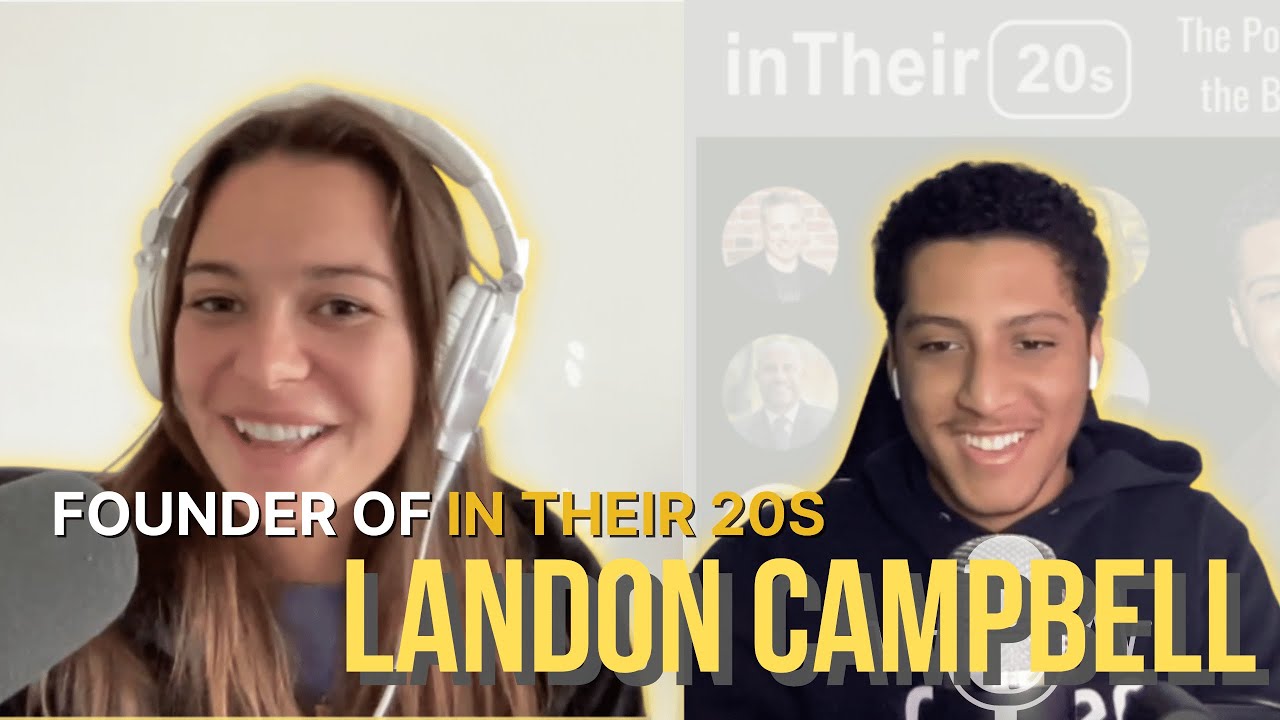
In this Seed to Harvest episode, host Paige Finn Doherty interviews Landon Campbell, creator and host of the "In Their Twenties" podcast and an executive at Inside. The conversation covers Landon’s daily routine as a remote executive, the logistical and strategic challenges of launching and sustaining a podcast, and concrete tactics for guest acquisition, cold‑email outreach, and production workflow. Landon shares his "tennis" metaphor for interview moderation, the importance of preparation and improvisation, and storytelling techniques drawn from his theater background. He discusses how he leverages alignment between his podcast and his role at Inside, the value of building multiple, related projects, and the influence of creators such as Jason Calacanis and the Hype House collective. The interview also delves into the personal story of his late co‑founder Michael Holmes, whose legacy motivates the show’s mission to help 20‑somethings navigate uncertainty. Landon outlines his long‑term vision for "In Their Twenties," potential pivots into venture capital and media, and offers advice for aspiring podcasters: consistency, preparation, concise outreach, and treating the podcast as a startup. The episode ends with contact information and a call to action for listeners.
Chapters
Hello everyone, and welcome back to Seed to Harvest. I'm really excited to be joined by Landon Campbell today, the host of In Their Twenties. He's shared episodes with Steve Wozniak, Ev Williams, Jason Calacanis, David Sacks, Mayor Francis Juarez, and Jewel Burke Solomon, and more. He's also a member of the exec team at Inside, backed by Sequoia, Elon Musk, and Mark Cuban. Landon, thanks so much for joining us today. And I love to start off our episodes by asking the same thing of each of our guests since you come from such varied backgrounds. So I know no day is the same, but to give our listeners some perspective, what does an average day look like for you?
Oh, well, great question, Paige. Thanks for having me too. This is gonna be a lot of fun. Average day, I'd say if I can start my day off with a quick mile run just to kind of like, you know, focus on that, don't focus on any work stuff, and also just have like a clear, you know, look at my calendar, like I know, so I know exactly what the day's gonna look like. I mean, if I can start my day off with those 2 things, I'm in a good mood.
Awesome. And then as an executive on the Inside Team and also running your own podcast, I'm curious, like, who do you talk to during the day? Like, what are you doing?
Of course. Yeah. So communication is super important in whatever you do. I'm constantly talking with my team because, you know, both in their 20s, you know, I do work with some people with that project still. And then also inside, obviously we have a huge team there, but they're all completely remote. So I'm sitting in the same spot for the most of the day. I should also mention I love going on walks too. So whenever I can get out the house, that's really important. But I am in Chicago, so it's pretty, pretty cold now. Very difficult to— It's pretty chilly. It's chilly. It's very hard to get outside. But yeah, just, you know, Slack's open, constantly looking for ways to have meetings when I can, you know, have huddles. Slack has this cool little open room thing where you can speak with people. As often as I can talk to people so I just don't go stir crazy. That's what I'm trying to do.
That's awesome. And you've produced over 83 episodes now. Is there an update to that running total?
Yes. Yeah. So 83 is the official number. I think we released number 83 yesterday. We've been doing episodes every single Monday and occasionally like some Wednesdays, but yeah, for the past like year and a half, every Monday interviewing some pretty cool people about their 20s. And I've learned a lot from the experience. It's been a lot of fun.
Yeah. I would love to hear your learnings from both interviewing folks and then also managing social media strategy, guest acquisition, and sponsorship, which are things I don't think a lot of folks talk about when running podcasts. So I'd love to hear both about your logistic learnings and then also any sage wisdom that you might have received from folks that you've interviewed.
Yes, I love the sage wisdom. My sister's name is Sage, so, uh, cool word. So yes, a lot of people don't realize how difficult it is to start a podcast, and I saw a very interesting statistic. When I started, you know, like a year and a half ago, which was 90% of podcasters quit after episode 3. I think a lot of people have tweeted that over the past, you know, few months, but it's true. And I've kind of been able to get a bird's eye view into why people quit. I mean, they think it's gonna be a great fun experience, which it is, you know, creating content, it's great having conversations, a wonderful time, but it is pretty stressful, you know, finding guests every single week, editing, finding sponsors, you know, you're not getting paid super early. So, you know, that leads to people quitting and, uh, It's difficult, and I went through many challenges and still continue to go through challenges with the podcast. You know, not everything is perfect with the show, but I think I just, you know, really focused early on powering through, realizing that I could have these big goals, you know, for guests. Like, I'd want to be able to speak with the Wozniaks and the Ev Williams one day, but I knew just starting out it wouldn't be like that. So we went after— and I say we, I started this with my best friend— we went after our college professors. We went after people who we interned for, just people within our own network. So I'd kind of give that advice to any podcaster looking to start out. Have the goal of like, you know, this would be the perfect guest. These would be the perfect guests for my show. But you don't have to go after those guests on the first day. Start with your network and build from there. And, you know, just really understand that it's, it's not gonna be all, you know, crystal clear day one. You might not even get to see the views and the listeners that you want until Episode 50, which was kind of when we started to, you know, get the listenership that we felt we deserved. But it took, it took 50 weeks, you know, to get there. And that was, you know, the sacrifice we were willing to put in cuz we believed in it. We believed in the show and really enjoyed and still enjoy talking to amazing people.
Yeah, I love that. To your point around folks starting a podcast and then quitting after episode 3, I feel like there's something that happens when you press the record button where your world kind of shifts.
Yes.
There's this level of like, okay, we're live now. I'm, I'm saying things, we're talking. So I'm curious if you could walk me through what pressing the record button was like on your first day or first week of recording.
Yeah. Awkward. And, uh, you know, still it gets a little awkward sometimes for sure. And I'll be completely transparent. I wasn't like listening to a bunch of podcasts before I started. Of course I deep Dived and did some research, you know, right before we started. But I wasn't like this podcast enthusiast. I wasn't like, or podcast aficionado, there's a fancy word. I wasn't someone who was really interested in podcasting. Like, I've heard about it, it's been around forever, but we more like or less came up with the idea of like, you know, the matter first, like what we wanted the show to be around. And we used podcasting as like a, you know, sort of a vehicle. Because we kind of started as a video series and like we wanted to strictly be on YouTube. We didn't really put any focus on the podcast, you know, the audio side of it, but we really just became obsessed with the world of podcasting and understood like how great of a medium it is to connect with people. I think podcasting is the best way to learn something, teach something, and build your personal brand. You know, talk about something you're passionate about, learn something new. But you know, that, that's the more easy one, you know, like listening to shows, but actually having a show and like jumping on with people. Yeah, it's, you know, it can be really scary, but It's another one of those things, very similar to what I mentioned earlier, where if you go into it knowing that it's gonna be a little awkward at the beginning and just push through that, use that nervous and convert it to, you know, positive energy and push forward, then you'll get comfortable with it. It's all just about being consistent. And over time, even someone like me who was nervous, you know, to start out, like I, I got a little more used to it. And now, I mean, you know, 83 episodes later, like it's fun. I enjoy it. And, uh, it's a little less awkward to hear my voice for sure.
Yeah, absolutely. It's funny, I was laughing about what you said earlier because I also didn't listen to a lot of podcasts. I was like actually kind of anti-podcast. I was like, the world does not need another podcast. There's like all these memes about podcast bros.
I, I love those ones.
And, um, I felt like podcasting felt very one-dimensional to me until I found shows like For example, one of my friends, Adam Faiz, recommended that I listen to Gimlet Media's podcast where they did this incredible journalistic experience of what it was like to build a startup from the inside.
Yes.
And it was just like totally ripped my understanding of what a podcast could be from a journalistic perspective. And then there's another one I really loved called Even the Rich, and there's like a 6-episode series about Jay-Z and Beyoncé. And I, wow, it was super cool to. listen to a story being told. I think that makes a really engaging conversation. And digging a bit deeper on that point, what would you say makes a really engaging conversation with your guests?
Yeah, so I've kind of found like a, the perfect equation, at least like the types of questions that I ask, because sometimes like before you have anyone on, like you want to do your due diligence, you know, you don't have to like know everything about the person and You don't have to know where they're from and their Social Security, but at least have a general understanding about just looking at their LinkedIn. These are the careers they've done. Okay, I kind of see synergy here. This pivot makes sense. So then the questions that you come up with can be very aimed towards that because as a host, you're also serving as a proctor of information. You're a moderator. You kind of have to understand how the Interview's gonna take place a little bit. You don't have to know all of the specifics, but I really try and guide my guests as best as I can to just have them like not only share their experiences, the information, but just really have it like flow naturally into a great conversation. I think it's like a game of tennis, to be honest. Like you gotta constantly be alert. You gotta really like, you know, be focused and like, you know, listen to what the people, guests are saying because, you know, you could always, you know, ask this follow-up differently. Okay. You know, maybe structure it a little differently here. Yeah. Being a, being a host is a, It's an acquired skill for sure, but I'd say like, you know, I've learned how to talk to people better. I've learned how to help share stories better. I've even learned how to become a better storyteller myself because people, people love stories. Companies hire storytellers. That's something I've been saying for years. Humans, we just, you know, we love listening and understanding stories so much, and that can really make or break, you know, someone sharing information across. Like if the story is not there, It's, you know, it's gonna be very hard to understand what someone's saying. So I think, yeah, that's the biggest thing.
On your metaphor about playing a game of tennis, have there ever been any moments where you've been completely surprised by an answer from a guest?
So I'd say yes, there have been many individual moments, but, um, I'll give like a larger scale example of kind of like what I mean by this game of tennis. So I interviewed Woz, he was our 50th episode. I was like scared shitless before because, I mean, I, I've been obsessed with Apple and him like my whole life and Jobs, and I've known the story so well. But something I did know also going into it was that he, he's just a very interesting communicator where, I mean, he's just, he's, he's genius-level intelligence where how he explains things sometimes might go over, you know, a lot of people's heads. I mean, he's, he's—
Mm-hmm.
Very passionate about what he does and what he built. And I knew that going into the conversation that my audience, you know, might not understand a lot of the stuff that he was saying. So it was my duty as a moderator to kind of like, you know, bring it home as best as I could, maybe give analogies after he shared, you know, an interesting story about the insides of a computer that like I didn't even understand a lot. But yeah, you know, it's, it's the duty as a moderator and host to like, you've really gotta know your audience. You gotta know who's listening. Doesn't have to be, you know, every individual, but just have a general understanding of, you know, who's tuning into your show and, you know, how they want to hear a story. So I think that that's the larger example. There have been like a bunch of mini moments, but yeah, I've spoken with some like very high IQ people who have great stories, great experiences, but I've, you know, as a host, I've just really tried to have it flow into a, a, a story as best as I can.
Yeah, I loved your analogies. I would love to dig into, are there any analogies that have particularly caught your eye recently that you've been using?
So I, so we've kind of built the show. We started, you know, building the web series, as I mentioned, and the podcast, but we've built like other things attached to In Their Twenties. So we've had an internship program. It's our podcasting and business development internship where we teach students, you know, kind of the craft around there and our newsletter. And we've built other segments as well. But the analogy I'd give is I've kind of just tried to run it like a startup as often as I can since the beginning. And I think that that's more like good advice for any podcaster starting out. Have a long-term vision. You need to obviously focus on the now, but what lasting impact do you want your show to become? Does it If it just should be a show, that's completely fine too. And I respect those shows. But, you know, if you, if you think that there are opportunities to have it pivot into other things, that's something to also explore. And, you know, the example I love to share, Ev Williams, founder of, you know, co-founder of Twitter, Medium, he kind of spoke about the best advice when it comes to starting a company or a podcast. And, you know, he just really shared the importance of focus, you know, focus on solving a small problem for a small group of people first. And I think that that's wonderful advice that, yeah, it can go to any content creator that's making something, go to any entrepreneur. A lot of times we want to tackle the world and fix everything and solve, you know, all these large problems, but we only get there by focusing early. So really gotta pinpoint your focus, focus on solving a small problem for a small group of people. That's literally how we worded it. And that's kind of the same analogy that we've used with the podcast. You know, we started with just sharing the best advice for struggling 20-somethings about what successful people did in their 20s. Like that's the focused approach that we started with. And once we felt like we kind of got there, we were able to build other things on top of In Their 20s. And obviously still just scratching the surface, but I think, yeah, that's the example I'd give there. Just, you gotta focus.
Yeah, it's cool. I've been thinking about this a lot in Tim Ferriss's book, The 4-Hour Chef. He Mm-hmm. Talks about how he has this knife hanging in his office and it represents the importance of decision, 'cause the root of that word means to cut. And I think that a lot of decision-making skills and focus comes from that ability to very decisively say no to things that don't fit your larger vision. I'm curious if there are moments when you were building in their 20s where you had to make a tough decision about something that you didn't think was a fit. And if you did, would you mind sharing what that experience was like?
Yes, great question. I mean, I've been offered to do like, you know, a lot of different things within Their Twenties, you know, create or sell swag, which I just feel like, you know, we were too early and still too early and like haven't built the community, you know, first I think is really like the main focus. And even on the subject of community, you know, it's all about timing. You know, we've built such a strong audience and We're looking to build a community in the future, but I just never wanted to rush that process. And, you know, we've had a lot of people come and say, I can, you know, help you with this, or even, you know, some NFT, you know, projects related to In Their Twenties. But that, that's the thing with Focus. I've had to say no to a lot of things just because, you know, I think it's like still so early and I'm still trying to build a base and still got a long ways to go until I would be comfortable fully, you know, committing and building something like that. But, you know, I think that it, it's It's still okay to like have a plan, or at least, you know, multiple buckets to say the least of like, this could pivot into this, this can turn into this. But if you rush it, I think things just look a little too artificial. People really recognize that, at least like in the market. They, they see when things are rushed. They see like when you're just, you know, jumping into something you're not ready to do yet.
Yeah. I feel like in a proliferation of content creators, when a lot of people are doing it, I don't know if you take this approach to content, but I feel like As I've gone deeper on the creator path, I can no longer watch a YouTube video and like not think about how they're like monetizing, how they're editing. And I'm like, okay, I wish this part of my brain would turn off sometimes.
It's a sixth sense.
Yeah.
Yeah.
But it's, it's never going to. Now I'm, I'm curious, is that, it sounds like that's a similar lens that you take away from. Are there any specific folks who you look towards for inspiration as a creator? It could be like outside the space as well.
Oh gosh, that's a wonderful question. Inspiration as a creator. I mean, yeah, there are so many great creators out there. I mean, I'd say that I, a huge inspiration of course has to be J. Cal. I just feel like how he got started, like I relate to a lot of it. You know, he started as a journalist and so, you know, content creator pre, back in the '90s before, you know, the term was coined. But, you know, he started as a journalist and was able to pivot into, you know, other industries and, you know, ultimately became a capital allocator from his journalistic abilities. You know, he learned how to build a network, how to, you know, find BS, you know, in talking to founders. There were a lot of skills that he learned, you know, from that period of his life, which made him and make him continue to make him a really good investor. And he still like has that same keen focus on creating content though, you know, like really finding the relation between media and capital allocation. So I mean, any content creator that like Has that vision? I know you know the guys like the guys at a lot of the animal capital guys.
Josh Richards and Marshall Sandman.
It's Hype House, right? Hype House.
Is that it?
Yes. Yeah. A lot of those guys, for example, like they have like in that sixth sense, I think. You know, they're not just creating content. They have they have the bigger picture. Like okay, like how will I be able to monetize this in the future? You know, create capital and really you know use my connections, use my exposure to you know pivot into other opportunities. So. I think that, yeah, you don't have to just like be stuck doing one thing forever. I think you should at least have a plan, like of how this could pivot to this and how you could turn this to that. Those are the creators I have the most respect for.
I love that. I think one running thought I've had for a long time in this industry is I think journalists make really great VCs. I think one of the most important things as a capital allocator is to be a great storyteller and to be able to understand when other people are. There's this thing I think about, it's like this concept of lost in translation where some folks don't understand necessarily how to translate their idea, their greater vision to these different personas. So that could be investors, could be employees, could be customers, but they're all very different bases in which you need to be an effective storyteller. So that's one thing that I've thought a lot about, and it sounds like you have too. So in high school, you helped produce dark comedy called Tigers Be Still. So it seems like events and storytelling have been 2 core themes for you growing as a creator and as a human. So I would love to touch on what sparked your interest in those 2 areas.
Totally. Yeah. Was raised a theater kid, you know, and I thought that was gonna be the main focus of my life forever. Mainly directing, but also, you know, acting and playwriting, et cetera. And ended up getting, was planning on going to DePaul. I graduated from DePaul University in Chicago, but yeah, I was moving to DePaul for theater originally. Didn't know anybody in Chicago, had no connections, like no resume, and kind of just had like this quarter-life crisis that I should try something new, but I should be intentional with my next move. So what I mean by being intentional, like let me take the skills that I developed in theater and put that towards something that, you know, could be related but in a different industry or a different topic. And, you know, from theater I really took away, yeah, the art of storytelling, creativity, writing. I mean, there were so many specific skills. that I took from theater that I felt like I could put towards the startup ecosystem, which I did. And now I've recently found really strong passion in the events spaces. But yeah, I mean, I credit a lot of that to my prior experiences in theater. So I think that, yeah, for any 20-something, any individual, if you're looking to make a crazy, what might seem radical change or step in your life, which is fine, you can do it, but at least kind of Use the skills that you already have in your backpack, kind of relate the two and just start there. Like, what can I take from this past thing that I did and put towards this new thing? Because that will help you be more focused in those early days. Because, you know, I felt a little lost when I tried to get into the startup VC, you know, ecosystem at the beginning.
I can definitely resonate on, on feeling lost in the ecosystem when you first get started. We have semi-similar backgrounds. I wanted to manage artists, and so I spent a lot of time like on stages running events, Doing stuff at San Diego State. And one of the things that I felt when I was making the transition was I was like, what do I do? I have all these random, yeah, interesting things, like interests that I have and skills that I've acquired. I think one of the things I learned over managing live events was just like dealing with dumpster fires with absolutely no time buffer. I would love to hear more about kind of your experience in that area. Any fun stories that you might— Either have blocked out or—
From my theater days?
Yeah, deep memories of.
So I can give a super quick story. This wasn't— I mean, it was my fault. I mean, yes, there were many stories where like, you know, I had to manage other people, and that's also another thing that I've gained from theater, you know, directing and managing teams now. But you know, when it comes to dumpster fire, the first thing I think about is I'm super allergic to like all nuts, highly allergic, and I've Occasionally, like on mistake, mistakenly, like have had peanuts or almonds.
Dabbles?
Yeah, on accident. And we had it, we had a tech rehearsal for like this huge show that I was like one of the leads in, in high school. I think this was like my junior year. And if no one's familiar with like tech rehearsals, we do 'em for a week. They're like all day pretty much. Like literally we start like at 8:00 AM and go until like 7:00 PM, just going through the script like multiple times, running it on stage. And, you know, we have lunch catered in and stuff. And I think it was actually around dinner time, super dark in the house, like couldn't see anything because we were testing the stage lights and we had Thai food. And for some reason I just like dove in because I was super hungry, ended up having peanuts like all over it. And I just like my throat started to close and stuff. But I just knew that I didn't want to leave my team behind because this was like day before show. So I ended up, you know, still like going on stage and, you know, at least I wasn't full energy at all, but like You know, kind of went through it. And I think that, yeah, that's kind of the first dumpster fire I can think about. And probably a crazy example, but like, I think, you know, the takeaway there is sometimes you have to power through the uncertainty and sometimes you have to, you have to, you know, improvise the best that you can.
Yeah. Love the improvisation. I feel like another good lesson would be like checking your proof. Yeah.
I mean, that, that's an—
yeah.
Do it. Doing due diligence. See, so there, there's a lot of, there's a lot of—
Doing due diligence. To bring it back to venture.
Yes. Yes.
So I, I guess I would love to talk more about, so you've been balancing in their 20s and then also running podcast strategy inside and events. So I would love to dive deeper into how those 2 roles are similar and different. I think running a podcast, uh, individually has been a really great learning experience, but definitely be curious to learn more about what it's like running a podcast strategy with like a full larger team and more resources and then kind of Your learnings, running them in parallel?
Totally. Yeah. I mean, let me first off say that I'm super fortunate that there's heavy alignment between, you know, what I have and have built within Their Twenties and Inside. If there wasn't, I wouldn't probably be as successful in either role. And I say that from personal experiences. You know, there were past roles I've had where, you know, I felt like I was splitting my time a little too much in focus. But at least, you know, now with what I do, like there's heavy alignment, you know, I've brought in, guests from in their 20s to engage with Inside events and vice versa. I've met you through Inside. I've met a lot of cool people through Inside. And yeah, I think that my advice there is if you're looking to take on multiple projects, which you can, a lot of people will say that it's not encouraged and you should be a master of one instead of a master of none. But if you're someone that has to, like Gary Vee, he has to do multiple things. And it helps his businesses thrive having multiple buckets. If you're going to do multiple things, at least try and find things that are somewhat aligned. So if we're talking Gary Vee as an example, they're all under the Vayner umbrella, but he has a lot of different ones, VaynerSports, VaynerNFTs, VaynerMedia, et cetera. But they're all under a similar, they have similar alignment. So that's kind of just my advice when it comes to taking on multiple projects. Do your best to find alignment because if you don't, and if the things, if the 2 things or multiple things that you're working on just, you know, aren't helping each other, then it's going to be difficult to manage. I mean, that's just from some experience.
Yeah, it definitely makes sense. One of my friends, Dan, writes a really great newsletter called Trapital where he breaks down all of the business models of different creators, especially in entertainment and music. I think one of the Really interesting ones was Issa Rae's, and she has like different media companies. She also executive produces different shows. And then it— Dan's maps of people kind of map out where the alignment is with certain things. And I think it's really interesting as a content creator, a lot of your work is more external facing than it would be if you were solely an employee at a company. So it can seem like you're doing a lot more. It just all happens to be. outside work that everyone can see. So that's been the really interesting part about being a creator, cuz folks are like, how do you do so much? And I'm like, I just don't do all one.
They help each other. Yeah.
Yeah. They, they help each other so much. Speaking of helping each other, you were super helpful when I started my podcast. I—
Of course.
Met, yeah, I met Landon at, um, Meet Our Fund. You interviewed me when I was brought on to pitch VineGenius Ventures to a ton of founders, which was really fun.
An awesome pitch, by the way.
Thank you.
It was really good. Yeah.
Yeah. And I remember texting you and being like, hey, I wanna start a podcast. I have no idea where to start. Like, what do I do? And you were super helpful. So I'd love if you could share the advice that you gave me here, cuz I think there's probably some aspiring podcasters listening.
Totally. Yes. And I'm just super happy to help anyone that's looking to get into the space because I I remember when I was trying to understand it, like there wasn't really a podcaster I could speak to. And yes, YouTube and other platforms are great resources, but it helps to like talk to someone.
That one, you're like, what's that one thing that I need?
Yes, exactly.
Like what is my podcast hosting infrastructure?
Yes. Yeah. So some quick advice, and I know that we just spoke about this before we started interviewing today, but just have, be prepared, you know, like have like interviews in the background, just upload it to Google Drive. They don't have to all be edited and stuff. But if you're, you know, if you're crazy and wanna have everything ready to go, I, I'd recommend, you know, the early days are, it's important to have just spare interviews ready to go.
I'm listening to you say this and being like, definitely don't have this, but great advice. Yeah.
I mean, but you understand its importance. Yes. And I, I, I haven't been perfect. Like, I'm, I'm not like, you know, I've, I, this, this is from experience of like stressing about not having them because, you know, it does take time to edit. It takes time to source guests. A lot of times people are not gonna get back to you. It takes time.
Or people cancel.
Or people cancel, literally. So I think that that's with whatever you do, just like be prepared. When we started, we had like 6. Now, yeah, numbers, I, I won't give the specific number. It's not, it's not 6, it's, it's a little less, but I'm trying my best to like get back to how we started, original 6. And I'd say another piece of advice when reaching out to people, just keep it short and simple as possible. A very compelling subject line on an email as well can be really helpful.
Okay. Give me an example of that. I, my next question is what your go-to cold email strategy is for guest acquisition.
So, yeah, yeah, yeah.
You jumped right into that one.
Like what, like whatever your one sentence pitch is for the show, I'd really just like, you know, get that coined in the subject line. So, you know, my one subject or, you know, one sentence is, you know, best advice from the best people, you know, top podcast for 20-somethings. Like, you know, it's, it's pretty, I try and get as specific. I switch it around as often as I can, but Try and make that subject line just super clear. 'Cause a lot of these people, speaking from experience, you know, I go after a lot of—
Yes.
Yes, exactly. Like, can you invest in my company? Can you be on my podcast? Like, you gotta just have a really compelling subject and also like realize that people don't read paragraphs and paragraphs and paragraphs of emails. And how do I know that? Because I don't read paragraphs and paragraphs. So flip it sometimes. Like, would you read this? Like if, if someone sent you this long email, Would you read it? I just really recommend keep it as short and sweet as possible. Hyperlink when you can, like say I spoke with this guest, that's something. And then I think a larger thing too, email's not going to be for everybody. So you got to do a little due diligence. You got to understand your— this guest, you got to understand their online persona, as I like to call it. Like I've gotten some people doing some weird stuff, not just email, I'll post a story and tag them, tweet at people.
Yeah.
'Cause I see that they spend a lot.
Mine's mainly been just like sliding into people's Twitter DMs and like, or that, hey, like let's hop on a podcast together. I feel like it's a lot, it can be a lot more informal than you would think.
Yeah, exactly. Yeah. Yeah. You don't have to have like this whole like pitch deck. And I, I, I was there, you know, when I started I had a, I fucking had a contract. Like it was, it was pretty funny how we started. But, uh, it's, it doesn't have to be super formal like that.
Just keep it short.
Yeah. Keep it simple.
Okay, so that sounds like you have a great cold email strategy there. I would love to hear more about what your production looks like from email to researching the guest to actually being in the interview, and then how you edit and if you use a team.
Yes.
Walk me through that process.
Yeah, a lot to share here. I'll even kind of start it with this one point cuz I didn't fully answer it earlier. I think when you asked the question, like, Yeah, I have done like social media for the podcast. I've done outreach and I do have, you know, a team that I work with within their 20s now. But I think, and this is not just for podcasters, this is any entrepreneur, before you have a team, you know, before you have individuals come on and take responsibilities off your plate, you need to do each of them. You don't have to be perfect at doing each of them. And there were things, for example, like TikTok, like I suck at making TikToks, but I still tried to make TikToks just to see. the process. So now when I have someone making my— which we're kind of gonna be ramping up with in the next few weeks, like I have a better understanding at least like how the app works, et cetera. So I'll start there, like do the jobs first. And my personal process advice I can give there. So I watch a lot of interviews of like the individuals. I'll read a lot of articles prior to the interview, not to find the questions that I should ask, but to find the questions that I shouldn't ask. I've seen a lot of interviews. I just watched a recent one with Brad Pitt. It was pretty funny. He was being interviewed. About a movie, and this reporter just kept asking like the same questions he's been asked in previous interviews. And he literally said like, just check out these other past interviews. So I never want to have that happen. So I, and I understand there's gonna be some overlap, but I try and do my best to see their body of work, to see and recognize the questions that I should not be asking. And then when it comes to developing questions, Yeah, I mean, when we started, I'd have like a list of like, I think our sweet number was like 10 to 12 questions that we'd ask during the interview, which was helpful too, cuz I had a co-host and that just kind of helped us keep track of like, okay, you're gonna ask this at this moment and I'm gonna ask this. But I just felt like we were too like stuck on the script and it's not gonna happen overnight. Like it, I can now go into interviews more or less just having bullet points of like topics I want to cover. And, uh, I mean, yeah, after doing this like for 83 episodes, yeah, I'm, I'm a little more comfortable when I, from when I first started. Improvising. Yes, exactly. Yeah. But, uh, you don't have to start out like that. So I'd say the main thing, like, do what works for you at the beginning, but everybody should be trying to get away from the questions for sure. And sometimes, uh, it's just, yeah, you wanna test it out during one interview, ask like just an improv question, see how it goes. But, uh, yeah, one day you'll, you'll be able to kind of just Ask, ask away.
One day.
Yes.
Me looking at my list of questions. So one of the things that I think is really special about your story is part of your deeper motivation behind continuing the legacy of In Their Twenties. So if you're comfortable, I'd love to hear more about your late co-founder and his impact on you and what you're building.
Of course. So yeah, Michael Holmes, I met freshman year at DePaul. We rushed a fraternity together and I ended up dropping outta the fraternity after freshman year. But yeah, I met like some of my closest friends, you know, during those rush days. And he was one of them. Super great guy from the burbs of Chicago. Very just business focused. Like he started a small business in high school and I just always knew like I wanted to start something with him. And, you know, before we even got to the business stuff though, like he became one of my best friends. I have like 6 best friends now who I mentioned met from the frat, you know, like 6 to 8. But yeah, like the 6 main ones, we ended up living together. So Michael and I, we lived together for 2 years in a 10-bed and then in a 6-bed, which was disgusting. But that's a story for another day. But yeah, I mean, Michael and I, I mean, just became super close over the years and we, I think it was like around like senior year, the beginning of senior year, kind of said like, let's just start something and like see what happens. And our first idea was this company. It was actually a documentary series, which is what the project was, but Had plans to turn it into a larger company called Effet Chicago. Effet in French, or NFA, means impact. And we were gonna be interviewing Chicago designers to talk about, you know, their stories, how they got started, and just share a little bit about, you know, the projects that they're working on. So we started there and then COVID hit and we were doing in-person interviews and we had a team for this and we had a location, but we had no idea what was happening with the pandemic. So we just felt it'd be best to, you know, kind of pause. And because we couldn't go on site and we didn't want to put our team in harm's way or anything, I went home to California. He stayed in Chicago and we'd be talking every day like, damn, we have this energy to interview. And, you know, we just spent so much time like, you know, preparing for this project and like, should we do it remotely? And then, you know, we kind of brought that back to the team and they agreed. I mean, I think the quality wouldn't be as cool because we were going, you know, Chicago designers, we had some really cool sets for this and The vibe, it just, it couldn't be over Zoom, but we kind of came together and said, okay, like, are there other interviews we could do? And we had a lot of internships in college and we saw the growing trend where there were a lot of people losing jobs our age and just confused on, like, you remember the early pandemic days? Like it was, it was really— Oh yeah.
Nick energy. I think we graduated the same year. Yeah, we did. 2020. Everyone, everyone was thrown into disarray.
Yes. Yeah.
That year.
So yeah, we kind of, and then that's how In Their Twenties started. Like, I mean, as a way to Show people that everybody's been through terrible times and, you know, maybe not exactly pandemic vibes, but a lot of majority of my guests, I mean, all come prepared to share like a moment of uncertainty and something that changed their lives drastically. And it helped them though. So that's how Under 20 started and I'm super glad I started it with Michael. Yeah, he, he did pass away April 20th, about 2021. So last year, short battle with brain cancer that was super out of nowhere. But that's another like big, big motivation for keeping this going, just to honor his legacy. And I know he, he would've done the same if the roles were reversed. And this, in their 20s, meant a lot. Well, it means a lot to me and him. It, it, yeah, I mean, it's, this is something we started from nothing and, you know, came in this with a strong mission and it's brought us to meet some great people. And I'm just glad I can keep it going for him.
I love that. That's so powerful. And I'm so sorry for your loss. I know. Michael meant a lot to you.
Yeah.
And it's so incredible that you've built In Their Twenties, and I'm sure that it helps continue on his legacy, especially with you running it and being so involved with it.
Of course.
I'm sure that you think of him often, so it's—
Every single day.
Yeah. Yeah. Well, I would love to hear more about your long-term vision for In Their Twenties, and I guess I'm curious to hear what you think Michael's was.
Yes. Yeah, that's a, that's a great question. I mentioned earlier, it's always good to have a few buckets, you know, things that you think something can turn into or, you know, possible pivots that you can make. I don't share a whole lot of those, but I mean, I will say that I, I'm so glad that In Their Twenties has led me into learning more about VC and, you know, kind of seeing this new correlation. It's been around years.
Are you going to cross over the dark side?
Maybe. I mean, we'll see. We'll see. Fingers crossed. But yeah, I think that I just I see the power of podcasting so clearly now after having a show and how storytelling is really increasing in the capital allocation space. So yeah, if I were to come into the dark side, like I'd want to make my mark there, you know, really media focused and, you know, yeah, I'll keep it at that. Yeah, I'll keep it there. I mean, just continue to have In Their Twenties and, you know, have it be an impactful thing and resource for a lot of 20-somethings. But Yeah, if, if it were to turn it into something else, I'm, I'm totally open to that.
That's awesome. I'm curious, I get a lot of really interesting cold emails from folks either listening to the podcast or having read my content somewhere online. I'm curious if there's been any serendipitous moments in this for you.
Wow. So many. I think, damn, that's a, that's a really cool question. Yeah, there, there have been a lot of cool moments. DePaul, I mean, was just super supportive. In, you know, this journey and being invited back to, you know, participate and be a speaker at a lot of events and help, you know, students have a better idea or get a better idea of, you know, their goals. And 'cause I mean, I, I've been on advice overload. I mean, I, I've been able to speak with a lot of great people. I have so much great advice just, you know, bundled in my head from all these guests I've had. So I've, it's, it's been nice to be able to help other people, you know, get closer to their goals with this. I think I saw a quote a while back. I'm gonna butcher it, but it was, you, you reach your goals when you help others get closer to reaching their goals. And I think that's been the biggest, like just serendipitous, like multiple moments that have come. I mean, people coming to me saying that they have a better, clearer idea of what they need to do in their lives because of this. I mean, that, that's, that's the impact that Michael and I wanted to have created from this. So yeah, that's, that's the biggest.
Yeah, it's incredible. I think that's been one of the most rewarding parts of my journey as well. I wrote this blog post a long time ago called on finding true north. And it was kind of a series of self-discovery questions you could ask yourself. And I remember I got a text a month ago or something and it was like, hey, just read this and I quit my job and I'm starting a company. And I was like, wow, that's crazy. So cool.
But it's— Yeah, it's kind of crazy. Like, I, I, I always, I'm always appreciative when I hear things like that, but then I'm like, damn, like I'm just a guy that has a podcast.
Like it's, you know.
Yeah.
It's humbling, but yeah, it's crazy. It's very, very humbling. And I feel like there's this aspect of deep gratefulness. And then at the end of the day, you can't take yourself too seriously.
Exactly. Yes.
Yeah.
Yeah.
You're like, I'm this niche internet person.
Exactly. One, one of the multimillions. So yeah.
So I'm curious, given, given that you have all of this advice bundled in your head and you're having to make decisions on what information and advice you think is really crucial to share. What are the pieces of advice that you'd give to budding podcasts?
Yes, I'll be redundant. I'll be consistent in saying that you need to be consistent. You gotta really do things multiple times to become a master or really understand it better. It's the 10,000 hours. I mean, you gotta put time into doing something. You gotta be consistent. And that's, there's a lot of truth there. So releasing episodes every single Monday, interviewing 2 to 3 guests a week for a long time. I mean, those were things that in order to get better, I mean, I, I had to do, and you gotta be consistent. You can't just do it one. And I, you know, really look up to a lot of great people that follow the same framework. I mean, Kobe's a huge one. I mean, he was the first in the gym, last to leave. And like, that's not something that like just was a pretty headline, you know, for one month he would do like, that's his entire career. Like before people even knew, like of his abilities, you know, on the, on the court. So I think that when no one's watching, those are the times to be consistent. But yeah, I mean, there's, there's added pressure when people are watching, so you gotta continue.
Yeah. I like to, I, I love this phrase I heard recently. It was kind of like, in times, what you do in times of abundance determines how long that time of abundance lasts for you. Yeah. And I think it's increasingly clear that being consistent and just There's this woman that got into the Olympics and I was just laughing so hard at her video. But how she got into the Olympics is just, she just like, she showed up and she stayed upright. She had to place in the top 30 of finalists in the different events she was at. So she found out the event that like all of the professional skiers weren't making it to, and she went, she stayed upright. She called like 13th place.
Smart.
And she made it to the Olympics. And I, I think that's pretty incredible. Like you don't have to be the best at whatever you're doing. You just gotta show up and stay up there.
Yes. I love that. Yeah. No, I'm gonna, I'm gonna look that up. That sounds hilarious.
Awesome. Well, Landon, thank you so much for coming on. I appreciate it so much. And of course, to close this out, do you have any additional things you wanna touch on? And then where can people find you on the internet?
Yes, I'd say where can people find me? Active on Twitter, @landon20s, 2-0-S. Same for my Instagram. And yeah, I, I'm always open to talk to new people and understand, you know, what they're trying to build, especially if someone's trying to build a podcast. And Paige will vouch for me. I'm always happy to give advice. So reach out whenever, please.
All right. Awesome. Thank you so much. Thanks so much for tuning in today to Seed to Harvest. If you enjoyed this episode, be sure to subscribe wherever your favorite podcast listening platform is. I'll be releasing I'll be releasing new episodes weekly, and if you have any questions or comments, feel free to let me know on Twitter. That's Paige Finn, Paige and then Finn with 3 N's. Thanks, and see you again next week!
More from Paige



Paige of Behind Genius driving an AI electric train in St. Louis (Intramotev Visit)





