RareBreed GP Mac Conwell on Building Community And Founder Advice | Seed To Harvest S1 Ep3
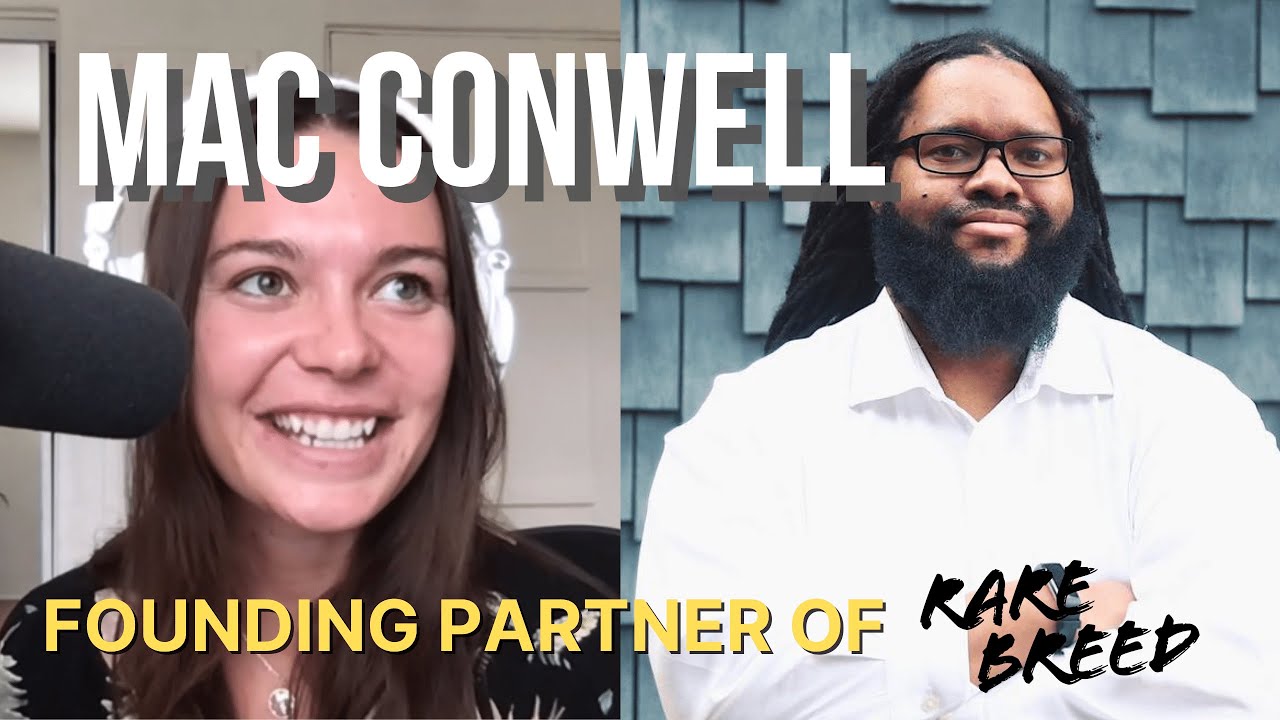
In this episode of the Seed to Harvest podcast, host Paige Finn Doherty interviews Mac Conwell, founding partner of Rare Breed Ventures. The conversation opens with Mac’s personal "North Star" – a Black Baltimore entrepreneur who became a surrogate mother to fund her hair‑extension dryer prototype – illustrating the human motivations behind his investing. Mac recounts his transition from an engineering role at Northrop Grumman to venture, emphasizing his problem‑solver mindset and how that informs his approach to sourcing and supporting founders. He details an unconventional fundraising journey that leveraged a strong Twitter presence, public solicitation under a 506 exemption, and rolling fund mechanics via AngelList, allowing frequent, transparent capital calls and rolling closes. The discussion moves to Rare Breed’s unique fund structure, including flexible capital‑call options, lack of a GP commitment, and the use of Carta and SubDox for streamlined LP onboarding. Mac shares his investment thesis, focusing on exceptional founders with diverse traits rather than a rigid framework, citing recent deals such as Early Bird (crypto wallet), Rebundle (plant‑based hair products), and ScholarMe (education platform). He highlights the importance of community, mentorship, and networks – from the Kauffman Fellowship to relationships with established firms like NEA, Greenspring, and Hustle Fund – that have supported his growth. The conversation also touches on emotional regulation during the roller‑coaster of fundraising, team building at Rare Breed, and practical advice for aspiring venture professionals, emphasizing networking, thought leadership, and building deal flow. The episode concludes with reflections on perseverance, the value of abundance mindset, and gratitude for the supportive ecosystem.
Chapters
Hi everyone. My name's Paige Doherty. Welcome back to Seed to Harvest, a podcast all about incredible venture capitalists and their journeys. I'm really excited to be here today with Mack Conwell, the founding partner of Rare Breed Ventures and enthusiastic drag racer. Is that right?
That is correct.
Um, I'm really excited to share a bit of Mack's story and have a conversation around frameworks, around how he spends his time and how he makes investment decisions and also his North Star. So I think I would love to start off honestly with what is your North Star, Mac?
So my North Star is this amazing woman, a Black woman here in Baltimore running a company called meatsbundle.com. And really why she's my North Star is because I watched this woman for 3 years trying to convince people that Her idea of a tumble dryer that can dry a wig or hair extension in 15 minutes with no heat was a valuable idea and watched her get nothing but nos to the point where her— she determined that her only option in order to get access to capital to start building her first prototype was by becoming a surrogate mother. She gave birth to twins to raise a nominal amount of money just so she could start building a prototype. And to watch her go through that experience was truly frustrating for me, especially considering when you look at the way the hair extension market, which is projected to be a $10 billion market by the year 2023, with zero innovation in the care for the products, what she was building was like a true opportunity and nobody else could see that. And that was frustrating.
I think that's such an incredibly powerful story of what motivates you as an investor. I would love to dig deeper also into your personal motivation. I think we have some interesting crossovers. We both previously had security clearances and worked at Northrop Grumman before forging into the investing world. I would love to hear what specifically did you take from that experience that you now apply as an investor?
I mean, I don't like from that experience, the thing I take with, you know, I'm an engineer, so I've Been an engineer and I've had a position where I was being known back when I worked at Northrop Grumman in Booz Allen Hamilton as somebody who would just take on any project. You know, when there was a project that nobody else would want to take, I would take it. Right. And so, uh, I became like a fixer or a problem solver. So I was always tinkering with a bunch of different things. It was never one thing. And so that feeds into being an entrepreneur and tinkering and trying to solve random problems. And then As an investor, I basically get to work, you know, in the peripheral of, you know, dozens of companies, you know, solving complex problems all the time. So I guess it just feeds into my, my ADD-ness. Always wanting to do something different, right? Yeah.
And I love that sense of being peripheral to engineers. I definitely share a similar interest in terms of like having that engineer at heart and then applying it to Investing. So I'm curious, as you think about that transition, I believe that congratulations are in order as you have closed your first fund.
Yes, we have closed Fund 1, The Rare Breed. We can celebrate.
All the flowers. I'm so happy for you, Mac. It's been such an incredible year, 2 years to be on this journey together. Yeah. So I would love to hear more about like your experience fundraising and maybe some of the fundraising's hard.
You know, everybody talks about how hard it is and then you start doing it and you realize it is like as hard, if not harder than what everybody says.
Mm-hmm.
Fundraising for me was interesting, given the fact of early on in the fundraising process, I recognized I didn't have a network of LPs.
Mm-hmm.
And so my way to grow that network was through my Twitter presence. I noticed that the more I tweeted about venture and entrepreneurship, the more people I got to know. The more other VCs would follow me. And so I just made it a point that if I saw there was a VC who followed me, I would send them a message to have a meeting. And so I had a lot of meetings in a short amount of time, but it did 2 things or did 3 things. One, it helped grow my profile and brand cuz now I had a larger group of people who knew me.
Mm-hmm.
2, it helped me learn like how to fundraise and from other GPs and get advice. But then 3, And the one that I wasn't expecting but was most important was a lot of these GPs, other funds started committing capital to my fund. And so like the first $2 to $3 million in my fund, which is a $10 million fund, all came from— the majority came from other GPs, other funds.
Mm-hmm.
Right. And so like the Twitter thing became my strategy. And then also on top of that, I can credit AngelList for this, for making— so when AngelList last year came out, or in 2020, came out with their rolling funds, and, you know, those things started to get popular, one of the really interesting parts about rolling funds was they could, they were able to publicly solicit. And so my Twitter presence is growing. I'm like, oh, the ability to publicly solicit would be a game changer for me. I gotta do this. And really what it was is they were taking advantage of a designation that most funds hadn't. a 506. The 506 designation actually comes from the JOBS Act from back in 2013, which allows for both funds and companies to raise capital in a public manner, but all their investors must be accredited. Well, I was always going— I was always only going to have accredited investors in my fund to begin with. So, Mm-hmm. for me, that gave me a clear option to talk about my fund publicly. And now I'm part of a wave that you, I would say, are part of as well, of these emerging funds that are built or doing what we call building in public. where we're keeping people involved and letting people know what we're doing at every step of the way in a very transparent way, which, you know, is really cool and is allowing a lot of people to see how the industry works, but also puts you in a very vulnerable place, right? Like everybody's there for you when you do well, but if you do bad, it all happens in public too, which is, you know, a very interesting place to be. And so I wanna ask you, Paige, what's that been like for you building in public? How's building in public been for you?
Yeah, building in public's been super interesting. I think that We've had a bit of divergent routes because we chose to raise under 506, which means you can't solicit and you can't publicly talk about fundraising. I struggled with that because there's this gray area where the SEC's not really gonna come after you if you have like a tiny, like $5 million nano fund. But there is some sense of, you know, later on when we go to do institutional due diligence on future funds, how that reflects. On our integrity as fund managers and not complying with those regulations. And so for me, it was an interesting walking the line of how can I add value to the community that I've built while staying compliant. So definitely for the next one, we're going to do 506 so I can talk about it. But I think that I've been so excited to see you and the folks at Overlooked especially have just done an incredible job of bringing the community into your fundraising process and talking about how difficult it is. There was a great quote from Harry Stebbings' podcast about, he said, everyone, everyone talks about how hard fundraising is and says it's the hardest thing they've ever done. And then you actually start doing it and you're like, oh wow, shit, this is definitely the hardest thing that I've ever done. I think that's the one thing I wish I could have shared more of is it is a very difficult journey. But it's sometimes like you have to laugh at it. Like getting your first million-dollar no is such a surreal, surreal experience. I would love for you to talk about maybe some of the, the nos that you got that ultimately ended up, you know, you reflected on them in a positive way looking back now.
There's nothing positive about getting a no. What are you talking about?
It's just not yet.
No, fuck. Oh. I mean, it's, it's interesting, like, because I had so many meetings in a short amount of time, like for context, mm-hmm, from June of 2020 to September of 2020, I had over 1,100 meetings, right? And from like June 2020 to June of 2021, I had close to 4,000 meetings. So like, I just had a bunch of meetings, right?
Mm-hmm.
And so I never went into them thinking about money as I was about learning and making connections. If the money happened, great. And so when people would pass, I'd be like, well, I, I never asked for it anyway, so thanks. It's cool. But you know, there were a few toward, but like as I got closer to the end of the fund and the momentum was picking up, I started getting more and more institutions who were interested. And I did have some institutions pass for one reason or another, you know, 'cause like my fundraise is very untraditional. My fund structure's untraditional. I don't have a GP commit, which, you know, other GPs can be mad at me about. I'm sorry. I just, I'm broke. I couldn't do it. You know, I had a fund pass me because I didn't have a GP commit.
Mm-hmm.
Right? They were like, yeah, we just, we can't get there. And I was like, all right, your loss. Like, I mean, if you can't get over the fact that I don't have the money to be able to put in my own capital into this fund, and you think that's gonna stop me from doing everything humanly possible. Like the whole point of putting in a GP commit is just so that they can feel like you have skin in the game. So like they feel like you're gonna be as attached to this fund as they are. It's like, nah, this is my career. Like, yeah. Like if, like if this fund doesn't work, like, I'm outta work essentially. So I'm gonna do everything I can, whether I put money in this or not. Like, it's not gonna be the determinant about how hard I work. But if you don't agree with that, then that's fine. Right? And so, you know, I've had LPs passed for that and, you know, my track record's not as long. So I've had LPs passed for that.
Right.
I probably have had LPs passed because I'm big, Black, and with dreadlocks. I don't know. I can only surmise. Right? But I will say, you know, We all have these moments in fundraising. So fundraising's really hard, but as you go, you have these moments where like you get on the winning streak where like every meeting you have, you're closing and you're winning and you're feeling good and you're like, oh, this fund's gonna be closed in no time. And then all of a sudden you get a no that you weren't expecting or a string of nos and it just kind of resets you. It's just like, oh yeah, this is really hard. Everybody's not gonna wanna give me their money. Not everybody's gonna think I'm that smart. Okay. Let's, let's get back to the basics. Those are always the, the like the moments where you're like tested. But then again, you know, for me it was similar to being an entrepreneur. Like I was used to that. But I will say, you know, I've had talks with other fund managers where like those moments come up and it's like, dang, I wasn't prepared for that. No, I gotta, I gotta reset myself and like take a day and get ready, get back up on the horse and go back at it.
Oh yeah.
Yeah.
That like regulation of your, I, I refer to it as an emotional thermostat, but How you stay regulated during such an incredibly rollercoaster style of emotions. I'm curious how that has changed. I remember watching this video when we first started raising and someone committed to a $10,000 investment and I took a video and I was crying in it because I was so happy. And then I got further and further into fundraising and then it would be like, oh cool, like we got like a $100,000 commitment, like cool. You know, um, so I'm, I'm curious like how you've thought about regulating your emotional thermostat as you've gone through the fundraising process.
I don't know if I've thought about it too much because like, again, I should say like raising a fund as a fund manager is the most entrepreneurial thing we can do, right?
Mm-hmm.
And having had 2 startups before, it just all looked really familiar. And then I realized like, oh yeah, I'm, I'm building a company from scratch again. I said I would never do this. This is awesome. And so it's just more the regulation of you enjoy the wins and you don't, and you try not to beat yourself up for the losers. Right. But I will say, you know, there's been several times where I've gotten the call and people have committed and I've like gone run around in my backyard screaming and yelling like, I can't believe it. We did this. You know, the first time somebody committed a dollar to my fund, the first time I got the $100,000 check, shout out to Scott Tusk. The first time I got, you know, a $500,000 check, which turned into a million check. Shout out Insight Partners, right? Like all of those were seminal moments for me to let me know like, oh, I like, like this is possible. But then, you know, when you get the nos or you get turned down, or when you have a meeting, like everything's going great and then there's some technicality that comes up later, or there's some due diligence thing that you're like, yeah, I'm not, I'm not doing this 20-page due diligence package. Y'all, y'all can keep your money kind of a thing. Those things are deflating, but you know, I've gone through that grind before.
Mm-hmm.
And so, you know, it's just, all right, you know, take an evening, watch a, watch a basketball game, watch a football game, have an old-fashioned and go back to it tomorrow, right?
Like, Yep.
You just internalize it. Go to Buffalo Wild Wings. Go to Buffalo Wild Wings with your friends and vent about it. And then, you know, you go back to it. So that's really, you know, everybody's gotta find their own way to kind of de-stress and let that stuff go. And you just can't dwell on it. When I was an entrepreneur, I used to dwell on that stuff and it was so unhealthy.
Yeah, it's, you just like, it's hard learning how to take things like less seriously while appreciating the privilege that you have for being in the position that you're in, for sure. I'm curious, you mentioned earlier that your fund structure is different. I would love if you could expand on that, maybe some aspects of your portfolio construction or thesis that you want to touch on.
Yeah, so I should say it's not really the structure. Like my basic structure of my fund is fairly standard. It's more about The process that we put in place for fundraising was really abnormal. And the fact of what I did was I saw rolling funds that, that, you know, AngelList was doing. I thought they were really cool, but I didn't like the way they did LP returns. Right?
Mm-hmm.
And so what I recognized was all the things I liked about rolling funds were like technological, and all the things I hated were structural. And I was like, well, if I just use the standard structure, couldn't I do everything else the same way? The answer was pretty much yes, right? So, you know, 506, public solicit, work with Carta as our back, as our back office. They had a partnership at the time with a company called Annual Transactions, which turns your, your sub-docs, LPA, and any other legal docs into a guided web form, which is awesome because all I gotta do is send people links and they can get access to my docs. And so, Mm-hmm. we have it set up on our website. You click a, you can go to rarebreed.vc and click a button to become an LP. Tell us you're accredited and you would just automatically get access to our SubDox. Like, you ain't, you ain't gotta talk to me, you ain't gotta worry about no lawyer. Like, you just go straight there. And then we do rolling closes every 3 weeks. So as LPs commit, we would send them to Carta in batches, and every 3 weeks we would close on a group of LPs, which allowed us to get capital as we were going. So we were able to deploy a lot more capital than we would've Had we gone through like a traditional closed structure, or, and even, and even for our capital calls, we didn't use a traditional capital call structure. You know, most people call capital as needed. We call capital, we gave our, our LPs 3 options for capital. They could do 100% upfront, 50% over 2 years, or 33% each year for 3 years with the minimum being $10K per year. So our minimum was $10K originally. So if you wanted to make a $10K investment, You had to do it all upfront, right?
Mm-hmm.
Um, and I got the idea for that from 500 Startups Fund 1 where they made all their LPs put 50% upfront and 25% each year over the next 2 years, right? Which kind of runs almost like a subscription, which is similar, which is like rolling fund is like people subscribe for quarters. So we basically gave people the ability to subscribe for years. Like, you wanna do it over 1 year, 2 years, or 3 years? And, uh, that worked out for my LPs. Like, they were perfectly happy with it. Like, I haven't had a single LP, you know, have a concern about it, which also reminded me that like all the things they tell you that you're supposed to do in venture, like, you don't have to follow any rules. Like, there, there aren't really rules here, right? Like, they're just, there are structures and processes that have worked in the past for others and they've just shared it enough where that became the prevailing thought. But doesn't have to be the only one.
Mm-hmm.
And so like, those are the kind of things that we did differently. But you know, the, the backend structure, you know, there's a, a management company, a GP, an LP, right? Like, you know, all that stuff is, it's kind of standard. And you know, for our fund, we needed to have, like, we were doing enough things on the frontend that were weird that we had to have some stuff that was standardized.
Yeah.
Because like LPs don't want things that are too crazy, too out of the ordinary.
Yeah. You don't want like half your pitch to be explaining like some weird aspect of your like backend. Yeah.
Yeah. It's like, that's, that's not helpful. But also that's one of the reasons why I did some of those long-form posts that I did. So like I did a post about, we're not, we're not doing a rolling fund, but this is what we're doing. And LP, I didn't know there were LPs who invested in our fund who read that first. Right. And so now that gives them a framework of, oh, he's doing something different. So when they come into the meeting, Mm-hmm. They're already expecting to hear about me doing something different versus me having to like explain it as much to them. Like they're more excited to learn how I'm different than it is like being scary for them, which, you know, that was a big benefit for me.
Absolutely. I think the whole building in public when you're working through things that can really only be explained in long-form documents is really helpful because some of those things take so long to explain when you atomize the different structures on the backend of venture and are putting them back together in a structure that works better for the modern, the next generation of fund managers, in my opinion, will choose to atomize the structures and use them like little Lego blocks and put 'em in all sorts of different formations. So you've talked to an incredible number of funds and GPs. I'm curious what firms you look up to or have taken pieces either from portfolio construction, how they Um, do their investment process or just how they're established as a brand that you've admired or taken a little Lego piece of?
Well, I'm a huge fan of the folks at Hustle Fund. I think Hustle Fund is an amazing brand. It's an amazing team. They do a really good job of supporting entrepreneurs in, in a very tangible way. Like I've been able to see it with some of our co-investors up front that I love those folks. Um, I'm, I'm a big, I mean, everybody's a fan of Andreessen and folks like that. Encompass, the Sequoias, the first rounds, they're all a little different, but you know, to become a top-tier fund like that, that's the goal. But when I think about my fund construction, my fund construction's probably closest aligned to Precursor, you know?
Mm-hmm.
And, and Charles Hudson was like one of the first to really double down on this idea of pre-seed. And what is pre-seed? You know, basically doing like 20 investments a year, this larger portfolio, not as many board seats, really being supportive and helpful for their founders. You know, I loved the work that, you know, Charles has done over there. And then, you know, when I started thinking about the firm I'm going to build out over time, my real— the firms I truly look up to are NEA and Greenspring Associates. And that's really particular because, you know, being based in Baltimore, Many people might not know this, but 2 of the founders of NEA are from Baltimore. It was originally a Maryland-based firm. And Greenspring Associates, which is a Maryland-based firm, one of the founders is the son of one of the founders of NEA, right? Like, there's that kind of thing. And so those are the folks that I, as I was breaking into the tech ecosystem, that I heard about and got to meet first, right? Those are the folks who have been my mentors, my advisors. Folks I run into at bars and get to talk deals with, and they're both amazing firms. I mean, Greenspring Associates recently got acquired by StepStone, which is an amazing deal. It's like a $750 million deal kind of thing.
Mm-hmm.
NEA is a top-tier fund up there with the Sequoias and the, the Andreassons of the world. And so to have folks from that ilk who support me and some who are LPs in the fund, And some who are mentors and advisors to me means the world. And so, you know, I'm going to build the next large multi-stage fund based outta Baltimore. When people look at me crazy when I say that, I'm like, well, we already had 2. Mm-hmm. I'm just the next generation in that line. And, and as I think about, you know, I've closed my Fund 1 and I'm looking at my Fund 2, my Fund 2's gonna have a lot more elements of, Like a Greenspring Associates, which, you know, hopefully there'll be a lot more to come on that end in the near future.
Oh, I'm excited for that. I think that that's such an incredible vision and I have no doubt that you are the right person to carry it out. I'm wishing you all the success in that. Uh, so in terms of your investment style, why do founders choose to work with you in your own words?
Founders choose to work with me because I tell them upfront, They should treat me like an employee. Like, I'm not always going to be the biggest check. I'm going to be a meaningful one. And whatever you need help with, like, yeah, we do the VC help of, you know, I can pick up the phone and call an operator or try to find you, you know, a rockstar employee or, you know, help you put a round together. But like, you got my cell phone number. Call me, text me for anything.
Mm-hmm.
Right? Like, yo, Mac, I need your help just figuring out payroll. Okay, let's figure out payroll. Me and my co-founder had a big fight last night. Okay, let's talk about it. Hey, I got, I, I had this meeting with this VC. What does this mean? What did they say to me? Well, let's sit down and have a conversation. Hey, I got an angel investor who's getting on my nerves. What do I do? Well, let's talk about it. Should I do React Native or should I build a native app? Well, you know, let's have a call. Like, talk like you can use me for anything, right? We had one entrepreneur who, you know, she raised some money and, you know, she needed to put a team together and do some hiring and she was struggling with finding some people. And so basically me and some of my teammates basically worked with her, worked for her for basically a week and a half and helped her do some hiring and set up her payroll and everything else, right? So that she could focus on what she needed to focus. I don't know many funds that are gonna do stuff like that.
Right.
And so I think that's why entrepreneurs work with me. Then some of 'em wanna work with me just 'cause they see the Twitter thing and they think I'm really cool. So like, I'll take that too.
I love that. I think I, I really admire that about you and Rare Breed, that you're really willing to go to work and go to bat for the founders that you support. I would love to talk about some of your recent deals. I know one just got announced, Early Bird. Do you want to talk a little bit about how you found that deal and why you're excited about it?
Early Bird is an amazing one that just got announced today, which is awesome. Alongside, you know, 776, so Alexis Ohanian, and then Gemini. I think that's the 3rd largest crypto wallet out there, the Winklevoss twins, which is kind of odd. Like, those are like some names. I don't know if I'm supposed to be, you know, in the same breath with, but I'll take it, right?
Oh, for sure. For sure. You better Say that with your chest, Mac.
But Early Bird's amazing because here's one of the secrets to getting into some of these really cool deals is I build relationships not just with other GPs, but with a lot of young people just breaking into venture. A lot of people who are just recently breaking into venture, they're just looking for somebody to talk to or, or talk about ideas or how you work in this industry. And so that actually came from a, a, a woman who I met who was working at another firm as a senior associate. And when she saw the deal, she brought it to me and I thought it was amazing. Right? I, I've gotten so many deals that way from, you know, the associates that people always tell you you shouldn't spend time with or you shouldn't talk to. Like, no, if you find an associate at a firm who thinks what you're building is really cool, they will be your biggest advocate.
Mm-hmm.
Right? And even if their firm doesn't do it, doesn't mean they can't get you to a firm that does.
Yeah. And so, especially, I was lucky enough, especially when they can't push through a deal they're really passionate about to a partner meeting. I think folks find particular joy in finding a partner that believes in it as much as they do.
100%. And so that, that's how that, uh, that deal came through. And, um, you got to meet Jordan and Caleb and amazing team, amazing founders, amazing vision. And, you know, it's, it's a cool product because, you know, it allows you to make Investments on behalf of the young people in your life, the children in your life. Well, I'm somebody who buys— I have 9 godchildren, and what I do is I, whenever they have a birthday or a holiday, I buy them a gift and then I buy them stock in the company that makes that gift or that gift represents, right? Now I could do it in Early Bird. This made my life easier, right? So like, this is already something I do and this is something that I advocate for other people to do. Now I got a company I'm behind to support, make that happen. Like, that's a win-win for everybody. So I'm really bullish on 'em and I'm excited.
That's awesome. And when you think about how you make investments in these teams, can you talk about some of the traits in founders that particularly interest you?
Every deal's its own individual thing, right?
Mm-hmm.
Everything, like, I don't have a framework that says I only invest in founders should look like this.
Mm-hmm.
My framework is I look for exceptional people, right? But what makes you exceptional could be different for every person, right? It could be you got a crazy go-to-market strategy. It could be you just got an amazing amount of traction cuz you're solving a problem that you care so deeply about. I think you're weird, right? Like David Picrow from a company called Parter, they help gig workers, you know, better manage all the different platforms they use, find more work, and figure out which route's making the most money. This dude was working at a venture firm, but cared about this problem so much that he was doing like 2 to 4 hours every day of gig work himself. And then he like went to another state and hung out with a gig driver who was making like $30 or $40 an hour routinely and just rode around with him for a week to figure out how he did it.
Mm-hmm.
Like, it, it's going like all these like off the beaten path, like chat rooms and blogs and, and all these different things just to talk to these drivers in this community. It's like, you care about this way too much. You are the perfect person to solve this problem.
Right.
And that's amazing. But then, you know, on the flip side, you got a founder like, I don't know, Sierra for the company Rebundle, making plant-based biodegradable braiding hair because she had such a bad experience putting synthetic hair in her head. She wanted to solve a problem for it. Like the idea of using plant to create hair that's safer on your body and better for the environment. That's just crazy. Like who thinks like that? That's, that's, that's awesome. And then specifically in that company, Rebundle, what I, the reason I made that investment, because they do have some competitors. One was they were the first ones to launch in the US with the product, but two, They had a really strong brand. The founder, Sierra, spent time building her brand as an influencer in the sustainability space, and then was really thoughtful about all the branding she put together for her company, right? And what we know is the best product's not always gonna win a market, but if you got a strong brand and you can show that you can keep customers coming back, And you might have a shot. Mm-hmm. And so in that instance, it was a combination of an amazing founder with a truly amazing vision, building something unique that was hitting on some macro trends, right, of sustainability and, and wanting to have better products for people of color for their hair, while also having a strong brand that is really carrying the company. And so that was, you know, though all those pieces come together, that makes it an interesting one. But then, you know, we got a founder like Femi from ScholarMe, which is being rebranded soon. You know, the reason I made the investment in him is 'cause he's the one who famously used a Venmo hack to get his first 25,000 users. And like, I didn't need to know anything else. Like, you figured out how to send people money on, on Venmo. With a message that drew them back to your platform because Venmo's a social media app. I'd never considered anything like that. Young man, and he was what, 17 when he told me he did this? Like, I knew he was smarter than me and everybody else in the room. I'm just like, yeah, just give him a check and we'll see what happens. And he goes on the YC, you know, he raised money from Paul Graham personally. He's getting ready to— he just raised. Some significant capital, is getting ready to raise more, you know, have a company valued at over $100 million here soon. He's a 21-year-old Black kid from Baltimore. Like, that's incredible, right? And all I needed to know was like, go.
Yeah, I, I didn't know he was from Baltimore. I got introduced to him through Vern at Realtime and, and Marlon at Impulse, and they were like, yo, you have to meet Femi. He's awesome. And we missed the timing of a round, but I was just so blown away by like his His presence is one where you just like, whatever he needs to do, he's gonna figure it out. You're like, you're good. Like, you got it. Whatever you need to learn, you're gonna learn and be so excited by it.
So when I worked for the state of Maryland, I wrote him his very first check.
Really?
He made $40K to drop outta college.
Wow. Wow. What a, what a crazy journey. So yeah, I would love to hear more when you were making investments for the state of Maryland. It was their first innovation fund that they stood up. Is that correct?
No. So I stood up, so I worked with, so the organization I worked for, TEDCO, at the time had been around almost 20 years. So it was, it was originally founded because in the state of Maryland, we do really, we rank really high at research, but we suck at commercializing that research. So they were originally created to help fund the commercialization of, of companies coming out of our research institutions. And over time it became more of a funding organization. So they get $21 million annually deployed across 9 different funding programs. They make—
Whoa.
60 to 80 seed deals and 20 pre-seed deals a year. Before YC, they were the most active seed investor in the— tells you like how long they've been around. And so when I got there, they had, they specifically had a hard time investing in Black-led companies. Mm-hmm. And one of the issues that came up with these companies, a lot of these founders were complaining about the lack of access to friends and family capital to compete for our seed fund. And so I started a pre-seed fund to invest in Black founders and then eventually underrepresented founders and women and women founders. That was a first of its kind. So it was the first, and at the time only state-backed pre-seed fund for women and minorities in the country. We launched that in 2017. I ran that for 3 years and eventually we were able to get the state of Maryland to put $1 million in the annual budget to make it a long-term fund here. Which is something like I'm truly proud of. And so Femi's company, ScholarMe, was actually in the pilot year, the very first year we did it, where we made our first 9 investments. And I think his company was the last investment of that group. And I met Femi when he was like 16 and in high school. I was speaking at an event and he just happened to be there. And then like, I would speak at like high school events around the city and like, he was like every, every STEM high school after-school thing he was at. And I was like, are you following me or am I following you? I can't tell. Wow. And so it's just incredible to see like how far that comes. And like, it also validated like my thought process about investing in pre-seed and going earlier. And granted, you know, it's taken him a while to get here, but like, that's not uncommon for companies. You know, YC talks about companies going through raising a bunch of money, then they're in the wilderness for 2 years before, you know, They come back on scene and you see them like go crazy. So yeah, that was, that was like, though, those, that time working for the state of Maryland was super important for me as I've grown as an investor.
I love that. So speaking of heading into the wilderness, you've just come off a very long period of fundraising. How are you thinking of using or differently structuring your time as, as we're entering the wilderness part of being fund managers?
Here's the, here's the thing, right? Like, I want to take a break. I want to focus on some things. I want to do some planning. But honestly, we're in a really crazy market. Things are moving really fast. Things are moving really hot. And when you have momentum, you can't stop. This is actually something Charles Hudson told me. You know, he's like, you know, don't stop. If you got the momentum, you keep going. So honestly, Now that Fund 1's closed, we're actually spending Q4 working on strategy and putting materials for Fund 2 together.
Mm-hmm.
So I'm gonna be back in the market raising Fund 2, right? Like right afterwards, which I'm not excited about, but it is, I'm excited about the potential for a larger fund where I can really bring, you know, my team on and be able to pay them, have them full-time. So. Excited for that, but I'm going right back to the fundraising. And, you know, it's also weird cuz, you know, for us, you know, I know you've gone through this, Paige, where a large portion of our fundraising's been done over COVID.
Mm-hmm.
Right. You know, we've been over Zoom, we've been over meetings. Travel's picking up again. And now I'm like starting to feel the, the, the, the, I'm starting to feel the weight of the travel and how much traveling it is.
Yeah.
How many different places I go to. Like, I find myself in New York almost like twice a week right now. I'm just like, eh, I don't know if I'm like—
It's such a crazy story. So for context, for those listening, Mac and I both participated in Joel Sutton Capital's Emerging Fund Manager Program, which is awesome. I highly recommend. And he hosted a family office summit, which is the first time I met Mac in person. And Mac, I would love for you to share this story because I feel like it's such a great encapsulation of your dedication to venture.
It's crazy. So like I set up, you know, my train ride. I was gonna get there, like Joel asked me to moderate a panel, like said, sure. And so I'm, I'm going to catch a train up, up to New York. But I, I've made it so that like I would get to New York and I have like a 45-minute buffer to get to the event. So I get, so I get on the train and the train's running 10 minutes late. We lost 10 minutes there. 45, now 35. Cool. I get there and I call an Uber, but they want me to walk to a corner. I don't know New York. I have no clue where I am outside of like, I'm at Penn Station, so it's not gonna pick me up here. It's gonna pick me up at the corner. So I walk to one street, it's the wrong corner. I gotta get to the other end of the street. I'm trying to talk to the Uber driver who's not being helpful. And as soon as I get to the corner where he's at, he pulls off. I'm like, awesome. Let me get a Lyft driver. Got a Lyft driver, picked me up. I'm now wasting another 16 minutes. So my 45 minutes is now down to 20. I should still be good. We got time to get there. The driver starts driving and every street he wants to go to is getting blocked off. Why? Because the UN is in town. So not only is there traffic and streets are blocked off, my driver didn't know how to get to where we need to get to. And I'm like, awesome. And I'm just watching time click away, tick away, tick away. And so we get to the point where like, I'm clearly late and we're like 3 blocks away from where I need to be. And we're just like standstill traffic. And so I just jumped out of the Lyft, paid the guy, and like ran to where the event was being held. I walk in in my nice dress clothes, which I hadn't worn all pandemic, and like sweat pouring down. I opened the door to the room and as I opened the door to the room, Joel looks at me, he's like, hey Mac, glad to see you here. Why don't you come up on stage and finish this? I was just like, okay, gimme a moment to catch my breath. Let's go. So I was like 20 minutes late, but still had an amazing panel.
Yeah. And I think it was so synchronous that you showed up as he got to the question where you were asking institutional LPs about the importance of investing in diverse fund managers, which was just that. Such perfect timing. You'd asked like a couple questions before then you popped in, and I thought it was like an unplanned entrance of yours. I didn't know that you were gonna be moderating the whole panel. So I think that that was just such, such an incredible story and such a great way to get to finally meet each other in person. And like, as you think about building your team, I think this is like one of the things that I'm thinking about as we wrap up Fund 1 is like, how do you scale this effort? So I'm curious like how you're thinking about the structure of your team and, and how you're selecting people to work at Rare Breed. I'm being really lazy about it.
So like to date, I have 2 venture partners and 3 fellows, all with people I either knew before I started my fund or who like chased me down and like wouldn't leave me alone until I gave them work to do.
Hmm.
And so like at this point it's just like, well, this team, and then there's a few associates at other firms who I've worked really closely with who have sourced deals for me. Like, when I get a chance, I'm gonna poach you. And so like, really I had a structure for like a full, like 6-person staff already just like built in, which, you know, probably is lazy of me. Maybe I could do better to do like a full search, but I worked with a team who believed in me when, you know, other people weren't. So we'll see how far that gets me.
Yeah, that's really powerful. I think I'm starting to see that more and more is like why people make decisions like that. It's like, as you're coming up, like that early belief is so important and also like As you're building a venture firm, the commitments that you're making to hire people are often much longer term than other commitments. If you're at a startup or something like that, often fund cycles are, you know, 3 to 5 years and you're expecting someone to stay on. So you want people that really truly believe in the mission and resonate with the values that you want to build a company with. Yeah.
Wow.
So, so crazy. What have you learned over this past year? What have, what have been the biggest things you've been reflecting on?
One, that you can do venture differently. You don't have to follow anybody's path. 2, just do it. Like everybody, like when you wanna do something that people think is crazy, you'll get a lot of naysayers, but just like, just go do it. Like, I didn't even know if I could raise a $10 million fund. Like if you told me I could raise a $10 million fund in less than 18 months, I told you you were crazy. I figured if you gave me 18 to 24 months, I might be able to get close. I could talk to enough people, I could figure out some shit. But no, like, I had the ability to do it because I know what I'm doing. Like, I do this, right? I, like, this is what I do.
Mm-hmm.
I am a good investor, but it can be scary, right? Nobody's like, if you're not at a big name firm and everybody already knows your name and people wanna throw money at you, It's a really hard road and it can be really scary. And honestly, we don't talk about this, but most people who go out to raise funds don't, right? Most people don't hit their targets. But don't ever let anybody tell you that you can't, right? Don't ever let anybody tell you that you're not good enough, yourself included. Like, you can't tell you— you can't speak to yourself and tell yourself that you're not good enough. Because for a long time, that's what I was doing, right? And so I've learned to, like, stay away from that. I've also learned that don't let, don't let money stop you from doing things. Like if you don't have the money, just start doing it. Because if you go about it right, there will be people around to help you, you know?
Mm-hmm.
Famously for me, you know, I'm currently a Kauffman Fellow, which is amazing. Kauffman, for those who don't know, is a fellowship program. It's like the premier VC fellowship program. It's like the Harvard of VC. Right. It's $80 grand for 2 years and you gotta pay that upfront. Like if you get in, they give you like 60 days to send them an $80 grand check, which is astronomical and, and, and like insane and something I could never afford.
Mm-hmm.
But when I got accepted into the program, I wrote an email to a few of my LPs.
Mm-hmm.
And one of them was a mentor and advisor of mine. So, yeah, don't worry about it. I got this. He's like, you need this opportunity. You need to do this. Go do that. I couldn't thank him enough. And there are other people in my class who had similar situations and found other people and other organizations to support them through that. And like, for the longest time, I wouldn't apply 'cause I'm like, I can't afford it.
Mm-hmm.
But I, I have to say that now being in, it's one of the best things that's ever happened to me. It's one of the best group of people I've ever been able to work with, and I can't be more thankful to that LP for, you know, giving me the opportunity to do this. But, and even like raising my fund, like, I'm like, I don't have money for a GP commit. Most of my LPs have been okay with that.
Right.
Like, I've been told my whole life, like, oh, if you don't have a GP commit, you'll never, like, no, that's not true. Right? Like, just because I didn't have the money didn't mean I wasn't a good investor. And so, I just didn't let that stop me. So I learned that along the way. And just the power of community, like, people are, people are fundamentally good. People want to be helpful. People want to support. You know, the amount of founders I've said no to, but who've said good things about me on Twitter is like mind-blowing to me. Like, I far more expect them to cuss me out than I expect them to say thank you. Right? Even if I feel like I've been helpful.
Yeah.
And so, you know, it's, it's, it's been cool to see how many people have been willing to help along in the process that everybody tells you is so hard. It's like so insular.
Absolutely. I, yeah, I loved, I just recently today saw a thread about a founder who you met with and ended up turning down, but they went on to talk about how helpful you were in, in helping them pitch. I think that's a very common thing is like, if you haven't raised money for a startup before, or if you haven't raised like a significant amount of capital, it takes a long time to perfect the art of pitching. And I think as a venture capitalist, like you're seeing all of these founders come out to market and pitch and kind of like seeing what elements work. And then also as a fund manager raising your own fund, you get intimately familiar with what works and what doesn't in fundraising. So I commend you for sharing that information and helping that founder with their pitch. I, I think this topic of abundance is really interesting. I think that's something that you and I share is optimistic view of the world and a strong belief in the abundance, not letting money stop you. I have had similar feelings about Kaufman. I went to a state school. I was very fortunate, got a scholarship and worked my way through, but that $80K price tag on the Kaufman program, I was like, so putting some feelers out in the universe for something to happen, hopefully. Did you apply? I haven't.
Did you apply for Class 27?
No, I haven't. I've been—
You gotta apply for Class 27, Paige. You gotta apply. You gotta apply. Now that we're here, I need you to apply to Cal Fit.
You're putting me on the spot.
Yes. Like no questions asked. Just apply. We'll figure everything else out.
I wanna hear more about your experience at Third Tree because you posted a picture on Twitter at 1440 Multiversity, which is an incredible campus that was built by one of the founders of Jupiter Networks in hopes that folks would come to get more multidisciplinary education and I went to a conference that really impacted the future of my life called the Hive Global Leaders in 2019 there. So I'd love to hear more about your experience. There's an awesome picture of all the fellows of Kauffman that were Black, and I think that was such an incredibly powerful testament to the community. So I wanna hear more about your experience there.
Well, I'll say this, right? At Kauffman, you know, it's a VC Training and fellowship, but really first and foremost, they're all about helping you understand yourself so that you can be a better leader and a better investor, a better person first, and then a better investor second, right? So they spend a lot of time helping you understand yourself, the way you think, the way you perceive, the way people perceive you, to help you better understand the world around you, how to work and operate with the world around you, how to be a better conduit in the world. And then we dig into all the VC stuff. And so the thing about Kauffman, you know, if as a VC, everything we do is transactional. Most people look at us as checkbooks, right? Everybody wants something from you, whether it's a deal or money. When you're in Kauffman, you're around people who have the same understanding of the world and what we do. But Allow you to be in a place where you could be truly open, transparent, and vulnerable, right? Where you can share the most personal of things and have a group of folks to rally around you who you can also do transactional things with, right?
Mm-hmm.
And like, that is such an incredible thing. And so the, the, the, the, the module we did at 1440 was the first time we'd ever gotten to meet each other in person. And we were there, Class 26 and Class 25, at the same time and got to share notes, to spend time, to fellowship together. They made space for all the Black fellows to hang out, which is really amazing. It was a really instructive time for me, and I think for most people there. And it was there that, again, somebody I truly respect and look up to talked to me and gave me some advice and gave me a push to think bigger and do bigger. And so I'm super excited for my fund too and what I'm gonna do. But, you know, it's because of the individuals there and the support that I get through my Kaufman network.
I think that is, has been so instrumental in my journey as well. You shared that when you started, you would've never believed that you could have raised the amount of money that you did in the time that you did. And I sure as hell felt that way. And it was interesting, I don't know if you experienced this, but towards the end of our fundraise, people would be like, so why are you like only raising this amount of money? And I just would laugh and think back to the time where I was like, uh, honestly, I thought this was impossible like 6 months ago. So I'm still trying to come to terms with it. And I think the power of meeting and having intimate conversations with folks who have done more is like the same as seeing someone run the 4-minute mile. It's like you didn't think it was possible and then you see people do it and you do it yourself and you're like, oh wow, I really can think bigger. But I, you know, looking back, it was almost impossible to comprehend doing what we have done. And I feel really grateful to be where we are.
I'm curious.
Who in your journey has been instrumental in giving you those pushes and what was the advice that they shared with you?
Charles Hudson's been really instrumental and somebody I can go to for things. Marlon Nichols as well from Shore Capital. Elizabeth Yen from Hustle Fund, who was one of the first GPs to commit money to my fund on our first call ever. And now she's like legitimately a good friend, which is crazy. Like, I met her on Twitter, like, now she's a friend. Vlad, who helped launch Foot Locker's corporate venture arm, is now at Main Street Capital Partners. Vlad, you know, he's a Black guy from New York who's a GP of a billion-dollar fund. And, you know, he was, he's a Kauffman, you know, he's in my Kauffman class and he's one of the guys who pulled me aside and told me like, You know, you can do this. You know, he, he gave, he legitimately gave me a pep talk at like 8 o'clock at night walking around 1440. And I can never thank him enough for that. But all the people I mentioned have been truly instrumental for me. And then also Vince Talbert, who was one of the co-founders of Build Me a Leader, a company that got acquired by PayPal for a billion dollars back in You know, he's a, he's a Maryland guy. You know, he's been a, an advisor of mine since I was an entrepreneur. And, you know, to have him support and always have my back and tell me, you know, to keep going, it's been great. And there's been tons of other folks. So if I didn't say your name, sorry. Actually, you know what? I, I'm gonna shout out one of my LPs, Zach Silverman. So Zach Silverman's incredible because he loves to tell the story that he literally had the ability to make an investment in one emerging fund manager. He had enough money to make one investment. He made it in Rare Breed. He did it through his parents 'cause he, he wasn't considered accredited, but his parents are. And, you know, he got me to sit down with his parents and explain to everything who made the investment. And I can't tell you how supportive that man has been time and time and time again. Like he legitimately loves Rare Breed. Like he's probably, he might be our biggest supporter. Right. And granted, it's, he's not our biggest check, but he truly believes in what we're building. So like, even like, no matter how big our fund gets over time, he'll always have a spot.
Right.
No matter how big or small a check he wants to write, like he will always be a member Of the Rare Breed family. So I'm really happy to have him as well.
I love that. Well, Mac, our time today is coming to an end, but I always enjoy our conversations and this is no exception. Before we part ways, do you have any advice for folks that are looking to get into venture?
My advice is network is key. However you build your network, you know, I use Twitter. You can use LinkedIn, you can go to events, whatever. But this is a network industry. Meet all the— try to reach out and meet all the folks you can. Reach out to me, reach out to Paige, reach out to emerging managers, reach out to experienced managers. You'll be surprised how many people will take that meeting. And when you do, be very thoughtful in learning as much as you can and make sure you take down notes on what it is that they and their fund is interested in, because not only should you be meeting fund managers, you should also be meeting companies, right? That way, as you find companies that you think are incredible, that fit the thesis of some of the fund managers you're meeting, start making introductions. You wanna start building a name for yourself as somebody who has strong deal flow, 'cause deal flow will get you hired. And if thought leadership is where you wanna be, start writing, whether it be a Substack, tweets, LinkedIn, blog posts, I don't care. Start writing so people can understand your personal viewpoint on the world in some aspect of investing, whether it be the metaverse, whether it be NFTs, whether it be crypto or fintech or consumer, whatever it is. Let people know that you have a point of view. Could that have served you well? Those are 2 tangible things I could put out.
I love that. Well, thank you so much for your time, Mac. I so appreciate it. I had so much fun today.
Me too, Paige. Thanks for having me.
Thanks so much for tuning in today to Seed to Harvest. If you enjoyed this episode, be sure to subscribe wherever your favorite podcast listening platform is. I'll be releasing new episodes weekly, and if you have any questions or comments, feel free to let me know on Twitter. That's Paige Finn, Paige and then Finn with 3 N's. Thanks and see you again next week.
More from Paige



Paige of Behind Genius driving an AI electric train in St. Louis (Intramotev Visit)





