reviewing the Behind Genius Ventures winter break college essay contest! | Ep 86
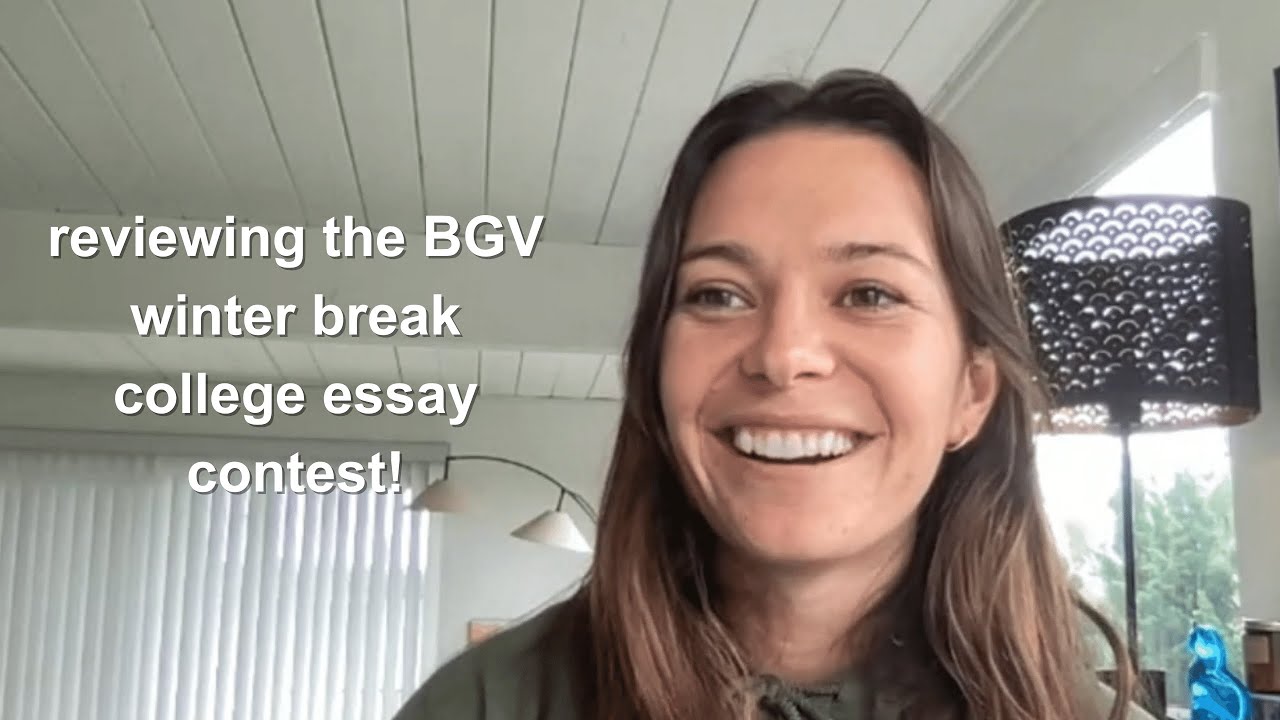
In this live, solo recording, Paige Doherty, founder of Behind Genius Ventures (BGV), reviews roughly 20 college‑essay submissions to the BGV Winter Break College Essay Contest. She explains the contest prompt and evaluation criteria—engaging hook, expert quotes/research, and clear articulation of why the problem matters—then walks through a wide array of essay topics submitted by students from schools such as Cornell, Georgia Tech, UNC, Dartmouth, SDSU, and ASU. For each essay she provides a brief synopsis, reads key excerpts, and highlights the specific problem, proposed solution, and any market‑trend or startup references. The essays cover smartphone addiction, AI‑driven skincare, sustainable fashion, fintech in Africa, novel governance models, venture‑capital competition, AI‑human creative cycles, screen‑dependency, interplanetary travel, virtual power plants, Southeast‑Asian higher‑education gaps, women’s hormone health, and the next wave of consumer hardware. Doherty notes that about half of the students used AI for ideation or editing and that many hope to share their insights with startups or venture capitalists in BGV’s network. Throughout the session she interjects personal reflections, mentions BGV portfolio companies (e.g., Zenith Learning Group, ProfGym, Matrix, Hearth Display, Lychee), and thanks the Seed to Harvest podcast editor. The episode ends with a promise to announce the contest winners in a future video.
Chapters
Okay. Hi everyone. If you are tuning in, my name's Paige Doherty and I launched the Behind Genius Ventures Winter Break College Essay Contest, um, last year in December, and I'm really excited about it. Honestly, I was getting excited just reading some excerpts of some of the essays that were sent in. I received around 20 contributions to the essay contest. So today I wanted to kind of talk a little bit about what I learned and then read you some of The excerpts from my favorite essays. I'm recording live on Instagram, YouTube, and Twitter. This is my first time doing this, so I'm a little nervous, but I'm excited, and hopefully you'll leave today learning something about what college students are interested in. So the prompt for the college essay contest was basically pick a problem that you think is really impactful. And bring the spirit of curiosity and discovery to finding a question, concept, issue that you're interested in, and in 1,800 words or fewer, explaining it to a general audience in a way that not only helps us understand the topic that you are interested in, but engages us and makes it— makes us see why it's important. So the things I'm looking for in these essays are one, an engaging hook that grabs my attention and makes us me care about the problem, 2, quotes experts and/or includes research on market trends and relevant early-stage companies, and then clearly 3 is explains the why the problem matters. And I went to San Diego State. I graduated in 2020 and I spent my winter breaks writing essays to help cover my college costs. And this essay contest is something I would've loved to participate in, both to compete for a cash prize of $500. Mm-hmm. research space I was interested in and get to shadow a venture capitalist. So I printed out all the essays. So I'm going to go through and just kind of give a summary of some of the topics that we'll be discussing today. So maybe I'll go through and read some of the titles of these pieces. So the first one is Whispers from the Candy Jar. This one is about smartphone addiction. The next one Is revolutionizing skincare detection with low-cost AI-based smartphone solutions. The next one is Threads of Change: From Shane to Sustainability, a Fashion Odyssey of Mindful Consumerism. The next one is Fintechs for a Peaceful Country. The next one is The Future of Politics Is Not a Career: Why the Greatest Countries of the Next Century Will Be of the Service Model of Governance. The next is The Intense Competition in Venture Capital. So you can see like the topics are very like far ranging. There's the next one's Bridging Technology and Community at Geek's Transformative Journey Towards Impactful Innovation. I really like this one had like diagrams in it. So you can see this one is AI and the Human Creative Cycle, which is something we've been thinking a lot about at Hygiene Dispensers. And then we have Hollywood's Starving Artists. Basically gonna like go through these and then I'll read them backwards. Next one is navigating the future screen dependency versus screenless living dynamics. This is like a topic that I think has come up like a lot, especially in the younger generation, is like screen dependency. Turn this upside down. Why the future of fintech is in Africa. Overlooked and understudied, the ovarian hormone cycle. Whoa. Okay, Fighting Fast Fashion. Taking the Leap. This one is about interplanetary travel. And then Virtual Power Plants. Pretty cool. And then this one doesn't have a title, but it's on the state of higher education in Southeast Asia. And then This one is on AI. So to give you some context for what college students are thinking about, we had applicants from a bunch of different schools. So if I look across the responses, we had folks from Cornell, Georgia Tech, UNC, Dartmouth, SDSU, a bunch from ASU. And then one of the questions that I asked was, did you use AI? And I thought what was really interesting is Maybe half of the students used it, some for ideation, some for refining context and help rewording. And then all these, most of these students were interested in having their information shared with startups or venture capitalists hiring in our networks. So I wanted to read some of these. Am I reading chat? Yeah, I'm reading chat. So if you have any comments, feel free to Put them in the chat, so we can definitely go through some of these together. Maybe I'll start with the higher education in Southeast Asia and read an excerpt of it. So in the region of Southeast Asia, a crucial question lingers: How can we bridge the educational gap, raising the quality of education in developing countries like Malaysia, Thailand, and Indonesia to match Singapore's standards? The key lies in the convergence of technology and democratization, a transformative journey that holds the power to reshape the destiny. In 2020, the total estimated population of the Association of Southeast Asian Nations stood at more than 660 million, with a third under 20 years old. Although SEA's land size is half that of the U.S., education standards are vastly different across neighboring countries. For instance, in the Program for International Student Assessment, Singapore stands as an educational powerhouse with a score of 560, which is the highest in the world. While neighboring countries such as Cambodia and the Philippines languish among the bottom 10 with scores of 337 and 353 respectively. These numbers aren't just metrics, they're a reflection of the divergent paths that education has taken within the region. Mm-hmm. Amidst this, there are startups in the region developing edtech solutions to bridge this gap. For instance, Zenith Learning Group, who recently raised a $1.4 million seed round, aims to offer Singapore-quality education to those who can't afford it. They combine physical centers with a gamified online platform that allows parents to track their child's academic progress using data-driven insights. Their goal is to deliver world-class education from a smart device and advance education standards in the region. In addition, there can be potential collaboration efforts within BGV's portfolio with edtech companies in SEA. For example, ProfGym may be used to build a more personalized experience for learners via their patented RealBook technology. Alternatively, Matrix may be used to build quests and user rewards for teachers, allowing their students to have gamified learning experience. That's pretty cool. They're like mentioning specific companies within our portfolio. The alliance between technology and education is not just about numbers and score. It's about illuminating the minds of students, fostering creativity, and nurturing a generation equipped with the skills needed to navigate the complexities of the modern world. Why is this important to me? It matters because beyond numbers, education is about social impact. My personal journey, having served as the Chief Networks Officer of Advisory Singapore, reflects a commitment to fostering impactful transitions for students from schooling life into the workforce. Our flagship mentorship program, the largest pro bono one in Singapore, pairing industry professionals across 40+ industries with students, embodies the belief that education is not just about grades or imparting knowledge, but also preparing students to contribute meaningfully for society. Whoa, this is super cool. I haven't spent much time in like international education since we invest mainly in the US and Canada, but it's really interesting to hear about the educational disparities. And I really liked how this essay mentioned specific examples from our portfolio. Okay. And next one. Oh, this one's interesting. This one is about AI and it starts with a bit of dialogue. So it says, I'm not worried about AI. You should be. I was taken aback coming from someone I really looked up to. A direct challenge like that was a hit to my ego. He knew this too. It was his way of lighting a fire under me. Pain is the best motivator, I suppose. One employee who is hyper-proficient at AI can replace 10 who don't use it. I'm planning on laying off half my staff within the next 3 months. This will only mean The rich richer and the poor poorer. Which side will you be on? When I had this conversation with a multimillionaire friend, ChatGPT had just gone viral, quickly followed by a host of other AI tools. Of course, he was right. His knack for spotting trends early is reflected by the many zeros showing on his bank balance. A year later, I'm still eating microwave food in my dumpster of a college town apartment. He was on a yacht in Dubai last week. Can't confirm it was as fun as the Instagram pics, but I do think I've spotted a trend. The world is moving fast, and what used to be done in 5 years can now be done in 6 months. Most AI solutions startups propose won't be applicable for mass adoption until at least a few years. The now implications of AI lie in how your every single day-to-day business incorporates it. And even if this hasn't occurred on a large scale yet, what I'm saying is we're distracted by fancy new AI product startups making edtech platforms or health diagnostic tools. But there are countless ways to use AI now with just publicly available tools. We're not even close to the full potential of our current tools yet, while many people are focused on building more. It wasn't as connected to market research on it. It was more of a personal anecdote, but I did like how it talked about the average person is not using AI. I don't have any stats on that, but I'd be curious to see. Learn more about it. Next one's on virtual power plants. This is so cool. I actually like was I printed all these out and I was really interested because all these are just like so different, and this one especially. So I'll start off. Blackouts loom as peak electricity demand outpaces aging grid infrastructure, and there were. 400 outages this year equaling over 9,000 hours without power. In monetary terms, outages in Texas over the last 2 years have cost them upwards of $200 billion. Outage duration has doubled over the last 10 years and expected to grow exponentially if left unchecked. States like Texas and Florida are getting an inflow of people and more frequent extreme temperatures, significantly straining their grids while creating higher power prices for consumers. There's a solution, decentralized energy resources, or virtual power plants. That's pretty cool. I've never heard about that before. A virtual power plant is a sustainable, independent power source that serves as a grid asset, allowing flexibility in supply and demand. This integration with a grid is done using software and hard asset installations on residential and commercial properties. A family of 4 with solar panels on the roof can sell their excess power to the grid during peak demand periods and make money. Hospitals that require backup generators can keep the generator on throughout the year and sell the power. Oh, I see. Okay. So the system is basically like if there are individuals or commercial places with excess power, they can sell it back to the grid. Okay. The potential for these systems isn't hypothetical anymore. H-E-B, a customer for Starbs providing this solution, has installed generators throughout its locations in Texas and sells power onto the grid. Making 20 plus million during the summer months selling power, and was able to stay on during Winter Storm Uri, spiking revenues because they were the only supplier available. However, there is significant potential for innovation within this space. That is really interesting. I was watching it talk about how the war in Ukraine has highlighted our energy dependency, and I thought it was a really interesting point. In addition, like. Climate change is also highlighting like our energy dependence on systems that were put in many, many years ago, and our demand for power has continued to rise. So this is really interesting. Corporations like Tesla, Sonnen, and Sunrun have gotten into this space, providing homeowners with a generator or home batteries and allowing families to store and sell surplus power. There are also startups like Horizon, Connect ER, Moxia, and Oxidative that provide provide differentiated solutions to this problem, like turning electric water heaters into grid batteries, providing the benefits of Tesla Powerwall but without the space requirement, installing second-life EV batteries instead of new batteries, creating software that uses smart devices on top of generators to maximize power sold during peak times, or providing containers with solar and batteries as tiny power plants to be placed in the back of the home, producing enough power to pay a monthly mortgage. That's pretty crazy. So the reason why this person wrote the essay is they live in Houston, Texas, and Winter Storm Uri was a devastating, unimaginable phenomenon for the state. Before it, no one wondered how the lights came on or where the electricity came from as long as it was cheap. However, the cold freeze debilitated the state and it led to at least 210 deaths and the repairs cost people months and hundreds of thousands of dollars. Since then, energy, power, sustainability, and reliability have repeatedly been a conversation. in public circles. People are getting educated and involved in how to solve these issues and now have a solution that is efficient, cost-effective, community-driven, and just requires implementation at scale. Hmm. That's cool. I would, I would love to like hear more on like the specific solutions that are happening in the virtual power plant space. I think it's like a very interesting idea. Oh, that's cool. Okay, the next one is called Taking the Leap. This one is about interplanetary travel. As Earth's natural landscapes shrivel under the shadow of urban expansion and its skies grow dim from pollution, the thought of stepping off our planet is no longer a fantasy but emerges as a critical pursuit for the hope and survival of Earth. The concept of humanity spreading its wings to become a multi-planetary species is not just an ambitious leap into the unknown, but a necessary step to preserve our legacy and the delicate balance of life on our planet. In the past 50 years, we as a species have dramatically improved our quality of life. In a recent Jeff Bezos interview, he said, in almost any measure you choose, we are better off than we were 50 to 100 years ago. Our lives have improved drastically. Our discoveries and developments in the sciences have saved millions of lives and elongated millions more. Our advancements in technology have greatly surpassed whatever we thought possible in the realms of medicine, travel, exploration, overall interconnectedness. Our urbanization and development have created thriving ecosystems that assist in fostering creativity and the movement of ideas and thought from person to person faster than ever. The caveat to this, to all this wonder, is that we have all borne witness to the destruction of our natural world. We've traded some of that pristine beauty for all these other gifts that we have as things advance We can have both, however, but we— to do that, we have to go to space, Jeff Bezos said. Well, that's definitely like the most like out there one that I've read so far. In recent years, we've seen significant increases in the resources devoted to the exploration of space. Some of our planet's most brilliant minds, such as Elon Musk, CEO of SpaceX, and Jeff Bezos, CEO of Blue Origin, are pouring billions of dollars into exploration and development of the space travel ecosystem so that other engineers and entrepreneurs can put their minds to work on these problems. This is an important note because without a proper foundation and building blocks in place, it's difficult to deploy certain lean methodologies and entrepreneurial strategies for early-stage companies in a capital-intensive industry. I like that he like noted the risks in this industry because it's definitely very capital-intensive. With the help of these tech giants, the past 5 years have seen a surge of startup companies working on developing launch vehicles, engine components, and services to contribute to the development of a space ecosystem. Some other notable companies are Firefly Aerospace, who recently was awarded a $112 million contract from NASA to develop multiple lunar payloads by the year 2026. Relativity Space made headway as the first company to 3D print rockets and create a new system for the manufacturing of these massive engineering marvels. As vital as the production of these crafts may be, of equal importance is the problem of driving down costs and creating efficient manufacturing processes. The next generation of innovators will be tasked with these issues related to cost and manufacturing constraints. I've always had a fascination with space, and the idea of looking back down on this giant planet from above has captivated me since I was a child. My life has been one that has been spent in constant pursuit of the ocean, mountains, forests, and the natural world. I have been lucky to have had some wonderful experiences across a number of different continents, diverse landscapes, and mountain ranges. The feeling of summiting a peak, no matter how large, instills within me a similar sensation each time. It is a feeling of accomplishment, appreciation, and a perspective for the world beneath my feet. That being said, I'm aware that we cannot continue to exist in the manner we currently do if we plan to keep this extraordinary ball of water and life in good condition for eternity. It's cool. Then, well, that was cool. There's like a bit more, but That was like the, the general part of the essay. Let's see, there's a couple of fighting fast fashion ones. I thought that was interesting. I think like, especially like when I was going to school, I think Shein was just— their like popularity was like just starting to pop off. And then it was like whenever you would go to the parties, a lot of people would be like wearing it and it because they There's some like really interesting essays and like how they're able to like use AI to like predict trends and like make clothing on demand. But I do think like a lot of consumers are pushing for more sustainable alternatives to fast fashion. Oh, so this author grappled with these questions during the pandemic as she learned to sew while quarantined in her bedroom. This is from her perspective. I began making face masks for my sister who was experiencing a PPE shortage while working in the COVID unit at a hospital. At the sewing machine, my mom taught me what her mom had once taught her, and soon enough I was selling new creations. Instead of shopping online, I took clothes from my closet and started reworking them into new statement pieces. What began as a new hobby sprouted into newfound TikTok fame, and I spent the next year creating reworked clothes, posting videos about them to my once impressive 10,000 followers— it's so funny that she says once impressive— and selling them nationwide. As I spread awareness of the dangers of fast fashion, I found myself constantly reexamining my own practices. Is wondering how sustainable is this business really? Um, and she said that she shifted to consuming less and borrowing more. She's building a peer-to-peer clothing rental app that has secured grant funding with an all-female tech team. And she's come across many startups that are creating simple and sophisticated solutions to problems in the fast fashion industry. Good4U is an app that rates clothing companies on how environmentally sustainable they are. 4Days collects old clothing and fabric scraps and turns them into new textiles and wardrobe basics. Rupee Laboratories, which recently received backing from Walmart, H&M Group, and Patagonia Inc.'s Tinchad Ventures, working on a prototype that turns carbon emissions into symbiotic textiles. That's cool. I'll go check that out. Yeah, more and more sustainable fashion startups are receiving support due to the growing problems the fast fashion industry creates. There's nothing like sustainable fashion. Navigating this shift demands a collective effort. On one hand, the consumers must rethink their purchasing habits, opting for more sustainable choices and embracing the circular economy. On the other hand, entrepreneurs and innovators are rising to the challenge, creating groundbreaking solutions that blend eco-consciousness with affordability. I think that's like a really good point around like eco-consciousness and affordability because I think like for a long time, like luxury fashion has tended to be more sustainable, but it's, it's less accessible. And I like that she went into that. That like dichotomy. The power to reshape the norm relies not only on our consumer choices, but arguably more impactfully on the transformative potential of new innovation within the space. Cool. Okay. This is fun. I feel like I'm learning a lot. I hope you all are as well if you're listening to this. Okay. All right. Overlooked and understudied, the ovarian hormone cycle. Okay, so she starts with some quotes. I always wanted to die randomly before my period. Biggest surprise I've learned is you're not actually supposed to feel bad before your period. Real quotes like this litter the community forum on Avia, an app that teaches members about how their hormone cycle impacts their daily lives. It's not unusual for members to be taken by surprise when they realize their PMS symptoms aren't normal. Feedback from real people highlights the lack of education on how the female body changes throughout the month. Hint, a lot more happens than just ovulation and menstruation. In the summer of 2022, I stumbled upon Elisa Vitti's In the Flow book. It contained all I could ever want to know about my ovarian hormone cycle. Before I knew it, I found myself on the floor of the bookstore hours later, eagerly turning each surprising page of newfound knowledge about my body. Suddenly, the mysterious mood swings that had led to relationship struggles and unnecessary family conflicts began to make sense. Oh, it's just my luteal phase, I whispered to myself. My once paralyzing anxiety became more manageable when I could soothe my thoughts with a simple mantra: it's not me, it's my hormones. At the very least, every girl deserves to understand why she feels the way she does. In the ever-evolving landscape of social media, TikTok unexpectedly emerges as a valuable source for hormone education. With over 5 million views, hashtag cycle syncing continues to trend. Unveiling the reality that many women are navigating uncharted territories when it comes to understanding their bodies. This is super interesting, actually. Like, anecdotally, a lot of my friends have like talked about psychosyncing. I feel like I've definitely read more about it, and I found out about it on TikTok. So it's cool that she talked about that. Yeah, with no formal education on the subject, girls are flocking to the comment sections of viral TikToks to share their experiences of living through the luteal phase, Or being gaslit by their gynecologists. It's evident that Gen Z harbors skepticism towards established corporations and organizations, choosing instead to trust the lived experiences of their peers. To earn the trust of this generation and provide them with the health education and access they deserve, brands must approach them with sensitivity and care. In comes Avia, a rising star in the women's health and hormone field, founded by women who personally navigated a plethora of hormonal issues. They inherently grasp the need for easily accessible education for all women, enabling them to optimize their lives based on their hormone cycles and promptly seek effective treatment for overlooked hormonal conditions. To enlist the trust of Gen Z, Avia has carefully crafted their organic marketing approach. Rather than channeling efforts in their brand account or influencers, Avia reaches into their own community and employs members of the app, like with the account Luteal Girl, to authentically share what they know about hormone health and how Avia has helped them flourish. This method builds community and trust, positioning Avia as the go-to place for hormone education. Oh, that's cool. I haven't heard of Avia before, but I'll have to check it out. Yeah. Let's see. Yeah. Diagnosing hormonal conditions like PCOS and PMDD typically takes 5 to 7 years, but comprehensive hormone cycle tracking can cut that down to just 2 cycles or 2 months. Beyond instilling confidence and empowerment, understanding the hormone cycle accelerates symptoms relief from symptoms associated with hormonal conditions. Yeah, women of childbearing age were excluded from clinical trials until 1993. Pretty crazy. I'm definitely really excited about women's health. We made an investment in a company called Zencape that helps extend care, especially to women suffering from PCOS or endometriosis. And I think I'm very invested in women's healthcare and improving access to care, especially since I, yeah, I definitely believe it's crucial to make up for lost time investing in women's health. Cool. Okay. Really enjoyed that. I'll have to check out Evia. All right, let's see. I need to read this one. Okay. So this one is Software Ate the World, but Hardware is Biting Back. Consumer hardware in the next wave of technology. If you're not familiar, we at Behind Genius Ventures have invested in 5 hardware startups, including Hearth Display, The Last Gameboard, Averon, Lotus Labs. And I don't know, it's definitely a hard space, but I feel like there's very resilient entrepreneurs building in the space. And I don't know, just like some really interesting things happening there. So I'm excited to read this essay. I also wrote a piece on multimodal AI on our blog that I'll share later, but I think the intersection with like multimodal AI and hardware as like the sensors or extension of that will be really interesting. Okay, so what comes after the iPhone? I might have a different answer compared to much of the tech world right now. The potential for the next wave of consumer technology isn't just with AI companions encased in ambient screenless computers. It's about redressing the ways we as consumers and technologists interact with devices and project our identities and aspirations onto them. Not just racing to build with emerging technologies. Or to put it crudely, solutions looking for problems. My curiosity about this topic is the foundation of my MA thesis. I'm assuming Master of Arts. Specifically, I'm looking into how communities can contribute to the innovation efforts of consumer hardware companies in London. But academic papers don't give you much space to explore why one thinks a given research question is interesting outside of the literature, a space to articulate the cultural importance of something too early to be committed to a journal. So I wanted to do a bit of it here. I'll pause here. Like, one of the things that's really interesting about this essay contest is I loved all the comments I got about like, thank you for this opportunity and folks that were really interested in just doing research on things they were interested in. So it's cool to hear that this author like had that experience. Anyways, it might be a bit determinist to say it, but like literature, art, and music, technology is a cultural good in and of itself. Able of expressing ideas on who we are as a society and possibly where we are going. So why is this interesting? I think that an emerging wave in consumer hardware will be at the forefront of the future of technology. Builders can be creative, inventing new ways for us to interact with technology and express ourselves. End users can be creative too by taking things apart and putting them together in new ways. There are several big problems with hardware right now. Perhaps the biggest is the dominance of Apple products paired with the lack of new ideas in terms of physical form and function. And then we have companies that chase what Apple wants, with ex-employees at worst aping their form, function, and communication style, and at best diametrically positioning themselves opposite Apple with anti-iPhone rhetoric, effectively tethering themselves to them forever. All this results in a lack of innovation across the board. Whatever you might call it, the hardware renaissance, hardware nostalgia, indie hardware, and so on, there's growing momentum in articulating what should be the next wave of consumer tech. In their Hardware Renaissance talk in 2023, co-founders of Lychee, a new wave hardware startup, used that these products will become more specific to individual tastes and generate new cultures in contrast to an all-encompassing device such as the iPhone. This is interesting. It's like what we wrote about in our multimodal piece is like, I think the next generation of really successful consumer hardware will be like really, really good at like one modality, whether that's like touch or speech or audio, and those will get snapped up by very excited M&A departments at companies that are like spending hundreds of millions of dollars to spin up those technologies internally and struggling. Lychee is one of the startups I've been interviewing with for my thesis. As an early-stage consumer tech company, they're in the best position to share provocations on the state of technology from the edges. They unveiled their first device, an art object called the Lychee Array, last year. Meant for forging social connections, it lights up when it detects the sound of talking. It's kind of cool. USB Club, a company that distributes their own USB sticks as a means of cultural distribution, is redressing our relationship between our computers and our own lives with a device that is familiar to all. I don't know if anyone listening remembers this, but I used to love, like, when I went to, like, middle school, I'd have my, like, USB stick and I would have all my presentations on it. That was just like So fun. It felt very like personal, but there wasn't any like screen or interaction really. Like it was just a harboring device. Unlike hot topics in hardware like Humane's AI Pin Tab or the Rabbit R1, Lychee and USB Club aren't tech push innovations thrust upon the market by the sole virtue of the emerging technologies that power them. But they aren't market pull innovations either, the result of cycles of user research and innovation. They're relatively simple machines driven by design and aim to make a statement about how we live in concert with technology, or rather how we should live, how we can use technology as a means of self-expression, and decidedly not in conversation with Apple, unlike the aforementioned examples. Despite the VC world enjoying historic success with software products and a historic aversion to both consumer and hardware ventures, consumer hardware can help tell us where the wind is blowing culturally because at the heart of All it— this is really a question of how our ideas, behaviors, and values are refined by the means by which we apply and share knowledge, technology. Software may make the world go round, but hardware is what captures the imagination. Oh, I love that. Well, it's coming up on the end of my time together with you all, but I hope you enjoyed this. I'm looking forward to sharing the winners as I go through and review all of the essays, but Thanks so much for stopping in. And a very special thank you to Seed to Harvest podcast editor Tate Doherty for his amazing work on this episode.
More from Paige



Paige of Behind Genius driving an AI electric train in St. Louis (Intramotev Visit)





