Screendoor Partners Principal Wes Panek on How Screendoor has Evolved | Seed To Harvest Ep53
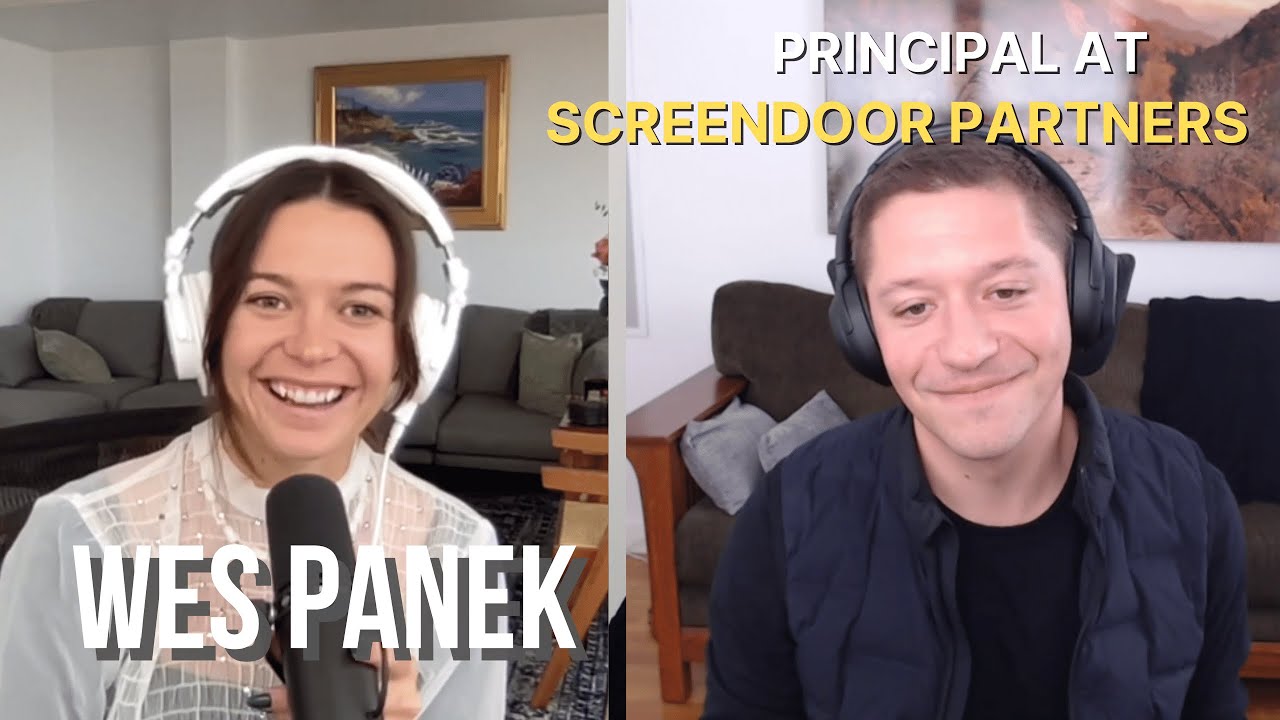
In this Seed to Harvest episode, host Paige Finn Doherty interviews Wes Panek, principal at Screen Door Partners. Wes shares his personal background, including his Māori heritage, and explains how that cultural identity fuels his commitment to backing underrepresented venture capital managers. He outlines Screen Door’s origin as a fund‑of‑funds created by a coalition of GPs from firms like Homebrew, Precursor, Kindred, and others, raising an $85 million first fund to provide anchor capital for emerging VC funds ranging from $10‑100 million. Wes describes the firm’s evolution: building a transparent, rapid investment process, pairing portfolio GPs with experienced advisor GPs, and scaling support programs. The conversation moves to best practices for LP advisory committees (LPACs), emphasizing their strategic value for early‑stage managers, appropriate sizing, and the balance between sparseness and depth. Wes and Paige discuss the specialist versus generalist debate from an LP perspective, noting Screen Door’s current tilt toward generalists while remaining open to sector‑focused funds. They provide fundraising advice for 2023’s downturn, urging careful fund sizing, runway extension, and rigorous portfolio construction. Personal anecdotes about Wes’s love of jazz, the Utah Jazz, skydiving, and plans to bungee‑jump in New Zealand illustrate how his passions intersect with his investment philosophy. The episode closes with Wes announcing a new managing director hire, plans to raise more capital, and his excitement about scaling the firm’s impact.
Chapters
Welcome back to Seed to Harvest, a podcast with founders, creators, and investors about their stories, frameworks, and tactics. My name's Paige Doherty. I'm the founding partner behind Genius Ventures and author of the illustrated children's book about venture, Seed to Harvest. Today, I'm really excited to be joined by Wes Panek, principal at Screen Door Partners. Previously, Wes was principal at New Media Ventures, a senior associate at the Global Development Incubator, and a strategy consultant at Deloitte. Beyond investing, he loves to play and listen to jazz and is a diehard NBA fan. So Wes, thanks so much for joining us today.
Thanks, Paige. Wonderful to be here. Fan of the pod. I've listened to many episodes, so glad we made this happen.
I know, that was so cool. We were chatting before the show about you had listened to the episode that we had done with Beezer and Kelly, so that was really cool. I would, I would love to start off with asking you, what is something that Not many people know about you that, that, that you wish more people knew?
I so appreciate this question for a few reasons. One, I, I don't love, I think naturally, to share a lot about myself. And so sometimes in venture, particularly when I used to be a direct investor, and I would see people post on Twitter so much, I felt like, man, am I in the wrong business? Like, I need to be self-promoting more or something. So these days I'm, I'm trying to do more of this. So it's a good prompt. I am deeply proud to be Māori. So Māori people are the indigenous people of New Zealand. My mom's family, they're immigrants from New Zealand and Polynesia. And a huge part of that history and heritage for me dovetails with why I care so much and so deeply about the mandate of Screen Door and backing underrepresented people in venture. When I was growing up and when I was young, I used to be kind of embarrassed by it. Like, I thought it was a little odd. I looked white in my view, and I kind of hid from it. And then when I got older, I realized it was such a cool thing and have spent a lot of time in recent years researching it, understanding my family history. New Zealand has like a fascinating political, social, like history of reparations for Māori people, which I won't dive too much into, but that's something that doesn't organically come up often in venture. And so it's really nice to share it.
Dang, that's super cool. I went, I went to the Australian Museum and they had recently in Sydney and they had like a fabulous exhibit on, um, like the different indigenous cultures both in Australia and New Zealand. So I so appreciate you sharing that and that's so cool. I'm excited. I'll ask you a couple follow-up questions on that later in the episode, but I would love, for the context of our listeners, can you explain a little bit more about what Screen Door is and how it came to be? And then I'll ask you a bit about your early experience there as well.
Of course. Screen Door, we've been around coming up on 2 years. We are a fund of funds. That is backing underrepresented emerging fund managers in venture capital. So generally folks who are raising their first or second institutional fund, generally smaller funds in the range of $10 to $100 million, kind of right now based in the US. And we aspire to be anchor capital for those funds and durable capital partners over the long term. The origin story is that 10 GPs from existing firms came together to form the vehicle. Probably most credit goes to the GPs at Homebrew, Satya Patel and Hunter Wach. They gathered together with 10 of their, or 8 of their other peers from firms like Precursor Ventures, Kindred, Forerunner, Cowboy Ventures, FICA, to name a few, and wanted a pool or a pool of capital that could capitalize other VCs that looked more like them. And so they brought the set of institutional LPs that had been backing their funds for years. Harvard, Princeton, other big endowments, Hall Capital Ford Foundation, for example. And we pulled together an $85 million fund 1 and have been deploying it, um, since I joined on day 1 for about a year and a half. And I was the founding hire and have kind of been running things day to day and really getting our investment process and, and day-to-day operations. Yeah.
Which is so incredible because I feel like something that not a lot of people in venture talk about is When you're just starting out, a lot of your initial investors will often be GPs at firms that have raised, you know, multi-hundred million dollar firms or funds and have been doing it for ages. And you get to learn from them, which has been such an enjoyable part of my process. So I think one of the things that makes Greendoor really unique is although you're a fund of fund, really your roots are like entrepreneurial fund managers, which I think is is really special. Can you talk a bit about how Screen Door has evolved since you joined on day one?
Absolutely. It's been a wild and lovely ride. I think I will say from day one, and this remains true now in a way that really hasn't changed much, we have pretty ambitious ambitions in terms of the level of scale we think is there to do this work, both from a returns perspective and from a sort of societal perspective. So we think about Screen Door as an economic vehicle, That is like a winning strategy first and foremost with a societal mandate. We, that said, I think are very intentional and deliberate about not wanting to bite off more than we can chew and kind of slowly at the right pace, moving quickly, but making sure that we are able to support the set of GPs we're backing meaningfully, durably. And so what that has meant in the interim or since day one is we have really thought about amidst something like 550 funds, I think is what I've talked to since I joined, making sure that we are kind of at a consistent clip backing them, but that we're also really focused on making sure our process is transparent, clear, quick, responsive, open, and giving good feedback to those managers. And that before we scale too fast or too quickly, like we're able to, to have that on lock. And I think one of the things that makes us so different is we like to think of ourselves as an LP of GPs.
Mm-hmm.
And so everyone in the portfolio gets matched up with some of those founding GPs who serve as advisors for firm building, help them think about how to get to fund 2, 3, 4, and beyond, and work through all of the gnarly questions on the fund management side and the firm building side, particularly separate from the investing side that naturally and inevitably come up. So a lot of what has evolved week to week even is the thinking around what that program looks like. how to scale it, and how to couple that type of support and counsel with the capital that we're deploying.
Yeah, that's awesome. I'd be curious to hear, like, as you're supporting a lot of these GPs with advisors, who have been some of the people in venture that you've really looked up to? And I know you've had experience on both the direct and LP side, so I'd be curious to hear if there's any difference in inspirations on those or anyone that stands out.
I have been a fan of like most of the founding Screen Door GPs for so long on Twitter, like from afar. Um, so when I joined, so this is maybe a roundabout way towards your question, but, but I'll get there. I promise. When I joined the direct investing side years ago, I joined kind of intentionally like a niche impact investing fund in the Bay called New Media Ventures. We were essentially capitalizing the tech stack for the progressive political left. So very niche, but I considered joining a larger fund to work from some of the folks that I now work with at Screen Door, but it's, I wanted higher velocity of deal experience to test and understand if and how I enjoyed venture like sooner. And that ended up being true and also taught me that there is so much about the mainstream venture game that is different than the niche but important investing that I was doing. And so I think the way probably first and foremost that Satya and Hunter built Homebrew was like a huge inspiration for kind of the deliberate way they thought about fund sizing, deploying capital, having like a societal mission.
Can you talk a bit like more about what specifically in their strategy really resonated? I think it would be helpful to understand like what is different about their strategy versus the broader venture ecosystem and what about that stood out to you?
I think the way that they, and of course this is my take or my sort of retelling, but the way that they think about optimizing for, or optimizing at the nexus of like happiness, who they are, and also crushing it and winning and finding alpha. And I think what I mean is, You know, as I watched them over the years, they were very deliberate about how they sized their funds. So very clearly wanting to play in the early stage space, having smaller funds, they could have easily raised much larger funds, not optimizing for how much money they were managing, wanting to always be bigger and bigger checks into bigger and bigger companies across stages at a time when a lot of funds were doing that.
Mm-hmm.
And they were coupling that sort of technical side of the strategy with a very like societally driven thesis in investing in companies that were not only exploiting or finding huge market opportunities, were also going to be good for the world. And so doing it in that order was something that I thought a lot about in my direct investing role, but was doing it at such a smaller scale. And so I had a craving to like learn from them and understand how that strategy works at a bigger scale in sort of a mainstream venture. context. And I feel like threads of that strategy, whether it's around kind of intentional portfolio construction or proactive, like sector and thesis focus, some version of that kind of exists in most of the funds of the founding GPs of Screen Door. So when I heard about that crew coming together, I was like, this is a no-brainer for me personally. Like I'll get to learn so much about how they do that work and how they think about picking and supporting other GPs. Like that lens as an allocator will be So unique and powerful. So yeah, it's—
Yeah, yeah. I remember when some of like the first announcements about Screen Door came out and I was like, oh my gosh, this is like an incredible group of people in the venture ecosystem coming together to work on an initiative. So I'm really excited that we got to chat a bit more about what you all are building. I would love to also get into some of like the nitty gritty of what are some of the best practices fund managers should keep in mind when building their LPAC? And for those of you listening, not familiar, an LPAC is an LP advisory committee. And usually as your fund size grows, you'll look to bring in different advisors. But I'd be curious to hear more about the best practices that you think about as you recommend to your GPs how to build out an LPAC.
Absolutely. I'll say, as I share a couple of initial thoughts, that This is something I'm still learning about, and I'm earlier in my journey of both participating in LPACs and having increasingly strong opinions on them. But certainly I've been around a number now. We sit on the LPACs for a number of funds in our portfolio, et cetera. So the first thing I would say is I think it's important for emerging managers not to undervalue LPACs early on. It can be such a helpful and useful tool. to build institutional muscle, think about and crowdsource expertise on how to work through the inevitable set of challenges that come up, whether they be on the investment or the administrative side. And as I've poked around and kind of cultivated my own LP network, it seems like in the last market cycle or in the not too distant past, particularly for new fund managers, LPACs were less in vogue. And these days, I think particularly in the market now, I would say it's super helpful and can be a strong signal of seriousness of building an enduring firm. And then maybe the second category of things that I think about to keep in mind would be to use LPACs sparsely, but deliberately as ways to build trust with a set of investors and show them who you are, how you operate, and that you really want to collaborate with them. And that can really be like a good way to build a foundation for the long term for having LPs and capital partners that will stay around fund to fund. If they understand that you will bring up difficult questions that come up, like how to work through cross-fund investing, where you have different pools of capital with different investors in each and how to think about that, for example. And so these really don't like surprises. And I would say, Uh, I keep myself in that category, or I would put myself in that category as well.
I think most people would definitely put themselves in that bucket. But, but I, I so appreciate your thoughts on that. I, I'd be curious, cuz you also work quite, quite closely with Charles. I had him on, Charles Hudson at Precurse. I had him on an earlier episode and it was really interesting. He was talking about how he's built different LPACs for different, he's raised, so he has like a different LPAC for each entity. I'd be curious to hear more about like, have you heard of other managers doing that? Do most people have like one LPAC per venture firm or per fund? I'd be curious to see like across the managers that you back, how does, how do LPACs usually shape up? Totally.
I think in our portfolio or like the segment of managers we're backing, you know, most of them at this stage, it's like 1 or 2 funds, maybe an LPAC. So right now it kind of just looks like 1. So this is certainly less of my area of expertise in terms of, at this stage, firms with multiple funds and multiple LPACs, but I've definitely heard of that. And intuitively, I think it can be pretty helpful. This is a good prompt for me. I'm like, I should talk to Charles about that. But I know—
It'd be super interesting to chat with him about it.
Yeah, like I know, I do know some GPs who've talked to me a little bit about that. And again, kind of tracking to the 2 categories of things I was sharing where In this scenario, you're managing multiple funds, having different decision sets for them, different considerations, thinking about the vintage year, what that implications that means for things like pacing and value creation, et cetera. It can be helpful to have different perspectives around the table, but I haven't gotten too deep on it.
Yeah, I guess like one of the questions I have for you is how do you think your investing style has changed or stayed the same since you switched from direct to LP investing?
I find particularly given The segment of the market that I look at at Screen Door, I find LP investing. So maybe the question that I heard more is like, what feels different? Being an LP feels like more personal. There is less, when I was a direct investor, saying no felt easier and less personal because it felt easier to talk about why I thought a business model might not work or why the competitive landscape was too tough in And I didn't think they understood it well enough. And then there's some of that or some of those similar dynamics in terms of backing GPs, but I think less so, like ultimately it's sort of a, do we think this person will build a firm?
Yeah, it's quite personal.
Can we trust them to deploy something? Yeah, it's so personal. And I am, yeah, like I don't love telling people no, like I'm a people pleaser. That's what all personality tests I take say. So that's like something I've had to work on is like, How to be open and honest about that and comfortable saying, yeah, it's like, we just don't think you're going to do that, but here's why and here's how we can maybe, here's what we'd like to see in the future and what might change our mind. And this is just one institution's take, of course.
I love that.
Thank you. The other thing I'll quickly say is, I, on the flip side, I find the skill set quite similar directionally. I'm still thinking about markets. I'm still thinking about competitive wedges that can exist over the long term. I'm still thinking about so many of the same things. And so it feels nice to not feel like, oh no, I switched careers. Like I'm completely like starting from scratch because yeah, it actually—
So good to like build on the investing muscle that you built in direct. I'd be curious, I was chatting with Lucas Fernandez. He's an investor at Talipot, which is a family office here in San Diego. But we were talking about like, investing in managers that are specialists versus generalists. I'm curious where you place yourself on that scale because I know some LPs are more oriented around like generalists, some are more oriented around specialists, whether that's sector-focused or something like that. So I'd be curious to hear your take on specialists versus generalist fund managers as an LP.
Yeah, yeah, of course. I'm laughing because I, if I think about the conversations I've had Across the Screen Door team.
Yeah.
Like, I would say there are variable, even like opinions on that. And so I think this is a live one.
Yeah, it's a very, it's kind of a controversial topic within like the LP ecosystem for sure.
It's so controversial. And so I love this question. I think about this a lot because, yeah, because it's so, it's so important for, for what I do day to day. I think at the highest level with my Screen Door institutional hat on, for us, it's more right now of You know, it's more contextual. And so does a GP who's pitching us in any given context have a clear strategy? Does it feel differentiated? Does the GP market fit really make sense? Meaning their background, what they bring to the table, the networks they've cultivated, their ability to see, like those things can all line up. In a specialist pitch or a generalist pitch. So I think ultimately we like to think at the high level, like we're pretty open to whatever. And if you look at our portfolio so far, we have backed folks that probably would define it or qualify as both. But I will say, I think right now, and this is more kind of Wes speaking and less Screenworthy Institution, but I think there's probably a bias and/or directional, like orientation more towards generalists at this stage. And some of that's a function of, again, as I mentioned earlier. Absolutely. We want to really, yeah. And again, this is a little bit more like my take, but I think it's like at this stage we want to really be intentional about how deeply we can help the GPs that we back. And like we take that very seriously. And so some, not the most important, but also a non-trivial criteria we think a lot about is, is a fund that enters our portfolio is someone that we can match up with our GP advisor crew. And are they building something where like we have reps in building something close enough to that, that sort of partnership and relationship can be really additive? I think over time, you know, we will scale the set of GP advisors we have, the permutations of who's in the portfolio, who's matched up with who, like those will expand and change. And so ultimately, like this is not like a stagnant Question.
Yeah. Well, no, it never is a little differently by everyone, but yeah. And it's interesting to hear even across, even across the LP base, that being different. I feel like I've heard both sides of the coin. Some people are very highly opinionated on like which side of it that they, they're on. But I think I was particularly interested to hear your answer to that because I know that Screen Door is composed of a lot of different founding GPs who I would say probably have stronger opinions on that based on what's worked for them as a fund manager. And a lot of them are like, I don't know, like I'm really good friends with a lot of GPs who have very different strategies than I do.
So I appreciate you sharing that. Yeah, of course. And I'll just add quickly, I think there's an element too of, you know, if you ask me like sector by sector, you know, I might answer differently.
Yeah, that makes sense.
Yeah, like we backed a climate fund, Voyager, that has like deep technical expertise and narrow focus on that space. And so depending on the context too, like there may be a little bit more orientation for me personally on—
I guess one thing I'd be curious to hear more about is the advice that you're sharing with your GPs for those that are raising in this like 2023 market.
Kind of just general, how should they be thinking about it or?
Yeah, general thoughts on like fundraising in, I would say a downturn. Be curious what you all are sharing with your GPs that you back.
Yeah, I think those, I love to caveat. So I will say, you know, these conversations look a little bit different depending on the fund, what the long-term frame of what they want to build, whether they're specialists or generalists. But I think overall, and you know, this is probably a lot of LPs are saying this, but I would say kind of extending the runway, For fundraising, understanding it's going to be a difficult market. I think we were having a lot of conversations around really interrogating fund size and portfolio construction and being very clear on like, if you're raising a bigger fund, what really is the rationale and how have you demonstrated that you can actually get the allocation you believe you can or the ownership that you're targeting? And we're really maybe gut checking against some of those assumptions. Or encouraging folks to do more than they might normally. Yeah.
And like past years, I feel like it's been kind of like the expected journey of a fund manager is to like double, triple in size on the next funds. And I feel like definitely seeing like a reversion to growing at a slower pace, but I think that it allows fund managers to take less massive swings in strategy because if you go from You know, running a $50 million fund to a $150 million fund, there's some pretty significant strategic changes that you have to make that you haven't necessarily gotten a chance to hypothesize about without like that much money on the table. So super interesting to see that you are seeing that trend as well.
I agree.
Yeah.
And I think there's like a, it's almost, you know, the $50, $60 million fund works The like $150, $200 million fund works, the like $100-ish, I mean, kind of generally speaking now, you know, maybe is a bit of like odd man out at this moment. And so just to like put a finer point or to underscore that. Yeah. Like, and again, it depends, but I think, I think maybe there was less rigor around those questions a year ago for sure.
Yeah. That's super interesting. Okay. I have a fun question. This one is one that Riley added in. So shout out Riley. I know you're listening right now. Does your loyalty to jazz music have anything to do with your favorite team being the Utah Jazz?
Thank you, Riley. I don't think anyone's ever asked me that. I guess the context, and I think you mentioned this a little bit, but I, I love jazz music. I studied music in college. I play the piano, the saxophone, and I also deeply love the Utah Jazz. So ultimately, I don't think they really have anything to do with each other. But if I'm looking for a connection, my dad's from Utah.
Yeah.
He seeded my love of the jazz and he also played music. So he's probably the unifying thread. So shout out to my dad. And maybe, maybe there's a relationship there, but, you know, my earliest memories of watching the Utah Jazz were them losing to Michael Jordan in the NBA Finals. So maybe that contributes to my, like, I want to allocate money to underrepresented underdog type of people because I have felt that way since a 9-year-old child losing to Michael Jordan. I don't know. Something like that.
Oh my God.
Wow.
That like really came up strong with a passion. I feel like you're kind of like, oh, just throwing something out there, but like exactly how I feel. Yeah. Okay. So for my last question, what are you looking forward to most this year? And this can be like you personally or as an investor as well.
Yeah, I'll speak to both a little. I think professionally, I'm super excited and bullish on where we are at Screen Door. Earlier this week, we announced that we brought on our second full-time hire, Lisa Colley. She's our new managing director. So we're expanding our team. She brings like the institutional lens of being an institutional LP for years. And we are really thinking about scale in this next phase. So we're thinking about going out, raising more capital. We'll be continuing to deploy, expanding and building on some of that programming for emerging GPs we've talked about. So I'm just excited to, I feel like V1 is sort of in place and now we're off to the races in a good way. I think personally, I'm like, I'm trying, I'm like entering my mid-30s. I'm feeling age in like a way.
I know.
Like I haven't or something. And so I'm like, well, I was, I am like seeking adrenaline as much as I can before it feels like I need to set it down. So like, I just skydived for the first time. I like swam with humpback whale. I'm like trying to do that kind of stuff.
Well, that's—
But also like, yeah.
What's next up on your bucket list?
Probably bungee jumping.
Ooh. Anywhere specific you wanna do it?
Probably New Zealand.
Wow.
It's been a while since I've been back. to the homeland, if you will. And so southern, the South Island of New Zealand, very notable and beautiful places to do that. And so that might be the place where I finally muster the courage to take the plunge.
Dang. Okay. Well, I'm gonna definitely stay tuned on that. I'm excited to hear more about your experience bungee jumping in New Zealand. Well, Wes, thank you so much for joining us. For those of you listening that you, that wanna stay in touch, I'll drop the both Screen Door and Wes's Socials in the show notes, but thank you so much for coming on. Oh, actually, do you have any questions for me? I've been asking you a bunch of questions, but by the look in your face, that, that shocked you.
No, not at all. True. I, no, it's less of a shock and more of a like, oh yes, I do. And like, I probably haven't thought of them as much as I could have. Maybe I'll just ask one, which is a mirror of what you asked me, like, I know you're thinking about your next fund, but how has the market downturn affected the way that you're thinking about this next phase?
Yeah.
And are there things you're shifting? Yeah.
I will, to mirror you, I will caveat that while we raised our first fund in an incredible bull market, we also had no track record. I'd raised like 4 syndicates before we did the fund. None of them had any markups. So I was just like, You know, first 10K LP check in the door, and I was like, all right, 4.9999 million to go. So I think that there was a grit and resilience that was instilled in me because our first fundraise was so challenging. It was 120 investors, probably like 1,700 calls, and it was really challenging, and it gave me such a deep empathy for founders going through similar situations. Like I love backing underdog founders as well. I think that. That's been a big part of my journey is having early conviction in folks that come from different, all sorts of different backgrounds, just have really interesting stories and have the grit and resilience to overcome or even like highlight and be really grounded in their roots in that way. I think the market downturn for me has made me think about deployment schedule a lot more in terms of like how I'm calling capital out of fund to how I'm thinking about deploying. We were doing probably like one to 2 deals a month in Fund 1. And I would say I've definitely been very thoughtful about deployment schedule, but it's enabled me to find some really interesting opportunities as valuations have come down. So I'd say it's been a really exciting time to invest and I'm excited to continue deploying. So I'm happy to have cash in the bank in Fund 2.
That's awesome.
Yeah.
Yeah.
I, yeah, that's how it's changed for me. Yeah. But okay, cool. Thanks so much for coming on. I had so much fun.
You're welcome. Okay, thank you for having me, Paige.
Of course. Special thank you to producer Riley Jennings and podcast editor Tate Doherty for your help on this episode. If you're listening and you'd like to connect with me, follow me on Twitter or LinkedIn, Paige Finn with 3 N's. Thanks again for listening. I really appreciate it. You can look out for new episodes Every Monday at 5 p.m. PST, and if you'd like to learn more about those strategies and tactics of seasoned institutional investors and rising venture stars, check out our YouTube channel at Seed to Harvest. Also, my TikTok channel is Seed to Harvest, where I post a lot of behind the scenes. And if you like this episode, please rate and review this podcast wherever you get your podcasts. That's on Apple or Spotify. Anyways, thank you so much for listening.
I hope you have an awesome rest of your day.
More from Paige



Paige of Behind Genius driving an AI electric train in St. Louis (Intramotev Visit)





