Sydecar Director of Revenue and Automatter Author Halle Kaplan-Allen | Seed to Harvest Ep11
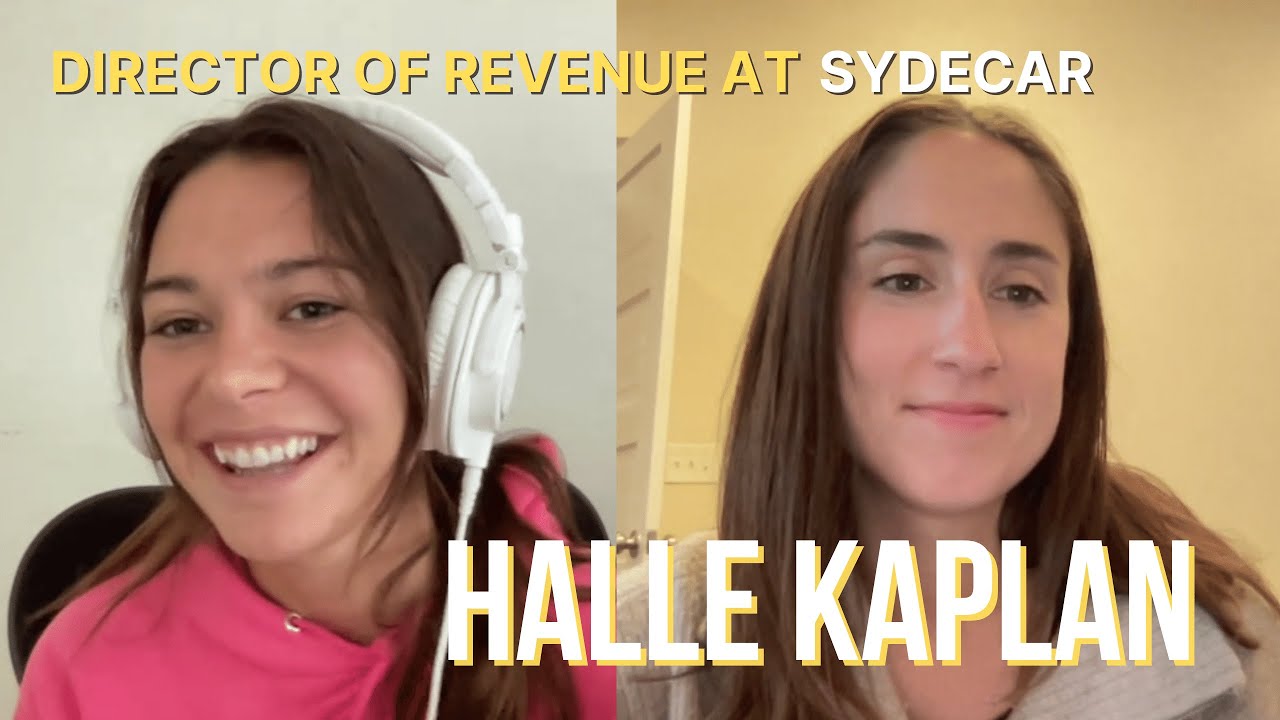
In this episode of Seed to Harvest, host Paige Finn Doherty interviews Hallie Kaplan Allen, growth and marketing lead at Sidecar and author of the Automatter newsletter. Hallie discusses how Twitter and long‑form writing opened doors for her, describing her collaborative, non‑rigid writing process and the value of editing partnerships. She contrasts her previous role on AngelList’s back‑office operations team—where she learned venture fund administration, regulation, and the complexities of SPVs—with her current work at Sidecar, building an on‑ramp for emerging venture investors. Hallie explains the motivation behind Automatter, aiming to demystify fund admin and avoid reinventing the wheel. The conversation moves to broader trends: the expansion of the creator economy beyond mega‑influencers, the verticalization of creators, and the rise of niche creator‑funds. They examine Web3’s hype around DAOs, arguing that both Web2 and Web3 tools can achieve transparency, accessibility, and efficiency, but the real impact depends on governance rather than technology. Hallie introduces the concept of ecosystem operations—systematizing partnership workflows between LPs, founders, and fund managers—to help solo GPs leverage an “operationalized army.” They share concrete marketing tactics used in venture, such as transparent LP disclosures, fintech‑focused community events, and spontaneous Twitter Q&A sessions. Finally, Hallie invites listeners to connect with her for SPV collaborations, writing projects, or to follow her on Twitter.
Chapters
Hello everyone and welcome back to Seed to Harvest. Thanks for your patience on this episode. I've been traveling, so I do apologize for the wait, but today I have a very, very special guest and dear friend, longtime collaborator joining us, Hallie Kaplan Allen. She's currently leading growth and marketing at Sidecar, a private investing platform, and was previously at AngelList. She runs arguably one of the best kept secrets in venture, the Automator newsletter, and we first met on Twitter in 2020 and immediately hit it off. Holly, thanks so much for joining us. I'm stoked to have you.
Oh, thanks. I'm so excited about this.
Thanks for having me.
Yay.
Of course. This has been a long time coming. So we both live in, live, lived in cities outside of Silicon Valley, and Twitter has given us a really interesting opportunity to find a voice in that broader ecosystem. So I would love for, if you could speak a bit more about some of the interesting opportunities that writing online has brought to you, because a lot of our listeners either write online or want to, so would love for you to share your experience doing that?
Yeah, I feel like I have a hard time talking about without sounding so cliché because to your point, like I've lived in New Orleans for the past 10 and a half years and, um, really like for much of that time didn't have a full awareness of the tech inventor ecosystem that existed either in Silicon Valley or on Twitter. And, and so like I said, I, I feel like so Cliché when I say this, but like it really has opened up the world of opportunity for me in so many different ways. I, I did start using Twitter because I read somewhere that it was a good way to network in like startups and venture. And I, I am an introvert and like really never expected that much to come of it. And, and definitely wasn't like super consistent with like trying to build a brand or anything like that, but Um, I did find this like very specific, I think somewhat niche space to start writing about both on Twitter and through my newsletter. And it resonated with people and like, I don't know what else to say, but the rest is history. Like it's brought me so many fulfilling relationships that I wouldn't have had otherwise. And, and like I said, I think like saying like Twitter introduced me to all these people and whatever, like it sounds cliché, but it really is. My experience. And I think very specifically, you know, using long-form writing as a way to connect with people and collaborate with people has been so great because you get, you know, you get like a little further past just like what you might be able to capture in like 240 characters on Twitter. Like you actually have an opportunity to find people who you share a lot of ideas and values and interests with. And so I think long-form writing has been, has been a big part of it, but obviously have started a lot of those relationships through Twitter.
Yeah, I think that's how we really got to know each other is editing each other's work. And definitely one of the things that we bonded over was that the writing process is a struggle. I think we were texting back and forth and we were like, what if there's no more content? Like, what's happening? Like, your bar for content gets so much higher as you start writing more and more and you've like explored all these different like niches in the ecosystem. And then you're kind of like, oh, I don't want to like go back and recycle content, but like some people who have joined the party community later on haven't had a chance to fully enjoy those, those pieces. So I'm excited to dig in a bit to your archive later. But this morning I was just looking over your comments in my most recent piece of writing in Google Docs. So for context for our listeners, Holly, Holly and I have been collaborating on writing since December of 2020, and she's arguably one of the best editors I've worked with, like very nitpicky about grammar, which I adore. So can you speak a bit to what your writing process looks like and how important collaboration is to you in that process?
Yeah, I wish I could say I had like a writing process, like I light a candle and I get in the mood, but like I really don't have a rigid process. And I think that's definitely part of the reason why I haven't been super consistent in like writing at all or writing for Automatter over the past several months as other priorities have come up. And it, It's kind of purposeful because sometimes I feel like that level of rigidity takes kind of like some of the joy out of it. That being said, like I have heard from other people about how they have, you know, a little bit more structure to their writing process and it's really, really fulfilling for them. But kind of like you said, like I have this bar for myself that's definitely increased over time. And at a very basic level, I think the bar for myself is like, I won't write about anything that I don't think is interesting. And, and now Having a job where I write for a company as part of my like actual job description, like there's obviously that becomes a little bit more tricky, but I also have this like aversion to writing about things that I think have been talked about a lot. Mm-hmm. Or like writing things that I feel like have already been said a million times. But I think like one of the things that's helped me work through those challenges or those aversions is finding people to write collaboratively with, whether that means like Actually writing a piece with other people where like one person's writing one paragraph and one person's writing the other, or, you know, having a really good kind of like copy editing collaboration process. I think one of the things, like I've always been a really good writer, like technically speaking, you spoke to my grammar, like I don't know what it is, but I just like picked up on that at a very early age and, and have really enjoyed the technical side of writing, but I think what's more of a challenge for me is being able to like get a really good sense of what other, what resonates with other people and being able to tell a story that I can kind of like get other people to buy into and get excited about from the beginning. Take them along a journey where it's not just like, here's my thesis and my supporting paragraphs, but like, you know, really like using kind of like a hook and using emotion and me appeal and telling a story. Memes. Use a lot of memes, right? After I finish an article, I go deep on memes and GIFs and it's It's my favorite part of the process. But yeah, I think writing, writing collaboratively has definitely like helped me through that challenge, which is like understanding what's interesting to other people, what brings other people into a piece at certain points. And like, I've enjoyed that because it does make me feel like I'm kind of like leveling up my writing, even if I'm not finding new topics to write about, even if I'm not like the most interested in what I'm writing about. I, it's another challenge that's like really fun to try and fulfill.
Yeah. So let's dive into that a bit. You recently joined Sidecar, which is an early-stage startup building an on-ramp to venture capital, starting with SPVs. So would you mind sharing more about how your role has shifted since leaving AngelList? I'm sure there's different aspects to this based on the team size and the structure of your role, so I would love to hear more about that.
Yeah, the roles are, are night and day, even though they're both in this very specific niche of like venture and investment tech. At AngelList, I worked on the back office operations team where I was helping to execute and build a lot of the workflows that kind of like support the back office of venture capital. And that was my first exposure to venture ever. Like, I've written about this, but I didn't know anyone who worked in venture. I'd never taken a finance class. I didn't know any, like, I didn't know about financial statements before I started at AngelList. And so I learned more about like, you know, I was actually executing these workflows, so I learned more about kind of regulation and venture law and fund admin than like I could ever possibly want to know. At the same time, you know, and it was, I mean, it was amazing. It was the best crash course to venture you could ever get was working in that role. And one of the things that I learned outside of kind of like the words and the jargon is like how complicated and confusing it all is. And at the same time, I was kind of like building this community and meeting a lot of people in the venture space through Twitter, many of whom like you are, you know, were kind of like starting off with with forming syndicates and then starting funds. And like, I was like, how are these people, like, like, how are these people figuring out all of these challenges? Like, I, I can explain to people what I'm doing in my day-to-day at AngelList and like lots of, lots of kind of emerging fund managers use AngelList to take care of a lot of that stuff. But it's, it's so unbelievably confusing. And if you're not paid to, to actually know all of those, yeah, kind of like that jargon in your day-to-day, then like, how are people doing this?
I like what you said about like, you know more about fund admin now than you ever wanted to know. I feel like I didn't know that much about it and then obviously started a venture firm and now I know way more than I— It's all super, super interesting. But yeah, you have to, and there's not really a crash course you can take. Like when there is money and fiduciary responsibility on the line, you learn pretty quickly like how to do things and you ask other fund managers, it becomes like a much more urgent situation, but it's not necessarily like an elective class that you're going to take in college or there's not really crash courses available, which is one of the reasons I think your content is so important because it really fills a gap in that education for emerging managers of like, okay, what's actually going on behind the scenes? What do I need? What are like the different considerations and trade-offs?
Yeah, I was just going to say like that you touched on it with the fiduciary duty and the responsibility, like especially as someone who has recently gone from syndicating deals to raising a fund, like you have this leveled up relationship with the people who are trusting you with their money and like it doesn't work for you to just say like, oh, don't worry, I'm handling it. Or like, don't worry, my back office is handling it. No, you have to be able to speak the language and And it's, you know, but there's, once again, like, you're not a, you're not a lawyer, you're not going to school for this. Like, there has to be a middle ground for those people who are like so passionate and creative and well-connected and have access to capital and deal flow. Like, there has to be a way for those people to invest in the opportunities that they think is really exciting. And that's a lot of what we're trying to solve for at Sidecar and And a lot of kind of like the educational writing and just general kind of like opening up these conversations about this stuff is what we're working on, complemented by a product that's actually going to empower emerging venture investors to make informed decisions, make decisions that are compliant, but aren't compromising, like, you know, something in their relationships with their LPs or compromising the returns that they can get because As I'm sure you've learned, like it's actually pretty fucking easy to make a mistake that costs you a lot of money, whether that's money in legal fees.
Yeah.
Or not taking advantage of some—
We had to make like an amendment to our LLC. Yeah. And it was like, A, a lot of time to communicate that change and then B, a pretty hefty legal bill. So it's relatively easy to miss something and people do it all the time and to change those mistakes. I like, yeah, it definitely can't be underestimated how important getting these things right the first time and then also how common mistakes are.
Yeah. And it's, it's the, the commonality is, is what's so crazy. And it was a big reason why I wanted to start Automatter is cuz it's like, why do you, why does everyone have to reinvent the wheel? Why does everyone have to like carve their own path?
Well, no one talks about it. Yeah. No one talks about like their back office adventure.
No one talks about it.
I was like, I remember reaching out to like this group of emerging managers. And I was like, oh, so what do you all use for like CRMs? And they're like, oh, we don't really use anything. And of course, like coming from like a tech sales background, like when I was at WorkOS, I was a developer success engineer. I was like, automate everything possible. The relationships are the most important part, so obviously you can't automate those, but everything outside of that should be in a way in which it supports like the nurturing of those relationships. And I feel Distinctly similar about how fund admin should be as well. 100%.
You have to, you have to find, especially as, as a solo GP, or I mean, you started your fund when you still had a full-time job. You were investing when you still had a full-time job. Like you can't, you can't do it all. Like you literally can't. You have to find ways to automate.
I want to dive into, we're teasing everyone, just like touching on some of these side topics. So I want to dive into some of your favorite pieces. I loved going back and rereading them. So some of my favorites were the emerging manager toolbox, which when I went back in our Twitter DMs was something that we were like bouncing back and forth between each other, and that was so fun. So from The Year Everyone Became a Creator, which is one of my favorite pieces, I like to share a quote. So 2020 was the year that everyone became a creator, from YouTubers, TikTokers, and Substackers to no-coders, gamers, educators, sex workers, and more. If you make money online, you're now a creator. And as Hugo Amsalem explains, a creator isn't someone who creates, a creator is an individual who scales without permission. So there's a few explanations for this craze. COVID created so much leisure time online that it was finally viable for a critical mass of creators to earn a living by monetizing online content. And the average creator wouldn't be able to make a killing or even a living off of a single platform, but if they stitch together revenue streams across TikTokers, creator fund newsletter subscriptions, and NFT sales, they could make it work. So you wrote this in July of 2021. How have you seen this trend expand since then?
It's definitely expanded. Expanded is the right word, which is like, I, it's, it's so awesome. Like I, I think I mentioned in that piece, you know, we, we talk about like creator funds. I mean, I think Charli D'Amelio finally just announced her, the D'Amelio Family Venture Fund a couple weeks ago. So like, You know, you have that aspect or that level of creator, but I think there's been this expansion both horizontally. So like, you know, different types, different folks from different industries getting involved, whether it's athletes, journalists, you know, online content creators starting to get involved in investing, but also like expanded vertically where like it's not just these people with millions or hundreds of thousands of followers on Twitter or Instagram or TikTok that can monetize their following. Like, You have these people who come from very, you know, modest backgrounds who have really organically and probably over a long period of time built really engaged communities. Actually, I was just reading just before this that 776, Alexis Ohanian's fund, just announced this initiative where they're investing in a bunch of emerging fund managers.
Oh yeah, the Titans Project.
Yeah. And like the, the, the, 3 that he announced today, like Allyson Felix is an Olympic gold medalist. Obviously she's like absolutely incredible, but like not someone you would assume to have a venture fund. And one of the, one of the other girls whose fund he's investing in is like someone I like knew in high school. But you have this like expansion where, you know, once again, like you don't need to be someone with hundreds of thousands of followers. You just need a very specific value prop and area of expertise. One of our, one of our really awesome favorite, not that we have favorite, but great foundational customers at Sidecar, Nick Milanovic, has just announced his venture fund, the fintech fund that he basically like built off of this newsletter that he created. Mm-hmm. I think like 2 or 3 years ago. Um, he originally created it just for his like internal team at the company he was working at and He grew it to this newsletter with 10,000 followers and a $10 million venture fund. Yeah, like pretty incredible.
I think like a similar thing that is happening on the creator side that's happened on the venture side is you have like these large multi-stage, large like name brand firms. Then you have like very specialized folks who specialize in like product or go-to-market. And I think we're seeing a similar shift with creators or influencers where they're really doubling down on a specific niche. And while they might not have like millions of followers, that engagement engagement with a very specific community can oftentimes be even more valuable because it is so targeted and their community feels so involved and has such a clear understanding of what their brand is and what they stand for.
Yeah.
So I, I, I really like that emphasis on the verticalization of creators. One of my other favorite opening lines of yours is, I regret to inform you that today I'm gonna write about DAOs. For context for our listeners, DAOs are decentralized autonomous organizations. And they have become more prevalent in venture with companies like SyndicateDAO. And I'm curious, you wrote this in 2021, but how do you think the emergence of Web3 has shifted venture from an infrastructure perspective? It's gotten a lot of hype online, but some of the points that you touched on in your article about this include transparency, oversight, accessibility, and efficiency, along with assumptions and kind of the breakdown of those assumptions from a Web3 perspective.
Yeah, I, it is important to note that I wrote this, what, like 10 months ago? 'Cause I think DAOs have totally followed the hype cycle of kind of like huge wave of hype that's died down and people have become a little bit more critical in their analysis and evaluation of, of the structures. But the main point of my article was like, I felt like people were getting, were really emphasizing, you know, like DAOs are good because they automatically result in, in those things you said, like transparency, accessibility, efficiency. And then within that, there's this implication that like a DAO is the only way to achieve those things in the context of venture, of in investing as a group. And that's just not the case. Like, so the, what I did in the article was basically break down the way that existing technology, not Web3 technology, Web2 technology, if you will, can result in those same things. And in the same vein, like both Web3 and Web2 technology can use, can be used for good or evil.
Mm-hmm.
There's nothing inherently good or democratizing about using a DAO to invest, just like there's not anything inherently bad or exclusive about using an SPV or a fund to invest. It's about who's in charge, who's making the decisions. And like, yes, someone is making the decisions, even if it's a DAO, there is decision-making. Like, and, and once again, like over the past 10 months, I think people have started to look at DAOs with a little bit more of a critical lens, which I really appreciate.
Yeah, it's been really interesting 'cause that was something that I think like we focused focus heavily on the future of work and the future of play. So we, we often get a lot of questions about how we see Web3, and I think your piece on it specifically was really interesting to me because you are so focused on fund operations and you've been beating the drum around the contrast of a DAO versus a venture fund isn't necessarily the comparison that you need to make. It's kind of like a venture fund without the correct tooling.
Right.
Versus like a venture fund with the correct tooling in place to be able to empower the fund manager their investors and their founders to have more transparency, oversight, accessibility, and efficiency. And you can do that with a range of tools, whether those are Web2 or Web3. So it's super interesting to see how that piece has matured over time. I was just getting coffee with Heather Honette in New York, who's on an earlier episode of Seed to Harvest and is one of our investors as well. You quoted her in your excellent piece on automating ecosystem ops. So in it, you quote Heather explaining that a platform function is how the firm helps you build the community and ecosystem around your idea. So I would love if you could speak to the benefits of ecosystem operations and what that means to you. Community is a buzzword that gets thrown around a lot, but I really enjoyed your piece on this and would love for you to share further.
Yeah, so ecosystem, one, love Heather, loved her episode, love everything about her. And Human has been like really instrumental in defining what platform looks like at like a modern venture fund. Ecosystem operations is a term that I stole from this startup Crossbeam that I've always been really interested in. And their definition of it is something around like, it's, it, ecosystem operations is the workflows and systems that enable you to source and implement partnership opportunities. And what I, when I hear that, it's like there's such an obvious application to venture, right? Like, like your partnerships are with your LPs.
Yeah.
It literally is a partner. And when you think about like Like surfacing and implementing opportunities within those partnerships. Like, this is so relevant to the demographic I speak to of emerging fund managers and solo capitalists where like, yes, you're technically working on your own, but like you also have this huge army behind you.
It's nuts.
And like, yeah, some of them aren't going to want to be super involved with you or with your portfolio companies or with decision-making, but like some of them are and some of them are really smart and this is This is a trend that we've seen more and more where you have other venture capitalists or other kind of like really smart operators acting as LPs within emerging venture funds. And like those people can provide immense value to you, to your portfolio companies. So like figure out how to categorize, systematize, and operationalize those relationships. And you're no longer a solo GP. You're no longer working on your own. You're working with this operationalized army that can provide immense value. Yeah. It was cool.
When I first read it, I was working on my syndicate, and so I was thinking of that. And then I read further down in the piece and you quoted me. You're like, Paige, an angel investor and syndicate lead, recently posted a Twitter thread highlighting 15 of her LPs, including their day jobs and areas of expertise. I remember getting a lot of critique on sharing my LPs because it was kind of like a no-no back then. And you noted that this is an unbelievable marketing tool to generate future deal flow, and it did, which was really interesting. But I'm curious what other interesting marketing examples that you've seen in venture. I think you have a really good pulse and ambient knowledge of random tweets as well.
That is the truth. Takes up way too much—
Brain space.
But lives rent-free in my brain, as, as Gen Z says. Yeah, so one, like, I, I think like you deserve credit for that because it is a good marketing tool, but it's also just really smart in terms of kind of like Pushing the boundaries, like you said, like people used to think it was weird to say who your LPs are. Like that's completely shifted over the past year. Like once again, when you have these incredible operators or investors as LPs in your fund, like you all deserve credit and should talk about that openly. But in terms of marketing, I actually, I mentioned the the fintech fund Nix Fund a little while ago. They actually do these like fintech happy hours around the world, literally around the world because he's really focused on emerging markets. too. And, and I've talked to him about a bit about this because I used to work in events and like events are like really low ROI for the most part. Like they take a lot of work, they're exhausting.
Mm-hmm.
And they don't, as a fundraising tool in or outside of venture, like as a fundraising tool, they actually don't generate that much because they are, events are really expensive to put on. But the way that Nick's talked about it, like his entire goal with what he's built is to like build this really tight-knit fintech community where people are providing value to one another. And obviously there's this element of spontaneity that's created in in-person events that people have been missing over the past few years. So that's something that I, I think is, is really good for marketing and just general community building. And then I also actually saw on Twitter, I think yesterday or the day before, Haley Bryant, who is part of Hustle Fund.
Mm-hmm.
Angel Squad, who's also an amazing person, did this like really fun, like it almost seemed like completely like spontane— spont— spontaneous Q&A thread with like one of the other participants in Venture, in Hustle Fund Angel Squad, where they just like, she just like asked a question and made it seem like, I mean, I assume it was planned. Yeah. I don't know, but it seemed very spont— spontaneous in a way that I really enjoyed.
So I love that. Super cool. She used to be at Animals and she's great. And I, I, we worked with her at WorkOS and I love, love working with Animals. Yeah, they're a really incredible agency. I learned a lot about writing from working with them as well.
Yeah.
So speaking of events, that's a background that both you and I share. I used to plan like music festivals and stuff at SDSU. You did some really great intimate fireside chats on Zoom throughout the pandemic with leaders in the venture industry that I attended and enjoyed. So can you speak more to the spark behind putting those together?
Yeah, it was. So we did these fireside chats through Automatter and like, it was, the point was to bring people together in conversation and like we always had a featured speaker. So someone who had some expert, you know, subject matter expertise on something specific, but then we intentionally kept the groups really small to like 5, maybe 10 people. And, and the participants were somewhat curated because we wanted it to be a conversation where like everyone was providing value. Like we said, we want everyone to learn something and to teach something during these events. And I think that really did happen. Like, I think it was a lot, it was a lot less about just like having people come together. I mean, honestly, like it was a tremendous tool for, for Jeremy, my writing partner and I to learn about what people were interested in so that we could get free content ideas about it. Yeah, 100%. I mean, yeah, we repurposed all of them into long form. Yeah. Content on Automatter. We did a great one with Samir Khati and with Ben Tossel of Makerpad. Like, just, I mean, it was just a really interesting opportunity to see the questions that other people had for those speakers and then to see where the conversation went. Like I said, it was a way for us to get content to write about. It was awesome.
I love that. I feel like I have found ways to work that sneakily into my, that was kind of why I started the podcast. I was like, I want an outlet to be more rigid around my content production so I can have blocked out time to have conversations with all sorts of interesting people without there being an element of like transaction, which I think is, is challenging to find if you work in venture because it is very much a business where it's, it's like any conversation you have, there's like a slight tinge of that, of like, how can I be helpful to you? How can you be helpful to me? Is there a transaction in that?
But if you get If you get comfortable enough just doing it all the time in different formats, whether it's through the podcast or just—
It becomes super natural.
Having someone on Twitter. Yeah. And then, and then you don't have this weight of like needing to have an ask at the end of every conversation, especially not— you also get a huge return on your investment. Like, like all of this, all of these conversations will come back to, to benefit you in some way. So it's, it's just awesome.
It's nice not being in fundraising mode anymore. I think that was like also the other part. I was in fundraising mode for 9 months. last year. So I was like, I'm gonna start the podcast so I can just like jam on venture stuff. Well, awesome. This has been so fun. I was super excited for this and always enjoy spending time with you. To close this out, do you have any additional things that you want to touch on? And then where can people find you on the internet?
To touch on, if, if you're doing SPVs, hit me up. Sidecars, onboarding new customers. And if you want to write, Seriously hit me up. As Paige knows, it's been, I've had a little bit of a writing hiatus and, and finding people who have interesting stuff to say and wanna say it in collaboration with me is always really fun. So you can, you can hit me up on Twitter. My handle is HKA with 4 underscores in front of it, so you'll probably never find me, but sometimes Paige tweets at me, so just look there.
Thanks so much for tuning in today to Seed to Harvest. If you enjoyed this episode, be sure to subscribe wherever your favorite podcast listening platform is. I'll be releasing new episodes weekly, and if you have any questions or comments, feel free to let me know on Twitter. That's Paige Finn, Paige and then Finn with 3 N's. Thanks, and see you again next week. Bye.
More from Paige



Paige of Behind Genius driving an AI electric train in St. Louis (Intramotev Visit)





