The Business of Broadway: Behind the Scenes with Tony Award Winner Sue Gilad | Ep 92
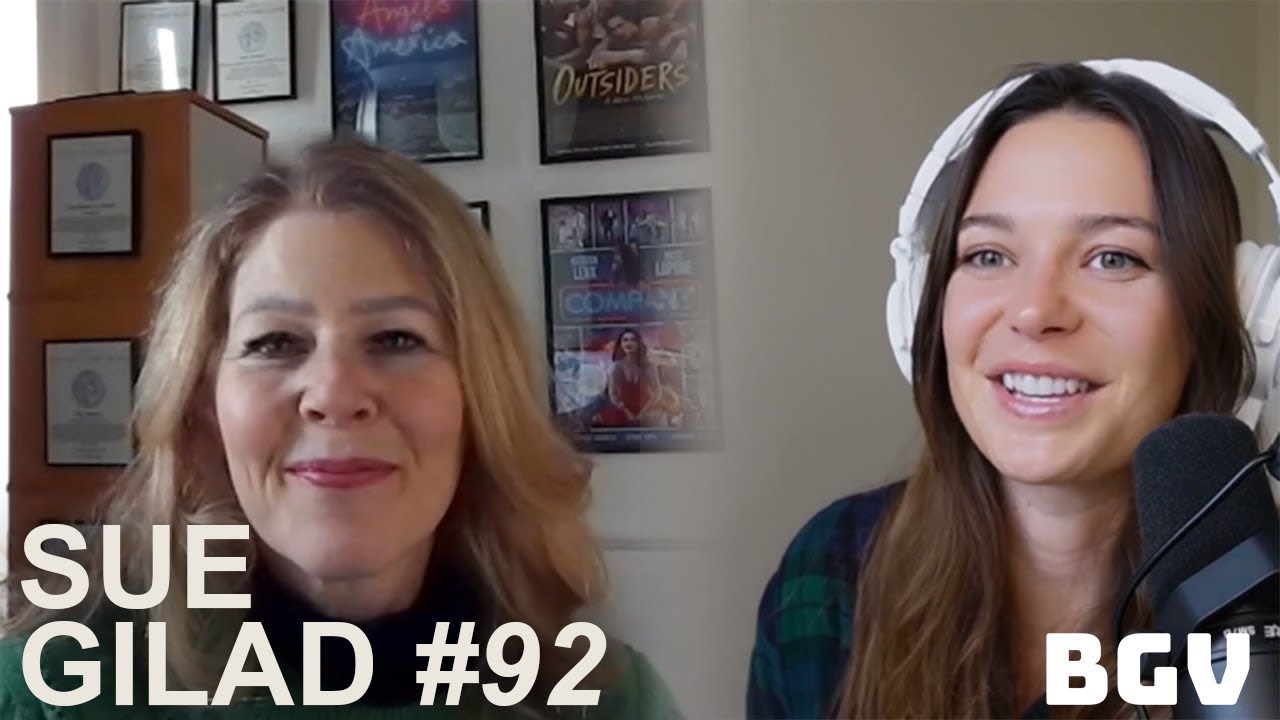
In this episode of the Seed to Harvest podcast, host Paige Finn Doherty interviews five‑time Tony Award‑winning Broadway producer Sue Gilad. The conversation begins with Gilad’s childhood fascination with theater and traces her path from watching shows in the TKTS line to becoming a leading producer. Gilad explains the vast ecosystem behind a Broadway production, detailing the ratio of on‑stage talent to backstage staff, the ownership of the 42 Broadway houses, and the limited number of full‑time producers. She walks through the financial architecture of a show—each production is set up as its own LLC/SPV, requiring $20‑plus million in capital, with investors made whole before profits are split 50/50 between producers and investors. Using Moulin Rouge! and The Outsiders as case studies, she describes how a property is licensed, music cleared, workshopped, out‑of‑town try‑outs staged, and finally opened on Broadway, including the role of creative teams and marketing. The impact of the COVID‑19 shutdown is explored, highlighting the 18‑month closure, the Shuttered Venue Operators Grant, and the challenges of re‑opening. Gilad discusses international expansion, noting lower production costs in the UK due to tax incentives and subsidies, and outlines touring strategies such as the upcoming world tour in Edinburgh. The episode also covers the significance of Tony Awards for a show’s longevity, industry jargon like “break ’em,” and Gilad’s preferred communication tool—the telephone. Throughout, she offers practical advice for aspiring producers and investors, emphasizing risk, audience appeal, and the importance of relationships.
Chapters
Hello everyone, and welcome back to Seed to Harvest, a podcast hosted by me, Paige Finn Doherty. I am really excited to have a special guest on today. Um, so in the summer of 2023, I got an email from one of our investors that says, hey, I have a friend who has been on Broadway for 20+ years and she is thinking about spinning up a fund. Would you be interested in meeting with her? And I think one of the perks of this role is getting to meet other people who are exploring financing in creative industries. So I'm really excited to have on 5-time Tony Award-winning Broadway producer Sue Gilad with us today to share more about her role and her love of theater. Sue, welcome to the show.
I feel so welcomed, Paige. Thank you. And I feel honored that I get to talk about theater all day long. Because when I was a kid, that was like the thing you did in your free time when you really should have been doing your math homework.
Wait, OK. I would— maybe let's start there. When you were younger, did you always know you were going to be involved with Broadway? Or was that like a love of yours? What has your love affair with theater looked like?
Broadway was a fantasy, and it's a dream, and not something I could ever imagine Being a part of. I mean, Broadway was rarefied to me. I would go to work with my dad on Sundays. He had a camera store in the Village, in Greenwich Village. And I would earn enough money, miraculously— thank you, Dad— to go stand on the TKTS line, the half-price ticket line. And then, you know, days before internet, so you didn't know what you got. So you would go and see a show like Torch Song Trilogy. Well, that has So I said, that's probably a musical. That's not a musical. It would not be an appropriate show for me to see. So all day, I mean, everything. And of course, I had the worst seats in the theater, all the way, all the way, all the way in the back. But just to be part, just to, you know, have an experience that you got to see the best people in the world doing it—
Yeah.
—was magical for me, really magical. And my big sister took dance class, Of course I took dance, and my dad was a professional singer, so we're always singing around the house. Um, and then I just became a performer because that's who you saw. You see the actors on stage, you see— we call them the sales force, you know, because they really do a great job on stage. And, uh, you can see the actors and you read, well, I guess that's what I'll do. But today, when I lead seminars and I speak with a lot of students, I say, for the 30 people that you see on stage, you've got another 300, sometimes 400, sometimes—
Whoa! I didn't know the ratio is like that. Wait, so what is— what does that look like behind the scenes?
So, uh, for The Outsiders, for example, we have our 20-some-odd actors that are in the company on stage. Then of course we have understudies and swings who save the show on a varied basis. Then we have backstage stage crew, wardrobe, stage management, company management, front of house, usher, advertising agency, digital marketing agency, our attorneys, our general manager. I think we have the people now that are booking our tour because we're going to launch a North American tour of The Outsider in September. So we have people booking that all over the country, people who work in the regional theaters and the— Broadway in the region. You have a million different ways that you can, like me, be alone to talk about Broadway all day. Just be a part of Broadway. Maybe if you don't have the talent or the interest to do 8 shows a week as a performer, you can still be a part of this world where there are hundreds and hundreds of us. I mean, we're a very, very small industry, but considering how small we are, we're quite mighty. We are integral to New York City's Um, but budget and New York City's, um, tourism, I think that a huge part of New York is seeing a Broadway show. So, and there are so, so many of us that are just bonkers for Broadway. We're a weird, fabulous little cult.
Yeah, I love that. I, well, I guess, um, it's when we talked before, I was like, oh, there's a lot of similarities between the being in venture where you're kind of like behind the scenes, um, and participating indirectly in company building, which is really exciting. Um, and I, I think like from our perspective, venture's grown from, I think before it's like around like 10,000 firms, but can you give me an idea of like what that looks like from the Broadway producer standpoint? Like how many Broadway producers are there, do you think?
Sure. So we start with where we're limited. We have 42 theaters on Broadway.
Okay.
They're mostly owned by 3 theater-owning families, the Shuberts, the Nederlanders, and what used to be Geoghegan and is now the Ambassador Theatre. And then we have a few nonprofits sprinkled in there that you might know, Lincoln Center, Manhattan Theatre Club, the Roundabout Theatre. So we are capped. Naturally, by how many audiences you can have every night. So you have quite a few producers, people who are full-time producers like I am. Some people who get behind a project, they fall deeply in love with this one show, and they find themselves helping shepherd it to Broadway.
Yeah.
And then you have people who are hired as executive producers Because they know where the show should go next. They have expertise. And then other people who just, say, hold the option on the property, but they don't do this for a living. So there aren't too many of us. Now, with that said, there are a lot of shows that are circling around Broadway, hoping to land a theater. Right now, we are climbing this year back to pre-COVID numbers, where we have all of our theaters filled or filling up now at the start of the season. spring, uh, we have as many people, a few more people coming to see Broadway shows. And it used to be, you know, pre-pandemic, if you were able to do $1 million a week in ticket sales for a Broadway musical, you were doing okay. But now we—
Whoa, that's okay? $1 million a week is like okay in Broadway terms?
Well, we want to, you know, we want to make back our Investors.
Yeah, I'll ask you about that in a, in a second, more on the business of Broadway side. But yeah, please continue.
Yeah, and then, you know, we have running costs, right? So our single biggest running cost is probably advertising and marketing to make people think it's a good idea that, hey, you should come see a Broadway show, any Broadway show. But then, hey, if you're seeing a Broadway show, well, come see mine, I think, you know. Advertising and marketing to make that happen. And then we have running costs wherein we have to pay— we have 19 unions, I believe, on Broadway. They're not just our actors, but our stage managers, and our wardrobe, and our press reps, and everything. There's a tremendous ongoing cost to keeping Broadway open. But when thrilling, beyond thrilling this season, if the audiences think it's worth it, and they come, and we see them coming in droves. And for The Outsiders in particular, which is our newest show, which just opened last season, We see kids coming to see it, teenagers and kids in their 20s, and coming out, you know, throwing their arms around their parents, sobbing, laughing, saying, we have to come back, we have to bring Dad. And we were really worried as a community. We were worried, and I was really worried because I had kids that age that, you know, there was 18 months where they couldn't see anything.
Mm-hmm.
All they could do was watch Netflix, and Netflix was of winning, and everybody lost the magic of sitting in the dark together and being told a story and going on this epic journey and being changed together by the end of 2 and a half hours. And for a long while there, we thought we'll never get it back. And now we're finally here. We've got the right moment.
Yeah, I, um, I don't know when in the right time, the right time in this episode is to share it, but You very nicely arranged seats for Moulin Rouge!, which was my first Broadway show in 2023. And it absolutely blew my mind. I was like, I honestly, like, I didn't know what to expect. I feel like I had, like, seen posters and seen some, like, videos. But the experience of being in a dark theater with hundreds or thousands of people watching actors perform, dance, sing live, and just being like, oh my goodness, like the work that is going into this behind the scenes, you don't really know what it is, but it's like so incredible to see. I don't know. I remember like calling, um, uh, I called my boyfriend on the way back from this show and I was just like, Oh my goodness. I think I walked probably like 50 blocks back to where I was staying, and I was just telling him about it the whole time. It was like the most fantastic experience. Um, so I feel like I got to experience it firsthand through you. Um, maybe we could talk a little bit about like, how does a show become born? Like, how does it come from like idea or— other media property to that experience on Broadway?
Yeah, it starts with an idea. It always starts with an idea. With Moulin Rouge!, it was a film 20 years ago, more than 25 years ago now. And Baz Luhrmann directed that film and came up with a vision for it. And then the one thing that you can't do in film is you can't be No. Baz, along with our director, Alex Timbers, said, wouldn't it be amazing if you could have a live production of Moulin Rouge! The Musical where you step in— and hopefully you felt this, Paige— you step in and you are inside the Moulin Rouge! You are inside the cabaret.
Oh, yeah.
Audience within the audience. And so it becomes like you're a magical night within a night. Because you're part of the show, and then you're also part of the show within the show. And that was the conceit. That was the initial concept that made it be distinct from and unique to the film. You can go and you can see the film, and you can have an experience with it. But here, you're inside. You are a night at the movies.
Yeah.
You know, on Broadway, I don't know if you noticed this, but at the very front of the audience seats where we We have what we call can-can scenes. And people are sitting, and there's a passerelle, an area where our actors can walk and dance. So if you're sitting in a boat seat, you're kind of watching our actors like—
Oh, yeah.
They're above you, and they're dancing with those big wings above you. And you are— boy, are you in it. And there's a little pre-show where our performers are walking around the stage and interacting with the audience, which is just— It's theater magic. It's just—
Yeah.
How does it show? So for Moulin Rouge, it was already an idea. It was already a fully fleshed-out idea in another form of media. To get it to Broadway was about 10 years because—
Whoa.
Getting the music— well, for Moulin Rouge, there are 74 songs in Moulin Rouge, right? And—
Oh my gosh. OK.
For music licenses, that was one very hardworking attorney. And then it was about where do the songs go to tell the story. Our music supervisor, Justin Levine, said, it's going to be about what the lyrics are telling. And then the lyrics must forward the story. And there were so many songs that were tried and trashed because they didn't fit perfectly in where the story— where it was going to honor the storytelling. Now, that, as you can imagine, took a bit of time. Then we did our out-of-town tryout. That was the summer of 2018. We actually brought back the Emerson Colonial Theatre in Boston. It had been closed for a while, and it was older and majestic and everything you hope from Moulin Rouge! We completely sold out of that run in Boston.
In Boston?
And then a year, almost a full year later, we opened on Broadway at the Al Hirschfeld. And the Al Hirschfeld was really custom-built For Moulin Rouge!, I don't know if you noticed, but underneath the box seats where you have sort of some ceramic, there are little windmills that are carved into—
Oh, yes, yes. Yeah, I remember seeing that.
Oh, well, I think Moulin Rouge! is going to be here for a while. So we opened in 2019, and things were going very, very well for the show. We got beautiful reviews. We got 15 Tony nominations, I believe. And then in March of 2020, we were actually the first show to shut down because we had some unusual programming. We had a Thursday matinee for the show, and our audience was sitting in their seats, and it was 1 o'clock on Thursday, March 12th, and an usher didn't feel well. And so the stage manager made the unenviable announcement, We are sorry. We have to cancel the show. Please go home. We'll find another way to get you into the theater. And that night on Broadway, Six, the musical Six, was supposed to open. It did not open. They had their opening night party with just a few producers there. Every one of those producers got COVID. COVID swept our community immediately. From that night on, we shut down every Broadway show. We shut down 500 seats or more. You couldn't do your show. Everybody on Broadway went to go see an Off-Broadway show that night, Paige, because the Off-Broadway shows under 500 seats, they were still open. And we thought, oh, we'll close for 3 weeks. Oh my gosh, 3 weeks. We will lose so much revenue. We'll lose so much momentum.
Yeah.
They won't come back. 18 months later, Broadway opened. And it took— You know, Moulin Rouge! was fortunate in that at the very, very end of the grantmaking, there was a grant that came out for live theater called the Shuttered Venue Operators Grant. It took a very long time to come out. We thought for a long time we wouldn't get anything because, like, admittedly, food and shelter are probably more important, right?
Yeah.
But in the end, we were able to get— and the qualifying shows got $10 million. And that was to open the doors and to put in a new HVAC system and to start rehearsals. and to start the marketing machine again and to give people a reason to come back to the theater. We were really fortunate with Moulin Rouge! We ended up being honored with 10 Tony Awards, including Best Musical and Best Choreography and everything you can imagine. But when we reopened, people really wanted to forget their troubles. They really wanted to get lost. And Moulin Rouge! was the perfect place to do it. So it's still running on Broadway. We have 7 other productions around the world now. We're just about to open the world tour in Edinburgh next month.
Whoa.
On England Moulin Rouge.
It— yeah, it was amazing. Um, wow, I had no idea that Broadway was closed for 8— like, 18 months is, is very long. Like, that, that must have been like some of the longest closures of like any industry. Right?
We were on pins and needles. We thought it was dead forever because that was compounded by technology happening very, very quickly. And if there was any movie that to see or any TV series, it's on your phone. You can sit for years and never run out of content on streaming. So you keep with that. But as you know, I think from having seen Moulin Rouge, it's breathtaking.
Yeah, it definitely doesn't compare to watching a movie on your phone. I don't know, man. Okay, I guess, um, one of my questions would be like, what, what do you do as a co-producer of Moulin Rouge? Like, what is your role?
So there are different levels of producer. I was a young producer on Moulin Rouge. So co-producer means you bring whatever your skills are to the table. Um, as a co-producer, you'll raise a certain amount of funding because Broadway has gotten so expensive with labor that no one who produces wants to or can do it alone.
Yeah.
You know, to bring a Broadway musical to fully open on Broadway, it's upwards of $20 million. So you get a whole team to do that. And then my job now is to make sure that Moulin Rouge! stays front and center of people's minds. So we bring a lot of groups to the show. We'll introduce them. We'll talk to them about, like, what did it take to get here? So by the time they see the show, They're really honoring the art of it. They really respect it. And it's very, very fun to bring a group to Moulin Rouge! because if they didn't want to party with each other beforehand, oh boy, they will after. They're going to want to have— you know, here's what we unofficially call Moulin Rouge! We call it the get lucky show because it's very romantic. It's very—
Yeah. Yeah.
A lot of people, the audiences who are maybe single, and then during intermission, they're talking to each other by the bar. And then somehow they end up leaving together. This is a fun game, Preston.
Oh, that's cool.
It does all the things. It does the thing.
Yeah.
So if there's this thing you fancy, you probably want to invite them to Moulin Rouge. It's going to be an effective night for me.
Yes.
So my job is to make sure that people are still excited about the show now that it's, you know, Um, oh my gosh. 6 years since Moulin Rouge opened on Broadway. Now I'm a lead producer, so my job was, for Les Mis, figure out where did they go next. So Les Mis, the film with Cher, Christina Aguilera, we opened in Manchester in the UK half a year ago. And there was sold-out houses and crazy standing ovations. So then we said, let's really see if this works. Let's go to an openly hostile town to just see if the audience is still like us. And we chose Glasgow in Scotland.
That's awesome.
I mean, Paige, they're not shy. The thing we got to, standing ovation, sold out. We went back to Manchester because we didn't have enough tickets. So we had to go back again. And this year, we're going to be opening in the West End, which is London's answer to Broadway. The costs in the UK are somewhere between a third and a half of what they are on the NFL. Yeah. Yeah.
Why is it, is it labor costs or is it like different venues or what is the, why is this much less expensive?
It's the fact that the UK have sort of this storied history of bringing English language art and they have tremendous subsidies and very generous tax incentives by the government. The Broadway community has a tax credit, but you will not get that tax credit when your show is in development. You will only maybe qualify for that tax credit after your show's been running on Broadway. So in some parts— The funny part is that we haven't had what we call the first-class production, the West End production yet, and yet we've got the tax credit. back from the UK government, which has really helped us get through the next developmental step. It's really generous, really incredible. We have a lot more American producers who are finding themselves across the pond and producing first in the UK.
That is super interesting. OK, wait, so walk me through the business of a Broadway film. So as a producer, you would raise some part of the— $20 million. Um, and I think we, we talked about this a little bit, but it's kind of like a, like the, in venture, it's like an SPV. It's like a deal-by-deal basis. So, um, for a long time you've done that before. Can you walk, yeah, maybe like walk us through what that looks like and how a Broadway deal comes together and works?
Yeah, you hit it exactly. Each show is its own LLC, is its own SPV, and That means that if you have good luck with one show, it had no bearing on the next show, right?
True.
So it's not just being an entrepreneur, Paige, it's being an entrepreneur with every new show, bootstrapping.
Yeah.
From the beginning, and you have, you know, no guarantee that this one's gonna succeed just because the math seemed good. So first, the big challenge is finding a property that is gonna light you up and you're gonna spend years So I spend a tremendous amount of time going to readings. People submit scripts all the time. My friends who I've worked before share the work that they're working on with me. You know, we have a brand new show right now called When Elvis Met the Beatles. And this—
Ooh.
My 2 talented Irish writers. And it's based on a book, The Night Elvis Met the Beatles. It's a true story. They did meet. And this has amazing music from Elvis. An amazing music from the Beatles, and a very hot story of booming and who's more important, respect, but also a little bit of envy. And oh, it's it's just all the delicious things in theater.
Ooh, yeah.
The Beatles is WeChat. Some of the writers, and now we get to do the fundraising. And luckily for our industry. When you fundraise for theater, only fundraise what you need right now, right? So for, for Wasp, we needed to raise about £8 million, but we've been doing that over the past 10 years. So every time we have another developmental workshop or we go out of town to Manchester and we want to pay for the costumes and we want to pay for the sets and we definitely want to pay our actors. So we raised a certain amount of money. And depending on when you come in, there's preferred returns. If you come in at what we call front money, very, very earliest stages, there's no proof of concept. We don't know if this thing's gonna work. We don't know if we're gonna feed it. We don't know if people will care. Then you're going to get up to 100% of the producer's profits. Because how—
What?
Our investors are made whole first for the $20 million or whatever it costs to put on the show. $20-some-odd million. Once our investors are made whole, then we split profits 50/50.
Mm-hmm.
Producers 50%, investors 50%. And so if an investor came in at $1 million and then they get their $1 million initial investment back, now what they're gonna see is their profits are gonna drop down. They'll come in more slowly 'cause now it's pure profits. You'll get 50% and then 100%. 'Cause at long last, the producers get something for our work. It's a very bad proposition to be a producer. You definitely don't want to hang your hat hoping that you're going— because it is adventure. There is no way to guarantee in theater that it's a success. The closest thing you can guarantee is once you're a huge success on Broadway, like The Outsiders is, the tour is going to be a very good investment. But nobody can get into the tour because all of our initial investors have the right of first refusal.
That is so cool. Yeah, it follows a very similar path to investing in an early-stage startup. Like, it's like you have, um, well, there is— I guess it's a little bit different because it's less like profit-oriented and more equity-oriented. So the equity would be less expensive, and then it gets more expensive and more competitive as the rounds go on. Granted, everything's gone up. Yeah.
In any kind of theater, really. But on Broadway, if you have a home run, if you have a Moulin Rouge! or an Outsiders, then your investors will benefit for years and decades from that, as they should, because without them, we wouldn't have a show. They take on huge risks. And, you know, some investors come on board because they want to come to the opening night party. They want to meet the star.
Yeah.
They want the— press dates. And, you know, they want to know if we're going to be in the New York Times. They'll get that— they'll get that copy of the New York Times before it comes out digitally, which is cool. There are a lot of perks, you know. But at the end of the day, food is art and it's totally subjective. And my first question is, after it hits me in the gut, who else will care about this? I have to make sure it's not just going to be me. If I love something but it's not commercially viable page, I can't do it. And that's always the pull I have in my industry. Commerce. Is it artistic? Does it move someone and scoop your insides out? Will you scream with laughter? Will you sob to the depths of your soul? Great, check. Now, does it make sense fiscally? Do we have enough of an audience internationally and around the world that will also be moved Because burlesque, for example, is one of the top ten most popular Western films in Japan. In Japan, they are dying to do burlesque on stage. Japan?
Yeah.
I mean, so crazy. But that that mitigates our risk a little bit because we know there's an audience chopping of a bit. So one cop.
Whoa! Um, I would love to hear about like. What is it like to win a Tony?
Oh, oh my gosh. First of all, it's as thrilling as you can imagine. But I'll talk to you about our most recent, which was The Outsiders for Best Musical. And Best Musical is the very last award that is given. So it's 11 o'clock at night. Your makeup is drooping. Your dress is drooping. You're on pins and needles but trying to be cool. And a few awards before Best Musical is Best Director of a Musical. And everyone in the industry was quite sure that that was going to go to not The Outsiders. And then they announced our director's name, Danya Thaymor, who really— she made magic with The Outsiders. That's the only way to describe it. The way that she pulled the entire creative team together to make the sound, the light, the choreography, the costumes all seamless and all telling the exact same story. You'd swear you're in Tulsa, Oklahoma, 1967, right, Paige?
Sure.
She did a magical job. And this was the first musical she'd ever directed, ever. And they went on that evening, and she had the look on her face that I think all of us had, like, It wasn't— they didn't call my name. When she got up on stage, we all said, oh, wait. We have a chance. If all of the Tony voters saw what we were striving for, what the show was trying to put across, and they shared those accolades with Danya, then maybe there'd be a moment. And then I bit all my fingernails off. So that was good. And then they— no. And my producing partner Larry was getting closer to the aisle, and he got up. And they said Outsiders. And I swear to you, Paige, I heard Hell's Kitchen. I swear. And I thought, oh well, at least Daniel won for Best Director. People were— and he looked at me, and he grabbed my arm, and he goes, get up. Now, creatively, your head goes— I said, I'm not getting up. They said, hell's kitchen. That's embarrassing. It's Thomas Chef. Anyway, I said, what?
No.
And he was like, what is the matter with you, dummy? Get up. And that was our day. And it was really special, you know. Angelina Jolie is one of our general partners on the show, and she can't record because her daughter saw the show when we were out of town in California, but boy, we have And her daughter just saw the show again and again and again and spoke to her. And she brought her mom to see the show. And her mom called our team and said, my daughter wants to be part of this. She wants to be— and we were like, OK. And Arena Doherty, so supportive and so wonderful throughout the entire process. She came to the Tony Awards, got up on stage with us. It was a real honor, like a pinch-me moment, you know?
Wow.
But the best part of it, I have to say, the absolute best part of it Is that hundreds of thousands of people who would've never known what The Outsiders is will now, I mean, they'll know about it. They'll be honored to go see it. It's the show that they've picked on their one big trip to New York. No, we, you know, already the tour is routed for the first year and will, will hit so many cities of people who could've never made it to New York, but they will also share in the magic because Tony Award winner means we get our press book when we go on tour. And more and more audience members will be profoundly moved and will be excited to think about what does family mean to them? What does brotherhood mean to them? What does love mean to them? All of the themes of The Outsiders that are so beautifully elucidated in the play, people will see it. And we— and that, that's just it.
That is— yeah, that is incredible. What, what a spectacular experience to have. Um, I think at this point in the episode, I usually like to ask our guests if, if there's any questions that they have for me. Before I do that, I have 2 rapid-fire questions. So the first would be, what is a phrase that only someone from your industry would understand?
Break 'em. Um, break 'em.
Break 'em.
Yeah, it's short for break a leg. And do you know, have you heard of break a leg?
Yeah, I have, but not break 'em. Is that both of them?
Yes. Well, so break a leg, everyone thinks it means the, you don't wanna say good luck in the theater, so you say the opposite, break a leg, and then, you know, things will go well and you won't break your leg. But what it actually comes from is from the days of vaudeville when you signed up on a huge list and hopefully you would get to perform in vaudeville if there was time, if the other act in front of you was short enough or they were excited enough to put you earlier on the bill.
Yeah.
And that heavy curtain came down between acts. And then if the red curtain came up and you were on stage, it would literally break enough that you could see your leg, and that would mean I performed for tonight. I got an audience. I made enough money, a nickel or a dime, to get a warm bowl of soup and to get a bed for tonight so I can continue to pursue my art tomorrow. Right? Wow.
That's so cool.
So that's where break a leg comes from. Um, and you know, we in the theater, we say merde, uh, which, you know, in French it's shit, which is also like shorthand for like, you know, good luck, but Where delaying just takes too long, especially if you were doing 8 shows a week. So now we're going to break them in with break 'em, and it's quick. And you say it usually when you're going on stage, like with your dance partner. We say it to each other as producers during our final previews or doing our press performances or during— and whenever there's anyone important coming to see the show, break 'em, and then we go.
Ooh, I love that. Wow, that is so cool. I never knew that. And then my second question would be, What is your favorite tool as a Broadway producer?
My favorite tool, because I am extremely old, is the telephone. Have you heard of it?
Yes, I have.
I'm amazed. I discovered that everyone younger than me sends text messages or emails. It's not effective to me. To me, if I want something done, if I want to build a relationship with an artist, If I want to get to know what they're thinking about a property, if I have a director in mind, if I'm building my team, it's going to be ideally in person if you're in my city. Since we're developing for rent in the UK, most everybody isn't. If you're not in my city, then we're going to do a phone call or these days a Zoom is pretty great too. Yeah. I will try my best. I'm not always successful, Paige, but I will try my best to use email and texting only as follows.
Oh, I love that. Yeah, I feel like the— that is becoming a lost art, is like picking up the telephone. Like the classic, like, Entourage where Ari is like always on the phone and he's like, oh, give me this person, like, give me that person. He's, uh— I always like— I love that. And I, I, I think you're right, like a lot of people Myself included, using no.
Um, easy, and I can do it in three. Yeah, but the people who really matter, especially together a new show. Like I want to have a conversation with you. I want to see if you share my vision. You're excited about this because when we take on a new project and we take on relatively few compared to how many are pitched to us, right? We can say the name of that show more than we say our own name. We're here. We're here. 'Cause I just wanna make sure my core team is as thrilled as I am.
Oh, you've done an absolutely spectacular job so far, and I'm excited to see The Outsiders soon. Um, you to see it too.
Bring Caitlin.
Okay, I will. Um, before we hop to you, or what, what questions would you be interested in asking me?
Okay, so I need to ask you, what is the one thing that you always hope that people will ask you? I'm gonna preface this by saying, because you're so young, people probably ask you, do you like your job? Do you like working for so-and-so? And like, question for you would be, how— 2 questions. A, what do you want me to ask? We'll pause for a minute. But B, how do you respond when your age is a detriment and people have no idea what you're up to? How do you share with them I am a very big deal. I am Paige Doherty, giant success. And how do you say that graciously without being like, you know, written off, trying to put me in my place? You have no clue.
Um, well, I think that's a great question, so I'll just go with that one. Um, I— well, it's changed over the years, but I'll give you— maybe I'll share a story to illustrate how I think about it. I don't know. So I was at this like networking event. Um, I was in San Diego. It was like a bunch, a bunch of other like fund managers, um, maybe like 10 people at a coffee shop. And we're standing in a circle and like 4 of us, and this one who I don't know comes up to me and she's like, oh, like, are you like a wife of like one of the investors?
Perfect.
I was like, yeah. I mean, I mean, I was like, okay, like obviously I didn't want her to be like embarrassed. Like it's whatever. Um, and then someone very nicely next to us was like, oh, she's the fund manager and she's written a book. And, and then the woman got like, just like her cheeks got so red and she was like, I'm so sorry. And I was like, totally fine. Uh, like, don't worry about it. I— but I think, uh, I'd rather have other people talk about it than me. I feel like I'm like very— or at least I try to be like pretty down to earth. And I think that's one of the reasons why founders really like working with me is they're just like, oh, you're not like— I don't know, I don't think I'm the most important person in the room. Like, I'm in this business to meet like absolutely incredible people who are building businesses and are way smarter than me in their domains of expertise. Um, so I don't know. I think, I think having other people introduce you makes it a lot easier because a lot of what founders say about working with us is like, Paige is super warm and supportive and gets it. And that's not something you can really like introduce yourself with.
He's like, hi, what's your name?
You just kind of have to like act through it, you know?
So, you know, I have a producing partner. I do everything with him. He is, you know, if no one showed up for the party except me and Larry, it would still be the best party I've ever been to, Paige.
Yeah.
Now we lead a lot of seminars. We do a lot of like bringing Broadway to the boardroom cuz it's so much fun. Cool. Going around and doing their own powerful introductions, right? So whenever anyone says, I'm gonna introduce you, we're like, oh no, no, no, thank you. We introduce each other because, oh, I, there I've been at, 'cause like according to them, I've won 5 Oscars. I've— no, no, it's fine. But when we get to introduce each other, we get to brag on the other person.
Yeah.
Me, everything's partnership. I don't wanna do anything alone because by myself I have zero motivation. But if it means that Larry's life is gonna be better, Let's go. And I wanna tell you, maybe it's just a being female thing, but at your age, for who you are, you are changing the game. Because even at my age, in my 50s, I'm in many rooms where people are like, so with your husband? Now, granted, my husband's famous in his realm, like his world. He's an author, he's an executive coach for super high performers. Sometimes I'm his wife, and that is awesome for me.
Okay.
But I'm very clear, when it's my moment to be the star, people should know it. And the fact that you are so young and running your own empire, it's gonna be a game changer for the next generation. But you deserve that. Maybe the next person who doesn't know you will not see. What brings you here? Do you run a fund?
I, like, I would, like, I am definitely a standout for how young I was when I started the fund. So it was not like totally out of The question, but I thank you so much for saying that. I appreciate it. And this was so fun. Any last comments before—
Oh, honey, so if you haven't seen a show, it doesn't need to be a Broadway show. It can be an anything show. It could be your local community production. It can be a school production. It can be your local Broadway in Dallas or Des Moines or Tampa or wherever you are. Go see a show that you think will light you up. Bring someone you love, hold their hand, hug them, be allowed to have your emotions be bigger than they can be in real life, and feel all the magical feels. Was that bad at porn?
Oh, okay, okay, wait. Actually, last question. If I'm in San Francisco, what theater should I go to?
Oh, so San Francisco is actually an amazing theater town. So they have the ACT, American Conservatory Theater. They also have Broadway shows traipsing through there. In fact, when we were there with Moulin Rouge!, our other show, Jagged Little Pill, was playing San Francisco at the same exact time. Ooh, I would just type in San Francisco theater and the dates of an evening, and it's very hard to see a bad show in San Francisco because their audience is so exacting and insidious. You really put on Great. Wonderful. Great.
Okay. Amazing. And you're super excited.
We have 47 major markets across the United States that Broadway, Broadway-level theater shows.
Cool. Amazing. Well, Sue, thank you so much for coming on. This was so fantastic. Um, yeah, thank you so much for your time. This is awesome. I learned So much. Breakdown, how many theaters there are in New York, what the process of making a Broadway show is. And it was fantastic to get to know you better and hear about your moments of recognition. And yeah, I'm rooting for you. So thank you for coming on.
Thank you. You're invited back to Broadway anytime. I can promise you one thing. We are going to keep making Brit Shatterage shows.
More from Paige



Paige of Behind Genius driving an AI electric train in St. Louis (Intramotev Visit)





