Village Global Co-founder Anne Dwane on Founding Versus Building Networks | Seed To Harvest Ep39
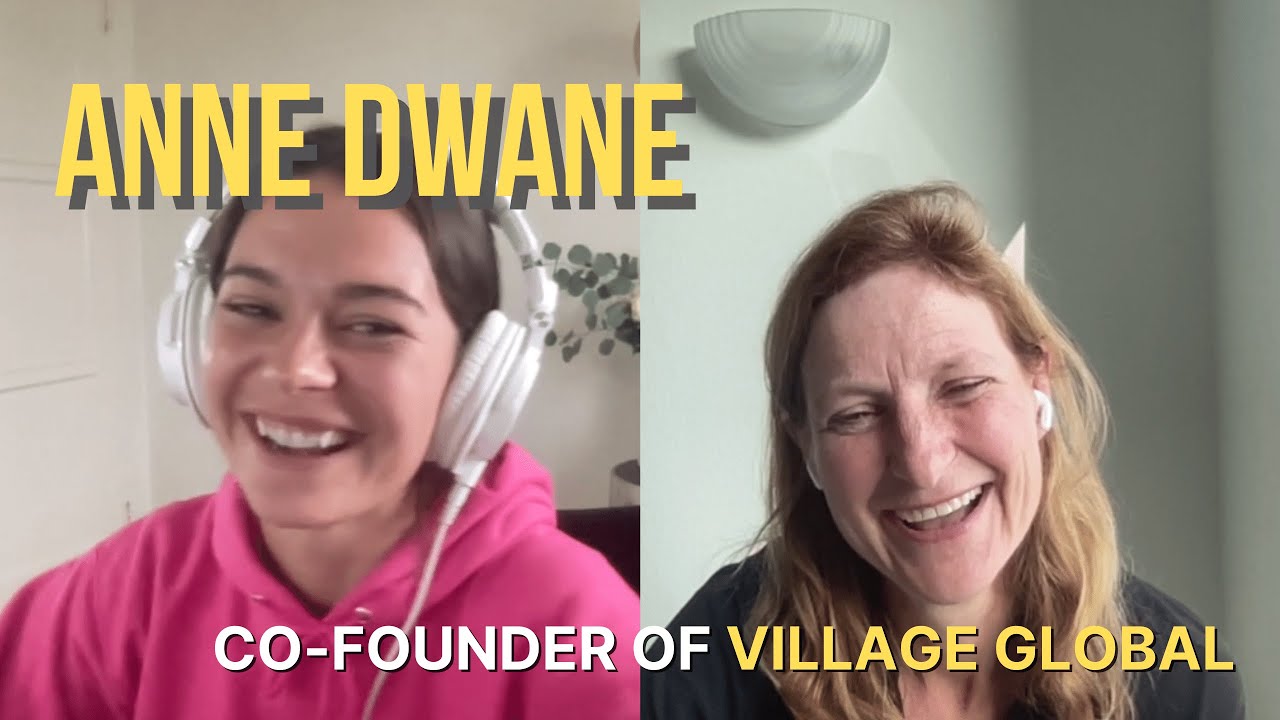
In this Seed to Harvest episode, host Paige Finn Doherty interviews Anne Dwane, co‑founder of Village Global and former founder of Military.com and Zinch (later acquired by Chegg). Anne recounts her early entrepreneurial journey, surviving the dot‑com bust and the 2008 financial crisis, and the lessons she drew about resilience, measuring every dollar, and the importance of community. She contrasts the founder experience with building a venture firm, explaining Village Global’s unique network‑centric model that treats itself as a network rather than a hub, leveraging a large scout/"network leader" program to source deals and decentralize decision‑making. The conversation dives into the mechanics of the fund – early‑stage check sizes, scout‑led capital allocation, and the requirement for scouts to invest their own money. Anne describes Village’s emerging‑manager program, which backs promising angels turning into GPs, and outlines how the firm manages capital calls, LP communications, and uses lines of credit as it scales. She shares practical advice on investor updates (clinical transparency, clear metrics, learning loops), time and energy management (focus on energy, singular priority, disciplined creativity), and decision‑making (the Debate‑Decide‑Do framework and the necessity of saying no). Finally, she offers concrete guidance for early‑stage founders navigating a bear market: calibrate inputs to outputs, maintain tight feedback loops, prioritize ruthlessly, and be prepared to pivot. Throughout, Anne emphasizes community, curiosity, and the balance between seriousness and fun in venture.
Chapters
Welcome back to Seed to Harvest, a podcast with founders, creators, and investors about their stories, frameworks, and tactics. Today, I'm honored to be joined by Anne Duane from Village Global, an early-stage venture firm backed by some of the world's most successful entrepreneurs, including Jeff Bezos, Sara Blakely, Bill Gates, Reid Hoffman, Magic Johnson, and Anne Wojcicki. Previously, she co-founded Military.com, a social and professional network for service members and veterans that was acquired by Monster. She was also the CEO at Zinch, a network connecting students with colleges and scholarships. Zinch was acquired by Chegg, where she served as Chief Business Officer before and after the IPO. Anne, I'm super excited to have you on today. Thanks so much for taking the time.
Paige, it's wonderful to be here. I'm a frequent listener and now first-time caller.
Yay! I know, I'm so excited to have you on, and I'm excited that you listen to the podcast as well. That's super cool. So I, I would love to start sort of earlier in your career in terms of like comparing how has your experience building a venture firm been comparative to your experience building Cinch and Military.com as a founder?
Great question. I think the founder mindset transcends every category, right? A company, a fund, and it's about seeing A vision of what's possible and then try to manifest in the world by hook or by crook, like figure it out, figure it out. And my founding experience was really, first of all, a long time ago. I like to say started in the 1900s. And there's a song called We're Going to Party Like It's 1999. And we were pretty exuberant in 1999 and we raised Series A. It was a $5 million Series A. We got a paper check. Oh my God. All of these are artifacts of the, the day.
Whoa. Um, that's awesome. Did you cash the paper check? Like, did you go to the bank and cash it?
Yeah.
Yeah. Whoa.
Yeah, it was really funny. But, but then the world changed in March of 2000. The world stopped and it was the dot-com implosion. And we had customers who owed us revenue who said, we're not paying you cuz you're probably one of those dot-coms that couldn't go outta business. So not only did we see capital markets close, so we couldn't raise more capital, but we saw our revenue really threatened and drying up and people either refusing to pay us or refusing to sign new deals. And we were in extremis and it was a really tough time. And I'm really grateful to the team that we had and the investors we had though. It's a crazy story because we had to go from something like 80 people to 15.
Mm-hmm.
We had to cut our team. And back then as a founder, and today too, you hired your friends. So it was really painful to make those cuts. And then adding insult to injury, my, I was co-founder, my co-founder, Chris Michael, was my best friend from business school. So my best friend today, he was CEO and founder of military.com. It was really his vision and epiphany about how to help the military and veteran community. And the board fired him. Wow. And that was really tough. And the good news is we, the team rallied. We treated every dollar as oxygen for the business. We didn't spend time or money on something if we couldn't measure it. If you couldn't measure it, it didn't matter. And we kind of clawed our way back to cash flow break even. And Chris came back. And it was a good story in the end. And the funny part is somewhere in 2001, one of our large customers was Monster.com, which was doing recruiting of people mainly after military service.
Mm-hmm.
And I remember meeting with them and they liked us and they thought the veteran community was amazing. We would've given the company to them for a dollar to keep it running and You know, to fulfill the promise to our community. But they weren't even buying it at a dollar. But at about 4 years later, we had a disciplined, high-growth, high-revenue, profitable company. And that company was acquired. So I think what I learned in that is, as founders, we don't control— sorry, as founders, we don't control the macro and don't wish it was easier.
Mm-hmm.
Make yourself stronger and ask for the help you need. And don't lament the fact that bad things happen. Just figure out what's next. And sometimes you have to take it one step at a time because it's really hard to figure out where the big thing is, but don't give up and embrace that joy of figuring it out and know that pressure creates diamonds. And probably the adversity will reveal character. And stick with the people that you trust and you wanna go after big things with.
And I'm, wow, that's, that's like such a wild story. And it feels like that you had like the extremes cuz you had like just raised and then adapting the company after the dot-com crash. I'm, I'm curious, like have there been moments in Village Global where you've gone through such extreme swings? Is it, I feel like folks often joke that VC is a retirement job. I have not found that in my experience yet. So I'm curious, like, how does building a venture firm compare to your work as a founder?
Well, I think we're seeing the cycles now. And again, I lived through 2008 because, and maybe you don't want to co-found a company with me because we, I joined the company in 2008 and financial markets continued to crash. But once again, we pulled through that and raised money and And ended up having, you know, building a service that was, and we ended up being acquired by Chegg, which was a perfect outcome for that company. And I think it was a good marriage of teams and culture and things like that. And I think venture is different. I think there are, the highs aren't as high, the lows aren't as low. We have diversified portfolio. When you are a founder, you don't, right? You have a one company and, but the benefit, I think, uh, in the ecosystem is that we can provide external perspective to founders, which is super important. And that's what we should be doing. I don't want to provide advice from 5 years ago or 10 years ago or something like that. What we want to do at Village is find the relevant people who can be helpful to a founder right now. And often that is people who are Figuring things out just in time now, or maybe they're one or two steps ahead. And that's really the cornerstone of Village. We didn't want to build a firm with masters of the universe GPs that said, "Hey, come to me. I'm so great." But rather, how do we get a bunch of people together with a founder mindset? So some people obviously are investors, or I'm sorry, founders at the very earliest stages. But our capital comes from some of the most successful founders in the world, and you name some of them. But they are still interested in the next wave of innovators and they are driven by curiosity and they want to support that next wave. And then our job really is to activate a group of scouts through, these are angels who are generally operator angels who can be first call for very early stage founders. And these are people who want to be trusted and helpful. And then together with those operator angels and the other portfolio founders, founders are not alone on that journey.
I, I wanna dig in a bit on what you said in terms of like the activations. This is something we think a lot about at BGB of like around 140 investors, many of whom are operators and actively involved in supporting portfolio founders. I'm curious, as you've grown Village Global, how, how do you think about like scaling that infrastructure? Because now you're a much bigger firm than when you were when you started, but the ethos remains the same, or around activating that community. So I'm curious, like what tactics you use to activate that, that scout network.
Yep. I think it's, you know, when I was a founder, I got good advice, which is you gotta be absolutely essential or extremely entertaining to break through in a busy world. And the world has not gotten anything but busier. And I would say those 2 principles apply. So if you're absolutely essential and useful, Mm-hmm. To founders, like, well, this is a resource I can turn to when I need help with selling or when I'm hiring or something like that. That's one. And then the other is the value of community and entertainment. And how do we get the, some of our LPs to participate in events or to meet founders? And the reality is we make it fun. We help founders share their vision of the future. Not, they're pitching their seed stage company to somebody who's, you know, really a very established entrepreneur and may not be ready to write a small check, right, in a seed company. But that seed stage founder can describe the vision of the world that they think will be pervasive in 5, 10, 15 years. And that's interesting to people who love it. And then just the energy and the exuberance. I think is, is just so important to ca— and we can capture that, right? By, by putting these people together.
I love that. I love that. I had never heard the delineation between absolutely essential and absolutely entertaining. I feel like it's one of those things, like we think a lot about the future of work and the future of play, and there is an element of seriousness in venture. I think especially as you're like managing other people's money, it's really important to be like serious and thoughtful and disciplined in that way. But bringing fun and the human element has really been something that I've looked up to you and Village Global a lot on since that is like such a strong part of your ethos. I want to, yeah, I want to hear a bit more if you could share like the founding story of Village Global. Like what was that spark where you're like, you know what I want to do tomorrow? I'm going to start a venture firm. Like how did that start?
Well, I think that a lot of venture has been a cottage industry. Matters who you know, and the firms are a little bit like hub and spoke systems. And that works very well. It just doesn't scale as much because firms rapidly become GP constrained, right? They can only sit on so many boards or they can only back so many companies or something like that. So we thought about, is there a way to, in Is there a way to have a network? Because social and professional networks have changed so much of the way we interact. But Village Global doesn't think of ourselves as having a network. We think of ourselves as being a network. And that really operates on a couple levels. So one is the LPs that we raise money from, we want to not just invest money.
Mm-hmm.
but to commit time and lend their names to this initiative. So really activating them in the network. The second is the vast majority of companies we back are identified by these operator angels who are scouts. We call 'em network leaders, and they're out there on the edges of networks. And our experiment is really in decentralized decision-making because in some cases we believe that if Those companies were brought back to a roundtable in Silicon Valley and the decision had to be made there. The decision might be no, because people sitting in around a table in Silicon Valley might not be proximate to those technologies, those markets, or those sectors that these operator angels are swimming in. And they're kind of swimming in the tidal pools of entrepreneurship and finding this next wave. And we think that's super exciting because The founders of the next wave of game-changing global companies may not look at all like the ones of the past, of now or the past 10 years. So that decentralized is really good. And then, and then the way we support companies is less about hub and spoke or a particular system, but kind of the mass customization that comes with founders being able to reach out to other founders in real time.
Mm-hmm.
And us facilitating those connections. Mm-hmm.
Yeah. I'm curious, like on the, on the structural perspective, if you could share, is it like, is it like the core fund that the scouts like invest out of, or is there a separate fund or like, what does your portfolio construction look like?
Oh yeah. We just, we operate exactly like other venture funds.
Mm-hmm.
In the sense that we are writing between $500K and $1 million checks at the very earliest stages, generally for 5 to 10% ownership. Mm-hmm. It's just that Most of those checks are directed by Scouts that we have entrusted with our money. And in our iteration of the Network Leader Program, the network, the Scout Program, we ask that the network leaders invest some of their own money. And that's a number that's comfortable for them. So they have their own skin in the game.
Wow.
And then we come in alongside them on the cap table, full disclosure, full transparency. And the reason that we think this is good is number one, we think that this is the way to discover, um, maybe underestimated or, or undiscovered gem companies around the world and teams. And then for the angel investor, this is a way that they can have not just more money to put behind founders that they really like, but more services like a platform and a community that you often don't have as an angel or, or, and then.
Mm-hmm.
More deal flow, which we're able to share with them, their own connectivity to this, uh, community, which could help them with their own, you know, business or whatever they're working on. And then we do share carry, but we try not to make this transactional. It's really about being part of this.
Yeah. I love that, like that incentive alignment that you talked about where they're putting their own money to work in addition to the Village Global check, because I feel like it's like, okay, this is something where I'm not only putting like the Village Global's money on the line, but also like my own personal money. This is something I believe in, and I'm going to scale up that commitment by bringing in Village to the deal. That's super interesting. I hadn't, I haven't really heard of a scout program doing like that. It's more like there's an allocation of capital that the scout has access to, but I like that, like that pairing is really cool. So it's, it's very obvious from our conversation that a major pattern in your career is valuing community and networks. So I'm curious, what expert advice do you have for individuals just starting out and wanting to build their network in venture?
The most interesting thing to existing venture investors is introductions to remarkable founders. So I always say, you know, how does someone entering the ecosystem bring that? That's not essential, but it's nice to know what the coin of the realm is.
Mm-hmm.
But I, some things that practically I've seen be very successful are some people map spaces. So it could be a geo, it could be a, um, sector, something like a technology that is spawning a bunch of companies. And they develop that thinking and that thesis and maybe some prioritization of companies or something like that. It doesn't mean they have to have a lot of access. All this can be done with pretty much public information and looking around. And then they share that with relevant investors. And I think that good clarity of thought is really valued. So that's one thing, just offering that and they can publish it themselves and then we can, they can send it to the relevant investors and hopefully people might take notice. Certainly helping founders, you know, So that they turn to you and you can be, you know, bringing them forward is great. I do think that VC Twitter is a thing. And in this case, I would say, do as I say, not as I do, because I'm a super voyeur on Twitter and I'm not, I don't tweet a lot, but I do really value the learning that I get from following so many other wonderful VCs and founders. And I think VCs just have more time on Twitter.
Yeah.
And it's really amazing. I think so many people, including you, Have a great Twitter presence. You can stay in touch with people. You can contribute. You can be doing meaningful and helpful replies and over time build, as you know, great relationships. So that's great. And then scout programs, which are, you know, kind of across the ecosystem now, are a great way to get started. And that requires generally minimal capital. And in our case, We think about different criteria for evaluating network leaders.
Mm-hmm.
Um, but established huge track record is not one of them. Mm-hmm. Of course, we do look at if people have done investments before, but we also have backed founders who wanna get into angel investing when they don't have a huge track record. Mm-hmm. And there's ways that we get to know them and be comfortable giving them allocations. But I think that's really great and it's really about having access. 2 remarkable founders in a complementary ecosystem, and then indicating that you have judgment about which ones to back to, to go big. And it's tricky at the early stages, we all know, but you know, what's the, what's your unique angle, I think is important. And then the other I would say is EIR programs can be really powerful if you want to make the switch from creator or founder into investor.
Mm-hmm.
And there are as many EIR programs as there are people. And I think it's just a question of what do you want to offer? What can you offer a firm? And then what, what do you want to get out of it?
Mm-hmm. I, yeah, I feel like the EIR program is really interesting as well. So I'm, I'm curious on, you've not only leveraged the Scout program, but Village has also started investing in emerging managers or GPs, especially early-stage funds. So I'm curious what inspired you to start investing in managers, which is a bit different than leveraging a scout program. And yeah, like what, what's top of mind for you there? Yep.
So the decision to back emerging managers was really an outgrowth of the scout program. Mm-hmm. And especially over the past couple years, we realized that some of the world's best angels were going pro.
Mm-hmm.
People were saying, hey, you're doing a great job. We wanna put money behind you. And we wanted to support that growth and that trend. And I think many founders want to work with, uh, these people.
Mm-hmm.
And the other is that I think that some of the world's best investors, people who have great access to early-stage founders and can provide really a unique value add to them, haven't raised money before and frankly don't enjoy raising money. And if we can be an LP that not only puts money behind, um, emerging managers, but also potentially could make introductions to other LPs, that could be super helpful.
Mm-hmm.
And we love to, in many cases, these folks have been a co-investor with us before, and we've heard wonderful things from founders. We've worked with them before, and it's a really easy transition. But we also look at new funds around the world, generally less than $50 million, that have a unique and compu—
Yeah, I think that that was, I was always interested to hear like how that had either, like it was a chicken and the egg question for me, like the, the Scout versus Emerging Manager Program. But I like your statement around the best angels are, are going pro. It's been super cool. Yeah.
Present company included.
Thanks.
And I love chicken and egg problems. So that was the origination of the word CHEG, chicken and egg.
Oh my God, it was?
Yeah.
That's so cool.
What?
I didn't know that. Dang. I used Chegg a lot in college. I hope none of my professors are listening to this. I used Chegg, was awesome for my electrical engineering class. Anyways, so going, going a bit into like some more tactical stuff, I'm curious, like one of the things that we're thinking about a lot is, um, as our firm scales, how we adjust our capital call structure. So before we were like the same amount quarterly, so it was like 12.5% quarterly, and now we're switching to an as-needed basis and leveraging capital call lines of credit more heavily. So I'm curious, like, as you've grown Village, obviously, like, as your firm has grown, adding on like finance and compliance and all of that stuff, so you're a bit more abstracted from that side of things, but I'm curious like how your capital call structure shifted as your firm grew and especially as you're leveraging these scout networks.
Yeah, it's hard to be predictive with any venture model and especially with the scout network and things like that. But like you, we just try to make our best estimates and not surprise LPs. I think that's important. And we do leverage a line of credit. And I give huge props to Adam Corey, our co-founder and operating partner, who really is very experienced and he really thinks about managing the cash and also thinking about managing the LP expectations and relationships. 'Cause I think that's, that's the key. Mm-hmm.
Yeah. The—
And I would say, yeah, that, you know, I hear a lot of people saying, well, there's a lot of dry powder in the industry and These investors are gonna have to invest. This is not my experience in 2001 and 2008.
Yeah.
Is that there's no pressure for VC funds to deploy. Meaning I think if you don't have a good investment opportunity, you shouldn't invest.
Right.
We're still actively investing in this time, but I just, I caution founders who think that way.
Yeah. Yeah. It's, it's been interesting, especially like talking to like some of the folks at Sandana about like what they've seen from an LP perspective in, in the last market downturn in terms of like GPs just wouldn't call cash for like 6, 12 months. If there was—
yeah, well, they, they just weren't investing.
Yeah.
Or they were reserving capital for their existing portfolio companies. Mm-hmm. All of which is a valid strategy.
Yeah.
Yeah. So I do think that in general, LP communications are critical.
Mm-hmm.
And it's easy to forget about them until fundraising time, but actually that's not the time when relationships are built. Yeah. Relationships are built day-to-day, and trust is earned with every single engagement.
That's the, the coin of the realm. I like that phrase. I might, I might borrow that. And speaking of, speaking of updates or like LP relations, what is the— I guess the question I have here is like, what's the best investor update you've ever received and what stood out for you? I'm sure that like there's a lot of high highs and low lows in your portfolio, but I'm curious if there is a founder, you don't have to mention them or the company by name, but Whose updates do you like regularly really look forward to reading regardless of like how the company is doing and why?
It's interesting. I mean, I always enjoy reading investor updates and if someone takes the time to draft an update, I'm definitely reading it. I think that what I hearken back to my own experience as founder, what I really appreciate is someone who is clinical. And tells the good news and the bad news. And the reason for that, having been part of a co-founding team that was 50% fired, is you want to instill confidence that there's full appreciation for the challenges and that no one could imagine anyone better on the problem.
Mm-hmm.
And so that inspires confidence. And, and then asking for help. And as I, you know, as I said before, don't wish it was easier, make yourself stronger. And part of that is asking for help you need. And, and that doesn't have to be just investor updates, but it can be. And yeah, so I think clear and organized. The other thing I'll just mention is, and I might have, might not have been guilty of this as a founder, is sometimes when I didn't hit a target. I didn't include that metric or I changed the, the context. And I actually think that actual versus plan is amazingly helpful for not just the, but the team. And the other quick hack on updates is I really think the update should be written for the writer, right? Whether that's CEO or the GP or something, and the internal team.
Yeah.
And then maybe there's some places that are redacted either for your current investors or maybe even for your prospective investors if you're sending that more broadly. But use it as a forcing function to understand your learning loops. Are we achieving what we set out to do? Should we double down? Do we need to change the goals and make those choices explicit as fast as possible?
Mm-hmm. I like that a lot. I think about, like when I write our updates, I think about it a lot from the context of like 2 things. So like one, I was like a high school bio geek. So like, I think the scientific, like the scientific process is really interesting around like you have your background and process, materials, hypothesis. So I think a lot about like what hypothesis are we testing this month? Yep. And then the second is my dad would always say that, it was so funny. I feel like I like did not appreciate this at the time as much as I do now, but whenever we were doing math homework together, he'd be like, show your work, like write out everything. If there's a formula, like you write it out. So it's definitely something that I think about a lot in, in writing our updates. And I think they've, they've definitely gotten a lot lengthier over time, which has been, which has been nice and, and fun to reflect. Another like topic that I've been thinking about a lot is time management. So I'm curious if you could share the best time management process or system that you've utilized that shifted your ability to operate either as a founder and And/or now as an investor.
Yep. So maybe the best hack is manage your energy, not your time.
Ooh.
And there's actually an article about this, which I can forward to you. Yeah, let's do that. And sometimes it is hard to be creative, right, on demand. That being said, I am a big proponent of what Walt Disney and his brother said. Which is the discipline of creativity is important. Meaning sometimes you just have to do it, right? Like you, you, you shouldn't avoid the difficult conversations. You should do that tricky task. And, you know, I'm a huge, I'm a big fan of meditation and stuff. And part of that is doing stuff when you don't feel like doing it, right? Having the mastery to, and self-discipline to do things like that. That being said, Sometimes it's better to go out and take a walk or to work on something else and come back to a project and then figure out what is the zone for you. And, you know, I think everybody, or I, you read so often that like you get up early and do a couple of work hours of work before anybody, like that particularly doesn't work for me. I, for whatever reason, like 4 to 6 PM is like a deep work window, but. So figure it out what works for you. And then a couple others, you know, Dan Rosenzweig at Chegg was really great about having 3 questions that could be disciplining priorities in a really big, in a world of, of like overwhelming number of possible priorities. And, and the 3 questions were, what problem are we solving? How will we measure success? And is it big enough to matter? And I also believe something you probably heard that until I think the 1900s, the word priority was never plural.
Whoa.
Priorities evolved.
That's crazy. I didn't know that.
This may be urban legend, but it's good on a podcast or at a cocktail party. And that is that there was just one. And, uh, I do think that it is important to say what one thing If done, would make the others not even relevant anymore.
Yeah.
They just matter so much. And this is extremely important with companies. The, it of course does attention because you wanna maintain some optionality, but I think the best way to think about optionality is not to set 10 experiments going at the same time, but set one or a few. And then have as quick a kind of a checkpoint as possible to say, should we continue? Should we stop? Should we rethink this?
I like that a lot. Whoa. The priority singular thing is blowing my mind. I feel like every time I think we were on a panel together and I just remember like I have my notebook out now, but I was just like writing down, like you have all these really cool sayings. I was like writing them all down. That's definitely a good one too. Next time I like am about to head to a cocktail party, I'll have to email you and be like, hey, Anne, like do you have any cool phrases? Yeah. And what's What's your, what's your, the most recent fun fact?
Yep. Well, I would say as an investor, I've been thinking a lot about debate, decide, do. And there is a lot of FOMO in this industry. Yeah. And it's not fair to anybody to delay these decisions. And the reality is I think we're all gonna miss a ton of amazing things. And, but it doesn't, You know, sometimes you just don't know what information would I need to make this decision? And if you can't articulate that and you can't get to 110% yes, then we're gonna have to say no, which is unfortunate. We know we're gonna miss out on a lot of opportunities, but I think it's good to just move on, figure out how do you fine-tune your process as an investor. Mm-hmm. And then don't look back because there's so much in front. Right. That yes, we can say, okay, I could have learned from this and things like that, but, but just keep going. Mm-hmm.
I like that a lot. Yeah, that was definitely one of the hardest things for me to learn that, mm-hmm, a lot of your job as an investor is saying no. Almost 99% of the things that I see, I say no to, if not, yeah, if not more. Of course. Yeah. So yeah, definitely learning how to be quicker about that and communicate your decisions. I used to be like terrified of passing. On intro calls, I'd be like, I'll like email you and let you know. And now I'm just like, all right, just wanna be transparent. Here's where my head's at. This is why we're making the decision. It's by no means a reflection of like you as the founder. It's more just like evaluating if this is an opportunity for our fund right now. But I think that that's definitely a challenging learning curve and I'm still very much in the middle of it.
It's a great question and I'm so glad you're thinking about it. Time is the most precious commodity and we don't manage it as well as we manage other things that are frankly like more measurable.
No.
Okay.
I am actually, I am curious. I was thinking about this earlier when you were talking about like manifestations and you do meditation. I feel like I'm quite spiritual, but I don't talk about it super often, but I do have like a vision board. I'm actually like looking at it right now and this is like from 3 years ago and I think I've done everything on it, so I just made a new one. Wow.
Congratulations.
But I was wondering if you have like a vision board or like how you think about manifestation. Or if that's like something that you do.
No, I think just go for it. And, you know, I'm fascinated by this concept of goals because if you're too goal-directed, I think you can miss out. And one of my favorite stories is about luck. And there was a research study about luck and it was done in the UK years ago and they brought in College students, as one does in research. And first they said, do you consider yourself a lucky person or an unlucky person? Okay. So you put it down. Then they handed everybody a newspaper, cuz this is years ago. And they said, count how many pictures are in this newspaper and then come up to the desk and you'll get your payment for participating in the study.
Mm-hmm.
And so they begin and they're all sitting in a room at desks. And some people very quickly finish and they go up to the end of the, to the room to get their reimbursement. And the trick of the whole study was that on page 2 in very large print, it said there are 16 pictures in this newspaper. You can just walk up to the front of the room and we'll pay you double what you were expecting to get if you do this immediately before, you know.
Mm-hmm.
In the next 5 minutes. And what was striking is that people who self-identified as lucky were way more likely to read the text because the unlucky people, unfortunately, were very focused on counting pictures and they mix— miss the text. Now, like most social science experiments, I don't know if this is replicable, but once again, it makes a very good story on a podcast. And I do. Believe, and there's a, a guy named Ken Stanley who wrote a book about this, and if you're too goal-directed, you can miss a focus on the next stepping stones that can get you there. So I think this is a good, the only thing I can say is this kind of vacillation between thinking big picture and then thinking extremely gritty and tactical is a good mix for any founder.
Mm-hmm. Wow. I love that study. Once again, all right, I'm definitely emailing you for more of that next time.
Okay.
All right. Wrapping up my last question, having lived through 2001 and 2008 as a founder, what are some of your suggestions for building through this bear market for early-stage founders in particular?
Yeah, I think, I think it is This whole notion of don't wish it was easier, make yourself stronger, ask for the help you need, calibrate your business such that you know exactly the outputs that you can get out of the inputs. And what I think in, in markets that are very, where capital's very loose, it's easier To take on things and not really calibrate them. But if you can really understand, here's the key objectives, the priority, or the priority, maybe a few priorities, right? And then are we moving that in short enough feedback cycles so much that you can be learning and iterating and then cut the stuff that doesn't matter? And then if you're wrong, give yourself the time to Pivot or change because your feedback loops are so tight.
Mm. I love that. Dang, Anne, you're spitting wisdom today. I so appreciate you coming on, and I'm sad that our time has come to an end, but I so appreciate—
Well, thank you, Paige, and congratulations on what you're building and all your contributions to the ecosystem. It's really inspiring.
Thank you. I so appreciate it, and thanks so much for coming on Seed to Harvest. Um, if you're listening and you would like, like to connect with Anne, I'll drop her. Well, yeah, you are a voyeur on Twitter, but where, where are you most active?
Twitter is fine. And I will try, maybe, you know, we'll make this a compliance thing where I'll try to tweet more in future and, and LinkedIn and—
Okay, perfect. I will, I will drop the socials in the show notes, but thank you again, Anne, for coming on. Thanks, Paige.
Bye.
Thanks so much for tuning in today to Seed to Harvest. If you enjoyed this episode, be sure to subscribe wherever your favorite podcast listening platform is. I'll be releasing new episodes weekly, and if you have any questions or comments, feel free to let me know on Twitter. That's Paige Finn, Paige and then Finn with 3 N's. Thanks, and see you again next week. Bye.
More from Paige



Paige of Behind Genius driving an AI electric train in St. Louis (Intramotev Visit)





