Vitalize VC Investor Gale Wilkinson on Considerations for Round Valuation | Seed To Harvest Ep 41
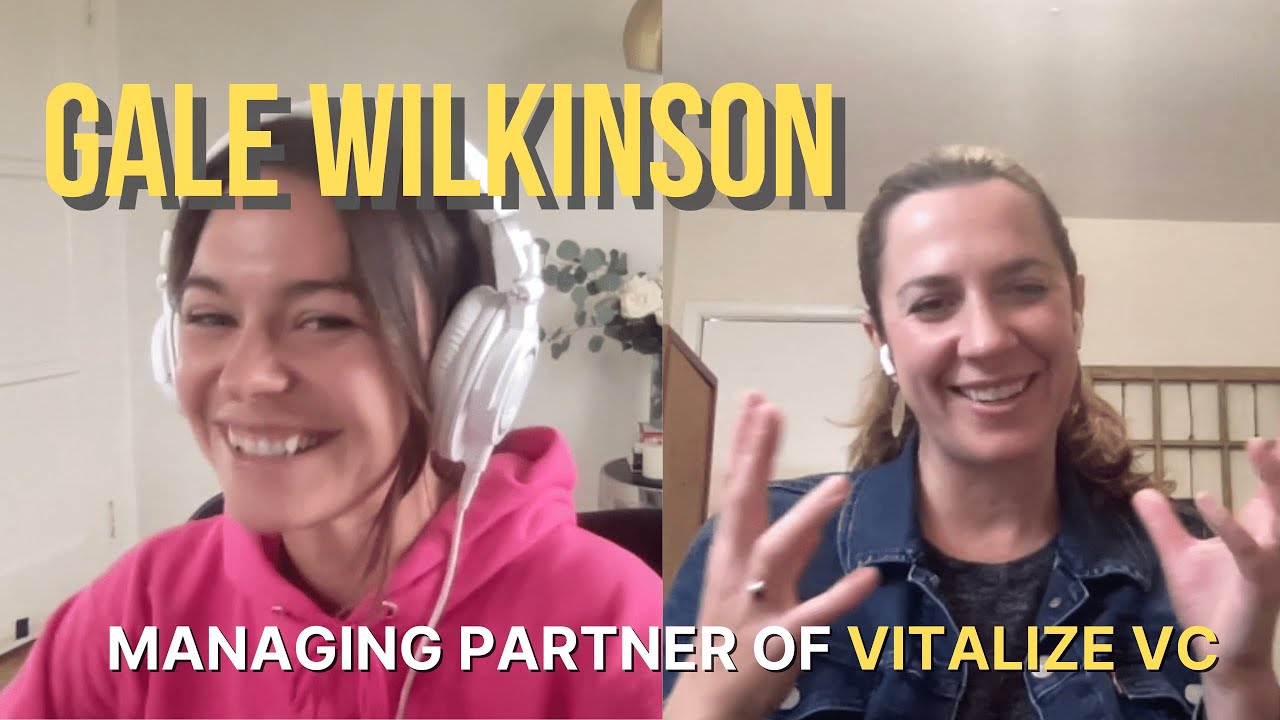
In this Seed to Harvest podcast episode, host Paige Finn Doherty interviews Gayle Wilkinson, General Partner at Vitalize VC. The conversation begins with a light‑hearted question about crystals, revealing Wilkinson’s belief in the power of intention. Wilkinson then shares founder lessons—chiefly the importance of focus and a clear revenue model—drawn from her two prior startups. She explains how she manages her time as a fund manager by saying no, delegating, and implementing the Traction EOS operating system, detailing its quarterly “rocks,” goal‑setting, and review process. The interview covers Vitalize VC’s lean team structure across Chicago, San Francisco, LA, New York, and part‑time roles, and her hiring philosophy for small funds, emphasizing entrepreneurial experience and serendipitous connections. Wilkinson highlights the value of community networks such as On Deck, Recast, Operator, and the Kauffman Fellows program, describing how they foster mentorship, deal flow, and friendships. She contrasts SPV investing with traditional fund raising, noting SPVs are quicker, deal‑specific, and require rigorous fiduciary care, while fund raises involve longer timelines and broader LP engagement. Wilkinson outlines Vitalize’s ownership targets (5%+ at seed, $250‑$750K checks, post‑money valuations under $15M) and the math she uses to evaluate 30x+ upside. She offers advice to angels on defining personal investment theses, avoiding herd mentality, and focusing on under‑represented founders. For founders, she provides a rule‑of‑thumb valuation heuristic (selling ~20% of the company at pre‑seed/seed) and, for investors, term‑sheet best practices anchored to NVCA market standards—clear economics, modest option pools, board composition, anti‑dilution and pro‑ration rights. The episode blends personal anecdotes, operational frameworks, and concrete venture‑capital guidance.
Chapters
Welcome back to Seed to Harvest, a podcast with founders, creators, and investors about their stories, frameworks, and tactics. Today I'm joined by our investor and dear friend, Gayle Wilkinson, general partner at Vitalize VC. After graduating with her degree in marketing, she consulted CPG companies on new product launches. After starting 2 businesses, she started an angel network in 2012, launched Vitalize Fund 1 in 2017. And has since invested in 100+ companies, deployed over $65 million in capital. She is a Transact Global member, Kauffman Fellow, and passionate about democratizing access to angel investing.
Hi Paige, thanks for having me.
Of course. So I can't stop laughing about, I might have to ask this question, like, and I know I told you I'd ask it near the end, but we were talking about this before and joking about like how, how many VCs do you go into metaphysical topics?
with.
And I thought that I would ask you this upfront. What crystal are you most resonating with in this season of your life?
Well, Paige, so for those of you who don't know me well, I do, I do, I do believe that the universe has magic and that there's energy that we can harness for really great things. And so yes, I do have a number of crystals sitting right next to me. And what I will answer, Paige, is rose quartz. So that's The one that I'm working on right now, which is all about heart energy. And in this chapter of my life, I am trying to figure out how to be, you know, more open and coming from a place of love. And I think that that's going to help me to continue to accelerate in my, in my life, my career.
Love rose quartz. What a great answer.
Okay.
Now to some venture stuff. After starting 2 businesses, I'm curious, what lessons did you take away as a founder that have benefited you as an investor?
Number one is focus. My first business was not focused. I, I was 20, let's see, 25 at the time that I started it. And I, I had to learn all this stuff that college didn't teach me to succeed in the real world. And I effect— and I started what effectively became a blog because I never figured out how to generate revenue, which is the second lesson. But I also had so many topics. I should have started with one and gone really, really, really deep into it, like personal finance, for example. But, you know, that, that experience was really great because I created something. I had a ton of viewers on, on the site, but I ended up shutting it down after 3 years of doing it kind of on nights and weekends because I learned that, you know, focus is important and I need the revenue model. And I started one when I was at business school called Hirebright, and that was about helping students and recent grads find startup and growth roles. And that one, um, I think ended up being sold, but I didn't have the same vision as the partner that I had at the time. And I learned a ton about co-founder dynamics.
Yeah.
So this is actually something that I can really relate to the founders on. I can empathize with them about how important it is to have that tough conversation upfront about how things are going to work and, you know, what, what you're going to do. And if things don't go well. Yeah.
You, you mentioned something that the biggest lesson that you learned was focus. And I was just chatting with Andwayne from Village Global. But she mentioned, I don't know if this, she's full of like cocktail stories, but she mentioned that priority in the early 1900s was, was a singular word and that priorities actually didn't develop in literature until after that. So I'm curious what time management strategies as you thought about focus has made the biggest impact on your work?
That's a really good question. I think learning how to say no is important and then prioritizing where the most value's gonna come from. So for me, As a fund manager, it's all about generating ROI for the LPs. That's my number one goal. And to do that, you know, it's all about operating the business, managing the team, finding deals, picking deals, winning deals, and then adding value to the deals after they come into our portfolio. And so it's honestly, it's constant, you know, prioritization of what's the most important and knowing that not everything is gonna get done, but that my time needs to be spent on things that are more the, the most and highest impact. So to, to do that, it's, You know, delegation, saying no once again, and then just always revisiting what, what our team needs to do. So we implemented what's called the Traction EOS system in Q2 of this year.
Oh my God.
Yeah. Which is going really well.
That's awesome. How is it going? I did it like that.
Yeah, it's insane.
I made a website for a traction consultant when I was in high school and I was like, this is a really cool system. And I actually thought about it recently. I was like, I wonder how applied to running a VC fund. So I would love if you could share a bit more of your experience and in, in terms of like how that's been going.
Sure. Yeah. For those of you that don't know what it is, it's a framework, as Paige mentioned, for that consultants use to help operators become much more efficient in terms of driving value and reaching goals. The, the first thing to do is figure out, you know, what is the north star of the company? So in 10 years, where do we want to be and how do we identify as a company Then it's, what's my 3-year goal? What's my 1-year goal? Understanding that path for the company and then figuring out, do we have the right, the right seats identified? So these are the positions required to hit all those goals and the right people in those right seats to once again hit all the goals. And you kind of do all this big picture thinking around those items, around how you're going to market and sell. And then you move into what they call rocks, which are basically goals. on a quarter-by-quarter basis, which I think is where the magic happens for a VC fund. We all generally have similar goals, like long-term, but short-term, you know, it's helpful for our, our firm to say, what, what number of deals do we want to do? How are we helping our companies this quarter? Are there any other projects that we're working on? So I think my, my few for this quarter are one, to do a few deals for our fund. Two is to fund, do some fundraising if I were fundraising. Number, number 3 and 4 are some cool operational projects. So we've done a fantastic job. I think Justin leading our marketing is working really well, but we want to be more intentional about PR. Exactly. Yes, a solid foundation. Now I'm thinking about a PR strategy in Q4. And then the last thing is finding some ways we can leverage project consultants to do some low-code, no-code work to automate a few things internally, finding future of work deals, which is where we focus. Getting some quantitative insights about picking companies and then also automating some things that were ways that we're helping add connections and value to our portfolio companies. So those, that's my bucket. And when we get past Q4, we have an hour meeting with our team where we talk about what went well and didn't go well in the last quarter. And then we reset for the quarter moving forward. Hmm.
That's super cool. I think you're the first person I've talked to that's implemented the Traction EOS system. So I'm excited to hear that it's going well for you all. And then how big is your, remind me again, like what your org structure for your team looks like?
Yep. So I've got myself and then we got my partner Caroline who sits in San Francisco and I'm in Chicago. And we've got Justin, our head of marketing in LA. Annette is our operations manager in New York. And then we have some part-time folks on our team, 2 part-time associates, John and Anand, and then a part-time community manager for Vitalife Angels, Larissa.
Whoa. Cool. Yeah. How did you think about the, the hiring process? Did it look similar across the board? Or were there different hiring practices that you instituted as the team grew?
Yeah, I think hiring, you have to find some magic in hiring for small funds. And, you know, you know this well, Paige, there's all sorts of things to do and goes back to that prioritization. Where, where do we most need somebody's help here? And then going out and finding the right person to fill, fill the gap. So for example, you know, when, when rewind to 2019, And we had already said, okay, we're going to focus on future of work investments. We're starting to think about thought leadership and branding. And we knew we wanted to hire somebody to come on and run our marketing. And I happened to do a podcast with Justin Gordon and really loved his energy, loved what he had done. He built a lot of things himself. And that, that's a key learning for me. When you're hiring for key positions in early stage funds, bringing on people who are entrepreneurial and who have built things in their past is really, really helpful. So he and I hit it off and then he came on in a, in a contract basis for a few months and knocked it outta the park. And then we, you know, both of us thought it was a great idea for him to come on full-time. So that's one example of a little serendipity, to be honest, podcast, but also as, as a manager, like knowing what my fund needs or our fund needs and then acting on that when something presents itself.
And you're part of several networks, including On Deck, Recast, and Operator. How can investors or founders leverage these types of networks to set themselves up for success?
Yeah, I'm a big fan of community and network. I think that, that this is the, the number one biggest thing that's helped me in my career as a VC. And the reason is because, um, you know, you, you get advice and support and you can give advice and support in these communities. So, you know, Paige, I think we met through, we met through Transact. Global.
Yeah, I think we met through Transact.
Yeah, so that's another one which has a few hundred women GPs of funds. Operator is a cohort-based program for emerging managers. Recast, another cohort-based program for emerging managers. And then also Kauffman Fellows, which is a cohort-based program for all kinds of VCs, LPs, and others in the ecosystem. And within each of these networks, I think the, the most magical thing for me has just been creating one-on-one relationships with some really amazing people that I might not have met otherwise.
Mm-hmm.
And, um, being able to share information and get advice and support when, you know, all of us face things we've never faced before every, every, every day pretty much. And so having that support network is just, it's just amazing.
And, and one of the networks that you're a part of is the Kauffman Program. So I would love if you could describe to our listeners, A, what that is if they're not familiar. And then B, what surprising benefits that you've received from participating in Kauffman?
Sure. I started Kauffman in 2018 as part of, uh, uh, Class 23. They're on Class 26 or 27 by now. It's effectively a program that was started out of a foundation in Kansas City called the Kauffman Foundation. And it's a group that has an amazing team and staff that run a program every year with between 50 and 60. Folks in the ecosystem, lots of VCs, small funds, large funds, LPs, other, other tangentially related, like maybe some accelerators, folks that run accelerators, for example. And the common thread here is bringing in individuals who can add to the ecosystem. That was huge in the application process and in the interview process. How are you going to add value to the group? And so it's, it's very much a community that wants to help each other. And there's also a thread of caring about impact within the venture industry. So Coffin does a fantastic job of bringing in a lot of underrepresented managers. And I think they're, they're, you know, a huge player in changing the face of what venture looks like, which is really awesome to be a part of that.
I love that. And what surprising benefits have you received? Any like interesting relationships that have led to like an investment or a friendship or anything like that?
Yeah, I've done, I've done 2 or 3 deals through that network. In fact, one, one of the deals that I did with Anduin, who we've just been talking about, it was a 2019 deal and our firm led the pre-seed. It was an intro from my friend Ben within the program, and he was an angel investor in the deal. And just, just yesterday, another one of our classmates sent me a note saying he's gonna invest in the company's A round. So, no way. Lots of cool things like that happen. Yeah. That's super cool. Yeah.
So that's, that's been fun.
And then I also have a smaller segment of our class. There are 5 of us who meet every 5 or 6 weeks or so. We have what we call girls' night in, and we do an hour and a half call where, you know, it's, it's a regular way just to keep in touch with some people. So things like that are really fun in addition to seeing folks in person at the annual events that Kauffman holds.
I love that. That's so cute. So in, in terms of like the, let's rewind to the To the SPV side of your investing, you've done close to $55 million plus in around 100 SPVs in your venture career. What advice do you have for someone getting started in investing around like leveraging SPVs as a way to build their track record?
Yeah, I think, you know, in some ways raising SPVs is easier than raising funds because you have a deal that you're shopping out to your network and you can get them excited about that particular deal. So I think it's a great way for folks to get started and, and even for early fund managers like myself to continue doing deals. You know, we can't, we can't follow on in every round of the, of the companies that we're invested in that do really well. So we still do SPVs with reduced economics so that our LPs can still benefit from putting dollars into those later rounds. So I think it's a, it's a fabulous way to, to get started in venture or to further your venture career and add to your assets under management. And once you kind of get that system down, it's actually pretty easy from an admin perspective to spin them up. You just wanna make sure, you know, you're doing good deals because the one thing to remember is in a fund, a manager is incentivized based on their overall portfolio. So the losers negate the winners when we're thinking about upside. And for an SPV, it's on a deal-by-deal basis. So I have to use a lot of care for my SPV investors. I take being a fiduciary really seriously to ensure that that is what I think a very good deal going, going in.
Yeah, that is like an interesting difference. I guess like one of the other similarities versus differences topics that I'd like to focus on was raising for your first fund, which Vitalized Fund 1 was $16.3 million versus the process of fundraising for an SPV. So I would love if you could share a bit on, you know, what, like what the differences there look like.
Sure. Raising for a fund, you know, kind of depends on what size it is. So my first fund, I was really fortunate that I worked with a bunch of folks who'd worked with me before and raised it fairly quickly. So I think it took about 3 months to raise the majority of Fund 1, all high net worths and a few family offices. So when you switch into institution land, it can take, you know, most emerging managers raise for up to 2 years. And I think not a lot of us realize that when TechCrunch announces a fund, it seems like it may have happened overnight, but most, most of them take a lot longer so that. To me, that's the big, the big difference is just having a long-term fundraising plan when you're going out to raise a fund versus an SPV. Typically it's a hot deal, it's moving fast, and you go to the SPV network and say, hey, here, here's our diligence. Here's the parameters of the deal. Are you in? Are you out? You have a couple days to decide.
Mm-hmm.
With the fund, unless you're one of the few lucky fund managers that can close it all immediately in one fell swoop, a lot of investors wanna kind of wait and see what happens. They wanna see what deals you do. They wanna see who else is investing. And this element of time can be quite taxing on, on a manager because it's just the different product that you're selling.
And then like on the fund side, what would you say that your philosophy around ownership is when crafting your, your overall portfolio strategy?
Yeah, so the, the funds that we're investing in out of right now, we invest $250K to $750K checks and we're targeting 5% plus ownership. We invest at the seed stage, so rounds tend to be $2 to $5 million, which means, you know, the valuations need to be south of $15 million post for us to be able to get our ownership percentage. Now, there are times where we'll go kind of go outside of that if we think it's a really good deal, but we try to be measured in getting that ownership percentage because, you know, when I look at the deals we've done historically, anytime you're a winner, you wish you had more ownership in that company. And we've, we've been really lucky that the, the ones we've done that are doing well, we We still own quite, quite a nice piece of it because they were capital efficient. So that's the other thing that we look at upfront. It's, can we get enough ownership today? And then what do we think the exit outcome is and how capital efficient is this business going to be to get to that eventual outcome? And then we're under, we're underwriting the entire investment to a 30x plus cash on cap.
Hmm. Okay. Okay. That's super interesting. So you, yeah, I would say like I'm really interested.
We do all this math. We have, we have a spreadsheet that we put the math into.
I was like trying to visualize it in my head and I was like, I think I need a spreadsheet to do that. I'm curious, like, so you think a lot about the education of more angels in the space. I think it's really important that that becomes, like, if you think about, you know, the best angels go pro and start funds. So by increasing the pipeline of folks that are interested in angel investing, you really increase the pipeline of folks that might one day lead funds and build large venture franchises. So. I'm curious what, what common mistakes can angels avoid when it comes to evaluating companies, specifically the early stage?
Yeah, the way that I teach our investing playbook. So we have an angel investing playbook webinar that we do quite often, and it's based on what we've learned running a bunch of SPVs, and then I've done close to 50 angel deals myself. And so I've made a lot of mistakes. I think before getting started, that the best thing for anybody to do is just take a step back and say, what are my personal goals? What gets me excited about this space? And when I, if I were to segment all the angels that I know into what they're looking for in terms of their thesis and approach, it varies dramatically. Somebody might say, I, I know and love health tech and that's all I'm gonna do. Somebody else might say, I'm, I'm from the San Diego area like Paige is, and I really only wanna invest in SoCal deals because I've lived here my entire life and that's really important to me.
Mm-hmm.
Or you might say, you know, I, I actually want to do stuff that's fun. My job is in business to business and I wanna do consumer deals with my angel investment. Or you might be like me, like my approach is basically it can be any sector. Now most of it tends to be consumer tech and then B2B tech. Mm-hmm. I don't really do much outta there. I've done a few products, but I want it to be something that's really exciting where I, I love the, the space and I love the founder.
Mm-hmm.
And then I personally over-index by, um, sending my dollars to underrepresented founders because I think there's still a lot of alpha there. So it's partially a greedy reason where I wanna make money. Mm-hmm. But I also love funding those founders because I think that, that, you know, it's, they're just gonna do amazing things once they make their own money. And then it's, you know, it's this community effect, pay it forward. Mm-hmm.
I love that. Love that.
Back to your question, figure out what you wanna invest in. That's, that's the number one thing with angel investing. And if you do that, you're gonna avoid a lot of mistakes cuz a lot of people just get into follow the herd mentality, which is not what you wanna do with angel investing.
Yeah, I think it's hard to like, especially as people start to like understand that you're writing a lot of angel checks, then a lot more of your work becomes saying no. And so if you start with a strong foundation around what you're interested in investing in, it becomes much easier to either like Have those be preemptiveness, or the founder's like, oh, I'm not in this area, so it's, it's not gonna be a fit. Or you have like a really strong investment thesis or strategy to fall back on and just like, it's not a fit for me as an angel. So I really, I, I love that like approach of going back to the beginning. And the last question I have for you today is what should founders consider when evaluating their round valuation? And then what should investors look out for when considering round valuation?
I love this question. I'm actually in some back and forth with some founders on Twitter today about it. I, once again, I've done, I've seen a ton of deals and I've done a ton of deals and I'm, I'm a big math person. The, in 99% of cases in venture, the math will tell the right story. Yes, there are outliers always, but 99% of the time, most founders at, at pre-seed and seed are going to sell Somewhere between 15 and maybe 25% of their company. And when I think about what that means to help a founder could get grounded in what this rule of thumb means is 20%. So if, if Paige is gonna raise $1 million for her pre-seed startup, her post-money valuation should be $5 million because 1 divided by 5 is 20%. She's selling 25% of her business after the round closes. Mm-hmm. That is very typical of pre-seed. At the seed stage, if you're raising say $2 million, your post will be about $10 million because that's 2 divided by 10 is 20%. And that, that math is going to work until you start to get to Series A, B, and beyond. If you're growing really quickly, you can get by by selling less of your business. So it should go down. When we do that math that we just talked about, when we're trying to figure out, is this 30x plus? Over time, you know, the Series A might be 10 to 15%. The Series B might be 8 to 10%, you know, that the best companies, that's the trajectory that they follow. But when you're looking at early stage, that 20% rubric is really, it's gonna work most of the time. Mm-hmm.
Yeah, I, I teach our like VCIC, our Venture Capital Investment Competition class at SCCU, and we've been talking a lot about the term sheet side of it. Actually, I do have one last question for you, and this is selfishly for them, is like we've been talking a lot about term sheet best practices. What are some of the term sheet best practices that you've learned as you've transitioned to more of a lead investor?
Mm-hmm. I'm a big fan of market standard. The NVCA has a good set of docs. Ours deviate from that a little bit, but what, what founders really want to review when they're working with investors is the economics. So that's the pricing. What's the valuation? Is there a preference on it? Is preference should be 1x. It should not be higher than that, even in this market is what, what I think. You know, is there participation? I think there should not be participation. These are all economic pieces. The other one is the option pool. When you give an option pool up, and typically 10%'s a really great rule of thumb, like that reduces the, the value of the share. So one would say that's the economics piece. And then there's control.
Mm-hmm.
So control is about things like, um, you know, the board. Do you have a board? I love investing even at the earliest stages when there is a 3-person board and it should be 2 on the common side. So that's the founders. And then one on the lead investor. And this tends to be very good structure at the very early stages. Um, and if you pick right with your investor, that investor should add a ton of value. And because you get started with the board early, you have a better chance of having everything in a good spot for your next round. So I actually think early boards are great. And then, you know, you just want other things like anti-dilution rights and pro rata rights and all that stuff to be market and standard. And I would just follow what's, what's in the NVCA docs for that.
Awesome. Well, we started with crystals and we ended with the NVCA standard Which is not as fun. Um, but definitely equally as important. Gail, thank you so much for joining Seed to Harvest today. If you would like to connect with Gail, I'll drop her Twitter in the show notes. She's super active on there and always shares really great educational resources. So Gail, thanks so much for coming on today.
Thanks, Paige. It was really fun. Paige, you're the best.
Thanks so much for tuning in today to Seed to Harvest. If you enjoyed this episode, be sure to subscribe wherever your favorite podcast listening platform is. I'll be releasing new episodes weekly, and if you have any questions or comments, feel free to let me know on Twitter. That's Paige Finn, Paige and then Finn with 3 N's. Thanks and see you again next week.
More from Paige



Paige of Behind Genius driving an AI electric train in St. Louis (Intramotev Visit)





