How small local news publishers can succeed with digital subscriptions (part 1)
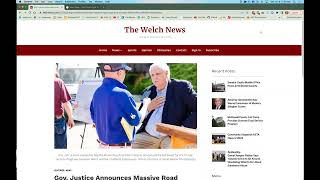
A podcast-style YouTube interview (Paywall podcast ep.25) where Pete Ericson and Tyler Channel discuss how very small local news publishers can transition from print or free-weekly models to sustainable digital subscriptions. They examine two case studies—Welch News (rural West Virginia) and Point Reyes (small California community)—and cover practical tactics: adopting a metered paywall to preserve SEO and social sharing, simplifying subscription options (favoring digital-only and limited choices), building email lists/newsletters, using social platforms (notably Facebook) to drive trial/registration, offering short free trials rather than deep discounts, and emphasizing personalization (bylines/photos) to leverage local trust.
Chapters
Hi, I'm Pete, and welcome to the Paywall podcast. This is episode number 25. Today we're going to talk about how to succeed as a local news publisher and what that secret sauce looks like. I'm here with Tyler Channel from Morganton, West Virginia. Tyler is a very interesting partner that we work with. He's the head of success here at Leggy Paywall, and he also taught journalism at University of West Virginia and. And manages a burgeoning group of local news publishers and has a ton of experience in helping very small local news publishers grow and make it, especially if they're coming from print, which most of them are, and making that transition to digital. And before we jump into it, what we're going to do in this conversation is really focus on two local news publishers that Tyler works with closely. They're both in different markets, so that's what makes them interesting. And. And. Hey, welcome back, Tyler. Hello.
Hello.
Good to have you here. Okay, so now that the intro is done with, we can jump into the meat and potatoes here. And one of the big challenges that we see you and I see with a lot of publishers is not only are maybe they coming from print and print revenues declining and having to switch to a digital source of revenue that actually works, but we also work with papers that they're free weeklies. Right. They're. They're literally printing paper and sending out 40,000 copies to the. To the area for free. Had been leaning on the ad revenue and are seeing that decline and making the switch to paid. So there's a lot of. There's a lot of friction in this transition from the traditional local print model switching to digital. Anything that strikes you, Tyler, with that conversation, and why don't you just introduce a couple of papers you'd like to talk about?
Yeah, yeah. And when you talk about that, it makes me think about this shift from an advertising product to a content product. Newspapers have often. And those free newspapers that you talk about that get sent out and are covered with advertising, that's been their main source of revenue for a long time. But now there's a focus on content and people paying for that local content that they can't get anywhere else. And this conversation can go off the rails quickly. Part of the reason that they have to do that is digital advertising is a wreck. Facebook and Google own virtually the entire market there, so publishers don't have many options. And one option that works really well is digital subscriptions, people actually paying for content that they read. And. Yeah, so a couple of different papers that I work with one in particular, the Welch News. They're here in West Virginia. They're in a very small market in the southern area of the state. It's known as coal country. If you're familiar with West Virginia, Welch is known for at one point having nearly 100,000 people in the region. During the height of the coal boom in that region. I grew up near there. I grew up near that part of West Virginia. And now their population, at least within city limits of Welch, is closer to about 2000 or so.
Wow. Wow.
Yeah. And access to broadband is not great. You're in a mountainous area, cell service isn't great. A lot of indicators would tell you that this is not a place to start a digital product. It has every. Everything about it. It's just not something that would tell you that you should start a digital product here.
They.
I got in touch with them back in 2018 and worked with them to essentially implement a website with a paywall. And this was just Pre.
Covid.
Barely January 2020, just before it all started. And since then they've managed to amass about 450 paid subscribers on their site. Digital only perspective. They don't even. From zero. Yeah, they didn't even have a website before January 2020. So this was their first experience with having content published on a website and giving people the option right out of the gate to pay for that content. And they offered a digital and print option for a while, but the data was clear that a digital owned subscription was the most popular. People were signing up for yearly and monthly.
Really. So even in an area with limited Internet access and the tradition of print, that more people were actually choosing digital only. Interesting. Yep.
And people still subscribe to their print products, but I think a lot of that comes over the phone or through walking into the office, that kind of thing. They still deliver their print product with their local. They have. Yeah. I don't know how many drivers that they have, but they go out into these West Virginia hollows or haulers as they're known locally, and they deliver papers and keep their. Keep their readership informed.
So looking at their website, if you're with us on YouTube, I see that they're really producing, they're really delivering digital only subscription options.
That's right.
So how do they handle the print?
I told them to pretend like print isn't something that they offer on their website. Give people, if they're on your. If they're on your website, don't give them an option to make your life more complicated. As far as delivering a print product. If they want that print product, likely they're not going to be doing that through the website. And that's. And I think that's been the case with them. A lot of people tend to call or walk in off the street. They do have a public facing office.
So now that makes a lot of sense. You're giving reduced amount of options too. And the workflow for supporting digital is ton less than print. But how did you get them there? You talked about a shift in mentality earlier. We know that many publishers are very nervous when it comes to changing the way that they generate their income. How did you get them to not publish the print product? That sounds like, like a terrifying position to be in where let's say if I'm a publisher and you say your main product, we're not even going to promote your previous main product on this website. We're going to go with all digital, trust me.
Yeah.
How did that, how did you manage to pull that off?
Yeah, that's the question I hear a lot from publishers is if I go digital, am I going to cannibalize my print product and put myself out of business with my digital. Yeah, my digital product. And ultimately that, that doesn't happen because first of all, digital is a lot cheaper than print. You don't have to physically print this stuff and deliver it. The print costs. A lot of publishers break even or they lose a little bit when they print and deliver their news product. And I do realize that some of them have to meet certain quotas in order to get the price, the rate that they, they have with their printers and stuff like that. But ultimately this is a new source of revenue for publishers. And some of it is people who had the print product and now they're paying you online, they're still paying you. They're not, they didn't disappear as far as how did I convince them to do this? Welch has a millennial workforce in a lot of ways there they were eager to try something new. And I think also never having had a website before was a little bit easier to make that transition for them. They didn't, they weren't sold on the idea that they had to offer print. And then also just in general, fewer options for people is makes the process easier for your customer. They don't have to calculate, they don't have to do I want the print? I don't know if I want the print. What if I go on vacation? I don't know about the price. Do I want to. It's Too much to think about. So there's a reason that Netflix and Hulu and Disney plus and all these different streaming platforms offer limited options. It's because they don't want you to have to think more than just putting your credit card in.
Yeah, yeah. So makes total sense.
And it helps the number of people that sign up. So keep it that.
I agree. That data is coming out. It's pretty clear. We refer to the New York Times quite a lot. And if you go there now, you get one offer that's out of articles, while your first offer is to register for a few more, which they won't even tell you how many more. Yeah, but then the second offer is one thing. It's usually a free trial or paid trial or something like that. But yeah, there's no. You're not choosing from 12 plans, which they could easily provide. They're not selling cooking, they're not recipes, they're not selling games, or they're selling the subscription to the content as a start as really the gateway into their universe. Yeah.
And the publishers, I know a lot of publishers aren't like Welch and that they print their print product in house and they deliver it. A lot of publishers outside of Welch tend to have a third party that prints it, and then that third party uses the PS to deliver their print product. And it never ran into a newspaper that has a positive experience with the postal service when it comes to delivering their newspaper. And so a lot of subscribers who go online and they're able to see that not only the articles in a digital link format, but also a PDF version or an E edition version of their newspaper the day that it comes out. It's just a much better experience. It's more affordable for the publisher. And long term, your profit margins are much higher on digital because often those costs are fixed.
For sure. For sure. All right, so let's. We promised we were going to talk about the tactics of what makes a local newspaper successful. But before we do that, let's talk about this. The other publisher that you're working with. It's in a very different demographic space. This is Point Reyes.
That's right.
And they're fairly new to your group.
That's right. That's right. Yep. This is in California. It's, I believe, north of San Francisco. It's a small market. The demographics are much better than place like Welch. The access, as far as I know, the access to broadband and I don't know about cell service out there, but I would imagine that their broadband access is a bit Better than what we have here in some of the rural parts of West Virginia.
Yeah.
And they've done very well with their paywall. They were offering an option to subscribe for content before Paywall Project, but they were. I believe it was a clunky setup with WooCommerce and a number of other systems trying to work together that was just complicated to manage. Yeah. Similar market, I think similar. Not similar market, but similar size. Like, I think there's only a few thousand people in the area, but similar numbers in terms of revenue, so.
Gotcha. Were they nervous about taking them in the direction you took them? As far as the subscriptions go?
Yeah. A lot of publishers are always worried about the bottom line as far as how much it costs per month. And there are some ways you can offset that, like selling local advertising and stuff like that. Offset a monthly fee that you're not wanting to take on. But generally, I find that monthly fee is often covered in the first week or two, depending on the publisher.
Oh, my Lord.
Yeah. So it's upfront. It's scary. I get it. Any kind of new investment is frightening because you're not entirely sure it's going to work or you're not entirely sure that people actually will pay for content. Yeah, that's local. And.
But they do. So in their case, it was more of.
We're gonna.
We're gonna switch platforms, let's say, and now we need to pay. They're gonna pay. We're gonna pay more for. For a better subscription solution. So. Jesus. Is it gonna really work?
That's right. Yep.
Yep.
Essentially, Paywall Project simplified their web setup and their digital subscription set up and took care of that so that they can focus more on content and publishing their stories and their E Edition and their newsletter and stuff like that.
Oh, yeah, yeah. Simplified things. Right. Work on the stuff that they need to work on. But now what happened? So you. They came off of one subscription system to Paywall Project now, so what actually happened to the numbers? I know you probably can't speak about exact numbers, but was there growth? Did it stay the same?
Oh, for sure. There's certainly growth. That's all I can tell you as far as revenue and subscribers are concerned. But they've certainly done very well with it and continue to do well with it.
Okay.
All right, cool.
All right, so let's segue now into the. To the sort of. This last segment that I think everyone's been looking forward to. And that is, what is the secret sauce to really making a local news publication work Even if they're tiny, like a tiny news publisher. I'm just going to list off a few things that we had talked about earlier. But one is obvious, and that's a good paywall system or metered paywall system.
Starting with good tools is important.
Yep, absolutely. And then building an email list, I think is part of that. I wanted to talk about social media a little bit, maybe even about digital ads, good or bad, and then a general approach to engaging your audience with the sort of a call to support the publication. But let's start with the meter paywall. We've covered this a lot, but let's talk about that as a benefit and we'll go on from there. And maybe there's some other things that you want to jump into as well.
Yeah.
Okay. I'll start with the metered paywall. That's kind of repeat paywall is kind of what we do. And if you're new to digital subscriptions, really the original and current benefit of a metered paywall is that you'll publish content on a website and you'll have real web articles, like what you're looking, if you're looking at on my screen here. And all this content, regardless, pretty much regardless of the settings, get picked up by Google and other search engines so that the articles rank in search. And then also all the articles can be shared in social media, on Facebook or LinkedIn or wherever the articles get shared. And that was the original concept behind a meter paywall, certainly behind leaky paywall, and which was the step beyond the hard paywall, which really was for most publishers not a good solution because it was hiding their content from search and social. It was forcing publishers to do the work of choosing which articles were free and not free and really the audience to choose that. And that's what the metered paywall does. So that's the. From and what you're telling me, that's the really the core engine of the new revenue stream, the digital subscription.
Yep, yep. Definitely. Another aspect of this is most papers that I work with, if they come in with a large social media presence, generally local news or Facebook centric users, a lot of their audiences are using Facebook. And by large, I don't mean 10,000. Sometimes having 1500 or less is enough to generate interest when you post your articles on Facebook and there's some activity on Twitter depending on the market that you're in. But being able to let people know that you have content and publishing that content and letting them find that content and when they click on it they're not getting to read it for free. They're either being prompted to register or a trial or some kind of requirement.
Yeah, yeah. Social definitely drives traffic. And with some publishers like Facebook as a local news publisher can be a very important tool.
Yeah, yeah. And long term, I have, I've always had this fantasy of publishers using Facebook until they no longer have to. That's probably a different conversation that we could talk about forever. But Facebook's not exactly my favorite platform on earth. I think a lot of people would agree with that. But for local news it certainly, there's no denying that it certainly drives people to your content and ultimately to subscribe to your content.
Yeah. So let's dig in a little deeper with Facebook. So let's say I'm a local news publisher and I'm publishing my articles on Facebook, excerpts of articles. Essentially I'm clicking the article and now I'm heading back to my website as a publisher, my local news site. That's great. Now what's the strat?
Yeah, the strategy is getting them to register on the site. Maybe you give them one free article, they're able to see what they're. What you've. What the article that you posted, they're able to read that, then they may be meander over onto a different article and now they're being prompted to register for additional content for free. Yeah, that, that is an excellent model that works. We talk about it all the time on this podcast.
Yep.
Another model that works that I've found is offering maybe a bit longer of an excerpt. Give people a couple paragraph, contact them to sign up for a free trial. So taking the Netflix approach, which Netflix no longer does a trial, but most streaming platforms no longer do trials. But offering people a free trial, put that credit card in, get their email address, get their name and information, get them into your newsletter and offer them free access for a few days. Not a discount, not a 30 cent for three months of access discount or anything. Just a few days, maybe seven at the most. And give them access to everything that you offer.
Why not a discount for me, it.
Devalues the content, it devalues the journalism, it devalues everything that you offer and it tells people that, oh, ultimately what you're offering me is really worth 30 cents for three months. So if I can just sign back up with a different email and a different credit card, ultimately that's what you're telling me that it's worth worth. When's the last time you not saying that the values are the same, but When's the last time you test drove a car and you had to pay a dollar for it and you got to keep it for three months? You know what I mean? It's better to treat it as a free trial. You're testing this out. You're not. We're not placing value on the content.
Right.
With 30 cents for three months. We're doing it based on a free acclamation. Yeah.
I like that. Keeping your brand, especially for local news, you have such trust. And. And I think the power of local news is. Is it has because local news gets to know the community. When done, it's local people covering a local community who's writing. And you might not agree with everything, but at least there's a level of trust there. You just can't get any other way. And we need that today. We need this level of trust to grow.
Yep. Yeah. I encourage a lot of local newspapers to do little things. Like you notice on Point Reyes they have a photo of the guy that wrote that article you're looking at.
Oh, yeah.
Personalize it as much as you can. Let people know that this isn't some newspaper chain, website from. From a corporate thing. This is a local, locally owned enterprise that reports locally. Here's the person that wrote it. Here's the photo of them. Yeah.
That's actually a very good detail.
Yeah.
To. Yeah. Leverage the strength of being part of the community.
Yeah. Yep.
Showing that everywhere.
Yeah. And you know, please don't charge 30 cents for three. Don't do that. Or 99 cents for three months. Don't play that game.
Yes.
It never works out in the end.
Yep. Yeah. Capturing. Back to capturing the email whether. Which way you do it. The free registration really is a great way to do it because free converts quite a bit more. And you want that list to build and it's going to build over time. And you want to use your newsletter to send the articles, the excerpts to. So people click and come back to your website and then hit the paid messaging over and over again. And so that builds the email list. Have you seen any correlation with size of email list to success? In other words, we're so just from my neighborhood here. So I live in an area called the Upper Valley of New Hampshire and it's about 30 small towns. I actually just looked up the population. It's a little under 60,000 people. It's a very wide geographic area. It goes from just about mid New Hampshire to central Vermont. It's a very broad region. And I have a friend, Rob Gurwit, who started Daybreak, and he covers local news and he covers it from the angle of Facebook and listservs and Reddit and all that good stuff and curating that into a great newsletter. And he's in over, let's see, a little over a year. He surpassed 10,000 subscribers. He really focused on his model now is free in donations. It might change, but he grew his email list from 0 to over 10,000 in just over a year. And that's allowed him to attract sponsorships now for his newsletter. And, and he's in the middle of building, building his website and I know we're trying to push him along a little bit in that direction, but that 10,000 mark for him I know was a really important milestone because now he's, he's generating the revenue that he needs. And I don't know the details of his revenues, but I know he's quite a bit happier in a happier space with that. Do you see anything like with Welch or Point Reyes in terms of like where you need to get your list to. To. Because let me just back that up by saying getting that email address, that is your direct marketing tool, right? That is the number one way to proactively push your news to your reader. And there's really no other good way to do that. Push notifications is certainly a good one, but that's a whole different ball of wax. Everyone has email, so the email newsletter becomes a real, becomes the number one tool in the toolbox. Any gauge on where a small news publisher needs to get.
Yeah, I can tell you that first, that just by having a newsletter and having people that you send out your news to on a weekly or monthly or whatever basis that you publish, those publishers who move to a paywall have a lot easier, have an easier time attracting paid subscribers. You have a built in audience already even though they're not on your website yet. You're in their inbox and they're reading whatever you're sending them on a weekly or monthly basis. So it's a lot easier to transition those readers into paid subscribers. Is there a number that local news publishers need to attain to do great with digital subs? I don't know. Most of them are under a thousand, some of them a couple thousand people that subscribe. It all really depends on how big the market is. But honestly, if you could get everyone.
More from Pete









From Donations to Subscriptions: How KB Independent Built a Sustainable Local News Model

