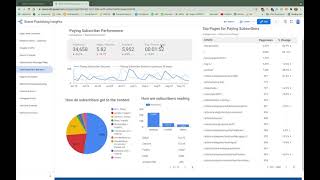
A short video conversation (Leaky Paywall Insights) about how logged-in, paying subscribers use a publisher's site. Paying subscribers show much higher engagement than casual visitors (around five-to-six pages per session here), though pageviews from this group have dipped slightly even as subscriber counts grow. The hosts describe how publishers use daily "morning meeting" reviews of the prior day's top pages to guide new articles, email content, and social posts, and they note device/demographic usage (desktop, Safari/Chrome) for this client.
Chapters
This dashboard is all about the behavior of the logged in and paying subscriber. So let's talk about that.
Correct? Yeah. So understanding how the folks who are actually are paying subscribers interact is great. And if we need to get them back in the fold, we have to understand how and why we do that. So page views, page sessions, pages per session, the number of sessions, the time on the page, those are all great things to look at for this client. Page views from the paying subscribers are down a little bit and their subscriber base continues to grow. But we actually had a conversation about this recently and talked about some ways to present new content and how we can display it and also how we treat emails to this group to make sure we're bringing them in often enough. So it's another great page to kind of understand how our paying subscribers use the site.
Yeah, it's cool data. One of the things that we're learning really quickly is that paying subscribers behave a fair amount differently than the casual visitor to websites. You know, you look at, you look at here five, you know, almost six pages per session. You know, the average news or magazine site with the casual visitor lands, you're going to get you know, 1.2, 1.6 pages per visit, something like that on average. And this is knocking it out of the park. You know, almost six pages per session. Even though it's down, it's still a big number.
Right.
Also mention one other thing, we have a different publisher, we work with that. What they do is they review their most popular pages every morning from the previous day. So what they're doing is they're literally sorting this data by yesterday essentially. And they'll look at, okay, well what, you know, what, what articles really worked, what were hot for that day. And this now gives them, you know, what are their, what are their most important readers? They're paying readers. What do they find really important? So they're able to now build, you know, they can create, go, go off and write new articles for that day because it's a morning meeting based on the performance of the articles previous day.
Yeah, that also gives, you know, it lets them know, it gives them ideas for emails for their non subscriber base. It gives them ideas for social media content. It's, it really just lets them know what is popular right now and what can we get new eyes into the site with. So it's a, it's a great tool.
Absolutely.
We also again have little hit content pieces here. Sort of like that organic traffic page where we have the demographic data. This is more how our subscribers use the site. So this client, it's desktop and it's Safari and Chrome, which is interesting data. I don't think we. We would leverage this on a daily basis, but it would be neat to look at trends here. So we put it in.
Right, Right. Yeah. And I think every publisher is going to be a little bit different as far as, you know, mobile. You know, most news sites have a very, very high mobile readership versus desktop, but this is. It's just a different audience.