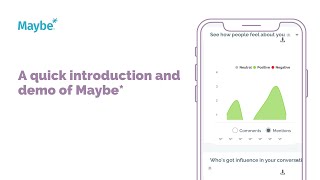
In this product demonstration, Polly Barnfield, OBE walks through the Maybe social‑media intelligence platform, showing how both a small independent shoe retailer (Keith Scarrett Shoes) and a large public‑sector client (Sheffield Council) use the dashboard. The platform aggregates data from Twitter, Facebook and Instagram for 7.9 million businesses and processes roughly 80 million daily engagements. Key modules include: - Social listening & engagement – real‑time comment/mention streams, in‑platform reply capability, and AI‑driven suggestions of 42 pieces of content to re‑engage. - Content module – performance stats for organic posts, AI‑generated inspirational content recommendations, scheduling, and visual learning from 80 million engagements. - Ads module – seven‑day ad performance, best‑performing ads, recommendations to pause under‑performing ads, and automated audience building for Facebook/Instagram based on who engages with the brand. - Competitor benchmarking – side‑by‑side comparison with any chosen competitor (e.g., Russell and Bromley, Gucci), including post metrics, sentiment word clouds, and influencer mapping. - Sentiment & word‑cloud analysis – daily scoring of positive/negative/neutral mentions across 80 million engagements, enabling rapid issue detection. - Influencer insights – identification of users who frequently mention or engage with the brand and competitors, visualised by circle size. - Strategic case study – Keith Scarrett Shoes used competitor sentiment (trainers) to launch a lower‑price trainer line, driving online success and higher ROAS. - Sponsorship manager for local authorities – councils can draw geographic boundaries, grant free platform tiers to thousands of SMEs, and monitor collective performance (reach, sentiment, offline purchases) across the area. - Loyalty/offline tracking – linking Visa/MasterCard/Amex data to measure offline conversions from online ads. - Training & support – daily live training sessions and on‑demand catch‑up resources. The demo emphasizes that the platform removes guesswork from social‑media decision‑making by surfacing actionable insights, automating audience creation, and providing transparent ad performance.
Chapters
Welcome to the MAYBE demo. I'm going to talk you through how both an SME and one of our enterprise clients uses the MAYBE dashboard. So let's start with Keith Scarrett Shoes. And these are a high end independent shoe retailer and everything I talk through with them applies to any other business. So this is their dashboard is populated with data from Twitter, Facebook and Instagram. Maybe gathers the data from 7.9 million businesses every single day and also collects the about 80 million engagements on that business content. So what that means is we can show any brand the comments or mentions they've had on their posts across Twitter, Facebook, Instagram, and as the owner of that account, you can click through and respond to those comments or mentions directly on Facebook, Twitter and Instagram without leaving the MAYBE platform. We're then suggesting 42 pieces of content that you should go and re engage with based upon people you've previously engaged with in the past. And from the Engage module you can literally go and jump into any conversation where your customers are potentially spending time. And that's divided by location and by sector. In the content module of maybe, this is showing there are two posts that you posted last week. It will show you the stats against them and it makes recommendations about inspirational content that may well work well for your audience, lets you schedule it and increasingly we're investing heavily in this area about being able to recommend the right types of pictures based upon how 80 million people engaged yesterday. So constantly learn what's working best. The Ads module of the MAYBE platform shows you how your ads have performed over the last seven days. It shows you your best performing ads. It shows you the ads we recommend you switch off. And critically, it's where we build your audience as well. So based upon who's looking at your social media content, we build audience for you in Facebook so that when you go and run your Facebook or Instagram ads, there's a ready made audience waiting for you. And scrolling down the dashboard you've got your data compared to any other business you choose. So in this example, this independent shoe retailer is comparing their data to Russell and Bromley. If you want to change and look at office shoes, for example, she literally would type in office shoes here and the data would change or Prada, whatever you like, but it lets you follow in the footsteps of giants. So she can see here her best post compared to Russell and Bromley. This is based upon how consumers have engaged with it. You can see here she's had 49 likes on it. It 6 comments vs Russell and Bromley's best post of the week which had 280 likes and 1 comment on it. She can come down and she can see stats her brand compared to the competitor brand. She can see what's working for her from a content perspective. So purple are her posts, light purple are the engagements on those posts and green are the paid engagements. And she can say see the same for her comparison brand. So here she could say well actually I'd like to know what, what were they posting about on the 29th for example that built up to all this engagement? She can come through and see it amusing me that Russell probably posting about trainer sandals right now. But hey ho, who knows? And come down you can see how people feel. This is pulling content based upon what's actually being said on the post. So these are the words on each post. We score them for positive, negative and neutral. So we're doing that for 80 million engagements every single day. Let us understand what's working well and as a business you can click through and see well what is positive, negative or neutral. Clicks are on here you see the actual posts. Really good way to jump on problems quickly obviously. And also we'll see what's going wrong with for competitor brands as well. And you can do this both on comments and mentions. Same for influencers actually we'll talk about that a bit more. Comments and mentions are key so obviously this is people commenting, these are people that are responding to your comments a lot. Mentions is both mentioning you by mentioning you or a hashtag but also just writing your brand. And this applies to everything with min maybe even if somebody just writes about your brand we will pick it up for you. So this, these graphs show you the influencers and we've had a number of clients very successfully go and borrow, should we say influences from other brands because they can see who are the people that are influencing other brands content and you can go and snuggle up and cozy next to them. The bigger the circle the more they're mentioning you. But again complete visibility. Then what's being said about you as interesting story here for key Scout shoes actually. So this is the, this is what customers are saying on your posts and then how they're mentioning you. And what this brand key Scarrett noticed was that Russell and Bromley had a lot of customers talking about trainers. Trainers seem to generate one of the biggest conversations online for Russell and Bromley. As this brand was thinking about launching online they were very conscious that they have quite an expensive product. Their average price point was over £400. So as they launched their online presence. They also launched a fashion trainer brand because it was a slightly lower price point and they already had the insight that for Russell and Bromley's online audience, trainers were bigger than one of the biggest talking points. And they took the strategic decision to launch fashion trainers and that is what they attribute their online success to. They now very successfully sell their expensive shoes as well. But they believe that because they could launch at a slightly lower price point with fashion trainers, that gave them the foot in the door, so to speak, and got their online brand flying. And without this word cloud, they'd have never have known that coming down. One more. You can see the ad spend, the visibility of ads and the way we build audience has had a massive impact on, On Key, Scarret and actually and a number of our other SME clients. And we'll talk more about that in a minute. Training. We run training one to many every day at 10 o' clock and it's also available on Catch Up. And then the last graph here is you can look at your reach, both paid and organic. Very good here to see that her organic reach is outstripping her paid content. So if we come back up to ads, click through. At any point in time, you see how what ads you've got running and how it's performing. Now, this may seem obvious, but actually many brands run and many businesses run paid ads, often outsource it to an agency, which means that it's actually quite hard to see what's going on. Facebook hide this data incredibly well. What we've done is make it very, very visible so you can see all of the ads you've got running. This lady only has one ad running because it runs so well for her. She see here that she spent £2,200 on the ad. She. She's got £8,900 back. We're saying this ad is really running very well. And she'll be getting an email saying, we recommend that you increase the spend on it. And this is the transparency that drives ad success. If they're also using our loyalty program, it means they can see this level of granularity for offline performance as well. So if they've connected their Visa, MasterCard and Amex cards in the Mabey platform, we'll be able to track offline purchases and conversions from Facebook ads as well. And from here they can see this. This is actually a retarget ad. The key thing that maybe does is helps businesses build audience. So what this business has learned is that rather than chasing new customers the whole time, it's far better to run their ads to people that have bought in store or who have already seen their website or seen their social media channels. So basically retarget the audience that's seen their content previously. They update their content regularly, but they keep targeting it at the audience that already are loyal customers. And that's what drives an extraordinary return on ad spend. When they want to reach new customers, they look for people that look like that audience maybe has enabled them to do that by constantly helping them build their custom audience for them. One other key thing is we talked about how you can see competitors on the dashboard. You can also see a basket of competitors. So here in their Insight tab, this SME has created a group of competitors. Now remember, we charge by the number of competitors you want to look at. It's quite Moorish, right? Who wouldn't want to see what their competitors are doing? She's put together a basket of businesses that she perceives as competition in that that's where else her customers would shop. She can look at their number of followers, their posts, their engagements, their posts per day, engagements per post, engagements per day and their best post and their ads over any date range she chooses. But she can also dive in and see the granularity of that data and look at the insights like we've seen on the dashboard for any brand. Now just imagine the impact of that for every business, whether you're the largest in the land, but particularly if you're the smallest in the land, being able to basically look at what best brands are doing is one of the fastest ways to increase performance. So here she can see in detail what Gucci is saying. She can see their best post. She can look at the engagement of both on their brands themselves, but also on what other people are saying about Gucci. Remember I said that we track mentions. You see here that this just they've written Gucci and this is pulling out the best post about what somebody else is saying. They haven't actually tagged Gucci, but Miley Cyrus said something great about Gucci and is being pulled out here. And then you can see the influences and you can see the word cloud about what is being said about Gucci sentiment and what content is working best. And you can see that for 7.9 million businesses on demand, really, really powerful. Now I said I'd also show you how we work with enterprise clients. So one of the pieces of work we had tremendous success with this year is is working with local authorities where they are sponsoring access to maybe platform for SMEs so if you take Sheffield as an example, they're sponsoring Access for about 7,000 businesses. And the way they can do that using the MABE platform is we enable them to draw a boundary around a geographical area. What they have done is drawn a boundary around Sheffield and then drawn smaller boundaries as well. And all of the businesses that only have a single location within that boundary have free access to maybe to a certain tier of maybe if they'd like to see more competitors, for example, they can upgrade. So here if we go to. So this is their dashboard is exactly the same as Q dashboard except it's showing their content. If they come through to their sponsorship manager, this is where they can define the businesses that have, that have access to maybe. So if we just choose so Sheffield, that's the entire group, let's choose a slightly smaller guide because it will load quicker. From here you can go and edit the boundary. And this is, lets you, lets you see the area that Sheffield has defined as the businesses that are benefiting. So in crooks this is the boundary. If I was to move one of these dots it would increase the number of businesses inside that boundary. So super simple, they can self serve and self manage this. Our ambition is to make sure this is live for every town in the uk. Really, really fast way to get our arms around a lot of businesses very quickly. And if we just go back one, we can then see the insights for that area too. So if we just select crooks here and say we'd like to see the insights, this then enables Sheffield to see how those businesses are performing if they have the loyalty program turned on. So if each business has got their as approved, Visa, MasterCard and Amex, it means that we'll also be able to see the offline purchases resulting from online activity. And here they can see the activity on social media, the post volumes and they start to track over time how they're helping businesses be more digital. They can see the engagement, the sentiment score and the word cloud for that particular location and they can see that for each location they're working with. Now this is talking about how this works for council, but this also works for FMCG clients or for membership organizations. And in those cases one of the things that they are really excited about is that from within their sponsorship manager they can upload content that then appears in their members content area. So they can distribute content through their members or in the sense of a place they can distribute a campaign, for example, about Christmas and use all the businesses in their area to accelerate the reach of a message. So we are really providing the tools to put social media on steroids. Providing the tools to make it super simple for any business to learn how to take the guesswork out of making smart business decisions. As we said at the beginning, if you can see the ads that are working and the images that are working, getting social media right becomes much easier and goes back to our whole raison d', etre, which is to take the guesswork out of making business decisions. That's a super quick tour of the maybe dashboard. Look forward to telling you more. But remember, this Dashboard exists for 7.9 million businesses and is learning from 80 million engagements per day. Look forward to telling you more. Million engagements per day.