How to run retargeting with your advertising.
Learn how to build retargeting campaigns on Meta by creating custom audiences from website visitors, Instagram engagement, or customer lists, then launching ads in Ads Manager with a sales objective and existing posts.
Chapters
In this video I'm going to talk about retargeting and how to set up a Facebook advertising campaign in your business manager to do this. So what does retargeting mean? Essentially, retargeting is going back out in front of audiences who have already engaged with your business in some ways. So Facebook allows you to retarget anyone who is engaged on your pages, both Instagram and Facebook, anyone who has visited your website, assuming you have the Pixel installed so it's been able to track, and anyone who is on your list or database who has given permission to be marketed to. So first I'm going to show you how to create these audiences and then how to set up a campaign to retarget them. So to get started, I'm going to jump into my business manager. So your business manager is business.facebook.com and I'm going to start in my audiences area. So to find your audiences area, just click in the burger and it'll either be here in your shortcuts or you'll find it in list. So once I'm into the audience area, I can get started and I'm going to build out all the audiences that I'm able to retarget. So let's get started in here. We want to choose custom audience. So this is connect with people who have already shown an interest in your business or product with custom audiences. So click here and you'll see all the options coming up that are available to you. For today, I'm just going to go, I'm going to use the website source, I'm going to use the Instagram account and the Facebook page and the customer list. But you can see that there are a number of other sources that might apply to you depending on the kind of advertising you've been running. So if you run any video ads, then you can retarget people who have watched your videos to, you know, over 25% or you can define how much you want them to have watched to sort of drill down on kind of their level of intent. I suppose if you've been running any lead gen ads, you can retarget people who filled those in. An instant experience ad is type of ad where you have kind of like a click through to a sort of full page within the app. So it's a little bit more advanced, the setup of an instant experience ad. But what's great about it is you can retarget anyone who engages with that ad. Then you've got a number of others that are a little bit more advanced. But if, for example, you promoted an event local to you and you wanted to retarget anyone who'd signed up, then, then that one's there for you as well. But I'm going to stick to my website, Instagram account and Facebook page and customer lists because typically they are sort of quite core and most businesses will be able to retarget those. So I'm going to start with my Instagram account and I'm going to include everyone who's engaged with this professional account for 365 days. If you wish, you can refine that down to be much tighter. So if you only wanted to retarget people who had engaged in the last 30 days, for example, or 60 days, 90 days, then you can define that here. You just want to name it accordingly so you're clear in your list. So I'm going to call this Instagram audiences demo 365 days. Okay, so let's let that one go off. Now. It does start asking you, do you want to sort of move on now? Do you want to create a lookalike audience? Do you want to create an ad? I'm just going to create another custom audience. So I'm now going to toggle on my Facebook page next. And as you can see, every time I redo this, it's. It's basically. Dropping off the page, the appropriate page. So this is what Facebook does. Often it's a little bit glitchy. So if you're attached to a number of pages, just always double check that you're on the right one that you want to be working with. So again, I'm going to leave that with everyone who's engaged with your page. Just to show you. You see, it allows you to define this more tightly. If you w with everyone who's engaged with your page, that's set at a really high level. That's going to kind of go for maximum volume of who's engaged with the page, but you can take it down further. So you can say people who've only engaged on a certain post or ad, people who've clicked on a particular call to action button, people who've saved your page or a post. So think about that for what you want to achieve and which is the most appropriate going to give that a name. Facebook engages demo365 and create audience. So let's show you the website one. Now, website is only going to work for you if you've got your Pixel installed on your website. We do have a video in our library all about how to create A pixel and get it installed on your website. So check that out if this is all news to you. So make sure you check the right source. So again, if you've got multiple pixels set up in your business manager, it might toggle off to the wrong one. So just make sure you've got the right one selected. I'm going to leave it on all website visitors, but you can be much more specific. So you can ask to only create an audience of people who visited certain pages. So you just request that one and you literally drop in the URL that you want to retarget and you can set the time definition. So it can be really quite tight that retargeting there. You've also got the option to use visitors by time spent. So if people have just landed on your website and bounced off within a few seconds, it might be that they're just not going to be of value to retarget. So if you want to specify people who hung around for more than 30 seconds, that kind of thing, you can use this option here and set your percentile. And then the other options are all to do with events. So here at maybe we've got lots of events set up. You may not have any events set up, so this won't apply to you. But if you're say a shopify website, you might have purchases add to cart view content, that kind of thing, you might have set up bespoke events. It all depends on which package you're using for your website. So if that applies to you, have a look and see if anything's of interest. But for the sake of this, I'm literally going to just toggle on all website visitors and you can go back to 180 days. That's the maximum I'm going to give my audience a name. Website Visitors Demo 180 Create audience so the final retargeting audience that can be looked at is customer list. So this will all be down to whether you have a database, you have a list and of course you would need to have marketing permissions. So make sure that your GDPR compliant and then you can use them. Now don't worry, all the information is hashed when you load it up. So it's all totally secure, it's totally kosher. This is kind of normal practice for Facebook retargeting. So you'll see it gives you some guidance on how to prepare your customer list. Typically you want the list as a CSV file. You will certainly want first name, second name and email address in the list. But if you have additional extra data, it might be valuable to add it in things like postcode, date of birth, gender, age. It will help Facebook to match and find people within the Facebook metasphere that will match with your list. So more you have, the better. And you can add this customer value data. So this will tell Facebook more about the potential, you know, the kind of customers that you have on your list that are showing particular value to you. That will be a pound sign most likely, and you'll be able to load up their kind of over their kind of overall purchase spend if you have that on your database. So I'm not going to be able to go much further on this to show you through. But essentially, does your list include a column for customer value? If you've got it, just click yes and it's going to at the next stage, it's going to ask you to upload the file. It actually provides a template if you're struggling on how to create the CSV file and you can choose your customer value column. So obviously the value aspect is going to kind of be different depending on your business. Typically it'll be a pound type value, but you then get the option once you've uploaded the file to say which is the column that has the value aspect in there. So I can't go any further. I don't have a list kind of ready to show you, but you just follow the steps and that will just upload and it'll tell you if there's any problems that it's finding. So I've now got my all my demo audiences in here, apart from my website 1. I'm sorry, my customer list 1. So now I'm going to jump into my Ads Manager and create a campaign to retarget all of those audiences. So let's jump into our grid here. So I'm in the Odax view and you're looking for that grid to get into Ads Manager. The Ojax view is the new interface that Facebook is rolling out. So some of what you see may not be familiar, depending on whether you're on the new version yet or not. But all the terms that are used are the same. So you will be able to follow these steps and navigate through your own interface view. So don't worry. So let's get started on a campaign. Click Create. And now in terms of the objective you want to choose for retargeting. Now this I would say would be driven by the size of your retargeting audience. So if you're a large business You've got a massive group that you can retarget. I mean, it doesn't even have to be that massive, but we're talking sort of around over 100,000, that kind of thing, or even a little bit bigger, you might be able to go for sales and that's a conversion objective. But if you're quite small, if the list, if you think the audience is going to be quite small, then I would stick with using engagement or potentially awareness, just to kind of blast out to the full audience that you have within your set. And you know you're going to get the most exposure that way. It might not generate the most intentional action from your ad, but I think that's the best way to get exposure on a small audience. So I'm going to choose engagement and I think that would be a good one to choose. It's going to go out for more video views, post engagement likes or event responses and click continue. But if, again, you know, if you think you've got a big enough audience size, go for sales, because obviously this is retargeting. You're trying to get the action that you actually want for your bottom line. So I'm going to call this my demo engagement, Engagement retargeting. And I'm going to scroll on down, check my engagement objective is set correctly. Now, when you're retargeting, you're not going to need as big a budget. You might only need £5 to get through your audience. But make a judgment call for yourself. Start at 10. If you're seeing the frequency, which is an indicator we have in our maybe dashboard reporting run up above, kind of five, six, then you need to turn down the budget a little bit or increase the size of your audience. So start at 10 and then watch that frequency to see what it's doing, to see whether you can turn it down a little bit or turn it up. So I've got everything set there. Campaign bid strategy, highest volume, click next. And we're going to jump into this level now, which is where we set up our audiences. So this is when I'm going to pull through all the audiences that I've just created. So here within the Odax view, it asks you to set the conversion activity that you're looking for. So we're on an engagement objective here that I set at the top level. I just want the engagement on the ad, please. Thank you very much. Depending on which objective you've chosen, you might want to drive people to your website, to your website or drive messenger responses. So choose what's appropriate for you and then the engagement type. I just want it to be post engagement. So budgets set on at the campaign level. And I'm going to bring in here my retargeting audiences. So let's click in here and type in demo, because I use that as a kind of consistent factor in my audiences. So here they all are. So I'm going to bring in my Facebook engagers, my Instagram engages and my website visitors. And obviously if you had your customer list, you'd bring that in as well. So I'm not going to define any aspect of this apart from obviously make sure that your country is set correctly. I'm not going to define anything any further though, because everything's really defined already in my audiences. So don't touch anything further. Scroll on down and then I'm going to choose Advantage placements. So this is when you ask Facebook to use all its placements and to judge it based on where they're seeing the performance. Again, because we're dealing with potentially a relatively small audience, you just want to max it. So keep it on advantage and then it's optimized for post engagement. We're good to go. And I'm going to click next. So just for speed, I am going to use an existing post to do this rather than setting up a whole new post. So here is where you choose that option. So rather than create from scratch, I'm just going to toggle on, use existing post, and I'm going to look for the post here. And we've got. Let me find it. So there's this post that's gone out this last week that's all about how to advertise on Instagram. So I'm going to choose that one. So I'm still. I'm really going to be just driving people to our blog in this example. But obviously if you want people to actually buy from you or download or to become a lead, then you'd master something fresh, which was driving that action. I'm just going to use this existing post on the feed. That's all about our latest blog, how to. I'll show you it here. Getting started with Instagram advertising to grow your business. So that's the blog I'm going to be sending people to. So because the post didn't have a button attached to it, you can do that now when you're creating an ad from the post. So I'm going to leave it on, learn more and pop in the URL. That blog. Okay, update post. And now you'll see that the button's been added. And everything I need is in that post ready to go. So I'm going to apply some my website tracking, make sure the pixel is the right one, and everything's ready to go. So I've got all my audiences set, I've got the budget set, I'm running an engagement campaign, and I'm going to click publish. So that's a quick walkthrough of how to create your audiences for retargeting and how to set up a campaign to apply that retargeting to them. And here you can see that it's taking a little while to publish, so I won't leave you waiting for that to happen. I'll say goodbye, but if you have any questions, just remember you can reach us on the blue button within the maybe platform. We'd love to help.
More from Polly

SHE BUILT AI THAT WRITES, PLANS & WORKS LIKE A HUMAN| With Polly Barnfield | The Business Spotlight

Why Most Founders Are Doing AI Wrong — And What It Really Takes to Scale It Across Your Team


Transform Your Business with a Complimentary Digital Growth Bundle for High Street Businesses
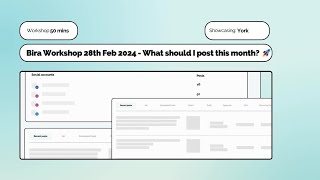
What should I post this month? Bira webinar 28th February 2024, featuring York