In this instructional video, the speaker demonstrates how a farm shop (Buckmoor End Farm) can attract foot traffic by leveraging Facebook hashtags and effective captioning. They explain the selection of local‑focused tags such as #local, #supportlocal, and product‑specific tags like #farmshop, showing how these help users discover the store when searching for regional or independent business content. The speaker then shifts to performance monitoring, walking through a social‑media dashboard that aggregates data across Facebook, Twitter, and Instagram. The dashboard highlights best‑performing posts, engagement metrics (posts per day, engagements per post, sentiment analysis), and competitor benchmarking against other farm shops. By comparing platform‑specific success and analyzing hashtag performance, the shop can refine its social strategy. The video ends with a call‑to‑action to book further training or ask questions via an on‑screen button.
Chapters
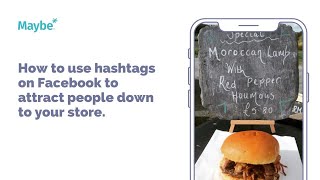
Today we're looking at how to use hashtags on Facebook to attract people down to your store. Now this is Buckmoor End Farm and as you can see, they are a farm shop. And what I love about this is, well, to be honest, there's loads of things that I love about it. It's a really lovely image that shows that kind of quaint, beautiful, authentic looking store. And of course big sign there saying that they're open, which is kind of what the caption wants you to know. It wants you to, to know that they're open from until 12 that day to restock on all your essentials. And then they're kind of, you know, enticing you in by talking about out for a sunny walk and grabbing your mulled wine or your Bailey's hot chocolate. So they're kind of giving you a bit of a view as to what you can get when you're there and why you might be wandering around. However, what I want to talk to you more about was actually these, which is the hashtags. So have, let's have a look at them. So first of all, you've got local. So you've got, you know that they're in the Chilterns, you know that it's home reared. So basically that is, you know, that kind of locally, locally, locally resourced produce, things like that. And then you've got supportlocal, which again, lots of people follow when they want to support local independent businesses. And then you've got the actual product, if you like, or the, the place itself, which is the farm shop. So these are all hashtags that I guess within this context people will be looking for. So if you're looking for anything to do with children's, it might just be that you might want to go for a wander around the children, something like that. And you would click on this one. It might be that you want to use, I don't know the hashtag support local. If you're just looking for independent businesses to follow. And then you've got your farm Shop, which means that you'd be looking for Farm Shop. And it might also mean that you're looking for Farm Shop in the Chilterns and you're much more likely to come across this post. So that's what it's all about. It's all about kind of trying to entice people down to your place. It's all about, I guess, digital signposting people. And that as also the same way that it works on Instagram as well. Now if I was this farm shop. I would want to understand how I was performing, all in all on social media because they clearly, you know, do make an effort. So I would go to maybe and go to my dashboard. And here, obviously you can watch, do things like monitor your content. You can look at comments, mentions, engagement and ads and things. But really, I think the biggest thing is it's about the comparison. So if I was them, I would have myself here, which. And then you would see your best post each week. So it would be either across Facebook, Twitter, Instagram, it would show you your most engaged post. And then on the right, it would be any other farm shops, it would be any other farm shop in the uk or it might be a local one that they want to compare themselves to and then they can start to understand, right, okay, if theirs is better on Twitter and mine is better on Instagram, how much better is it? Is it the same kind of post that is working well on one versus another? And then they can start to go into more detail, they can start to go into their social stats to understand, you know, where they rank in terms of posts per day, engagement per post, engagements per day. They can start to look at, at things like hashtags. They can start to see how people feel about them. They can see the sentiment. You can see what's been said about you versus what's been said about your competitor. So you can really start to build up a picture as to what's working and what's not on social media. And then of course, they can click to book more training if they want a bit more support. Now, if you've got any questions whatsoever, click on the little blue button. We love to help.