David De Cremer and Deng Yaping on the (ping pong) ball: Sports careers and business leadership
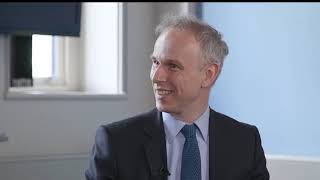
A recorded conversation (April 23, 2020) between Tracey Horne, Dr. Deng Yaping (Olympic table tennis champion) and Prof. David De Cremer (Cambridge Judge) on how elite sports experience maps to business leadership. Central themes: transferable skills (focus, resilience, passion, tactical analysis), cultural differences in how competitiveness is expressed, and practical advice for athletes — notably mental toughness, planning for retirement/second careers, and embracing experiences during a short sporting career.
Chapters
I'm Tracey Horne, head of corporate Communications and Marketing at Cambridge Judge Business School. And I'm delighted today to be joined by by Dr. Deng Yaping, who is a multiple Olympic and world champion in table tennis and a PhD in land economy from the University of Cambridge. And also Professor David de Kremer, who is our Chair of Management Studies at Cambridge Judge Business School. Thank you both for being here today. And the purpose of our meeting today is to talk about the experience of being elite sports people and transitioning to business and leadership. So I have a few questions for you both. I'd like to start with you, Dr. Den Young Ping. First of all, please, can you tell us what you find are the greatest parallels in finding success in sports and business? And are there certain skills that translate well?
I think definitely we need different skills in particular, so you have to know yourself and as well as you have to know your opponent, you have to study them. And for the business, I think you are not only study the products, the business models, as well as you have to study about the industry, what is going on, and also for the government policies, sometime in different countries, they have different policies, but the important things that you have to study and to know whether exactly you can win.
Thank you. And the same question to you, Professor Degrema. Are there any skills that you see transferred between sports and leadership?
Yeah, I think very much so. I think we have a prime example here. Passion, strength. You can see that Deng Xiaoping actually grooms it. I mean, it's all there. It fills a room. And that's what we call quite often charismatic leadership. So I think there are many examples of sports people who really become successful business leaders, study leadership. In my case, I used to be a national champion in long jump. And what I've learned myself from it is very much there are some skills that you get along the way, and you probably recognize this very much is you have a focus, the focus for attention and details. Like you mentioned, you study your opponents, you study how you should behave, how you should act. I think that's an extremely important trait. The focus that people have. And together with that combined with it, you see a lot of athletes have resilience because you have injuries, you fail, you don't win the competition you wanted, and you prepared for such a long time, but still you keep going. Determination, persistence. I remember that once I tore my Achilles tendon and it took six months. And during the summer, two summer months when I was at the high school, my mother joined me every day to the track to time me to see whether I was running faster at the end of the summer. So it's really the passion as well. As I said, you need to have that passion. I think resilience, passion, focus, those are very important traits that sports people take into business.
What would you say are the biggest differences between top level sports and business? You've spoken about the similarities or what you can take from sport and apply to leadership and business. Are there any things you find that are completely dissimilar and not applicable or transferable across?
Well, I think, and this may come as a surprise to some people because we agreed that business is also about winning to some extent, that if you move from being an athlete and having that focus and you go into, in my case, academia, thought leadership, you come across as too competitive sometimes. I remember when I was doing my PhD and I had my first a publication, a top publication. A fellow PhD student told me, it's not a competition, David. And I was completely surprised and I said, but it is not a competition. I agree, it's not a social competition. I'm not comparing myself to you. And then I realized suddenly what you do as a sports person is very much you're competing with yourself as well. You're trying to improve your performance. So I never looked at it like, oh, I have a publication, you don't. I only looked at it. I have my first publication, let's move on to the second. And I was my only comparison point. But people took it differently. So I think sports people, when you just move into business or taught leadership, you can be very competitive without being able to put that in perspective because we're so focused during our careers.
That's very interesting. Have you had any similar experiences or is there anything else that you have noticed is quite different in business and leadership compared to your days as an Olympic and world champion?
Yeah, I quite agree with David. When we go to the bat, lie onto the vet before go to sleep, we have to think about it. We have to think like watching the tv, watching the film. We go one by one by one, each play, each bull, each point, which one win, which one lost. So we have go like this detailed to analysis which one made me better, made me lost. So I think athletes is really good for analyzing. You have a plan ahead, stick on the plan. And also you have to predict what is going to happen and what is going to happening. That's also important but for us a quite automatic thing because always we have to know, you know, Olympic Games always finish or next Olympic Games when four years after. Okay, what day, what month, what time. And so we all stick on and we analysis what happening, why lost, when we winning and also predict what next time your opponent play with you, what kind of techniques, what tactics. So those are all the things we have to think about it that is made that leadership so strong that I think the same quality for the company, for the CEO, for the business.
That is fascinating because it actually sounds as though there are far more similarities than dissimilarities. Although perhaps it is the way in which it's sometimes delivered according to the example you were giving.
I think so, because there's one thing as well. I mean, we're both individual sporters, so we're individuals. Most people will say you're competitive. There's also team sports where you'll see people can lead teams. But one thing that really illustrates to me sports, individual sports as well, is we can be very competitive, but there's always respect. If there's no respect, you don't have the Olympic spirit, but you don't have the sports spirit. And I feel that that's something that a lot of sports people take with them. They're very transparent in that sense. In business, I find, because they pay a lot of respect. And what I find is in sports it's okay to be explicitly competitive because we're rivals. In business it's not okay to be explicitly competitive. They're more implicitly competitive. And I find that that sometimes goes along with less respect. I find athletes are very respectful to each other, although they're very competitive.
The final question to ask you both is what advice would you give to young athletes of today? To be the best they can be, to be the most successful in 21st century.
I think for the young athletes, first of all, they have a very passionate about their own sport and they are showing they are really want to win and they showing they have to wanted to really want to fight. And really from their bottom heart. Not all, not only I enjoy it, you can't enjoy it. This is not professional athletes. This is just a sports for all. That's okay. You can enjoy every moment. But for the professional athletes, more determined, more stick on your goal, stick on your dreams to suffer. Sometime even you play not good and must be you be very tough. Not only physically and from you hard. So the mental are very important. So I think from the young athletes, if you can, if you have this kind of capability, I'm sure one day you definitely can win the glory or achieve your best that you can in international levels. And also I think from the professional athletes. They also have to think about it much earlier, much ahead to plan when you retired. Obviously we have to facing that. So you be prepared earlier. That will make the year easier when you retired. So I think retirement for the athletes, always the issues, how to turning the second life or how to smooth the athletes when you peak, you know, when you reach the two peak and then now you're back to normal life. So that is a little bit hard for them. So I think the athletes always to a plan before that they'll be better.
Listening to Dr. Yaping now I understand why I definitely never became an Olympic champion. Because yes, you're right, the hardship is the mental toughness that it's not only the enjoyment and the satisfaction. My first coach always said you have to enjoy yourself.
You met me late.
Yes, I know. You could have coached me as well.
Maybe the Olympic champion.
Well, David, do you have any tips for balancing academic and sporting achievement?
Well, for me, one of the things that I regret the most is when you go on training camps internationally and we traveled so much, I never really enjoyed the experience of where you were, the cities that you saw. I mean, I have a lot of friends who are professional football players. They go to all these cities, but they never see the city. But they say I've been everywhere. So in a sense what I've learned to put things in perspective in your second career, sometimes, I would say for youngsters also try to embrace the experience completely, of course, be very focused and passionate, but embrace that experience. And the second thing I very much agree with you is the time span of the career of sports career is so short, time flies. And one thing that I regret the most is that in the beginning of my sports career, I always thought, oh, I'll do it next year, you know, there is no next time. You need to do it now.
Exactly.
You need to have that spirit. You need to get it now. And this is something that we hear in academia quite often. It's a different perspective. It's a much more traditional climate universities. So if you say I want to do it now and right away, a lot of colleagues will say take it easy. Yes, yes, yes. So I think you have to adjust to that as well.
Well, I'd like to thank you very much, Dr. Deng Yanping for your time today and Professor David de Craymer. It's been most interesting. Thank you.
I also have a small present for you that I wanted to give you. It's a book that we wrote on the leadership of one of the biggest Chinese companies Huawei. And I hope that works out. As we're going to play ping pong, maybe you may use this as a bat and I will use a normal bat because I would like to get the ball across at least once.
No problem. Don't worry.
Yes, yes.
I've learned that I will play the.
Ball to your hand. Okay. Thank you so much, Sa.
More from Prof.

Thinkers50 Curated LinkedIn Live Session with David De Cremer | The Organizational Application of AI

Professor David De Cremer on Who the Decision-makers Are In the Age of AI - HCLI Trailblazers #82
Unleashing AI's Potential for Global Business Leadership with David De Cremer | Paula Caligiuri

David De Cremer On AI Savvy Leadership | Episode #944 of Six Pixels of Separation