Leadership by algorithm - Full interview with David De Cremer
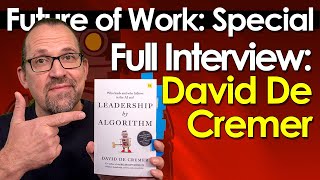
David De Cremer argues algorithms won't replace human leadership, but will handle routine metric-driven tasks as "Management by Algorithm." Real leadership stays human: it requires judgment on change, purpose, meaning, and ethics. Organizations need to understand AI's limits, avoid black boxes, and strengthen the human skills algorithms can't teach.
Chapters
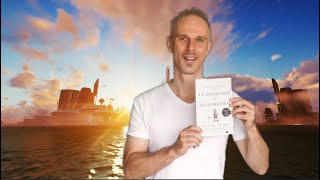
Hi, Dave Coplin here. Now look, you're just about to listen to the full length interview that I had with David De Kramer, who is the author of this fabulous book, Leadership by Algorithm. What you should also know is the lovely folks at Harriman House have given us a 30% discount code. So if after listening to the interview you feel like picking yourself a copy of the book up, head over to harrimanhouse.com there's your code and look at that. We're bringing you global insight, we're bringing you things hot of the press and we are saving you money. What's not to like about that? Anyway, here comes the interview. Hope you enjoy it. So, hello and welcome to a special edition of Dialing into the Future of Work. It's me, Dave Coplin and we have got a fantastic show for you. We've got the author, David de Kremer of this fantastic Leadership by Algorithm book. You can see that I have enjoyed reading. And with no further ado, let me bring David straight in. David is a, he's a thought leader, he's a behavioral scientist, but more importantly, he's been thinking a lot about the future of work in the role that we're going to have as humans with algorithms. So David, you're joining us from Singapore, which is a great honor for us. Thank you so much for joining us and spending some time with us today.
It's my pleasure, Dave. I'm really happy to be on the show.
That's great you say that now. I hope you'll feel the same in about 30 minutes. So look, let's get straight into this, the book and you know, people who know me will know how much I love the concept of Leadership by algorithm. Can you talk to me of a sort of, I guess the premise behind the book Leadership by Algorithm is this a world where we humans cease to have a role in the world of work.
Well, the title would suggest so, but the conclusion, so I'll start with the conclusion is that no, it's not going to happen. So the main conclusion is that we'll be confronted with a new mba. So I'm a business school professor, so most people say a new mba. This is a degree or something, but it's an abbreviation for Management by Algorithm. So how we see that most of our organizations are run these days is by metrics, KPI. So we like our KPIs because it's easy to manage and management in itself tries to keep stability. Ship is not rocking too much. We can manage status quo. This is routine Jobs. This is ticking boxes perfect for an algorithm. There's not much change there. There's not much uncertainty, ambiguity. We measure everything. And AI, in its essence, and many people forget this is basically statistics. So most people, when they see AI improvements or amazing things that AI can do, usually it's in one task and it's something that they can do because they can calculate very well. And as people, we're impressed by it. And in a way, we attribute almost some humanity and we make it an entity so we believe there's some awareness there. But I want to emphasize right away, AI is statistics, so there's no sense of awareness. AI doesn't know what a human is. AI can execute, so it's perfect for management. But when it comes down to leadership, we see something else. Leadership is different than management. Leadership is about dealing with change. When things change, which direction do we go? What kind of value are we creating? Why are we doing this? So as a leader, in a way, you're a purpose provider for your group, for your collective, for your organization. You point out a direction that makes sense given the circumstances, and you explain why it will create value to the collective. So that requires something else. That requires that you can deal with more temporal data, data that's changing all the times. And that's what we see in companies. Most of it is supervised learning, which means we provide the input, we train the algorithm, and then we apply it to new data. So that means pretty stationary. So as soon as things become chaotic, there's uncertainty. You need a sense of awareness. We still need our unique human abilities like critical thinking, creativity, perspective taking, being able to make abstraction of things which statistics don't do.
And that's great. And in the book, you have this wonderful. One of the subtitles in the chapter was Achieving More Means Less Management. And you know, that really struck a chord with me. And then you went on to talk about enlightened leadership. Could you just talk through those two points? Why does achieving more mean we have to manage less?
So, first of all, it sounded good, but that was not.
I like your thinking, you know, I.
Mean, people always like to say, my executive classes when I teach leadership. So not really anything about technology, but really about leadership. I always say leaders, they make others perform better, so they have to do less. And suddenly all these executives are like, oh, what do you mean, I can do less and others will do better. How can I do this? I said, yes, but you do less so you can focus more on your leadership responsibilities. Because people misunderstand this quite often. They Think, oh, I just lean back, I earn my money by doing less and others do well. And it was some sense. That's what effective leadership is. Look, managers don't have to think about motivating people. Managers assess, like I said, evaluate. We have all these metrics and the most often heard complaint in any company is we have too many managers and not enough leaders. So if we start with that assumption, what does that mean? Actually, it means that in a world where there's much uncertainty, in a world where we have to compete by being unique and most companies conform to each other, they're not unique. We need some innovative products. We need people who think out of the box, an inquisitive style of thinking. In our culture, managers are not going to do this because they are reactive, like laws, like rules. We follow the rules, we follow the boxes, we follow the metrics. So we don't train our people anymore in taking responsibility first, thinking out of the box, pointing out a new direction and being able to give meaning to it. And that's where the enlightenment comes in. So if you're a successful leader, it means people connect to you, they believe and they see the value in your approach and they're willing to commit to it. So that means people take ownership of their jobs and you give and you delegate that responsibility also to them and you make them give them that freedom, that room to grow, to perform better. That's the growth mindset that we hear now everywhere in consultancy and where Microsoft really is now the representative of, like we look at growth mindset, for example, our own research also shows that usually a KPI driven organization will say, have you been Dave, let me evaluate you this year. We'll compare yourself to all the other presenters and that's how we'll allocate your bonus. So it's pretty competitive. Whereas the growth mindset companies, where they say, like, we need to be more enlightened, we need to be looking out of the box and be proactive, will say, dave, how did you perform last year and how did you perform this year? Did you grow? Did you didn't? What happened? Can we improve on this? So we're making it actually much more about the person and making sure that that person owns the job. Because let's face it, if I'm running the organization, I don't want to be involved in all of this up to the level of executing the task. So a successful leader can connect and make sure that the team works. You don't have to be there. So that means it's less that they do better and less means you have more time. And that's the enlightened leadership to work on your vision, to make clear what it is, how does it work? How do you communicate this? How do you represent it? You're an embodiment of these things. That's what leadership is about. Leaders represent organizations and the values they stand for. So in a way, for example, and going back to technology, when I say, okay, you want to implement AI systems, that's fine, but most business leaders are not too tech savvy. So what they assume is, oh, it will know what to do, but that's the old model. It now sits in your boardroom and they will say, what's your strategy? So basically now suddenly you have to say as well as a leader, oh, what is it? Why are we using this AI system? We hire data scientists, but also make sure that data scientists know every department, know where the data are, what kind of data we need, because the quality of the data, data matters. So I need to be clear about also the value I want to create and my strategy. And I need to make sure that I have conditions that facilitate that integration. Suddenly your leadership role is really, again, it's still the same, making the team, the organization perform better and facilitate that. But now technology is in addition. So that's what I'm trying to make clear to people as well. Understand really what leadership is about and the alignment is really about. What direction are you taking, for what reason, what value do you want to create? And how will that value be created by your strategy? Those are questions you have to answer. And if you're involved in every little thing and think like a manager, you have no time to do that. You won't get better. And your company's not let.
Yeah, no, I love that. And David, one of the reoccurring themes that we've been talking about for years, but specifically in the last six months on this show, is this distinction between management and leadership. And I guess I'm interested enough. It's almost too obvious a question to ask. But does the pandemic make that distinction even more important today than it ever was before?
Yes, it's a very good question and it's one that we haven't been addressing fully yet. So what you see emerge now in the management literature, but also, let's say the business gurus you've probably read about this is what they're saying is, suddenly leaders, there are two issues. First one is there's an issue of distrust. So when you do remote working, you have to delegate some responsibility to your people at home and you have to trust them that they do the job. In the ideal situation, what you see, what is happening mostly is because people, most managers have a management mindset. They don't know how to build trust. So I wrote an article about it that the pandemic actually shows how bad our companies are in building trust with their workforce. Because since the pandemic, startups tech companies that produce technology for monitoring, for controlling has gone up by factor 4 or 5 their sales. Most companies. The BBC two weeks ago had an item about companies saying, oh, I everything about my employees, which keystroke, how much time they take for the email to respond, whether they're on it and they know it. But it's the only way to do it. It's not the only way. So there's the concept of vulnerable leadership. So leaders, in a way, like I said, they need people to connect to them because you're selling a message of vision that you want to create certain values and are you with me or not? And it's not really I'm against you or not, but it's more like, do you believe in this vision and in that journey? You want to give your people ownership because you hire them because they're the best people. I mean, I always ask my managers in the class, okay, do you pay them a salary when you are. And they look at me and say, of course. I say, okay, but then, okay, you pay them a salary. But who here feels you pay them a salary but you're still doing their job? And everyone raises their hand and says, oh, yeah, I have that feeling. I said, it's pretty stupid. No, you hired the best people. You still don't let them do their job. So that's the ownership. So in that sense, so what we see, they still have that management mindset. Leaders can connect. So they have to give trust to build trust. Our research shows this leadership is about you're willing to be vulnerable towards the other. So if I say, if you and I are working together, but I'm checking upon you all the time, what's your. What's the signal that I'm giving? I'm saying I don't trust you, I don't even have to mention it. The fact that I'm just monitoring you the whole time means I don't trust what you're doing. So if you're not willing to take that risk to say, like, okay, I'll let you do this stuff, you won't be able to build that kind of interpersonal trust. And that's what leaders have to be able to do. So we see there's already a leadership failure in itself. That's the first thing. The second thing is I see a lot of business leaders are starting to say now, hey, you know what, David, maybe you're right and I shouldn't be focusing on the process too much. Let's focus on the outcome. So we shouldn't be monitoring our people, we should just see whether they do the job, yes or not. So if the deadline, Dave, I'm telling you, in two weeks you have to provide this. You have to finish these assignments within two weeks. I just expect it to be on my desk. If it's there, it's fine. But there's a problem with that as well. If we go back to the financial crisis and all the corporate failures in the early 21st century, one of the things we saw there as well is remember in the financial industry we had a bonus system. If you make, if you can get this number of assignments or these kind of deals or these kind of clients and you get a bonus, how you do it, the process doesn't matter. I only want to see the outcome. So now we have all these leaders who are enlightened again saying, oh, let's just focus on outcome focused leadership. So I'll link it in. It's everywhere, Outcome focused leadership. Let's not look at how they do it. Research also shows in such a climate, it's when people are close to their KPI to say so, because it's still a KPI that you're close to, but you're not going to get it. People will cheat to get there, but you don't care about the process. So once they know this, they don't understand trust again because, okay, you don't monitor because it gives a bad signal. But then they say, okay, I let you go, we don't connect anymore and I'll wait for the outcome. Wrong again. What did I say? Leaders, an embodiment of the value you want to create and the norms. So that means you don't have to monitor with them, but you have to connect with them. That means of course you communicate, of course you're there and of course you're involved, but not in a controlling manner, but in a manner to facilitate and make them better. If you then say, no, no, no, we move to outcome focused again and they have no participation from the leadership part again, as you can see now, everywhere, like I said on LinkedIn, and only wait for the outcome, you're Recreating the financial crisis.
Yeah, yeah. No, I love that. And I mean, it's back to that sort of element of leadership, isn't it? And I think this, one of the big transitions that need to be made from managers as they transform to leaders is this sort of transition from management to coaching. And you know, you can sit around. The best people right now are those that are empowering their people. You know, they have a purpose, they understand what they've got to do. They've been given, you know, managed by output, but are constantly being coached. And coaching, to me is that supportive. Have you thought about this? What happens? You know, again, it's sort of putting the responsibility with the individual rather than. Well, I wouldn't have done it like that. You know, actually you're missing three things that. Do you know what I mean? It's that subtle change. Those are the hallmarks of great leaders.
Yes, we see this. Well, coaching becomes part of it. But don't forget, one thing I do want to stress is I don't want to present the leader as the person knows it all. Also, leaders be coached in how they coach their people. So employees expect the support. But like I said, you facilitate the work conditions. So that doesn't mean you can't give criticism, that doesn't mean you can't be tough on them. It all makes sense. You need to make it meaningful and facilitate so that they can perform form. And please don't expect in itself that a leader is there only just to be kind to them. That's also not the idea.
Yeah, yeah, the, the, I guess the other issue that this throws up is, is this whole concept of sort of algorithmic assessment. And you know, so one of the things that we're talking about right now in the uk, and I know it's happening more broadly, globally, in both the workplace, but also in education, is actually, maybe we don't need this end of year performance review or the end of year exams. Maybe we could use an algorithm to perform continual assessment on the behavior and the productivity of the individual and we'll use that as their assessment. What's your perspective on those? Is that the right direction for us to travel? Does that sort of get, you know, because part of the problem with the traditional method, either of exams or manager assessment, is all of the bias that you have implicit in that and all of the other things that go on. Does algorithmic assessment offer us a way through those?
Well, there are pros and cons, as you've also, I hope you've noticed in the book as well. I'm not negative about automation.
Yeah, absolutely.
Decision making. And this is such an example. What you're just presenting now is that I don't see a problem that algorithms are being used to track performance across a year. For example, because most companies agree the annual performance review is ineffective. First of all, most managers try to avoid it as long as possible because they don't like to give feedback to people. Again, they're not leaders. They don't have that mindset, not trained to do it. So in a lot of companies, it just doesn't happen anymore because it's only once a year. So there's a risk of if it doesn't happen this year, then it's been two years already. If you do it next time. So the continuous feedback loop is the one that we all advocate. Of course, if you're more coaching and you're involved, like I said, it's not remote working. And then I'll see when the outcome is there. No, you're continuously involved. You give continuous feedback. And we need to train these interpersonal skills. So first message already within an age, an era where AI and automation will enter organizations, we need to train our leaders even more in being humane and human, in those interpersonal skills. So that's the first lesson always. But then, having said this, continuous feedback is good. So algorithms can help there. Algorithms can see, yes. Okay, so are you growing in your job? For example, are you performing better? But we can also. So this is purely the performance measure. But you can also see, like, okay, are there any problems if we collect those data? Like, for example, you've talked about, you've spoken to HR every month. Okay, they have a bigger perspective. They can ask also about your family situation, conflicts with employees. They can do the 360 feedback. You can all have all that information. You have sentiment analysis now as well, natural language processing. Who can actually look for keywords? Organizations can invest in that to have that kind of training data. And why would this be a good thing? Is if it's used again from a growth mindset, from continuous feedback to see, like, okay, I just put in a lot of money in this person because I hired that person, I'm investing and I believe in that person. I'm giving them the ownership, as we said. So I want them to grow. So I'm using this to augment the effectiveness of the organization and HR to make this person better. So that's good. The problem is that as many things in life, for most people, everything is in the eye of the beholder. It's how they perceive it. So one of the issues, and this is where automation can work against you. If your workforce is not really explained well, why you use tracking systems, why you use algorithms that are involved in decision making. Because if you don't explain it, if you don't explain it at all, by definition, that's a default. People will perceive use of AI as the end goal simply being to collect data about yourself, which will probably be used against you. This is how people think if you don't communicate anything. So leaders have to communicate this. They have to. Again, it's the same thing as explaining the why. You have to explain the why to most things, especially technology, and give meaning to it, then it's a good thing. If people see that, because then they see the technology as a mean to an end, and the end is still a humane thing. I'm going to make you better. We're going to get a relationship. But most of our leadership fails even in these things. So what you see is, I see so many companies, AI adoption is 80 to 90% worldwide. But do they create value? Then you see it's only 15% of companies who say they adopt AI, who create value successfully. Because. And then they say, why is there such a gap? Why is there such a discrepancy? And, and my answer is always, you know what? Because your workforce doesn't align with the intelligence, with the automation that you've implemented. Because you know what, you didn't make a business case for it and you don't understand it.
Yeah. And this is a conversation I end up having a lot. And sort of, you take leaders into the example of, you look in the world of sport, right? And if you look at what's happening now for most athletes in any sport, team sports, individual sports, is increasingly, they're working with coaches who are amassing a whole series of data about the performance of that individual. And it's not just their performance on the field or the track or wherever. It's their sleep data, it's their, you know, diet. It's all of. All of this stuff comes with the single goal of how do we help this athlete perform at their best, they don't want to break the athlete. They want to get to that sort of maximum performance where they can sustain it. And then I say to the leaders, wouldn't it be great if as an organization, you could say to all of your people, we want to work with you to help you become the most productive that you can be as an individual, and we want to work with you, we want to, you know, access. And this is where it gets really scary. You know, your sleep data, how much you drink, your diet, all of these things with the sole purpose of helping you do better, because that's what's on offer. The problem is, is, you know, you cross a very significantly creepy line at the point at which do you know, you know what I. And so in one world it's okay, in another it's not. But it does come back to this sense of trust. But it also comes back to the next big topic that I really wanted to talk to you about, because in the book, you talk a lot about the rise and the importance of ethics from an organizational standpoint. And it's something that, you know, we've seen a lot of. And again, you know, we come from a tech background, so the whole concept of the ethics of how the technology is applied is very key to us. But in a world where algorithms and data are permeating the normal world of work, the concept are we doing the right thing? Becomes super important. Talk to me about this sort of relationship between algorithmic leadership and ethics. How does that play out in organizations?
As you know, it's a very complex relationship because ethics is a big, big concept. So let me start with what you said first. It's all great. In sports, for example, we collect all the data, people improve, athletes are happy, but there are limits to it. So this is what I mentioned, when there are also negatives to tracking systems and collecting data about people. The first one was, of course, if you don't explain why and it doesn't become meaningful to people, you have a problem for sports people. They're very selfish, ego driven. So all these data are going to help them. But there's something interesting about this case as well. When you look at sports, these people only do this for a certain number of years because the sports career is limited in terms of duration. But also many athletes have described they feel themselves robots because they only live in a world of data to say, so you can't keep doing this mentally. People can be robots. The most beautiful example is in the US now, like Amazon, which I also describe in, in the book. At the assembly lines, people are there being supervised by an algorithm who can fire people without any human intervention. What they do is they track every day. And as most managers work, oh, you know what, this quarter you performed this well, so next quarter you do better. Yeah, because then you get your bonus. So this is the perfection. When the algorithm enters, they check you. And every day, every week they push you a little bit further. People are on the streets. If people want to know, just go to Google search engine, look, images, Amazon people are not robots. You'll see people, Amazon employees, they're saying, I'm not a robot, I'm not a robot. Because that's the kind of climate you create. So that's in sports as well. So again, once you transfer that to the organizational setting, you're going to work with your people like this. There are limits in it. Not only because you have to make it clear it's a mean to an end and the end is serving all of us in a humane way. But also we can't do this 24, 7. We're not made to do this 24 7. And that's where I don't call it ethics right away. But this is, for example, my center on AI technology for humankind. This is where we introduce, okay, we need to think about our technology much more in a human centered way. Yeah, how can we augment our abilities but in a way that is still considered to be treated like a human and be treated like a human doesn't mean 247 being monitored and having your data available. Because then you're an algorithm yourself. And you see this unfortunately too often in certain education systems already that kids are trained very early on to remember things and to. I say that to be trained like an algorithm. What's the value for us when algorithms are around already?
Absolutely.
Our children to be an algorithm. No, now we need to train our children to be really humans who are think humane and are interpersonally able to collect and have an ethical sense of judgment. So the humanity, for me, the aspect there, the human centeredness of AI or technology in general brings us to this topic of ethics. Because ethics can be looked at in different ways. What is ethical, what is moral, what is ethical? I mean, I'm using them interchangeable now. But that means you respect people, you respect them for who they are. So in our own studies we show that, for example, if algorithms are used for hiring people, and it's really about very data driven people don't like actually an AI recruiter, they want a human recruiter. And one of the reasons why is because people do have that belief. And it's true, AI does not know what a human is. It does not know how to experience being human. It doesn't even care whether I drop dead tomorrow or not. Why would they evaluate me, a human, my personality, the unique person that I want to be, I don't want to be evaluated by A machine. Those are the limits. That's where we have the limits, especially for our generations. I'm not talking about two or three generations in the future. Maybe we've trained them to be an algorithm so they'll accept it. But then we've become servants of machine, and that's also not respectful to our society. So the ethics part really centers itself in treatment of how we treat ourselves and the kind of society we want to see. What kind of values do we want to see, and what kind of value do we want to create for society and ourselves? So in that sense, technology is simply a mean to an end. The other opposite is almost where technology becomes the end in itself. And that's where we see many ethical dilemmas. First of all, privacy. If you're being monitored the whole time. I mean, many Hollywood movies In the last 20, 30 years have addressed this. Who's controlling the one who's controlling the data, for example, a very simple question, but it's a question that's super relevant because this is about data management and what we see in surveys. Companies are extremely bad in data management. Then it comes data transparency. So we see a tendency between west and East. For example, Western companies are more willing, not that they're very willing, but they're more willing to share data and make it transparent on shared platforms than Asian companies, for example. They don't want to share. So if you have those attitudes already, I mean, it's very easy to see that we're going to have problems, especially with the big companies who have all our data, if that's the default attitude. Of course, as a customer, yes, there are certain threats there. That's the privacy. Other issues are also. Yeah, I mean, the privacy is one thing, but also what is the responsibility companies take? As you know, I wrote a piece on Cambridge Analytica, the use of it, when I was a Cambridge professor myself. And, yeah, the main character there was Mark Zuckerberg, Facebook account. 86 million accounts were leaked or used in research. And we know now also, by means of looking at your lights, we can predict 95% of your personality. So it's very valuable data. So what we see there is like, okay, are these company leaders? Are they equipped to deal with these kind of dilemmas, to say, no, this we can't. We can't do this without regulation, because there's no regulation. That's the big discussion in the U.S. now, can we trust them? No, we can't. Because Mark Zuckerberg, and I still remember this April 2018, he's in a He's on a radio show and the guy says, now I realize that I'm also responsible for what happens on the platform, the platform called Facebook. Up until now, I thought my only job and responsibility was to create the best and most innovative technology and platform possible. Yes, Mark, you're also responsible for what happens on your platform. So it took the guy 15 years leading this company, and he kept thinking like an engineer who's running a startup, saying, I just need to think about my product. And you know what? That's why, like in the social dilemma, what we see now on Netflix, that's why they say humans are products, because we use your data. It's business people like Zuckerberg.
Yeah.
So we don't see the ethics in those leaders. And now we come back to our first questions. Of course, we need better leadership training. That's also the gist of my book. I'm disappointed in the leaders we have today, but we need to realize we need to train our leaders in being more human, understanding human nature and taking up responsibilities.
So I'm really keen on that because. And you've already called it out in several ways, if you think about the skills. Look, you even list them in the book. You talk about the skills that we need for leadership as things like critical thinking, curiosity, agility, imagination, creativity, emotional intelligence, empathy, and ethical judgment. I mean, there's fantastic list of. What I love about the list, David, is these are human attributes. They are not, you know, sort of algorithms. They are not lines of code. They are fun, they are imperfect, they're difficult, they're complex. They're things that are fundamentally human. They're the kind of skills we want in our leaders. Now look at the skills that we're actually giving our young people and the skills that permeate the education system around the world, not just here in the uk. And they're in. Of those things are really recognized or judged, none is maybe a bit far. But certainly, you know, I'm, I. It's far more important for you right now to be able to remember the events leading up to the Battle of Hastings than it is to embrace your critical thinking or to develop your curiosity, for example. So if we truly want a world of leaders who have these skills, what do we got to do, David? What do we have to. How do we have to pivot how we think about education at school? So in the K12, you know, primary and secondary in the UK, but also in. In higher education, university level, if we're going to get leaders who've got these things they're coming to the world of work with these things already done. What do we do about education?
Well, education starts, I think one key concepts we definitely have to teach people again is accountability. You're accountable for your actions. So if you look at leaders today, the accountability seems to be far away. We take actions based on popularity, based on feedback, fear we lose voters. Let's not refer to the UK government at the moment, but you know what I'm talking about. So accountability is an issue definitely for the ones who are already in leadership positions today. So if we go back to our youngsters, how to promote this is, I think it's a complex story because let me start with saying, first of all, education is of course extremely important, but what kind of education? Because if we look at globally, there are different points of view. So I live in Asia now and rankings are important here being the number one, trying to avoid failure as much as possible, avoiding conflicts. So it means you're almost keeping them away from learning resilience, learning to fail, develop yourself, interpersonal connections because you try to avoid failure saving face of other people. So, and I have a personal story. My daughter, when she was two and a half, when we just arrived here, the school kindergarten basically was already putting them in boxes and labeling them and saying, oh, she's good at this, she's not good at this. And I said, I don't worry about it. She speaks three languages at home. Those languages will come out when she's seven, eight, all at once. She's right. Now it's chaos. But also research shows kids four or five years old, they can't take perspective. They only see their own perspective. So how can you already train these kids and label them and put them in a category? That's the first thing we should not do. So if we want them to be agile, creative, at least when they're youngsters, let them develop in their own pace. We do train them, we do feed them with the exercises, but we have to accept that some kids will move faster than other kids. So an obsession of putting people in boxes is not going to help us because like I said, managing by algorithm is by being able to put everything in boxes, first thing. Second thing is, what I also see is that if we train them as algorithms, which means it's memorizing and reproduction, we know we can go to the Internet, we have all of this. But I'm not saying to leave this completely behind. I'm just saying don't focus only on this. And why am I stressing don't Leave it completely behind. What I see in the younger generations, and as a professor I very much see this, is that people become so accustomed to using search engines that they don't even use the source, check the sources anymore. So when they say journal of blah blah blah, they say, oh, it sounds scientific and it's on Google. So it's true. But you have a lot of predator journals which basically sell bs. We can't, as a professional professor, you can't publish it in because we all know it's predator journals. So we don't have. Our kids don't even think about this anymore. So it's almost like a given. So what I do want to see, we need technology education and we need technology using in education, but I want them to stay critical about it. So that starts in the school when we start applying it. If we have generations, their cell phone is glued to their hands. They completely live in a world of social media. We have a problem. And I'm not the only one saying this because I know there's a lot of research out there already. It causes mental problems. If you do this too much, you become addicted. It's like any other addiction, but it's an addiction that's unquestioned. We're not even critical about it anymore. So that's the first thing. So that's why some people in Silicon Valley that I know say, you know, the job of the future is a philosopher. So Dave, you should be happy being a philosopher. And why? Why? Well, the simple truth is that you can think for yourself, that you can ask critical questions and that you can see logic in arguments. So this is the one thing that I definitely don't want to lose, that people can think logically. I've always pretty big. My, my partner always says this. I mean there's one strength of you is you always see where's the logic in your argument. There's no logic. I don't, I don't pay attention to it. Yeah. And this is something that I want to train our kids more into it because it will benefit them across the board. And in addition, of course, yeah, let them play with each other, let them fail, guide them, coach them. We need that element much more. But we know in education, for most of our teachers, unfortunately the administration is only going up and they also becoming ticking the box people. Unfortunately, our teachers are underpaid and unfortunately our teachers are not the ones that are very motivated, become demotivated. So then we have a bigger problem because it's the biggest investment we make. If you look at how education, in terms of how expensive it has become across 100 years. It's together with houses and education. But education wins by far. And it's a pity because actually education should be accessible to everyone. But we've made it the most expensive product around and we're not even good at it anymore because we're just producing the same the whole time.
Yeah, I mean, it's so true. And I mean, I mean, it's a problem that we come back to again and again. And right now what seems to be happening is we're shifting the problem from one place to another. So the universities are saying, you know, we're getting students now who don't have digital skills, so we're having to spend our time, you know, teaching them basic digital skills. And that's not your problem. Universities, actually, that should be done before they even arrive at your door. Similarly, in the workplace, you know, you know, as students graduate and then go to the workplace, the employers are saying, well, you know, none of these people know how to work in a organization. They don't have that experience. So we're having to train them, you know, and so I just, I feel like we've all got to remember what our respective roles are and start fulfilling those. And again, you know, viewers of this show will know I have a particular philosophy which is, you know, education is a pathway to employment. And I don't mean that you join the machine of work, but more that you're able to equip, have the skills and the ability to learn, such that you can offer value and be valued by the society that you're, you know, present in. I'm just so conscious of your time, David. And so there's two things really I wanted to get your perspective on. The first was you've got this incredible platform from which you can see the world. And by that I mean sort of if you look at the journey that you've had in your career and your position now in Singapore, and I'm really curious to know, based on that experience and based on the window from beyond your office, do you think different cultures and different regions will have a different rate of success or sort of ability to make, you know, leadership by algorithm successful, do you think that's going to play out differently around the world?
Well, I think we can already see this now with COVID 19, that there are cultural differences. So again, to make clear, when we talk about leadership by algorithm, we're talking about, will you be able to lead in a humane way? Introduction of technology within society, within our organizations so that it creates gains and benefits for us, but in a human centered way. Okay, so we're not talking about. Algorithms take over. To some extent they do, like in Netflix or Google Day or YouTube, they guide you already. So algorithms do guide us sometimes, but we don't. Like I said, we get addicted to it. But this is where we have to stop it. We don't want to be led by it. So if we look at it from that point of view, yes, you see actually differences. So just give an example. Singapore, they've been very effective in pushing back COVID 19. Of course people can say, oh, there's tens of thousand, almost 60,000 infections. But as we all know, there was. There's another issue with Singapore as well, which is what kind of citizen are you? These were all migrant workers who were put together, 300,000 of them. Of course, it was just waiting for disaster to happen. But if you look in the community, as they call it, they've been very successful. And the reason why is, I mean, they're very tech savvy. And this is what I see. There's a big difference between the west and Asia in terms of being tech savvy in your daily life. So people here, I mean, it's in the west as well, we all look at our cell phones, but this has been going here for the last 15 years already. And people here are more willing to experiment and allow technology into their daily lives. Experimenting. I mean, like, okay, some things will be automated. They want to post so much. Whereas in the west still, and I'm talking about Europe and uk, let's put the US aside because that's today another special nation to say. So UK and Europe, we're still, we have certain traditions, we have certain ways of looking at technology. Look at our ethical and normative frameworks that we're developing in the European Union, the UK as well, the UK cyber security, who made the decision on not using Huawei's equipment. So we're very aware of ethical issues and how it influences our lives. So we have more of a culture where we, we do like the fact that we have certain ways of doing and we don't leave them behind too much. So in that sense, you could say we're careful, but it's also, it's more humane. It's. We want to keep those in life. So how do we mix it best? Whereas in Asia, we don't think too much about the mix. Let's just move on. And Singapore government is very much pushing this. I would say now with COVID 19 so they're giving these benefits to say, okay, we want kids to do, be STEM graduates. Science, technology, engineering, that's what they need to do. And they actually push them almost to reskill everyone to become more like an algorithm, like a machine. And that's where I see the big difference. I feel that yes, Asia will use technology much quicker and probably more effective to produce value. But I see it at the short term, I don't see the long term. Value for me will be the mix. How can we make that people use technology, collaborate to say so that we create value for humanity on the long term? And that's an issue where we struggle more with because we think about it, we try to find logic, we try to see what can we do about it. So we experimentless. That's why in Europe and UK we say we don't have our own technology companies, we're not willing to experiment as much as in Asia or even the U.S. so we're running behind. But I'm still a big believer also as a, as an amateur philosopher, that that kind of thinking process will bring value to us on the longer term. Because at the end of the day it will have to create value and meaning for who? For us, for us as humans. Because what will be the biggest problem, for example, a nation as Singapore, you can train your people to be the best engineers, to be the best scientists, and they think like their methodology. So basically they start thinking like a student. And I see this every year, for example, National University of Singapore, as a quota. Every year we need to at least sponsor 50 tech startups. And they say, oh, but these people don't have a business sense. So we want them to be engineers and think like a computer scientist and act like it, but also be tech savvy, business savvy. So we've started a program now in our center where we say, no, no, no, we want accelerators where we teach them ethics and humanity. Yeah, why do you want to have accelerators like that? These people need to be computer scientists and the accelerator should be business. Business savviness. I said, okay, so they've become algorithms who can do business. So and so, like you said, so they don't wait because of course they want to keep leading. Like I said, rankings are important in Asia and that is such a big cultural difference. And you see it in your education, you see it in. So just to give one example, I already referred to my daughter. So now she moved from the Singapore kindergarten to an international school, Dover College, a UK college. UK Tradition. I'm not saying it's better, but one thing we noticed already in the first two weeks, we were used to the fact that they're monitored so much in the Singaporean kindergarten. So everything is corrected right away and taken care of. So basically you have a kid who feels safe, but at the same time is very well controlled. So now she had to go to the UK school. And there it was like, you have to do the same things, but for example, okay, putting your swimming gear on, you have to do it yourself. So the first two weeks, teacher emailing us, Hannah has to learn to put her swimming suit on herself. She doesn't think like this. She doesn't have that mindset, which is then again the cultural influence of like. Yeah, well, that's how. I mean, when I was a kid, same thing. I mean, the teachers are not going to monitor everyone individually or going to use technology to make sure that every kid is doing this. And I still think it's a positive attitude and a good attitude. You know why? Because now, a month later, she feels the empowerment of being able to do it herself. And that's the big issue. I don't want to lose that. Because it's not only the kids, it's also the adults. The way we live in our world, how many people do you see who become actually depressed, burned out, simply because of the fact that, and this is the ownership that we talked about in your job, that you feel empowered, that you feel like you can master something and do it because that's necessary for the long term motivation of a human. And let's face it, in the next 30 years, at least, AI is not going to have the ability that humans have, the sense of awareness that we need to make meaningful things to be creative. That makes sense. So that means no matter what business gurus tell you, tech gurus tell you, for the next 30 years, technology will have to be put in the group of people and not the other way around.
Yeah, no, I love that. And it brings me, you know, it's the classic question that you always ask at the end of discussions like this. And you know, all of the organizations, all of the clients that I work with, the people I work with here in the UK and beyond, they're all somewhere on this journey. But the thing I'd really love to hear from you, David, is given that people, they get the principle and they also get the principle that you've made really, really clear, which I think is super important, which is this is not sort of the algorithms taking over, but this is trying to elevate human capability by using the technology for what it's good at and using the humans for what they're good at. What would you say to organizations who sort of broadly understand the opportunity but have no idea where to start? Start how, how would you advise them to sort of start working down their own path, their own journey to make this a reality for them?
I think that's a very good question and it's something that we're working on in our center as well. And the reason why is we hardly see any courses worldwide who are addressing this issue. So basically your question is a, is a pregnant one. So first of all, I would say don't be afraid to explore the potential of technology and to bring it into your company, but be prepared. So don't be afraid because like I said, I'm not negative about the technology, I'm not negative about AI, but at least have a minimal understanding of what AI is really capable of for the people who understand a little bit of technology. Because organizations work with people. We don't want to create black boxes. Black boxes, meaning we use algorithms, we use technology, and people don't know how it works. It produces outcomes and we have to accept those decisions. And because the board decided on this, that's the worst thing possible because people don't trust it. Black box creates distrust. So most companies will use what we call, for example, machine learning, supervised learning, where we train our algorithms. We have a certain mathematical calculation rule, a model, and they can apply this to new static data. So they help our jobs that are routine jobs, administrative jobs, and up to, even to certain level of management jobs where there's a lot of administration and ticking boxes. So don't be afraid of using that, but also be realistic in the sense that's how you're going to use AI and that's also what AI is capable of. I always teach my students who are interested in bringing AI in their companies the example of a self driving car. So here on our campus, so you can see behind me, it's very green, it's hilly, we have a little bus that drives on its own self driving car, but it's going very slow. So if you walk, you walk pretty fast. So you're not running, just walking, you keep up with the bus. So I always ask my students when we go there, why does it drive so slow? Maybe because people want to see, make sure that they see it, that it's noticed. So could all be good reasons. But the reason is if the car would start driving faster the likelihood of getting involved in an accident goes up exponentially because it's very difficult for robots to navigate in a world of humans because they need to sensor, they need to locate, but at the same time they also need to do their task. So computer scientists often said it's easier to send a robot to Mars and than putting a robot in a team of people in a company, because in Mars we don't meet any humans. You just do your task. You don't have to worry too much about the navigation here. You do. So that would be my first point. Really understand the limitations of AI and the technology to what level you can use it and then put it in your strategy as you've always been doing. Because that's my second point. And that motivated a little bit my book as well. I had a lot of senior leaders really coming up to me in classes and saying, okay, we're learning about leadership interpersonal skills. And a lot of them have this belief which we are actually countering that, okay, the more AI there'll be, we don't need to pay attention to soft skills anymore. But it's the opposite. The more we have AI, the more we need to pay attention to soft skills. So I said, and so they come up to me, they have this misunderstanding. They said, I mean, they're like in the end, at the end of their 40s, shouldn't I change my perspective? I should become more tech savvy, but even learn to code so a lot of them will learn to code. I said, if it's your hobby, you're interested in it, fine. But if you really see it as a career, adding perspective at your age where you are a senior leader, that's the wrong, wrong attitude. You don't need to become a coder to do this because basically your job is not changing that drastically. We still need a strategy for the company and you still need to create and make decisions to create value for that strategy so that it works, that the business value is created in ways that fit our normative or moral values of our society and our companies. So that still stays. It's just that technology will enter this equation. So how are you going to use technology for what and why? And can you communicate this to your people? And can you create the right conditions for the people? You're going to hire data scientists that they talk to the right business people to understand what the business rules are, get the right kind of quality of data and make a model that serves your strategy for that. You don't need to be a coder So I want business leaders to realize this, that in that sense your job doesn't change, but you need to be able to think about the value of technology. So it starts with understanding what is technology really able of. So that's supervised learning. We're not going to go further in the next 20 years in companies because of the fact we don't want to create black boxes and create distrust. The second thing is understand your own organization. What kind of value are you creating? What kind of strategy do you have? What kind of people do you need for that and can you make that business case? Thirdly, assess feedback loops are important. So you work with a human workforce. You need to get feedback all the time whether technology is doing what it's doing. So I see so many companies who basically lose money by means of technology implementation because they don't assess it, don't refresh their data. For example, companies change, the data change as well. The environment changes. So you need to bring new training data in. You need to understand that, that there needs to be feedback loops, which means clear communication, transparency. And again, clearly, why are we doing what we're doing? Does everyone understand that? Because that will determine the kind of quality data you need. So the advice would be there? Yes. Follow a course. AI in business. Don't become a coder. Strengthen your leadership skills and understand what the value is that you want to create in your organization. And finally, really get to know your organization well. How does it work from the ground up to the top? Those are skills I want you to invest in.
That's amazing. And I think there's so many things there that I think are really important and hopefully release some of the, the burden and anxiety that I think leaders feel. Because I know lots of leaders who feel like they. And again, I think this is part of their transition from managers to leaders. They feel that they have to know everything about everything in order to be able to lead it. And so they want the skills and they want the awareness of technology. It also comes back to trust, I think, doesn't it, David? In terms of, you know, I need to be able to trust the people around me so that I can get on and create the environment for them to be successful rather than the mistrust. Like, I need to make sure I know what this guy's saying is true or this lady is saying is true. True or false? Do you know what I mean? They just, it's got to be to build that, that great way. Look, I think that's a wonderful way to end this conversation. I can't, you know, thank you enough for spending time to join us. And I can't recommend this book enough. It's a. It's a great sort of guidebook that takes you through the human side of the potential of technology and organizations. If you're watching this anyway, you already know that, but this is a great place to see it written down. So, David, just can I thank you today for joining us and giving us your time. It was a real pleasure to have you on the show.
My pleasure. Like I said at the beginning of the show, it's great to participate. I still stand behind my words. I enjoyed it. Thank you.
You're so welcome. That's it for this week. We'll be back again next week with another investigative look at the future of work. We'll be dialing again into the future of work. Thanks for joining us as always. If you enjoyed this show, give us a like subscribe if you haven't done already. If you have comments to make. David's brilliantly put his website up there. You can contact him. You'll note that he doesn't have a Twitter or a Facebook account. What does that tell you about his perspective on where we're heading with all of this stuff? Thanks for joining us and we will see you again next week.
More from Prof.
Thinkers50 Curated LinkedIn Live Session with David De Cremer | The Organizational Application of AI

Professor David De Cremer on Who the Decision-makers Are In the Age of AI - HCLI Trailblazers #82
Unleashing AI's Potential for Global Business Leadership with David De Cremer | Paula Caligiuri

David De Cremer On AI Savvy Leadership | Episode #944 of Six Pixels of Separation