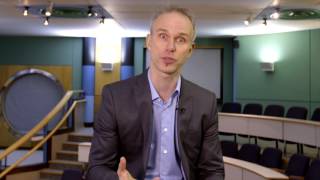
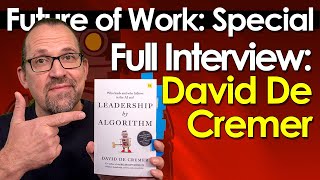
Prof. David De Cremer argues that the 2008 financial crisis revealed not only economic failures but a concurrent leadership crisis driven by short-term thinking and self-interest. The talk sketches what the "new leadership" requires: motivating and empowering people without over-reliance on financial incentives, embedding value-driven missions, building trust, and helping listeners design a personal action agenda to become "learning leaders."
Chapters
We all know that we had a very severe financial crisis in 2008, and the aftermath is still very clear nowadays. What most people don't realize is that in conjunction with the financial crisis, we also have, and we can actually say this, a leadership crisis. The financial crisis has made clear that our leadership was restricted in a sense that we focus on the short term, on the self interest, Greed enters the equation, and we do have a problem when it comes down to leading people and achieving something with leadership. So from that point of view, the new leadership is really zooming in into the question of what is the leadership we need, especially now in the aftermath of the financial crisis. What are the characteristics we need when we talk about leaders? What is leadership about and what should it achieve? Those are the questions that we will be addressing in the new leadership. Executives and managers face many challenges, but one of the more, let's say, urgent challenges is how to motivate your people, how to empower them. We've seen that only rewarding people, bringing financial incentives did not work, hence the financial crisis. What we need to know more about now is how do you lead a team without jeopardizing your position and at the same time motivating people that they are intrinsically willing to achieve the purpose of your team, of your organization? Buy into the mission to say so. These are not easy questions because they deal with the fact that you have to mingle with people, you have to motivate them, you have to interact with them, you have to gain their trust. These are soft aspects of leadership, but they're crucial. They're very crucial in defining our strategy, our purpose, which mostly is exemplified by means of financial numbers, by statistics, but how to achieve these statistics? You need to mobilize people, and that's what true leadership is about. And it doesn't matter whether you're at a high level of an executive position or just starting as a manager at one point in your career, we're all confronted with these issues. And at that point you need to be ready. When we're talking about how to connect to people, how to make sure people buy into the mission or strategy that you're advocating, it's important to look at a few dimensions of your leadership. The first dimension we're looking at is who are you in the position of a leader? Do you make the position or does the position make you an important question to address for yourself? Once you find out who you are, what you can do, and what you are supposed to do, bringing these together in a personal agenda, the next step arrives, which is communicating all of this to your team members, to the people in the company, making sure they sign in. So we'll also be looking at how do you negotiate such issues like values, strategies, missions, how do you build trust, how do you make sure, which nowadays is very important, that the mission you're pursuing is a value driven one. Because as we all know now, value driven organizations are the future. Values are important. People need to follow them. People, people need to incorporate them. How can you, as a leader in your leadership position, make sure that it becomes a shared value and motivate people in that? Those are all the aspects that we will be looking at in the new leadership program. I want you to become a kind of an architect of your own leadership. Once you understand the building blocks, you put them together in practice by listening to others, by learning, and then by acting. So one of the aims of the new leadership program is also that you are able to develop your own personal action agenda, that you learn from all the concepts that we've introduced, all the case studies that we've discussed, and all the exercises that we've run. Okay, this is what I can use. This is where I can experiment, and this is how I can see whether it works or doesn't work. You put this together in your own agenda and this is going to make you a learning leader. But then in real practice, and you will be doing the job because you understand why, and that's the key thing here, that you understand why.