07 Masterful Comm Rapport
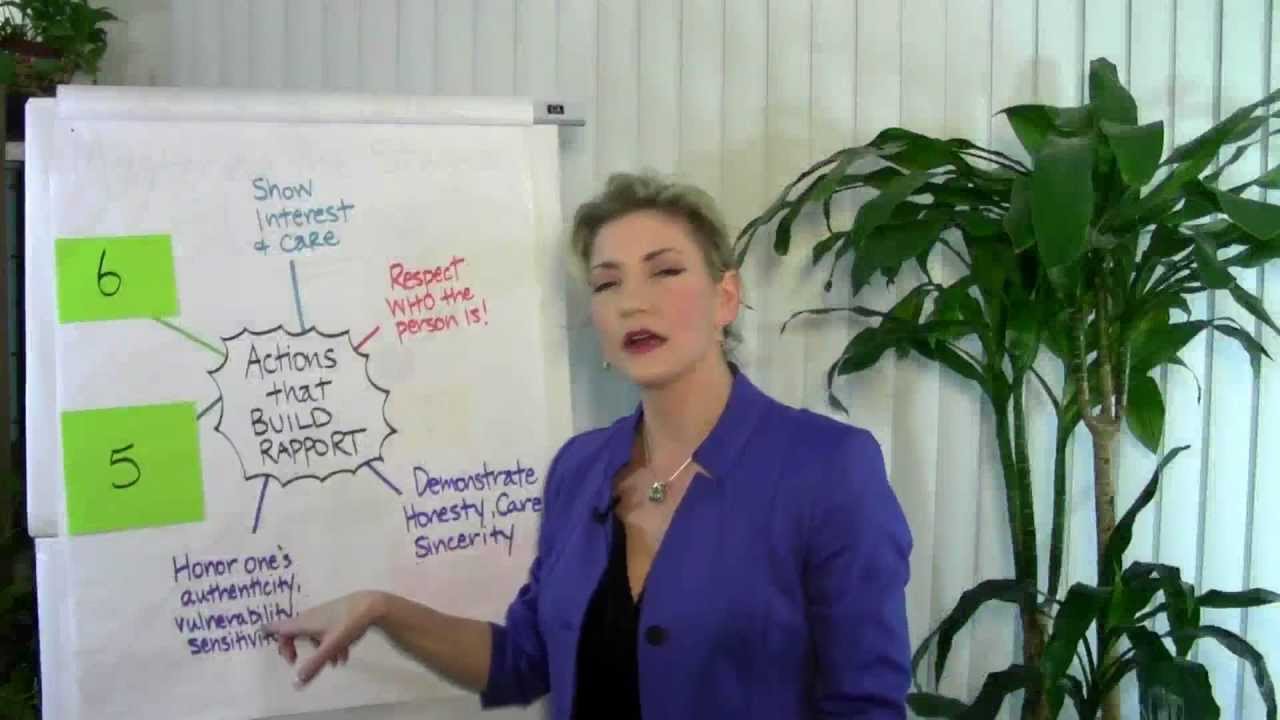
Rae T. Chois teaches the BABE dialogue framework and defines rapport as a warm, safe connection that enables vulnerability. She emphasizes the 80/20 listening rule, showing genuine interest, and respecting people beyond their roles. The core challenge: write down three specific ways to improve your rapport skills right now.
Chapters
Welcome back everyone, this is Rae T. Chois, Master Certified Coach and Professional Coach Trainer, and I'm thrilled that you are back for some more free information. Thank you so much for all of your feedback and for going on this journey with me. I'm really appreciating the engagement that we're having together, and I want to remind you today of the RIDART formula related to the BABE formula and then give you some new exciting information on rapport. So how does that sound? So we covered RIDART last day, which are the stages of trust, and I said, hey, you know what? There is a process to get to trust. There's steps and stages that you need to go through to really finally create that space of trustworthiness, you know, you being trustworthy and you trusting someone else. And of course, don't we all want that? We want to have those intimate relationships where we know that we can trust. That, that person will show up, that they will be authentic, hopefully even vulnerable with who they are with us. So we want to go through these stages with our loved ones and create the space for trust for them. Rapport leads to that invitation. Hey, you want to come and hang out with me? Or, hey, do you want to be part of my mastermind group? Or, hey, why don't you join my family? I want to marry you, right? Hopefully there's more that happens before that invitation happens, but you get my point, right? Then there's the dialogue, and of course we want to focus on the BABE formula when we're dialoguing. We want to be above the line. We want to really truly have that creative space inside of ourselves where we have choice. We choose how we behave, we choose how we show up, we choose how we respond to any situation. Doesn't matter if somebody's giving us love or they're requesting. Love. We're above the line. So we've got the dialogue that of course is the agreement. The agreement must be, we agree to disagree. If you're not agreeing to disagree, there's an issue in the situation, okay? You're likely not gonna build respect and trust one another through time. So that's a big thing, that it's okay if I don't agree with you, right? Who you are is more important than your thoughts, your opinions, your suggestions, your ideas. So we want respect on the level of value, the respect on the level of identity, respect somebody's vision, okay? Now, the foundation of this whole thing is rapport. Rapport is that warm connection between 2 people where they really do connect on a deep level. So let's dive into rapport and I'll teach you some new skills that you can implement immediately. So rapport, rapport is your ability to create an environment with someone To create a space for somebody to be who they are. And of course, they need to feel safe. They need to know that they can show up and be who they are with you. Right? But more than that, we've got to have some support. And of course, our best friends believe in us more than we believe in ourselves, and they really are supportive. You gotta do that for other people. Find, you know, that, that space of infinite possibility in that person and let them know that you believe in them More than they could ever believe in themselves. That's gonna create a lot of rapport, that's gonna create a deep connection. But there's more than just support, right? We want to appreciate who that person is as they are. So yeah, we want to believe in what's possible for them, but we want to appreciate who they are as they are. No matter how they show up, you appreciate them. It's not always easy, but it does create long-term rapport with somebody. And what else? Mutual respect. Of course, if there's a lot of appreciation, support, and safety, naturally there's mutual respect. Naturally, we move through the stages of RIDDART into that space of trust, that final T at the end. And of course, what we're all looking for, that sense of intimacy, right? That warm connection where we can be vulnerable, we can be available, we can tell our whole truth. Now let's go a little bit deeper into rapport, shall we? There's lots more information, I'm just gonna remove this right now, that I want to share with you because there's certain actions that actually build rapport, very specific things. First of all, you want to show interest and care, obviously, if you don't show that you're interested in the person and you don't show them that you care, they're not gonna care, right? People don't care how much you know, how knowledgeable you are, how special you are until they know that you care, right? We've all heard that. That phrase before. So you want to show care, and you can show care with your tone of voice, with your gestures, with your body language, with your pitch, right? We can talk a lot about rapport-building technique, but the bottom line is that your heart is open and you really show interest in the person and you really care. And in many situations, this means you listen more than you talk. Think 80/20 rule here, you guys, okay? If you really want to build a warm connection with someone and you want them to really feel your interest and your support, talk less, listen more, okay? Next one, actions that build rapport: respect who the person is. Now, this is really important. When we think of someone on the level of identity, okay, we're thinking of who they are, and so many people think that what they do is Is who they are, that what they do, you know, I'm a lawyer, I'm a doctor, you know, I'm a dentist, I'm a chiropractor, I'm a coach, I'm a this, that, and the other thing. I'm from this country, I'm from this nationality. It doesn't matter, right? Who you are is so much more than all of that. You're so much more than the country you grew up in and the roles that you play, the behaviors that you act out every day. Right? You are more, and when you as a human being sit down with another person and you know that they are more, right? When you respect who the person is way beyond all of the judgments and all of the ways that they judge themselves, you're going to get into a deep space of rapport. Is this making sense? Yes. Okay, good. Glad you're getting it. Other actions that build rapport, obviously, this This seems pretty obvious, but you want to demonstrate honesty, care, and sincerity. And just notice in your own mind right now all the ways that you might start to do that even more. You know, as I go through these things, just keep asking yourself, how can I do this even more? How can I do this in an even more powerful way so the connection is deeper, especially with the people that I love the most? How can I show more care and interest? How can I show more respect? How can I demonstrate more honesty, more care, more sincerity? Sincerity? How can I honor that person's authenticity, vulnerability, and sensitivities? And this requires your listening. This requires you knowing that everything is okay, no matter what story that person tells about their life, no matter the, the trauma drama, that you know on their behalf. You don't even need to say anything, but you just know. You listen as if they are okay. We all know what it's like to be listened to as if we're broken, right? How does that feel when someone listens to you as if they're broken or as if you're broken? How does that feel? It sucks, doesn't it? Excuse me, it totally sucks because you know that that person is taking you on as a project and they're trying to fix you. And how does that feel? Okay, you don't want to be in a space like that, right? You kind of get defensive and feel vulnerable. So what we want is to honor That person, and we want to support and believe in that person, as I've already said, and we truly want to make sure that in every moment we keep our promises. You break a promise to somebody, you are not going to build rapport, okay? It's going to be over, it's going to be done, and they will not trust you. So you want to keep your promises. Now, all of this is obvious, You guys know this stuff. This isn't rocket science. And yet, how many ways are each of us— and I'm pointing the finger at myself here too— out of integrity with ourselves? Right? What are all the ways that we are out of integrity with all this stuff? And what are all the ways that we can be even better starting now? So I invite you to pick up your pen right now and write 3 new ways, starting immediately, Immediately that you can do one or all of these better. Maybe it's with a particular person, maybe it's with yourself, because you're always in relationship with yourself. Very important to never forget, okay? The quality of your outer relationships is a reflection of your inner world. So go ahead, write all that stuff down. I've got more information to share with you in the next video, but take action right now. Improve who you are with rapport building, and in the next conversation, I'll teach you some skills on how to build rapport. So be well, be enlightened, and our paths will cross next video.
More from Rae

Amplify Your Impact ~ 3 Master-Level Superskills to Create Rapid Client Results


What does a Professional Coach do? TV Interview will Rae T. Chois, Master Certified Coach - #1

Masterful Communication Coaching Demo - What do you and what not to do when communicating