Masterful Communication Coaching Demo - What do you and what not to do when communicating

Rae T. Chois coaches Elora through listening and questioning exercises, contrasting closed-ended questions that keep people stuck in the past with open-ended ones that move them toward clarity and choice. The demo shows how strategic questioning and compassionate presence guide clients to their own insights rather than the coach's agenda.
Chapters
So hello, Elora! Hi, how are you?
Good, thank you.
Good. Thank you so much for being here. My pleasure. I appreciate it. Yeah, yeah. So I'm just gonna speak to the camera for a moment. So hello everyone, welcome! So glad that you are here. Uh, this is my friend Elora. We have never worked together before, correct? So we, we know each other in kind of a distant way, and this is just an incredible opportunity for us to show some of these distinctions that we've been creating together over the many, many modules. So I hope that you enjoy this particular example. All right, so I'm now just going to connect with Elora. We're going to give a before picture and an after picture. Elora doesn't really know what's coming. She knows that we're going to be doing some, some chatting together, and then we will reflect afterwards on the difference that Elora felt inside of herself. Okay, so I just ask that you be yourself and just share, and as, as you notice what I'm doing in relationship to you, notice how it feels inside of you. So just kind of get the feeling tone, and then afterwards we'll step out and reflect on it together. Okay? So are you ready to play?
Absolutely.
Okay, super. So I'm just curious, I think just to get started here, it'd be really wonderful to share something that you are passionate about. If you'd be willing.
Absolutely. Currently, I'm very passionate about my spiritual growth as an individual and the light that that shines out into the world and making it really personal for me. Just, I'm in the process of raising 2 incredible daughters.
I'm raising 2 incredible boys. Yes, yes.
And just really making sure that You know, what they're witnessing is, you know, their mom playing big as much as possible.
You know, I can really relate to this. I mean, this is what's really, really important to me is that my boys, you know, currently 7 and 8 years old— and actually, how are your girls?
They're really good. 14 and 18.
I know it!
Freshmen in high school and a freshman in college.
We need to get them together again because when I lived here in Portland, Oregon, they were babysitting and that was so fun. It was really neat to To connect, and I always appreciated their energy. Both of them would come and support both my boys. I needed 2 at that time, if you remember.
Right, right.
It was an intense time.
And they needed each other.
And they needed each other to be able to handle it all. Yeah, there was lots of energy there. Well, you know, when you're speaking about your spiritual path and you're speaking about the light, I mean, I, you know, as you know, I've been on a spiritual journey for a long time myself. Yeah, yeah. So I think Thank you for sharing about it. Like, what's happening for you in the experience?
I, well, I am claiming just a new version of myself and just have had this yearning for quite some time to do things differently, to step out and be a little more bold.
Bold. Me too. I'm totally, yes.
Yes. You know, if I'm supposed to be a light in the world and if, you know, if I really feel a calling to be in a position to truly inspire others, I needed to make some changes. I needed to play a little bigger in certain areas and—
You know, Laura, I can totally relate. I mean, as you know, there's lots of things that I'm stepping up to inside of myself and it's big. You know, you got to step up. It all starts within. It starts within, yeah. And I know, I know for myself, there's lots and lots of travel and there's, you know, with 2 kids and managing all of it. Okay, pull the yellow curtain. So when I pull the yellow curtain, that means that we're freezing what's going on and you just notice what that experience was like for you. Okay?
Mm-hmm.
All right, so—
Oh, okay.
Okay, we're done.
Okay.
Yeah, so when I pull the yellow curtain, that means the little example is done.
Okay.
Okay, does that make sense?
Mm-hmm.
All right, so rewind and just notice how I'm different in relationship with you. Okay?
Okay.
All right, so let's go back to the beginning. Please share something that you are passionate about.
Well, do I share the same thing?
Yeah, just do the exact same thing.
So I am passionate about the journey that I'm on and how that the example that that sets for my daughters. I didn't mention before, but I also work with teens at our spiritual center. Wow. And so, you know, we're also demonstrating how to, you know, be bigger in life and more authentic in life. And that has just really taken me to a place of walking You know, walking my talk.
Walking your talk. So bigger and more authentic. So that's for yourself, and you're demonstrating that with your children and at the teen center. So those words, you know, bigger, more authentic, walking your talk, why is that so important to you?
I think that just paying attention to The passion that I feel inside of me and never quite feeling like I'm meeting what I'm here to do. You know, it's just I have a yearning inside to know that I'm on track or on path.
That you're on track.
And, you know, in going through lessons Mm-hmm. And classes and just opportunities to educate myself in ways of, you know, tapping into spirit and just what that spiritual journey feels like for me. In the midst of that, there's no place to be small.
Mm-hmm.
And so, you know, I think those areas are exposed in those types of classes, you know, where you can—
They're exposed.
Either face it, and, you know, generally you're held accountable by your classmates and by your leader, and you can choose to know. It's like once you know, you can never not know. You just know.
Once you know, you can never not know.
Right. So you choose to play small, or are you knowing there's more or a greater expression? And so that's really been my journey, I think, for the last 10 years. And just the more I know myself, the more passionate I become to see how well Or just, you know, I'm just committed to exposing and becoming the greatest expression of myself, whatever that is.
So there's a couple of words there, exposing and becoming the greatest expression, whatever that is. So why is that important to you, you know, exposing and becoming the greatest expression of what that is?
Hmm. I think for me, I can't even— hmm, I don't know any other way. I, you know, my belief is, you know, in my head, that we can choose to live through this lifetime unconscious, or we can choose to be conscious and aware.
Or we can choose to be conscious.
And I just To live or to, you know, recently I have been on a journey in a relationship. Mmm. And, you know, to love someone so much and to know that they're choosing to live and embrace practices that go against everything that I feel in my core and
And,
you know, making those tough choices and knowing it just, I mean, physically hurts. At the end of our relationship, it physically hurt to be together, not because we were doing anything painful towards the other person. It was just how we were choosing to exist. Yeah. And so, Those are the choices that are tricky to make, and that I think really make the distinction of, you know, the commitment to be the best version of
myself. Mm-hmm, the commitment.
The commitment, and not playing small. And, you know, it physically hurts. It was so uncomfortable. I mean, physically, in our core, you know, we would be so excited to see each other all day long, and then we come together and within 5 minutes I've got a stomachache. And, you know, we're starting to kind of be offended easily. And, you know, and then the human parts of us start playing out just in the relationship. But in the essence of it, it's just we were at such different places.
Mm-hmm.
You know, the rescuer can never be the victim. And if the victim doesn't want to be rescued or want to come out into the light, it's their choice to stay in that dark room. And where, you know, where's the healthy choice? And so that's where—
That's the healthy choice.
The commitment to myself and my daughters is, you know, to make those healthy choices in love.
In love.
It was so easy to— well, I mean, it wasn't easy, but it was better to walk away from that relationship and say, I love you so much, I respect you, you are such a good man, and—
And?
It's just not working for us together, and we both deserve the greatest partner.
The greatest partner. So let's pull the yellow curtain. Thank you for sharing so authentically. Wow, thank you. I think we're all feeling very honored here in this moment. So mostly I want you to calibrate inside of yourself the experience of the first— the first, let's put that one here— and the second. So what did you notice as an inner experience in terms of what I was doing the first time and the second time?
The first conversation was very girlfriend chatty. Let's catch up. You're interested in what I'm saying. Yes. Um, and, and then, but there was something in the second version where it just clicked that you really wanted to know. You know, you wanted to know that deeper level, and there was nothing in the first that indicated that you were not interested in what I was saying. But I think that it just took it to a deeper level, that I want to know what you know. That's so interesting.
Okay, so may I share with you what I was doing inside of me that was different?
Sure, sure.
So in this program, we've been talking about different levels of listening, and I've distinguished them in terms of A, B, C, D, E, and then there's an even greater version. But A, B, and C is level 1 listening. Okay, so the A stands for automatic, okay? And when you're listening automatically, you can listen for brokenness or you can confirm what's going on. So that's the B and the C. I hope everybody's remembering this, right? The automatic and then the broken or the confirmation. So because we have the same core value system and, you know, it's so easy to get into rapport with you, I was listening automatically and kind of confirming what was going on. So When you listen automatically, what you do is you hear the words, they come in, and you pull up your inner files. Mm-hmm. So, I'm reminded of your children and then babysitting my children. And so, I'm making personal comments, right? Oh, your spiritual journey, my spiritual journey too. So, it's almost like the spotlight goes on you and I listen but only to a certain extent. And then as soon as I find agreement, It swings back to me, and then I share my stuff. And then, so when you were saying the girlfriend chatty thing, that was absolutely what I was doing. Okay, and 98% of the time we're listening— actually even more than that, 99% of the time we listen automatically because we don't know how to listen any differently.
Right.
We might put our full attention on somebody, but still in our brain we're going, I agree, I disagree, oh, I like that, oh, I don't like that. We don't know how to turn off the inner tapes, right? It's a very interesting thing that we've never really learned. So I was listening automatically and finding agreement, and I was constantly bringing myself into the conversation. And, you know, it's nice to go, oh yeah, Rae's on a spiritual journey too, and oh yeah, there's our 2 kids and all that kind of stuff. Yeah. But I was like talking about my travel and my, you know, so here we are on Elora, and then it's Rae, and then Elora, and then it's Rae. There's no real true space I wasn't really presencing you. I'm actually presencing more myself in relationship to you.
Gotcha.
So there's no space for you. Whereas in the second round, I made a deliberate choice inside of myself. And, you know, we're not in a really, really deep conversation. I mean, obviously we'd have to get rid of the camera and all that kind of stuff and be in a really comfortable setting. But what I was doing is I put my whole attention on you, and I didn't, I didn't focus on myself. I focus on myself. I remove myself. So
when I didn't notice that—
Yeah, well, but you could tell that I was interested. Okay, I was really sincerely interested in you. I wasn't bringing myself in.
Gotcha,
right? I was like, you know what, this remarkable woman is getting my full attention. So I'm paying attention, you know, I'm here now, I'm listening in, and I'm allowing it to begin. Mm-hmm. In the moment. So there's the A, B, C, and then D is deliberate focus. Mm-hmm. So I'm deliberately focusing on you. I turn off my inner dialogue, my preferences, my opinions, my suggestions, right? Rae's model of the world, her way of being in life. I just set it aside. Not that I'm not willing to share myself, it has nothing to do with that. It's just that I'm putting you as the focus point. Right, and the one that I'm paying attention to rather than myself. And then naturally out of that, when we focus on the other person, we want to ask them questions. We use their language with them because we're presencing the space in that way. Does that make sense?
Absolutely.
Yeah, could you feel that? I'm just curious to know what your experience was with that.
Well, and again, when we go back to the, the girlfriend visiting, chatting, where you're almost You're embracing the back and forth, you know, which feels really natural.
Sure.
And to be in a more, you know, just a different setting.
Yeah.
I think where you're with someone who really wants to hear about the entire journey and listen without connecting to verbally, you know, or interjecting.
Yeah.
So what goes on in your brain when you do that? Because, you know, even holding what, you know, what I refer to as holding the space, where you're just allowing someone to clean house and get it all out and you're not interjecting, you're just really, you know, holding their—
Holding the space. That's a nice term. I really like that. You're just holding the space.
Holding the space for them to do that cleaning. And it's still really hard to turn off that part of your brain and go,
Yeah.
Oh, I don't— you know, it's like you're holding the truth of, you know, their bigger self even though they can't necessarily see it. And how do you turn off your brain to not go, I disagree, or, yes, I agree, or, I've been there, I've done that?
It is a practice, and it's not simple because our whole lives we have listened automatically, right? And so much of relationship is about sharing your It is that, you know, that chit-chatty starting point was— I mean, it was fun. I was enjoying that space, but there wasn't really any depth, you know. And it was— I actually felt it was more about me than it was about you. I was taking what you're saying and I was really bringing myself in.
Mm-hmm.
What I do differently inside of myself— and obviously, you know, I've been coaching for a while, but it's, it's a beautiful practice with my children, with my mother, with my father, with my best friends. Especially when they're really, you know, into a significant conversation like their spiritual journey, like the new chapter of their life, like a relationship, you know, gently dissolving and something new being created. Right. You know, the real deep stuff in life is to remove the self. And so what I do is I actually go through a 3-step process inside of me. So I think of my level 1 listening as a little light switch, and I haven't shared this with you guys, so So this is a really great question. It's like a light switch, and I say, this is not the time for me. This is the time for this remarkable human being I have the privilege of being with.
Mm-hmm.
Right? You know, and I think of relating as just a remarkable opportunity. You know, like when you really have a chance to sit down with someone, and there's so much learning and so much growth and so much healing, you know, just out of being present to somebody else. I don't need to let my inner dialogue go. So I turn off level 1 listening. I think of it as a light switch. I turn off Rae, you know, the little self, the little S, right? Mm-hmm. And then I think of a dimmer switch and I phase in bigger ears because little Rae has little ears. She's focused on herself. You know, she's focused on what she agrees with and what she disagrees with and what's right for her. And it's very, well, it's righteous, right? And it doesn't really allow for really deep relating. Mm-hmm. So I grow my ears. And so I grew my ears a little bit. I didn't grow them all the way because, well, I mean, it would take a little bit more time. We've got a camera here and all that kind of stuff. So I grew them a bit. I got to deliberate focus. So that was the phasing in of level 2, okay? If we were to continue the conversation, I would phase it up even more, you know, and we would get into even deeper rapport. You would relax even more. My ears would grow even bigger, and we would be talking about not just, you know, what's happened lately in relationship and what's happening in your courses right now, but we would blow it out and talk about your whole life. Mm-hmm. And I would, you know, notice the nuances and changes in Mood, the words that you're saying, the words that you're not saying, you know, because it's just the ecology of who you are. And that's just a little bit of a jargony term, everyone. You know, the ecology is just somebody's wholeness, right? So it's their, their whole essence. Mm-hmm. And then, so that's really deep. That's when people are so deeply, profoundly connected. It's just all there is is love in that space and truth and authenticity, you know, and vulnerability. I mean, you know, if you're gonna be vulnerable with someone, don't you want them to listen to you in that way?
Absolutely.
I mean, like, what a gift. But the person has to be resourceful enough to do that inside of themselves, to give that gift. Then as we— so that's the, you know, ABC. D, deliberate. E is expanded listening. So that's that wider space I was talking about. The highest expression of listening from my perspective is heart listening.
Mm-hmm.
So then, you know, we can go to that expanded place, but if our heart isn't open, it's only so expanded, right? But if we open our heart even more, then there's really a sense of ease, and there's really a sense of flow. And then I get to support you in relationship with your highest self, just in conversation, right? And so what's revealed for you is profound. And what's What's interesting is that we human beings have very little capacity to do this, you know, because we just don't have the training. We're taught to listen actively, and that's not— you know, if I was listening actively, you know, I would be thinking a lot.
Taking notes.
Taking notes, you know what I mean? And I'm just— yeah, like that activity gets in the way of relating and being present to you. You know, I don't want an active mind. I want an empty mind.
So I have a question.
Yeah, yeah.
So I use the term, you know, listening with your heart, and in conversations with my daughters and the work that we do with teens and even, you know, partnership, that when you listen with an open heart, you're surrounding the communication with love. So you're not as easily offended, or, you know, you're not taking anything personal. You're just You're hearing them from the view of like 40,000 feet, from up above, and so you're not in the circumstance. You're really able to hear them from a different level. But how would that relate to— because it doesn't sound like it would be the same.
Well, this is very interesting. I hope you guys are appreciating this conversation because this is a very interesting thing. So heart listening can And that can be done at level 1, level 2, or level 3. So I can bring in my heart and listen automatically, okay? When I'm— when my heart is really open, I'll remove the B, which is the brokenness. I'm not going to see you as broken, right? So I can still look at you from the 40,000-foot level, and I can appreciate all of who you are and all of who you're becoming, but my personal thoughts can still come into the space. Exactly. Even though my heart is open. So if you can learn, you know, this is for all of us, to listen with our heart and choose level 2 and level 3 listening where we also remove the self. Now it's not always appropriate to remove the self. Mm-hmm. You know, I mean, sometimes people are like, hey, give me your opinion here. I want to know what's up with you. But really, when we can realize and own that people People always have their own inner resources, and when we give them the opportunity to come up with their own answers, and they— like, even just watching you reflect in this very short period of time, there were some beautiful things that you were beginning to begin to access.
Mm-hmm.
You know, as you were talking about the relationship evolving itself and then noticing the calibrating of being excited all day and then what it was actually creating, like, there was richness. And if we were to continue to presence the space, it would get even bigger, and there would be aha moments, right? But if I come in with my suggestions and I have a level 1 moment, automatic listening, and I'm like, well, have you thought of it like this? Have you thought of it like this? It stops the flow. It becomes about me then and my suggestion. You go, well, that might work, it might not work, it, you know, and again, it's me coming in.
Mm-hmm.
So, but does my answer make sense? Yes, it does. So when we put a heart around ABCDE, basically the B falls away. We can't listen with brokenness if our heart is open. We can't see someone as broken anymore. We listen with our heart, but we can still be automatic. We can still listen at level 1. And if you do level 2, level 3 listening, it's an even greater space. What are your thoughts on this? I'm curious.
It's really interesting. I'm not familiar with that part of your work.
Yeah.
And so it's enlightening, especially in just referencing, you know, hmm, I probably, you know, use your first Level A and then Level B in my business affairs, you know, with having someone come in and they want you to solve it for them, they want you to fix their problem, so to speak. And so, you know, so there's that reference.
Mm-hmm.
And then also with, with my daughters, you know, wanting to fix their problems. And so not dropping down to a deeper level where that's probably what they really need, because that mama protection comes up and I want to engulf them and fix everything And so I'm operating in the first level, not because of— not coming from an ego need, but coming from love. Coming from love. That's the natural instinct, to come from love, and it truly isn't honoring what they're needing in that moment. So that's what's going through my brain, you know, just what, you know, how do I relate that to how I communicate? Yes, I'm
getting so excited because there's so many elements to the program that, you know, I hope that you'll actually watch the content of this program because there's so many things that are interwoven together that we could discuss in relationship to this. I know in your work there's very specific things around action and environment, you know, and it's appropriate to give somebody advice and action and environment when we're actually figuring something out. Where we want to really make sure that we're listening at levels 2 and 3 is in, you know, somebody's visioning process and them defining who they are on the deepest level and them really figuring out what their core values are and what the core beliefs are, you know, and who they really want to be on the planet, which is, you know, your spiritual journey is that, you know. And even though all the coursework and all of the classes and all of your classmates are coming together and they're supporting you, ultimately you are the expert of your own inner territory. And we want to hold people as the expert. And so this is where parenting is really interesting and challenging because we love our children so much and we want to bring out their best. But we also have an agenda for them, you know? And that agenda can get in the way of us really allowing that level 2 and level 3 listening because we want to fix, you know, and protect and care for. And ultimately, when we let go— this is one of the things that we talk about in this course are the Ericksonian principles, the thought process of Milton Erickson. And he always knew that people always and already had all the resources to be within us to be a success. Excuse me. So they already have all the resources within to be a success. And if somebody doesn't know how, they can always figure out how. Mm-hmm. So he always related to people in that way, and he would never tell them what to do because he was always giving people the opportunity to come up with their own solutions. And this— he would work magic and miracles with people. He would never— I mean, he was a psychotherapist. He would sit down with a schizophrenic and, you know, people with manic depression, all these Horrific, horrific diseases. And, you know, their whole experience inside the hospital setting was being diagnosed and being assessed for the illness. He never saw illness. He just saw a human being. Hmm. And he would sit down with them, and in just a few hours there would be so much transformation because he didn't focus on what was wrong. And he would never tell them what to do. He always brought out their inner genius.
Mm-hmm.
So it's a very interesting And of course, as a parent myself, it's a really interesting journey to calibrate because sometimes it is appropriate to listen at level 1. But in those moments where level 2 and 3 are truly valuable, we want to have the skill set to be able to offer that to people. Wow, this is a rich conversation. What's coming up here?
Yeah, it's just, you know, I have an 18-year-old and she's starting college and she's Resisting making that transition as much as I'm resisting letting her go to make that transition. And what I notice, you know, just in my life is that the more that I'm able to allow her—
Hmm.
Well, it's not even allowing her. The more that I'm able, because that comes from ego, when I can step back and just allow what is, That she continuously steps up, and a greater expression of her is what she's able to shine. It's what's being demonstrated. The less that I try to, you know, protect and manage, and coming from love or not coming from love, it still has the same effect on the other person.
It still has the same effect. You know, there's a beautiful quote, and I wish I could I could remember who the author is in this moment, and I encourage you guys to look this up. Never do something for someone that they can do for themselves.
Mm-hmm.
You know, because it allows them to take 100% responsibility for their life. And that, you know, owning that who I am is the expert of my own inner journey, and who I am is someone that can trust my own choices and trust that I know and I can calibrate my inner world. I mean, what a gift to offer Mm-hmm. And yet the dynamic of parenting is so rich for our own inner development. Mm-hmm.
Right? Wow.
So thank you so much. Oh, my pleasure. You're such a wonderful woman. So we're gonna go and do another little exercise. And so hopefully there was lots of really wonderful, rich information here for you guys. We're now gonna move into another little demo, so we'll see you shortly. Thank you. Okay, that was that. How did that feel for you? Good. Yeah, okay, good. So— Well,
again, we're getting to catch up. We're like— I know. It's like business and pleasure.
Yeah, it's kind of— and I think that there's good— you know, we might cut some of that out, but I think that ultimately it's— I think it's good.
It's hard to not want to flail around and Yeah,
well,
feel free
to use your arms though and
just be natural.
Sure.
Well, yeah, and, and, you know, but it's like, you know, itch your neck and wanna, you know, I'm just—
Just do what's natural because then it looks natural if you're, if you're just sitting there and it's— because I'm doing this too, and then they realize, you know, it's just human beings, you know, nobody's putting on a show or trying to make it perfect, you know, because then it's not relatable,
you
know. So just Yeah. How long was that?
Uh, we burned 34 minutes, but I had started it when we were introducing it, so maybe about half an hour.
Okay, so let's do these next ones a little bit quicker. What is the time, just so that we can calibrate? You have to leave right at 1:30, right? 11:30. Okay, we've got time here. Um, okay, so this next one, um, is on And again, I just want you to notice the difference. We'll maybe do this one a little bit quicker, but I'll just distinguish the skill set. Okay. Um, it's useful for this one to come across well to pretend that we're meeting somewhere, but I don't want it to really be a true pretend scenario. Uh, you and I, um, Really, when's the last time we saw each other? It was just at church, you know, it was like 6 months ago maybe. Is that right? Mm-hmm. You know, so haven't seen each other for 6 months and we run into one another, let's say at church, you know, um, and we're talking. Okay, so that'll be kind of the pretend scenario, and then I'm just gonna blurt something out and then we'll hit rewind and we'll, uh, talk again. Okay, does that make sense?
So I'm answering, I'm building this, having this dialogue with you as if we hadn't seen each other for 6 months.
Yeah, and we're just meeting up and we're meeting up at church.
Okay.
Exactly. Yeah, and I'll frame it for everybody.
Okay, so I have to figure out, so I'm gonna try to place you with someone that I haven't seen for a long time because—
Yeah, yeah, and then, um, yeah, it's mostly showing the skill Mm-hmm. Of what happens and you noticing the difference inside of yourself.
Mm-hmm.
Okay?
Okay.
All right. Okay, so hello everyone, welcome back. This is gonna be a demo on rapport skills. I've got my friend Elora here, and Elora and I have known each other for a few years. We see each other maybe every 6 months or so. We're building a stronger friendship, I think, now, and yet we've never worked together Right? Exactly. So we're gonna do 2 little demos, scenario number 1, scenario number 2, and you, Elora, will just notice what's different inside of your body, and then we'll reflect on what's different.
Okay.
Okay, so I think just to honor this demo, I think what we're gonna do is we're gonna pretend that we haven't seen each other for 6 months, which is actually Quite true. We did— we've caught up a little bit with the last demo that we just did on listening, but it was really about 6 months ago that we saw each other. So let's just pretend we're meeting up— we saw each other last time at church, so let's just pretend we're meeting up at church and chatting. Is that okay for you, that kind of scenario? Yes. Okay, so there you go, you got the scenario. So, hi! Hi! It's great to see you!
It's good to see you too.
Yeah, how are you doing?
Really good. Really good. Lots of changes going on in my life.
So what's changing? What's going on?
Well, I have a freshman in high school and a freshman in college, and so their lives are— they're releasing the old and stepping into the new. So what are they releasing?
What are they—
Well, just, I think, you know, the pond is so much bigger
for
Shane in high school than it was in middle school. Totally. You know, there's so much more responsibility that she's really needing to step up to the plate.
Yeah, what is she stepping up to? What is she responsible for?
And so just—
Okay, let's stop there. Okay, so that was scenario number 1. That was funny.
I'm like, whoa. I'm like, do you really want to know all that?
Okay, but I just want you to notice how that felt.
Sure, sure.
Scenario number 2. Are you ready?
Yeah.
So, hey, it's nice to see you.
It's good to see you too.
Yeah, how are you?
Really good.
Really good. Really good.
Lots of big changes coming up.
So what's— what are the big changes? It's been 6 months. I know.
Well, you know, life, I think, I think as a parent, it tends to revolve around your children. And so lots of big changes there. Just Shane is starting high school and Peyton is starting college. And so they went from a little pond to a big pond.
To a big pond.
Really swiftly. And so just the comfort of— I think there's a level of comfort that comes from Being in what they feel is a safe place in their mind because it's familiar. Wow. And going into the bigger, unfamiliar, you know, it's definitely expanding their, their comfort zones and what they feel is safe.
And so may I ask you a question? I'm just curious. So as they're expanding their comfort zones, And you're noticing them step into a bigger pond. How's that impacting your life?
Oh my goodness. I think as a parent, I really have to witness, be okay with just being a witness, and not guiding and controlling or suggesting. You know, that it's really been a deep practice for me Mm-hmm. In my own evolution as a mom to really be able to step back and just trust that even if they make a choice that I don't agree with, they're still being accountable for that choice and just being able to support them through their own choices regardless if I would have made the same choice. And that's really— I mean, that's a big step, I think, as a parent. to be able to really honor their choice and try to not guide or control it.
So honoring their choice and not guiding or controlling it. Wow. So who are you being when you are honoring their choice? It's tricky.
It's definitely tricky. And I think, you know, trying to be the example for them And just on my own spiritual journey and just, you know, I think the biggest lesson that anyone can learn in life is, you know, by example.
Mm-hmm.
And so I'm, you know, walking the talk and just really honoring what's coming up for me internally, you know, even when the choices are hard. And so Mm-hmm. You know, and that's tricky. And they're witnessing, you know, so I'm not just saying, this is how it's done. I'm, you know, they're able to witness, this is how it's done. So I don't even have to go there. I just have to, you know, remind them to always honor that inner knowing and trust that they're making the right choice when they make it from a conscious place. And then I'm walking with them. that same path and they're able to witness it. And then I plant the seed and then honor. And we talk about consequences too, so that they have to, you know, they have to be responsible for those choices as well.
So I'm really curious. We haven't seen each other in a while, and do you mind me asking like a kind of a direct question? Well, just for the purpose of You talk about really noticing how your children's journey is in relationship to yours. May I ask, I mean, how are you walking your own talk?
It's tricky.
Yeah.
There's definitely, I think, there can be, it can be a little painful. I think that there's really just Pain in the areas where I resist.
Mmm.
And so, you know, if, if a, you know, for me, if I'm ending a relationship that I can see, you know, from that Truth with a capital T from within that this isn't the most honoring of my life, you know, that this isn't where I am going to— I'm not the best version of myself in that relationship. You can look at the little parts of you that come up for healing in dialogue with another person, and when you're not moving past that, Mm-hmm. that's where, you know, that's where the resistance comes in. You know, do I need to let that go? Do I need to let go You know, and just that's where I think just really saying it's painful and what, what is my higher truth in this situation? Is it something that I need to honor and bless and release? Mm-hmm. Or, you know, is there something really here for me? And for me personally, I think that's why, you know, I was in relationship with this one particular person for such a length of time was because I was really honoring the growing that I was doing in that relationship. And it reached a point that I just feel that I can't be the only one to grow.
Right.
And, you know, moving in the same direction, I don't think that you ever really grow at the same pace as another person. But if I'm feeling Like, I'm growing at one level and they're resisting my growth, you know, that can be absolutely part of their journey and I can honor that. And if it's really preventing me from moving forward, you know, to honor that part of me, the healthier thing is, you know, to love it and release it. And that's really what I'm moving through right now.
That's what you're moving through. So, you know, again, just for the purpose of like really going deep here, if it's okay with you, you know, in just a few words, you know, what is your capital T Truth for you? What is that for you?
Hmm, it's, it's just the all-knowing. I think for me to come— hmm, that's an interesting question.
Yeah.
And so, you know, my first hit on that is, you know, it's just the most authentic place that I could view life from. You know, just the Truth with a capital T. It's just what it would be putting on, you know, your God eyes, whatever that would look like. You know, that if you just knew the Truth. If you knew the truth of, you know, or you could live from that place of just what really is, and it's not about having any agenda, you know.
So looking out from those God eyes. Mm-hmm.
So that's what, you know, my truth means, and I think how that relates to how I see myself is Um, taking off all the lenses, so to speak. Mm-hmm. You know, that you're not looking at a situation with pain, even though there might be some parts in there that hurt. You know, it's easy to see the truth. So in relation to my relationship that I just ended, you know, my lens of pain is, I love this person so much, why can't we figure out a way to make it work. And, you know, when I take off that pain lens, I can just see that, you know, it's all love, and we are really in different places in our life, and there's nothing that we could do in coming from those 2 different places to ever make this fit.
Right. Looking through those God eyes, removing Wow, thank you.
My pleasure.
Okay, let's pull the yellow curtain. Boy, we could keep going with this. This is so rich. I'm like, wow. I'm looking forward— we get a chance to do a coaching session later, so I'm really excited about that. Now, obviously we had scenario number 1. Scenario number 2, we really got into a rich conversation, but there were some very specific things that I was doing differently. So what did the first, even though it was only 10 seconds long, what did it feel like for you?
It was intimidating for me. Part of my— one of my greatest journeys in life is to feel safe having conversations that feel a little confrontational. And that one wasn't confrontational, but it was abrasive.
But I was kind of leaning in.
Right. It wasn't, you know, it was like you were so eager to get at It didn't feel like, you know, it just, it felt pushy to me.
So what did you feel like? What was your feeling?
I wanted to lean back. I would be surprised to look at the video if I didn't lean back a little bit.
I mean, I was asking some pretty direct questions and, you know, I wasn't even actually really listening totally because I was jumping in and jumping out. Jumping over top of you. Right. Yeah, but that's an example of asking a direct question. I mean, you know, some of those questions were actually quite good. It's just that there wasn't any rapport.
Right.
And space for that, you know, to be available. What did you notice differently the second time? What was different about that for you?
Well, your voice was much softer, you know, and more friendly. You know, so there was definitely more inviting, and there was a pause in between. You know, I think, um, it felt as if you were not attached to the question as much as you were just really wanting to hear what was going on. Mm-hmm.
So the questions, and we'll do a demo on questions later, but the The questions were just coming out of the relating. It wasn't something I was thinking up in advance or anything. It was just coming through in that moment. Sure. There were 3 specific things that I was doing there a little bit differently. So when we talk about rapport, there's lots of ways to get into deep rapport with someone. Obviously, you want to match their posture and match their tonality and leaning in or jumping and having more volume and all that kind of stuff. So there's the matching and mirroring side. But more than that, it's that open-hearted space, right? And again, if we were to remove the camera and really truly be in a space with one another, we could relax even more. And the 3 skills that I was using there is the first thing that I was doing was backtracking your words.
Mm-hmm.
So even though most of the time I was silent and just presencing you, there were some keywords that I was saying back to you in the way that you said them. Did you notice that at all?
I did.
Yeah. Did it feel like I was mocking you or mimicking you or anything like that?
No, it felt like you were pulling value from what I said.
Yeah, so that's the intention. A lot of people are wondering about the skill of backtracking and they're going, well, is that going to be like I'm mocking someone or mimicking them or whatever? But what we're doing is we're honoring them by, you know, or I was honoring you by holding up a mirror to your beautiful words and just saying them back to you in the way that you said them. And that typically deepens the experience for someone and they feel heard. But if you change the words just a little bit and you put your spin on them, it kind of creates a little bit of a disconnection because it's like, well, that's not quite it. It's not, you know, like, so for example, looking through God eyes, and I said something like, it's amazing to experience the feelings of the Divine.
Mm-hmm.
You know, if I was to change those That's right. You know, change the word God and then turn the seeing into a feeling, you'll go, yeah, for me it's more about pulling off the lenses. And, you know, the metaphor gets shifted, and so it can have a different experience for that person when you change their words. So if you want to really go into a deep space, backtracking is so much better than paraphrasing.
So
it's really honoring the person, especially with their keywords. So I was backtracking. Then I was softening. So the first time I was just blurting questions. Right. The second time, hmm, I'm curious, you know, and there was kind of some— you could hear in my voice, hmm, hey, you know, and then, wow, you know, there was just soft kind of acknowledging and appreciating that was going on. So we call those softeners rather than really direct questions. And the third thing I was doing was I would name the outcome. Now, I didn't do this every time, but I would say, for the purpose of noticing your girl's experience in relationship to your own, may I ask you a question? That was the other thing, is I was asking permission. May I ask you a direct question? You know, and that one time, I can't remember what I even asked you, but it was really direct. Do you remember what it was? It was something about— I was so in the moment with you.
My relationship, what is the— What is my experience being, or what is my relationship myself by witness, in the witnessing of my daughter's experience? You know, you took it and really turned it back to—
Like, how are you walking your talk?
Absolutely.
And I mean, that's like just walking into it, okay, so those are your daughters, how are you walking your talk?
Right.
You know, I mean, that's really direct. I mean, you say that out of context and you don't soften it. I mean, you're going to break rapport with someone because they're going to probably get a little defensive. So yeah, I was asking a pretty direct question, but it was received at the level that it can be in front of a camera. I mean, let's face it, right? But it was received and you were able— like, tell me what your experience was. I, you know, let you share. What did you notice about that?
Well, it took it from giving you information, you know, reflecting on this is a beautiful that I'm able to witness outside of myself in relationship to my daughters. And your question made me go right back inside, you know, so where I was kind of keeping it a little— not superficial, but out there.
Right, out there.
You know, telling you, you know, this is what my environment has been like since we've last seen each other, rather than this is what my inner environment is like now in In relation to that experience, you know, this experience that we're in. So it made it very personal, even though I was sharing with you personal information all along. It made it personal, you know, more about me and, you know, what's my journey like while witnessing, you know, their journey.
And that you were in the condition to receive that because hopefully it was the way that I asked it, that you were able to receive it to go within. I mean, because you just meet up at church and you're having a quick conversation. If you just blurt things out,
and
you're a really conscious being, we can still break rapport with one another by going too direct, or it creates that confrontational energy with somebody. Right. But if we backtrack their words, honor their words, name the outcome, and soften Those— the combination of those things come together, and you can really get into a deep conversation with somebody.
And feel like you're really valuing— I felt very valued, that my words were being valued.
Yeah.
Thank you.
My pleasure. That was so wonderful, my dear. Okay, cheers. Okay, how was that for you? Good. Good. Yeah, yeah. The skills are making sense and stuff? Is this interesting?
Absolutely. It's everything that has come up in my relationship for the last— since the beginning of my relationship. The difference in, you know, understanding it one way and wanting it one way. And, and I can see my role in, you know, what possibly happened. Isn't that amazing? And I still wouldn't change anything.
And you still wouldn't change anything? Of course.
No, but to walk away To have this experience after just having that experience is really powerful, because I'm like, aha. And, you know, and he's a trained therapist, and so, and has so much of his own agenda, you know. Mm-hmm. So, I can really see why, you know, not just in, You know, I'm not in the victim role at all, but I can really see what each of us were doing to devalue the other person in the moment without knowing it, and how that could, you know, create an estrangement in our relationship. Absolutely.
That's good. One little thing I'll share with you right now, and then we'll move into the next one. One of the key components of this model And there's all these skills, right? But the key model is a 4-quadrant model. So think of a diamond and then with an X in the middle. And actually, you know what, just release the 4-quadrant model. Just think of a line, right? Mm-hmm. And so what I'm saying that, you know, relating is actually very simple. There's 2 things that you need to check in with. And then I bring in a whole bunch of other things, but this is the BABE formula, B-A-B-E. I came up with BABE because I was talking with with a woman who works here, actually. Her name is Babe, and I brought this all together. I was like, wow, I'm going to call this the Babe Formula. And then I was realizing, wow, that's so cool. Her name is Babe, but that's actually cool because when you're a total babe and you're really in deep rapport with someone, you really are a babe. You're someone who's like— Mm-hmm. And when you're really connected with someone, they'll call you babe or honey or Hey, darling, you know, or whatever, like these warm, sweetie— these words come up when you know that you're really connected with someone. So I thought, oh, it's actually really amazing that it's called the B.A.B.E. Formula. You know, it's a simple strategy. So really, it's— okay, so here's the B.A.B.E. Formula. So the— I'm like, what I'm saying is there's a line. Mm-hmm. Okay, and the line is what you want to check in with in every moment, okay, because you're at choice with the line where you put yourself. So life below the line is the life of being a reactor.
Mm-hmm.
And, you know, I mean, just obviously, you know, all the elements of being a reactor. Sure, sure. You're focused on what you do not want. You're shaming and blaming and complaining internally or externally. Right, right, right. You know, you're in the lower energies of life. And, you know, you can scale it from 0 to 10, and you can notice in any moment if you're being a reactor. Right? And the more we react, the less choice we have. We just get to this, you know, it's a funnel, and right at the very bottom there's no choice, and anger and frustration, you know, you know, I just got to get out of here, or you explode or whatever. So the lower we go with our reaction, the less choice we have. So, you know, you want to notice, am I below the line or am I above the line? Mm-hmm. So if you think of the 2 words creator and This is life as a creator is above the line. There's only one difference. You know, you're not seeing it visually, but if you hold it up in your mind, a reactor has the letter C in the middle, right? So if you move the C to the beginning, if you see first what it is that you want to create and you take 100% responsibility for what's going on inside of you, when you see first, you become a creator so much more easily. Oh, I love that now. Isn't that really interesting? Yeah. So as we are— when we're above the line, we can be 1 or 2 or 3. We are so much more resourceful inside of ourselves, right? And the higher we are above the line, you know, the more choices and possibilities we have in life and the more expansive this is, right? Mm-hmm. So when we're relating, the first thing we want— and you can do this in relationship with yourself. people all the time, just noticing, you know, okay, I'm checking in with my feelings right now. Where am I? Am I, you know, am I above the line or below the line? Just that closed question, am I above or below, helps you go, okay, I'm a little bit below the line. All right, how below? Okay, -2. Okay, that's important information. I've got a choice now. Because we can choose to put ourselves above the line or we can choose to stay below the line.
Mm-hmm.
The issue is, okay, so part 1 is Checking in with Align. And I'll come back to the acronym of BAVE in just a second. So it's like, where am I, right, in relationship to this? The other thing is that, so you notice that first,
why would you leave? And you need to create your Tuscan villa here.
Yes.
And live this lifestyle, that that's what humanity needs, is not to go to a place that already has it, It's to make it safe to have that experience within family here. Wow. And so, and then of course from there it's just escalated to the point that all I need is the cash. You know, I've got the builder, I've got the land, I've got, I mean, everything. So I have spent 2 years, you know, and whatever resistance, you know, again, it's It's living the great life. I live a really great life and I have this really great dream and it never quite—
So how many people would live in your little villa?
Well, the villa actually, in order to function and support itself, would be a working farm. Actually, the land is already a holly farm. It's already producing income and it would be a bed and breakfast. Mm-hmm. Um, so that you could invite in and share this experience with other people and have it be a moneymaker, you know, so that it supports itself. And then, um, from that, in this particular piece of land, because it's farmland, you couldn't hold public events that were otherwise not affiliated with what was produced on the land. Oh, I see. You could have a bed and breakfast and host a wedding for the people who rented, you know. Mm-hmm. So you could still bring in these beautiful, you know, either guided experiences or just, you know, gift the use of the space with, you know, but have it be more like an inn or a retreat, you know, where each room is completely self-contained. So, you know, someone could come and do everything in one room except for, you know, cook a meal.
Wow!
And it's just, you know—
Okay, I want to hear more about this. This is really exciting.
Yeah, and so it is really exciting. Totally! And the girls are on board, and, you know, just with everything that they, you know, want to do and with This particular piece of land, it's 3 lots. And so each lot, you would have a main structure. So it'd have 1 main residence in each house with 5 rentable suites in each house. So that way, you know, because you couldn't have more than 5 per lot per house. Mm-hmm. So that's, you know, to keep it as a farm and also to be a bed and breakfast, but that would give you, you know, 15 executive suites to be able to, you know, rent out in addition to having, you know, gardens and meditation outdoor rooms and spaces. And there's just so many ways that it would serve, you know. Absolutely. And the service part of it really comes first, you know. The money would just support But you would be giving so much outward to humanity that it would just be a natural process for it to flow back in. And so there would be private residences in each of these. So in theory, in 20 years, I would live in one residence, each of the girls would have their own space, their own home, their own families, you know, in the same property, but definitely separate, you know.
Separate. Of course, yeah.
And but space for my parents or— and then space to make money and have friends and family come and stay and experience this way of life for a weekend or for 2 or 3 months and really have it set up that it's, you know, really embracive of that.
That's amazing. Okay, so more to be revealed around that. I'm gonna get a little bit more hot water. So the next little exercise The exercises we're going to do, these 2, one of them will be really short and the other one will be a little bit longer. Okay. Both of them, I'd like for you to bring a challenge, and if you want, your current ending of your relationship would be really good with the last exercise.
Okay.
Because what we do through that exercise is we go into the detail and I ask you about The storyline, you know, and so we get into kind of the muck. We raise the energy a little bit, we raise the energy even more, raise the energy even more, and direct it differently, and you notice how it's different inside of you. This next one I'm going to do is the difference between closed questions and open questions. So it would be good if it was a corporate challenge or a family challenge, just something a little more simple, and you just notice the difference. I'm just going to get a little bit more hot water. Okay. We need to move quite quickly into the— just in honor of the time.
What time do you need to leave?
Well—
At 1?
No, 1:30, 1:45-ish. I'm only about 15 minutes away from my office, and I do— the way that I'm driving, Peyton is doing a little shopping. And so I'll, but I'll be able to.
So 1:45 is the very latest.
Okay, awesome.
I just had this salmon. Can you smell my breath? I had
salmon. Okay, good.
I notice it myself. Oh, hot water is just so good. It's just really. In China, women do not drink cold water. They don't drink any cold drinks. They always drink a warm drink, even if it's extremely hot outside. They believe that the female body doesn't receive cold energy well, and it mucks us up internally.
Oh, that's so interesting. And I— it is so uncomfortable for me to drink anything cold, you know, just— I, you know, so as I embrace that divine goddess inside of me, my body's It's just naturally telling me what's better. And it throws off your chemistry so much that your body goes—
Yeah, boring.
I think just in immune practicing, you know, and trying to keep your immune system strong, that if you're doing things that, you know, throw it, it's gotta work so hard
to— Totally.
You know, ice water, things that are really, really—
Yeah, the body has to.
Have you started, Ron, recording?
Yes, we're rolling. Oh, we're rolling.
Wow.
Hey,
hey. Hi.
Okay. It's a beautiful moment. So hello, welcome back everyone. I'm here with my friend Elora. Perhaps you've seen a demo with us before, one of our conversations. If you haven't, Elora is a You know, we're not, we're not really, really close and intimate, but we're certainly getting more of that as I hear more of your story, and we'll have the privilege of doing a coaching session later. And in this particular example, we're going to show questioning. So I'm going to show 2 different examples of how I can ask questions with Elora, and you'll just notice how you feel. So scenario 1, scenario 2, we'll do a brief reflection on that. Okay. Sound good?
Yes.
All right. So I'm going to request that you share a challenge, something that's going on for you that you would like to have solved. And I'm just going to be, you know, somebody here supporting that process.
So a challenge in my family that I have, that's— it's challenging for me to not be able to fix it. So I don't know if that falls within the guidelines, but
Yeah, yeah, sure.
My younger daughter is fighting depression, and it's not situational, it's more chemical. And so, so that for me is really challenging because I, in supporting her to take a holistic approach, which she has to choose to embrace, And if she doesn't make that choice, you know, if she knew that Top Ramen was going to put her in a downward spin and a salad was going to help her maintain, you know, especially with protein, a balanced blood level, which was going to help her cope, but she's still choosing to eat the Top Ramen—
So does she have the information that she needs?
Yes. And so it's still a choice. And so, and she keeps—
So is she still making that choice? Mm-hmm. The ramen choice. She's still making that choice? Yes. Have you—
Yes.
Have you educated her on this?
Yes.
Okay.
And so, and, you know, if she's hungry and has that craving, that's what she'll choose.
So is she wanting to make a change around this, just out of curiosity? Like, is she—
Well, she wants it fixed. You know, she acknowledges the pain. She acknowledges that she wants it different. And she's still making what I would consider unconscious choices. You know, she's making choices that doesn't serve it being different. She's making choices that support it being the same or getting worse. And
so is there a way through this, do you think?
Well, so what I, what, what I'm learning through just being in therapy with her, And just witnessing her therapy is that the chemical imbalance in her brain, it's— she can't make a different choice, not because she doesn't want to. So I'm trying to give her logical information Mm-hmm. to want to make a better choice, you know, and there's nothing in her that doesn't want to make the best possible choice, but because that chem— there's a chemical imbalance she doesn't have the same reasoning that I, you know, that, you know, someone who doesn't have that chemical imbalance has. And so, so it's tricky.
Oh, so I mean, does this impact who you are as a mother?
Well, it definitely, in all honesty, it takes me right back to my adolescence. And just acknowledge that I'm the adult version of my daughter. Mm-hmm. You know, that these are all things that I personally struggled with and never had anyone acknowledge. I wasn't even aware, and so I couldn't even acknowledge it. But I see my struggles and how I had to learn to shuck and jive and all the pain that I went through and, you know, wanting to be different. So I think just bringing this situation to the light, you know, I've been aware.
So is that the best thing to do then, is to bring it to the light?
It is. And, you know, so in the therapy with, you know, allowing a diagnosis, which, you know, I've never believed in labels, you know, and so that was really hard for me to say, you know.
So she has a label?
She has a label now.
She has a label now.
And, you know, it comes with a medication, which, you know, again, and—
Is that something she's taking? I'm sorry, I have to pull the yellow curtain. This is very difficult for me. Okay, okay, so that was scenario number 1.
Okay,
okay, so just notice how you felt with that experience.
Sure.
So same topic.
Okay.
Ready?
Yes.
Scenario number 2.
Okay.
Okay. So, um, yeah, please just share something that you're currently dealing with.
So, um, I'm having a challenge with my youngest daughter. She, um, is fighting depression. And yeah, it's kind of tricky.
Yeah, it's kind of tricky. I bet it is. I bet it is. So what are you learning through this process with her?
I have to— hmm, it's a good question. I have to see it through a different set of eyes because my approach in how I, you know, live my life and how I believe that I'm raising them is to Um, not treat the symptom, but, you know, look for the cause and really take a look at why it is, and then treating it from there. And, and that's a choice. It's a choice. And not everybody makes that same choice, you know, so they can have all the information, but they, you know, they may choose— well, in my mind, so I see it as they have a choice to do it one way or the other. way or do it another. And what I'm finding is that with certain chemical imbalances, they really— there's no other choice that they can make. They don't see it as one or the other. They see just one solution.
So may I ask a question? I mean, you said something a little bit earlier around looking at this through new eyes. So Just suppose you were to do that. You were to look at this situation, you know, step out of your own perspective and look through the eyes of the solution, you know, the highest and best solution. You know what, first of all, what color might those eyes be? Just out of curiosity. If we were to just kind of give them a frame.
Hmm, I would think that they would be like really crystally blue or green. I mean, you know, something really light and clear, like clear water.
Like clear water. So would you play with me around this? Sure. Okay, so just suppose you were to really gently move yourself behind those, those crystal eyes and just really notice the highest and best solution for all. Just notice how you can begin to access that. What do you begin to notice?
Well, I see my daughter, you know, as a whole and complete, you know, person. I'm able to really see the truth
Mm-hmm.
From this space. And the question that comes for me, it is the greater truth and the highest truth, and in the moment, it's not the truth that she sees.
So what is the deep What's the deeper meaning in that looking?
Well, in finding— hmm, I'm leaving my heart and going back to my head.
So would you be willing to go back to your heart? Or do you want to go into your head? I'm just wondering.
Well, I think the information that comes from my heart
Mm-hmm.
Isn't the information that matches the initial question. Mm-hmm. And so with, you know, I can be in my heart about the greater truth of who she is and the greater truth of the situation, and— but it isn't what's going to serve her needs the best.
Can I ask you a different question?
Absolutely.
So what for you in this moment would be the very best question that I could ask you that would really support you and support the solution?
Hmm.
The best question that I could ask you.
I— hmm. I don't know. I don't know. Hmm,
what might it be? You know, just if I was to ask you a question that really allowed for you to get access to something that was really true with a capital T and connected the head and the heart, you had both really served. What might that question be?
I don't know. I mean, I can go there. Sure.
Just notice what it might be if you just allow yourself to go there.
Hmm. I'm not connecting with the question, but I am connecting Connecting with greater truth.
So what is the greater truth revealing to you?
The truth in this experience is That everything that's playing out is the experience that she is supposed to be having. You know, that this is her— this is her walk with spirit.
This is her walk with spirit.
And, I mean, this is my walk with spirit as well. You know, that I am supposed to come from a history of Unconscious living. And, you know, to be able to witness her in a similar place and to be able to see it with a greater truth. And I— for me, in that witnessing place, it's healing that within me. Mm-hmm.
So as you experience that healing, who do you choose to be as the mother who watches her daughter walk in spirit, with spirit, her journey?
I really have to take the place of being someone who's witnessing, you know, and just holding the space, holding the light, being the light, holding the candle for for her because she can't hold it for herself right now. And not trying to force, you know.
So if you're not forcing, what are you doing? What are you doing instead?
Providing her information and choices and, and guiding her to know all the information, but in the end it's still It's her choice. You know, it's still her journey.
It's still her journey.
And I— for me, the more— from my own experience of approaching this from a discipline place, you know, you can— you can't discipline out something if it's not being driven, you know, from a place of disregarding discipline, if it's coming from a real, you know, chemically driven imbalance, you know, the choice, the choices are just different in that, from that place.
So as you are the light on her spirit walk and you hold the candle that she can't hold on her own, what wants to happen out of this whole What's wanting to come through?
That she would be able to make more holistic approaches that would support the function, you know, the function of her body so that it doesn't, it doesn't experience these types of imbalances. And, um,
So what is 100% within your control to do here, to be?
To surround her with love and light and just be consistent in my, you know, just being with her. You know, that if I'm in it coming from a non-reacting place, you know, if I'm knowing the truth, Mm-hmm. You know, and seeing her through a lens of real compassion, that these are real struggles for her, even though it feels just dramatic. And, you know, you're making the same choice over and over and over again, and you still come up with the same— you know, it's still— you get the same discipline, you get the same conversation, you know, having with me, and you continue to make the choice. Being able to see that from a place of love And knowing that she really just doesn't see another option and being able to hold that for her rather than becoming angry or, you know, taking action.
Right.
Right. You just let that go.
Let that go. So here you are in compassion and love.
And still holding her accountable.
And still holding her accountable as you hold the light, as you hold the candle that she can't hold For herself.
Mm-hmm.
Wow. Thank you.
You're welcome.
So, let's pull the yellow curtain. Um, 2 different scenarios. What did you notice about the first one?
I have to go back to that because I'm so relaxed into the second one. The first one felt— it was more about the information. You know, I felt that you cared about what I was saying, and you were You were guiding me through the conversation to come up with a solution. And I felt that the second round of questions, you know, you kept asking me, where is the solution in this? And what is the question? And where do you need to go? And, and which felt a little uncomfortable for me. Yeah. And not that you made me feel uncomfortable, but just it really made me step into my own accountability of what choices I was making and what I really— you know, it made me acknowledge what I see.
Right. Now, in round 2, it kind of had a bit of a coaching flavor. It wasn't a full coaching session in any way because we didn't set a very, very clear agenda at the very beginning around what specifically you want that's within your control and all that kind of stuff. So it was just a conversation and relating. May I share here what I was Doing differently? Mm-hmm. Okay, so in round 1, what I was doing was listening mostly at level 2 to begin with, but I was— remember the listening levels that I was calibrating earlier? I was going into level 1 listening, and I was asking you closed questions. So, you know, is this what you want? Do you think that you should do this? Have you thought of this? So the closed questions are always yes or no. And then I was starting to manipulate the space a little bit by telling you what to do. Have you thought of doing this? So it was like this suggestion, right? Mm-hmm. And what was interesting about your process, if I just notice what I saw happen, is that, well, no, I haven't tried, or, yes, I've tried that and it's not working. And, you know, it was kind of a little bit like bumper cars. I don't know, that it wasn't quite a flow state. What was your experience?
Similar. You know, that I was like, it was— that's the information. You know, yes and no and, you know, this was my experience.
And it felt like I was guiding you. Right. Because that's what closed questions do is they kind of manipulate and guide where to go. Because I'm kind of taking responsibility, you know. Do you think this should happen? Do you want this to happen? You know, and it's not honoring you as having My
mind
is
going to— I ask closed-ended questions all the time, but I believe them to be open-ended questions.
Well, this is very interesting because the way that I learned to ask open-ended questions, and the group knows this because I have kind of teased about this a little bit, open-ended questions typically start with W. The only one that doesn't is H. So, who do you choose to be? Why is that important to you? How is the one that is the H1, but what do you want? Which are the best choices? When might you do that? Where might you do that? You know, when we use open, it allows for more possibilities and we can start to get into a flow state of different ideas. But the closed questioning shuts down the conversation. Mm-hmm. You know, the open questions, especially when it's just out of the moment, like you were bringing up the eyes, and so I just allowed you to go there. Then, you know, you came back and there was a little disconnect, so we just did what was naturally kind of flowing in the moment. I had no agenda. We didn't have an outcome, so that's why it wasn't coaching. But we— there was a different experience. So what did you notice the second round? What was different for you?
Just that I did notice, without calling them open-ended questions, it just felt like we were— there was more exposure. Mm-hmm. To the inside of me, you know, that it wasn't as much information. It was more about feeling and inner knowing and, you know, just that, you know, it felt like it was guiding in a little bit.
Yeah. So typically with open-ended, there really are new insights because we are opening the space up for the inquiry and we get out of, you know, the content.
Right, right.
Structure of what's really going on. And I very gently guided you from— and I didn't do this till the very end— but I gently guided you from focusing on your daughter to really focusing on what you want that's really within your control.
Mm-hmm.
Because of course we can't change anyone outside of ourselves, you know. So when we're asking open-ended questions and we're inviting someone to really, you know, focus on what they want that they're, you know, 100% responsible for, gently, you know, We remove the outer world and tune it inward, which is what you did naturally. This is her spiritual walk, and yet I'm on this walk with her. So what's my role in this? So it's just really beautiful seeing that it was a deeper place of insight and inquiry. And you make a really good point. It's not necessarily easy. It is uncomfortable. Right. But when we create this kind of a space, that's when newness happens. Mm-hmm. You know, otherwise it's just the old storyline of what's already happened and just explaining, and that's not where transformation happens.
Right.
You know, when we're relating with one another. Yeah. So what's your insight out of this experience, just out of curiosity?
Well, I just, again, relating it into the conversations that I have with the people that I care about, you know, that how having those, you know, where you're trying to You're trying to find information to help, you know, if you're helping them see a situation or they're asking you a question and you're helping them maybe see it from a different point of view.
Mm-hmm.
And, and that just in that space of helping and finding information, that energetically you've put a bubble around the conversation because you're trying to hold too much control over it rather than just opening it up and expanding it, that there will be new insights on both parts. You know, that literally you're just inviting more energy or more spirit in naturally in just how you choose to frame your questions and how much more inclusive and transformational that is.
Isn't this fun?
It's so fun.
It's so fun. It's simple. It's not necessarily easy, but it's very simple. You just need the information and then the practice. And may I highlight something that you said that was very interesting? When you were talking about putting that bubble around it, you were using the word try. You're trying to control the situation, right?
Right.
And I think the word try is very appropriate because it's like we're trying to offer value, we're trying really hard, but we're usually coming from a place of brokenness. I've got to help here because this person— and this is subtle and it's hard for us to admit sometimes, I know for myself— it's like if we're trying to help them, it's because we don't believe that they can do it for themselves. There's this subtle nuance. And for me, when I realized, wow, that is so arrogant.
Right. Well, and that's the space that I'm coming from in a situation in my life right now.
Yeah, got that. So those open-ended questions. Now here's something really funny, and then we'll just complete. Because open-ended starts with a W, you kind of have to pierce your lips a little bit. Now obviously we don't want to do it too much, but it's like we kiss the question, like we're really sending love out. Who is it that you choose to be in this moment, and what are some of the many ways you can handle it? You know, and when might you actually do it? So it's kind of this fun little game that I play, you know, with, you know, if I'm really coming from a space of love within myself, let me open up those questions and really deliver them in a way that serves and opens up and honors. Yeah. So thank you once again. You're so awesome. Appreciate it. Appreciate it. Okay. Okay, so one more round. Do you have one more round in you?
And you, yeah. Just a little—
A little fleck.
Makeup. I don't—
it was— Everything else okay?
Yeah. And I had a little piece of fuzz that every time I breathed out, I could feel it blowing. Oh, that's so—
yesterday, Ron and I were working together, and I thought I had something in my teeth. And I was like— as I was talking to him, I was like, we should have just stopped. But I forget that. Okay, so this last one, we'll do— you know, again, we want to move quickly. Because the latest we can start this, the vision walk. Let's do this in 15 minutes. Okay. So a little bit quicker. I'll just, I'll stop you sooner. So maybe just pause between the things that you're saying just a little bit more.
Okay.
So then I can just say, okay, so notice that. Now let's do a little different. Let's do a little differently.
Yeah, because I don't, I mean, I'm never quite sure how much information.
It's beautiful. You're really being It's such an honest, pure example. Everybody's going to be so inspired by your inner inquiry and what you're— because everybody will be able to relate to it. I mean, not the specifics, but the general.
Sure.
I mean, who doesn't have somebody in their life that is hurting in some way that you can see them making the wrong choices? Like, you know, everybody will be able to find their own way of relating. So it's really— and then they're seeing your process and it's pure and true. You know, so yeah, thank you.
And you want it, so we're gonna do relationship?
I would encourage you to in this one. So I'm gonna start by inviting you to give me the details, and then, you know, so it's, it's gonna be below the line for 2 levels, and then we go above the line for 2 levels.
Okay.
Okay, yeah. Are you okay with that? You can choose something else.
No, I'm just thinking, well, there's so many layers.
Yeah.
Just victimhood or yuckiness. Yes, yes.
We don't need— it's mostly showing the layers, and then let's get into real coaching for you so we can really coach you. But this is more for the group. And yeah, say things that you think that is true for you and then what you think people can relate to.
Sure, sure.
So it makes sense to them, you know? Okay. Okay, so welcome back everyone. This is focused on powerful Questioning and the 4 levels of engagement. So I've got Elora here again, and for those of you that have not seen a demo of Elora and myself, we know each other, however we have never worked together before, and so this is a wonderful space. I'll be showing the 4 different levels and hopefully everybody will, number one, see the distinctions, and number two, be able to relate to this conversation in some way. So I just ask that you be yourself, and then, you know, we'll do all 4 layers, and I'll kind of pull the yellow curtain, and then afterwards we'll reflect on it briefly.
Okay?
Sound good? Okay, great. So let's please have you start by sharing a challenge, something that you're currently dealing with.
Well, I just ended a relationship that—
Wow.
Right.
Okay.
8 months.
8 months.
And a man that I love with all of my heart.
Yeah.
And just couldn't get past the muck.
Okay, the muck. So like, what was mucky about it? What happened there?
Um, he, he lived from a place of being a victim. He was a victim in his circumstances.
Victim.
He, um, Yeah. So, just with his work, you know, he was in a job that, you know, and looking for a different job, and, but because of his circumstances, he couldn't find a new job. He couldn't find a new job.
Okay, so, this, you know, like, you know, I mean, obviously he's a victim, but, like, who's Was it?
I see, in my— I just, I live from a different perspective, and I believe it's all about perspective. And if, you know, if you believe you can't, you can't. And if you're, you know, for me, you know, my van, the way that I saw it was that he was either living from the past, or he kept saying, well, when this happens, I'll be able to give you every part of me, or I'll be able to trust, or I'll be able to share.
If this happens. So what, like, what does he need to have happen, do you think?
He needed to— he's in a very stressful job, and he's really, really needed. He is a drug and alcohol therapist.
Oh, okay.
And in an intake facility, you know, at the state level.
At the state level.
So And is also, you know, in recovery himself. And so, you know, so he has just an incredible insight, and he loves helping people. It's his passion. Sure. I mean, he is in the job, and when it starts to take a toll on you, you know, the practice is to step away for a year, you know, or a period of time. Do something else. Really, you know, gain your inner strength and then go back into it.
So, what was he doing there, you know, or not doing? So he hadn't taken a year off, or had he taken a year off?
Well, he's trying to find another job, find it closer to home, but he's frustrated that because he doesn't have the experience or, you know, changed modalities or whatever's happening, there was always a situation that was preventing him from changing.
So how was that impacting you? Like, what was that bringing out in you?
Well, it puts me into the role of the solver, you know, that if I'm— I'm the fixer, you know. And, and, you know, for your partner to come to you and say, I only feel like half a man in this situation—
How does that make you feel when he says that?
I feel like I need to pick up that other half. You know, it's— so what that invokes, you know, that just brings up the fixer in me.
The fixer.
You know, that I have to do more or be more in this situation because he's not coming in. You know, and it's just the mindset of a whole and complete person.
Yes.
You know, I could view my job as very limiting, or I could view it as fitting all the needs that I have in this moment, I could view—
So what do you think he was doing? I mean, he's seeing himself as half a man, right? And so you're having to take that on.
Right.
Yeah.
And, and, but he doesn't want to be fixed.
He doesn't want to be fixed.
He just wants me to be in that rabbit hole, you know, with him.
Okay, let's pull the yellow card. Okay, so just notice the quality of that and what happened for you.
Mm-hmm. Do you want me to tell you now?
No, not yet. Let's just— we'll just compare it to all the different levels. Okay. Okay, so rewind.
Okay.
Okay, so, um, please share a challenge. What's going on for you?
So I've just ended a relationship. Yeah, just ended a relationship. Um,
wow. Okay, so what are, what are the facts? What are the facts about this? You know, what are the facts of the learning, the information about the relationship?
The facts are that my former partner was living, really living at an unconscious level. And being someone who really practices Being conscious, it was just a real challenge for us.
Mm-hmm.
And that led, you know, into communication challenges and, you know, feeling either not trusted or not safe or, you know, not valued, you know, that it just brought up a lot. It just brought up— we were living in our stuff, so to speak. On both of us, because it was so easy for me to drop down to that level and forget to come, you know, to climb back out.
To drop down and forget to climb back out. So what are the factual learnings around communication for you now? You know, as you move this into the future, what are the facts here for yourself?
I know that I need to be most authentic with myself. Mm-hmm.
And,
you know, when I speak a need and that need is continuously not met by choice, you know, that should invoke a place in me that goes, this isn't okay, instead of making it okay and making excuses, you know, for the other person. That's my own, you know, something that I can really be accountable for.
So that's what you've learned. Yeah, you've got that.
One of the things, you know, one of the things that I've learned from this situation is just really, you know, I can be authentic with another person and that change, the level of authenticity with other people if I'm not living from that place for me.
For you.
You know, being able to be really authentic with myself first.
Okay, so being authentic with yourself first is one of the facts that you get from this, one of the learnings. Okay, all right, let's pull the yellow card. Okay, so notice the difference of that. Okay, so you ready to play again?
Yes!
This is such a workout, isn't it? Yeah, you're You're doing fabulous. Thank you. Yeah, I mean, this is very real. It just happened the other day, so I just want to really appreciate you for this.
Sure, thank you.
Yeah. So, um, Laura, what is a current challenge? And as you consider that challenge, what you want to create out of it? So just briefly with the challenge, but mostly what you want to create now. What is that challenge?
I just ended a tricky relationship, and from that, you know, I have the insight of what, you know, the perfect situation would be for me, the perfect relationship for me, you know, would be. And that, you know, would be a place where I'm coming in as a whole and complete person, Attracting someone who believes that they're also, you know, that they're coming from that space as well. And, you know, a deep level of authenticity within myself and within my partner.
And, um, will you play with me for a moment? Okay, so let's actually look out and start to create a vision of this, will you? Okay. Okay, just look up and out. So there you are, you've attracted somebody who's whole, And you're whole and complete. And there's this authenticity. So say a little bit more about that creation for yourself.
So my partner, my future partner, makes choices from a very conscious place. It would impact, you know, starting from how it impacts his health and his own life, as well as the impact that it has on the people around him. Mm-hmm. And the impact that it has on the community and the world. You know, in general.
Mm-hmm. So as you look at that, how satisfied are you with that creation that you're moving into?
Oh, it just— I can— my whole body is vibrating in this moment. I can feel it, that that's what I'm moving towards.
So as you feel yourself moving towards that and you honor the past relationship— so there's the future, where's the Where do you feel the past relationship in relationship to your body right now, just out of curiosity? Is it behind you? Is it off to the side? Where do you feel it energetically?
Hmm. It's almost to the side of me.
Which side, if you were to point to it right now, just out of curiosity?
Honestly, it's my, it's my left side.
Okay. I'm feeling it right here. So as you honor this recent past, I mean, this is a recent past, right? And you notice the future you're in the process of creating, you know, honoring both, who do you choose to be in relationship?
I choose to be that person. What I see in my future partner has to be what I see for myself. You know, the place that I'm— it's really the place that I believe that I live from. And I know that we can all be more authentic, you know, and, and really live consciously Mm-hmm. And continuously practice to make more conscious choices. Yeah. And I would love to have that mirrored to me.
Mm-hmm.
Mm-hmm.
And you're seeing that there.
Mm-hmm.
So as we reflect back on this, Mm-hmm. you know, um, this has ended.
Mm-hmm.
And as you continue to— and I don't know if, if there's any relationship And it doesn't really matter. But in relationship to this, moving towards this, who do you choose to be now? Who do you choose to be right now?
Hmm.
Hmm. Just
notice. Mm-hmm. Compassion comes first and foremost. And being completely honest, you know, having— holding that compassion for me in the grief.
In the grief, yeah. Yeah, absolutely. Having compassion for yourself in the grief, yeah.
And just knowing it's okay.
And knowing it's okay.
Yeah. And in that release, it's creating a bigger opening for what I'm moving towards.
Yeah.
You know, that there has to be space. And so whatever, whatever my part, you know, all the parts that are mine to own in this, If I don't find some release, you know, of those old patterns, then there won't be the space for that.
So let's suppose you do that. Are you willing to continue? We'll move into the next level. Okay, we're just gonna— because this is—
Sure.
Yeah, we might need a little bit of Kleenex. Okay, okay. So just, just be right here. Thank you. You're being so authentic and true and We're very much honored. So as you describe it again, you were talking about the release. What specifically do you need to let go of in this situation?
Hmm. There's always the need to be right. And just— Coming from a place of not feeling understood or not feeling listened to, the lower self wants to, you know, cry out more and wants to try to be understood more. Mm-hmm. So I think it's creating resistance even though it feels like, you know, I'm stepping in. I can still see how stepping in with, you know, this need that I'm not fulfilling within myself first is just creating more need.
Okay, so where is that resistance within you?
It's in my head.
Hello, resistance. So, Elora, let's suppose this resistance that's residing in your head has a positive intention. There's a tremendous opportunity and a gift here. Just allow that part of you to speak. Don't think about it. Allow it to have its voice. What is its positive intention?
To be accepted. To be understood. To be seen with a capital S.
It's a capital S. So let's suppose that happens. There is acceptance. It is understood and it is seen with a capital S.
Mm-hmm.
What does it want through being seen with a capital S? It's even deeper, even
Something interesting just happened, that it dropped into my heart.
Mm-hmm.
You know, where I'm not really relating to it in my head anymore as a, as a Hmm, like intellectual desire. It's more of that heart expansion.
So what wants to happen now?
I want to be able to have that connection with my highest self first, that that's—
The connection with your highest self.
And I, I see this little face inside my heart, this little inner small hidden, you know, face that wants to emerge.
Mm-hmm.
And I'm not sure what that represents, if it's, you know, my parts of my childhood that maybe weren't honored or explored. I'm not sure, but just this little, this little
So what might that face be wanting to share with you now?
Hmm. It's saying you're okay. That you're perfect.
You are okay. You are perfect.
And that I'm okay. The voice is saying that it's okay too.
So Laura, as you Experience this. What does life want for you now?
I see the words remembrance.
Remembrance.
Just remember who I am. And live from that divine place. You know, that inner, the Knowing with a capital K.
The Knowing with a capital K from that divine place.
Know. Know myself.
Know yourself. And as you know yourself and we really honor this place, we integrate this place. As you just take a moment and reflect back on this very recent experience of relating, what wants to happen now out of that relating?
Within that relationship? Or moving forward?
Well, let's complete around that relationship if that feels right for you. What's to happen there?
Just to release with love. That there's no— neither of us are wrong. That we're— it's— we're right where we need to be.
Mm-hmm.
You know, that it's— we're in the perfect place for us. And it's okay if it's not the perfect place to support each other.
It's okay. Mm-hmm. So as you release with love and honor all of this okayness, who are you now?
I feel very calm, very grounded.
From this calm, grounded place, what is the opportunity that's now available?
To remember to stay calm and grounded, you know, to come from this place.
So how might you do that? How might you remember?
By using my tool belt. Ah! My spiritual practices, you know, and just being in this place more, staying in the heart.
Calm and grounded, staying in the heart.
Rather than the head. And you can be alive and happy and still be in the heart more than the head. The head seems to be more of a reactive, almost— the word will come to me— just, it just, you know, where you're thinking more and you're reacting situational rather than just knowing.
Maybe a mind tune. May I remind you of something? I just invite you to reflect back, and I'll— may I just share what we went through, what our process was? Remember how you went into your mind and you asked its positive intention?
You
said appreciation. We went a little bit deeper, and do you remember what happened? It moved from your mind—
Into my heart.
To your heart. So what might the deeper message be as you reflect On being calm and grounded, and the mind, once appreciated, drops into the heart. What's the deeper meaning in that for you?
Just to remember to take time to do that. I think it's a practice.
There's that word remembrance again.
Right, yes.
Remembrance, yeah.
Just that it is.
Just what your heart said, yeah. Remembrance. Okay, let's pull the yellow curtain. Boy, do I want to stay here with you. Oh my goodness. Okay, so just take a moment. So we had 4 very different levels. I'm really making you exercise by going back and reflecting on all of them, right? Because it's, it's probably, you know, quite a bit to even remember. But I, I want to say the first round, uh, We were deliberately in this storyline. So how was that for you to be focused? Do you remember way back when? Mm-hmm. Yeah, what was that like for you? It was kind of like, whose fault is it sort of energy.
Well, I think that there— I don't think I pointed a lot of fingers. It was more truth statements, but it's still my view, you know, how I see it. And there was definitely a seeking of validation. You know, this is how it is, don't you feel sorry for me? You know, that even though I don't consciously go to that place, there's still a part of something in me that says, you have to understand what I'm experiencing.
Right, and have compassion, right? And it was very fascinating to notice that you I didn't really go there, into whose fault is it, because your consciousness has evolved. But I was still bringing you into a lower energy by, you know, oh, there was a bunch of me getting involved with, oh wow, he's dealing with that. And then I was trying to seduce the storyline. And we all know that story is juicy. It's juicy. It has to be juicy. It's juicy. We go to movies for a reason, right? Because the storyline is so seductive and interesting. It's just not where transformation happens.
Right.
And I think everyone that has the privilege of seeing this, and hopefully for yourself, that's one level and we can hang out there and it's a choice, but it's not where the flow state of life is.
Do you think that we need to go— because I call I call that housekeeping, is when you just set a timer and you just, you just get out the muck and then you choose, you choose to know the truth. You know, that if you are continuously knowing the truth, do you think that sometimes you might stuff some stuff that, you know, you never shine the light on?
You know, there's different theories, okay? And so
Or just how it relates to the different levels of communication.
I think— okay, so there's a couple of things. So when we go into the past, because there was a real very different sequencing here around where we were pointing our attention. So we put our past right here, the present tense goes through your body, and then we started to create a bit of a future out there, right? Which is kind of interesting. The first 2 levels we were talking about the storyline and about the past. Mm-hmm. And so if we're going to housekeep, really, like if we use your metaphor, we want to honor what is. If we go into the past, you can go into the past in 2 categories. You can go into the past in terms of failure and go, why did this happen? Why did this happen? Why did he do this? Why did I do that? And that tends to elicit explanation, justification, rationalization, all head stuff, and it doesn't really create change.
Right.
You know, and there's the, the bottom line knowing that whatever we put our attention on, we get more of. So is that really cleaning house? I mean, you know, it's just something for us to ponder because if we give it energy— see, this is what Mill Erickson knew. He would go into these highly what you might call dysfunctional spaces, these places with people with horrific diagnoses, and he didn't see dysfunction. And he said, I'm not pointing to the dysfunction. I don't want to talk about the dysfunction in any way. I'm honoring this human being for who they are right here, right now, and I'm projecting to the future. So that was Milton's way of transformation. He wasn't going into the past, and he was using Hypnotherapy and other technologies, right, to allow consciousness to evolve. If you and I, just as, you know, regular folks, are reflecting in the past, it's useful to ask the question, how? How did that get created? And how might I learn from this situation? What are the opportunities here? So that elicits the structure. It doesn't elicit the content.
Gotcha.
So the second level And actually, it was funny because you wouldn't really get into the content very much. You're so evolved in your consciousness. It was interesting, but it was still him and me, him and me sort of thing, right? Right. And pointing to his work and all that kind of stuff, right? Which is easy for us to do. There's that quote of— and this is very humbling for me when I'm reminded of this quote— it's easy to see the speck in your neighbor's eye and not the log in your own. Is that from the Bible? I don't know. So it's like, you know, okay, let me do my own inner work here, right? Which is what we're both up to inside of ourselves as we do our— I mean, what everybody is up to here, you know. So the second one, I was being pretty specific about what are the facts here, right? But there was some key, like, here's the learning, here's the truth. And so you were making some matter-of-fact sort of Statements. So we were more in structure, but it was still about the past focus. So how was the next level for you?
Well, it took me out of the story, and, you know, when I hear fact, I go to the, you know, the truth, you know, or what's the information. The information was, you know, we're in different places, we couldn't get that, you know, to work, and so it felt more It drew me out of the story a little bit. It drew me out automatically just by how you formed the question and trying to really answer the, you know, the question for exactly as it's being asked.
Right.
Um, you know, I felt that the question itself and the questions that followed up really drew me to the next level.
So there was level 2, the factual stuff. So we got out of the muck.
Right.
We got into the facts, but it was very interesting. Your tone of voice was really factual. It was still— it was just a very interesting energy that you had about you, and there was clearly some good value there. Then we went up to the next level, and this is where I started to invite a bit of a future. So we weren't just looking at the past.
I just had an insight really quick. Okay, let's hear it. Well, in the first level, I was I was speaking from my heart, but it wasn't an on, you know, it was about the past. And then when we went into the factual stuff, I was totally answering from my head. And that, you know, when you said that, that was kind of the difference, was that I moved from my heart because it took it out of what I was feeling into what's the facts.
Uh-huh.
You know, so then I went here and then it shifted, and then from there you pulled me up, you know, and I was forced to go back within, you know, back down to my heart. And I could feel the shift energetically, but seeing how the questions drew that is interesting.
Interesting, yeah, because then together we went— I just invited a future. So we moved from drama to fact and then into choice.
Right.
And I find, I mean, we can say, well, what, you know, who do you choose to be in this situation? So we can keep it past-focused, but there's such a magnificent gift when we invite what it is that you want to create and you get a clarity around where you are in comparison to where you want to be, and then we bring it into this moment and say, hey, who do you choose to be, you know, as you're making this? And first you said, I choose to be But then I honored you and invited you to come back and said, you know, who do you choose to be right here and right now with this very recent ending? And it was so beautiful watching your process because that really choked you up in that moment. You know, you really got access to something.
Mm-hmm.
Yeah. And then I kept going. I didn't stop because then we invited— so the next level, so once we get into choice, the next level is opportunity. Mm-hmm. So we went back into that. You noticed the thing that was happening in your head a little bit. That dropped down into your heart. You got into that calm, grounded place. And then I, just in honor of this not being, oh, Rae's doing coaching in the future, we never dealt with the past issue, I brought it back here. Which, this isn't coaching, you guys. We're just having a conversation. And we can have conversations at this level if we have permission. You know, I can sit down with you as my friend and we can converse in this way, as long as there's permission and you want that for me. Imagine if we could do that for one another.
Right.
Your neighbor comes knocking on the door and says, I am in a total spin. I am just completely at wit's end. I don't know what to do. Something could happen if somebody doesn't help me, so can you help me? You can choose at which level to have the conversation. They all serve And you serve on one level. It's just personally I feel when you're above the line, there's more service, right? So just to clarify that last level, we went into opportunity and I said, you know, what wants to happen here? And you talked about what you wanted to have happen. And then I said, you know, what does life want for you right now? And then we related it back here with the letting go and the releasing. So what was the final 2 opportunities like for you?
It really made me Mm-hmm. Get out of my head, you know, a little bit, because I think that, you know, not necessarily the need to say the right thing, but what's the right choice, and, you know, what is it that I really want? So it almost takes you to a place of self-accountability, you know, where it's not— you know, even though I don't see myself as a victim, you know, I still believe I draw into my life what I'm projecting, and what is it that I want to project? You know, what is it that I want to put out there? And making that from a really conscious place.
What was it like for you to kind of look up and out and then go within, like tune me out, actually close your eyes to me and put your attention on what you want to create and put your attention on your inner world? What was that like for you?
I could see it. Mm-hmm. You know, I've practiced visualizing, you know, quite a bit and envisioning. And so, and that's part of, you know, so that portion was just really easy for me to see, you know. And I think closing my eyes, it's less about the seeing and more about what am I feeling, you know, in that moment, which allows me, you know, to see the possibility of that a little bit
This is something very interesting that I learned from Dr. Marilyn Atkinson at Erickson Coaching International. When we're actually really in deep coaching, you know, and again, we're just conversing here, it's not really coaching, we sit side by side where you're literally like, we don't look at each other, okay, and we just look up and out.
Mm-hmm.
When you think of how the brain-mind system works, we really influence one another. Like, out of all of our demos, we've been looking at each other and you're seeing me nodding my head and, you know, consciously or unconsciously, I am influencing you, you know, and influencing your choices. So when I remove myself, like you're, you know, doing this deep work, right? Mm-hmm. You know, and you as my friend sit down and say, hey, I want to, you know, clear this up and create a future for myself. And we can sit on the couch and I can invite you to look up and out, or I can be taking notes and just you look here, not at Mm-hmm.
Right?
Because it really doesn't matter what I think, you know, even though we like to know that the person is with us. I'm honoring you more if I invite you to use the power of your cerebral cortex and whole brain functioning, actually create your future and come within yourself and honor your own truth and tune me out. I'm just here as, as the gifted opportunity of your expression, but if I'm influencing you all the time, it's just not the highest So anyway, it's kind of interesting. So this is kind of like when we're really in a flow state, you know, we can really invite someone to start to use their whole brain and really see things systemically. That's the thing about the cerebral cortex. It visualizes and it sees things in terms of systems. And you can, you know, all things happen first in mind, then in reality.
Right.
What comes up for you as you hear this?
Just that it's so interesting. And that's what I want to do.
Ah, cool! Good.
That I want to learn more.
Yeah. Wow. Well, thank you so much for being so authentic and so pure. And I know everybody here is entirely gifted. And I know that, you know, many of us are transformed by you seeing, you know, doing your inner work and us seeing that process. So thank you very much. You're a very generous soul. Thank you. Okay.
More from Rae

Amplify Your Impact ~ 3 Master-Level Superskills to Create Rapid Client Results


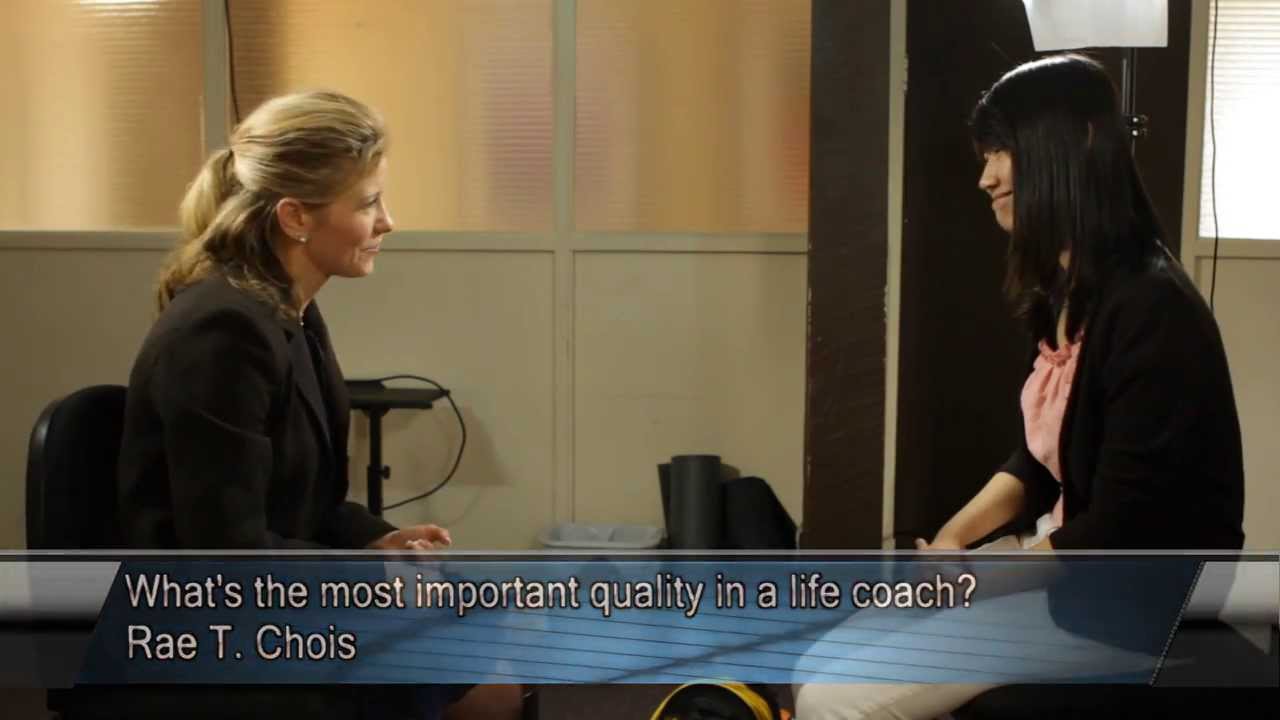
What does a Professional Coach do? TV Interview will Rae T. Chois, Master Certified Coach - #1