08 Masterful Comm Feedback

Master Certified Coach Rae T. Chois teaches backtracking, a listening technique where you repeat someone's exact words instead of paraphrasing, to build deeper rapport. She introduces the WWW/EBI feedback framework: What's Working Well, then Even Better If. She also addresses negative self-talk as "gremlins" and recommends asking for feedback before giving it.
Chapters
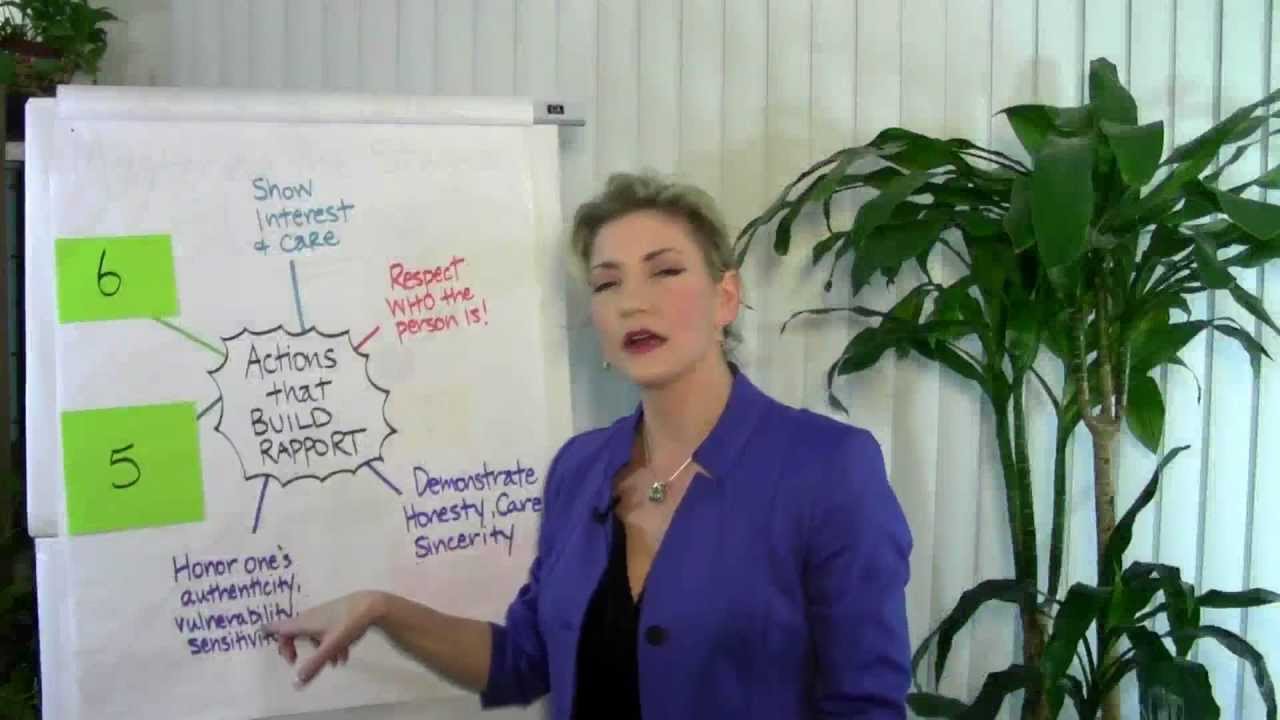
Welcome back everyone, Rae T. Chois here, Master Certified Coach, Professional Coach Trainer, and creator of this free video series for you on masterful communication, not just masterful, transformational communication, and we've been talking about rapport, building rapport, and moving through the stages to get to trust. So rapport, invitation, dialogue, do you remember these stages? We enter into a state of rapport, invitation, dialogue, then there's an agreement, Respect, and ultimately trust. That's the RIDART formula. And we've been talking about the actions that build rapport, okay? All of these things, they're very obvious. And I want to teach you a technique right now that supports you to do all of this stuff and really creates a lot of warm connection with another person because they really feel heard. And it might feel awkward to begin with, I'm just warning you right now, but I'll tell you, it works, it works really well, okay? So are you ready? Okay, so this is called backtracking, and I'm going to give you 2 examples, and I'm going to show you the difference between backtracking and paraphrasing, okay? And then, by the way, after this I'm going to talk about feedback and how you can give feedback to people that's highly effective, okay? But first, let's talk about backtracking and paraphrasing. Now, I'm going to play out a scenario here, so I'm just going to make something up right in this moment, and I'm going to play out 2 different scenarios, and I just invite you to consider for a moment pretending that you are the person that's standing right here. I'm just going to call this person Sally, just for the fun of it, okay? So this is Sally, and I want you to pretend for a moment that you're Sally and you're experiencing what Sally might experience. Okay. Okay, are you willing? This is just kind of a little play in consciousness so that you can notice what you will notice. So let's suppose I'm talking with Sally and it goes like this. Okay, just experience what it would be like to be Sally. So, hey Sally, how's it going? Are you ready to go on our shopping trip today? Yeah, I think that would be wonderful. You know, let's go ahead and go shopping. You know, but first I really want to tell you about My son, I'm really kind of having an issue with him right now, and it's really impacting my whole family, actually. He's just got some things going on. It's really, really, really difficult, actually. Oh, okay, so you're finding that your family's in a really horrible state of affairs, and, you know, this is a major issue for you. Well, no, it's not that my whole family, it's just my son. Oh, so your son is creating chaos in your home. He's really, you know, being a problem for everybody. Well, it's not so much that he's being a problem, he's just not really, you know, I don't know, it's not that he's a problem, it's just that there's issues and I just don't know how to address them. Oh, so as a mother you're having, you don't know how to do this, you don't really know how to help your son. Okay, let's pull the yellow curtain. That means freeze frame. Okay, so just notice what Sally might have experienced in a situation like that. Okay, just notice what I was doing. I'm gonna do it differently this time. Okay? All right. Hey Sally, are you ready to go shopping? Yeah, I'm ready, but you know, I'm just— I want to be totally honest with you. I'm having a situation with my son right now, and I'm really quite concerned. There's a lot of chaos that's happening inside of him, and It's impacting the family. Wow, so there's some chaos that's happening inside of him. What would you like for him to be experiencing instead of that? I mean, what are you wanting for your son? Well, I'd really— I'd like for my son to just be authentic. I feel like he's playing a role, you know, and it's not who he really is. He's just Like, he's acting like his friends and he's not being himself. Okay, so you want your son to be himself. Why is that important to you, to help your son be himself? Well, that's going to really— I mean, if I can do that, I'll know that I'm a really good parent and I'll have, you know, been through the real heartache of his teenage years with him in an effective way. Okay, so you want to be with your son in an effective way through his teenage years? Yeah, I do. Okay, freeze frame. Now, I completely made that up on the spot, okay? So I want you to notice though that I did something very different between scenario number 1 and scenario number 2, okay? Scenario number 1 was totally different. I was doing something called paraphrasing. So I would speak, listen to Sally, and then I interpreted what Sally was saying according to my model of the world. So I was spitting out information that was kind of twisting it and torquing it, and, you know, oh, your whole family's in trouble. And I was filtering the information according to my preferences, my opinions, my suggestions, my ideas of life, and then I was giving it back as Rae. According to my model of the world. Does that make sense to you? It's very different, okay, because I'm constantly assuming and making judgments around what she's saying or not saying, and you know what it's like when somebody twists your words up. Have you ever had that where they say it back to you a little differently? You go, well, that's not quite what I was saying, and then you go into explanation, justification, rationalization, you're trying to get them to understand you, but you feel misunderstood. Does that make sense? Right? Now, backtracking is a totally different scenario. What we want to do to build the deepest level of rapport is to listen to somebody's words, and the words that they mark with their voice shows you that they're important. It's kind of like when we're talking, we walk around with a highlighter and we highlight the things that are most important, and when you hear someone mark something with their voice, I would encourage you to say those words back to that person. Now you're gonna go, Rae, it's gonna be like I'm mocking that person, you know, it's not gonna work. It will work because what you're doing in that moment is holding a mirror up to them and you're showing them that you are listening to them, you're really listening to them. So this is the difference between paraphrasing, which basically you're judging what someone is saying and feeding it back in your words to see if you understand, and Typically that person feels misunderstood by you and they need to explain, but if you listen and you say the words back to them in the way that they said it, you will build rapport in ways that you never dreamed possible. Okay, now I'm not saying mocking and saying the whole sentence back to the person, okay? You're gonna sound like a little parrot. This isn't about parroting, it's about honoring. It's It's about appreciating. Does that make sense to you? Now there's so much more to learn about this skill, but I'm hoping that my little tiny scenario here with Sally, even though I made it up on the spot, is helpful for you, because in scenario number 2, I was listening to Sally's words and saying them back to her, and just imagine what it would have felt like to be Sally. Scenario number 1 versus scenario number 2. Okay, likely scenario number 1 would take Sally below the line because she'd be so caught up in explaining herself, it's not gonna work. But scenario number 2 is gonna invite Sally above the line. When we backtrack, it's like giving love because we're honoring the person's words and the way that they say them, and we're willing to say it back to them just to show that we love and care for who they are. Does that make sense to you? Play with backtracking. You're gonna find it opens a whole new world to you. Now, one more tool, and then I will let you go for this video. This tool tool is really important. In communication, we are constantly giving feedback. I'm just gonna move this down here. We're constantly giving feedback to people, and we're constantly giving feedback to ourselves, aren't we? And let's start with ourselves. I mean, how often do you go into negative inner dialogue inside of yourself? Like, I'm not good enough, I'm not smart enough, or, you know, I'm a woman from Canada, who do I think I am? You know, I don't have enough education. You know, I'm, I'm too short. I'm too tall. I'm too, you know, this, that, and the other thing, right? We do this thing. We do this thing called negative inner dialogue. In coaching, we call it gremlins, right? That negative spin. Often we hear the sound of our mother or father, and we go into all the things that we did wrong, all the ways that we're dysfunctional, all the ways that we're a bit of a loser, and we sabotage ourselves. Don't we? We do this all the time. So I'm gonna invite you to have compassion with yourself and compassion with the world. And when you give feedback, I want you to consider these 2 frames. Okay? These 2 frames. Now focus on yourself first. Give yourself feedback. And then when the outer world requests feedback, that's when it's best received. Hint, hint, wink, wink, nudge, nudge. Just going around giving people feedback all the time, if it's not requested, it will not land, even if you use this formula, okay? So make sure that people are requesting feedback from you, and if they request, use this and you will truly be somebody that makes a huge difference in that person's life, okay? So the word feedback could actually be crossed out and we could put in the word Okay. When we're supporting someone, we are helping them get into positive growth mode. When we're supporting ourselves, we're helping ourselves get into positive growth mode. And if there is something that, you know, we need to get into positive growth mode around, like pretty much every area of our life, right? We want to get better. We want to grow in every single way. One of the mantras that I love is, is this one I heard. Every day and in every way. I am better and better. The only way that you can do that is to give feedback to yourself and others in this way. So the first part, to be in positive growth mode, you want to focus on WWW. What's WWW? I would encourage you to write this down: What's working well? What's working well, right? If you just came out of a meeting. Ask yourself, okay, what worked well about that meeting? Even if it was only a 5 out of 10, right? If you just had a situation happen, I don't know, at work, and it was, let's say, a 6 out of 10, before you go into what all the things that you did wrong or all the things that the other person did wrong, focus on what worked well. So just take a moment, what worked well there? What could I do even better? So that's the next one. The first one is what worked well, the second one, EBI, Even better if. Okay, it would be even better if such and such happened, such and such happened, such and such happened. Okay? Now notice, this is assuming that everything is okay. If it's got to get even better, then it's okay. You know, everything in this universe is okay. We can just relax. We can allow ourselves to be all of who we are. We can notice what's working Well, and we can allow ourselves to be in positive growth mode. Now, if you do that for yourself and you do that for other people, you are truly going to be in rapport and in flow and in love with all of life, and that's what I wish for you. I wish that for you. So get out there, backtrack keywords, and just notice how that lands for a person. And notice how when someone paraphrases your words or they say Say it back to you differently, how it feels to you, okay? Because if it doesn't feel good for you, it's definitely not going to feel good for somebody else. That's step number 1. And step number 2, focus on WWW and EBI. What's working well? Focus on what's working well. Whatever you put your attention on, you get more of. So if you start there, what's working well? What's working well? That's going to grow in your life. And then get the EBI, even better ifs, And watch your life skyrocket. So thank you very much for this video. The next video, I'm going to take you through the stages of learning. This will be our final free video. I have so much more that I want to share with you, so much more, but hopefully you will come back and enjoy this final video on the stages of learning all the way up to mastery. We're standing for masterful communication. I want that for you. I want that for me. Thank you. So go out there, be well, be in light, and our paths will cross in the next video. Bye.
More from Rae

Amplify Your Impact ~ 3 Master-Level Superskills to Create Rapid Client Results





What does a Professional Coach do? TV Interview will Rae T. Chois, Master Certified Coach - #1

Masterful Communication Coaching Demo - What do you and what not to do when communicating