The Exact Process Top Media Executives Use to Build Their Brand
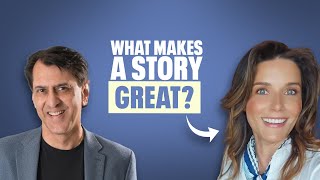
Patrice Poulzer, a former Today Show producer, teaches executives how to build their brand through storytelling. She uses a five-part framework: set stakes, describe sensory details, reveal internal dialogue, present the moment of truth, and close with resolution. Real examples show how authentic stories drive credibility and career growth across LinkedIn, customer pitches, and internal leadership.
Chapters
Let me tell you a little bit about storytelling and why it works. It's the only form of marketing that hits the brain.
Personal brand, I don't think is an option anymore. I think it's necessary for executives. So is that one of the best ways to actually start a story is to paint a picture of the environment? How can people think through how to tell a story like that?
And that is what makes stories powerful.
In this episode of Executive Signal, I'm thrilled to welcome Patrice Poulzer. She's a former Today Show producer, a Gracie Award winner, and an Emmy-nominated journalist. She's also founder of a top video storytelling agency. She's worked with Netflix, Lululemon, many other brands to help their executives tell business stories and recently launched an AI storytelling tool. Patrice will walk us through how B2B leaders can find, shape, and share powerful narratives that promote their company, products, and personal brand with authenticity and impact. Patrice, welcome to the podcast.
Thank you. Quite the introduction. You got to follow me around to networking events.
Well, I am really excited about this conversation because you have such depth in your background about How to Tell Stories. So let's get into it. Let's talk about how executives who don't think that they have stories can uncover stories that, you know, again, that they don't realize that they have. What's the first step?
That's a very broad question. Um, but so let me kind of just like take it back a little bit. I mean, whether you are an executive or you are not an executive, you know, one of the, you know, the human truth that all people you tend to have is that we view ourselves through such biased lens. It's really difficult to look at ourselves and to look at our own journey and paths and see what's special about it or see why someone else would find that particular story interesting. Right? So you have a lot of executives that might say, "Well, everyone's been through tough times in business," or, "Everyone's had to lay off people," or, "Everyone's had lower than expected quarter." So Why would I talk about that? Because that's so common. But the mistake is, is that within those broad, very relatable moments for executives lies super universal human connections. And that is what makes stories powerful, is finding those moments in any situation, even if it's— and bonus if it's happened to a lot of other executives. It gives you a really easy bridge on how to make yourself memorable, on how to present yourself a bit more human. So I think the first thing is that, you know, executives probably need to start looking at some of the stuff that they go through on a daily basis, not as mundane or boring or common, but as opportunities to actually be relatable and connect with other people through those moments.
How do you figure out what those moments are? Because to your point, people might just think, well, I'm just doing my job. I don't know what to share. And that's one of the biggest things I hear from other executives, some of— many of who are my peers, like, well, Raj, I have no idea what to post. What do I post? What do I share? So how do you find— give me an example of, of how you helped an executive figure out something that they didn't realize was a really cool story.
Yeah, I mean, so one of the basic tenets of powerful storytelling is the more relatable the story is to another human being, the more memorable the story is gonna be. So when I'm talking to executives who might not think they are sitting on this goldmine of stories, which by the way, they always are, you know, you have to ask them questions that get them to think a little bit and to get them to probably be more vulnerable than some of them like to be. So I usually start off by saying, I don't always start off right away with like the most intense question. There's a gradual art to this, but if we're just talking generally, 'cause we don't have time to go through the complete process, You want to start with like, tell me about a moment where you made a decision and it was wrong and you knew it was wrong and tell me about that. Tell me about a moment where you had to make a decision between easy and right and what did you do? If you chose easy, tell me about that. What happened? If you chose right, tell me about that. Why did you choose the right path even though it wasn't easy? Tell me about a moment when you had to make a difficult layoff. And you didn't want to, but you had to do it for something bigger in the company. Tell me about that moment. Like, why did you make that decision? So you start asking them very pointed questions about how they felt in a moment, and that usually starts getting them talking. And all of a sudden, those moments start to become bedrocks for really interesting stories. Or even like, you know, tell me about a moment in your industry where you had to make a decision that was not popular, and how did you get people see your side, or tell me a moment when you made a decision and you thought it was the right decision and it actually turned out to not be the right decision. Like, these are hard questions because quite often it takes an executive, you need to be a bit introspective and you need to be willing to kind of go there. But the more you're willing to be honest and be truthful, like that's where the storytelling lies. And that's actually where you start to build like incredible trust and momentum.
You know, one of the things that just really came across as you were saying this is every time you wanted to capture something, you started with the words, tell me about a moment. The only way to answer that is by telling a story. And so, it's very interesting because I use something very similar. I say, tell me about a time when, same thing. Tell me about a moment when, and then the second part of this was you really dug for the feeling, not just what happened, like the plot. You're actually looking at what were the emotions. So, I mean, not every executive wants to be sharing sharing that. They might feel vulnerable. They don't want to share vulnerability. They might want to show, you know, or at least feel that showing strength is important. And of course, there's a lot of research now that shows being vulnerable actually makes you stronger, or at least, you know, shows off that you're stronger. What are your thoughts on that? How do you get an executive who is maybe just a little shy to actually share some of those feelings and wants to just share the facts? How do you get them out of that shell?
Yeah, I know, that's That's one of the most common things with executives, especially successful executives, right? That maybe have led a certain way. Quite often when executives, whether it's them or their team telling them, we need to make a shift. Like we need to change. We need to evolve here. It's usually because they're hitting a bottleneck somewhere. So if you're hitting a bottleneck somewhere or they're not getting to that next level, whatever that next level is, it's all relative. Like some executives want to get on stages or they want to get invited to, you know, industry conference, or maybe they want to author a book. Like, so They know. So if they're coming to me, they know that they're going to have to do some work. But again, I don't start out with like, tell me about your shower cry moment. We don't start like that. But usually what I do is generic lessons without emotion. No one is going to remember that. And so I usually start with facts first. So if I have a very right-left brain person and they're very fact-based, I tell them, okay, Let me tell you a little bit about storytelling and why it works. It's the only form of marketing that hits the brain and it's the only type of marketing that you can actually get into the brainwaves of a complete stranger and have them sync up with yours. It's called neurocoupling. So I start actually by giving them some science and data that they can attach storytelling to so they don't view it as this soft, fluffy, cute, I'm going to cry on social media type of thing, right? Which I know it has a reputation. It can have a reputation like that. And so sometimes what I'll do too is like we start with, easy wins. So I might say, rather than like, "How did you feel?" I might say like, "The meeting was tense, right? There's a meeting tense. Explain to me what made you know that this meeting was tense. Explain to me what that was all about." And all of a sudden you'll get executives be like, "Oh, well, it was silent," or, "I could hear the tapping of my co-founder's knee up against the table," or, "I could hear the ticking of a clock." You, you, you, I start with like getting them to describe that feeling, right? Almost like sensory details. And it, and it almost gets their brain in another frame of mind. So then by the time we get to like, you know, maybe a harder question, or to be honest with you, I'll start with a nice question. I'll be like, you had a really successful product or you had a really successful launch, but let's talk about that. Launch. Like, we all know that launches are extremely hard. So tell me about that moment before you are gonna send that email to the company or your investors. What was that like when you were about to send that? And they'll be like, oh my God, yeah, I was really nervous. Or so you start slowly getting them to chat to you like a human, and, you know, and not that they have to have a wall or, you know, be perceived in a, in a certain way.
I love that you talked about the sensory parts because that's very easy for someone to describe without feeling like they're going deep into some vulnerable place of vulnerability. And, and, you know, you're, you're very vivid notes about someone tapping their fingers on a table or, or bouncing their knee, uh, something that everybody can relate to. And it really takes you right into that moment. You're painting that picture. So is that one of the best ways to actually start a story, is to paint a picture of the environment? Um, or there's some other, uh, techniques you can use to really get to that place faster and bring your audience along with you?
Yeah, you're very observant, by the way. This is not a— we didn't do any planning at all.
I know we didn't, but yeah, I appreciate it.
Yeah, no, no, but you're really good. Like, you're really good at like picking up on the big, the major takeaways. You can tell that you've done some of this work yourself. So yes, like, first of all, one of the biggest mistakes I see in storytelling, especially from executives, is that it goes too broad. Too generic, you know, like, you know, we made a difficult decision, right? Like, that's not vulnerable, right?
Like saying that feels like the who hasn't, right? And it doesn't feel like you learn anything from it.
Exactly. Exactly. So, so if someone is saying that and I'm like, oh, I have to get them to go deeper, I might ask them to be like, well, can you talk to me about what your internal dialogue was telling you at the time? Like, what were, what was, what were, you know, I know you had to do forward-facing to the company and you had to make this really difficult decision, but like, When you were driving home that night, like, or I'm driving to work that morning, what were you saying on repeat in your brain? And you kind of almost like get them to see themselves in a third person. And people can often start being a little bit more open with you, but also moments. You always want to hook a story on a moment. Like for example, right now I'm working with a bunch of entrepreneurs and quite often, you know, we're doing their founder story. So a founder story might encompass 20 years for some of these people. Like, how do you encapsulate a powerful 2-minute video? Cause we do it in video. How do you encapsulate 20 years into 2 minutes? 2 minutes is roughly 300 words. That is not a lot of words. And the way to do that and the way to stick the landing, as I like to call it, is you hook it on a moment, maybe 2, but you always take a moment and there always is a moment and there might be several, but you pick the one moment that you're going to tell for this particular story and you can always tell more, but stick to a moment because that way someone will remember a moment. They're not going to remember you giving them a, you know, a Cliff Note version of the last 10 years of your founder journey or your entrepreneurial journey.
So on your website, I noticed that your, uh, your, your story, your about page starts in the middle. It doesn't start right, you know, like, oh, here's where I started and here's where I came to, got to. And it doesn't start at the end, like, here's what I do now. It started with a, uh, almost a moment of crisis, and then it walks you through. Uh, I found that very captivating, and so it just really drew me into, well, how did she get there? So there was clearly a technique behind this. Can you describe that? Because that, that popped some psychological triggers that kept me reading.
Yeah, I mean, that's a storytelling technique. So there's lots of techniques. That's one technique is that you do— you start in the middle of the story, or you start at the rock bottom moment at the beginning of the story, right? You start at the— there I was in the shower wondering how I was going to keep this all together, right? All of a sudden then, you know, you're piquing interest, and now our brain wants to close that feedback loop. So now we need to finish that story. Well, what happened to this person, right? Another technique too is, again, nostalgia and childhood. There's a reason why every great documentary or all of them, they all, if they're not starting in childhood, there's that moment where they go back in time with the black and white photos because even if you don't relate to that person's life exactly, you know, like I just watched the other day, um, the Brett Favre, like Green Bay Packer, he has a documentary. I knew nothing about him, um, and— or not Brett Favre, uh, the other one. Oh my God, anyway, there was like one, one of the, the Green Bay, um, Aaron, Aaron Rodgers, and you know, I mean I don't have a similar upbringing to Aaron Rodgers, yet like his childhood and like how he was raised and just, yeah, there, that's a technique where, you know, you know, cause if you think about attention, people don't, doesn't, we don't have a lot of thresholds, right. For attention. And so how are you going to get someone's attention immediately? So then they can hopefully stick around long enough to actually hear what you want to tell them. You have to use some techniques sometimes. And so starting in the middle, starting at childhood, Starting with like, you know, a universal lesson that you learned and kind of saying it off the bat. Like those are all techniques to hopefully entice your person to stay and stick around.
And I think a lot of people get, they think that, well, I'm in B2B, I don't really have like stories. How do I make my stories emotional? And to your point, I remember, I think one of the best stories I saw for a cybersecurity company. I mean, talk about kind of dry stuff, right? People hear about hacks and everything, but the story started with the CEO got a text in the middle of the night night saying, all systems are under attack, we're down.
Oh, so good.
You want to just like, what happened and what did you do about it? You just like, you're engaged immediately. And so that's a story that people can relate to because dry, boring stuff, you just suddenly go right to the heart of an emotion and you're like, I don't want that to be my story. Well, exactly.
And you know, in what, what that person was doing so beautifully, whether or not they, and I'm sure they did it intentionally, is, you know, the he or she set the stakes. Like, if you don't have a lot of time, you want to not waste time with context and backdrop. And he could have started out like, you know, did you know that blah blah blah percentage is responsible for all your data? Or like, all those spam calls you get, like, you could be getting hacked. I mean, you know, you— bam! He started with the emotional moment. He started with that, you know, he set the stakes. And then he probably moved into some like moment of truth where, you know, he or she realized that like, oh my God, like I can change this or I can, I can, you know, make this better. And then if he was doing his job well, he would have, he would have looped that story back to what it meant for the audience and what it meant for me, because we all care. We want to know what's in it for us.
Yeah. Now you'd mentioned different techniques, so, and looping back. So that sounds like a technique also. Can you describe that? It almost sounds like there's an arc where you've kind of created a punch point and then started, rewound and then arced it over to the end. How can people think through how to tell a story like that? And what's the process? Do they take notes? Do they write down stuff? What do they do? How do you make that story?
Yeah. I mean, look, there's lots of different techniques depending on what type of story you want to tell, right? If you're telling a founder story, if you're telling a customer story, if you're telling the hero's journey story, if you're— But by and large, just a very basic one is a story always has to involve a change. A change internally, it can be a change in your way you think, or it can be a change externally, like an exchange in, like in, in the environment. And so, you know, a very loose way to think about it is, you know, you gotta set the stakes. So kind of using your cybersecurity, that's a perfect example of someone setting the stakes. I got a text in the middle of the night at 2:00 AM, all your bank accounts, you know, have been hacked and none of your social media logins work anymore. Okay. Stakes are set. Then the next part of a very loose kind of story formula is once you set the state, give me contact, bring me into that moment. How did you feel? What did you see? Those are two, those are two questions you can always ask yourself when you're thinking about telling a story. How did you feel? What did you see? I saw a text on my phone stare at me at 2 in the morning. Those are details. I felt dread. I felt a knot in my stomach. Boom. You brought me in. That's not a lot of words. Okay. Okay, next part of that story. The middle part would be, okay, this is like the moment of truth. So if I'm this founder, this is like the scene where in that moment, I realized that like all of my family's albums were gone. I'm just making this up, right? Like you almost, you bring the moment to make it hit it home or personal. Like, what did that mean? You got to text that meme. Like, oh my God, that meant that I just lost the last 5 years of my family archive because I put everything on my Instagram because that was my family album. And you know, my grandmother passed away or something right now. All of a sudden, you're bringing this in. I did not want that to happen to any more people. And I knew figure out a way. So then the next part of that story is like, you know, Okay. Like, what did you do? So, so again, you're, that's a very like loose way, but it's like context, setting the stage, you know, um, what the, what did you do? The comp, you know, the change and the complications. And then kind of the end part of that is the consequence and the resolution. Like how, how did that resolve?
Yeah. Now, I mean, working in television, you've got a certain amount of time, seconds, minutes that you're allowed to tell a story. So there's a lot of stuff that ends up on, on the editing room floor or, you know, deleted. I guess there's no editing floor anymore. So, um, so how do you decide what are the most important parts to keep into the story and how— what, what you, what you edit out in order to keep it tight?
Yeah, no, it's a really good question. I mean, most of the time people put too much backdrop into it, right? They take too long to get to the actual meat. So they'll, they'll take you through the lead-up, you know, so much runway for like how you got to be the founder of that company. Again, that using the example you use, that's a a real, like, most people wouldn't start there. Most people would probably be like, well, I used to work at this company and I would notice this and I noticed that and that. And all of a sudden, but you know, you're a minute in and you're bored out of your mind. So, you know, there's all, you know, the details you don't, especially with video storytelling, you don't need as many details. And, you know, again, you always want to focus on like What is the one takeaway? People's brains cannot take in that much information. They're not gonna remember, even if it's an amazing story, people are only gonna remember probably one big thing. So it's really getting clear on what is the takeaway that you want someone to leave that story with. And so if it's like the cybersecurity, if you want the takeaway to be like, you know, we understand your pain because me, the founder, actually lost all my family's personal stuff and it killed me. And that's why we're safe and we're family to you. Like if that's the take, then you wanna make sure that like everything connects to that. And if it's too dry, if it's too data-driven, if you start putting in a lot of numbers or a lot of stats, stats, like you're gonna lose people. You're often best on focusing on like that emotional takeaway and then focusing it on a character. So if I'm that founder and that's, and I'm using my own story to hit home the message of my company's mission, that's a win-win. Like if you, the founder, can relate to your customer. Now founders and executives aren't always the perfect mirror of their customers, but if you are and you can really relate to the pain of your people, then you're foolish by not taking in a personal moment and looping that because that just makes you that much more trustworthy as well. So it's personal moment yourself and again, like a moment, like trying to find one moment, not too many.
Yeah, I found that especially with B2B executives, that sometimes just telling customer stories also makes a bit of a difference if you don't always have your own stories because you may have a certain number of stories, not endless, right? But with your customers, if you're talking to them, you really truly can find an endless amount of stories. I remember one of my companies, we used to sell data, boring stuff. I mean, just really like, okay, what's so exciting about numbers? And so, what we tried to do is correlate that to the impact that our data had on the companies using our system and what it meant for their customers and really painted a picture so that people would look at that story and say, "I want that to be my story." And one example we had was— so, we used to sell wealth data for people in the United States, the company's called Wealth Engine. And nonprofits would use our data to figure out who they should go after in terms of, like, pursuing donors and so on. Again, kind of, like, boring stuff, right? But what we found is when we talked to our customers and said, tell me about a time when you had a really good successful moment using the data, and then they would light up. They're like, oh my goodness, we were pursuing this one family. We thought that they would be able to give maybe a few thousand dollars, and your data said, no, they can actually donate over a million. So we invited them to do a tour of the campus, and we showed them all this stuff. 2 months later we had a check for $5 million. And you're thinking instantly, I want that to be my story, right? And so I think capturing that is, is really, really important. And to your point about cutting out a lot of the stuff, we didn't need to go into all the extra details, just the punch points, right?
Yeah. I, I think you forget, I mean, look, it happens to all of us because we're all guilty of getting in silos where you're in your bubble. Like, you know, when I was in TV, you know, like you, everything lives and breathes and dies by that industry. And when you're in that industry, it's the most important, and, you know, but you forget that, oh my God, like, there's a whole world. And the same thing with other industries that, you know, people are not thinking, like, you know, thinking in that lingo way, and they don't know. And so we, like, it's a reason, and there's a reason too why, you know, nonprofits especially will always focus on a child or a village or a place or a rather than, you know, 80% of our proceeds have given water to all of Europe, or I'm just whatever, right? Like, that's, that's a story, but that you're not going to remember that. Like, you always want to hook it on someone or something, and you just— your chances of connecting are just so much better.
As we prepared for this conversation, you were sharing a data point about an executive that you were helping that was running a marketing agency and wasn't historically sharing content because for whatever reason, maybe you can walk me through what that story was like and what happened after they started sharing some content. Like, what did they share and what happened?
Yeah, I mean, I get a lot of executives, whether they're the CEO or C-suite or Oftentimes the founder, and they're used to not having to be in the spotlight because they're either, their zone of genius is doing something else related to the business. And that's not historically founders and CEOs have necessarily needed to do, but we live in a different world now and marketing has changed and it is required to some degree. I think the onus is a bit more unfortunately on female founders than it is on males, which is like a whole other discussion. Like female founders are expected, I think, to be way more front and center in the brand, less so than men, but that's changing a little bit. And so like, so I was working with this like executive who has a very successful media company in Chicago and he had 7 years in, he had never barely posted on LinkedIn, nothing. And he was fine with that. He didn't want to be front and center. It's not about him. It's about the product. It's about him. It's about the customer. Customers. It's not about him, right? That's always what you hear. It's not about me. Well, he's starting to run into some issues because even though his company was on paper better than his rivals from a profit, revenue, P&L, you name it, if you were to hide his company brand and like 5 other brands that you would probably, most of us would recognize, his company would be top every single time. And he was walking into a meeting in a large bank to potentially get some investment for a new product arm they were launching. And not one single person in that room knew who he was. And he spent the first 5 to 10 minutes rather awkwardly, he said, answering questions like, "Wait, who are you?" And, "I'm sorry," even though he was a huge deal. And it dawned on him that, "Wow, I know we're better. I know the way I lead my company is better." And yet I'm just over here not telling anyone about it. And so we kind of this moment where he approached me last year because he had been following— he gets my newsletters. He's like, I really am into your newsletters and like, they're so good and I read them all. And he goes, and I'm like, half the time I'm like, I'm not even in your world. And yet I'm like, I got to finish this newsletter. He's like, I want to do what you do. So we started working together and it was a bit painful at first because he had never done anything and he was very executive, so he's very corporate. So any time we'd start, I'd ask him about, you know, his upbringing. He'd be like, it doesn't matter. Who cares? Like, this is what I do now. It matters now, right? My results now. And it took some time to be like, people actually care. Like they really do care. And so after a while he started getting into a flow and he started posting and not even every day. He posted maybe twice a week, sometimes once a week, but it was a quality post. And it was a post that was not written by AI. It was a post that only could have came from him. And it was a human-felt post. And he's, by the end of the year, he came to, I saw him in Cannes, we had dinner together and he told me, he goes, I cannot tell you how many people will come up to me and be like, I saw that LinkedIn post you wrote and I sent it to my team. Kara Swisher is, you know, a name in media and was at Cannes doing a podcast, you know, thing and called out his company. And he didn't know this, in the audience as her favorite thing that she reads every day. And like, he just said that the— it's not even about followers, right? It's not about the amount of followers or vanity metrics, but the quality of relationships he started to have in this past year. He started— he was— he spoke at South by Southwest, he spoke at Cannes, he, he is on his way. He's been on some huge podcasts this year. And I really believe it's this mental switch he had about, I actually owe it to my industry. And I owe it to other people that are not where I'm at to have a viewpoint of possibility for being able to actually lead a very successful company and do it in this really human awesome way. And you don't have a lot of people in his space doing things the way he does. And so he changed his viewpoint on like, it was his duty. And I think if more people felt that, especially if you are doing something cool and you're doing something against the grain, if you're doing something that's like soft— we need more softness right now in this world, like we need more empathy, we need more bridge building— and you're not, like, you're doing a disservice. We have enough of chest thumping and like productivity, 4 AM. Okay, like, please, like, let's balance this out a little bit. And those are the people that don't tend to be as chest-pumpy. So it's—
Yeah. I love that you're touching on executive posting because I think that there's, that's a big need out there. There's so much content that people are just thinking that ChatGPT can generate for them. ChatGPT then becomes their voice and it's the most generic voice now you will see. And I know executives who just like, oh, I don't know what to write. They put an idea into ChatGPT. It looks well written, but honestly, you know, now it's very easy to recognize and they post that. And I'm just thinking to myself, oh man, you are absolutely diluting your personal brand. This is going to have some fairly long-term consequences for you and your company. And to your point, you know, with your story, I think that executive's personal brand, you know, before they started sharing their stories, was not as well known. And they clearly realized how important just for their own business to get loans, to get whatever they need to do is it's so important just to have that. So, personal brand, I don't think is an option anymore. I think it's necessary for executives. And again, to your point, it's not just CEOs really, right? It's if you mentioned earlier, if you wanted to have a TED Talk, if you wanted to to promote a book, write a book, if you wanted to get some other, maybe a promotion, maybe you're COO and you want to become CEO, just getting out there, I think, is really important. Non-negotiable at this point.
Yeah. And I think another point to make too is, as we've seen, corporate America is a totally different arena right now, right? These are long gone are the days where you're at a company and it's family and you're there forever and everyone loves each other. It's just not how it is anymore, right? And, and the landscape has changed and the loyalty has shifted. And the only true thing that you own are your ideas, your thoughts, your brain, how you put yourself out there. And quite often that is the protection moat right now because as we're seeing with AI, AI is eliminating jobs and it's really hard to eliminate someone who has such a unique point of view and out there in the company and is making, is really valuable because of their human connection and relationship skills, that's harder for AI to replace. It's a lot easier for AI to replace someone that is maybe doing good, decent work, but it's just super quiet about it. And like, it's hard. So in a way, like, and I actually in my last program, because I work with founders and in a program called Founders Fire, and one of my students works at Apple and she's been at Apple for 12 years. And at first you're like, why are you— what's up? You're at Apple, right? She's flying high. She's been there for 12 years. She's got an amazing job and she's so smart. She's like, I can sense the shift in my industry and I'm not— I'm here. I've been here for 12 years. I, I gotta like, I gotta keep either real sharp and myself more untouchable, not just based on skill, because as we know, like now you can learn how to code with AI and now developers have to sharpen their tools. Before they were untouchable, right? Engineers, developers, like bow down. Not so much anymore. Like how are your AI prompting skills, engineers? Like that, you know, okay. Like you don't have it, sorry, next. So, mm-hmm. You know, like anything you have to sharpen. And so she came to my program because she's like, I need to learn how to weave in myself more and make myself known. And she worked with me in my program. And by the end of my program, she was teaching in the Saudi— the— they have a like an all-girls like Apple training center in Saudi Arabia. And she was asked to go there and lead all the training there. She was written up in the internal company newsletter. She said that is like the Yet it's never happened to her in 12 years of working at that company because she started, we started working. How do you weave in your story in really organic ways, right? Um, especially at a company, right? You're not like, let me tell you about my founder story. That's not how it is at a company. It's much more subtle. It's much more micro woven and it's, and it's more strategic. And so it, this is a real thing and it works when you adopt that mentality, but it's a, it's a big mentality shift. Do you have to have—
walk me through that because that's, I mean, I think a lot of people listening to this can feel that pain potentially coming. And so, they want to put this little insurance policy around themselves. So, what can they do to build that insurance policy? What were the steps that she took to make herself more visible so that she became this person that, oh, we can't let go of her. She is doing so many fantastic things.
Yeah. It's different for everyone because it depends what your goal is. But just to give you an example, it starts subtle. So for example, she's a product manager, so she led multiple teams in different units in the company. And when you're a product manager, right, you are leading different people and you're like coming together. So quite often she would do all these sprints, right? And she would have Scrum meetings or like weekly, you know, they'd have like an all hands on deck like once a week or something. And normally when she would start that meeting with all these different people, you just get down to business. So you're like, all right, let's go through the agenda. But I encouraged her. I'm like, why don't you try this time instead of just getting into it? Why don't you take 5 minutes and just say, you know what, I'm here every week and all these people, you're tuning in from all over the world, which way. Let me tell you just one little story about why I love doing this work or what happened that made me really inspired to to do the things like that I'm doing with you guys here on the team. So she started like doing that. And she said that the tone, and this was over time, we were together for like 9 months, but like over time, she said at first it was awkward. She was so awkward. She was like, I felt like I wanted to die. And she's like, this is my team. She doesn't normally start out like this, but what's ha— but you know what you do when you are a leader and you showcase a hint of that, of humanness, you actually put other people at ease. And then you tell people implicitly that it is okay to be a full self. It's okay to actually show up and maybe share a little bit personal, or it doesn't always have to be so business. So what happened was over time, her team would actually like DM her and be like, oh my God, actually I had something similar to me. And as she got more comfortable, she got a little bit more vulnerable, right? Talking about like, you know, you know, she, she basically her dad left her and her mom worked in Vegas and she was basically raised herself as a child. And so chaos was her childhood and what she does is very structured and systematic. So this desire for stability and taking order to chaos, that's what she does from a product manager standpoint, but it's much deeper. And when she shared that story, that's how she got into the global newsletter. She shared her upbringing, like, and so when you do that, she, she got a promotion. She, she didn't get it. She was approached by a different organ, a different unit in Apple, and they're like, we want you to interview for this role, much higher than what she was doing. She didn't get it. But my point is, you know, it's not a home run every time, but she now has the skill set to— it's, it's to, to just hold on. And then you just buy yourself time because maybe she wants to stay Apple. Maybe she wants to leave and go do her own thing. But regardless, you take control. You are not at the total mercy of your industry that is at the mercy of, of, you know, inflation and society and politics. You can't control that, but you can control your image and like how people perceive you.
That's a— that is a— that is a very powerful story. And I like that you said that, you know, you try, okay, you may not get every single win, But now she's on the radar, right? And so that alone is making a big difference.
Huge. That's all it is sometimes, right? People don't— especially these massive companies, and Apple is an extreme example. But you take lots of companies, you get past a certain point and it's impossible to know everyone, even if you are a founder or C-suite and want to know everyone, it's hard. And so you have to take your path in your own hand. And I think in corporate, I'm guilty of it as Char, I was in corporate for a long time, you sometimes feel powerless. You feel like it doesn't matter what you do, or if you get a terrible boss, you're screwed. And so there's this powerless feeling a lot of times. And I think that also what leads to a lot of unhappiness in corporate. But when you start owning your, I hate I hate saying brand. It's so overdone. We're humans, we're not brands, right? But when you start owning your stories and you start owning how you want to share stories or not, that's when it gets interesting. And that's when you can start opening up different doors for yourself in corporate. And also eventually if you do leave corporate, now you have the momentum to go off on your own or consult or fractional work or whatever you do. You have that foundational practice.
Let me pivot now a little bit back to your days at the Today Show. You clearly get pitched, I'm sure, a lot of stories. What did you look for? What made for an interesting story?
Yeah, that's a really great question. I mean, you get pitched, oh my God, hundreds of times a day. And you know what is interesting is you can have 3 people in front of you in your inbox box or on your desk. And even if you had 3 businesses and Business A was the most experienced, or even like, you know, the most popular, the most known, but if you had Business C that maybe you didn't know but they pitched you a better story, we always would go with the Business C. So this is also why I feel so strong about storytelling, is like I've seen it in action from a non-business hat when I had when I didn't even know I was going to be an entrepreneur, when I was still totally in journalism mode, like it is, it drove everything, at least that I did. Right. I mean, sure. Maybe change now, everything bleeds into one another, but when I was there, it was pure story. And so, you know, most of the time you don't read half the pitches, but it goes back to the basics. Like, like if someone has an opening line, you don't just go to third base with someone, right? Like you like start at first. Right. And so like the opening line might be, you know, Hey, I really enjoyed your last LinkedIn post about that. Or, hey, I saw that last story you did on blah, blah, blah. Or like, you know, hey, you're in New York. I hear the, you know, the Yankees won, like, blah, something just like, I'm a human, you're a human, right? Off the bat. So that's just like, okay, they've done maybe a little, because it's amazing how many people like got your name wrong. Or, you know, I'm in lifestyle and business and I'm getting pitched like a Dateline story. I'm like, I don't do murder. Like, why are you pitching me a murder? But you know, it's been blasted. And the thing is, in these newsrooms, it's small. So even though it was blasted to me, I might sit 2 aisles away from the Dateline— the Dateline desk, and already I'm annoyed. And I don't want to pass it on to the producer that I know at the Dateline desk because I know this person pitching me is just blasting me. So you have to understand too that you're not in a silo. Like, you might think you're blasting you know, a big organization like Today Show or NBC, it is small and everyone is near each other and everyone talks to different units. And so if you— that's why it's very— it's worth the extra time to like make sure that you're actually tailoring your pitch to it. And you can say, you might not be the right person and I'm so sorry, like, you know, but even that is human. Like, that's a human line. I'd be more inclined to pass it on to Joel at the 8 AM hour, right, for the Today Show if I'm working on the 10 AM. Which is totally different. Anyway, so we're getting off here, but my point is, but the best pitches always would usually involve like your cybersecurity example story. It was 2:00 AM. I got a text and it woke me in the middle of the night. Start, get like, take me to the emotion. Tell me like that you get it, that you get this storytelling organization. So you're gonna match it with a story. And then also look like, and I know this can be overdone right now because, you know, vulnerability is like this token word that being vulnerable isn't just acknowledging hard things. Being vulnerable is actually acknowledging your role in that hard thing and what your responsibility was to that. Like, being vulnerable isn't like, I had a horrible— like, I had a horrible boss and I hated him. He was so mean to me. Like, that's not me being vulnerable. Like, being vulnerable is being like, actually, I can look back and see that I did this and I can see why that maybe had this type of reaction. But now I'm on a mission to help other people like myself don't do what I did so they can have a better chance. Like, that's vulnerability. That's like, oh, you're telling me something that you kind of acknowledged that you had a role in, but now the inspiring part is you're going to actually help my audience, my Today Show audience, be better. And it's focused on the audience Not on you. That was the other thing too, is a lot of time people get focused on themselves, executives, founder stories, I, I, I, I, and you, and you have to remember that even if it is your founder story and it's a bit of a conundrum and a juxtaposition because, well, it's my story, I'm the founder, but the best founder stories always understand that you are acting as a mirror to your most most perfect customer. So your story is going to hit at their soul. And the only way that you can hit at the soul of your customer is if you really tell your own story through the lens of someone else watching it. Most people don't do that. They're just ego. It's my story. Don't care that I'm boring you. Don't care that, you know, I'm going to tell you what I want to tell you. So it's really too, it's like understanding that the best pitches were always about my Today Show audience, not about the person actually me.
That's a very valid point. I mean, just, you want to see what is it in it for, for you as a viewer, uh, or as a reader if you're consuming content. And I think that, like, that part is, is really fascinating because too many people focus on themselves as the hero in the hero journey, and the hero is really your customer and the person you're leading, right? You're kind of the Sherpa, if you will. As we get closer to closing this out, I wanted to talk to you about consistency and when you have a founder story, I mean, you kind of have your founder story and that's it. And how many times can you just keep sharing that before you start to feel that, am I being redundant? Have I already shared this story? So how do you keep things fresh and how often do you think people should be sharing their stories and, and in what platforms? Is it LinkedIn the best one or are there other ways?
So a few thoughts on there. So, and this is actually the type of work I do. This is my analogy. When you go to a concert and you see your favorite band, if they don't play their greatest hits, people are livid, right? Like, I don't care how long they've been doing it. Like, there are certain songs that they just like, Madonna has to play or Coldplay has to play, right? Like you have to play Kendrick Lamar has to play. I'm going to see Kendrick Lamar this weekend. Like he's good. He has, he has to play, right? So, You, if you, if you take that analogy and look, do they sprinkle in new songs? Of course they do, because they're artists and like they have an attentive audience and you want to promote your new stuff. But here's the thing again, human beings don't remember stuff. We only remember things after being told like hundreds of times. You know, the old, we've all heard that stat, like it takes 7 times. It's like 700 times now because we're just so much content at us. So my point is it's complete hubris to think that you're going to tell your founder story or your origin story even 10 times and you think someone's going to remember that. Are you out of your mind? When they're caring for their mom, they have kids going off to college, they have a sick toddler at home, like they're worried about their client not paying them in late, or they're worrying about not getting Q2 results and they're going to have a bad article in Meet the Press. Like, no. Like they, so My point is a few things. There is, you should have a greatest hits. Like, this is what I do. Like I work when I, when I work with my executives, we have a greatest hits. You have, you have 10 stories that is you, those are like your foundational truths. And those are stories that you should continually be weaving in. Now you don't weave them in at every single moment, but again, it's like with my Apple person, it's micro-moments. Right? Like when she's talking about like raising herself because her mom worked on Vegas overnight because she was a single mom and she was raising her— like, you don't, you don't talk about that every single time, but there are moments we know what— you know what, that is a moment that like when you're in this circumstance that, that is powerful, right? So, but, but in order to know how to do that, you need to lay it out. Like you need to know like what are my top 10 hits. Now because we're humans, we are always Every day, this is a story, right? Like every single day you're having, we have 50 stories that happened to you this morning already, right? That you could turn into content if you wanted to, but it's knowing what you're ultimately all about. You know, like just to give you an example, you know, I moved from Lisbon. I moved from New York to Lisbon with my 3 small kids. Like I changed my service-based business model brand video to building an AI tech storytelling tool. Like I, I, I tend to punt big. They don't always hit. I have a lot of, I have a lot of misses, but I tend to go big and I try. So that's one of my core values. So if I'm talking about stories in my LinkedIn content, I often ask myself, does this story match how I want people to remember me with? And if it's yes, then you know, okay, great. Then tell it. If it's like completely random, then especially if you're an executive, maybe you don't, maybe Just tell your friends, tell your journal or whatever, like tell your notes app. But I think, you know, a few takeaways here. I know I don't want to— sorry, I'm spiraling here, but number one, you should know your greatest hits. It is okay to repeat your greatest hits a lot. I often say to my founders, if you are sick of telling that story, that is a great thing because you should be, because those are— your people are going to remember you Sarah Blakely tells the same freaking story ad nauseam. We can probably all repeat it, even if you don't really know her that well, because she's still a billionaire who doesn't owe anyone anything, still tells that story as recently as like last week on her Insta— on her, um, LinkedIn, her origin story of going door to door and like having her spanked on her t-shirt. And like, I've heard that story 50 times. Guess what? She tells it in different ways, or, oh, I learned something different, or, oh, she put a picture of herself this time So now I remember the picture of it, but it's a little bit of a different version. She started in the middle of that story of how she felt rather than like, here is the strategy of how I actually did that. So there's variations of your greatest hits and that's when you— that's how you start to get a personal brand with traction. Gary Vee is the same way. We all know he has the wine business with his dad from Russia. Like, oh my God, like we can— you can say this without even thinking because he does it strategically. So it's— yes, you should be saying stuff ad nauseam, and of course sprinkle in new things, but when in doubt, go back to your core, your core hits, and just repeat, repeat, you know, every so often.
Yeah, that is the— I love that, and thank you for that, especially with the Gary Vee story. Everybody knows he wants to buy the Jets. He— like, there's, there's just some things you just know about Gary Vee, right? And so Yeah, and he keeps repeating it. Yeah. Patrice, tell us what you're working on now, and if people wanted to connect with you, how can they? And just before you say that, I'll actually put in a note that I watch you on LinkedIn. I saw your story maybe over a year ago, and so I've been following. And what prompted me to reach out to you to do this podcast with me was the story you shared about buying a hat. That was on LinkedIn. And I was like, oh, and you know what it was? Honestly, the person that you posted the picture of reminded me of one of my friends who looks exactly like that. I was like, is that my friend? Oh, it's not. Oh, oh, let me read that full story. So you never know what angle this is going to come at you at, you know?
So I love that. And also to kind of just another supporting example, I just hired a marketing person, um, for my AI storytelling company, and she had no idea, but I was— my mom was a single mom for a lot of years with me, and this woman was a single mom of 4 kids. Some people would run with that, right? I don't want to hire a single mom with 4 kids. I also know that she left like a pretty intense situation to build her business. She had no idea that she wasn't even trying to share that. That just— I kind of knew that a little bit. And that what— but as soon as she said she was a single mom and I knew the stuff that she had done for other people. I had two other people that I was— that I had interviewed with, and very good. She was my girl. She was my person because I'm like, oh my God, that— because I saw my own mother work her butt off, and I know that— that I know what that's like on the other end, like watching someone, like the stress and the internal and like getting to— so like, that is— that's what's powerful. And kind of to your point, like This is so random and like that, that made you remember me and reach out. Like, think about that. If that's happening en masse, that's, that's where it becomes powerful. That's how you start getting customers. So anyway, what I'm doing right now, um, so two things. Um, so I work privately one-to-one with executives, uh, all the time on storytelling work in various capacities. Uh, so So that's one way to work private with me, depending on what their goals are, to maybe post better content. Maybe they're trying to get on the keynote or podcast. So, but it's all baked in storytelling and we really like go deep in it. It's not just marketing pillars or what are your content themes? It's like, I take you, I take you there. So I do one-on-one work. I have a signature program called Founders Fire that I run once, sometimes twice a year where we work together and then my New York team, I have a New York video team still, we write your story and they put together a video. So it's this combination. You get this really powerful marketing asset. And then my latest child, my, I call it my daughter because I have 3 sons, um, is I launched a storytelling AI coaching platform, uh, last year and it's going amazing. But now I'm a SaaS product founder. And I'm like, oh God, how do you do that? Like, I've never done that. So, but it's going because our tool is really special and we, again, it's baked with how we view the world and AI and it's fric— we put friction in and we help people tell better stories that are really hard. It's really hard to do on your own. So that's like what I'm do— doing now in tandem with my storytelling coaching services and consulting.
Yeah, that's fantastic. And I can certainly empathize with the SaaS part of it. I'm on my fourth one now and it's never easy.
Yeah, tell me, I need to interview you.
You need to tell me what— I'm happy to connect with you on that. Patrice, this was a masterclass in storytelling and I really appreciate your time and energy and all of the stories that you shared, the techniques that you shared. Thank you very much for being on Executive Signatures.
Thank you, this is fun.
More from Raj

Consultants and Fractional Executives Are Landing Lucrative Deals With This System

He Grew His AI Startup From 0 to 2,300 Teams - The Content Strategy That Crushes