The LinkedIn Content Strategy Behind a Top 5 MSP
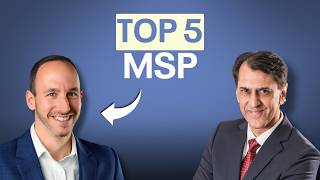
Steve Fratkin, CEO of Antiva, grew his MSP to $175 million in revenue partly through LinkedIn thought leadership. He credits a monthly two-hour "rap session" with his marketing leader that generates six to eight weeks of content, posting personal stories that drive measurable increases in marketing and sales qualified leads.
Chapters
We have built a company that grew people and technology simply accelerated that growth. I was getting inbound calls from 300-person companies that didn't need to be convinced of the value proposition.
I mean, to grow completely organically to $18 million, you don't just stumble into that. You have to be doing something right. When did you first start posting on LinkedIn and sharing your thought leadership content and what drove that decision?
We needed to do marketing to create brand recognition so that people who are on the buying journey heard of Antiva and knew how to reach out to us. You need to be involved in LinkedIn. You need to write your stories. You need to do this stuff.
Steve Fratkin has grown Entiva to $175 million in revenue and 800 employees. It's one of the largest managed service providers in the United States. In this episode, he shares his executive communication strategy to build trust, pipeline, and culture. You'll see why the authentic stories leaders tell about encryption breaches, about being a hugger, and about not having all the answers matter more than polished corporate messaging. This is Executive Signal. Steven, welcome to the podcast.
Great to be here. Thank you.
Let's start with your origin story. How did you accidentally land your first IT client in high school? And how did that moment shape Antiva's journey?
Yeah, so it was actually middle school, believe it or not. And frankly, girls weren't paying attention to me. Classes were very boring. And I found myself skipping out on those classes quite often and spending time across the street street at a CompUSA. Uh, one day I went on my normal routine of doing that and happened to be wearing a red shirt, and I was mistaken as an employee by one of the customers. Uh, and, and he actually became, uh, my first paid customer, uh, back almost 30 years ago at this point.
Wow. Okay. And then that led to more contracts?
Yeah, so I actually first helped that gentleman set up a computer in his home office. It was actually quite extraordinary going over there, setting it up, working for 2 hours. I took the bus from my parents' house and, you know, I'll never forget getting a check for $75 for doing the very things that I loved. It was kind of mind-blowing. But by the time I got back to my parents' house, on the tape-based answering machine, if you can remember what those were like, there were already two other referrals from that person for residential computer support. What was really interesting, and I would say lucky, and by the way, my story has a lot of luck along the way, was that individual happened to be the CEO of a very large business, around 15,000 employees at the time. And the referrals that I was getting from him to help on a residential level were also business owners in the DC metro area. So while for the next really 4 or 5 years, most of that business was residential computer support, it was doing it for individuals who were involved in businesses and were ultimately decision makers in those businesses.
Now, it's interesting you say that. I mean, that started in middle school, so you're not even out of high school at this point when you're getting this kind of business, I presume you had some time to do homework because you had to graduate, right? And then you went on to the University of Maryland. Also, I'm also a Terp. And so, so tell me about that. How did, how did running a business work when you're starting college? Because it's a big change.
Yeah. Well, first through the middle school, high school journey, you know, big credit to the leadership of the school at that time. You know, full disclosure, full transparency. The first few times I did this and spent my time at the CompUSA instead of class, the school didn't know about it. But eventually I got caught. And when I got caught, the dean sat down with me, looked at my grades and said, you know, what you're doing doesn't make sense. You're not keeping up your grades. But if you're really interested in this other stuff, you bring your grades up to A's and B's and we'll turn the other cheek and we'll let you do it. And so for the next quarter, I really focused on the schoolwork, took the challenge, accepted it, accomplished that goal. And then really from that day forward, getting the classwork done, getting the good grades, making sure the homework done was all a means to an end. It was all to support me doing what I was actually passionate about. And it was amazing. I doubt it would happen in this day and age, but at the time, the leadership at the school was really able to challenge me in that and then support me in doing that. So, so really it was a delicate balancing act of, you know, completing the work I had to, to, to get what I needed to get done at school and then spend my time really doing what I loved, which didn't feel like work. you know, working with computers, building them, setting them up with people, so on and so forth. Um, you know, fast forward into college. At that point, I had already started to pick up commercial clients. At this point, most of them were recurring revenue. Uh, a lot were in the mortgage and real estate and title industry at the time. This was right as, uh, more and more of those types of companies were, were being created left and right as a, as a bubble was being created, if you will. And, you know, my time in college was not that dissimilar from my time in middle school and high school insofar as I was going for occasional classes, exams, but not really for the overall social experience or frankly for as much engagement as I could have had otherwise, right? Like I was just going to get done what I needed to do. No regrets on that, but that was my experience. So, even when I went to the Smith School of Business at the University of Maryland, I was commuting back and forth every day to Tyson's Corner where I had my first office at the time.
Oh, so you had an office already?
Yeah.
Wow, that's a pretty busy college career, I would say.
Yeah.
Yeah. Okay. Well, so you grew it after you graduated, you grew it. By 2015, you're already at $18 million. And was that predominantly through referrals or other channels, actual marketing that people are paying for?
Yeah. So through 2015, we grew exclusively by word of mouth and referral. We didn't have salespeople. We didn't have marketing yet. And it was kind of an amazing business insofar as the customers that we earned the trust of stayed with us. It was very much a recurring revenue business. And, you know, even till today, it's our business to lose once we start supporting them. So if we're doing something wrong, then we lose it. But if we continue to maintain that relationship, be the trusted advisor, be responsive, do the work well, we're a part of that company that we're working for, hopefully in perpetuity. So, so up until that point, we really had no sales and marketing.
Okay. And at that point, you— everything changed. You got private equity and you use that as a mechanism to start growing. So what decision led up to that?
Yeah. So to, to go backwards just a little bit from about let's just call it mid-'90s all the way till 2015, the business grew organically, word of mouth and referral. And what I'll say is unintentionally, right? Just did good work. More and more opportunities came because of that work. And I was never really intentional about which ones to take, which ones not to take. It just all came. Kept happening. And it wasn't until really early 2015 where I realized that we had grown to a point where I couldn't keep my finger on the pulse of everything that was going on any longer. And I needed to make a decision of, hey, you know, do I shrink to 40 team members, move to K Street in Washington, D.C., and support law firms in a 3-block radius? I can keep my finger on the pulse of everything. And it would be a lot simpler, or do I really continue growing? And, you know, at the time, I'd say maybe we had 80 team members, and it was the first time we really had to be intentional about putting managers in different roles. And we were successful about doing that and taking folks that had been with us for a while and putting them into those positions. But what I would say is once they were in those positions, the energy was just a little bit different in the company. Stuff got done, the trains were running on time, clients were happy, team members were happy. But before, I'd say people were running through walls either because they were following me or because I asked them to. And now it felt more like a 9 to 5. And I didn't like that. It just wasn't— it wasn't working for me. So I spent a few days just thinking about if money were off the table, What happened over the last about 20 years that really motivated me to work 7 days a week, 16 hours a day, and be so connected to what we were doing here and have so much just energy? And I kept coming back to 2 consistent experiences. The first was— it happened maybe, I don't know, 30%, 40% of the time. I'd be at a local networking or philanthropic event. I'd have a a name tag on that said Steve Antiva. I'd be at the bar getting a drink and I'd see a client's name and I'd say, oh, hi, I'm Steve. I'm with Antiva. And I'd hear a response from them that would sound something like, oh, we know Antiva. We work with Antiva. Ever since we started working with Antiva, our technology has just worked so we could focus on growing our business. And those words would just like hit me and give me a tremendous amount of energy that would carry me through the next 2 weeks.
Mm-hmm.
What would happen even more often though, is with new team members. And I would meet at the time, every new team member we had between 3 and 6 months of them starting for coffee or lunch. And those very consistently, I'd say like 90% of the time, they opened up the same way with the colleague I was talking to. And it would sound something like, in the 90 to 180 days I've been here, I've learned and grown more than I have in my prior job and/or formal education. And when I heard that, it was like you could attach me to a, you know, a gas pump, fill me up, and I had enough energy to go again, like another 2 weeks. And what I had learned through those experiences is we had built a company that grew people, and technology simply accelerated that growth. And that was what gave me my energy and my reward. So when it came time to you know, what would come next, what would we invest in, would we bring in private equity, did we want to grow, did we want to shrink? I went back to that growing people using technology as an accelerator. And if we're going to do that and we're going to make positive impact on others, then we ourselves needed to grow the company. And that's when I started to look for private equity. And there's, of course, more to this story. I don't think that's why we're here today, so we could spend some more time on it another day. But like kind of just skipping through it all, at the end of the day, once we realized what we wanted to do and that we were different from many of the other folks that did it, we really wanted to focus on making a few strategic investments. The first was around automation, right? So if you can imagine, we are a company that exists to grow people, but the core function that we provide of keeping technology up and running was effectively becoming commoditized every day. So we wanted to automate as much of the keep stuff up and running part of the business as possible so we could elevate the technical talent to do that which only they could do, helping our clients use technology to grow, which in turn would grow them. The second area of investment, which I think is near and dear to your heart, was around organic sales and marketing. And the idea there was at the time, we really didn't have any of that. It was only our circle of referrals that led to our continued growth, which was quite awesome, to be frank.
I mean, to grow like completely organically to $18 million, you don't just stumble into that. You have to be doing something right.
Yeah. So, no, we, again, like we, there was, we were very lucky. We definitely were doing quite a few things right. And, you know, it became, well, okay, everybody needs what we do. We know that. In fact, in 2005, I had to convince 100-employee companies to outsource their IT, convince them why it was of value, what could be considered and what could be done that way that wouldn't be able to be done if you had an internal team. And in 2015, I was getting inbound calls from 300-person companies that didn't need to be convinced of the value proposition. They were calling though, because frankly, they knew that they could get more for less. So, so in that specific scenario, what I knew we needed to do was we needed to do marketing to create brand recognition so that people who are on the buying journey heard of Antiva and knew how to reach out to us. And then we needed to invest in, uh, sales reps or what we call solutions consultants to qualify and close the right opportunities. So that was the second area of investment. And then the third, which I'll kind of jump through quickly, was really around executing strategic mergers and acquisitions. At the time, there was companies like Mindshift and All Covered that were already doing this, but they were really doing it with an exclusive financial objective. And we, we had, obviously we wanted to win financially as well, but there was more of a, an impact that we wanted to make on people and really help with this growth concept. So we, understanding that it was different, we wanted to be a consolidator instead of being the consolidated. So when I looked for private equity support, it was really to support us in making those 3 investments. Not just financially, but ideally, you know, for me, if they had any experience they could bring to the table to how to do it right, to make sure that we avoided as many mistakes as possible.
Thanks for sharing that, especially about the human element that you found so rewarding, not just from talking to clients who are using you and had heard about your brand name, but also from your new staff members that really helped energize you to just kind of keep going. Uh, and you've since taken with the private equity, since taken Antiva from, uh, $18 million to now $175 million, 800 employees. When did you first start posting on LinkedIn and sharing your thought leadership content and what drove that decision?
So, so what drove it is different than why it continues today. So I'd say, okay. Um, in, in our journey, It wasn't until our— and I think we had different folks in marketing first, but like I'll credit Holly Dowden as our first real strong leader of marketing. And she had come in and she's obviously focused on campaigns and all the things we need to do internally and externally. And she's constantly pushing me and she's saying, you really need to post on social media. You need to be involved in LinkedIn. You need to write your stories. You need to do this stuff. And I'm like, Holly, I got too much stuff going on. Like, like, I don't want to put time or energy into this. She's like, no, no, no. Like, it really matters. You need to do it. And so I would say at this point, maybe it was 6 years ago that I started to do this. And again, it was really Holly that was pushing me. And so I agreed. And like, she needed to almost be by my side the first few times and hold me accountable for doing it because it just wasn't high on my list of things that I wanted to do.
Yeah.
And some magic happened probably a year into that process, which is it became extremely cathartic to me. So the stuff that I write about, think about, both as it relates to technology and leadership and just, just really human, I'll just say humanity. It became kind of a journaling outlet for me to share what's on my mind. And frankly, you know, going back to the why behind Intiva of growing people using technology as the accelerator, that I was getting that fulfillment from the impact that I was making by telling some of my stories. And it had nothing to do with me and my own ego. It was more about how people could relate to these things, how they didn't hear them said this way, how they connected with it. How it improved their own growth journey or their personal journey. And I'm starting to get notes and feedback on that from those folks. And it's been incredibly rewarding to me. Plus, it's just been a great outlet for me to get my thoughts out there.
You know, it makes you so human as a CEO. A lot of people feel that, you know, somebody who's running an 800-person company may not be as accessible, but you really are. You respond to comments. And, you know, I look at some of your posts and You never talk about all these— well, you mentioned, you know, some of the achievements that you're having with the company, but a lot of them are just very human-to-human connections. Saw a post that you just had this week, I think it was this morning, where you posted about having an AI weekend with your family. So relatable in this time. And I think that people are already engaging with that type of content. Is there a certain type of material that you post that you find either is very rewarding for you or resonates most with other people?
For me, the most rewarding content is the— it's the experiences that I've had that if I had earlier in life, I think I would have had more positive impact. If that makes sense. So anytime I can find those and share them, and, and have— even if it impacts one person, I feel like I've, uh, given back in a very material way. So that makes me feel great. Um, in terms of— so that's for me, you know, in terms of what gets the most I don't know, the most reactions, the most views from others.
Engagement. Yeah.
It tends to be those personal stories with any, like, either without image or with image that's personal. That tends to yield the most engagement. But like, you know, in my own strategy, I don't force that, right? Like, when those stories are real and I can share them, I do it. When they're not, I don't. And obviously through all of it, I also want to impart some education around, you know, what are the latest trends in technology and how businesses and individuals can be using them to help themselves be more efficient and successful.
I know one of the traps that many CEOs find themselves in, well, many of them don't share content online. Wide variety of reasons. I think the time feeling is oftentimes one of the big ones. The other thing is they're not sure what to say, and you often find people reposting either their own company's content or some other information. And I know that that's something that, you know, it's great to do every once in a while. And I've noticed on your LinkedIn post, you only do that occasionally when there's some big news announcement, but most of your content is really it just feels very personal. So, is that intentional or, you know, is there a strategy behind it or is it just something that you just kind of do naturally at this point?
You know, at this point, I would say it's just natural and it's habit. You know, just while, of course, I'm proud of Intiva and everything Intiva is focused on, You know, I'm not, I'm not just, I'm not just acting as a repeat channel for what our team is putting out there. You know, I do believe that, that if, if there is an audience that's interested in that which Antiva is putting out, they're already getting that. And, you know, short of an occasional share of big news or something exciting, um, I, I, I don't I don't feel that me repeating that is really adding a tremendous amount of value. If you went back to before 6 years ago, I would say that's only what I did, right? And TiVo would say something or there would be something about the company and I would say it or TiVo would say it and I would share it. And it was very, you know, tactical, not very deep on a social emotional level.
Yeah. Do you, when you do post now, do you lean more into just those personal stories, company stories? And do you encourage your team members to also get online and start sharing information too?
Yes. So in terms of what I'm doing, it's really what just speaks to me, right? So there's obviously been a lot around generative AI and what that means for people. And, you know, sometimes that could relate back to Intiva's AI and digital transformation practice area. And for small and mid-sized businesses that are looking to improve efficiency or start to leverage the toolset, you know, here are some examples of what we're doing and let's work together. Other times, just like what you called out this morning, It's more about sharing what we're doing in my household to help our kids be good stewards of AI and know what it is and what it isn't. So really, it's just, for me, it just has become a conduit to share what's most important at any given moment. In terms of our team members, Holly, God bless her soul, has been encouraging them and I've obviously been supporting that encouragement. But for the most part, they're still in the routines of, you know, maybe HubSpot is linked to their accounts and automatically shares out things that come across the Intiva channel or our marketing team will help them create some content to get them started. But we have some that that are doing it and do have it be personal. And we absolutely encourage that to occur. And we have others that we've encouraged it for and it just has not made it high on their priority list. And so the marketing team supports them with that.
Okay. So a lot of executives who are listening might be thinking, well, how long does all of this take? So Steve, when you think about the amount of time that you put into this and when you put into it? Do you write in the evenings, weekends? Is there a set schedule? How did you develop that habit and how long does it take?
Yeah. Well, so from an intentionality perspective, I would say once a month for 2 hours, I'll sit down and I'll do like a rap session, if you will, with Holly or another colleague just to talk about some ideas that I've had. And by the way, through the course of the month, I might just jot down notes and ideas that will trigger back to the discussion. And then we'll talk about them. Do they make sense? Do they not? And that'll lead to some drafts. And then typically through those sessions, we'll write out 6 to 8 weeks of content and then kind of put them in queue. So like as it sits right now, I've got content written through October. And sometimes I have to reorder that content, like, depending on what's most topical. But I'll spend about 2 hours a month and it'll usually get me 6 weeks of content that I could schedule out. Separate. Yeah. Yeah.
No, I was going to say that's actually a reasonable amount of time. It's not like it's just this major time sink that people think, oh my gosh, I got every single day, got to sit down and start writing, which makes it feel overwhelming. And thankfully, that's not the way most people do it. So that's good to know.
Yeah, it really— and for me, again, the writing is cathartic. That may not be the case for everyone else. And not to go back to that original story, but to my middle school, high school, right? Like, a shout out to them. Uh, they really taught me how to write and how to critically think. And by the time I went to the— to college, like, writing massive essays and papers would take me hours when it took, uh, you know, other students sometimes weeks. And so like, I'm blessed with the ability to get those words out. And so, and frankly, you know, again, I credit Holly. She's great at understanding what I'm trying to say and she can quickly give me feedback or even help me draft ideas that I didn't draft myself based on conversations. So she's, she's been great from that perspective. Separate from that, as stuff just comes up, and it does. Like last weekend, I was with my twins and we were— it was super early in the morning and we walked to a coffee shop and there happened to be a soldier uniformed in front of us. And so we, you know, we bought him coffee and we thanked him for his bravery. And that soldier turned around to me and the twins and was very grateful, like this was the kindest thing, but was incredibly grateful for the intent of our statement and the coffee. But he said, you know, courage is different from bravery. Bravery just happens, right? Like you, you know, regardless of the consequence of the action, you're doing it and you're doing it just without thinking. Courage requires you to think first, know the risks, and then take that step anyway. And that just stuck with me. And so once I got home and I was trying to talk to the twins about— they're very young, so I'm not sure they processed all of it. But like, then I was like, huh, that was a really amazing experience. And I'd like to share that, what that soldier taught me. So just in that moment, I went ahead and I wrote out a draft. And posted it, right? So, like, that happens all the time.
Yeah, I'm so glad you shared that because I remember that post, and what a human connection that that post made with a lot of people. I think that ties back to your whole theme of being relatable, being, you know, connecting with people and sending messages to them. And obviously, that story that you just shared connects very deeply with how how we run companies as well, very appropriate for not just LinkedIn, but for other places. So let me pivot a little bit and talk about other channels that you use for communications. Now, as big a company as you have, you have other marketing techniques, strategies that you use, perhaps some traditional ways of driving sales. How does your executive-led thought leadership tie into that? Is there any correlation, or is it one of those situations where, as the old saying goes, I know 50% of my marketing works, I just don't know which 50%. Where does this land with you?
Yeah, so real meaningful content is so, so, so, so important. Like, and just being able, like, if we just separate the ROI for a moment, right? Our job, and I've said this from when we were 1, 2 employees to today, like we are the trusted advisor to our client, just like a doctor, a lawyer, or an accountant. We need to be having meaningful relationships with the clients. We need to be in the communities that, that they're in, and we need to be trusted at a just, just as an advisor to them. So to take what we know and make it consumable and understandable is our duty, right? If we exist to grow people and technology is the accelerator of that, we need to create and share meaningful content, even if it hurts our competitive differentiation because that's what we're about as a company. So for me, encouraging our team members to do this, create that meaningful content, and then obviously use it for our campaigns on social media, on our website, for SEO and GEO, and also use it for the, frankly, for what our sales reps and business development reps are doing on the ground. Is super meaningful. So everything we create always gets used in more than one area. And rarely, rarely do we regret spending the time to create it in the first place. So even in the worst case scenarios, if it didn't get much external traction, it's supporting our internal team in better understanding what we're doing and how that can be used to support a client in their own growth objectives.
You'd mentioned that even if it doesn't make an impact relating to your competitors, could you dive into what you mean by that?
So I think what I was saying about the competitor, like some of the thought leadership we share takes away or could take away our competitive advantage, right? So if we're sharing our playbook on how we're helping our clients use data lakes, uh, to put their, uh, their, their information in a safe, secure container and allow generative AI to look at it and, and present trends and other information, we might be telling our competition what they haven't realized they need to do for their customers. Customers yet. And we're willing to take that risk, right? Like a rising tide lifts all boats. And for us, when I say we exist to grow people and technology is that accelerator, we exist to grow our clients, we exist to grow our team, we even exist to grow our competitors as well.
You know, I appreciate you saying that because I've always found that to be the case as well, is you share as much as you can. And you don't really hold anything back. If you want to share how you do something, we just go ahead and openly share it. And I found throughout my career as well that the more you do that, the more people see you as the expert. And oftentimes they'll, even if they try to do it themselves following your checklist or step-by-step playbook, they may stumble and come back to you and hire you for that role. Right.
And that's okay. Right. Like that, all of that, like I've just I've become more and more comfortable with it. And, you know, at the end of the day, we, we want to live our values, communicate those externally, and, you know, accept all the good and the challenges that come with it.
Let me shift now to metrics. Oftentimes CEOs will look at any kind of use of their time to see what kind of result they may get as an outcome of it. You're putting about 2 hours a month into creating your LinkedIn content and your team is doing other content, what kind of metrics do you track that you find to be the most meaningful?
So we got it. Let me just put aside my content for a minute and go back to what, what the rest of what we're doing, right? So, so our marketing team and everything else that's focused on our company content, really what we're tracking there is, is MQLs and SQLs, right? Marketing qualified leads, sales qualified leads. We have found that creating good content puts eyeballs in the places that we want them to go. And then through the use of lots of different tools, whether it's HubSpot or Sixth Sense or others, we're able to see what happens with that in the buyer journey. When do they look? How do they come back? And frankly, I know it's a little creepy, but if they're looking at a specific piece of content, how do we then send more of what they're interested in to them automatically instead of putting them in the pool of the broader content that we have. So all of that is tracked. And, you know, I should know this, and I don't want to put you in the background and start digging through my emails, but even last week, our marketing leader shot a note out to our team and attributed that in the last quarter, the marketing qualified leads went up almost threefold. And then that contributed to more than $100,000 of monthly recurring revenue that got closed from truly marketing efforts, meaning we had no other connection to these people in any other way.
And that's what kind of content was that that generated that lift?
Yeah, you know, it ran the gamut. So, you know, there's not a specific thing that did it. And, you know, you asked how long. This is years and years of work that are getting us to where we are today. And by the way, what we've done to get us today could be different tomorrow. And we're seeing a tremendous amount of that change as people are using more generative AI to do their searches versus traditional web browsing with SEO. So we're seeing that happen now. But I think the big picture here is, Just be consistent, keep going, be willing to put in the time, and of course track those MQLs and SQLs and where you're seeing them be effective. Keep putting more fuel on the fire, but also recognize that what was effective last month may not be effective next month, and that's okay. It doesn't mean you've done anything wrong. In fact, if you can measure that and then pivot, then you're doing the right thing.
One of the things that many executives find works well, companies find works well, is storytelling. Do you incorporate B2B business-to-business storytelling inside your, not just your posts online, but also throughout the other content that your team is creating?
Look, not always, but anytime we can storytell, we do. And it's because things are relatable that way, right? So, you know, telling the story of the 14-location, $100 million medical provider that didn't want to spend $30 per laptop to encrypt the device with us because, quote, "That's what insurance was for." After they were down for 3 weeks of reputational damage, had to spend an insurance copay that far exceeded that of the 30 times 150 devices that they had. It's kind of a, it's a real-world scenario that people could relate to and have probably even heard their colleagues or leadership team members say and go, hmm, okay, you know, ounce of prevention, it can go a long way here. And so telling those stories versus saying, 'Oh, encrypt your device at $30 per user per month,' or '30 per user period,' uh, lands a little bit differently.
Yeah, I, you know, it's, uh, the way I look at storytelling is when people hear it, they either want to say, 'I want that to be my story,' or, 'I don't want that to be my story.' And both of them work. Both of them work.
They do. And from a, from a personal perspective, and again, Everything I do personally ultimately does go back to the Antiva brand. So it does drive eyeballs to Antiva. But from a personal storytelling perspective, I see exactly what you just described as well. And it gives me just— it gives me fulfillment and joy to see that happen. So, you know, some of the personal stories that I share, some of the more vulnerable stories, when I hear someone go, oh my God, that happened to me too. I thought I was alone. Right? It's unbelievable. And for myself, knowing I'm not alone and hearing from others that it's actually more normal than we all expect is— it's, again, it creates meaningful human connection that matters so much. And Look, I don't want to negatively harm Antivo or its brand in any way. It's a phenomenal company. We do great work. And I'm a little disgusted by the things that we enable, right? So if I could go back in time 20 years and make the mobile device, the smartphone disappear and never come to fruition, I would. Because I think the smartphone, while it's created connection for work and other things, it's removed human connection. It's made it so people aren't present with one another. And it makes me sad. So for me, while we're enabling technology that does a lot of good, it's also done a lot of harm. So when I bring these stories up, I'm trying to put back more human connection in a world that is severely lacking it.
You know, your, your comment just triggered a memory of another post you had where you mentioned that you're a hugger. And I can relate to that because I'm a hugger too. And you hesitated when you met one of your colleagues because you hadn't had that human-to-human connection. And then as you talked about it, that's when everything kind of got like, I guess, okay, we're both huggers kind of thing, right?
And that post, you know, it's interesting. What you see online is like an iceberg, right? Like the amount of communication that comes from people texting or emailing or doing a direct message is oftentimes 10 or 15 times more than what you see publicly. And, you know, you hear all the time how people can relate to that and how they don't know how to— they didn't know how to ask. And, and heck, you know, they're going to now. And how many people shared that same experience that I put out there? It was kind of shocking. Yeah.
Yeah. Stephen, there's one other part of online communications and messaging that goes not just to the heart of growing a company in terms of new clients, but it's staff, it's culture. How have your posts online affected your company culture and your ability to attract really strong talent? I mean, you're leading 800 people now. You need to have the right people in the right seats.
Yeah. Look, so getting the right people in the right seats is a— I mean, for all the people that are listening to this, I'm sure you know how hard that is and how your job is never done. In fact, now being a private equity-backed CEO for more than a decade, I realize that the function of a CEO is to— like, number one function is to figure out who those right people are and make them successful. And then also recognize that the right people for a period of time changes over time, right? And you have to be able to see that and have, you know, what I would say is the carefrontational conversations around when that has to adjust. So it's, to me, all of what we share out there allows people inside of the company, especially who come through acquisition, and external who are prospective employees or prospective acquisition targets, get a chance to see whether or not there's cultural alignment, which is so, so hard to really understand until you're in it. So it kind of allows for a preview. As does looking at other people's content. So like, we'll look at what prospective team members put out there. We'll look at our prospective acquisition targets and see how they've been communicating online and what their executives or their owners are saying and really who they are. And it's not to catch them in anything. It's just to better understand if it's a good fit or not.
Mm-hmm. Does your online posting, whether it's through articles that you talk about or just your LinkedIn posts, does that have an impact on the type of leaders you're attracting? Do you have a correlation?
Yeah, I mean, I'm sure it does. What I could— you know, you asked me earlier, are people inside of the company doing this? And I can tell you that— or like writing their own unique content. I can tell you that, that from companies we've acquired that we've since integrated with that see what I've done and their legacy leaders have seen some of what I continue to do. They've started to do their own in a similar way, which I think is awesome, right? So I've loved seeing that develop and I'd love people to get into that habit. So yes, I mean, absolutely. I don't think I have the same data to support these feelings like I would a prospective customer where I know there's MQLs and SQLs to support it. And I'd be curious, you know, whether you have any experience on how to track that or how one might go about tracking that, you know, whether it's a field for prospective team members or acquisition targets, like what are best practices there?
That's a good question. What I've seen is it boils down to conversations and the more intelligent conversations and deeper conversations you're having with with people who I think could be either a part of your team or even, you know, clients. I think that's really what drives it. What I've seen, and in some of the other interviews on this podcast that some of our guests have seen, is that when they share deep thought leadership content, for example, educational content about the industry they're in or leadership styles, things like that, that may not generate as many likes or views, but oftentimes that content is what hones in on that specific person at that stage of their needs so well that they engage with the conversation. And that creates a lot of meaningful connections. So it's a hard metric to put data on. I know that— I know I have an engineering background. I love data. I love seeing how this connects to that dot. But sometimes it's a little bit of a gut feel. And so it's not like you can just drive everything by gut feel. You want data to back it up too. From what I've seen is that it does seem to make a very strong impact. Got 2 more questions for you as we start to close out here. Where do you see executive visibility and thought leadership going over the next 12 to 14, 24 months?
Look, I think it's more important now than ever, right? There's so much change happening in the world right now. You know, I guess we need to embrace it as the new normal. But as leaders, it's our responsibility to help guide people through this with as much clarity as possible. And I don't have answers to everything. In fact, I don't have answers to most things. But what I can do is share my thoughts on them. I can be open and vulnerable, and I can make commitments to share what I know as often as I do. You know, I have a good friend of mine that, that that will say ambiguity leads to anxiety and the only antidote is clarity. And we are in a very ambiguous time. And, you know, as leaders, it's our opportunity to rise up and help people who really do need someone to step up and guide them.
Very, very important notes there. Thanks for that. If someone, an executive, were listening to this and they weren't sure where to start, what's the one practical step that you would recommend they take this week to help them improve their online visibility with purpose?
Just take a moment to, to think through what in your day has been meaningful. And start to write them down. If you're not already, like, if I were to just pick a platform to start with, start with LinkedIn. You know, it's one of the strongest ones out there. And I think, you know, if that's all you do, that's going to be a great starting point. So I would say, you know, start using LinkedIn, start understanding from your own day-to-day, what are the common, like, themes that come up for you. And then look, as, as an executive, as a leader, as a business owner, you have extreme power insofar as you get to guide what's important to that company, and what they're about and what they're focused on. And so you can make that connect to what's important to you. And in fact, if you make that what's important to you, you're going to lead with more passion and more clarity, and you're going to attract people around you that have incredible alignment, that get to row in the same direction with you. And by the way, this is a— this could take a long time to get to, especially if in going through this exercise, it's different from that in how you are presenting in your company today. But getting clear with that in yourself and making that clear to others is incredible because you're going to start to go at your own natural rhythm. Like you're not fighting yourself to be a different thing or a different facade or keep up different narratives. You're just being you. And if you can align that with who you are as a person and who you are as a leader and what your business is doing, that's, that's the, that's the secret sauce.
That is the secret sauce. Stephen, it's all about authenticity. I love that. Thank you so much. Thanks for being a guest on Executive Signal. Appreciate it.
Pleasure. Glad to be here.
More from Raj

Consultants and Fractional Executives Are Landing Lucrative Deals With This System
He Grew His AI Startup From 0 to 2,300 Teams - The Content Strategy That Crushes