This AI Podcast Breakdown of MrBeast's Strategy is Insane
In this YouTube episode, the host demonstrates Google’s NotebookLM by uploading a leaked 36‑page MrBeast production guide and generating an AI‑driven audio conversation between two synthetic speakers. The AI‑generated podcast then walks listeners through the guide’s core principles, highlighting MrBeast’s obsessive focus on click‑through rate (CTR) and title/thumbnail phrasing, his data‑driven obsession with average view duration (AVD) and front‑loaded hooks, and the intangible “wow factor” that differentiates his brand. The discussion also covers his hiring philosophy—insisting on A‑players and zero tolerance for C‑players—along with concrete production tactics such as “video everything,” “say the negatives,” extreme ownership (“It’s Your Fault, Track the Contractor”), resourceful budgeting, and relentless persistence (“no doesn’t mean no”). The episode rounds out with reflections on the human side of the operation: treating contestants with respect, encouraging authentic on‑camera personalities, and maintaining an information diet that fuels creativity. Throughout, the AI‑generated dialogue blends conversational, enthusiastic tones with analytical insights, turning a leaked internal document into a masterclass on YouTube virality.
Chapters
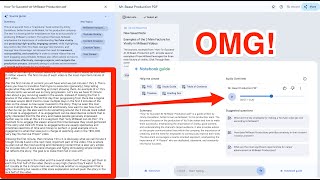
Today I'm testing out NotebookLM by Google. Now they just came out with a new update to this that adds audio. This is mind-blowing. Take a look. What I've done here is I uploaded a document. There's a new document came out a couple of days ago that is a leaked document about MrBeast's, basically an onboarding manual. And in it, he describes how he actually creates videos and key elements in the video. So I uploaded the documents, a 36-page PDF file. And when you click on it, I can actually create notes from the file. So I wanted to find out what are some of the most important pieces of it. And I can actually just ask Google's NotebookLM and it will come up with answers for me. So when you upload it, it'll also ask you if you want to create an audio version. So it takes a little while to do that, but it'll do that in the background. In the meantime, you can ask it questions. So here's what I— first thing I did is I asked it to summarize some of the key strategies that MrBeast talks about. And then I had it create another summary of best practices. And then I wanted to know what actually makes a video go viral, which he includes in his document. And he actually has several examples. And right here, it actually will tell you, for instance, instead of I spend 50 hours in my front yard, a more notable title would be I spent 50 hours in ketchup. And then he talks about it. All this is from his document. And Google will also show you where in the document. It's included. So that's all pretty wild to begin with. You can just upload all kinds of documents and ask it questions so you can learn faster. But the other thing that really blew my mind was this, and this is the audio version of it. This is two AI bots having a conversation.
All right, so get this. Ever wonder how MrBeast seems to just crack the code of YouTube virality?
Yeah.
Today's deep dive. It's like a masterclass.
Okay.
Straight from the source. Yeah. Right. We got our hands on like excerpts from an internal MrBeast production guide. Mm-hmm. And let me tell you, yeah, it is like getting a peek behind the wizard's curtain.
And what's fascinating is it's not like some polished, you know, corporate playbook or something.
Right.
It's raw. It's honest.
Yeah.
It really throws some of that conventional wisdom out the window, you know?
Seriously, you'd think a guy giving away millions would have this whole high-quality production thing down pat.
Right.
But it's way more focused on what actually works on YouTube, even if it's like a little messy.
Yeah. This is where understanding the platform's DNA is crucial, right? See, he's not trying to win any like traditional media awards here.
Right.
He's laser focused on one thing.
Yeah.
YouTube success. And that means playing by YouTube's rules.
Which makes sense, 'cause like you wouldn't use a basketball playbook for a soccer game.
Exactly.
You gotta know the field. And for YouTube, that's clicks, watch time, all those things that make the algorithm happy.
And that brings us to one of the first big surprises, honestly, from this guy.
Okay.
MrBeast. He is obsessed with something called click-through rate.
Okay.
Or CTR.
CTR. Got it.
Basically how enticing your video's title and thumbnail are, especially to viewers who are scrolling through a sea of content, right? What?
Yeah, I saw that part. He had this whole thing about how even a tiny tweak can make a huge difference in how many people click. Like, I spent 50 hours in my front yard versus I spent 50 hours braiding ketchup.
Right.
Both could be wild videos, but which one makes you stop and stare?
Exactly. And the ketchup one, that's instantly more clickable, right?
Yeah.
More visually intriguing. Yeah. And that's before you even get to the title itself.
Right.
He talks about how important it is to really juice it up with the right phrasing.
Okay.
So instead of, I don't like bananas, it's like bananas are the worst food on earth.
Right. Way more extreme, way more likely to make someone stop scrolling.
Exactly.
Yeah.
And that's what it's all about. Grabbing attention in those crucial first few seconds.
Mm-hmm.
Because if people don't click, they don't watch.
Simple as that. But here's the thing that really blew my mind. Yeah. He doesn't care how many hours you work.
It's in the guide, plain as day.
Click.
The amount of time you put in is totally irrelevant to him.
Wow.
It's about efficiency.
Okay.
Making smart decisions under pressure.
Right.
It's about results.
So it's not about pulling all-nighters?
Nope.
It's about working smarter, not harder.
Precisely. Okay. And this emphasis on efficiency ties into his obsession with what he calls A-players.
Oh yeah. He's serious about that.
Oh yeah.
He is looking for the best of the best.
Absolutely.
Those people who are, you know, obsessed, coachable.
Mm-hmm.
Constantly learning from their mistakes.
And he is very upfront about it.
Right.
There's a line in the guide that says, uh, A-players are obsessive, learn from mistakes, coachable, intelligent, don't make excuses, believe in YouTube, see the value of this company, and are the best in the goddamn world at their job.
Wow.
Yeah.
He doesn't mince words, does he?
No, he doesn't.
So he's clearly built a team that thrives in this, like high-pressure, results-driven environment.
For sure.
But there's also a flip side to that, right?
Yeah.
He talks about having zero tolerance for C players.
Right.
It's a very data-driven approach. Right. Which we'll dive into more in a bit.
Okay.
He's quick to recognize who's not a good fit and make changes accordingly.
Right. Yeah. Okay. So we've talked about the importance of grabbing attention with a killer CTR.
Right.
But what happens once someone actually clicks on your video.
That's where MrBeast's obsession with average view duration comes in.
Okay.
Or AVD.
Right. AVD. It sounds kind of technical, but it's basically just how long on average people are actually sticking around to watch your stuff. Right.
And it's absolutely crucial on YouTube. Right. Think about it. The algorithm loves it when people watch a video all the way through, or at least a significant chunk of it.
Right.
It's a sign of engagement, a sign that you're creating content people actually want to consume.
Which makes total sense.
Yeah.
But the lengths. MrBeast goes to optimize for AVD is wild. He was analyzing viewer drop-off almost by the second.
Oh yeah.
He's got graphs and charts and everything.
He's obsessed with understanding the flow of a video.
Okay.
How people's attention naturally fluctuates.
Right.
And he's found that the first minute is absolutely crucial.
Oh, really?
Lose people there.
Yeah.
And you've essentially lost them for good.
Which explains why he's always hammering on the importance of those front-loaded hooks. Gotta grab attention right outta the gate.
Exactly. You need to give people a reason to stay glued to their screens, especially in those early moments.
Yeah.
And then around that 3-minute mark, yeah, bam, hit 'em with a re-engagement point.
You mean like something completely unexpected? Yeah. To like pique their interest again.
Exactly.
Got an example of that?
Oh, he's got tons.
Okay.
Remember that, uh, $10,000 Every Day You Survive prison video?
Yeah.
The part where he puts Carl in charge of guarding Josh.
Oh man, that was hilarious. Carl trying to be all tough. Stuff and failing miserably, I was dying.
Exactly. It's a moment that's both unexpected and hilarious, perfectly timed to recapture anyone who might be drifting off.
Yeah.
And that's the genius of it.
Right.
MrBeast understands that keeping people engaged is about strategically creating these peaks and valleys of excitement.
It's like he's playing 4D chess with our attention spans. He even said that back half content isn't as critical for retention. Which is kind of wild when you think about it.
Right. You'd think every second would matter equally.
Right.
But he understands that strategically distributing those high engagement moments throughout a video actually keeps people hooked for longer overall.
So we've got CTR to get people in the door.
Right.
We got AVG to keep them glued to their screens.
Keep them engaged.
And then there's this whole other level he talks about.
Yeah.
The wow factor.
This is where MrBeast goes beyond just data and algorithms.
Okay.
And taps into something more intangible.
Right.
Yeah. Something truly unique to his brand.
It's like, yeah, anyone can do a 100 Days in a Circle video.
Right.
But only MrBeast is gonna airlift a whole house in with a crane 30 seconds in.
Precisely.
Mm-hmm.
It's about creating a spectacle.
Mm-hmm.
A sense of anything can happen energy that you just can't replicate with better cameras or snappier editing.
And that, my friends, is how you build a brand that stands out from the crowd.
Absolutely.
It's about pushing the boundaries, pushing the boundaries, taking risks and giving people something they've never seen before.
And he owns it completely.
Best year ever.
He even says in the guide, uh, anytime we do something that no other creator can do that separates us in their mind and makes our videos more special to them. You can't track the wow factor, but I can describe it. Anything that no other YouTuber can do.
So it's not just about the numbers.
Yeah.
It's about that intangible element of It's that surprise and wonder that keeps people coming back for more.
For sure.
But enough about the theory.
Yeah.
Let's get into the nitty gritty of how MrBeast actually brings these ideas to life. 'Cause this document, it's full of these like ninja production tactics.
Oh yeah.
And trust me, some of them will really surprise you. This document, man, it's like a masterclass in unconventional thinking. For example, right? MrBeast is all about this idea of video everything.
Oh yeah.
At first I thought, okay, sure. Document the process, but he takes it to like a whole other level.
Yeah. It's not just for record keeping.
Right.
It's about fostering a culture of like clear visual communication.
Okay.
Need to explain a location to like 10 different people?
Yeah.
Don't waste time with these long emails or phone calls.
Right.
Just send them a video.
So smart. Like a picture's worth a thousand words, but a video, that's gotta be like A million?
Exactly. Especially with, you know, remote work and stuff becoming more and more common, this kind of asynchronous visual communication can be a game changer for teams.
It's like he's thinking 10 steps ahead. And speaking of thinking ahead, this next one kind of blew my mind. Say the negatives. He actually wants people to point out potential problems before they even happen.
It's brilliant when you think about it.
Okay.
Instead of sugarcoating things, he encourages this like radical honesty, right? That forces everyone to think critically and, you know, proactively problem solve.
So it's like instead of saying, yeah, yeah, this location is perfect, you're saying, okay, but here's why this might be a terrible idea.
Exactly. And that leads to better solutions, stronger plans, ultimately a more efficient and effective production process.
Which brings us to my personal favorite, It's Your Fault, Track the Contractor. Sounds kind of harsh, right?
Yeah.
But then you realize it's all about taking extreme ownership, you know?
And he's not afraid to delegate.
Right.
But he also understands that accountability lies with the person who's ultimately responsible for the project.
Yeah.
It's a no excuses mentality and it applies to everyone, including himself.
It's actually quite refreshing, you know, to see that. And this like no nonsense approach extends to his views on money too. Oh yeah. He's all about being resourceful and creative instead of just throwing money at problems.
Remember that example he gave about offering someone a year's supply of Doritos versus a $20,000 prize?
So good. Who needs cash when you can have a year's worth of cheesy goodness, right?
Right. It's about finding creative solutions that maximize impact without breaking the bank.
Totally.
And that ties into another one of his core principles. No doesn't mean no.
Rah! Yes, the Dollar Tree story. A perfect example of this. Persistence is key.
Absolutely. It's about not taking no for an answer, especially when you believe in something passionately.
Yeah.
And sometimes that persistence pays off in a big way, like when MrBeast convinced that Dollar Tree employee to let him buy a single dollar for $10,000.
Genius. But, you know, with all this talk about algorithms and production hacks, it's easy to forget there's a human element to all of this too.
Absolutely. And that's actually one of the things that surprised me most about this guide. It reveals a side of MrBeast that you don't always see in his videos.
Right. He talks about the importance of treating people with respect, even the contestants who are like random people off the street.
Right.
And he encourages the boys to be their authentic, goofy selves on camera, which, let's be honest, is a big part of their charm.
Totally.
He even admits that he doesn't always have all the answers.
It's true.
He actually encourages his team to come to him with like well-thought-out solutions, not just problems.
Right. And remember that example he gave about the Lamborghini?
Oh yeah.
Instead of asking what kind of car to get, right? He wants them to come to him with options.
Yeah.
Pros, cons, the whole nine yards.
It's about respecting his time, but it's also about empowering his team to be like proactive and think critically.
Exactly.
It's like he's saying, I trust you to figure it out. Just don't waste my time. Which is actually a great leadership lesson for anyone. But perhaps the most unexpected takeaway from this whole thing is the emphasis on information diet.
Ah, yes. The Chris Tyson cartoon principle.
Exactly. Who knew that Chris's love for cartoons was actually a strategic advantage?
It all comes down to the idea that you can't create compelling content in a vacuum.
Okay.
What you consume influences your output.
It makes you wonder. What are we all feeding our minds?
Right.
And how is that shaping the work we do, the stories we tell, the connections we make?
It's a powerful thought to end on. We've spent this whole deep dive dissecting MrBeast's process, his strategies, his secrets. But ultimately, I think the biggest takeaway is this: even at the top of his game, he's constantly seeking new knowledge, new inspiration, new ways to grow. If MrBeast, with all his success, is still this hungry to learn, What does that say about the rest of us?
That's a really good question. And one that I think we can all benefit from asking ourselves. So what are you waiting for? Go out there and discover something new today. You never know where that next bit of inspiration might come from.
Mind-blowing.
More from Raj

Consultants and Fractional Executives Are Landing Lucrative Deals With This System
He Grew His AI Startup From 0 to 2,300 Teams - The Content Strategy That Crushes