From 250 Territories to a Handful | Amir Toren, Biogal CEO

In this episode of "In the Room CEO Decisions," fractional CFO Raphael Benhamou interviews Amir Toren, the newly appointed CEO of Biogal, a 40‑year‑old veterinary diagnostics company owned by the Kibbutz Gal‑Ed. Toren explains how he immediately narrowed Biogal’s sales focus from roughly 250 territories to a core handful that generate about 70% of revenue, using a data‑driven funnel that considers sales volume, regulatory ease, and distributor strength. He discusses the internal pushback from regional managers and how the company reorganized those roles into a global sales squad, aligning incentives with overall company performance. Toren reflects on his first 90 days, emphasizing a five‑pillar framework (product, regulatory, marketing, IP, team) for building a healthy life‑science business. He describes the unique governance of a kibbutz‑owned firm, balancing long‑term strategic freedom with the need to navigate community politics and multiple stakeholder groups. A major growth initiative was the launch of a veterinary‑influencer partnership to break into the U.S. market, targeting key opinion leaders on social platforms; early engagement metrics showed increased visibility and opened distribution doors. Finally, Toren outlines the most pressing decision he faces: whether to invest in a new product line to counter rising low‑cost PCR competition and how to allocate R&D resources amid legacy product pressures. The conversation offers a candid look at trade‑offs, stakeholder management, and strategic prioritization in a legacy, community‑owned life‑science company.
Chapters
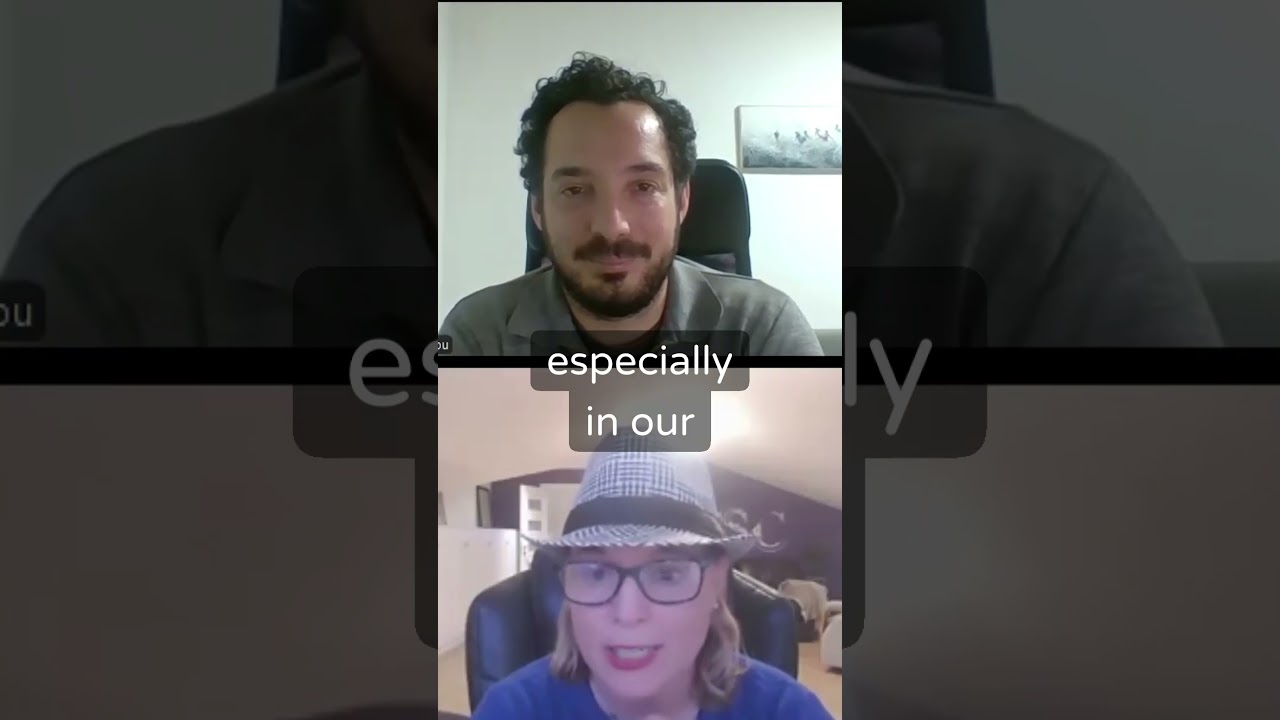
Welcome to In the Room CEO Decisions. I'm Raphael Benhamou, a fractional CFO working with founder-led companies at the inflection points. On this podcast, I talk to CEOs and founders around the defining strategy decisions behind their companies, not the polished version, but how they actually thought through the trade-offs when their stakes were, when the stakes were real. Today I'm joined by Amir Eftouhan, CEO of Biogun, a veterinary, uh, diagnostics company that sells into 100, uh, 250 Territories worldwide. Amir, welcome. Nice to meet you too. Can you give me in some minutes or two a quick run of what Biogal is doing and where you are today, and then we'll take it from there?
Biogal exists for 40 years. This is a company owned by Gal Ed, by a kibbutz. This the company is manufacturing and selling diagnostic kits for veterinary use all over the world. We have 2 lines of products. One is PCR-based and one is ELISA-based. One is to evaluate and to find the diseases, whether bacterial or viral, that the pets— usually the pets have. And the other one is for titer testing to evaluate the rate of immunization of these animals.
Fantastic. Thank you for this. So, a bit of context. You started, you joined the company relatively recently, and when you joined, you inherited a company that was selling into 250 territories. And one of the first moves that you made was to pull the budget from that and to focus on a handful of territories. Can you walk me through that decision? What gave you the confidence to cut sort of that marketing strategy or the marketing budget and to focus into a core number of strategies?
First of all, confidence is not the right word. It may be a decision based on some knowledge. But to be honest, I think that the answer is not cutting budget or relocating budget, but to see, to prioritize. Most of the territories are territories that we sell, you know, on a coincidence basis or just a handful of products or company or a veterinary that asks for the product. So at the beginning, we analyzed the territories that were prioritized based on level A, B, C, D, etc. And then we thought, listen, among all the territories, we have several, as you mentioned, handful that make a vast majority of our sales. Let's say something like 70% of the sales. So the idea was that we have limited resources, both personnel and investments. And to allocate these personnel into the most selling or the most promising territories was, I think, a logical move. So we had a sort of a funnel. First, the territories that sell, that have the higher amount of sales, then the territories where we have less regulatory pushback, and then the territories that the distributor is a good one or that we have good relations with. That was, I think, the logic behind this.
And did you get any pushback from anyone when you made that decision? Because from what I understood, you made the decision quite quickly when you joined Bygas. Did anyone push back? And so what were their arguments? If they did, what were their arguments?
I think the only pushback was— it's not a pushback, but, you know, eyes rolling or a little bit of difficulty receiving this decision. Always when I make a decision, I try to have an internal discussion, at least internal discussion, even depending on the move, but usually a board discussion, even a board discussion. The pushback or a little bit of hesitancy came from the internal team. So the people that had territory management over the titles, so they thought, okay, my territory is about to be cancelled and then what about my position, etc. But the move or the idea went from territory management to a team that is dealing with global sales and like a squad that you take from one place to another and you allocate the people per their tasks and per their demand and per the need. So that's when the pushback or the hesitancy was a little bit cancelled.
Okay, that's interesting then. So Apart from a restructuring of the marketing efforts, it sounds like you also had a bit of a reorganization of the company as well, in a sense, because you had to sort of move people around from different territories and you had to change the philosophy in a sense, really, of rather than each sort of individuals having territorial responsibilities, sort of working more as a global team. How did that transition work out? Did anyone resist against it? Did they like their approach? How did it go?
I think at the beginning, you know, the company for a long time had a Latin America territory manager that speaks Spanish, obviously. And then for other territories, people that are more concerned with the Far East or Japan, etc. But I think the idea was generally well accepted by the team because at the end of the day, they saw that we are working as a team, we are working better because it's not only if you sell better in Latin America, but the the global sales are dropping, then what's the purpose? But if we as a team are selling better than, and all the efforts are jointly targeted at the global sales, then it was really well accepted. I think the team, it's a small team again, but the team works very nicely together.
That's good to hear. And when you were making that decision, did you have any doubts? Did you set a timeline for yourself? Did you say, If it doesn't work out this way in the next X number of months, I'm going to have to rethink the strategy? Was there any contingency planning on your part?
Not really in this case. I mean, not in the territory. I didn't think it's such a drastic move. I mean, it's not like we changed the other territories' sales because the sales were opportunistic in many of these territories. I mean, if you take Malaysia or you take Indonesia or you take the Emirates, these sales— the Emirates maybe not, but in several of the territories, some of the distributors are ordering on an opportunistic base. So it's not like we've neglected or we didn't take really— we didn't take the sales as— these sales are let's say, for Grand. So it's not such a drastic move the way I saw it.
But then I'm just wondering about the regional managers then. If the sales are coming in sort of more or less opportunistically, why have the regional managers in the first place? What would they—
That's a good question. Yeah, that's a good question because this is the way the company was going. You know, territories, for example, China, as you know, as we previously discussed, China was a very large territory for the company. China was lost for us. So there was a person that was dealing with China, but not all the territories have regional managers, but the structure was that the company is dealing with regional managers for the marketing. We had to change, I had to change also the incentives because the incentives were based on sales and not specifically connected with the company's overall Interesting.
Yeah. Like I observed earlier, it sounds like it was more than just a sort of a sales marketing transition, but really a company-wide transformation that happened in many ways because that's still happening.
I hope.
Yeah. And presumably then, so this confidence that you had and it came from your prior experience, you've worked as a CEO in a couple of other companies before. So you've seen presumably some of this. In other cases, and so you you had that confidence because you'd done it before. Are there any things? Would you say that there are any things that you learned in say the first ninety days of of joining Bioguard that that weren't evident before that you you didn't think about checking into based on prior experience?
There were many things I've learned here in the company. Usually when when I join a company, I try to do my due diligence. Due diligence, unfortunately, in most of the cases is limited to the things that you learn when you're outside the company, the material they sent you, the people you talk with, the products, etc., etc. But there were many things that I tried to bring from my experience. Some of them, you know, are sort of genetically imprinted in me for the many years I'm in this business. But You know, the 5 foundations, it's not directly related to sales, but to build a viable and healthy company. In the domain of life science companies or medical device companies, there are 5 pillars. One is obviously the product you sell. Then there's the regulatory process. Then there's the marketing or who are you selling the product to? Then there's the IP behind the product and the team. So I try Usually to strengthen all these pillars independently, and then to see how they jointly connect into one direction and to the direction of increasing the sales of the company.
Interesting. And how would you say the governance in Baikal affected sort of ability to implement? You mentioned it's a kibbutz company, so I imagine it's slightly different from what you've seen before.
Yeah, first of all, the company is 40 years old, so it's not a new company. It has legacy, it has lots of history. And as you mentioned, this is owned by a kibbutz, and the kibbutz that is still living like a kibbutz, like, you know, the historical kibbutzes in the past. Yes, it has lots of effect, and you have to— I've learned, okay, I've learned that there are advantages and disadvantages. So first of all, the advantages are coming from the fact that you're not VC-backed, or you're not coming from a regular conventional company. And you don't have to specifically think— I'm saying it in quotes, but you don't have to specifically think about the next investment, or if you're pleasing the investors. This is more a long-term process. It's more like strategic players. So this is the advantages. The disadvantages are that some of the activities that you do are not merely strategic, but they have to do with the environment and the ecosystem. You have to think of the employees from the kibbutz, you have to think the implications that, you know, people are talking and gossiping about the company, although they're not really part of it. So there's not— there's a lot of additional things you have to think of and how to politically, politically position the moves that you're doing.
Right. The moves that you're doing or the changes that you're making, are there things that you, you had to make a decision that you had, that you could fix or that you had to leave alone? Coming in as a, as the new CEO into a 40-year company. So presumably, like you said, there are a lot of things that you you saw that you would like to fix or change. But how did you sort of— did you have to sort of essentially weigh up how you could or whether you could even change some things versus other things that you couldn't change at all based on sort of the culture and the governance style?
Some of the, you know, when I'm coming to the company, I'm trying— when I'm coming to a new company, I'm trying not to be like guest that sees all the flaws and indicates all the flaws and saying, listen, this is faulty, this is not okay, and this is not working. And this, look how they left the company or how the company was run before I came. I'm trying to see what the point is now and how to move forward from here. So there were many decisions that I did, I want to do, and I'm doing. So it's, I'm taking it, I'm trying to think, not politically, because it's not really politics, to negotiate or deliver these moves to the key personnel here in the kibbutz. Here, you know, in the kibbutz you have— in a conventional company you have a board of directors or investors, and that's who you're committed to. But here you have the board of directors, and then you have also the kibbutz ownership, sort of chairman of the kibbutz, the CEO of the kibbutz, the community manager of the kibbutz. So lots of stakeholders. And you have to think how to convey the decisions to all these people and see that you're doing it wisely. I cannot say that I've always done it wisely, but I'm trying to, at least I'm trying to do it wisely. So for instance, we thought of changing the board of directors, and which came to, you know, here articles of administrations They have four years of of governance or to be in the position. So the four years term has ended, and we've tried to think together with the kibbutz ownership how are we changing or who are we bringing alongside to this to strengthen the board of directors to be more international, more sophisticated, maybe more more knowledgeable in in today's environment. So we we try to do it together, and it's. It was, was, and it still is a long process, but it's, it's coming to an end.
Doing things together, I think, I mean, for those who might listen to this from outside of Israel who are not familiar with the kibbutz style, it's really all about a community that works together for the betterment of the community and sharing resources and so on. So that might give a little bit of context to everyone who is, who might be listening from, from outside of Israel. One thing I wanted to loop back to was the— we went on a bit of a tangent around the decision-making governance, but something that I was very interested in is your focus on the American market that we talked about previously and using influencers, something that you hadn't done before. You, to give a bit of context, you partnered up with some veterinary influencers that drive the US market awareness, and that's completely new for Bioguide and also from what I understood for you. And I was curious about, about that decision, how you came to that decision and what that working would look like for you and how you— what kind of data you're pulling for that. Can you give me a— share a little bit about that?
Yes, of course. First of all, when, when you've mentioned, or we talked about previously, choosing a handful of territories and going with them, the number one territory that was, let's say, an untapped territory for Bioguard for many years was the US market. The US market has, for many products, medical device and pharmaceutical products, it's a huge market and obviously for a veterinary market. And when we tried, and the company has made lots of effort for many years to penetrate the US market. And when I came to the company, there were 2 advisors that were trying to find the best strategy to penetrate the US market. And I met with them, I discussed with several veterinarians abroad, I did my research. And during my research, I found in several websites, I found veterinary key opinion leaders that are running veterinary hospitals or large clinics. And alongside to these activities, they have also a very high influential media coverage, Instagram, TikTok, LinkedIn, Facebook, etc., etc. And then I thought, hey, why not? At the end of the day, this is a product. It's not like a drug that you're selling. It's at the end of the day, one of the products or The one product, the number one product that we are selling in the US that is regulatory approved in the US is a product that has lots of, let's say, discussions behind it, especially after COVID. This is a titer testing product that is testing the vaccination of the pets, vaccination situation of the pets. And this, as you know, in the US and all over the world, there's a lot of Let's say vaccination hesitancy and vaccination debate, and we are trying to get away from the vaccination hesitancy. But we're trying to be on the border of if if you as a person would like to understand what will be your what is penetrating your body, so why not your pet? This is one thing. Then then you were calling it the influenza strategy, but it's not it's not really it carries a consumer marketing baggage. Tried to do here is to take a key opinion leader, which is obviously something that is being used all across the world in many domains, and to have him be the ambassador of the, um, and when we interviewed basically 3 very high, let's say, uh, high influential people in the veterinary domain, we understood that Maybe there's a thing there. And when we tried, when we started, we know we signed an agreement. This is a very costly agreement for a company like ours. So we signed the agreement for 3 months and then maybe an additional 3 months. Let's see how it goes. But it was, at the end of the day, it was a really beneficial move and it was really a strategic move for the company.
So you saw the returns quite quickly then if you're doing it on 3-month cadences?
We saw the returns. First of all, we saw the engagement of the people. I learned that many of the followers, you know, when you see 500,000 followers, you don't understand, or I don't know, 250,000 followers, you don't understand who these followers are. So you have to differentiate between veterinarians, to pet owners, to people who are just scamming, you know, and just doing lots of, lots of mess in the network. But the move had its own course. I cannot say, I cannot put the finger on the move itself for increasing the sales. But I think that this agreement brought with it lots of connections and lots of open many doors that at the end of the day caused for the increase of sales.
But before you, before you saw that, before that happened, when you were sort of making the decision, was there any point where you, or did you have a point where you thought, if this doesn't work, I have to pull the plug and try something different and new?
Yes, of course. Of course.
You made that internally?
You know, it was not this deal. We did not build on this move alone. We did lots of, as we discussed in our previous discussion, you know, we shot in all directions like good Israelis. We were not walking in complete order. I'm trying many directions and I'm trying to open as many doors as I can to see, you know, without defocusing or without wasting too many resources, but trying to see What will be the logical move? So we tried to negotiate or to strengthen the connections with our distributor in the US. We had a visit to the US and tried to organize a sort of a roadshow, meeting with dog shelters, meeting with dog shelters, I mean, with the dog shelter personnel, obviously, and meeting with managers of large veterinary chains and trying to meet with veterinary professors in, in higher, in Ivy League universities, etc., etc. Uh, the influencer move was one of, of, uh, additional, like, conferences and, and all sorts of conventional, let's say, uh, marketing moves.
What would you say is the biggest decision that's on your desk right now that you're actively working through? Because it sounds like you've got a lot of different things that you're still You're very much in the process of transitioning in many respects. So what would you say is the biggest decision that you're working on at the moment?
First of all, the move, sort of the American move that we did, or the American success that we had in 2025, opened the appetite or brought additional appetite to see, okay, hey, we did it in the US, why not do it in other territories. So we have selected from the list, from the handful that we talked about before, we've selected 5 additional territories and we're trying to do sort of the same. It's not, obviously it's not the same strategic move, but if you take Japan for instance, so you're taking Japan and you're thinking, okay, how can we increase the sales in Japan? Japan is again a huge market, a huge potential. It's a Western, sort of a Western market and lots of pets. But on the other hand, this is a very conservative and very old-fashioned market. The things that we did or that we are doing in the US are not exactly working in Japan. So for instance, the Meta campaign that we're doing in Australia, in the US, in Canada, in the UK is not working in Japan because there are lots of regulation, hesitancy, and other things like that. So there are many decisions. All of them are based, I think most of them are based on how to increase the sales in the territories that we are trying to reach and to open additional channels, additional territories, I mean. But I think if I have to put my finger on the most difficult or the most difficult decision that I have to make is that 2 of our product lines are very old, so to speak. And these products are being sold in the market. They have lots of worldwide, But on the other hand, we have lots of competition mainly coming in. As I mentioned, one of our product lines is PCR-based, and PCR is, after COVID, is like a word that you're saying in every household. Many companies are developing PCR-based technologies, and the Chinese are developing many, many PCR-based technologies. And to compete with the pricing of the Chinese products, it's very hard. And so going back to the decision, One of the things that I've put on the table is bringing a new product to the company. And we have met the company's team, I mean the marketing and the R&D team and myself meeting with tens. And when I'm saying tens, it's to the high numbers, like 70 or 80 technologies companies. ideas, etc., from, from all over the world, universities, R&D hubs, TTOs, etc., etc., to choose what will be the product or the technology that we will invest not only, uh, not, not only money but also resources, uh, for the next couple or, uh, more years is, is a very hard decision to make.
Big decision. Amir, thank you for being in the room with me today. I really appreciate the candor. And I hope that we can have another call in maybe in a couple of months or a year when, when you've gone down that road a little bit. And we can see what the outcomes were of the decision that you're making today.
I'd love to. And thank you for having me.
It's a pleasure. Thank you, Amir. Bye-bye.
More from Raphael
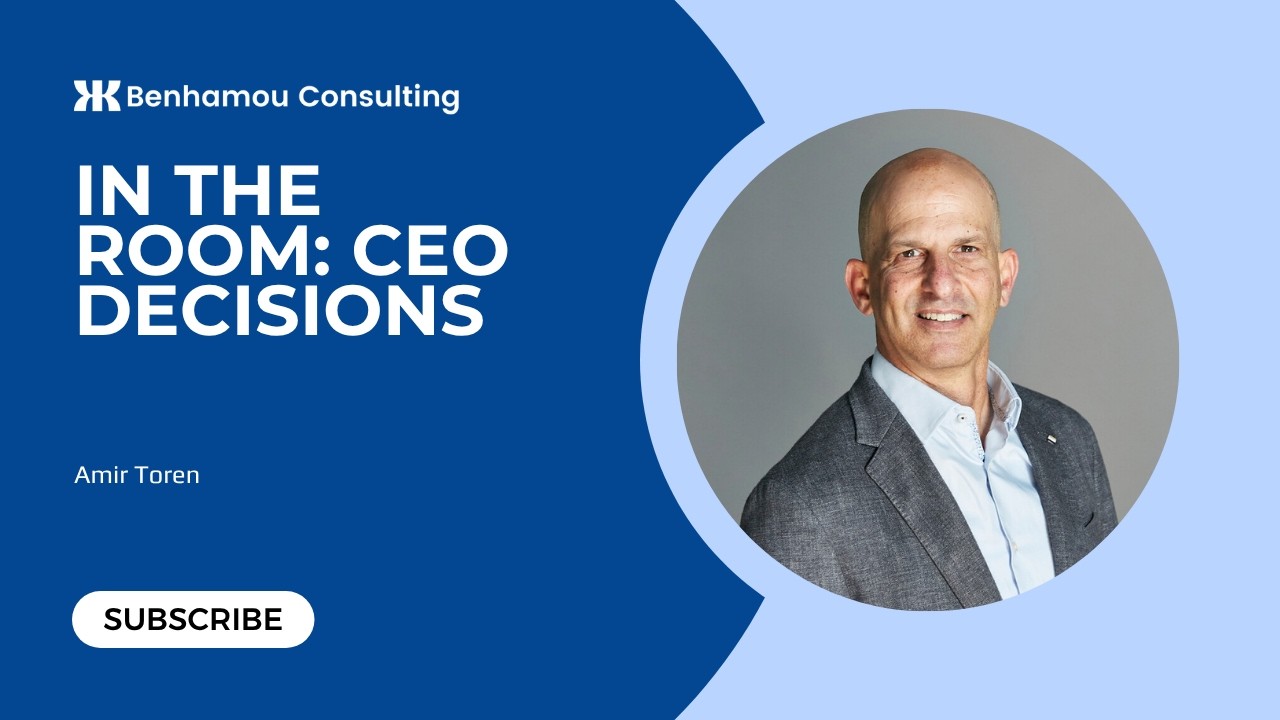
Reviewing 70+ technologies and still unsure -- a CEO mid-decision | In The Room
"It wasn't an influencer strategy" -- How Biogal cracked the US veterinary market | In The Room

How a new CEO cut focus from 250 territories to a handful -- and why it wasn't risky | In The Room