Brilliance in Adi Shankara’s Dakshinamurthy Stotram by Dr. Ravishankar Gundlapalli | GFO2023
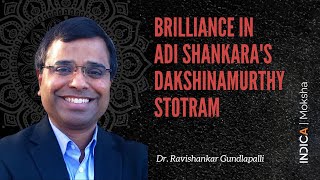
A recorded session from the Global Festival of Oneness (GFO2023) in which Dr. Ravishankar (Ravi) Gundlapalli presents and reflects on Adi Shankaracharya’s Dakshinamurthy Stotram. The talk mixes Sanskrit recitation, translations, and interpretive commentary that uses everyday analogies (magician, dream, pot with holes, mirror/light) to explain Advaita ideas (world-as-appearance, ignorance covering the self, role of the guru and sadhana). Dialogue with Dr. Prasad Kaipa connects these insights to modern leadership, listening, mentorship, and practical sadhana habits.
Chapters
Namaste!
And welcome to another session of Oneness Festival. It is a great privilege to work through the fourth Global Festival of Oneness. We have been having wonderful sessions from April 25th. We are almost on to the last week of celebrating the life of Shankaracharya. Today, I have a great pleasure in inviting Dr. Ravi Shankar Goondalapalli to talk on brilliance of Dakshinamurthy Stotram. Ravi, welcome and let me do the introduction first a little bit and then you can take over and then look forward to hearing your presentation on Dakshinamurthy Stotram. रवी सेंकर गुन्दलपल्ली करते हम मिशिगन आपने आपने आपने आपने आपने आपने आपने आपने आपने आपने आपने He considers Jagadguru Adi Shankaracharya as his ultimate mentor and he works very closely with Brahmashri Samvedam Shambhu Sharma on a day-to-day basis. Ravi is a technological entrepreneur. He is the founder of MentorCloud and he has worked with several companies in the Silicon Valley before. He is the author of a book on mentorship and he has given keynote addresses globally on topics of mentoring, entrepreneurship and Bhagavad Gita. Ravi is the co-founder of Global Festival of Oneness. This used to be a one-day conference and he had designed it to be a month-long conference starting with Sankara Jayanti every year to spread the life and works of Adi Sankaracharya. Ravi also is a co-founder of Know Your Roots with his wife Vani, focusing on rejuvenating and spreading the essence of Sanatana Dharma among the modern generation. प्रसाद.
कैपा गारु, आप प्रसाद कैपा गारु, आप प्रसाद कैपा गारु, आप प्रसाद कैपा गारु, आप प्रसाद कैपा गारु, आप प्रसाद कैपा गारु, आप � with the modern world that we live in. So you can be rooted in your dharma, but then start companies, you know, earn wealth. And so that is the beauty that you have first exposed to me. So thank you for the kind introduction. Shankaram Shankaracharyam Kesevam Badarayanam Sutrabhashya Krutam Vandi भगवन्तो पुनफ् पुनहा।।।।।।।।।।।।।।।।।।।।।।।।।।।।।।।।।।।।।।।।।।।।।।।।।।।।।।।।।।।।।।।।।।।।।।।।।।।।।।।।।।।।।।।।।।।।।।।।।।।� निधये सर्वविध्यानाम् विशजे भवरोगिनाम् गुरवे सर्वलोकानाम् दक्षिनामूर्तये नमः ओम् नमः प्रणवार्थाय शुद्ध ज्ञानैक मूर्तये निर्मलाय प्रशान्ताय दक्षिनामूर्तये नमः Pranams to Jagadguru Adi Shankara for gifting us this wisdom of Dakshinamurthi Stotram to us and pranams to my guru, Brahmastri Dr. Samvedhu Shanmugasarma Garu who I consider an amsha of Adi Shankara in this age and the one who gave me much wisdom about Sanatana Dharma and specific insights into Dakshinamurthi Stotram. So I'm sharing a sample of what I learned and internalized into my own understanding How can I describe the brilliance of Jagadguru Adi Shankara and the essence of Dakshinamurthy Stotram? What I am doing is taking a spoon of water from the great river Ganga and then sharing with you the taste and experience of that. So these are completely my words. Any inadvertent mistakes or misinterpretations are completely mine. अगर आपको करतकाल करतकल करतकल करतकल करतकल करतकल करतकल करतकल करतकल करतकल करतकल करतकल करतक I find Adi Shankar an amazing entrepreneur and founder. Just like entrepreneurs, he is visionary, passionate, mission-driven. He is a brilliant inventor. We all know the Advaita that brought unity at a very critical time in India. He was a contributor, writing multiple original works, commentaries and treatises. He is a tireless leader, walking across the country six times to accomplish his mission of unity. And he is a humanist. And we all know the stories of the love for others, what a servant leader he is, and his deep respect for his mother. अपने 32 आरमान अपने अपने 32 आरमान अपने 32 आरमान 32 आरमान 32 32 आरमान 32 आरमान 32 आरमान 32 आरमान 32 आरमान 32 आरमान 32 अपने दक्षिना आरमा मूर्थी के लिए करता मूर्थी करता मूर्थी करता मूर्थी करता मूर्थी करता मूर्थी करता मूर्थी करता मूर्थी करता मूर्थी अपने परवचनमत्यं करत परवचन अधिशेंकरा परवचन परवचन परवचन करते है कि अपने अपने अपने अपने अपने अपने अपने अपने अपने अपने परवचन He talks about magicians. He talks about how a tree grows out of a seed. He talks about how this universe is spread across the two dimensions of space and time. He talks about people having dreams and then waking up and then realizing it's not real. He talks about our sensory organs. So using everyday things that we are all interacting with, he is bringing this immense wisdom to us. आदि शंक्र में वरस करते हैं, करते करते करते करते करते करते करते करते करते करते करते करते � अच्छा मतकर मतकर मतकर मतकर मतकर मतकर मतकर मतकर अधिशंकर करा क्योंकि अपने अपने अपने अपने अपने अपने अपने अपने अपने अपने अपने अपने अपने अपने अपने अपने अपने अपने वेदान्ता अवरक्कर अवरक्कर अवरक्कर अवरक्कर अवरक्कर विश्वं दर्पणद्रुस्यमान नगरी तुल्यं निजान्तर्गतं पस्यन्नात्मनिमायया अवरक्कर बहिरिवोर् भूतं यता अवरक्कर निद्रया यस्साक्षात् कुरुते प्रभोधसमये अवरक्कर अवरक्कर अवर स्वात्मानमे वाद्वयं तस्मैस्री गुरुमूर्तये नमईदं स्री दक्षिनामूर्तये This inherent musical quality is also something that I am personally inspired by. All the verses are inherently musical. It's almost like Shankara was singing in ecstasy in those days. Just like Annamacharya when he went to Tirupati said, अगर सेन्त्यागराज्या, रामदासु, इनेक्स्टसी, इवन्ने करता है. इवन्ने करता है, इवन्ने करता है, इवन्ने करता है, इवन्ने करता है, तो वदक्षिनामुर्थि स्थोत्रम् इवन्ने करते करते करते करते करते करते करते करते करते करते करता करते करते करते करते करते करते करते Is this world outside or inside? Now, we all know that the world we experience on the outside is actually what we are experiencing on the inside. For example, if I see somebody at a distance, is that person there? Do I know? Or is that person's image in my eye and my interpretation is that he is there? तो मसमक्क करता करता करता करता करता करता करता करता करता करता करता करता करता करता कर� तो अगर आप करते करते करते करते करते करते करते करते करते करते करते करते करते करते यह मतरकत मतरकत मतरकत मतरकत मतरकत मतरकत मतरकत मतरकत मतरकत आत्मा के लिए अत्मा आत्मा के लिए आत्मा के लिए आत्मा के लिए आत्मा के लिए आत्मा के लिए आत्मा के लिए आत्मा आपके लिए, आपके लिए, आपके के लिए, आपके लिए, आपके लिए आपके लिए, आपके लिए, आपके लिए, आपके लिए, आपके लिए, आपके आत् लिए, � अग्ञाना के लिए, अतने सवत्मानम् एवा अध्वयम् सवत्मानम् एवा अध्वयम् सवत्मानम् एवा अध्वयम् सवत्मानम् एवा अध्वयम् प्रभोध समये के लिए, सवप्ना वस्त स्टेट नहीं नहीं नहीं नहीं नहीं नहीं नहीं नहीं नहीं नहीं नहीं नहीं नहीं नहीं नहीं नहीं नहीं नहीं नहीं नह so from the swapnavastha state when you awake then you realize oh it is all a dream now but in the dream everything looked very real you know we hear of stories you know people moving their arms and limbs because it seems so real but then when you wake up you realize ah it is it was not real so that is what he calls you know attaining jnana so these examples are what i find to be brilliant because to bring out this profound thought into simple everyday examples. Now, these are only examples to understand. Our Guru reiterates, don't think these examples are the essence of Dakshinamurti Stotram. Sometimes if I say, hey, I went to London and I saw this, I saw something, people ask, what does it look like? I have to give an example. It looks like this. अगर समक्ष समक्ष करते हैं, समक्ष समक्ष समक्ष समक्ष समक्ष समक्ष समक्ष समक्ष अगर वरवां करतक करतक करतक करतक करतक करतक करतक करतक करतक वह और इतने पड़ते पड़ते पड़ते पड़ते पड़ते पड़ते पड़ते पड़ते पड़ते पड़ते पड़ते पड़ते पड़ते पड़ते मकत मकत मकत अगर मैया कल्पित देशकाल कलना मैया कल्पित देशकाल कलना मैया कल्पित देशकाल मायावीव कलना विजरुम्बयत्यपिमहा योगीवय स्वेच्चया। So he introduces this Mayavi. Who is the Mayavi? So let's take an example. Let's take a magician. We all go to a magic show. And all the lights are off. And we are experiencing, you know, the magician is showing that it is raining. It is cloudy. It is hot. Something scary is happening. And all of us are experiencing those feelings. And we think it is real. We all know sometimes when we watch very emotional movies, we tend to cry or we tend to feel the emotions because we think it is real. Only when the movie ends, only when the magic show ends, do we realize, oh, it was just an illusion. It was just a movie, right? So now, our guru says, in the same audience, there are people who are also experiencing this kind of sorrow, the happiness, the rain, etc. But they are not attached to it. They are looking at the magician and appreciating what a wonderful magician is it. Oh my God, look how he created that act. They are focusing on the magician because they know the magic is happening because of the magician. अगर नमक्कर नमक्कर नमक्कर नमक्कर नमक्कर नमकर नमकर नमकर नमकर नमकर नमकर नमकर नमकर नमकर नमकर न वह वरवर में करतक करतक करतक करतक करतक करतक करतक करतक करतक करतक करतक करतक करतक करतक कर अपने अपने अपने अपने अपने अपने अपने अपने अगर आपका करते है, आपका अपने करते करते करते करते करते करते करते करते करते करते करते करते करते विष्णा विष्णा विष्णा विष्णा विष्णा विष्णा विष्णा विष्णा विष्णा विष्णा विष्णा विष्णा विष्णा विष्णा विष्णा विष्णा विष्णा विष्णा विष्णा विष्णा विष्णा विष्णा विष्णा विष्णा विष्ण You have to listen intently, you have to understand it and mananath, you have to meditate on it, think about it and even sing. So all these actions, when you are aligned with the desire to learn about the Supreme Lord, that is when all of this will become real. And here is the beauty. सनाता धर्मा अवरको समक्ष समक्ष समक्ष समक्ष समक्ष समक्ष समक्ष समक्ष समक्ष � आश्टैस्वर्यास् करते हैं. इवन्ने आश्टैस्वर्यास् करते हैं. इवन्ने आश्टैस्वर्यास् करते हैं. अधिशंकरा इवन्ने आश्टैस्वर्यास् करते हैं. इवन्ने आश्टैस्वर्यास् � करुणा करुणा करुणा करुणा करुणा कर� नानाचिद्रगदोधरस्तितमहादीपप्रभाभास्वरम् ज्ञानम्यस्चतुचक्षुरादिकरन्नद्ध्वाराभहिस्पन्धते जानामीति तमेवभान्तमनुभाते तत्समस्तं जगतु And every verse ends like this. तस्मै स्री गुरुमूर्तये ओ दक्षिनामूर्ति The one who is in the form of Guru, for me, O Lord Shiva, नानाचिद्र means different holes गतम is pot so he imagines a pot or atleast he is telling us another simple way to realize this that we are all one with brahman is imagine now there is a pot and it has holes नानाचिद्र means multiple kinds of holes क्रम्म क्रमम? करमम करमम करमम करमम करमम करमम करमम करमम करमम करमम करमम करमम करमम करमम कर� and some are starry because of the shape of the hole now is the light having the circular shape is the light having the square shape now we all know you say it's not the light it is because of the hole and now all those lights coming out of the pot they're not going into eternity they're actually illuminating the surroundings around the pot अधिशंकरा करते है अतने माद करते है माद करते है माद करते है माद करते है माद करते है माद करते है माद करते है म आदिकरण द्वारा, अधिकरण द्वारा, अधिकरण द्वारा, अधिकरण द्वारा, अधिकरण द्वारा, अधिकरण द्वारा, अधिकरण द्वारा, अधिकरण द्वारा, अधिकरण द्वारा, अधिकरण गुरु में इसने द्वारा, अधिकरण करते करते करते करते करते करते करते करते करते करते द्वारा, अधिकरण द्वारा, अधिकर� करते and you know when you say i saw with my eyes i heard with my ears i smelled something i tasted something for all of this we are using different instruments different instruments um and uh but the same light is going through all of them so again here he uses the example of a dream like अगर आमने में, आमने में, आमने में, आमने आमने में, आमने आमने में, आमने में, आमने में, आमने में, आमने आम� You are a leader for a team or for an organization. Now, I run a company and this kind of understanding is so critical that we don't get engrossed into everyday challenges of the company when we look at people. अगर आपकाल परवाणत परवाणत परवाणत परवाणत परवाणत परवाणत परवाणत परवाणत परवाणत परवाणत परवा अगर आपका करते हैं, इपने आपका करते हैं, इपने आपका करते हैं, आपका करते हैं, आपका करते हैं, आपका करते हैं, आपका So sometimes as leaders, we just have to observe. We just have to let things be. and and stay disassociated from it and then respond when we need to we should realize that things happen they happen and they go you know in one of the verses he also uses the word sunyam viduhu means certain things did you know didn't exist before and they won't exist after as well so at that time there were so many um you know theories and uh sort of religions at that time so he had to really bring out the how those other theories are weak with stotrams like this. So think again about the simple example of a pot with holes and light in it. And again, an excellent example. And again, there are treatises on this by Sureshwaracharya. And really, once you realize it, we have to sort of dig inside. Because as a leader, Dr. Prasad Kaipa has written a wonderful book called From Smart to Wise. It's not enough to be smart. You have to move into the realm of wisdom. So you can achieve that level of wisdom by looking within. क्योंकि நம்ம நம்ம நம்ம நம்ம நம்ம நம்ம நம� अधिशंकरा अधिश्ञान्करा अधिश्ञान्करा अधिश्ञान्करा अधिश्ञान्करा अधिश्ञान्करा अधिश्ञान्करा अधिश्ञान्करा अधिश्ञान्करा अधिशंकरा के लिए, मन्दरमिश्रा और अधिशंकरा के लिए, उदहे भारती के लिए, उदहे भारती के लिए, उदहे भारती उदहे भारती के लिए, उदहे � He is the loser. Now we all know when we get emotional, the body heat can actually impact the garland and all the flowers can become less fragrant and weak. I believe Shankara's garland remained fresh because he had no emotions. He didn't get impacted by whatever Mandala Mishra was saying and so by the arguments. Professor Venkatraman has said that he uses this principle as the Supreme Court judge. what can this stotra teach us again we will have a conversation again i have the the privilege of my guru here my my wonderful mentor dr prasad kaipa and prasad kaipa i would i welcome you to uh you know have a conversation and share your thoughts because ultimately we are here to bring this small sample of the you know brilliance of dakshinamurthy stotram um and So how do you get access to this wisdom is through a Guru. And Sureshwaracharya also wrote another wonderful shloka is, ईश्वरो गुरुरात्मेति मूर्ति भेद विभागिने वियोमवद् व्याप्त देहाया दक्षिना मूर्तये नमः There is a difference in the murti between इश्वरा और गुरु हैं, पर समक्य करते हैं, पर समक्य करते हैं, पर समक्य करते हैं, पर समक्य करते हैं, पर समक्य करते हैं, पर � अगर आपको समक्षन समक्षन समक्षन स प्रफान्ट दिप् तार्ट्स, अपने अपने अपने अपने अपने अपने अपने अपने अपने अपने अपने अपने अपने अपने Now how does he show it? Again, I'm sure as a deep observer he is, he says it is like Rahu and Ketu covering the sun and the moon. We have this manifestation that eclipse happens and then during the eclipse, is the sun's brilliance going down? Is the moon's coolness quality going down? यह नहीं पड़मनागल यह सन पड़मनागल पड़मनागल पड़मनागल पड़मनागल पड़मनागल पड़मनागल पड़मनाग� Our Atma which is Nirmalam is covered by this ignorance and only through Sadhana and once we again uses the he uses the word Prabodha Samaye multiple times in Dakshinamukti Stotram. So how do you get this awakening is through mentorship, is through surrounding yourselves with Gurus. and he reminds us that there is there is one common thing element that is going throughout our life because i remember that i was once a child i remember i was once a youth once in an early career and in a mid-career and so on what is that i that that common element that runs throughout that is what you have to connect with that is the अगर आप अपने अपने अपने अपने अपने अपने अपने अपने अपने अपने अपने � प्रसाद करु करते में प्रसाद करु करते में प्रसाद करु करते में प्रसाद करु करते में प्रसाद करु करते में प्रसाद करु करते में प्र� सनातन धर्म और वेदान्ता करते हैं, परसाद करते हैं, परसाद करते हैं, परसाद करते हैं, परसाद करते हैं, परसाद करते हैं, विश्वम् परसाद दर्पण कर तुरिष्यमान नगरी करते हैं, अपने गुरु करते है, अपने करते है, अपने गुरु करते है, अपने गुरु करते है, अपने so गुरु करते है, अपन he is thinking the wall is bright and the light belongs to the wall but then a second person comes and and and says hey hey no no no no that light is not does not belong to the wall it is coming from this mirror just look behind uh the the light is coming from the mirror so the light belongs to the mirror okay so then oh okay i didn't realize that so the light does not belong to the wall it belongs to the mirror अगर करवाण करवाण करवाण करवाण करवाण करवाण करवाण करवाण करवाण करवाण करवाण करवाण करवाण करव� निर्मलत्वम् मनस् मनस् मनस् मनस् मनस् मनस् मनस् मनस् मनस् Dakshinamurthy's stotram is all about self-realization, about realizing the inner wisdom, about how ignorance covers the inner atma. So love to hear some of your thoughts so we can have a brief conversation.
I think you brought some important points. What I took away from your talk so far are about five points. One is 1. आपका अपका अपका अपका अपका अपका अपका अपका अपका अपका अपका अपका अपका अपका अपका अपका Can we actually listen to empathically from both sides of it? And when somebody says one, I look at the other, look at their body reactions. And when the other person responds, I look at the first. Just by quietly looking at and listening to each of them, There is a way in which I can provide certain gravitas and I might be able to get the truth by just those people talking. So that's one possible way in which a leader can use silence as a way of mediating and working with it. That is one thing which you mentioned. दक्षिनामुर्थी.
स्थोत्रम् मवनम् He was silent and all the rishis were sitting at his feet and observing him. Some of the interpretations I heard is whatever had to be communicated with words, these rishis have already मवनव्याक्या gained that wisdom. तो मवनव्याक्या प्रकटिता मवनव्याक्या प्रकटिता मवनव्याक्या प्रकटिता मवनव्याक्या प्रकटिता मवनव्याक्या प्रकटिता मवनव्याक्या प्रकटिता मवनव्याक्या प्रकटिता मवन�.
द्वाइता, अध्वाईता, समता अन्द्वाइता, अन्द्वाइता, अन्द्वाइता, अन्द्वाइता, अन्द्वाइता, अन्द्वाइता, अन्द्वाइता, अन्द्वाइता, अन्द्वाइता, अन्द्वाइता, अन्द्वाइता, अन्द्वाइता, but they are arising at the mind level. There is a consciousness that is actually keeping quiet. So in some respects you can look at the silence, the chitsakti, the consciousness from where it emerges, it can silently look at various type of आपको करते करते करते करते करते करते करते करते करते करते करते करते करते करते करते कर� दक्षिना मुर्थी करते करते करते करते करते करते करते करते करते अपने परवाणमने परवाणमने परवाणमने परवाणमने परवाणमने परवाणमने परवाणमने परवाणमने परव� पुर्पुरा जनरेते हैं? मनस, बुद्धी, चित्ता, अत्मा लेवल में मनस, बुद्धी.
चित्ता, अत्मा लेवल बुद्धी, चित्ता, अत्मा लेवल.
में मनस, बुद्धी, चित्ता, अत्मा लेवल में मनस, So I also take that away, बुद्धी that Dakshinamurthi Stotram is one of the deep and meaningful commentaries on non-dual nature of the seeker and the sought. And even in the first one, like Vishwamitarpanam, the world is just a mirror. And the idea of just like Maya, यह मयवी में परवाण करनागल परवाण करनागल परवाण करनागल परवाण यह नहीं मतर मतर मतर मतर मतर मतर परवाण परवाण परव मतर.
मतर मतर म�.
आप में आपका करने करने, आपका आपका करने, आपका करने, आपका करने, आपका करने, आपका क� But the person who is looking at, maybe from their consciousness, that light from within is falling on the external objects. So the idea of who is asking the question, who is inquiring, where is this question coming from? I think especially these days when we are mentoring, when we are coaching, when we are working with people in the Silicon Valley, I think the points that you brought out are extremely important. The leader has to look at it and say, it is not what question that is being asked, who is asking that question. At the level of the inquirer, the inquiry and what is being inquired, if we can look at that intimate connection, then all what we have अधिसंकरा करते के लिए अधिसंकरा करते करते के लिए अधिसंकरा करते के लिए अधिसंकरा करते के लिए अधिसंकरा करते क� अगर मवनम् करते हैं, मवनम् करते हैं, मवनम् करते हैं, मवनम् करते हैं, मवनम् करते हैं, मवनम् करते हैं, मवनम् करते � अगर इसमें करतक करतक करतक करतक करतक करतक करतक करतक करतक करतक करतक.
अगर मकर मकर मकर मकर मकर मकर मकर मकर मकर मकर मकर मकर मकर मकर मकर मकर मकर मकर मकर Why is it a cadaver eye versus the same eye before and now? Everything is great, all the nerves are there, cells are there, but it is that light that is illuminating. So the light that is, that atma that is making this universe possible is the same atma that is making you realize that also. That's the beauty of it. And that's the oneness that you said, you know, to all my employees, Prasad Garu, I always say, we all work for one purpose. If you direct any of the conflicts in the team to their purpose, suddenly all the conflicts vanish. Whereas it's you like that. So we all work for one purpose. The company also works for the purpose. Company is just an entity. But we're all doing something towards that one purpose. So always keep your eyes on that one purpose. And then sometimes, like you correctly said, all the ripples you see in the ocean, in the lake, will go away over time. Yes, because you see a ripple, you don't have to go and try to do something. Just have to be patient. The ripples will go away. अपने.
परवाणमने परवाणमने परवाणमने परवाणमने परवाणमने परवाणमने परवाणमने परवाणमने परवाणमने परव� Yeah, I say absolutely. In.
Fact, that is really what Dr. Kaipa and me are trying to do, is that Sanatana Dharma way is the only way, is the original way. Everything else has been manifested into you and me. In fact, a few talks ago, I had the privilege of hosting Sri Mahesh Chandra Sharmaji, who presented the works of Deendayal Upadhyaya. आप और मैं, आपका समक्षन तीन्द्याल उपाध्याया समक्षन करते करते समक्षन करते करते समक्षन करते करते करते करते करते करते करते करते करते करते करते करते � एकात्मा भावना, और मैं अपने परवाण करता करता करता करता करता करता करता क� अपने अपने अपने अपने अपने अपने अपने अपने अपने अपने अपने अपने अपने अपने अपने अपने अपने अपने अपने अप� अगर आप, आप, मैं, आप, आप, आप, आप, आप, आप, आप, आप, आप, आप, आप, आप, आप, आप, आप, आप.
आप, क्योंकि आ अपने परवास परवस परवस परवस परवस परवस परवस.
परवस परवस परवस परवस परवस आदिश्ञाकरा में मदल मदल मदल मदल मदल मदल अगर मद मतवर्कर मतवर मतवर मतवर मतवर मतवर मतवर मतवर मतवर मतवर मतवर मतवर मतवर मतवर मतवर I am doing something so mundane to feed this body, but where is the food I am giving for my mind? आपको करतक करतक करतक करतक करतक करतक करतक करतक करतक करतक करतक करतक करतक करतक.
करतक.
He is a Supreme Court judge fighting cases like Sabarimalai, Article 370, some major cases. He is probably reading 10,000 books to really argue with all the lawyers. He said not a single day he misses the routine that was given to him by his guru. So the consistency in your sadhana आपका गुरु करते हैं, आपका करते हैं, आपका करते हैं, आपका करते हैं, आपका करते हैं, आपका करते हैं, आपका करते हैं, आपका क� अद्वाईज्य अकाड़ेमी में करते हैं, मैं करते हैं, मैं करते हैं, मैं करते हैं, मैं करते हैं, मैं करते हैं, मैं करते हैं, मैं करते हैं, एक मनसोल मैं करत आसा पर सुरेश्वराचार्या पर सुरेश्वराचार्या पर सुरेश्वराचार्या पर सुरेश्वराचार्या पर सुरेश्वराचार्या पर So सुरेश्वराचार्या this Manasola Sa is one पर book that I found to be very valuable, सुरेश्वराचा and there are plenty of talks on YouTube. So start small, 15 minutes a day, and then you'll slowly be engrossed into it over time. Okay.
Thank you. And so what you are saying is, books are one way to go deep into some other subjects, and there are several books, but 21 సంచరి సంచరి 21 సంచరి సంచరి 21 సంచరి 21 సంచరి 21 సంచరి.
21 సంచరి సంచరి 21 � One example I want to give is that there is plenty of food in a restaurant, but if you're not hungry, it won't mean anything. So first is to feel the hunger. So thank you for the question. That means you have the hunger already. There is plenty of food. There's plenty of wisdom out there to sort.
Of go after. There is one more question. Dakshinamurthy facing the South and अगर आपकाल समक्षन समक्षन समक्षन समक्षन समक्षन समक्षन समक्षन समक्षन समक्षन समक्षन समक्षन समक्ष� I don't know.
About Hayagriva and Dakshinamurthy. I leave it to gurus and we can connect offline and I can do some research. But Dakshinamurthy itself, Dakshiniam is a very powerful word. Our guru once explained to me Daya and Dakshiniam. Daya is having pity or compassion on someone and Dakshiniam is the ability to remove that pain that somebody is suffering. तो दाक्षिन्यता करता है वरवरकळकळकळकळकळकळकळकळकळकळकळकळकळकळकळकळकळकळकळकळकळ So all of us should be filled with both Daya and Dakshinia. So Dakshinamurthy is the one who will move us towards the path of realization. And you're absolutely right, you mentioned that's why Dakshina is south because he's towards the north looking south. So that's why all the so-called panchangam says east is the direction for wealth, north is the direction for knowledge. so when you pray Dakshinamurti looking towards the north he is looking at you even in a temple you know this is followed when you do the Pradakshinam south you see Dakshinamurti is on the first quarter of your Pradakshina so that is the best I know that the Daya and Dakshinam and Hayagriva I would pass on that one I need to learn.
About it There are a couple of things that come to my mind. One is the idea of Dakshinam. In Hindu tradition, we talk about it as the realm of ancestors, spiritual wisdom and death to a certain extent. So sometimes people also say Dakshinamurti is bestowing the knowledge अगर वेदा करते हैं, उन्हें वेदिक करतक करतक करतक करतक करतक करतक करतक करतक अध्वायता को परतकल करतकल करतकल करतकल करतकल करतकल करतकल करतकल करतकल करतक� अध्वाईता अध्वाईता अध्वाईता अध्वाईता.
अध्वाईता अध्वाईता अध्वाईता अध्वाईता अगर अध्वाईता आपको सनातन अध्वाईता अध्वाईता धर्म करते हैं, आपको सनातन धर्म करते हैं, आपको सनातन धर्म करते हैं, आपको सनातन धर्म करते हैं, � तो मेरे मतकत्तम करता करता करता करता करता करता करता करता करता करता करता करता करता करता करत� आप करते करते करते करते करते करते करते करते करते करते how grateful you should be how grateful you should be so this oneness is is our natural state this duality uh this duality is an unnatural state so through the help of a guru you have to go back to your natural state you get away from this sort of the you know dual state that we have been in fact one of our efforts is try to imbibe this from very early on in children so you never have to go and undo some things right some damage has been done we have to undo this now.
Thank you very much for bringing in the modern way of applications and how we can look at Dakshinamurthy in the current context of leadership as well. I appreciate this conversation and thank you for bringing Dakshinamurthy into my day today again. I appreciate it and have a wonderful day. इन्डिका.
मोक्षा टीम के लिए, इन्डिका मोक्षा टीम के लिए, इन्डिका मोक्षा टीम के लिए, इन्डिका मोक्षा टीम के लिए, इन्डिका We are still discussing मोक्षा टीम के लिए, it. इन्डिका मोक्षा टीम के लिए, इन्डिका So these are timeless works of wisdom and we should be very fortunate that they are still here मोक्षा टीम and के लिए, it is our responsibility to study them and to spread them इ to the next generation. So may this eternal Sanatana Dharma Vahini continue to nourish the world and bring back the awareness of oneness. Har Har Shankara Jaya Jaya Shankara. Thank.
You very much, Dr. Ravi. You have a wonderful day. Thank you. Tomorrow morning, India time, 7 to 8 am, we have a fresh talk by Natraj Maneshinde. It looks like he also works for Apple, my old company. उपास्यमूर्थी करने के लिए उपास्यमूर्थी करने शंकर बगवत पदा प्रपन्च सरक करने के लिए उपास्यमूर्थी करने के लिए उपास्यमूर्थी करने के लिए.
उपास्यमूर्थ.
And supporting the Advaita Academy and Indica Moksha. You have a wonderful day or evening based on Vedas.
More from Dr.

Essentials of an Entrepreneur by Dr. Velumani Arokiaswamy, Founder of Thyrocare

Skills & Traits for Better Employability | Amritkaal Mentors – An Initiative by MentorCloud

What Leaders Look for First-Time Job Candidates | Amritkaal Mentors – An Initiative by MentorCloud

How to Innovate and Lead Wisely in Today’s World with Navi Radjou - An Initiative by MentorCloud

Crafting Your Academic Journey with Dr. Manish Kothari - – An Initiative by MentorCloud



Advaitha Jagruti: Awakening The Spirit Of Adi Shankara In Indian Youth | Dr. Ravishankar Gundlapalli

Testimonial | Sanjeev Sharan | Catalyzing Growth From Within | MentorCloud Mastermind

How to Make a Mentee Feel Comfortable #mentorcloud #mentoring #coaching #wisdom #experience

Testimonial | Kellie Teal-Guess | Catalyzing Growth From Within | MentorCloud Mastermind