Episode 18 on the startup adventure of Dr Stan
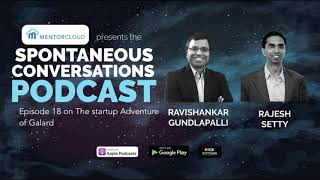
A recorded conversation (Episode 18) where Dr. Stan describes founding Galard, a Czech luxury menswear brand, by bootstrapping from a small personal investment and validating demand through made-to-order tailored shirts. He started with an initial outlay of about $800 (later adding about $10,000), sold directly to contacts, scaled to small stores and added suits and imported shoes, prioritized exceptional personal service, and ultimately sold the company after roughly two years (launched 2011 → sale completed Sept 2013). Hosts emphasize resourcefulness, lean validation, and customer experience as key lessons.
Questions this video answers
2011 (April or May)
$800 initial; later added about $10,000
About 50 shirts in the early test (first month)
Approximately 200–300 shirts within about six months
He sold 70% after two years (signed after ~2 years and 3 months) and sold the remainder soon after; sale finalized in September 2013
Chapters
Hi there. Welcome to episode number 18 of spontaneous conversations. This is Ravi Gundlapalli, founder CEO of Mentor Cloud.
Hi. This is Rajesh Seti. I'm a serial entrepreneur.
And today Rajesh and I are very, very glad to introduce to you a surprise guest from Czech Republic, Dr. Stan. Stan, please introduce yourself.
Hello, my name is Stan. As you said, I'm coming from the Czech Republic and right now I'm just traveling around the. But the reason why I'm here is that you somehow consider me probably a successful entrepreneur.
We will find out in our conversation. So Rajesh, what do you have in mind today?
Yeah, so we also have a silent participant, Rohit, our friend. And Rohit and I heard his story. Stan's story. What is first company? I just got so fascinated how he bootstrapped the first story. Galard is the name.
Yes, exactly.
Gallard is the fashion brand. And I thought this will be amazing for our listeners to hear how Dr. Stan started Galard and what was the thinking, what were the techniques, what were the tactics, how did he go about bootstrapping? Galad to be a successful brand.
So essentially to our listeners, bootstrapping is basically doing more with less. And there are so many ways we can find resources around us that we always, most entrepreneurs think first thing to do is go raise a bunch of money. And that's the mindset in Silicon Valley. So this whole topic of bootstrapping I think is very, very valuable to listen to your story. How did you get started?
Yeah, so I didn't really raise any money. And actually a lot of people ask me when they see the company now, like, how did you start a company? Usually they think I have like a really rich parents that helped me to launch the company. But basically the first investment, I know it sounds actually like even like a dream now, basically when I talk about it, the first investment that I put it was $800. So I started the company with $800. After, like, after like half a year I saw it works. I put some of my savings there around like $10,000. That's still not a lot. And basically that was all money they launched the company with. So what I was actually doing is that Galaard right now is a fashion company that is manufacturing tailor made and bespoke shirts and suits and sells like luxurious shoes that we import from Britain. And basically I started with.
Tailor made shirts. And at that time I was working in a company when a couple of my colleagues, they were wearing tailor made shirts and they were paying like above $100 a shirt. And I love their shirt. And I was like, but they are just like too expensive, you know, I could not really afford them. And at the same time I went just for a weekend to London and. And I have heard about.
The street in London and it's called Savile Row. And that street you can get bespoke shirts and suits.
And they are amazing. But suits start at around like $5,000. A shirt is like $200 and more. And I was like, I'm sure there must be a way how to provide this experience in Czech Republic, but for like a more reasonable price. So when I got back from that weekend in London, I asked a friend of mine who was working in a fashion business, how are actually these shirts manufactured? And I found out that there is just like several companies and they are also in the Czech Republic who are actually manufacturing all these shirts. They are handmade, they are bespoke, like based on the measurements I take from you. But they do it for different brands. And basically this is true for every single thing. So for example, if you have a suit that is for example Gucci, or if you have a jeans that are Cavalli or Versace, they do not have their own production. There are factories around the world that are manufacturing this stuff for different brands. So I was like, okay, let's meet that company and let's ask them if they can manufacture it for me. So I met with like a GM of that company. I told him what my intention was and actually I met two of those companies. In the first one they told me I'm crazy, you know, that they don't want to cooperate with such a small entities. The other one was like, let's give it a try. So we gave it a try and he said that he will be willing to manufacture the shirts for my brand. At the same time I found a company that was willing to, and they are still. There are actually a couple of such companies and they were willing to supply me fabric based on order that I do not have to keep it in stock, that I just can order like a small, small amount. So basically I was like, okay, so I can start selling shirts. I don't need to keep stock, I don't need to buy any machines, anything. So basically I asked my friend to make me a website. I promised him a shirt in exchange. So let's say that it was around like $50 for, for a website. Then I created business cards and I have created a packaging so like a nice bag and just like little features to provide a nice packaging and this altogether was like around 800.
I just learned, I went just to see the manufacturer and everything and they learned me in a day how to measure the body to create the perfect shirt. So I got back home and actually I just met couple of my friends and I asked them to provide me numbers of their friends that would be willing to buy such a high end shirt that would cost around like hundred dollars. And I just got a couple of numbers. I met a couple of people, really it was like a few individuals, like 15, and like half of them bought the shirt at the same time. There were some people who were like hard to crack to buy a shirt. So I provided them the shirt for half the price. So they bought the shirt and basically like within a month I sold around like 50 shirts.
And these shirts were like, they were not made before they were made to order.
Exactly, and they were made to order. So basically I sold the shirt for $100, manufactured the shirt for around $50. And actually I had like no costs besides my time meeting the clients and selling the first shirt.
In retrospectively, I had like no business background. And now I know this is called lean startup. So basically this is what they say, like, try to actually first validate the business that the people are interested in. But I have seen that I, with the help of my wife, that we have sold like around like 50 shirts. And at that time, you know, like, I sold like I made like $2,500 a month besides my regular job. And I was like, that's great, that's nice. Yeah. So that's a lot of money, especially in the Czech Republic. So what we did that we hired.
First consultant, it was a young lady, she was paid on commission, so again, no expenses from all the shirts she sold. I was actually making a very small profit on that, but it was helping me to get some traction of first shirt sold. At the same time, my clients were not anymore my friends. So they wanted to like go somewhere to pick up the shirt because first I was delivering the shirt. So they were happy, you know, So I was like, hello, this is Stan from Gaillard. You know, like, I'm selling a bespoke shirt. I can meet you in your office. That's a great benefit. And I will deliver the shirt personally. So of course they were considering this a great benefit. But actually at the same time I had actually no premises, so.
And approximately, you know, when was this in terms of year? Was it late 90s, early 2000s?
No, this was 2012. 2011. 2011.
Very interesting. So you almost did What Dell did for computers, they didn't have any stock. They just waited for the order and then they went to the suppliers and got the laptops done. That's fantastic. Yeah, please continue.
So basically, and that was the moment when I realized that I need some kind of a small store. And it wasn't even a store, it was a small office in a business building. But I was like, I don't need to be in a mall. You know, I'm selling expensive stuff and I'm to businessmen. I don't need to be in the mall. You know, I just need to keep that personal approach. So I was like, let's have it in a business building. And actually most of the people in the business building can be my customers. So I spent like $10,000 to like buy a very nice carpet, to put like a wallpapers on the walls. I got the first stock of ties and cufflinks and you know, basically and like a, like a place where. And first like couple of samples of shirts. And that was the moment when it was already me, my wife, and the first consultant selling the shirts. And like what happened like within like six months actually we were all doing this part time, but we sold like around like 200, 300 shirts. So actually I got the feedback from the, from the market. They like it. And what was great change was that some of the clients were saying that they want suit if I'm going to manufacture suits. I was like, I have no idea how suits are manufactured, but it doesn't really matter. It doesn't matter. Yeah. So I went online and I was like, bespoke suits. So I learned how they are manufactured and I visited like around 20 tailors in the Czech Republic who are manufacturing suits. And I asked them if they would be willing to manufacture them under my brand. And I found some that were willing to do that. So what actually happened that I just tried to sell some of those. I sold like five suits, like you know, in a month, but they are manufactured for like a pretty long time, like five, six weeks to get them done. So of course it was like a difficult time when I was figuring out if it makes sense if we are able to create a good suit. But basically with wear, I was able to manufacture the suit for like around like between 500 to 1,000. And I was able to sell it for the twice as much money. So actually my margin was like around 100%.
So. And I was still in that small, like it was actually like very small place where we were selling them. But I got like, but the next like two months I get a couple of good clients who bought and every one of them bought like two free suits. So basically I sold like 15 suits in two, three months. But basically I made like around $20,000. So.
Like now from a retrospective, actually I have no idea where I got the guts to open larger stores. So actually I just moved to a larger place and we opened like a store that had around like there was like two sales assistants and you know, and like finally we got the stock of like shirts and couple of suits.
Like a year passed, I don't know how, and I started to import shoes from Britain. But again I needed no money because I, okay, I bought just a few shoes stock and when there was a client who liked the shoes and I didn't have the size, I just order it. Of course it edits a certain amount of money. So I had like a smaller margin, but it still allowed me to expand my offer.
So that was like one, like in one and a half year. At that time I decided to open another store in different city. Again it was small, it was like a super tiny, tiny store. But the byproduct of the whole business was that suddenly I had list of like 400 very rich Czech people and top managers because like who affords such an.
Expensive suit or shirt?
So I was making like a normal amount of money. After like one year I ran the company, I quit my previous job and I started to do this full time. You know, I just read a lot online. I started to like write my own blog a little bit. I spent a lot of time like doing like direct sales. So for example, one of the things that worked very well was that I started to offer courses for correct dress, like how to dress correctly for free to companies. So I called the company and I told them that I am willing to teach them how to dress properly.
For free. And so I got there. There were usually like between 15 to 30 people in audience and I was just telling them for an hour how to dress properly, how to take care of their shirts, suits, shoes, etc. Etc. Let's say 12 of them become our client. But suddenly when you realize if one of them bought a suit for $2,000 and I made a thousand dollars on that suit, it was a pretty good training.
So that worked very well. And basically I just tried to put myself in as many events where I could talk about proper clothes possible. And one day I met a guy in one of these events. He was owner of investment company like a, like a guy who Works in the finances. And I made him to come to store and he ordered free shirts. Excellent. He liked the store. He came and he said that he wants them like fast. Like he doesn't care about, like paying more for having an expression. I was like, yeah, sure. So I did my best to manufacture the shirt really fast. And he got them next week. I delivered it personally. I really spent a lot of time with this customer experience and being really personal. He loved that.
He got to the store next day, he bought three pairs of shoes, and every pair of shoes was like $200. So he spent a lot of money there. And he said that he wants a suit. He bought a suit that day, and again he said that he wants to make it express. And again he said he has no problem paying more. So I just put some kind of like express fee there. And he was shopping in the store, like for over a month, maybe two months.
I was very glad I have him as a customer. Every time I could, I gave him presents. So for example, when he got shirt, I gave him a tie. When he got the suit, I gave him like.
A pair of special treatment for a suit. And I took him for lunch. Next time he took me for a lunch. And one day he mentioned that actually he was always very fond of fashion. And next time he mentioned that actually, you know, that he can imagine having a fashion company like in his portfolio of companies because he was doing a lot with the finances. And he said, you know, basically, your clients are my clients. And next time, it was our fourth lunch we had together. He said, if I would be willing to sell the company.
And I was like.
This was after about two and a half years.
This was two years.
Two years.
Exactly two years. And after two years and three months, we signed the contract. He bought 70% of the company.
And basically he bought 70% of the company with the condition that I will start to work as a executive manager in his holding in his group of companies, that I will be in charge of some stuff there and that he wants to grow the business, that he will hire a professional manager and so on. And I was like, awesome. Because first, I'm not a fashion guy, you know, I was like, I don't want to do fashion in my life. I like it. It's fun, but, you know, I want to do something else. So suddenly I got a great job opportunity. So I was like, amazing. I want to do that. So he cashed for the 70% of the company. That was awesome. I bought a house, a better car.
But after like two Months.
I really didn't like what he was doing with the company. Like, we had a lot of disagreements about the future of the company.
But I didn't say anything. He just knew that I disagree a lot. And once again, we had lunch and he said that, you know, don't you want to sell the rest of the company and I'll do it my way? And I was like, I don't care. So he bought the rest of the company. He cashed for the rest of the company. And basically, I launched the company in 2011. I sold it in 2013. I launched it 2011, May or April. I sold it 2013, September. And since then, I'm doing a different kind of a business. But basically the money I put in was $800 in the beginning, then $10,000 later. And then I was just doing the whole stuff with all the money I earned. Of course, like, look, I didn't pay myself for two years.
I had free clothes, and of course I paid for the gas.
But basically, like, in those two years, I didn't pretty much like, buy anything, you know, so. So everything was paid from. From the company. I had, like, no vacation, basically, and stuff like that, but who cares?
But, you know, it paid off pretty, pretty soon.
Very, very good. I think, Ravi, this is extending a little bit. Interesting. So I have a few more questions.
Sure. I think this session can be long because the story was so gripping that we didn't want to interrupt you, but Rajesh wanted to ask your first comment or question.
I have some comments, but the question was about naming and branding. So you shared with you, with us why you named the company Galad and what was the reason behind it.
Okay. So, well, I knew, well, it's going to be a fashion brand, so I wanted to have some kind of, like, a fashion name. And I do not really like those like, like super super suits or like super shirts. So I knew that I want to have like a random name, you know, something that doesn't mean anything, but you can imagine something about that. So I have just created a couple of random words, and this was one of them. And actually, okay, I was driving on the highway and Lamborghini was passing me. Lamborghini, Gallardo.
Gallardo. And I was like, gallardo, that's a nice name. I like that. So basically, I took out O and I made and I took out one L. And I was like, galaard. I was like, I like it. You know, first my name is Gaelic. So I was like, you know, gal ik Galart. And then I was Like Galard. So this almost like art. I was like, I go for it. And I went online. There was a free trademark and free website. I was like, awesome.
Very, very nice.
You know, it's interesting that, you know, we were talking recently, Rajesh, about this, this thing called serendipity. And we were saying that serendipity doesn't happen to anybody. It happens to somebody that is actually, you know, thinking about things like the fact that the Lamborghini passed you, the fact that this investment guy came to your store did not happen just like that. So people think that luck happened to somebody and they became. But your story is another testament of how passionate work and doing what it takes to build a company suddenly makes everything seem very lucky. The name drops in your mind, the investor drops in your store, and suddenly everything happens. So I think some of the entrepreneurs listening should understand that to build a business, it requires the passion and real hard work and not necessarily money in the first place.
I totally agree with that. You know, you just really have to put time and effort in it because again, that guy who bought the company, I met him at event when I was speaking for free. Then next time, like next day when he was shopping there, he said, I want to come at this time. And I did everything I could to be there. Then he said, I want it fast and like, I work my ass off to do it like really fast and to provide him superb service. Of course, I had no idea he he can buy company, the whole company, but I knew that he can be a good customer of mine. So I put a lot of effort to make him a happy customer. And instead of a suit, he put the whole firm money.
Here is another example of focusing on your product and customer service. The customer became an investor and became an acquirer.
That is so true. So in closing, should we all give some comments, lessons learned and everything? Just to summarize, what are the takeaways? I'm sure the story was super inspiring, Stan, and I'm sure people will enjoy it. I'll go first. One of the first things I realized even when you first shared the story with me, is that it is never about the lack of resources. It is always about the availability of resourcefulness. So because there is no money, there is no business plan, there is nothing, there is no investment. But you are very resourceful to see, even to offer someone. I'll give you a shirt. Can you build me a website? Like a barter kind of thing? That is what is required when it comes to making things happen in a scrappy way, scrappy. Not in a derogatory fashion, but with limited resources. How can you build something that will make something valuable happen? The other thing that.
Want to draw upon is the fact that you didn't know much about the fashion industry.
Right. But that didn't stop you from saying, okay, let's build a business. Because Google is there.
I tell you why exactly Google is there. Google taught me everything. Like everything is online. There are blogs, there are videos, you can learn everything online. Everything.
Yes. And the last one from my side is what Ravi, you mentioned is about the insane focus on customers experience. Although you were a small company, you gave people a very rich experience because the rich people like that personal service and then attention to detail, caring and giving it exactly how they want it so much that you met, you were like an angel kind of person who fell in love with you. And soon he fell in love with the business so much that he acquired the whole company. That's what my takeaway was. Ravi, you want to share something?
Yeah. I think first of all, it was a very inspiring story. And I think a lot of Silicon Valley entrepreneurs, and especially entrepreneurs in the emerging countries that don't always have access to investors, I think they should first stop thinking about raising money but really looking at what is it that they're passionate about and looking around in their network. Because.
There are so many people that we have in our network that we could kind of tap into for this kind of in kind help. And your story is again a testament of where there is a will, there is a way. You had the will. You're walking in London and then you had the idea. And it is not about having ideas, but it's about converting those ideas into a real business. And that requires passion and not always money. Your story again tells, guys, converting an idea into your business, that the key ingredient is not money, key ingredient is you, your product, your passion. And you said customer service. Because if you look at Zappos as another example, they are insane about customer service. And I was recently listening to Tony Hsieh. Their longest customer service call was eight hours. So they don't track their customer service reps on how many calls you have a minute. That's very insane. If the customer wants to talk, let them talk. Apparently somebody spoke for eight hours. So it's almost like you going there and delivering the shirt and having lunch with them. That's what every customer in the world wants, whether they're rich or poor. And I think this is a fantastic story and I'm sure many entrepreneurs will take it up and then, you know, get on there Passions.
Thank you.
Do you want to say anything in closing?
Well, I'm pretty happy I could just share the story and I hope there were some lessons, you know, that everyone can learn.
Yeah. This was amazing. So thank you so much. Stan, you were our very first guest in this whole series. We never had guests. It was only Raji and Rajesh talking.
So thank you so much. So again, signing off, Ravi Kundlapalli, you can learn more about us and me@mentacloud.com yeah.
And this is Rajesh Sethi. And you can learn more about me on rajesh city.com. until then, goodbye.
More from Dr.

Essentials of an Entrepreneur by Dr. Velumani Arokiaswamy, Founder of Thyrocare

Skills & Traits for Better Employability | Amritkaal Mentors – An Initiative by MentorCloud

What Leaders Look for First-Time Job Candidates | Amritkaal Mentors – An Initiative by MentorCloud

How to Innovate and Lead Wisely in Today’s World with Navi Radjou - An Initiative by MentorCloud

Crafting Your Academic Journey with Dr. Manish Kothari - – An Initiative by MentorCloud



Advaitha Jagruti: Awakening The Spirit Of Adi Shankara In Indian Youth | Dr. Ravishankar Gundlapalli

Testimonial | Sanjeev Sharan | Catalyzing Growth From Within | MentorCloud Mastermind

How to Make a Mentee Feel Comfortable #mentorcloud #mentoring #coaching #wisdom #experience

Testimonial | Kellie Teal-Guess | Catalyzing Growth From Within | MentorCloud Mastermind