Episode 3 on How to handle failure.
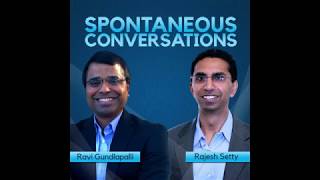
Dr. Ravi Gundlapalli and Rajesh Sethi discuss reframing failure as an outcome shaped by external factors, not just personal effort. They stress separating yourself from the situation and reflecting on your actions, attitude, and assumptions. Ravi shares how he failed his PhD qualifier, then topped it the second time.
Chapters
Hi there. Welcome to another episode of Spontaneous Conversations. This is Ravi Gundlapalli, founder and CEO of Mentor Cloud.
This is Rajesh Sethi, very good friend of Ravi, and I am a serial entrepreneur. So, Ravi, what are we talking about now?
I think we just picked a topic that I think is a very important one. It's about how to handle failure.
Yeah.
And to the audience, we just picked the topic literally 30 seconds ago.
Yeah. I think it has to be a spontaneous conversation. So where do we start? So first, let me start first. I always tell people when they are really feeling bad about something that they attempted but they failed. And if I want to lift them up, I always tell them, let's assume that.
For the next 30 days, every single decision you make, every single decision is a successful one. Is it possible people say, no way?
Maybe some decisions will be right, some decisions will be wrong. Right. People will say, yeah, just for the sake of simplicity, let's assume that 50% of the decisions will be right. 50% of the decisions will be wrong. Because neither of us are Albert Einstein or Madame Curie or something. Let's assume that we are normal people. 50. 50. So people say, yeah, that sounds like a plan. I tell them that means you just agreed to me that 50% of the time you will fail. They say, yes. So how much time do you spend on the failure when you can just lift yourself up and focus on the other 50% where you are going to succeed? Yeah.
Yeah. I think I want to take us one step back to just, you know, define failure.
Yeah, right.
Because just because you didn't catch the plane, that's not a failure. Right. So I think it's very important for people to simplify the definition is when the outcome is not what you expected. Most people think I failed. Right. But one thing to realize, the outcome of any event in life is not just the effort that you put in. A bunch of things have to come together for the outcome to be. To be what it is. Like take the example of an Olympic athlete. They might be practicing for three years, three and a half years, but if the food that they're eating that day for some reason.
Knocks them out, it's nothing to do with their effort over the last three and a half years. It is the circumstance that can not give the outcome they are expecting. So first thing I want people to kind of, you know, get grounded is an outcome is not a. Is not completely dependent on what you do. It is a function of many, many other things. Just realizing that will make you feel it's not me. And that I think is the realization that I that I would like to kind of bring up. Then you say everything is not a failure, it's a different outcome that you are expecting.
I totally agree with you. In fact, only caveat that I always tell is people should not take it to another extreme level and say, put not enough effort and say, you know what, Ravi? Outcome is not based on the effort. Every single thing has to come together. It has timing and food and other people have to participate. So.
This should not be the reason for them to get a license for not putting enough effort.
Yes, I think that's an excellent correction. I mean, I'm sure everybody listening to this conversation are the people that are really putting in their effort. Because however talented you are, however smart you are, effort is what gives you results. So that's a baseline. We are saying you got to put in your best foot forward, but don't take if the outcome is not what you expect, don't take it all on yourself because there are other contributing factors. If you are a startup entrepreneur, it could be the market has tanked. It could be sort of the house mortgage crisis. What has that got to do with your own abilities? It could be a huge snowstorm that canceled all kinds of things. So many, many things can happen. But the fundamental baseline, like you said, is these are the people who are really working hard and giving their best and using their talents to create an outcome. And every outcome can always be positive because experience is what to get. Experience is what you get when you don't get what you're looking for.
Yeah, that's nicely said. See, go back to the fundamentals that Gita says. Bhagavad Gita says that attach yourself to the effort and detach yourself from the outcome. And whether you believe or subscribe to the Gita or something, but the fundamental knowledge is sound because you put in your effort, put your heart into it, as if you are going to win. And if you don't win, you will learn.
Correct? In fact, Stephen Covey also in the Seventh Habit, he says, begin with the end in mind. And if you translate that to the Bhagavad Gita, a lot of people think, oh, that means you should not be look at the end result. So both are saying the same thing. You have to have a goal, you have to have an idea of the outcome, but don't get attached to the outcome. Is really both. Stephen Covey in the Western world is saying and Bhagavad Gita in the Eastern.
World are Saying, very nice. So one more point I want to bring this, Ravi, is there is a common misconception that when you fail in a project, people suddenly start taking it personally and think rather than think, I failed in this project, they stop it, I failed. And they start attributing that everything is wrong with them. So when they do that, all of a sudden their self esteem goes down because they don't treat this as a project failure, they treat this as a personal failure.
Yes. In fact, we are all engaged in events, right? We are individuals. We are engaged in different contexts, different projects, different situations. So we should always separate out the individual from the situation. So it is never an individual failure. The person at that moment outcome was different. I think if you can separate out the situation and the individual, half the stress is gone.
Correct. So we started off by saying, you know, how to handle failure and everything. So we first defined what is failure. And then we should not take things personally because it is a project failure or an event failure or it is not your failure. And we talked about the perspective and the mindset that, you know, effort is in your hands, the outcome is not in your hands. So you have to attach yourself to therefore detach from the outcome. What else can they do to handle failure?
I think the number one thing is you should definitely reflect, reflect on exactly what happened. And I mean, failure is not easy. I mean, I've had a situation when I was doing my PhD the first time I took my qualifiers. I don't think anybody in the world knows this. I actually failed my qualifiers. I was the first in many years to fail the qualifiers. It was such a devastating experience because I have been topper everywhere. So how do I deal with it? So first thing is I kind of said, there must be something different in the way I approach this versus everything else I did up until that point. Maybe I have underestimated how difficult this is. Maybe I have taken too much on my plate that time. Maybe I did not study what this exam expects of me. And so people should always reflect on everything that kind of, you know, is an influence on the outcome. And I felt really good after that. Even though some friends said, oh my God, this guy must be like, whoa. But believe me, after four months, I topped the university. Same exam, same everything, same Ravi. Nothing happened. But what was the difference is I changed because I reflected on what happened. I changed the way I studied. I kind of removed all the noise so that I could focus on it. And I exactly brought the 100% Ravi to this context.
Yeah, beautifully said. What I took away from that, first of all, I think everybody will know that you failed in the qualified. The whole world will know it. At least the world that we are dealing with.
Yes. And I want them to know it's okay.
Yeah. The second I took away from this was how. How you responded to failure. You could have said, you know, I was a topper. And I do not know how I was a topper. If I am failing a qualifier exam, how did I do it? And they start doubting your own capability. That could have been one path, and that is a path to disaster. Sooner than later, more failures will come and you will amplify the failures. And all of a sudden you think you are a failure.
In your terms. What you did was. He said I was a topper. I did a few things that made me become a topper. Some things I did did not make me that get me that kind of an outcome. Something else happened. Not a very desirable outcome for a topper. What should I do differently? So the lessons learned and you applied it, not just say, I reflected on it, I put it in my journal and then did do nothing. You change the activities that you are doing, how you looked at it. And that for me, Ravi, is the classic case of bouncing back.
Yes.
Like it was a comeback for you, but so much so strong that you became a topper again.
Absolutely. And you know, they say that you use the word bouncing back, that resilience, it actually comes from what I call as a very deep character. That's why we have to encourage people to have that strong character. People with a weak character, they fall like.
A ball of mud. They just fall and they never get up. But successful people. You talked about Einstein in an earlier episode. These guys also have had things that didn't expect. Madame Curie had issues. Thomas Edison had issues. Newton had issues. Everybody had issues. I mean, the people who invented the airplane, Wright brothers, they failed so many times, but they never took it upon themselves as failures. They took it upon the effort. They said, okay, I've got to change the calculations a little bit. Because as long as you don't take it personally, such people I call have a strong character. And that character helps you bounce back.
Yeah, very nicely said. One of the things that I ask people to reflect upon, you said we have to reflect on failure. And why did it lead? Always say, what should they reflect upon? What exactly? First is their actions that led there. And the second one is their attitude that led them there. Actions, actions, attitude. Third one is assumptions that they made.
That's why many people fail, actually.
Exactly.
They make wrong assumptions.
Yeah. Especially in the startup world, assumptions are everything. But even in general, because first of all, they have to have a good attitude. If they are lackadaisical and say, yeah, I will try this and we really are not trying it, and then putting in their actions, like put their heart into it. The last one, like you said, they do not test the assumptions along the way. Right. If they are writing a story, for example, if writing a novel or anything. One assumption is, does the novel hold. Does the novel hold water? Right. You can just. One easy way to assumption test the assumption is come to a friend and say, this is the story line. What do you think? And people say, I don't know, it might work. I don't maybe. And you know from the response that the assumption is flawed, that this is not going to be there. So if as they work through the assumptions and check their attitude and refine their actions, even if they fail this time because of market conditions, so many other things, they become better as people because they have grown because of the experience.
I think that's a very. Just to summarize actions, attitude and assumptions, assumptions. I think assumption is the key. Where most people think, I know it all, I'm invincible. Especially for entrepreneurs listening to this. If you had a fantastic, stellar career in the corporate world, do not assume that the entrepreneurship world will just. It will be a cakewalk. It's a totally new. It's like walking in China versus walking in Africa. Totally different. Different people, different environment, different temperatures, different goals. You are the same person. So you may have been successful in a career in the corporate America. In entrepreneurship, you cannot just sustain that energy. So it's very important to stress those assumptions, to really see your attitude and are you ready for it. So you can actually prevent failure by testing assumptions and avoiding the context that can, you know, end up being a failure.
Beautiful. I think we should use some closing comment and we should move on to the next episode. What do you think?
Absolutely. So failure is part of life. It happens. Everybody who has succeeded has failed. And the more you fail, the more you're learning. Now failure will make a better you. Only if you reflect.
Yeah.
If you don't take the time to reflect and talk to mentors like we talked about in the earlier episode is talking to a mentor. If somebody, if 20 people say we've all failed, that's like, whoa, it's not me. That it's not me is the most critical thing I think people should take away.
Very nice. My closing comment is that everybody knows the difference between a dead end and a detour. So for me failure is like a detour and if somebody thinks it's like dead end then they are losing out big time. If they think it's a detour it will make them open to new possibilities because that road got closed and some other road got opened.
Exactly. I want to take a few more seconds. If you view the world as abundant then every obstacle is a detour because there's so much to achieve. If you view the world as scarce there's only so much and if I could not get that little of something then life becomes very so have an attitude of abundance. There's plenty to do in this world in our capabilities in terms of resources and so sky is the limit.
Yeah, beautiful with that. This is Rajesh. You can read more about me on.
My blog Rajeshetty.com and more about Ravi and our company@mentacloud.com.
More from Dr.

Essentials of an Entrepreneur by Dr. Velumani Arokiaswamy, Founder of Thyrocare

Skills & Traits for Better Employability | Amritkaal Mentors – An Initiative by MentorCloud

What Leaders Look for First-Time Job Candidates | Amritkaal Mentors – An Initiative by MentorCloud

How to Innovate and Lead Wisely in Today’s World with Navi Radjou - An Initiative by MentorCloud

Crafting Your Academic Journey with Dr. Manish Kothari - – An Initiative by MentorCloud



Advaitha Jagruti: Awakening The Spirit Of Adi Shankara In Indian Youth | Dr. Ravishankar Gundlapalli

Testimonial | Sanjeev Sharan | Catalyzing Growth From Within | MentorCloud Mastermind

How to Make a Mentee Feel Comfortable #mentorcloud #mentoring #coaching #wisdom #experience

Testimonial | Kellie Teal-Guess | Catalyzing Growth From Within | MentorCloud Mastermind