Episode 7 on How to get on the fast track?
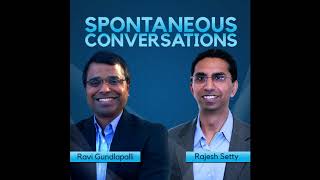
Dr. Ravi Gundlapalli and Rajesh Sete discuss how to accelerate your career: find mentors, make yourself visible, take unexpected assignments, and create value beyond your job description. Rajesh shares how he moved from HP documentation into leadership and learned the cost of missing a deadline in Singapore.
Questions this video answers
Episode 7
Dr. Ravi Gundlapalli (host) and Rajesh Sete (guest)
Chapters
Hello there. Welcome to episode number seven of spontaneous conversations. This is Ravi Gundlapalli, founder, CEO of Mentor Cloud.
This is Rajesh Sete. I'm a serial entrepreneur.
Fantastic, Rajesh. So the topic we just picked before we hit the record button is how to get on the fast track.
Yeah, it's a great topic. I think. I don't think anybody, Ravi, will say, I don't want to get on the fast track.
Yeah, even when you're driving, you want to be on the fast lane. There's a beautiful song, getting on the fast lane or something like that.
Correct.
I think it's a good topic because all of us don't want to be on a slow lane.
Maybe when it comes to some extremely happy moments, you want those moments to last. So you want time to move slowly, but when it comes to your track, your success, your career, you want to grow as fast as possible.
Correct. What are some things that somebody should do to get on the fast track? Let us start with it.
Yeah. I mean, you know, you know what I think about day in and day out is first get a mentor for somebody to clear the fog for you. Somebody to show what the road ahead is. Like, where are the twists and the turns and where are the ditches and obstacles? So I think the first thing is.
You cannot be on a fast track on your own. You need somebody.
Correct. So the question comes just double clicking on getting a mentor, because somebody has just joined the company and everything, and then they want to get on the fast track. And then there are some amazing people and they want to get them as a mentor. But those amazing people have so many requests. Everybody wants them to be a mentor. Now, now, first, how do we clear that fog? What do you think they should do?
Yeah. In fact, in our previous episodes, we talked about having those enriching conversations.
We talked about the power of mentorship. And our recent episode, we talked about networking. And networking is extremely critical even inside the company. Once you join the company, you want to really be visible. Just if you're sitting in your cube and doing work all day, that's what a photocopier does. It sits in one place and does job all day long. And it does the job, but no one knows it's kind of significance. Whereas as an employee, as part of the organization, you want to be visible. And so to be visible to those people, that could be great ambassadors for you for your fast track. And you got to be worthy of it.
Exactly. So they have to show some accomplishments that will make other people notice them. And Say it is worthy of giving my mind share kind of thing. I remember in my early days when I first came to the United States.
I had a consulting engagement at HP and then there was no technical job there. So I was sitting on the so called quote unquote bench where like consultants when they are jobless, they sit on the bench. Right. So and then my boss came and said, Rajesh, there is no technical job, but there is a documentation project. You know, I don't think, you know, you write well and all, but you may not want to do the documentation. But I am just telling you there is this job that if you want you can take it. So I was contemplating myself, should I take it or not take it. And then I just thought, if I don't take it, it's a six week job anyway. If I don't take it, then there is no guarantee that I will get a project. Yeah.
For six weeks.
Yeah. Sitting there. Then everybody said, don't take it because then people will brand you as a documentation person. And I said, that's a Friday problem. I have a Monday problem. I have to get a job. Otherwise I learned I'm not valuable for the company. So I said I will take it. That Ravi turned out to be the turning point in my growth. Because the documentation project happened to be like an implementation checklist for a global rollout of a CRM project. They were rolling out in multiple countries, more than two dozen countries, and they have localization problems and everything. So they wanted me to create a five page checklist so that they can hand it around. Why this was a turning point in my career was because for me to create the checklist, I had to meet with all the managers of all the modules, the key decision makers and everything.
So the force networking.
Force networking, although it looked like a documentation project. And then I started asking questions. What is this? What is the relevance of this? What is the relevance of this in Ireland, whatever country they were implementing. Right. So.
So you had a chance to understand.
The whole business, the bigger picture. The bigger picture, even people who were working on the project for more than six, eight months, they were working on one module. I had the opportunity to understand the whole because I am preparing the implementation checklist. Right. Then I got so fascinated by the project and I started creating, instead of a checklist, I created a cookbook. It was 108 pages. They didn't know that I was creating a cookbook.
It wasn't one of what they were expecting you to do.
Yeah. And I just did it because it's supposed to be done. And there was a committee with like 60, 80 people together. All of them. One day they said, can you bring your checklist to the meeting? I said, how many people are there? 80 people. Bring 100 copies just in case we want to give it. And I walked into the room and I said, where is the checklist? He said, the office boy is bringing. I said, what do you mean office boy is bringing? Because there were hundred books. I could not carry all of them.
And after that they started looking at me very differently because they expected something. I went back with something that is even in their dreams, they were not expecting it. And I had an executive summary of six pages so that along with it. Because if you want a quick browse.
You can just skim through it. Yeah.
After that I got a meeting with one more big boss in a company called Vantiv Corporation where I consulted for a long time. And I was thinking that now they will give me a technical job. Right. So I heard from HP that you did this. So we want to send you to another project. So Lincoln Telephone company in Nebraska. And I said, what is the job? Oh, you will be managing the project. So I came in as a programmer, did a documentation project because they understood the big picture and represented it and then also was able to manage relationships with all the decision makers. They never looked at me as a programmer beyond that.
You know, that's a great story, Rajesh. I think I just want to use the word you use. You know, let's double click on it. I think that open mindedness, somebody brought you a project, you had nothing to lose. And one of the most important things.
As far as getting on fast track is to have that open mindedness. Because you don't know when a door opens, you can't assume what's on the other side of the door because what you expect to happen is based on your past experience, which you don't have a whole lot.
Correct.
So might as well, if you have nothing to lose, have that open mindedness and then open the door and the world of possibilities will show up. Whereas many people will think what will I do this documentation project? So they will find a way to not do things. Whereas you found reasons to do it with that open mindedness with let me go and check it out. I have nothing to do for six weeks right now. And that I think is a very important aspect that I'm kind of drawing from it.
Yeah. Also first few times people looked at me as a documentation person and then once they realized the quality of questions I was asking, they became, oh, nobody asked this question like this. Let me tell you and let me show you, give you a demo. After the first meeting, it became very interesting for me because I went to the next meeting and I used to tell them, this is what I learned from that module, the module head. And this is the summary. He said, wow, this is very interesting. I have been here, I didn't know what all they were doing. This is very interesting. So what do you need from me? So the third person, I used to tell them, this is what I learned from that module. The fourth person was almost waiting for me to come because I will get a quick summary of everything that is happening in this project.
Very good. Yeah. So if I have to summarize again, out of the story, you are open minded. So you took the project and then you found ways to be visible to a bunch of people. Because the other way to be on a fast track is to become visible. People should know, like if Rajesh became a director tomorrow, everybody should think, oh yeah, of course, that guy deserves it. Nobody should question, who is this guy. So you got, you were open, you made yourself visible and you made yourself extremely valuable. You are kind of innovating on the fly and kind of creating something that is more valuable than what they were expecting of you.
Correct. So there is an old adage, right? It says, when life hands you a lemon, make a lemonade out of it.
When life hands you a lemon, make a lemonade. Don't just complain that somebody gave you a lemon.
Yes. So my thinking is this is what I got, Documentation project. This is my first foray into the United States. I was running a big project in Singapore before coming here. But they said in us, everybody starts with the lowest level. You have to prove yourself. I think that is maybe this is the way it works. But I said I will make the most out of this documentation thing.
You know the other thing that I wanted to again highlight, just kind of focusing on your story and kind of drawing points from that as what Fast Track is. I hear you say that you really loved what was given to you.
Yes.
Because today you are doing what you love. So if I have to phrase it, if people really show that they love what they are given or what they are doing, show enthusiasm, show passion, then eventually people will observe you and they will give you what you really love to do. So love what you do so that you can eventually do what you love.
Beautifully said, Ravi. Very, very nicely said. It sums up the whole thing because my theory is that what do I Do in the bench. I know what was there because I was already on the bench for more than 10 days. So I know exactly what would happen. So anything beyond that is an upgrade for me anyway.
Exactly, exactly. I think that's a great story. I think we all have those stories when we went beyond our expected outputs because we want to really show that we know more than what the company knows. Because every employee has something that they do and there are also many things that they know. And if you can somehow draw from what you know and that happens only because of passion.
Totally agree.
Otherwise it just sits in your head and you just do. Like. Like the example I was giving of the photocopier.
Yes.
It doesn't say, oh, I can also do fax. Let me fax it. It won.
Yes.
It will just. If you say copy, it will copy. But as human beings, if somebody says copy, you can ask, is this what exactly you want to accomplish with this copying? Oh, okay. You can think. And instead of just doing a job, you can actually do a job plus which a machine cannot do.
Yeah. On a lighter note, we have to be careful with the photocopier because it might sue us with a discrimination lawsuit because we are using it as an example of what not to do. And the photographer is thinking, oh my God, I'm just doing my job. Why is Ravi targeting me?
Exactly. This is again a good lesson, right? If an employee says, hey, I'm doing my job, how come I'm not getting promoted? This is a good story. Doing a job is what you are paid for. But creating value over and above your job is what you get promoted for.
Oh, beautifully said. I love this. Today you are on a roll.
Yeah, it's very spontaneous.
I'll tell you one more story and there is a lesson there. When I was in Singapore, I used to work for a bank, Standard Chartered Bank. And it was a very high profile project. And then my boss there, who is senior director or something, he said, when will you let me know how long it takes? So I said, Friday afternoon, I will let you know. And then I was wanting to have those meetings, but there was some fire. Not literally fire, but there was some fire in the.
Some emergency situation.
I forgot about it, actually totally forgot that I was supposed to. So this person was waiting for it. So then he sent me an email saying something needs to be done. I said, oh, I'll work on it. So then I realized, but I had not even started working until Friday evening. So Monday morning he came and told me, do you have the. I Need to do? I need to get this information. Do you have it?
I had half written information. Then he called me aside and told me one thing. See for you it looks like it's a four hour delay. 11:00am I have a meeting with the CIO of the bank. Now I have told him based on your promise that you will give me on Friday. I have to do some more work on it because I need the budget. Because you don't know what it costs. I need the budget. I need the whole weekend to think through it. And then I have a presentation at 11 o'. Clock. For you it's four hours. For me it's face saving. Now I can blame it on you saying he didn't give it but I look like an idiot because he said you should have thought about it.
Yeah.
Rajesh is not going to do it. Talk to Ramesh or get something done. Because CIO is not like, okay, no problem. I'll give it to you tomorrow.
So what happened?
I learnt the biggest lesson. Of course I was ramping up. I did everything. Somehow we saved the meeting. But I learnt the biggest lesson because in a big company or any small company there are always dependencies. Like there is a chain reaction. It is not like okay, I am delaying, no problem. It is only four hours. That four hours translates into 40 hours by the time the end impact happens. So that is why when you mentioned about always create value I was always thinking.
That you have to think through the overall impact of what you are doing.
Absolutely. I think you make another interesting.
Lesson for people to get on the fast track which is make your boss look good. Most people try to fight with their bosses. And here's a statistic that I want to leave this conversation with. We are almost out of time. 80% of managers are bad bosses. This industry statistic because we are not trained to be bosses. We are trained to do stuff. And suddenly because we did a bunch of stuff, they make us leaders. And then we don't know how to handle other people. So the most important thing is your manager is there because he or she has done something better than other people. Okay. However bad he or she is. So making your boss look good, making your team look good is a single most recipe for getting on the fast track. Making your boss feel bad, making your team kind of draft feel that. Why is this person here is a negative recipe for you being on the fast track. So who you're working for, make them look good. Leave emotions aside, leave personality aside. Get the job done so your boss can get move up that leaves the position for you to move into that role.
Beautifully said. My closing comment is very simple. The boss, your team, the structure that you have, the company are the cards that are handed to you. Now you have to make the most out of those cards. You can say I got a bad card and then that is why I lost my game. Or you can say these are the cards that I played.
Yeah. How can I make the best use of it?
Exactly. So that probably is one more thing to keep it in the back of the mind that I have to do magic with the cards that have been handed over to me.
Fantastic. Excellent. So being open minded.
Making yourself visible, having a great mentor, making your team and boss look good are some of the key summary points that I want to take away from this spontaneous conversation. Thank you for listening. This is Ravi. You can learn more about me@mentacloud.com this.
Is Rajesh and you can learn more about me@rajeshcity.com blog.
More from Dr.

Essentials of an Entrepreneur by Dr. Velumani Arokiaswamy, Founder of Thyrocare

Skills & Traits for Better Employability | Amritkaal Mentors – An Initiative by MentorCloud

What Leaders Look for First-Time Job Candidates | Amritkaal Mentors – An Initiative by MentorCloud

How to Innovate and Lead Wisely in Today’s World with Navi Radjou - An Initiative by MentorCloud

Crafting Your Academic Journey with Dr. Manish Kothari - – An Initiative by MentorCloud



Advaitha Jagruti: Awakening The Spirit Of Adi Shankara In Indian Youth | Dr. Ravishankar Gundlapalli

Testimonial | Sanjeev Sharan | Catalyzing Growth From Within | MentorCloud Mastermind

How to Make a Mentee Feel Comfortable #mentorcloud #mentoring #coaching #wisdom #experience

Testimonial | Kellie Teal-Guess | Catalyzing Growth From Within | MentorCloud Mastermind