How to exceed the new expectations of your people to fuel your growth| Fireside Chat| Golbie Kamarei
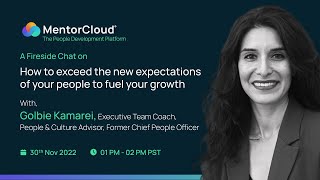
Dr. Ravi Gundlapalli and executive coach Golbie Kamarei discuss how workplace expectations have shifted across generations. They cover what employees actually want now, how to communicate expectations clearly, and how to rebuild trust after layoffs.
Chapters
Once again, you are part of the Fireside Chat conversation on the topic how to exceed the expectations or the new expectations of your people to fuel your growth. So whether you are a team leader, whether your organization running the entire, entire company, the expectations is an interesting word and we'll talk more about it. So thank you all for joining and with me I have Golby Kamarai. Her bio is like five pages and so I told her to introduce herself so that I get to know what matters to her the most. She is a TEDx speaker. She has been a serial chief people officer. She's an executive coach. She's such a fun to always talk and sometimes we just talk about things that are like suddenly become so exciting and interesting. So let's get started. It's one of five. So once again, this is Ravi Gundlapalli, founder of Mentor Cloud and I'm so honored to be having this conversation. We call this a Fireside Chat because we want this to be in the moment, authentic. And we didn't really prepare about any of this stuff just because we wanted to really share what's in our mind. Right? I mean, you know, someone like Golby has been living this, this field of managing people and you know, growing people in organizations. So it's not something that she has to prepare for. So we'll keep it authentic, honest and we'll leave enough time at the end for questions. And this webinar is being recorded so those that you know are not able to make it, we will share the recording as well. So with that, Golby, thank you so much. I know you're very, very busy, but thank you for making the time because the world needs to hear.
Your thoughts on this important topic.
So why don't you start with introducing yourself, Colby?
Okay, perfect. Thank you for that kind introduction. Hello everyone. I'm excited for the Q and A when we get to interact a bit. My name is Golby Kammerai. I'm an executive coach with Kamrai Advisory. My background's quite varied. I've been, as Ravi said, a chief people officer for three different organizations. One was a tech, a tech HR tech company, one was a retail direct to consumer company and one was an aerospace company. So all about 500 people and below. Prior to that I worked at BlackRock, which was several thousand at the point. I think while I was there it was about 12,000 in organizational development and investing roles. So from all my kind of work experiences, have always been thinking about the system, the organizational system, interpersonal dynamics and individual performance. And so I Particularly love this topic of expectations because I think it fuels a lot of our words and actions, and many people aren't super conscious of their own expectations. And so I'm excited to nerd out with you on this. Educationally, I have a bachelor's in psych from Stanford and a master's in Business Development. Excuse me, Business management. I should know what I got a degree in from the Stanford Graduate School of Business, and I'm also training.
To become a psychotherapist at the California Institute of Integral Studies. So this idea of expectations, while we'll talk about it mostly in a work context, it really is something that hopefully, if there's some good nuggets here, you can take into your personal lives as well. Does that involve me today?
Absolutely. Thank you, Golvi. Thank you, Golvi. I did not know about your educational background because I only saw the outcome of the educational experience. So very good to wish. Thanks for sharing.
So.
So I want to start with the thought that came and we were talking before we got started. I truly believe, thinking from a more spiritual way of human relationships, expectations is the root cause of all problems. A country expects other country to behave certain way. If they don't, they go attack or do something. And in relationships, I expect my spouse, my daughter, my dog to behave a certain way. And if they don't, I'm upset. So it's such a very, very critical word. So what does expectations mean to you? Tell us more from a more human relationship perspective.
So I completely agree with you. And what's really interesting of noticing this rise in mindfulness and awareness of mindfulness, especially in Western society over the last five to 10 years, is we use this term being mindful. And so what we tend to mean by that, or what many tend to mean by that, is meeting the present moment in the present moment as it is, without expectation or judgment of how it is. And that's really hard. Like, people are struggling to be mindful because we're so habituated to think that a moment should look, feel, sound a certain way. A lot of us are trained to have expectations of ourselves, of other people, of situations. And so part of this mindfulness movement is like unraveling our expectations so that we can actually just be present with whatever is arising, whether it's a thought arising in our head, a feeling arising in our body, words arising in conversation, sounds arising just to meet it with a sense of curiosity as opposed to judgment of, hey, you didn't live up to my expectation. So I totally agree with you a lot of people many times throughout the day in big and small ways or big and small ways, find that their expectations get violated. People and situations don't live up to what they thought it should be, then they feel badly. Hopefully over the course of this conversation there might be some nuggets of hey, how can we start to increase awareness of the expectations we bring into the present moment so that we don't feel disappointment as much as as we might currently experience.
Excellent. So this expectations also happens in inside organizations, right? People say, I am upset, I'm angry, I'm going to leave my employer. I don't like my manager. You know, this company is so bad. Everything happens because you thought something should happen in the company, but you may or may not have told anyone about it. And because of that sort of, you know, so which is why in this new world.
We just ended, hopefully this big pandemic is behind us. It is reshaping everything. It's reshaping everything. And people are working from home. And it's interesting that everybody talks about great something. The Great Recession, everything in America has to be great. The Great Recession, the great expectations, the great tragedy, the Great Recession. So what are some of the great expectations of people that you are hearing about today? What are the people in the workplace are looking for?
Well, I think you nailed it and I love that you said everything in America needs to be great because we really, you know, we are mentor Cloud is, you know, an American based company and but you know, we are a more globalized world more and more, and especially with the transition to remote work, we are working with people in all sorts of countries and cultures and we need to start to recognize.
Kind of our own American centricity and the impact that has. But that's a side conversation. So the great expectation. So I think one of the important things to recognize here is that in my observation, right now is the broadest range of expectations for what an individual might want from their workplace than ever before. And what motivates that statement is if you look, there are four generations of individuals that are in the workplace right now. We still have some baby boomers working, we have a lot of Gen X individuals working, we have a lot of millennials and Gen Z is coming on board and they're working. Now each of these generations have been acculturated into what work is, what are the norms of work, what are the expectations of how a leader should behave or appropriate boundaries or what you can expect of your employer. And so even if you just look at the age range of People coming and working.
As a proxy for what is the mentality people are bringing to what they think work should be. Is it just a paycheck or is it your social community and your home away from home? Is it a place where you, you know, you do the job to get the job done or is it a place that grows you into the human being and teaches you all these new skills? And so I think it's in addition to what people are bringing in terms of their own individual expectations to the workplace based on their own lived experience, their own acculturation to what work represents, I think we're also seeing some environmental shifts. Whether it's the pandemic which has just changed all the behavioral norms, or it's the economic contraction that's now after many years, changing the power dynamic between individuals and employers. So there's kind of like change at multiple levels. I'll pause there and see if that resonates.
Yeah, it does. In fact, you said it so beautifully. You said work is a platform for growth. You know, I, I was talking to so called baby boomers. Luckily I'm not, I'm not that. But when you talk to them, for them work was survival. They didn't question. They needed work to earn money to, you know, earn food for the family. And they didn't question you come at 6 o' clock in the morning and stay till midnight, no questions asked. But yeah, I want you to expand on this new expectation that work is my platform for growth. If I'm not growing here, I don't care. I will, I will survive on Taco Bell. I don't need a, I don't need to look at work as a way to survive.
I will respond to that. I do want to say I think you're spot on because when we think about the range of people who are in the workforce right now, some are underemployed, some are employed at capacity and some are unemployed. But the people who have a relationship to work right now, that includes people who grew up in a pre Internet age, as well as digital nomads are digital natives. It includes people who are raised in the Cold War era, civil rights era, in addition to people who are raised with technology that perpetuates social movements like MeToo and Black Lives Matter. And so it really depends, you know, how and when people kind of built their relationship with work, I think personally highly impacts their, their expectations. And what if they're in a leadership position, they then expect of other people, which is why there's a lot of tension These days between people with different expectations of what work is. But you asked about the people who are. Maybe it tends to be associated with the Gen Z, maybe even millennials of work as a mechanism for growth. I'm here to learn new skills, to become the person I want to become. There's less boundaries between home life and work life. There's kind of this 247 accessibility.
I think a lot of it is industry specific. Again, nothing we say is going to be consistent across industries, geographies.
Growth of maturity or maturity of a company, all of it is contextual. But there are a lot of new companies and there have been since the 20078 recession. And it was.
It fueled an innovation and entrepreneurship boom. We might be seeing another one coming shortly. But there are a lot of tech companies that have grown and prospered and they have the Googles of the world, the Facebooks of the world. They had younger.
CEOs that were really challenging the traditional ethos or expectation of what work offers employees. And some of them grew very powerful and very influential and have kind of led the way for a lot of other companies that have started and now there are multiple very successful tech companies and obviously non tech companies, but that are pushing the bounds of what can be expected at work. So you see the kind of benefits, whether it's you get all your meals paid for, there's activities and fun.
To additional financial or monetary benefits in tech companies. And you do see in some more traditional industries like oil and gas or financial services. And so I think when we, I think people who are attracted and the original brain drain from kind of like the financial services to the tech industry has acculturated people into thinking that's the norm. And it is the norm for some people, but not everyone.
So it's interesting you say that, right? What is the norm is being challenged from what I'm hearing. Right? What is norm? What does work mean? You know, what if. What can you ask the employer versus what can you not ask? When can you raise your voice? Everything is changing. And when you have four generations, like you said, it can be, it can cause a lot of tension. Right. The so called millennials and Gen Z's are wondering what are these older people doing in the workplace working 40 years in the same company? That's unthinkable for them.
Yeah, yeah, keep going.
And the people who have been there for a long time are wondering who are these young people who keep coming and going? Right?
Absolutely. Yeah.
So what can a company do to address this? Like do they have an expectations, all hands meeting or something or what do you recommend?
Well, I think it starts at an individual level, an interpersonal team level, and then also at an organizational system level. And that's often how I take, that's the lens I take whenever I'm consulting on any sort of organizational development or culture issue. Because at an individual level, anyone can do this. But it's really important for leaders to really start to clarify, even just for themselves, what are my expectations? Do I define work or employee engagement? How important do I make those things? But to really start to get clear on how do I define these terms that I'm using? Very easily, casually, work balance, professionalism, commitment, all these things, you know, that we use when we're describing employees and work. How do I define these terms? What are my expectations around this? And how much have I tested my expectations? Even in terms of like the definition, how often have I tested the definitions that my definition is the same as my peer group's definition? So leaders can, to get their own clarity around, oh, I'm thinking and expecting this. Is that what you're thinking and expecting? Before they even start to have an all hands with employee base, before they start to like make declarations about what one can expect with their employee, if to be an employee of the system. So a lot of it starts with individual leaders doing the internal inquiry around, you know, what do I mean when I use these terms and what do I expect? What are the behaviors that describe the terms I use and the values I talk about when it comes to work? That would be the first step. Does that, does that resonate?
Yes, it does. It almost, it almost seems like maybe, you know, as we are, as we are, you know, wrapping up 2022, there could be an exercise where an organization encourages people to sort of, you know, self reflect and what do they expect had to happen in their professional life and their personal life in 2023.
And then provide a mechanism for them to share it with their team, with their managers. So now everybody knows, right? I think be more intentional.
Absolutely. I mean, we're talking about expectations, which is such a broad topic, but we could even narrow it. Like, excuse me, there might be expectations related to one's role and the desired outcomes of that role or how performance is determined, the successful performance is determined for that role. There are also expectations around what the employee experience should be, which is a topic of conversation for some companies within certain industries, but not all companies. For some companies, they're like, you know, what your employee experience is going to be, what it is. We're not going to put extra attention or resources behind designing this really wonderful experience that's you know, this is where what we were talking about like what the expectation of work is, what's the definition of work? But let's just talk at the roles like when I was in a CPO role.
The funny thing about performance management is a lot of performance management systems will say things like you'll be rated in terms of meets expectations, exceeds expectations greatly exceeds expectations, doesn't meet expectations. But expectations as a tool is only helpful if they're very clearly communicated and understood. Rarely happens. The world I'd like to see is where people's performance are assessed against impact. Like meets aligned like agreed upon desired impact goals or something like that. That's a novel. But you can start by putting in on a quarterly basis or at a year end basis. Check ins with individuals and their managers to say each person can rate how clear are you on the expectations of your role? 1 to 5 How clear are you of what success looks like in your role 1 to 5 and both the employee and the manager can answer that question about that. How clearly the manager's question could be how clear have you communicated or aligned on the expectations of your direct reports role? Because then if they're out of alignment, if the employee's like I'm not clear at all really on the expectations of my role because either we never clearly defined it or the market conditions are changing so quickly or the company's growing so quickly, it gives that employee and the manager a chance to pause and go, okay, first things first, we have to clarify what your role even is like responsible for and what success looks like. Because in the absence of that, both the employee and the manager are going to bring their own expectations of what success looks like or what that role needs to achieve to the table. And if they've never calibrated it, they're more likely to get frustrated because it doesn't align. We want to reduce that level of potential frustration because we're all operating on a model of what a role should do. So we want to practice verbalizing it.
I love it. I think, you know, everyone listening to this, you know, practice the act of verbalizing your expectations even in your personal relationships and of course in the workplace. And the reason we selected this topic, Golby, is because when the expectation, when first of all you don't verbalize the expectations, nobody knows what you're looking for and the employee doesn't know what you're looking for. What happens? Expectations are Misaligned. So two bad things happen. First, you, your precious life, every day you have is a gift to do something good to yourself, to your family and to the world. And if you're not happy, you're wasting that day. And none of us have infinite time on at our disposal. So someday we're all going to leave this world, right? So you are wasting a very important, you know, part of, of what living means. So important for you to verbalize, let other people know so that you are not upset. For the employer, it is even worse, right? They are paying you and you are not happy. So you're not doing good work, so the productivity is impacted. And then suddenly you say, you know what, I'm leaving. And now I have to hire a whole new person. So as a leader, as an individual, it has to be a, you know, both people can, can benefit if you address expectations by verbalizing.
I think that's spot on. But a lot of it starts with yourself. Am I aware of what expectations I'm bringing to the table? And have I practice saying it out loud with really clear language. And you'd be surprised how many people are not practiced at this. So I am an executive coach and I work with senior leaders and those are senior leaders of companies that are both big and very well established and small and startups. Some of Those leaders have 20, 25, 30 years experience, some have five to 10. And no matter their background, it is very common for people to say, oh well, they should just know what good performance looks like. Or well, they should know what I mean by raising the bar. They should know what I mean by creating like, I want to be empowered and those, no one can read another person's mind. And so we really, you know, coaches, people, leaders, leaders in general, managers really have to train ourselves for ourselves. But also others on saying, can we get a little bit more specific in our language? Because when we throw these concepts or these idioms around, raise the bar. Everyone should know what raising the bar is. That doesn't actually translate. We want to get really specific because when we translate into specific behaviors, then people can go, oh, that's what you mean by raising the bar? That's not what I mean by raising the bar. And you can practice this even with your partner at home or your friends to say, hey, how would you define this? And you can start to see the range of ways people define key terms and concepts. And when you see the misalignment over what you think is a very well understood concept or value or you know, just attribute, then you start to realize, oh, anything less than being very specific in my language is going to potentially lead to misalignment, miscommunication, and potentially frustration.
Right, Beautiful. I mean, this is the essence of what we are talking. What you're saying is to be aware for yourself and start verbalizing it, checking it with people so everybody knows. It's almost like I tell Golby, okay, Colby, I'll see you in the evening. Like, what time? Oh, yeah, I knew in my mind it was 4 o', clock, but you didn't know that. Yeah, you showed up at 5 o'. Clock. So I'm upset. You are. Like, you never told me that. Right. As simple as that.
And so that tends to happen over and over and over. And then rather than going, oh, I could probably slow down and clarify what I mean by the evening, most people go, that person's always late or that person. And people often will start to make up a story or a narrative about the other person or the situation. Oh, my boss never gets it. Well, have you asked your boss explicitly what it is that you want and need and why it's important? And have you listened to their response? And so, so many, you know, this isn't work. And in personal lives, so many interpersonal relationships would benefit by slowing down, checking in, asking specifically for what you want and need for yourself and why, and then checking in and saying, what does that person want and need for themselves? Can I offer it to them? And to start to get ahead of miscommunication. But it's a very hard thing to do.
Beautiful. So it's amazing that we talked about the core essence of this topic for the last few several minutes. I want to shift gears because I've been tracking this Gallup, the poll that they track employee engagement. I don't even like the word engagement, but that's a different discussion you and I will have. So when I look at the graphs, 20 years ago, it was 28% of the people are so called engaged. In a way, Gallup expects employers to be engaged. And in 2022 it is 32%. So it has not changed. So that means more than 70% of the people are so called disengaged. And if you look at the pandemic and look at all the things that are going on, it may be even harder. Those course we have to be completely rethought. So.
What do we do to really make everyone in your organization come to work excited, inspired, committed, and so on?
Well, I think the first thing to do is to test your assumption that that's really what is required for everyone to come to work excited. And then what excited even looks like? What does it sound like? What's the behavior around excitement? Do we actually need everyone engaged? Why do we think that? How do we define engagement for our company? Because engagement looks very different depending on who's defining it. And so it's really saying, okay, well, what's my hypothesis around the value of engagement? And there's heaps of research that show engagement leads to performance and retention. And so I'm not, I'm not suggesting that it's not a value or an attribute worth aspiring to, but I think it's one of those squishy terms that depends on how you define it. And unless we are really clear about what engagement looks like at Company X, everyone that works at Company X is going to define it for themselves and they'll be like, well, I'm not engaged and their boss might think they are, or vice versa. And so it's really, what does engagement look like? And then is it fair to assume that everyone will have the same relationship to work where they all want to be highly engaged? Maybe, but maybe not. Some people might just be taking a job because it pays a bill and it supports their family or gets them health care or supports their visa. Like it is worth recognizing that America is a capitalist system where we need. We don't have some basic civil social services that other countries have. And so people's relationship to work isn't always because it's their greatest joy and passion to do their job. Sometimes it's, I just need money to live in this capitalist society. So I think it's worth again testing the, you know, one's hypothesis as to why, you know, who does everyone need to be engaged? What do I define as engagement? And then once you're clear and you've calibrated that with the leadership team, I think the important thing is to communicate that it's a desire to create the conditions where people are engaged as an engagement. Looking like xyz, looking like coming to work on time, looking like volunteering for extra social activities, it could look like raising your hand to be a manager. People again will define it differently. But it's about then, once you define what the leadership team thinks engagement looks like to calibrate that with the employee population and say, hey, this is our hypothesis of what engagement looks like. Is that what you all feel or you all want from your work experience? This is where this new HR tech world is blowing up around giving employees a voice, employee Voice. Yeah. There's a company called All Voices that tries to, you know, use engagement.
Engagement surveys to try and uncover what's in people's heads about their expectations, their wants and desires and to do it in a way that then can hopefully be acted upon. So it's a multi step process for sure.
Excellent point. So.
I'm almost hearing you say that the whole engagement idea may have to evolve and become a lot more clearer. It's not what about what an employer thinks engagement means? And you also said, made a good point. Maybe the Gallup numbers of 30%, 40%.
Maybe focus on those that are engaged and make them superstars, make them super productive, super committed. And there are people, like you said, in the society that just are there to do a job, to get their, you know, health insurance and so on and just make sure that that is met. So excellent point.
Yeah. And I mean, I was talking a lot about motivation. The motivation is, might be I just want a paycheck. I don't want all the song and dance that is expected in some of some companies and maybe that might not be the right employer fit. So I'm talking about motivation of an employee to come to work. But it's also worth recognizing people have different personalities. Some people are really outgoing and bubbly and want to connect and interact. Some people are more quiet and reserved and they just want to work individually.
I think what I feel like I'm noticing is the word engagement is becoming synonymous with extroversion at times for some people. And we want to really challenge that because there is more of an initiative to be, you know, have diverse workplaces. We know that it leads to better results, that, you know, our country, our world is highly diverse. We are, have, we want to give opportunities and there's a lot of technology that invites more people who aren't geolocated. So you can have dispersed, diverse or dispersed groups. But I think it's really around recognizing this is why challenging the definition. What do I mean by engaged and is it, is it kind of, is it conforming to a particular way of behaving in the workplace and is that an appropriate definition if we're really trying to be diverse and allow people to come to work and not have to be someone other than who they are?
I love it. I love it. I think.
Yeah, engagement is an overused word and it can mean a lot. And there is definitely a lot of good work to focus on the voice and make sure it is very personalized. Not everybody is expected to be.
Always bubbly. And I Like the way you said engagement sometimes is, is sort of, you know, tied to that, that extrovert, extroversion kind of personality. And some people don't like that. They just want to be. So yeah, that brings me to the next question I wanted to ask you. Which is, which is top of every leader's mind right now is should people come back to work? Because that's what that was how it was always supposed to be. And we all know the importance of human connection. It's fun to go into workplace, say hello to colleagues, have a cup of coffee, you know, have lunch with someone, and have those serendipitous interactions that won't happen if you're sitting at home. But in a lot of leaders tell me, I can't get my people to come back. This pandemic has changed it. They don't want to come back. Some millennials, they want to come back.
They don't like sitting at home and working. Whereas some programmers or millennials, they're happily sitting at home and coding all day long. So what do we do? Do we. Is there a. Is, is there a one size fits all in this, in this, in this world where should everybody be forced to come to work or should we go to this in a global world where we never meet another human being that's kind of miserable?
I think it's such a good question and I would say I don't know the answer. There's so many people who are trying to experiment their way into the right answer for their company. But I had a very similar conversation yesterday with a very senior leader of a multi large multinational saying the same thing, saying, you know, people don't want to come back to work and we're the kind of business and the kind of culture where we kind of want them here. And so it's, there's this tension. And I wouldn't say it's so necessarily like the more tenured people versus the less tenured people, or the more senior versus junior or older versus younger, though there sometimes seems like there's some alignment between kind of the who's wanting what kind of work environment. But I think we're in this new world where we have to figure it out together. And industries, some industries might be more conducive to a flexibility kind of model or a hybrid model. There's some industries that aren't conducive. Knowledge workers can often work anywhere. They can be connected simply via their technology. There are people at retail locations, manufacturing, where they have to touch the. And that makes it A little bit harder. So there's really no right answer between are you all in person, are you all virtual or are you hybrid? I know that many chief people officers when I was in the role and my peers are sharing knowledge and insights about their lessons learned what's working, what's not working, so that hopefully each company can course correct and get the right design.
I think when it comes, I think it's really around human connection and it's worth recognizing that connection can mean something. Again, one of these terms, connection can mean something different to everybody. For some people, connection might mean human connection and it might be specifically human in person, tactile, I can hug you connection. For other people, human connection could be valuable over a zoom call. For some people, connection which could lead to engagement can be connection to the company mission, meaning I don't need to be in the office to feel connected to the mission. I live and breathe this mission. I wake up with this mission. For some people it can be connection to the work product or the company's product. It's like again, I don't need to necessarily be collaborating in a room with you to feel that connection to the product we're building or the service we're offering. I think it's worth recognizing that people again have a range of preferences and companies get to decide to what extent do they want to.
Offer and accommodate. That's the word I'm looking for. A large range in preferences of their employee base or a small range of preferences. And then if they're clear on that, if they understand the trade offs they're going to make by declaring a position, then to really clearly communicate what their expectations are, whether it's coming into the office or you need to be performance expectations. But I think it's around again defining what you mean by anything, whether it's engagement, collaboration, connection, figuring out what, making sure people are using the same definition, translating that concept into behaviors and then allowing people to practice those behaviors.
Very well said. I'm just thinking when we talked about four generations of employees, there's probably multiple generations of people, leaders as well, people from the 30, 40 years ago think work is this. That's why I think everybody should come to work, whereas younger people think differently. So there is that aspect not only on the employee side, even on the HR community itself, which is why they're not able to come to terms because for them work means you wake up in the morning, get ready, drop your son or daughter in college or school, and then go to work. Right. So there is that also so it almost seems like we have to go back to the basics. Why does this organization exist? What should the organization do to the world and what does it take to make that happen? And then figure out who needs to be in what role and what location and what format to get it happen. Almost like we have to go back to basics, not try to, you know, modify what is there right now.
I think that's smart. You know, what you're describing is what some people call the employee value prop. You know, well, why does the company exist? Yes. What are we in the service of? What are we, you know, what's our mission, our vision, our purpose? Individuals can ask those same questions of themselves, but the company when they're thinking about, okay, well, how do we attract the right people for the right roles at the right time with the right resources can say, okay, well, what do we have to offer employees? What is the value of coming and being an employee here? And then they can share that and employees can either opt into that or not. And sometimes that employee value prop is going to be, you know what, we've been doing it this way for the last 30, 40, 50, 100 years. We're not going to change. Even though the external conditions have changed. That might be fine because the people who want that will gravitate to that. Or a company might say, you know, we have been operating our culture, our ethos, our way of business for a long period of time. But we're looking at external conditions, we're looking at trends, whether it's trends in technology, trends in, you know.
Population ecology, or just population trends. And we want to shift, we want to kind of recalibrate what the employee prop is. And if they're clear about that and then articulate it, then the right people will come to them. So it doesn't really matter where you fall. There's no one right way to be an organization. But it's really about how clear is the leadership about what they're offering, their employee base, or what matters to their company. How clear are they for themselves and then how clearly are they to communicating that both to current and potential employees getting tongue tied.
Perfect. I think the employee value prop sounds good. And I mean, as a leader, I myself am thinking that it's not a one size fits all. Is that what a modern company or modern. Everybody talks about modern workforce, modern workforce. Maybe that's what it is that we have to rethink rather than try to tweak an industrial era workplace model. What is the Internet era workplace model? Almost? Right?
Yeah. I mean, I think that's what a lot of people, especially these entrepreneurs are doing is saying, hey, I'm not saddled with 100 year company culture or bureaucracy or way of doing things. I have a fresh slate. What's the world I want to create? And there are a lot of interesting, I mean I live in Silicon Valley, so there are a lot of interesting entrepreneurs that are saying, hey, you know, the world's shifting. I have a vision, I'm going to go test it via the company that I'm building. Whether it's the culture vision, that I have, a leadership vision. And so we're kind of at the frontiers of what work can look like. And some companies go, maybe they like test something bold or risky and it doesn't pan out. But there's information in both the little and big successes and the little and big failures that if people are paying attention, they can then apply to their company or their style of leadership. So yeah, the modern workforce is, and the modern, you know, the future of work I think is being co created right now.
It is, it is being co created and going back to the original. It has to be co created with, you know, clear verbalization of expectations like you said, right. It cannot be that we sit and figure out what it is and then employees like that's not what I want. So I think co create the modern workforce by verbalizing expectations. That should be a tagline.
That can be the tagline. I mean I think even at the very least, you know, building or people run organizations. So if individuals even just for themselves can start to be clear on what's my expectation for my job, for my manager for this project outcome? Have I practiced saying that out loud? Have I practiced clarifying the terms I'm using and using behaviors instead of concepts? Have I calibrated that with the other people, with my manager so that my manager knows what I'm expecting of her him? Have I, have I modified my expectation based on the feedback I got from when I verbalized? So people just starting at an individual and interpersonal level will change organizations because it'll uncover all the ways that people are just bringing the history of their belief system and their experiences to the situation and what they'll start to see, that everyone's just projecting their own view on the world. And when we realize just how misaligned we are kind of at that early and subtle stage, we can calibrate course, correct and do it together so that we're not rupturing relationships when things don't go our way. We're actually co creating together from a place of desired clarity, of desired outcome.
Desired outcome for which the organization exists in the first place. Right.
Yeah.
That's where really then everybody focuses on that and then we figure out where each of us need to be. It's.
Excellent. So please post your questions. I do see a few questions where we will get to them. We also did a poll and some of you have replied. Not all of you have replied, but looks like more than 60% are grateful and hopeful and optimistic. There are 17% of people are concerned. So hopefully this conversation will give you your concerns. Could be. Maybe what you're concerned about should be more known to other people so they can address it. You know, we also asked a question, we also asked a question, how does your employer today match your expectations? It is disappointing that nobody is blown away. So nobody said, my company far exceeds my expectations. Whereas, you know, 50 said they're happy because they meet expectations. A third say they're disappointed because they're below expectations. So if there is one action you can take, clarify the expectations. If you need more money, a better role, a better working conditions, a better manager, a better project, let them know. If they don't know, they can't read your mind.
Yeah, I think that's spot on. And sometimes it's really the nuanced stuff people say, you know, I'm not super blown away because I want my manager to tell me good job more often or to ask me how am I doing? And again, we have these subtle expectations often interpersonally that we don't realize, but then we use to judge the other person. Yes, we can say, hey, manager, I would love it if we kick off every meeting where you ask me how I'm doing and I ask you how you're doing, Is that, is that okay? Would you be up for that? Rarely would people be like, no, that's a waste of my time. But it's possible. You know, I've worked in cultures that don't have time for that, but it's really starting to notice and, and start to advocate this word, advocate, which itself should be defined. But start to articulate. How about that? Articulate.
Articulate is good.
Yeah, I see there are a few questions in the.
Yes, I'm going to go to the. The one question that you and I are talking about, you know, in a. Earlier is the question is we had to lay off some people recently, but I am worried about the remaining employees. How should we think about ensuring that our employees that are remaining are still inspired? What do you say Galvi?
Yeah, I'd say there are a lot of companies trying to figure this one out.
So I think it's. Let's think.
When there is a layoff, or people call it sometimes a riff, a reduction in force.
The organizational system contracts. There's a loss. There's a loss of human relationships, of human experience. Those individuals bring to the table of the knowledge, organizational knowledge they have. So there's a loss. And sometimes that loss is sad, sometimes it's contentious, sometimes it is messy.
It's worth acknowledging that the system has experienced a loss and the individuals within the system have experienced a loss. And people's relationships to loss vary. For some people, it's an intersection between their relationship with loss and their relationship with work. Some people are like, yeah, whatever comes and goes. Business is transactional. People, you know, they were here yesterday, they're not here tomorrow, so be it. Where some people think that was a person, how you treated that person, or now who am I going to talk to or how am I going to connect? It feels much more internalized. For example, I think it's worth just acknowledging the loss. Some people need to grieve a loss. Now, we don't often talk about grieving losses related to organizations, but maybe we should, because for some people, that will be significant. Sometimes the acknowledgement of it is a good first step because then people who. For whom it really is significant, or it triggers a fear of, oh, my gosh, I feel scared. Is my job in question. It gives them an acknowledgement of, yes, that this is an action that was taken that could trigger strong feelings and it might create. Might make people have certain fears. And so then you can start to open conversation. So I think the first thing is leaders should see it as a loss to the system and for individuals and should acknowledge it, acknowledge that it was an activity that happened. Some people don't. They don't verbalize it in all hands. They don't have a CEO letter, they don't kind of talk about it. But to talk about it at a system level, acknowledge it at a system level, the whole work, and then also at an interpersonal team level. So leaders can go to their teams and say, you know, this happened. I know that there might be some strong feelings and they might choose to say, let's talk about it here. They might say, the invitation, my door's open if you want to talk about it or if there's a concern. But I think it brings humanity to a really complex situation. And sometimes, you know, people's relationship with loss or change is unique to them, some people, and you don't know what it could trigger. And so I think it's also not judging people if they have a strong reaction to really anything because we don't know what life experience someone's had and what might be triggering a strong feeling state.
Excellent. I think. So to answer the question what Golbe's recommend is, acknowledge that sometimes you have to move fast when we need more gas. Sometimes we have to move more slowly when we need less gas. So just be acknowledged the fact that what is happening in the business conditions out there and make it as human as possible. And to all the remaining people, I think in recognizing and making sure that they don't feel that they are carrying all the burden, the workload of a thousand people now being done by 600 people and now they get burnt out. I don't like the word burnout. So as a leader to whoever asked the question, please talk to those that are remaining and to make sure that they don't feel overloaded and provide the support they need, whether it is extra tools, extra training, extra love and care, a break time. So you cannot expect the business to perform exactly the same with the lower number of people. Right, Golby?
Yeah, I think that's perfect. And I also think, do we really need everyone to be inspired the day after they find out their colleagues die? Die. Oh, gosh, I went morbid for a second. Their colleagues have left or there's been an organizational death. There you go. Where people have been laid off like inspiration after three years of pandemic, a global market contraction, people's homes, lives changing. You know, there are not a lot of inspired people right now. A lot of people are kind of hanging on. And so inspiration might be a lofty goal, but in the attempt to kind of generate it or kind of nurture it, remembering that purpose and mission is often inspiring for people. Something greater than themselves, A mission or a purpose greater than their company can often start to fuel motivation and inspiration when times are hard. So talking about the why, why does this business exist? Who are we trying to help? What impact do we think our product or service will have on the quality of that person's life and really start to kind of remind people why the organ to Robbie's earlier point, why the organization exists and what role they're playing in that end result of it making someone's life hopefully better, perfect.
The next question is how can I make sure that new employees that we are hiring. First of all, thank you for hiring you know, attracting people to your organization. You must be doing something amazing. How can I make sure that these new employees feel connected with our culture when we are all working remotely? There are two parts here. One is making them feel connected, whether it's remote or not, that you have to do regardless. It becomes an additional factor when everybody is remote. What are your thoughts? Golbi?
You're right. Connection is important to think through whether you're in person or remote. It's particularly hard if you are remote, at least now, because it's not the norm and it violates a lot of people's expectations of what an onboarding process would be. I think it's really important to clarify what are the principles of your culture? What are the values that underpin the culture of your company? How do those values translate into behaviors? For example, you might have a value around transparency and there might be a phrase around it, but what's the behavior of transparency? Is it everyone has an open calendar and you can see everyone's meetings? Is it the CEO and C suite shares all the financial data or all their conversations with the board? Is it everyone sees each other's comps? Is it you talk about your feelings openly, like what are the behaviors associated with particular values? And when you're clear on that, then you can start to think, okay, well, how might we create the conditions to strengthen and let people practice these behaviors or experience the benefit of these behaviors? How do those conditions look when we're in person versus when we're remote? And you can start to create rituals, you can start to create reinforcements that allow people to live the culture even when they're not necessarily in person. It's to, it's totally doable. It sometimes just takes a little bit more creativity since it's not as ingrained as a way of working.
Perfect, perfect. So if I can add to that, you know, new employees, to make them feel connected to the culture, first connect them to your people, to the people who are already there. Because culture is not something that is, that is, it is. It resides with the people. So if you are the senior leader, you know, even before somebody joins your organization, email them, talk to them, ask them. And you know, we have seen at Mentor Cloud, for example, you know, the onboarding programs are where a employee is already matched with an executive as a so called buddy mentor. So from day one, there is somebody I can go to, I can ask questions, I can share my challenges. So creating those human connections is the fastest and the most proven way to integrate your new people into your culture. So, and then this. The second idea for you is I'm a big proponent of no agenda zoom meetings. So schedule a zoom meeting. There's no agenda. Just let people hang out, let them come in, let them talk about their dog, their daughter, their son, doesn't matter whatever it is or the movie. Let them meet as people don't. Any, any. No project discussions, no deadlines, nothing. So no agenda meetings. Another way for people to say, oh, this place is all about people, not just about work and results. You know, that's also very important for people to feel connected.
I love that.
All right, another question. Any tips for what to do when culture is being negatively impacted by C suite executives such as COOs? What do you do when the majority do not trust them? Wow, that's a loaded question.
It uses a lot of important words.
Like trust. Trust is a very kind of word to unpack. Here's what I'd say. Since we have three minutes left and this could probably be a big topic, its own conversation.
I would.
I would say define trust, the impact of what you think not trusting is. But I think the most important thing that I always talk about when we talk about performance is that an individual is operating within a context, within a system. Performance can never happen outside of the relationship with the context. Often we look at one person, we'll say that person's the problem. That person is not doing, they're not doing their job. They always have a problem. They're the nitpicky one. But there's a system, they're playing a role within a system. And they actually probably add value in some way to the system, even by being difficult. Because if they were to leave, sometimes someone else comes in and plays that kind of difficult person role within an organizational system. So I think would be recognizing what is the context in which this person is operating. Has anyone asked about the context?
How much is it them as an individual and how much it is in the environment around them? I think it's what's tricky is when it's leaders is employees have expectations for leaders that aren't always communicated from the employee base, but even from peer leadership. We don't always communicate what it means to be a leader. That's one of the most loaded words. So we really. It sounds like they're violating some expectation which might be tacit, not yet expecting, explicit about how they should behave, speak, act, react. So it'd be clarifying expectations and explaining why they're out of alignment. It would be, and I don't know who the right person to do that is probably the CEO, their manager, or their peer. It'd be looking at the relationship to the context. What do we not see? Is that person sick? Do they have a sick child? Did something happen? A lot of times people are carrying burdens that we have no visibility into.
Yes.
So you don't know what's influencing their short temper or the fact that, that they're not doing what you might want them to do. But then I think it's really important about recognizing the power dynamics. The reason we are so critical of our leaders, I mean, this is its own separate topic, but one reason is they're in a position of power. And we tend to project a lot of expectations even more onto people who are in positions of power to us. And so worth recognizing kind of how expectations have differed in that role and what are the needed. How do expectations need to be clarified? So in an ideal world, that person could succeed in their role. Hopefully that was helpful in some small way.
Yeah, no, I, I think that, that, that's, that's very, very important. Again, it, it ties very well to the, to the, to the, to the core topic today. So my extension to what Golby said would be no, I, I encourage something called as a fireside chat. I tell executives, go stand in front of just like what we are doing today. You know, we didn't prepare anything. We didn't, we didn't dress up, we're just there. This is Ravi and Golby in as authentic as it can be. Right. So I encourage this CEO, for example, to encourage him or her to do a fireside chat like this and ask questions. We would like to know, where did you go to college and where did you grow up and what are some of the challenges that you went through? You will be amazed when you recognize the human behind the coo. You will begin to trust a lot more. So that would be my answer to that, to whoever asked that question, is try to find a way to get to the human behind us, behind the COOs, because CEOs or CEOs or C. Whatever, are not gods. They have challenges. I know people who have elderly parents whose, whose spouses passed away, whose children are having some serious illness. There is no way they can disassociate that and come and become like, act. You don't want people to act, right? That's not good. So understand what is making them, you know, be that way. And then you will have a better appreciation and your expectations will be toned down in the process and you will be, you may not Be where you want to be, but you can be at a different level but much more closer. Right. So another question, last one is how do you appeal to the younger generation of the workforce, especially if you're, if you're in a company that has been there for 30, 40, 50 years. What is one thing, Golby, that comes to mind before we wrap up to appeal to the younger generation of the workforce?
One thing.
Honestly, I'm going to go to the theme because it's the theme that I, that is present in all my exact coaching classes or with my exact coaching clients, with any workshops I run. It's really around.
Learning to communicate more clearly. Whether you're communicating expectations, whether you're communicating what your offer is to these employees, whether you're listening. Listening is a hugely important part of communication. But I tend to think communication is one of the most important skills to get to hone individually when you're just with another person or interpersonally. Also for teams and then eventually for systems like the whole organization. And how do you communicate at each of those levels? I think that's the, one of the most important things because there's no silver bullet, there's no.
There'S no one size fits all. It's going to be a co creative event. And to the extent that these organizational systems have multiple generations, there's going to be a give and take in terms of learning and exchanging insights. So if you can focus on how do you communicate well as a process, then no matter what the content is that arises in those conversations, you can take action on them. Yeah.
In fact, early on in the conversation you use this phrase which I wrote down was so powerful. Work is a platform for growth. Tell these younger people this company is your platform to make your life. It is not your place where you come to do some work and earn money. If that's what they want, let them tell you that. But if otherwise, in general, younger people are looking at esg, you know, the environment, society and governance. So very important to just say that, guys, this is your platform for growth. And you know, whoever asked that question, we are here to help you to really figure out how to make your company a place for growth, how to be the farm. You know, a farmer's market also needs a farm. So tell the young people, here is a farm. Come here, learn from others, grow and go wherever you want to. If this is not the place, no problem. A vegetable never gets stuck with the farm anyway. Right? So you, you can go wherever you want. So with that, I want to finalize that this last survey was very encouraging. So I think we have done something good today. Golby, when we asked the question, what is one thing you will change starting today? 71 of the people said, I'll be more conscious of what misalignment of expectations can do to both personal, professional relationships. So I think we have highlighted the importance of verbalizing expectations of. Of telling people in your work, in your home. And 30 even said, I will ask others of what their expectations are of me and I'll make my expectations clearer. So if you do these three, I think we can make the world a better place very simply, starting with our own world at home and eventually our world at work, which is when you work from home, it is the same. So, Golby, thank you so much. That was such a profound conversation. I learned a lot and I appreciate you taking the time.
Oh, thank you for having me, Ravi.
Wonderful. So thank you all. Have a great afternoon. We will share the recording of this and if you have any questions in the email that you will receive, there'll be an an address that you can always connect us. We love conversations. We love to help people grow. We love to make the world a better place. Thank you all and good evening. By.
More from Dr.

Essentials of an Entrepreneur by Dr. Velumani Arokiaswamy, Founder of Thyrocare

Skills & Traits for Better Employability | Amritkaal Mentors – An Initiative by MentorCloud

What Leaders Look for First-Time Job Candidates | Amritkaal Mentors – An Initiative by MentorCloud

How to Innovate and Lead Wisely in Today’s World with Navi Radjou - An Initiative by MentorCloud

Crafting Your Academic Journey with Dr. Manish Kothari - – An Initiative by MentorCloud



Advaitha Jagruti: Awakening The Spirit Of Adi Shankara In Indian Youth | Dr. Ravishankar Gundlapalli

Testimonial | Sanjeev Sharan | Catalyzing Growth From Within | MentorCloud Mastermind

How to Make a Mentee Feel Comfortable #mentorcloud #mentoring #coaching #wisdom #experience

Testimonial | Kellie Teal-Guess | Catalyzing Growth From Within | MentorCloud Mastermind