"My Wake Up Call" Podcast - Dr. Mark Goulston interviewing Dr. Ravishankar Gundlapalli
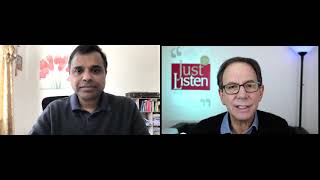
Dr. Ravishankar Gundlapalli survived two near-death experiences that pushed him to leave engineering and start Mentor Cloud, aiming to reach 100 million people. He mentored a visually-challenged student, Srikanth, who went on to MIT Sloan and now runs companies. Ravi's framework: people need to feel heard, understood, valued, and like they added value.
Questions this video answers
Dr. Ravishankar (Ravi) Gundlapalli.
To impact 100 million people.
Twice.
A mentee named Srikanth; he got into MIT and graduated from MIT Sloan.
Do, Know, Are, Dream.
Chapters
Welcome to another episode of my Wake Up Call. You know what this is about? This is my ability to reach out to people who have to make the world better. I mean, they can't get it out of their head and it's a calling to them and they would do it for free. But most of them know how to make money doing it. But they leave the world better than they found it. And today we have someone who leaves the world better than he finds it every day. Not only every day, in every interaction. So you can see why I'm excited to have my special guest today, Dr. Ravi Shankar Gunlapalli. And he says, perfect. Jeez, Perfect. Boy, I hope you can tell my wife that I'm capable of that because I haven't hit perfect with my wife in about 20 years. He says I can call him Ravi. It looks like Ravi and I have the same wife, but he's the founder and CEO of Mentor Cloud. It's a human powered growth engine for organizations to rapidly grow their capabilities and performance of people through guided mentorship. A lot of people think mentorship is just this amorphous thing, but he's turned it into an art, a science, skills, tools, and makes it happen for amazing organizations. He's globally recognized as a thought leader on mentoring and learning, and he's the author of the Art of Mentoring. He speaks everywhere. I mean, at the International mentoring Congress in 2020 in Madrid, the Women Economic Forum in 2020 in Cairo.
The Future now conference. He speaks to YPO and EO and he's just quite remarkable. He's been featured in every publication that my listeners tend to read. You may go on podcasts where people say, I don't read the Huffington Post, but he's been in the Huffington Post, Forbes, Harvard Business Review, Forbes, India, Knowledge at Wharton.
And you can catch him on all kinds of podcasts. He's also in a couple books deal, Storming with Tim Sanders. He's a mutual friend and Mark of an Eagle by David McAlee.
Prior to all this stuff, he led supply chain solutions for Boeing787, dream maker Raytheon and and Hitachi Global Storage. So what I like and appreciate about Ravi is he.
Is the connection between the left and right brain.
And he must have a corpus callosum that you know that's as thick as your arm because he sees the value of mentoring and how it impacts performance and the need that it can't be just mentoring with no purpose. So, Ravi, thank you for giving us the gift of your time.
Mark, thank you so much. That was so generous of you and very kind words in my introduction.
I still have a long way to go. I missed death twice. So this is my last chance. I don't think God will give me one more, one more chance to live. So in this beautiful life that I've been gifted, I have more work to do. So while everything that I have done that you have read is sort of gratifying, I'm looking at the road ahead and seeing how much more I can do with all the wonderful people that I get to meet in this journey, people to impact and then people like you who I got to meet very serendipitously.
So something I want you to dive into because this conversation is going to go wherever it goes when you miss death twice. Did from that. Did you have any wake up calls with a sense of urgency and the preciousness of life and, and that you really have a lot more to do to help the world?
Absolutely. You know, the first time I was, I was not even born. I was, my mom was seven months pregnant with me and I was to be aborted because the doctor said the baby is sideways. It's hard to have a delivery that's smooth. So my mom was on the surgery bed for me to be aborted. And then my aunt comes and says, hey, I am the seventh child in the family. So my aunt asked a simple question. If six kids came out just fine, what are the odds of the seventh child not coming just fine? So she said my mom just needed rest because she was taking care of six kids and my dad. So with some rest for a few more weeks, I came out just fine. Of course I'm out of whack because I think differently. I had a whole different trajectory in my education and life in general. The second time was definitely I was much more aware of what was happening. I was on a plane that was given permission to take off and then on the same Runway, the helicopter carrying the President of India was also given clearance to land. So it was a near close call to death. 142 of us, plus the President and her crew could all have burst into flames. But luckily it did happen, thanks to our pilot who happens to be a intense meditator and a strong God fearing person, which is why probably he saw this thing ahead of him about 100ft ahead at Runway speed, which is literally split seconds. So it was a wake up call for. First of all, I was happy I was alive. I was happy that India's President is alive. There was no accident.
But.
But what really got Me thinking was I was a number. 142 people saved from a mid air collision. No mention of Dr. Ravi Gundlapalli. No mention of this guy who has a PhD, who has several publications, patents. He was number seven in India in high school. None of that mattered. And I kind of was reflecting on that. And of course there was a lot of talk about the President which is great, but I said I need to do more. I figured that I was given this amazing chance and the life of my life could have just vanished just like that. I just don't do anything. I was just like everybody else. Bought a ticket and got on a plane. I felt the fragility of life. Extremely fragile. It can go away anytime. So might as well use every living moment to create impact. And I made a pact that day, I call it I am pact. I made a pact to create impact in the world. And I said the world should miss me. If I do good work, if I am impacting and leaving a legacy, then I'm sure the world will miss me. And I do remember, our dead are never dead until we have fully forgotten them. So all those things were playing in my mind. The story of Alfred Nobel. It turns out when I go look back. I read his story a few weeks ago of this accident. I can share that if your listeners don't know. So it was a wake up call. It was a point of reflection to say I got to think big. So I left my very safe and successful job working on the, working on the Dreamliner and decided to embark on a journey to impact 100 million people with what I call optimizing the supply chain of wisdom. Because mentors, I call it a supply mentees are the demand. I have done supply chain before. I said we need to bring these two sites together more effectively across borders. And so.
I feel fortunate that I found my passion and today I sort of live it every single second in my life.
What's the difference between being smart, being bright and being wise?
Oh, my very good friend and mentor actually wrote a book called From Smart to Wise.
My definition would be smartness is really about having skills in certain areas, but being wise is about applying those skills in a way that is impactful to you and impactful to the world and impactful at the moment that you are in.
Being wise is about being more contextually smart.
Yeah. And how does this fit with your view? Because when I think of. Let me tell you my mentor story because I've had eight mentors, they've all died. The most recent one was Larry King. And before him was Warren Bennis, big leadership guy. And I have something that I call the Dead Mentor Society, because at my core, Ravi, and something that's caused me to feel less than other men, I'm not an I. At my core, I'm a we.
And I used to think of myself as less than other men because I've never had. I'm going to take the hill. It's. I want to find a partner. And together we will make the world better. Better. And so sometimes where I use my dead mentors is I can be kind of hard on myself. So if I make a mistake, I can beat up on myself. And I call upon my dead mentors to talk me down from being self critical. And they do it with love. And so I go from being self critical about something to appreciating them, being grateful to them and missing them. And when I lean into that and I'll share something, why I mentor so many people. And I'm wondering if you have a parallel story. So Warren Bennis died several years ago, and I miss the man because he was an amazing, amazingly wise person when it comes to leadership.
And I remember the year before he died.
He said to me, I'm trying to be a good sport. And I said, what do you mean? He said, mark, they parade me around the MBA program at USC and they say, oh, this guy wrote a lot of books on leadership. And he said, mark, I'm irrelevant. I don't matter. My books the MBAs have heard of, they don't read them. And he said, I'm trying to be a good sport because I got to be relevant into my 80s and most people aren't relevant into their 70s, but it hurts.
And I took that in and I thought the best way to be relevant is to find people who are younger. So I'm in my early 70s, and to find younger people and help them distill their purpose and land in their future using anything and everything at my. At my disposal. And I think it's working. I think, you know, because I know people my age and trust me, they're not relevant. In fact, they get in the way. And so I'm trying to earn a few more years of relevance by mentoring people and helping them define what matters to them. And so I'm going to shift this because you haven't listened to my podcast, but what I ask people is what matters most to you in life outside of your family.
And you think at the end of your life you'll say, this was my purpose. This was why I was born. And maybe you've said it to impact 100 million lives. But if you can go into that and say, Mark, I think what matters most to me is this. And then just tell us the story of your wake up calls that led to that fantastic.
First of all, rest in peace Mr. Warren Bennis, Larry King and all the mentors that you have been fortunate to have. You know, because it is, you know, they have left a legacy and created you into who you are today so you can pass this on. You know, I come from the Indian heritage where this so called, you know, guru disciple sort of, you know, lineage is what kept India, you know, strong and with all the heritage and traditions continuing over tens of thousands of years. So today for me, mentorship is that human to human connection. Around the time when I missed that accident.
Very interestingly, I met a 16 year old visually challenged student. I was speaking at the Indian School of Business and I was speaking on igniting the genius in Indian youth. And I was living in Silicon Valley at that time. So I told the organizers, you know, let's get some local students also to speak because Silicon Valley guy who has left India 15 years ago, you know, him and coming and talking about Indian youth, I said, I want some Indians to speak as well. Anyway, so they selected a few students. One of them happened to be Srikanth. He was 16 at the time and he was blind, you know, blind from birth. And so he, after the event, it was close to 10pm in the night and there were a lot of students who came for the conference because their classmates were speaking. All those children said they want to see the campus, the Indian School of Business, which is beautiful campus, one of the top 10 business schools in the world today. So they all left and this student said, but I've seen that, sir, so can you talk to me? So I was like, how could you see.
If you don't have sight? Anyway, the long story short, he had an ambition to get to mit. And I really asked him, does he even know where MIT is? I said, it's actually very tough to live in Cambridge, even for regular sighted people. So I was just.
Talking to him like someone who would find it very hard to live in Cambridge. But I had a chance to learn more about him, started mentoring him. He got into mit, he graduated from Sloan School and I got him introduced to many of my friends. We funded his education, the books and everything. And now he's running two companies. The first company, some of our friends had the opportunity to support him and and today he's running a very successful company that manufactures green products and again, employing other visually challenged people. So that experience over those years taught me that it's not enough if you just have sight, you also need vision. So never confused sight with vision. I see a lot of blind people now who are just living their life, you know, consuming, consuming, consuming. And a real life is a life where there is more contribution than consumption. So those were the moments I realized that connection happened serendipitously. So I said, how many such people like me are out there with some experiential wisdom and how many people could actually benefit from it? So I said, I need to find a way to completely utilize this infinite supply of human wisdom because it's going to go underground or it's going to burn into ashes if you are from India, so it doesn't matter. So wisdom shared is actually wisdom amplified, wisdom stored. Even if you share it remains in your head. Now it's also remaining in somebody else's head. So those were those times. And I said, if I do that 100 million times, that they all know that it was because of Ravi and whatever he has done.
I get to live for free in the hearts of millions of people without ever paying a mortgage.
Let me ask you something. This could be a challenge because these conversations.
You can't take the psychiatrist out of me.
I would imagine that young man that you helped in his heart is such gratitude that you saw a future for him, that you saved and changed his life. Are you able to take that in.
And just feel how good it feels that you were able to do that? Or do you tend to be more analytical and say, well, look, I was happy to help him be successful.
Did his journey, which you facilitate, is that something that touches you inside, that you can just take it in and smile?
Absolutely. It was not at all a, I would say, purely transactional moment.
It was personally changing. It has defined who I am. I was able to discover myself because right when I was helping him, whose family had an income of, I think, hundred dollars per year, very, very, very poor. And I was also, at the time, were introduced to a few other students who were extremely from the wealthy side of India. So for me to find myself in both cases, I did not charge anything for me to say simultaneously I could help somebody who was very vulnerable and somebody who was very fortunate and still see the outcomes to be the same. I felt so good about myself. Even today, even this week, somebody said, hey, radio story. And it actually defined who I really am on the Inside. And I get most joy when I see other people flourish. And this particular experience made me realize that much more consciously.
Yeah, because I bring that up because.
I'll share an anecdote. I did a TEDx talk called what made you smile today? And before COVID I was starting a movement called wmyst. What made you smile today? Because what I discovered is that when you ask people who tend to be invisible in the world, and when you ask them their name and you tell them your name, and you say to that person.
Joan, thank you. My name's Mark. What made you smile today? And you watch them become a person instead of a TSA agent, they pause and they smile. And in my TEDx talk, I was talking about a young man in India named Arul who had reached out to me.
And I'm as likely to respond to an email from someone with no money as a Fortune 50 CEO. And I'm a little bit disorganized, and I'm just as likely to forget to respond to the Fortune 50 CEO as the person is from India.
Right?
Yeah. And so.
You'Re just. You're reminding me of. So I. I guess I helped a rule, a rule out. And I said to him in the email, I said, a rule. What made you smile today? And he said, nobody as important as you has ever typed my name.
So I go to my computer every morning and I touch where you typed my name.
And I then touch your name, and I'll tell you. It so got to me emotionally. And I thought that changed his life. That was so small.
It was so small.
So small. But that changed his life. And I'm sharing that because I think that's what you do, and I'm sure you do it to many people. And maybe I'm just. Maybe I'm just more on the emotional side of the tracks.
But.
But that made my day. That made me smile in my heart. And I hope you don't miss out being able to smile in your heart about how you're changing lives so that you can both feel the intellectual accomplishment. Well, I'm glad I solved the problem, and I helped them live up to their potential. But if you can actually feel what you've done with people and for people.
I think it can fill you up from the inside.
Absolutely. You know, I think this conversation is also sort of a gentle reminder that to bring joy, you don't have to, you know, sometimes move mountains. You know, like just telling someone that I'm there for you, just being able to listen to whatever problems they are in and letting somebody feel human and making them feel comfortable in the vulnerable state that they are in is actually good enough. And I have had the privilege to work with so many students, college students, professionals. A lot of times I'm wondering, what did I do? I didn't get them a new job. I didn't get their startup funded. I didn't get them promoted. And yet they're so grateful. They are. You know, my best phone call happens on, you know, every year on Father's Day when few of my students who I worked with them when they were 8th grade and all the way through college, they actually called me to say thank you for being there. And I'm like, what did I do for me from my side, probably there were a lot of transactional components, you know, helping them with satisfaction applications and just the advice. But I think I have touched them in much more deeper ways, which is why they still remember even today, because long after the transaction is over. So I encourage everyone who's listening is just being a good human being to another good human being is itself a lasting impression. No other transaction required. We need a human transaction.
It's interesting you said that, because a year after Warren Bennis died, I had something called an anniversary reaction. I knew that as a psychotherapist, that some people on the anniversary of certain events, deaths, divorces, traumas, a year later, they have a reaction. And I'd never had an anniversary reaction, even though I'd help people through them. A year after he died, I didn't realize it was the anniversary, but I was feeling kind of upset. And then I realized, oh, a year ago, Warren died. And I actually wrote a piece and I said, you know, I hope Warren realized this, that I thought what really made the relationship special was that someone who was so respected had respect for me. That feels pretty good that a respected person like Warren had respect for me. But what I realized that made a bigger difference, and this is I wrote an article on my anniversary reaction, is that he enjoyed me.
I put a smile on his face, and it wasn't just for what I was working on. He was glad to see me. And part of my pathology is I can't stand being a burden to anyone. I just, you know, I've never been able to get past that. But I don't want to burden anyone. I don't want to be high maintenance.
And you can probably think of, well, I wonder what Mark's childhood was. Let's not go there. But what happened is when I remembered him seeing me and he Just smiled. It wasn't, what are we going to work on? He was just happy to see me. And in that moment that someone like him could be happy to see me, I realized I'm not a burden, I'm welcome.
And what I wrote about is that it healed something in me. And I'm saying that because I don't know whether you know it or not, but I'm guessing that people feel enjoyed by you. Not just figure it out, let's figure out this problem. You help them with that. But I would bet anything on it that the people you've mentored actually feel enjoyed or even loved by you. And that's why you say, well, you know, sometimes you don't think you're doing anything, you're just being a human. Some of these people just don't feel loved by anyone, including themselves. So I know you're, you know, you'd be too embarrassed. But.
I'll bet if I checked with the number of those people who call you on Father's Day.
They feel liked by you and enjoyed by you. Do you think that's true?
I think absolutely true. You know, and I am, I feel more human too, because at the end of the day, a machine is there to do a transaction, but not a human being. I came up with because everybody talks about the Maslow's hierarchy of needs. So I actually came up with Ravi's hierarchy of people. And basically what does it mean to really connect with a human being in every interaction, whether your employee or a colleague. So I came upon this four level hierarchy that, you know, people do, people know, people are, and people dream. So if you just focus on the transaction of the do, then you get the job done. That's what a photocopier also does, you know, but we have to also pay attention to what they know. So that if you know, if you know what they know, then you can actually help them amplify that as a mentor or as a teacher or as a tutor, so that they feel like, oh, it's not what I do, it's not the only thing that matters. What I know also matters, and one level above is people are, let them, you know, let them be recognized as a child, as a parent, as a spouse, as a brother. Because we ought to recognize their role that they are in at the time and, and also focus on what their dreams are. So I have found, I mean, I used to do them more unconsciously before, which is why people say it is never a transaction, because we talk about so many things, you know, I'M a singer, I play the violin. So I have so many interests in life. So I like to live life to its full. And when in my interactions also I'm like that, I don't try to restrict my soul or my interactions to be too sort of transactional. So I agree with you. And I also have those moments when I meet such people who make me feel recognized, that they truly acknowledge who I am, what I know, what my dreams are. Such experiences will remain in my heart for a long time. And I'm sure same thing is with my mentees as well, you know.
If you don't have it yet, because I often, I kind of like assessments and surveys, and I'm guessing you may have it, but what you just said would be an incredible way to assess yourself as a mentor.
I should develop that, actually. It's been on my mind.
Yeah. So I'm pretty good at that. So this is. So if you're, if you say, if you want to be a mentor.
If you were to ask your mentee to rate you on a scale of 1 to 10 of your interest in what they did, what they know, who they are and what they dream, where a 10 would be.
Ravi cared about all those things. He was curious. He asked more about those things. He didn't rush me from one to the other. And one is, well, we focused on one thing. Oh, you know, we focused on, you know, what I did. But I think it'd be a great way for you to assess yourself on your mentorship journey.
And then. And don't beat up on yourself. But in your next meeting, have the intention that they're going to leave with me feeling that I, that I was curious and interested and cared about what they did, what they knew who they are and what they dreamed of, and then rate yourself and then have the intention to keep improving it. I think it's a natural assessment.
Excellent reminder. I have thought about it, have talked about it in my book. Also, I mentioned briefly how being a mentor is actually being a good human. But at that time, I didn't develop this hierarchy. So definitely it's a great way to reflect on every interaction. Because mentoring interaction should not be an intellectual excitement for you, where you go and say, ah, I really nailed it. I talked about the pitch quality. I talked about the marketing plan. Who cares? It's not an intellectual excitement. It's not an intellectual game. It's a human game. It's a human game where other person feels the extra power, the extra care, the extra love, the extra attention and extra Motivation and extra force to move them forward. So the only factor that you have to measure at the end of every mentoring interaction is did the other person move the needle? Did the other person feel that he or she has been recognized as a human being. Hard working, vulnerable, but feeling a sense of support? That matters not about your intelligence. Who cares?
I'm going to give you an assessment that I figured out that might help you with your wife.
Yeah, absolutely. Absolutely. It's, you know, I am happily married.
I know you're. No, we're all happily. We're all happily married. But when I've shared this with people like you, though, some people have said, oh, my God.
And it's called the HOOVA assessment. H U V A. And what WHOVA stands for is the next time you're interacting with her or someone else.
You put yourself in their shoes and rate you stands for is how much do they feel heard out versus my interrupting them? How much do they feel understood? And you show hearing them out by not interrupting them, by not being impatient. Understood by asking them questions. Can you say a little bit more about that? Oh, I get that. How much did they feel valued in what they said? Okay. And then a is how much do they feel you added value to what they said as opposed to changing the subject to you. So rate yourself from their point of view and then have the intention, you know, the next time I speak with them, I'm going, I want them to leave the conversation feeling that I heard them, I understood them, I valued them, and I added value.
Fantastic. I would love the assessment. And I will make sure this becomes my own continuous journey because men and women are very different. I've attended fantastic workshop on gender intelligence. And I was telling my good friend Barbara Annes. I said, barbara, where were you 24 years ago? You know, because she said, ravi, when men bring problems, they want solutions. When women bring problems, they just want to be heard. And here I was as A man, engineer, PhD, I'm like, I'm going to solve this for you. And my wife would say, I never asked you to solve it. Just listen to me. That's it. So I love it. I love the heard, understood, valued and adding value.
So let me ask you something and you got to be honest with me.
How well did I hear you understand you value what you had to say and add value.
With you. With you, with me. Okay.
I would say, heard me?
Yes.
Understood, Yes. I think valued with all the kind words you started. Yes. And you've already given me this excellent tool. So varied value So I would give you a 10. Absolutely.
Boy, I was on pins and needles there because I thought my ego and narcissist was screwing things up. Anyway, how can people find out more about you? I didn't tell you this, but my purpose in these interviews is for people to learn a little bit, but for my listeners to fall in love with you and then want to find out everything about you and, and you pass that test. I am telling you my listeners are going to fall in love with you and they're going to check you out. So tell them where they can check you out.
Absolutely. So I am the founder CEO of Mentor Cloud. You can go to mentorcloud.com to read about who we are and what I do. I also have my own site, Ravi Gundlapalli R a v I gundlapalli.com where I have my blogs and my videos. You can email me ravientacloud.com and I'd be happy to help if I can, but you know, I want to end with this. I've been on so many stages around the world, you know, panelists, keynotes, including the State Department and podcasts. But one secret I've never told a lot of people, which, you know, you mentioned to me, people have said things that they haven't said elsewhere, is when I was growing up, I had a very bad stutter. I would be feeling so afraid for some for my teacher to say, hey, Ravi, do you know this answer? And I would like, please don't call me, please don't call me because I would embarrass myself by not being able to say it. And after I was ridiculed or made fun of for many, many years.
I was always first in the class, so there was no issue about not knowing the information. But today, for me to be who I am, it just required that inner faith and inner belief that every challenge can be overcome. It can be overcome. And so I feel very fortunate today that I did not let that sort of temporary weakness as I was growing up stand in the way of me being able to speak like this. So to everyone listening, I think the entire power is in you. The way you look at your energy, your life, your secret power, your superpower. And you are your biggest limitation. And I was my biggest limitation. And once I figured it out, the problem went away. And so I feel that all of us can achieve lot more than what we have achieved up until now. So I just wish all the readers the very best and I hope to hear, hear from you and you know, anything that touched you, anything that was helpful for you in your life, you know, let me know. So I will have a smile on my face when I read that.
Well, you made me smile. And to our listeners, what I took note of was many things, but the idea of focusing on what people do know, who they are and what they dream of, put that into action today and put that into action with regard to yourself. Thank you, Ravi. Thank you to our listeners and thank you for tuning into another episode of my Wake Up Call. It helps the algorithm in ways that I don't understand. If you add comments, tell us what you like, how we can improve, maybe suggest people you'd like to see on this. And until next time, I always end this way. Everybody has wake up calls. Not everybody wakes up, but there'll be another one. Don't beat up on yourself. The next bus is coming. The next wake up call, you wake up. And thank you for tuning in. And we'll see you next time. Thank you.
Thank you so much, Mark, for having me.
Thank you, Robbie.
More from Dr.

Essentials of an Entrepreneur by Dr. Velumani Arokiaswamy, Founder of Thyrocare

Skills & Traits for Better Employability | Amritkaal Mentors – An Initiative by MentorCloud

What Leaders Look for First-Time Job Candidates | Amritkaal Mentors – An Initiative by MentorCloud

How to Innovate and Lead Wisely in Today’s World with Navi Radjou - An Initiative by MentorCloud

Crafting Your Academic Journey with Dr. Manish Kothari - – An Initiative by MentorCloud



Advaitha Jagruti: Awakening The Spirit Of Adi Shankara In Indian Youth | Dr. Ravishankar Gundlapalli

Testimonial | Sanjeev Sharan | Catalyzing Growth From Within | MentorCloud Mastermind

How to Make a Mentee Feel Comfortable #mentorcloud #mentoring #coaching #wisdom #experience

Testimonial | Kellie Teal-Guess | Catalyzing Growth From Within | MentorCloud Mastermind