Self Awareness: Mentorship for Career Elevation
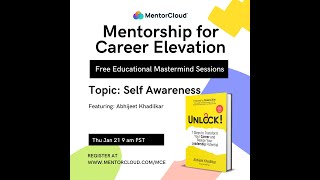
Abhijit Kadulkar and Dr. Ravi Gundlapalli walk through building self-awareness for your career using a two-part method: tap your network for feedback and use assessment tools like StrengthsFinder. They provide scripts for asking contributors what you're good at and where you need work.
Chapters
Hey Jameer, thanks for joining.
Hello Abhijit, how are you?
I'm good Jameer. Thank you for joining. We'll probably get started in a moment.
So Jameer, where are you joining us from?
I am joining from Belgium, India, Karnataka.
Wonderful. And Arjun is from. Also from Karnataka right now.
I am a big fan of yours and I am very impressed by Abhijit as well. I have watched his one off videos which you lastly shared. It was very motivating and inspirational.
Fantastic. What do you do Jameer?
I am a hospitality professional. I worked as a maintenance engineer in JW Marriott Pune.
Oh wonderful. Actually Marriott is one of our amazing customers. You probably. I don't know if they extend all the way to India. Are you familiar with the Voyage program?
I was a voyager there. Then I was promoted as assistant manager.
Fantastic.
So I've been part of program.
Very nice. So were you part of the Voyage Mentor cloud platform?
Yes.
I had an opportunity to find a mentor online and we were together for a couple of months, not long period. We had couple of interaction as well.
Fantastic. So I very, very glad to hear. Very glad to hear. So I work very closely with the Marriott corporate in the US and.
Yeah, so our team is behind that Voyage Mentor cloud program.
The importance of mentorship was into my mind from that platform only. So that was the first point when I started my interest in mentorship and career development.
Fantastic. So glad to hear that. So glad to hear. It's a small world.
Very good. So Abhijit is 9:05. Why don't we start and then some people have messaged me to record this. So we'll make this recording. Maybe remove the first part but record it and make it available. So some things have come up. So over to you Abhijit. And.
That sounds good. Can you guys hear me and see me on video? Right. So everything's good. Awesome. All right.
Hey team. Welcome to our inaugural Mentorship for Career Elevation session. And today's topic is about self awareness. And you know this is a topic that gets discussed a lot of times in professional settings. So why don't we take.
Today to talk a little bit more about self awareness because it's such a critical part of our careers and just to give you a little bit more about what this is about, Mentorship for Career Elevation is a series, it's been sponsored by Mentor Cloud and these are educational mastermind sessions. And these sessions are going to be hosted by career experts and leadership leaders from across the world. And we welcome you into this series. Little bit about Mentor Cloud in Case some of you may not know about Mentor Cloud, Mentor Cloud is a SaaS platform for companies who are using this to drive breakthrough business performance. And you can see there's a whole host of companies that have been using Mentor Cloud and it was recently recognized on the Nasdaq Tower as well. Just wanted to do a special thank you to the CEO of Metro Club, Ravi Gondolapalli, who's been sponsoring this initiative. And this is really a way to give back to the community to help everybody who's been affected by the pandemic, as well as people that are seeking sort of new leadership opportunities in their careers. All right, so now let's talk about what this session is all about. A little bit about me. In case you're wondering. Who is this person? What is he talking about? My name is Abhijit Kadulkar. I've been a tech executive in Silicon valley for about 20 plus years. I'm also an author, wrote a book called Unlock and happy to share a copy. If you're interested, just email or, you know, message me on LinkedIn. And I'm also a mentor with Mentor Cloud and over the years I've, you know, had management consulting experience at Deloitte and Cognizant and I've also been a tech leader at Cisco. So that's a little bit about me in the next 30 minutes or maybe about 25 minutes or so. Let's understand why self awareness is so important for your career. Let's identify some practical tools that you can use today. So this is not just about information, but actually let's make use of some of these topics and make use of these tools so that we can understand ourselves better. And then we'll figure out how to use these tools and drive self awareness to have a better career. Hopefully that works for you. Feel free to drop your comments and feedback in chat and if you have any questions, put that in chat. Also, in case you're watching this recording on LinkedIn, please register@mentorcloud.com MCE and we would be happy to answer your questions as you registered. We'll make you part of the series in the future as well. Ok. What is self awareness? You know, self awareness is really about knowing yourself. It's knowing your strengths, your weaknesses. It's knowing about your unique traits and your behaviors, your emotions, all of those things. And the more we learn about ourselves, the better off we are, as you already know. So knowing about ourselves and becoming self aware from a professional standpoint, it gives us the ability to plan to Strategize to figure out what we want to do with our careers. It also helps us become a better leader because the better we know ourselves, the better we can lead others.
Very importantly, when we become self aware, especially of our strengths, we can take advantage of market opportunities. This is a big deal because we're now here at the start of 2021 and almost every company and organization and team on the planet is figuring out how do we move forward from this pandemic and how do we really take advantage of the growth opportunities that lie ahead of us. And this is such a great opportunity for all of us to become even more self aware. Lastly, once I become more self aware of my strengths and weaknesses, I can be a little bit more intentional about my behavior so that I can drive the right outcomes for myself, my team, my community. So those are some of the reasons we should become self aware.
Now all of us have superpowers and Ravi had shared the video in this opening email that went out to all the mentorship for Career Elevation members. The email was about register for the session and it had a little video which was about your career Superpowers.
We are all superheroes and we all have an invisible cape on our backs. So if you're watching this, you have an invisible cape on your back. We just don't know what is the symbol on that cape, Right? Are you a Superman or a Spiderman or a Batman? We don't know. Or Superwoman or Wonder Woman? We don't know. But it's really important to find out what are our strengths and weaknesses. And because we can figure out our strengths and figure out our superpowers.
Now let's find out how do we become self aware? How do we find out about our superpowers? There's two ways really. Two approaches. One is to tap into our network. These are the people you already know. So let's figure out how can we tap into our network and figure out ourselves. Figure out, become more self aware and the other part is use online tools. Here's a quick hack. My recommendation is to do both. You learn from others about yourself as well as you use online tools and you put those things together so it becomes even more powerful and it will give you a really strong robust baseline to build your career stack. Let's look into how do we get into self awareness using our own network.
Tapping into our network is a three step process. It involves creating a self awareness journal. So if you have a computer, a notebook and a pen, you're all set. That's all the Equipment that you will need to create a self awareness journal. And of course you'll need your network, your personal network. And because of the current situation, quite frankly, all of us are online, which means you can ask for a zoom call or do a quick video call to your people in your network and actually get connected with them. Let me walk you through step by step of how do you create the self awareness journal? And it's a tool you can use that even if you're sitting at home right now and working from home.
The first step is to identify the contributors in your network. Who are the contributors? These are the people who can provide objective information about yourself.
So most of the times these are the people you may have worked with before. Maybe this is your former manager, by the way, why former manager? Because sometimes working with your current boss may not be very comfortable. So it's better to go to your former bosses and ask them about how you did, right? Because they will have a really good opinion and they've observed you from close quarters. They will be able to tell you exactly the right things and also share objective information. The second is your former colleagues, maybe some of your current colleagues as well, People that you work with at a pure relationship, right? Others is your close friends or maybe your distant friends and your partner or spouse. Although in some cases I've seen that kind of gets.
It could get a little weird if you're asking your wife with objective feedback. But that was a joke. But I think you should absolutely ask your partner, your spouse for information as well. You ask for a one on one meeting with each contributor, right? You're saying, hey, can you spare me 20, 30 minutes of your time? Can you please help me understand my strengths and weaknesses? Right? The point is this, which is described in this next step. Let's connect in a safe environment.
Make sure you're telling them that you're looking for objective feedback. There is going to be no ill feelings or negative repercussions from this conversation. Your current relationship is not going to be affected. You just make it abundantly clear to them that this is going to be. This is that they're helping you with this, right? So your job in this section is to ask them three key questions. Ready? First one is what am I really good at? Which means what are my strengths? Second, what am I not good at? Sort of what are my weaknesses? Third, which is kind of a super interesting question if you were asked to introduce me on stage. I'm just about to give a big speech and you're introducing me on stage. How will you introduce me? What will you say about me?
And if we can ask these three questions to each of our contacts, each of those contributors, we're going to get a ton of information. As you're getting this information, make sure you take notes. And if you're on Zoom or other platforms, you can actually ask if you can record these sessions. That way you can actually capture a lot of this really important feedback. Just to keep in mind, important. Make sure when you're taking this feedback that you don't exercise judgment, you don't stop them from, from providing feedback. Try not to show emotions, whether you like something or you don't like something.
Try also not to counter information, especially if you see negative feedback which you may feel in the moment is not correct. Don't try to stop the other person, don't try to counter it. One hack I will give you is ask this question, what else would you like to share? And ask this question repeatedly, what else? What else? And you'll be surprised at the amount of information you'll get back. And by the way, while it's still fresh in your mind, maybe during the meeting or right after the meeting, record all of this in your notebook. Record this feedback. Do this with every contributor you have set up time with. And then the last step, you collect all this information, you put it together, you review this information and you'll see patterns emerge. Patterns about your strengths, your weaknesses. This is your self awareness journal. This is how you can tap into your network and get more self aware. Right? By the way guys, if you have any questions, comments, feel free to drop them in chat. If you're watching recording, feel free to go to mentorcloud.commce to get registered for the series and we can definitely answer your questions over email.
So far we talked about the first part of approach towards self awareness which was tapping into your network. Now let's look at some online tools. If you go on Google, there's a ton of online tools for us to become self aware and I've taken many of those and I've found them to be equally good. There's one in particular that I really like and it's actually pretty quick and, and that's something that you can use. As of today I recommend bank code and Ravi who is the CEO of Mentor Cloud and thanks to them they're sponsoring this series. They've agreed to share their special code. It's worth about $99 and if you put this particular URL in the browser, you should be able to take this, this Assessment for free. You can uncover your personality code in about 90 seconds or less. So go to crackmycode.com Ravi this is Ravi's account. You should be able to get your personality code and this is a really quick way to do this. There are others as well. There are Strengths Finder, There's Strengths Finder 2.0. It was a company that has been now bought by Gallup and if you buy their book actually which sells on Amazon, you'll also get that Strengths Finder for free along with that. So try crackmycode.com, try Strengths Finder. That's a great way to figure out using online tools, your strengths and weaknesses. By the way, I recommend using both approaches, tapping into your network and using online tools. You put those together and you got a solid platform for self awareness.
Why don't we pause here for some Q and A before we go to the final topic of our session in terms of how do we use self awareness to leverage for a better career and elevate our careers. So let me pause and feel free to unmute yourself and ask questions.
Hi Abhijit. First of all, thank you. That was very, very informative. I had a question.
Talk about how self awareness has been critical in your success.
Can you think of any stories or any instance when you knowing your strengths and weaknesses has actually been a huge differentiator for your astronomical growth in your career?
Hey Ravi, thank you so much for that question.
There's definitely a couple of things and things that I kind of discovered as I went along in my journey and I wish I was a little bit more self aware when I started but hey, we all live and learn. So one thing that I really, I would say discovered along the way was when I was back in my management consulting days, I was working in a team and we were asked to do a client discovery which is in consulting language, analyzing your customer. And I realized when we were in that working session that I was able to basically collaborate with a team and jump to the whiteboard and basically.
Tap into every single person's strength who was in the room. Now it's virtual rooms but I was able to tap into every individual strengths and I was able to put together with their help a great analysis document. And that was to me a light bulb moment. Aha moment that said, you know what, I can work and collaborate really effectively with others, tap into everybody's strengths and actually generate a really good quality deliverable, whether that's software or report. And that's when I realized, you know what I could Be someone that basically collaborates with others and basically eggs everybody on to the finish line and create better results. So that was, I would say, the start of my leadership journey. And I realized that I could be a leader. Even though I may not be tall, I may not be good looking, I may not have all the credentials, but I could be a leader. And that was a discovery of my strength. The other one is, I would say communication, which is I was asked to lead a 120 person.
Working session, if you can call it, for a large healthcare company. And when I stepped in, I had really, I was super ginger, very nervous. I'd never addressed a audience of more than 10 people and here I was running a massive workshop for 120 people. And when I actually went through it, I realized that I could do it. Yes, I was nervous and ginger, but with good preparation, I was able to do it. And I discovered that second part, which was I can actually run a workshop. And basically I started to uncover these nuggets and started to build my career based on those strengths rather than focusing on some of those weaknesses that I absolutely have. So I don't know if the stories helped.
Absolutely. Thank you, Abhijit. That was very interesting. And I just made one comment. You also gave us a very simple tip of talking to our former bosses and our co workers and family members. Because I have heard early on in life the best way to become self aware is look in the mirror. And what you have just reminded us is other people could act as your mirror to show your blind spots as well as your superpowers. It's not just knowing the blind spots, but sometimes I may not know my superpower. You know, like until I met Rajesh, I did not know I could write a book. Somebody looked from, from a new perspective and looked at me and said, ravi, I see a book in you and I'm like, I don't. And here I am, you know, published a book. So your guidance is so simple, yet very, very, very profound. I found someone in me that I did not see.
Oh, absolutely, Robby, you made some really important points there. So let me just build on those. One is you're absolutely right. Talking to former managers, peers helps. And part of it is because when I wanted to do self awareness on my own, I realized that I have so many biases because quite frankly, every individual thinks that they're great and at least great at some things which may or may not be true. And I might have a lot of biases that are working for me or against me at Any point in time. And you're absolutely right. I think zoning in and talking to those managers and peers helps. The other part, you mentioned Roger Sethi, who is a dear friend and of course a co founder of Mentor Cloud and he's been an instrumental mentor for me as well. And he encouraged me to write a book. And similar to you, I did not know I had a book. And I would highly recommend the Art of Mentoring to anyone who wants to figure out mentorship, whether as a mentor or mentee or both. You know, that's a must read for anybody who's venturing into mentorship, which is quite frankly a critical pillar for all of our careers.
Thank you so much.
All right, let's, let's go to some other questions that might be out there.
Hey Arjun, Jameer, would you like to ask a question either on chat or on audio?
Hi Abhijit. So when we are doing networking, so how we can approach a particular manager or say a colleague with respect to our self awareness.
Journal? So can you share some approaches where we can connect with the people to know about ourselves?
Yeah, great question, Jamir. So here are a couple of tips that might help to connect or reconnect with your network. So what happens is when I'm doing self awareness, I'm reaching out to my former manager, former peers, colleagues, etc. They may not have heard from me for a long, long time. I may be approaching someone that I may have worked like 10 years ago or 5 years ago or or a couple of years ago. So the important part is to reconnect with them, saying, hey, how are you doing? I just wanted to check in and see, you know, just reconnect for 30 minutes on Zoom or 20 minutes. So that's a way to sort of broach the topic. So I would recommend not mentioning that you're doing self awareness right from the word go. Right. So basically establish a report and reconnect with them first. Before you mentioned that, hey, you want to do the self awareness exercise? So that's number one. Number two is it is also an indicator that we should all keep our networks active. Even if it's someone that we may have worked like 20 years ago. It's good to once in a while send them an article or a joke or connect with them on video or what have you or do a group call. An active network is extremely important. The most important thing I would say to keep a network active and keep a network, I would say growing is figuring out what can you help them with.
And it may sound surprising even Though I may feel that, hey, I don't want to spend a lot of money. I don't want to buy expensive gifts for my network. Totally cool. We can all contribute to our network. If you see someone who, who is working in retail or banking or tech or whatever and you look at that particular position, maybe you can send them something that doesn't cost too much, but it actually creates a better vibe for you in that network. It may be an article, it may be a connection. Maybe you can introduce someone to that person who may be valuable to them. But doing these things really helps to build out a great network. And the network doesn't feel cold anymore, it feels warm and inviting. And then you can dip into your network and tap into them for help.
I have a question, Abhijit. So say suppose we reach out to our former bosses or someone, right? And they give us a list. But before we even do that, I'm pretty sure everyone would have a list of their own, right? So there'll be some five items here and then you connect with your circle and then you make another list. What if both the lists are completely opposite to each other?
How do you.
What would be the next step?
Then I would prioritize others feedback over my own feedback for myself.
Okay, because. Because the part of the reason is I. I may feel that I'm self aware when I wrote down all of those things about myself. When we get objective feedback and that's consistent. For example, it might be, hey, Abhijit, you're really good at putting together great presentations, but you really suck at, I don't know, coding a Java application.
Then if that's consistent from multiple people that I worked with in the past, I have to take notice. I have to figure out.
That this is something that I cannot just disregard and continue to march down that path.
Quite frankly, it's a judgment call that all of us as individual leaders have to make. But if I were to make the call, I would make the call in favor of others consistent observations versus my own beliefs that I have at that point in time.
Although you can overcome weaknesses, et cetera, or build on your strengths and figure out a path for yourself, that path generally tends to be a longer path. So there is no such thing as impossible or not doable. It's just a question of where do you want to optimize. If you want an optimal path or fairly straightforward path, that's what the external feedback will give you. Thank you.
Great. Super questions. Thank you for the engagement. Why don't we go into the last topic before we wrap up, this is about how do we use self awareness? Make sure you're using your strengths and creating a career strategy and a career plan that's based on your strengths. Weaknesses are important and you have to acknowledge them. And if there's like basic weaknesses, like the example I gave about the developer, if I want to have a career in mobile app development and I don't know programming, yeah, that's a weakness that I have to overcome. Right. So I'm not talking about those type of weaknesses. But in general, if you want to have a phenomenal career, it is way better to double down on your strengths. Actually not double down, triple down on your strengths because that's how you can leverage others and get help from others to build things that are much bigger than your own or create things that have a bigger meaning. Similar to how Mentor Cloud has a massive goal and a great north star to create and provide mentorship for 100 million people on this planet. With that being said, let me end today's session and thank all of you for joining us in today's part of the series about.
Self awareness. And quite frankly, this series is going to be available for all of you whether you join live or recorded. Just make sure to go to mentorcloud.com MCE which stands for Mentorship for career elevation. Thank you Mentor Cloud. Thank you all for attending and I'll see you in one of our next episodes.
Thank you Ravi and Abhisheet.
Thank you Abhijit for a very inspiring session. I really appreciate it. It's an honor to.
Kick this off on a very important topic and we look forward to future sessions. And to everyone that has joined, please tell your friends the idea is to give by helping more people come out of this very tough year. Especially because of the pandemic.
Now is the time to really empower people with skills and we are all here to give. We have lined up several other career coaches and experts. One of the top coaches on LinkedIn, one of the top HR professionals and other executives who are here to share their knowledge with you completely free, just to give back. And we look forward to continuing this journey because the more we share, the more we learn as well. So send us your questions, stay engaged and and let's help a million people with the skills they need to become better parts of themselves starting with self awareness like we talked about today. So Abhijit, thank you very much and we look forward to seeing you. Our plan is to have this weekly so we will meet with you next week same time and let your friends know if they're looking for a job or if they're in between carriers.
Graduate students, let's share the knowledge.
Great. Thank you, Ravi, for the opportunity. Thank you, mentor Cloud. And I'll see you guys next week. All right.
Bye. Bye.
More from Dr.

Essentials of an Entrepreneur by Dr. Velumani Arokiaswamy, Founder of Thyrocare

Skills & Traits for Better Employability | Amritkaal Mentors – An Initiative by MentorCloud

What Leaders Look for First-Time Job Candidates | Amritkaal Mentors – An Initiative by MentorCloud

How to Innovate and Lead Wisely in Today’s World with Navi Radjou - An Initiative by MentorCloud

Crafting Your Academic Journey with Dr. Manish Kothari - – An Initiative by MentorCloud



Advaitha Jagruti: Awakening The Spirit Of Adi Shankara In Indian Youth | Dr. Ravishankar Gundlapalli

Testimonial | Sanjeev Sharan | Catalyzing Growth From Within | MentorCloud Mastermind

How to Make a Mentee Feel Comfortable #mentorcloud #mentoring #coaching #wisdom #experience

Testimonial | Kellie Teal-Guess | Catalyzing Growth From Within | MentorCloud Mastermind