Open Office Hours
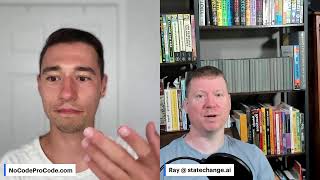
In this livestream Ray Deck and Speaker B discuss the current low‑code/no‑code ecosystem (Nordcraft, WeWeb, Softr, Bubble, Despia, Xano, etc.), highlighting market size, competition, and the difficulty of shipping complete applications. They argue that tools make starting easy but lack support for finishing, leading to high churn. The conversation moves to business models—subscription vs token‑based pricing—and how AI‑assisted coding (GPT‑5, Claude, Sonnet, Vibe coding) is changing development speed and cost, with examples like Lovable’s $100 M run‑rate. They examine the role of community and office‑hours, emphasizing education, case studies, and the importance of unbiased advice. The speakers also explore the freelance/agency economy, the shifting economics of software engineers (variable vs fixed cost), and strategies for personal wealth creation through knowledge, reputation, and assets. Practical tips on tool‑specific pain points (Xano email overload, video quality, Nordcraft variable bugs) and ideas for joint community offerings (the “Bishop Plan”) are shared. Throughout, they stress the need for faster, higher‑value, smaller engagements and the power of content (YouTube, tutorials) to build reputation and attract clients.
Chapters
been abandoned, but I think it'd be really, really cool to get this stuff going.
I think Nordcraft is too focused on people building powerful web applications. And it's a market where everybody is fighting. And it's a market where half of the people that get into it are losing. If you take a look at the market of people trying to build web applications, it's WeWeb, it's Softr, it's Nordcraft, it's Wist. It's Memberstack and Webflow, if you will. It's, it's not that big of a market if you actually start counting those tools. And if you take a look at how many apps are shipped in each tool, like the most it adds up, it's like maybe 50,000 apps if it adds up. And then there's Bubble with a million apps, but you can't compete with Bubble because they've been out there. They're a dinosaur. Right. So I think if you want to, if If you want to compete in that market, you have to be innovative. If you want to be innovative, you have to find new ways how people can consume your UI. I think Norcraft has probably the best technical foundation, but I think what they're doing is underutilized. But I also do think that in order for them to get to a point where they can do the other stuff, they first have to have a product that works the way it should work. Which is something that they're constantly working on improving the product, getting it to a point where people trust it, where it has that reputation. Because if you take a look at the Nordkraft case studies, 3 of the case studies are sample apps or Nordkraft itself. One of the case studies is Nordkraft, another case study is a template library that someone built for Nordkraft, Another case study is a beatboxing sample app that Andreas built. Another case study is like a poorly made online course application. The other case study is, uh, what was it like, some e-commerce builder, which is pretty cool, but it feels kind of janky. And then Despia, and then like another event platform, which is something that I think you could do in Webflow. CMS. So the case studies are not that comprehensive. So I think their main problem right now is that there are not enough people out there telling people how great Nordkraft is. So I think they don't have the time or the possibility right now to afford getting on there doing crazy stuff because they have to make sure that their foundation is correct.
Yeah, I mean, taking, taking the gaze off of Nordkraft directly for a second. I think this is a problem with the category. Um, there are people who are building in—
yeah, in the market for a little bit longer, so there's more.
Well, having more case studies, I think, is really— it's just a symptom. The, the real problem is that it is so much work to make a full-on app. And I've seen the experience before, like someone starts working on it and I've got lots of ideas and they build the first 80% of it in an incredibly short period of time. It's always That last 20% that takes 80% of the time. And that's— and because they're having that progressive slowdown experience, becoming more discouraging, it's feeling more expensive. I don't really have time for this anymore. I'm getting stuck. I've got other things I need to do. I'm going to put this down. I swear I'll come back tomorrow. They never come back to it. And the— when I look at these tools, I think the big failing in the low-code, no-code world is that they made it easy to start, but they did not put enough attention, to my mind, in shipping and making it straightforward to finish. And there's a lot of the stuff in like the AI vibe coding world suffering a bit of the same thing.
I mean, the good thing with the vibe coding is they make money while you suck at it. Like, like every time you fail, they make more money. So like vibe coding is like a casino. Like you pay for the journey, not for the result.
Right. Because you got to pay for these tokens or what have you. But the thing is, the same thing was basically true of the, the the low-code systems do. You go buy your subscription to, uh, whatever. You buy your subscription after it's shipped, which is, you know, uh, well, that, that has a certain fairness to it, and that then sets them up with the incentives, right, to help you actually, um, ship. And a lot of these other systems are designed like, hey, you start paying, and then we really want you to ship, because they know that if you don't ship you're going to churn. And what they want, because they basically SaaS economics, are trying to keep you around. The ones that have like more like, uh, token-based economics— not to be confused with tokenomics, that's a crypto thing— but the ones that are like, basically have that meter associated with the tokens, their economics are just a little bit, um, different. And that's where, um, but, but even all that said, I, I think that the, the way that the AI systems are delivering the promise is really exceptional. And is a big step up. And that's reflected like in the level of revenue and how quickly Cursor and Lovable have gotten to like $100 million in revenue.
Lovable, which is one of the low-level vibe coding tools, I would say their revenue is, I think, I don't want to belittle someone here. I don't want to sound offensive, but I think the revenue that Lovable is making a year is probably more than WeWeb and Nordcraft combined have done in the past year.
Uh, the, the, the, yeah, of course we're comparing a run rate with totals, but of course, yeah.
Um, I mean, the, the, like, Lovable, like, make $100 million this year already or something like that?
Lovable is now at a run rate of $100 million of annual recurring revenue, which is to say that probably means they made $8 million last year, and they're multiply that by 12 and you get Get a million, I get 100 million.
But I mean, it's probably more than Norcraft has made so far. It's more, 2 times more than what they've raised, probably more than WeWeb has done in the past 4 years, I would assume.
Uh, well, I, I think it's very likely that's the case. Um, I think both of those are companies that have revenues that maybe have 7-figure revenues, and even if you assume their revenues are like an average of $5 million a year, and there's no way they're that high, and you multiply that across their years of existence, you still don't get that. You don't get half of that number. And then you start looking at some of these others and like I've seen what some of these bigger players are. I mean, like Bubble actually makes a lot of money.
It is, I mean, I guess with their workload units, they know how to run a business. I think that's good. I think people always complain that Bubble is charging people, but they forget that if they're not profitable, there will be no Bubble in a few years. So, you know, while I attempt myself occasionally mocking Wist's pricing, there is a reason why Wist is profitable. And Norcraft has to raise money to keep running.
Well, you know what you call a company that's got a high stock price but doesn't actually make any money?
OpenAI.
You call it a bubble.
No, no bubble.
I have no idea.
Profit, and then someone is nonprofit and nobody really knows where the money is going.
Well, leaving aside OpenAI's Byzantine structure and the weirdness that came up a couple of years ago, Yeah, I don't know very much about that, although they're about to do like a secondary, if I recall, that their employees are able to cash out at a half trillion dollar rate for the company, which sounds pretty cool as well. But bring this back to what the low-code companies are good for. I think the category problem is that it's just too much work to create an app. While the tools have made things more accessible, they haven't made it fast enough because the scale of the problem. What I find very exciting about this from the point of view of somebody who wants to help more people make software is that if you have the idea of your UI or whatever is a component that's going to go into the AI as opposed to having to create a whole app that's got to go stand entirely on its own, there's a lot of juice in that to be able to create business value, just the stuff that matters much faster. Much like the MCP stuff was an opportunity, MCP in its previous generation was an opportunity to get your company's insights, values, secrets, data, into the AI combined with other things are useful for you so that you could be doing more meaningful work.
I see AI and I see the tools that we're using. I used to see them as the only way to build an application, but the more using them, the more I look at it and say, okay, the idea is the business. The no-code tool is the place where I rent. If I'm going to get evicted tomorrow, considering I still have a good credit score, I can rent somewhere else. It will take some time to set up shop somewhere else, will take some time to get the walls in the color that I want, but I can keep operating with minimal time delay. I'm not married to a tool anymore. I'm looking at stuff and whatever is the best is what I'll be using.
Sounds right.
Right. And people are looking like the tool is for business, but they forget that the tool is where their business rents. It's not the business. The business is more than the place that you're renting. Of course, business can be impacted based on where your location is, but ultimately it's about the offer, the service, and the people that run the business. That makes the business.
Yep, that, that sounds right. Also, like, what I like to think of businesses, um, in terms of assets, right? And like, the tool that you're buying isn't your asset. Like you say, it's renting, it's an expense. So your knowledge is an asset, right? And that's actually usually what we're in the business of selling, either in the form of services or code or content or community. Those are the 4 C's I find for intellectual property businesses. And but it's about what you know and you being able to record what you know in a form that allows you to generate, you know, to monetize it, right? To turn into an asset that could be productive for you. The— and you're right that these tools are not the only ways of doing that. We need to remember that pen and paper is a pretty good way of doing that too, because it's about expertise, right? So it's not just— so like the office hours that you do over at No-Code Pro-Code, we should put up a little block for that, are a great way for people to get access to your expertise, to your brain.
I'm sure you are better at something.
And say change, you know, we've got that going on too. That is that, you know, you and I are sort of simpatico in like the way that we are providing value to our clients, uh, is in a combination of providing services both high level and the sort of the office hours, having this idea of community to be encouraging people to working together. So that's sort of that, that leadership aspect that is helping them make more progress too. Having, uh, content— you're certainly the king of making much more video content nowadays, which I found very impressive. And creating code, you know, software that can actually help people make progress. Now, I think those 4 things are like the crux of how any intellectual business is going to be successful. And what I find to be exceptional about like the MCP stuff, which is where we started our conversation, is that allows you to just provide the stuff that matters, right? Like there was a time where you had to make a piece of hardware in order to distribute software. Because it came on the machine. There was a time where you need to, and more recently you have to go code up your HTML, JavaScript, whatever. Now we're using frameworks or we can even use some of these biz dev tools. But what we're creating is the same. This is now a change in what we're creating and the shrinkage in that is so powerful.
I'm still using vanilla JavaScript. I'm like 20 years behind, but I'll be there in 20 years.
If you agree.
Also, now talking of it, do you know how I unsubscribe from like the Xano join emails? I, I created a new Xano account for, for a client project a week ago, and so far I've like received 15 emails from Xano like encouraging me to start. And I was like, I'm already pretty good with this and there's no way for me to unsubscribe them. Do I just block John? Or—
that's, that's unfortunate. I'm sorry you're having that experience, and I think that's a great thing for you to maybe to let our mutual friend at Xano know about too. You know what, maybe—
Their follow-up emails, like, I already paid for the plan. I created like 15 API endpoints, 3 databases. I'm all in. And I still get like videos, like emails, watch this 5-minute video to set up your APIs or something like this.
Yes. And I find that most of the videos be pretty terrible too.
The only good Xano videos are the one on state change.
Right?
And the best ones, the best thing, if you want to watch a Xano video, I see a lot of people, they say, I want to watch a video, I want to learn for myself. But here's the thing, you don't know what you don't know. I found that the worst way how you can learn about something new is watching a video. You need it to be interactive because the video only covers a very, very narrow idea of doing something. And most of the videos that we record, Ray can probably approve that, is usually something very generic that is not custom to what you're doing. And usually when we look at the video ourselves that you think is still up to date, we're like, what the heck did I do in there? So if you want the latest information, because technology is moving fast, you got to go right now on statechange.ai and sign up for your account for only $39 a month. And once you like it, upgrade to $149. It's the best investment, you won't regret it. Scan the QR code right now.
Look at that. I appreciate that, man. The, uh, the, yeah, you sadly don't have a 1-800 number. Yeah. Uh, but, but yeah, I think your point about video is really a, it, it's really a good one. I was wondering if you might be able to speak to your own experience of like, you've made a lot of videos, particularly for working with front-end tools, working with Nordcraft and WeWeb and, uh, a lot for Wiz. Um, and I, I think particularly the Wiz stuff, like it's a little bit, a little bit older, like The Wist videos are getting the most views.
They're still number one videos every time. Even if I now make a Wist video, I know it's always going to get guaranteed like a fourth of my audience to watch it. It's a surprise to me because I'm looking at Wist, I'm like, this thing is really clunky, but it apparently solves lots of people's problems. And that's— results matter, not my personal take on some way how a framework is built. Results matter. And the only people that are really shipping exciting stuff in Nordkraft are the ones that are in office hours. I know this sounds super arrogant, but that's just how I am. Uh, and that's true. Like, we have someone, he's building an application to sell private jets for like $20 million online. Like, you can like just open his application and like buy for $20 million a private jet. When he started with Nordkraft, he didn't know how to do anything in Nordkraft, and he joined all the office hours that we had every day, and now he's building applications like I've never seen anyone— anybody build applications in Nordkraft, and he does an amazing job with that. And I told him, you know, if Andreas is going to call you to get on his showcase, don't join his showcase, join mine first, because I want to claim the credits because I brought you to Nordkraft from Wist. So, you know, I first got to claim the credits and then Andreas can I do it, but I'm gonna get my name first under that case study.
You know, you make a really good point about that. I think about like, you know, in StateChange we have, I mean, certainly not all, but a reasonable percentage of people who are serious about building, like say with Deno.
Like I built just the Nuxt.js change. Like you, you like, I should give you half of it, you know?
The, but I was sort of thinking about the model of this and how, you know, you described that, but I think there's a flip side here of, You know, like the people at Nordcraft should be really excited about getting more people into no-code, pro-code. And I appreciate you had whatever conversations you had.
That's not the case, I can tell you that. The, the, the Vakis was the only one who was interested in that because we were kind of like shaking hands, but he's certainly not with them anymore.
Right. And they think whatever they think, but like my, my, my take on this is like having seen what's going on here, these companies make money when their clients ship. It's not a here's the tool and then you can use it as much as you want. They, that's, they haven't made any money at that point because they, they sure they're getting like the immediate month's revenue. What they really want is a long-term low churn. That's how it turns into equity value. That's something that's going to drive their stock price. So the, so they should have all the incentive in the world to want people to be engaged and building quickly with their tools to do something really extraordinary. And that's, and that's something where I've certainly found that people in No-Go Pro Code, people in StateChange are far more likely to ship than people who are not.
I think with WeWeb it's different because WeWeb's office hours are actually useful. I have lots of people that use Despia that are like, oh, I don't know how to set this up. Let me ask Joyce. I was like, wait a second, you can just hop on a meeting with Joyce and she'll help you? I was like, this is amazing. I was like, this is great. Like, I can lean back. I don't have to help you set up your HLS video player for now. Um, in Norcraft, their office hours are like— it's like a Q&A. It's not really— I don't think it deserves the name office hours. It's like Q&A. It's like a one-way stream essentially where they just show the features. And that's cool that that gets the word out. It creates community. People can ask questions. But I think office hours are you bring the toughest problem and everybody is looking at your problem and we look at the good, the bad, and the ugly, and I'm going to show you how you can fix that. If there's something wrong with NodeGraph, we'll talk about it and we'll talk about ways how to go around that. This is why I think it's important even if WeWeb has the WeWeb office hours, that you still go to someone who's unopinionated about WeWeb like Ray Deck. When you really want the truth about what's the best to build. If you're really concerned about building the best application out there, you can't go to the WeWeb office hours because they're going to tell you to stick with WeWeb. But Ray is not getting bribery from WeWeb as far as I know, so he's going to tell you the truth. That's why I got to join statechange.ai and don't look back.
This is true. I do not get bribery from WeWeb or librubbery as they might call it. Um, the, um, but, but I, I was just gonna note that like you were talking about Joyce Kettering, um, and I would say Joyce Kettering and Matthew Sandez are two of the best educators, um, in the world of low-code, and I particularly the high end of it. I mean, uh, you know, like, uh, you know, Aaron Korenfeld, you know, JJ Englert are also quite good, uh, but they have sort of focused a little bit how to do your Make workflow. Uh, right, well, like Aaron, he works over at, uh, at Gumloop now. He does an excellent job for them. That's like an agentic automation platform.
Form.
Uh, there is, you know, the— who, uh, was it— I mentioned JJ, right? He works over at Softr and has done, I think, a lot to improve the Softr brand, uh, as being something for building apps, but all at the simpler end. I think at the high end, what I call high-end low-code, you know, I think of Joyce, I think of Matthew, I think of Daniel Petro, um, who was on—
Daniel is amazing. He got to do more videos.
He is really great, and he does, he does great events, he does webinars, he does videos. I think when the— that's one of the reasons I think to like look seriously at the WeWeb Xano combination is, um, and partially it's about the tools, but there's lots of competition for the tools, but the education, uh, offering there is really good and these people are just fantastic at it. And that, um, I think that those companies have made a smart move investing in that.
I think WeWeb— I mean, I told you that before, if I look at the Despia databases for all the projects that people have created most workflow, most load of the project that get created is actually Nordcraft. The most projects that actually end up finishing and paying is WeWeb. So this is why we are internally as a company are now looking how can we help make Despia be the best way how you can build a mobile app in WeWeb. We're, of course, prioritizing 90% of our customers. Why should we focus on features for people who are not our customers and who will not be our customers. Right now, we have one application that was built in Nordcraft that's on the App Store and like three who are close to being shipping. But we have dozens and dozens built in WeWeb. So we want to do everything to support our WeWeb users as good as we can. Now, of course, we'll keep maintaining it in Nordcraft because the other one who's still shipping is me and I'm a big client and customer, and that's important to me. So we'll keep maintaining Nordkraft, but we're looking right now, for example, adding offline mode to Despia. And offline mode is something that's very complex adding when you work with the architecture that Despia is built on top. So we have to target it to a specific platform, and the first platform that we will go out there and support when it comes to offline mode will obviously be WeWeb because that's where most of our customers are. And then Nordkraft is something that we'll do at, you know, my convenience whenever I need it because there's not really anybody using Vespa that uses Nordcraft besides the ones in my community and myself. Now, they're still important to us. We will maintain it. But as a business, we have to prioritize what makes us money and what makes Vespa money is WeWeb heavily, 90%.
That's impressive. Folks out there, you're thinking seriously about building a web app that you want to run on mobile, Um, first Despia is a great tool for that, but then apparently the world-class way to be using Despia is to be going through WeWeb.
I didn't say that. I'm just saying it will be the most convenient way because we're going to have a native integration, we're going to have offline support for it, we're going to focus on the education parts for it. Now, we're still going to support NodeGraph, we're still going to support Wiz, and we're going to do our best, but number one on the priority list is what 90% of our customers are using.
That is super cool.
And then you give everything that you can to the base, you can extend on there and say, okay, what's the next? The next, actually Bubble, because their mobile platform sucks.
But, uh, yeah, that's, that's a whole different can of tuna, right? They used to be that BDK was the way to do that with a similar kind of wrapper thing, uh, that I think worked— the technology worked in directionally at least the same way that Despi does today. And now they've got their native application technology, and I actually haven't had much chance to play with it. I don't know if you had—
I've seen that people told me it's pretty bad and they would like to use Despi.
Yeah. Have you gotten a chance to work at all with GPT-5?
I did with the API. I had to upload it, like, I think, the last 4 digits of my Social Security number to get access to it. But now that I have, there's either way an AI trying to open credit cards under my name, or, you know, hopefully an AI that is not doing that.
We all hope it is not doing that. That would not be very nice.
But it's pretty neat.
It is neat. You know, I think that like the playing with it— sorry, what? It's pretty fast.
It is pretty fast for the quality that it provides. Usually, like, with, with ChatGPT, it's like you can have it good or you can have it fast.
Well, historically, that's been like the way these models work, because I think that I never had that with Claude necessarily.
Claude has been always like medium speed and really good quality.
My impression is that Claude is not as many, um, was not as many parameters, or like Sonnet, which is really what we're talking about, right? The Opus is not winning speed records. But the, uh, but Sonnet as the workhorse was just really— was a— is a good model. It's for 4.0, is a good model, uh, that is, um, that doesn't have as many parameters as the highest end of the GPTs or of Opus.
Uh, it's like heavily focused on development, where ChatGPT is like helping you with everything.
Uh, well, yes, I think ChatGPT does a lot of things well that are not development, although it does seem to do development better as well, which is super cool to see. But what I found really exciting about the ChatGPT demo was when they were showing off spinning up software that was only going to be useful for the next few minutes. That idea of making ephemeral software, that's exciting to me.
I'm doing it all the time. I built myself a little application. It's actually a mobile application built in Despia that is like an application to, like the Vibe Code app or like Replit on your phone. It's essentially an application that lets me speak into the phone and it generates a React application that it deploys it on my— actually, it's Xano, it uses Xano for its deployment. Then what it does is it just essentially puts that app in my app library so I can open the app. Then when it runs a request, it runs it just client-side because it's on my phone only and it just pulls my API key from variables set in the application to then do the client API calls with streaming client-side. I can always build my own AI apps on my phone by just speaking into it that will be useful for the next few minutes.
That's super cool. I think that's also I'm looking for in terms of the change in software.
We have someone do the first comment for the day. Have you had the chance to compare ChatGPT versus Claude's latest model?
Well, you were just talking about your experience with it. You mentioned both its speed and its general applicability.
I mean, I found that ChatGPT is now getting better at UI because it usually really sucked at building UI. The UI was really terrible. Claude had the best UI, but now Claude, every time you can see if an AI model is using Claude based on the UI, if it uses purple gradients, you know it was using Claude. I didn't find ChatGPT-5 yet to have this fable for purple gradients, which is good.
Yeah, I haven't done quite as much coding with that in terms of comparing the two. I've noticed one, that ChatGPT-5 is a lot faster. Second, I've noticed that it's crazy cheaper than Claude Opus is. I'm pretty sure the reason that's faster is that it's a routing model. What's happening is it's not really a model, it's a service. You go talk to it and it's determining based on the question you're asking, which way to go for its next step and trying to use the cheapest model that'll do the job. And cheap usually also means fast. That's one of the reasons why it's higher performance, but it's also a reason why it can afford to be offering this lower price point, because it's a little bit kind of hiding the ball as to how many parameters it's going to pachinko its way through in order to, um, you know, get you your, your answer on the, uh, on the, on the other side. Uh, whereas Claude Sonnet or Claude Opus both are just models. You for your data in the front, and the number of parameters it's going to go through is kind of— that's just the way that model is going to work. My impression so far has been very favorable. I'm running GPT-5 right now over on Cursor, which is on my other screen, and it's been doing a fantastic job so far of helping me with the kinds of surgical work that I do at this phase of the application of the state change assistant that I'm working on. So I found it to be pretty effective. I switched back and forth to sort of see if I can change things up, but largely I've been pretty happy with it so far. I'm expecting that there's going to be a new Anthropic one in a few weeks.
And I tried the SageHenge Assist and it's absolutely mind-blowing. It's the first AI that really understands Xano. Usually if you ask AI anything about Xano, it's going to invent a bunch of stuff that doesn't make any sense. But Ray has been doing Xano for way longer than I even know that what Xano was. He was there from the beginning. He knows all the ins and outs. I learned everything that I know from Ray personally through this wonderful StateChange community and the daily office hours that he offers. So if you want to get access to the amazing StateChange intelligence, which is essentially Ray in your pocket, go to statechange.ai and sign up right now for the low price of $39.99. You won't regret scanning.
Super cool. But I'm a little late to the party, right? You've had like a no-code, pro-code system for a bit longer.
It was just building UIs in Norcraft because Norcraft still doesn't have a useful AI. It was a gap filler. We thought it was just for a few weeks. It turned out to be a year or so. Now we still don't have a useful AI. We have an AI that tells you what the sample value of your variables is, which is quite helpful.
Yeah, I hear that. That's actually a story of successful software. It's something you made relatively quickly that was going to be, hey, it's gap fill for a few weeks.
I haven't maintained that whole thing since a year. People keep asking, when is there going to be an update? I said the next update will be Nordcraft's officially.
AI, right? Some of the stuff you just want to have first.
Uh, it's just something that I had to get people to Nordcraft because usually when people joined the community, they told me, why should I even bother using Nordcraft if they don't have an AI builder? I was like, we have an AI builder inside of here, gets you started. I mean, the designs it does will look as good as Relume, but this is what most people want. They don't need the They don't need fancy UI, they just need a wireframe. Like they just need like a side panel here and like 3 cards here and then they can style it the way they want. So this is why the AI just does like a very generic UI. It just gives you the wireframe like Relume does and then they can copy paste it because 90% of the people that are in, or 80, like majority of people, um, that are in no-code, pro-code used to use Wist, used to use Webflow. And they're used to just copying something from Relume. So I just built this AI to generate your layouts like Relume does and you can paste them in Nordcraft just to get people up to speed. Yeah. But it was never intended to be like what WeWeb AI is doing, for example. Even though I could have the capability of building that, I don't see it valuable because the moment I am going to build it, it's going to be probably already out Yeah, I think that's a really good— I'd rather focus my time on making videos that teach people about the concepts so they can do it themselves without AI, or they know what to ask AI. That is more valuable than providing a wrapper for something. Oh, we got James. No-code, pro-code, and SayChange together, the ultimate combo. You guys should collab and create a bundled membership option. That's actually a pretty darn good idea.
I think it's a good idea. We should do that.
We should do that. Yes.
And you know what? We should call it the Bishop Plan.
Look at that, the Bishop Plan. Look at that. No, I think it's a great idea. Or maybe we can do a joint community or something. We'll figure it out.
Yeah, yeah, I, I, I, I, the, uh, I think that's a It's a really good idea.
We have people who are coming in.
VisualAccelerator.com.
We'll come up with better names.
But to just help people make a lot more progress. I think this is the kind of— I extol the virtues of Joyce and Matthew and Daniel. I think there is a real play for even the vendors to be encouraging, hey, you really want to ship, you should be using one of these communities or—
That's what Nordcraft is doing. Not Norcraft, never Norcraft. They used to, but this is what WeWeb and Xano are doing. If I go to Daniel and say I need help, he will send me to Ray. He will send me to StateChange. If I go to Joyce, if I go to Flo from WeWeb, Raf, he's probably going to say, hey, if you want some extra help, join our office hours. If that still doesn't help you, look at Ray. He helps the community. He has all the videos about WeWeb. Look at his community. With Nordkraft, it's a little bit more like, if you make money from this, you're on our watch list. Yeah, that is just the European way of how they deal with business, and the French people are different.
I would— I will just note that Ouweb might be better spelled O-U-I-web because they are French company, but Yes, I suppose maybe it's a difference between those, those Parisians and those more Nordic types.
By the way, just shooting my shot here, you know, we're always elbowing the no-code companies a little bit.
Yeah, well, keep the office going to sort of trade off. I think it's sort of his idea here that we're able to cover each other.
Then, then you can actually take a vacation and keep daily office hours going without interruption. Look at that, you can go, you can finally go on vacation and I can finally go on vacation.
So what's that word you just used?
Uh, so someone just, like James just said, like if we do the joint office hours, like create our bundle community, when I'm on vacation you can do office hours.
I didn't understand that word you just used a couple seconds ago.
Yeah, so like We can actually have some time off sometimes because you're there every day, I'm there every day.
I'm what?
Everybody's problems.
Yeah. Yeah. And I don't know, I really get great joy out of getting to do the office hours. I mean, the people I get to talk to, the challenges they're having. It's not like you're talking to a bunch of people who are whinging about, you know, that this sort of life is unfair and why isn't this thing working, right? That's what the support chat gets over at like the tools. Like when they're having like, oh, this thing just isn't working. You're right, it's not working. Go put in a support ticket. Let's move on to the next person now. The, um, but like, it, the, the, the really deadly thing though is when it is working but it's not working for you, right? And because of that, yeah, it's not about like the tool just isn't doing what it says on the tin. It's going to be about the more what, what are you really trying to accomplish? And that's, I, I think that's where, where you and I with our office hours, that's where really we, um, we earn our pay.
I mean, I learned to, when Norcraft isn't working, I used to I would just tell people, just open up a support ticket. But then they came back 3 hours later in Office Hours and said, "Still haven't fixed it." So I learned to figure out how to go around certain things and certain strange behaviors that sometimes occur. For example, in NordCrypt, there's a good chance that when you set the variable, it doesn't set it. The way to solve that is delete the variable, delete the action that sets the variable, create a variable again with the same name, and add the action that sets the variable everywhere where you had it again, and I'll fix it. I don't know why it happens. It seems like they don't know why it happens, but I know how to fix it when it happens now. So I stopped sending people to their official support. I just took matters into my own hands because I want to help people ship faster. Why should they be in waiting queue?
That's a good point. You know, uh, you know, uh, Lakshay brings up, I think, a reasonable you know, question. Not so much about our hiring. I don't know about you, I'm not really— I'm not hiring right now, but like the, the state of the, the job market, right? You and I both work with a number of people who are freelancing, people who do this for their day jobs. Like, what's your— what, what's your say on the— what's your opinion on the state of the job market?
I found that right now in this economy, the only way how you can have stable income is if you work for yourself. Okay, that's why I found— because it's just very unpredictable, like jobs being cut. People like— you have to imagine there's a CEO of a company who probably has— doesn't even know how to call OpenAI's API, and they are fantasizing about laying off all engineers and replacing them with AI, like Salesforce. So I found having your Your future in the hands of a moron is not a good idea. So you want to take the future into your own hands, and that can be freelancing, that can be creating an agency, that can be getting out there and solving people's bad-coded applications, which is a big market as well. You know, but I found that's the only way how you can— because the only person you can rely on is yourself. You can't rely on someone else. So if you are in charge of what you're doing, how you're business is running and who is going to be your customer. That is, you know, that you can rely on that if you just don't give up and if you're just going to find creative ways to get your word out there.
Yeah, I think in many ways the software engineers, for them to be successful, need to at least think of themselves working themselves regardless who's paying the, um, where the income is coming from. The, uh, you know, I think there was a You know, when we learn in basic economics about labor and capital, right, the, hey, who do you hire for? Like, what is labor? Labor is supposed to be the people who are working the bellows, right? Who are like making, taking the factory and have them creating more of those iron ingots that are going to come out of it. And that way, when you hire more people, you produce more iron ingots. You— and if you're not producing as many iron ingots, you let— you fire people. And that becomes like the basics of what we call variable cost. Labor is variable cost. But that's not the way it is for software engineers. Software engineers are a big change in the way that employment works, where we have a very large and relatively well-paid part of the population that is not in the business of handling the variable cost because hiring more engineers doesn't mean you produce more software or produce more value from your software. They're creating equity value, they're fixed cost, they're overhead. And that's the reason why those CEOs can be so excited about, oh wait, I can have fewer engineers because they're their overhead is going down and they can focus on just like the line of value inside.
I, I found that software engineers are like tax attorneys. We don't charge by what we do, we charge by the amount of money and that we make you, or the amount of money that we save you.
I think it certainly—
that's why I certainly did write invoices in the past for $5,000 for something took me 30 minutes to build, but that's the client, $20,000. And that is when it was worth it, right, for them, because they were like, I can save $20,000 for paying $5,000. I didn't charge $5,000 because I like doing $10,000 an hour, that's my rate. No, I was looking how much is the client currently paying for the setup, how much can they save. I know I can save them $20,000. So my compensation is only fair to be based on the value that I'm providing. And if you— if I was asking ChatGPT, should I charge like this? Is that fine? Or should I charge like $250 for half an hour of work? Because I charge $500 an hour. And ChatGPT says, your reasoning to charge $5,000 sounds like you're a consultant. And then I had a photo of Ray in my head, and then I did the only reasonable thing, and I charged the $5,000. $5,000 because that was the— I'm providing value, right? I'm saving $15,000, why shouldn't I get 5% of that, right?
You know, could you bring up Lakshay's next chat here? Because the first one was about hiring software engineers, but the second one, I think when he's sort of riffing off your comment about, you know, working for yourself, I think there's a second part.
Working for yourself doesn't have to be starting your own side hustle and moving to Thailand and becoming the more glue, you know, and just vibe coding applications that expose people's security keys. That can be you being the first person on Upwork doing Nordcraft. That can be you being the one of the few people doing Wizd on Upwork, right? That can be you being the few top WeWeb experts on Upwork. That can be you making videos that educate people about security when it comes to no-code. And then you can sell that service, like no-code security checkups for like $2,000 each on people's existing no-code applications and fix everything that, you know, seems to be unsecure. That can be creating a productized service, that can be creating an agency, that can be freelancing, kind of like being a one-person agency. It doesn't have to be vibe coding an application. That is not what it means. It means that You can work the same that you would do for someone else. It's just you find your customers. If, like, if you're already job hunting and then you will work with one person all the whole time, why don't you just, you know, hunt for clients and you can have multiple at the same time? And if you structure correctly, it's like having 3 jobs at the same time, getting paid for 3 jobs at the same time while only having to work one.
I think that's a really good point. I think there's another point that's sort of hidden inside this. And Lakshmi, I definitely was taking your comment in the humor I think you intended. But the other thing about that whole vibe coding your startup and getting hacked, and we've all seen the Twitter things, like famously Jason Lemkin went through this like with Replit. But you remember your initial question was like hiring for software engineers. And then we started talking about working for yourself. And you made a really good point about people who are vibe coding their own startups. This vibe coding thing is a massive opportunity for advisory work for— because there are all these people who want to bring to, to enable their businesses with software or want to represent themselves as software. And they now see that they can, that there's— it's possible. That's like the dream that, you know, ChatGPT and that Lovable and Bolt and all these other vibe coding, you know, elements of the movement have said this, this can be done. And not only that, it can be done in a relatively short period of time. You can get to the point where, like, if you get to the point where it disappoints you relatively quickly, and that's the big opportunity, I think, for many people who have more software engineering skill, is that rather than, I will go build that whole thing for you, people can say, I almost have it in my grasp, and you can help them go from almost to actually having it. Sometimes this means rebuilding, but because the tools are so good, the rebuilding can be very fast. Sometimes this means editing, sometimes this means auditing, but all of these things can be augmenting the work that they are doing. And then the way the client is owning the process and you have the job of making them smarter and stronger. And that kind of practice is one that I advise people on in like the mentoring I do for State Change Mastermind. Uh, and is what I think— I think there's a ton of money to be made and a ton of value because people are thirsting for this kind of help. And when I look at like, how can you make better money as a software engineer, particularly if your resume is not quite shaped that you're just going to go get a job at Google, which will pay very well, but like it's very particular kind of thing you're looking for, um, then, uh, that, that being able to help in that kind of zone there is, there's, there's just a lot of opportunity through the kinds of platforms that like, you know, you were talking about, you seen through platforms like Contra, et cetera, but also just through networking and finding people who have the pain and then being able to address it.
My, my resume is an empty page, but that happened. You've been self-employed the whole time. I remember my It's a blessing and a curse. Lots of paperwork, nobody takes you serious. But that's why I started actually the YouTube channel, because people were asking like, what's your— what's, what's like, what, what shows me that you actually know what you're talking about? I was like, look at my 400 YouTube videos, I'm a famous YouTuber.
Yeah, that's real. And I gotta say, like, if you're, if you're looking to go build up your practice, uh, Lakshay, I totally recommend start making video. Start making video, you know, distribute it on LinkedIn and put it up on YouTube. YouTube becomes your proof of life. It becomes your resume because it demonstrates, one, your skill with the underlying technologies. But second, and this is really important, if you are like one of the best people in the world at the lowest levels of technology, you don't need to worry so much about the communication. Everybody else has to worry about communication. So the fact that your YouTube is providing you with evidence of that communication ability. And that's going to get you consulting work, that's going to get you job offers, that's going to get you all sorts of stuff. I have— it's not about having tons of views, it's just about having it out there so they can see this is you doing the job.
I had many job offers from my YouTube channel. Wix wanted to hire me because of my Wix tutorials. And then I had a conversation with Ray and he told me to work for them. I mean, I decided we don't have to start it again. We don't want Joe to call again, but I got offers from Wix, Finsweet because of my YouTube videos. I mean, isn't that how Matthew also got the job from WeWeb? Wasn't he making WeWeb tutorials on YouTube and then they hired him because he was so good?
Well, certainly he was doing that and he is so good and it's good that they hired him. I think there's a little more to the story and the dance and the courtship that went with that. Yeah, that certainly he was out there being an expert and being a very successful consultant as an expert. And then they were able to convince him to come in-house. But, but that come— but that's all about reputation, right? And if you— and that becomes a great way to be just sort of stacking up reputation. To your point about like those Wiz videos, you know, those Wiz videos, ones you made early on, are still continuing to pay you dividends. So it's not just like how many views you get in the first 24 hours. If they just can cook for you for months and years.
Analytics, at least half of my monthly views still comes from the old Wist videos. I, I was— I looked at them, I would say, I gotta make a Wist 3.0 course and sell it for $50. Like, I gotta, I gotta monetize this.
And then, you know, turns into a, turns into a business. And I think there's so much to be said for that. We started with this idea of the changing shape of software with MCP and MCPUI, and we're sort of ending with the change of shape of the job, right? Of what it is to be a software engineer, what we think that market's going to look like as we head towards the end of the year too. And I think in both cases, it's about making more smaller, higher-value things. And there's there's a ton of value to be created, both because the tools are shrinking in terms of like the amount you need to do to create a lot of value and the size of these engagements and like how much value you can create in a short period of time. And while the engagement might be smaller in terms of hours, it's far more valuable, which means it can be higher in terms of billable rate.
And I think people have to think about it. I read a book and it had a beautiful story about Picasso. I actually made a short about it. You know that Picasso, when he was in a restaurant, he had all the best food, and then when the waiter came and wanted to, you know, get this paid, he just paid with a napkin where he drew something on, and the waiter was super happy because he had a real Picasso. And then the waiter said, could you please sign it? And Picasso said, I'm just trying to pay for my food, not for the whole restaurant. And you— and everybody has that thing that we're really good at. And usually it's something that we don't know, that we have to ask other people, what do you think I'm really good at? Because we have this blind spot. But then once we find that, when we do it, it's usually always something that you can just do out of nothing. It's like Picasso, like squiggling on a napkin. I just talk and I make money while talking because I make videos, they pay money, they get people to subscribe. I make videos about Despia, I built Despia. It's essentially free for me building that besides hiring some people, and that makes money. And, you know, it's something that we have control over, not like in the job market where your boss has control over. And if your boss does a bunch of bad financial decisions, you know, your job is gone because he's incapable of running a business. But when you're doing it like Picasso and like Ray and me, next time you need money, You're not concerned about, oh, I got an interview. You just take a napkin and you write something on it, right? And then your napkin will be different than Picasso's napkin, but everybody has that napkin where we can do something that just makes money when we put the effort into it that is valuable to other people.
I think that's right. I think of like there are 3 categories of wealth creation. There's knowledge, reputation, and wealth. And I think the trick is a lot of people, when they get a full-time day job, up. They are focused on like just cranking it for wealth. They're just shipping for their clients, but they're not investing, uh, through either study to create knowledge, uh, or selling themselves into the market, uh, to create reputation. Uh, that then means that like, oh well, I lost my job, or I want to— I'm not happy where I am, I want to do something else, I gotta start completely over. And nobody knows who you are, and then you're going through a whole— it's like, you know, just got— you're going on all these first dates for the first time, you know, and you don't have to.
Plenty of times And I found that if you're willing to learn, you can do anything. Like when I started this, I was starting making Webflow websites to be able to afford buying food. And that turned into me building web applications and having a tool to build mobile applications. So it doesn't matter where you're from. It only matters what— where you're willing to go. And that is all in your hands. And the easiest way to make sure that you have a future is making sure that not in the hands of someone else. So that's why I never wanted to be employed by someone else, because I want to be in control. Because if you are employed by someone else, doesn't mean that you have to fi— like get fired or cancel your job and quit, but it just means that, you know, while you're working for someone else, never stop branding yourself.
That's the key. It doesn't matter whether you're currently working for yourself or if you're currently full-time employed, you want to be setting aside the time and this may not be time if you're full-time employed, you may not be the same time your employer's time. So it's your time, right? But your time to invest in yourself. This is where you want to be doing research so you can be learning things and have skills you didn't have previously, which is important because in a changing environment, like your stuff is just obsoleting at a fast rate. But the other is selling yourself. This is where YouTube is really, really great, going and making videos. Your employer is usually not going to object to these things. And by having that stuff out there, and having, you know, you are building reputation, you will get inbound, people will like be trying to steal you away and you will also get, you know, just setting yourself up so that when you're like, hey, I want something different, you know, a bunch of people almost already know you and that's such a great position to be in. And so I would tell everybody on this, on this thing, you know, go, go. And videos are also great because they're so authentic. They're very hard for AI to reproduce. And the most important thing is it's you. Cue there. And get discovered by Google, get discovered by anyone, you know, like it's, it's just, uh, but, but if you don't put yourself out there, very hard to get discovered. Exactly.
It's all by masses. Like James is always saying, you're posting too much. I was like, I'm posting so much because there are lots of questions out there that I need to index for.
That's also a good point, right?
And I think the industry that we're in It's not— you're not going to be on someone's feed because they think it's a cool topic. This is— people don't watch our videos for entertainment. They watch our videos with a client on the phone screaming at them, why the heck is this application not done? And they have no idea how to solve this problem. The Nordkraft support let them alone. They are not available because they're in Denmark and they're sleeping right now, and they need help. And then they find my videos. And, or they go to a Norcraft video where I said we'll continue with the setup in the second part, and as most Norcraft videos, the second part hasn't been published yet, and then they find me doing the second part.
Cool. And yeah, it, it is, in addition to being good for you, it is like you, and as you just established, it's good for the world as well. I think if we all share a bit more, we will be able to make it a better place.
I found that you're making more money if the more you do for free. I usually did videos where I said, hey, this is the component, this is how you use it. And then I was like, if you want the components, sign up for Noko Pro, it's just $129 a month. And I stopped doing that. I just gave everything for free. If you look at Noko Pro, there are barely any new templates coming. Why? Because I shifted my approach from selling templates, selling ways how people set basic things up. I'm going to give it all to them for free because I want people to join the community. 'cause they want the advice from me in office hours like Ray does it, right? And that is a different market. You're getting a different kind of person. I found if you're selling templates, you're getting a bunch of hustlers who are like, I want to spin up the SaaS very quick, that are not truly interested taking the time, setting the time aside. And that sometimes means, you know, putting your dinner off an hour to join office hours or putting it early an hour and rescheduling your day. They're not willing to take that sacrifice. If they're not willing to take a sacrifice to get the stuff that they're building out there, they're not going to be successful. We don't want people who are not motivated inside of there because they're just taking the space away from other people who would heavily benefit from it. I learned that from Ray because Ray said something one time that really struck with me. I told you, Ray, about your payment gateway, how Circle has some limitations, and if you migrate, you lose all your customers. If you charge for a circle? And he said, I don't mind. The people who see the value will resubscribe to my new payment gateway. And the people who don't see the value, I'm not too concerned about them. It's just more space for people who want to join Statechains. I was like, why am I not thinking like that? Why am I just counting the amount of people and multiplying it by $129 and say, oh, cash? I should think differently about this. I should think about How can I get more people that it is a pleasure working with rather than increasing the revenue? Because there are other ways how I can increase my revenue without having to get more people into no-code, pro-code.
Yeah, it does help to enjoy it.
Yes.
Yes. And speaking of enjoying it, I really enjoyed doing this and we should enjoy doing it again in a week's time, man. Yes.
Yes. And I think it's very exciting. It's getting better every time we do this. Absolutely wonderful. Thank you all for watching. We really appreciate that, and we'll see you next time, next Friday, 1 PM.
Take care.










