Discover the advantages of the "Sustainable Salon Summit" in Dallas Texas
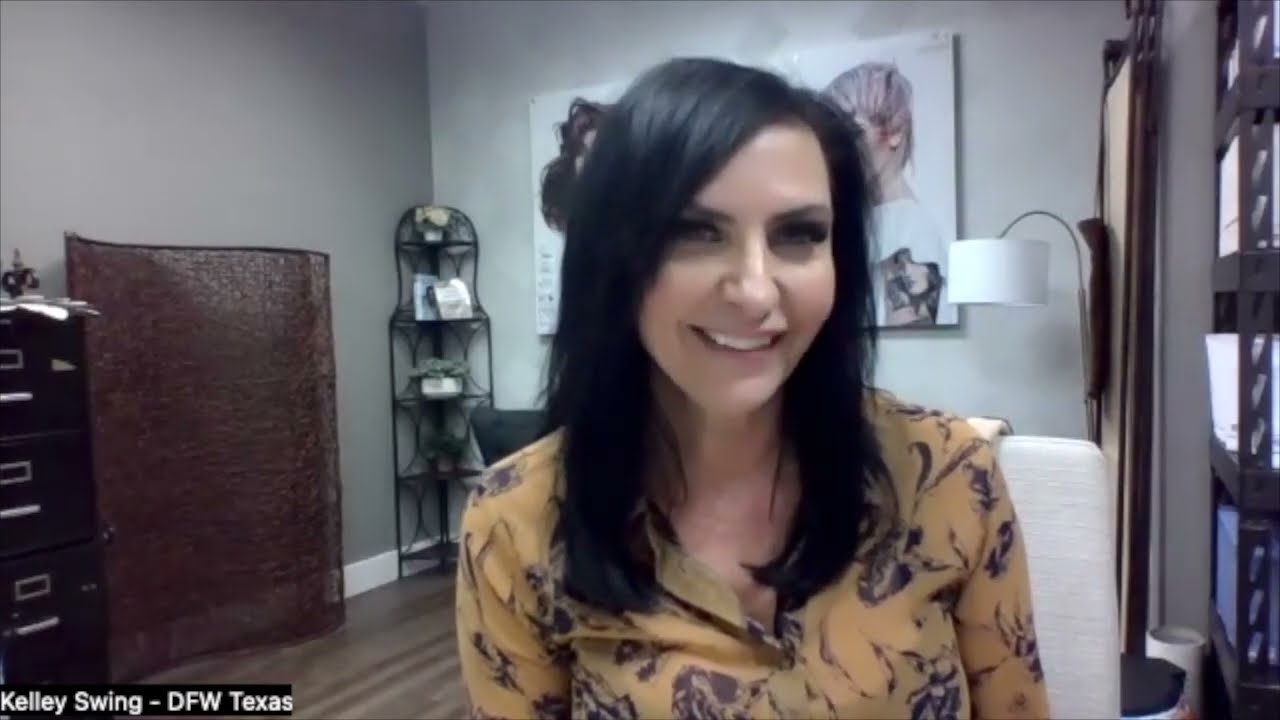
In this conversational interview, host Rene Deceuninck speaks with Kelly, a Texas-based salon entrepreneur who founded the first fully sustainable salon in Dallas‑Fort Worth. Kelly recounts her 20‑year career trajectory—from managing corporate salons to experiencing severe health issues caused by conventional salon chemicals, which spurred her to create a cruelty‑free, zero‑waste, fully sustainable salon. She explains why the beauty industry’s environmental impact rivals that of oil and gas and why sustainability can be profitable. Kelly outlines the upcoming Sustainable Salon Summit in Dallas, detailing its agenda: education on sustainable practices, business growth strategies, mindset shifts, crisis‑support training, and networking with global speakers. Notable speakers include Tom Chapman, who will teach stylists how to support clients in crisis, and Kelly highlights Rene’s body‑language sessions that give stylists practical tools to read clients. Kelly also promotes her book “Sustainable Salons,” which argues that eco‑friendly salons can thrive financially. The interview emphasizes the dual role of stylists as service providers and informal therapists, the need for mental‑health awareness, and the summit’s promise of innovative, actionable tools for salon owners and professionals.
Chapters
So good afternoon or good morning, Kelly. From me, it's good afternoon here in London. I don't know if it's morning where you are right now or is it?
It's afternoon right now.
Afternoon already.
Yeah.
So I'm super excited to come to Dallas. I will be flying tomorrow and look forward to speak on the summit. But before we go into that, could you give me some, or to the audience watching, some information, where do you come from? And how did you end up in the hair salon, uh, business or industry? And what's coming up next, like in terms of the, the products and stuff? Could you share some of that information and, and maybe why? Sure.
Um, I'm— I live in Texas and I came here maybe about 20 or so years ago, and I actually started an industry because I helped a girlfriend open a salon and market and manage it. So I, that's how I ended up there and it just kind of stuck, you know, it was just, it felt like the place I needed to be. I've done so many different things in my life, but when I got into salon, it just, it just was the right place for me, I guess you would say. So I started running salons at that time and then we had a recession, and I ended up going— was going to part-time because I wasn't a stylist, I wasn't behind the chair. So I went— was going to recession, I was like, well, I need to find another job. So I ended up going to a corporate company, and I managed salons with a corporate company, learned so much there. And then I became a district manager and transferred to Arizona, and I had 6 salons, um, and then they sold the company. So after all that, they said, promised they never would, they sold the company. And then I was left like, okay, they sold to competition, something that we said we never would be. So I ended up going out of the industry, started having some health issues. I couldn't understand why I was having a lot of health issues. And when I learned that these health issues, health issues that I was having were directed to from working in a salon, My office was right in the middle. We had— I had 25 stylists, so everyone was working, and my office is always open, goes through the air conditioning vents. I was getting respiratory problems, sinus problems, was getting really sick, and I went to doctor after doctor. Nobody could figure it out. And when I learned about the chemicals and products, I was like, oh my God, everybody needs to know about this. So then I went on a journey trying to find places that would anyone to do it in my area that was clean. And I couldn't find anyone except for one girl. I was driving over an hour and a half to go see her. And she— but the salon she was working in, everyone else was using the chemicals. So she got pregnant and she didn't want to be exposed to those, so she quit. And then I was out looking for a salon that— and so we couldn't find one, so we built one. And we built the first sustainable, completely sustainable salon in Dallas-Fort Worth. So, um, we went completely sustainable, not only with our products but with our recycling, cruelty-free. Just everything that we do and stand for is about sustainability and re— not causing any harm to the planet, any more harm than— because I believe we cause the most harm. I think that the beauty industry is number 2 after oil and gas. I believe that's causes the most mice on the planet. So it's something that I'm very passionate about sharing and helping other people, uh, understand what we're doing. We can just— we just have to make different choices, and the different choices work. Yeah, you know, so that's, that's what I'm excited about.
Yeah, yeah. So if you, you said like, uh, there was no salon, there was no— so you created one. So this pure entrepreneurship, you might say, like if there's no way made a way, right?
Yeah, we made a way. Yeah, that was interesting. I thought, oh, this is, you know, we can do this. I've ran salons. It's not the same.
That's a fascinating story. I mean, to come from where you come and where you are today, I mean, it's amazing. So if I would take my own example, I never took a piece of medication in my entire life. And then people say, where do you get all that energy from? I said, well, from homeopathics and oils and herbs and whatever. But if you think about the salon industry, all these chemicals, all these sprays, all these can't be healthy for somebody, first of all, using them, and then for somebody working in the hair salon industry. I can imagine that is— so you organize a summit next weekend, Sunday, I guess, is it? So what can people expect in terms of like if they would join us? I mean, join us, I mean, I'll be there too. What could they expect if they come to the Salon Summit?
Why would they—
if I If I would say to you, Kelly, tell me one reason why should I come to the summit, what would that be?
Well, what the summit was designed for is I, after having people come into my salon and I was teaching them about sustainability and the styles that I have, and then I started a distribution, so I also worked with salon owners and I noticed that there was a really big need. The only way to make a huge impact is to make it on a larger scale. So I was telling, you know, person after person individually, and it just felt like I was called to make this bigger so we could tell more people at one time. Plus, I wanted to bring, you know, all these other countries that are doing things differently than we are. And because I feel like we're just missing it, you know, missing the boat. And there's so many wonderful things that people are doing with sustainability all over the world. And we're just— we don't hear about it or we don't see it. So I made this summit and invited all these people from around the world to speak, and they're all going to be speaking about business. So what we get— what is hard also is the education. So education regarding helping your business grow, helping it be better as well. Your mindset, everything about sustainability, salon business. So there's so many things that I'm bringing to the summit with different speakers. So wonderful people are coming to speak, to share. And just like you, what I loved about asking you to come was all of your topics on body language. And so there's so many things that we don't realize that we're dealing with someone, especially with hair salons and hairstylists. The clients may not be telling you what you are asking them, or you might be missing something, but be able to learn to read their body language as well is just so amazing and intriguing to me. And, and so many— and when I talked to my whole team about it, they were like, oh my gosh, we would love to learn that. That's something that would really help them to become better at their job, you know, so, and helping people. So in this profession, it's the only other one where you touch people, you physically touch them. So if you're physically touching someone, you're taking on their energy, you're taking on their pain, you're, you're, you're, you're mingling your energy with theirs. So you have to be in the right place, number one, and number two, You have to know where they're at and be able to reach them, and you helping with that is, is amazing. So they're going to learn all of these things as well as, um, networking with people.
Coming out of a period of COVID for example, where people have like a lot of things on their head, and, and now they're coming emptying their thoughts and their minds in a hair salon. Because what, what happens in a hair salon is people they chat. They want to express themselves and share their misery or their challenges, also the beautiful things in life. But most of the time when I hear people, when I listen to people speaking in a salon, and I mean, I've gone to the barbershop, I'm not going to hair salon. I don't do my nails. But the thing is, is that when I listen in the barbershop, the guys are among each other, oh my God, did you hear about this? I said, wow, that's crazy. But if you run a salon, I mean, I can imagine everybody is like emptying their challenges or whatever they go through, but where do you go at the end of the day with your big can with all that information from all those people? I mean, I guess it might be like quite a challenge for you guys. Could that be true or?
Yes. Well, a lot of times a lot of people don't go see a therapist or they don't talk to anyone or some people don't have anyone to talk to and some people are never touched by anyone,, but they come to the salon and get their hair done. So it's a really big responsibility. So we need to be taking care of ourselves as well as, so we can take care of them, right? So, and if you're all, if you're taking on all this stuff too, you're not, it's going to affect you as a person. But in the salon, we hear everything. And a lot of people will tell their stylist before they'll tell their therapist. And then that's proven. And some people don't even talk about their feelings. And if you are equipped with the information on how to get that out of them to help them, I mean, that would be empowering for a hairstylist and for a manager, a leader, anyone to be able to do that.
So— Even if you do somebody's hair, you're a therapist at the same time.
Absolutely.
Yeah.
But you're not trained to be. So if you're not trained to be a therapist and you're trying to be a therapist, that's not a good thing. Yeah. You know, and we try, we try, you know, like I hear about it all the time, you know, what some clients say to the stylist and we're talking about it, you know, like, how do I tell my client? I don't know what to say, you know. So we discussed this a lot with the stylist. So this is something that they're going to learn at the summit and you're going to help with that as well. And, you know, we had Tom Chapman, he, he designed a whole course around clients in crisis and how to help them. So we'll also have that.
Tom Chapman. Who else?
Tom Chapman. Yeah. Tom Chapman speaking at the summit. And that's what he's— he's a barber and he has a barbershop and he teaches you how to help women in crisis. You know, he had a friend that committed suicide. So it's like, it's really interesting, the speaker arrangement. So it's really, really going to get a lot of value. My personal coach is going to be speaking and It's just, and how important it is that we have a coach and people that are helping us, right? And it's just, it's really great. So there's gonna be a lot of really great information and a lot of networking and fun stuff. So, tons of good stuff.
Okay, in terms of the body language, I'll share you some stuff there in the summit that you can actually use and it works. I got people calling me from all over the planet, and especially from the Middle East when I do seminars in the oil industry, and they call me and say, Rene, I use this and it works. And I say, yeah, that's the whole purpose.
Yes, you actually leave with tools that you can use. That's important.
Yeah. And in English language, right? And it's in human language. For example, if you turn to the right, you show your left part is your emotional part of your body. If you turn to the left, you show your right part of your body is your rational part of it. Why would you do that? You have to come to the summit to find find out.
Yeah.
And the days before, the 2 days before, I will do a seminar there as well, right next to the summit, and then we'll go to the summit. You know, Kelly, I look forward, I look so forward to come to Dallas. It's been 20 years since I was in the US last, so I really look forward. Yeah, I was in 2002. I traveled from East to West.
And also it's changed a little bit.
A bit.
A little bit.
Yeah. Yeah. It's, uh, that's awesome. Is there anything that you would like to share with, uh, the, the people watching here now? Uh, like, hey, um, come to the summit because you're gonna take away 1, 2, 3, X, Y, Z. What would that be?
Well, um, what they're gonna take away are, um, innovative tools that they would have probably never learned anywhere else. Very innovative tools. So we've all been to the summits for, for salons and they're— it needs to change. It needs an upgrade because they're all the same. We cannot continue doing the same, using the same tools and expecting a different outcome, right? So it's time for change. That's one. Number two, they're going to learn everything about sustainability. It's like what we're doing to the planet. And how we can make a difference. So just, just the thoughts of the chemicals going down the drain and going into your local water system. I mean, and there's a salon in every corner in the US. I don't know about where you're at, where, how many are where you are, but it, it goes into it because it's affecting everyone, you know, and not only just you think your client, it affects the hairstylist though, and your community, right?
Yeah. Very shortly, you wrote a book as well.
Yes.
Do you have it with you there? Could you show it? So just for the people to know that you wrote a book. Once you immortalize all your information, it's so important to have that. I mean, and that's Sustainable Salons, and then make millions. Yeah. Those who are watching and you're in the hair salon, buy the book.
Yeah. So a lot of people— it's the reason why I wrote it like that is because there's so many salons that we think that being sustainable, there's no money or it costs too much money or you're not going to be successful. And I— that's not true. You can be very successful and sustainable, profitably sustainable. How about that?
Um, I would say, Kelly, thank you so much for this conversation. I will share the link, uh, when we finish here so people can click and sign up. And I am so looking forward to come to the US and also learn from the other speakers because I saw the list of speakers. I'm super excited to hear what they have to share. You're never too old to learn, isn't it? So.
Right. Absolutely.
So thank you so much for this conversation. And I look forward to being in Dallas like in a couple of days from now. So, yeah.
All right. We'll see you then.
All right. Bye. Thank you.
More from Rene


What are ... The Silent Language of Connection and the Hidden Power of Non-Verbal Cues?








