What are the Secrets of the Mind-De-Cluttering You and Body Language ?
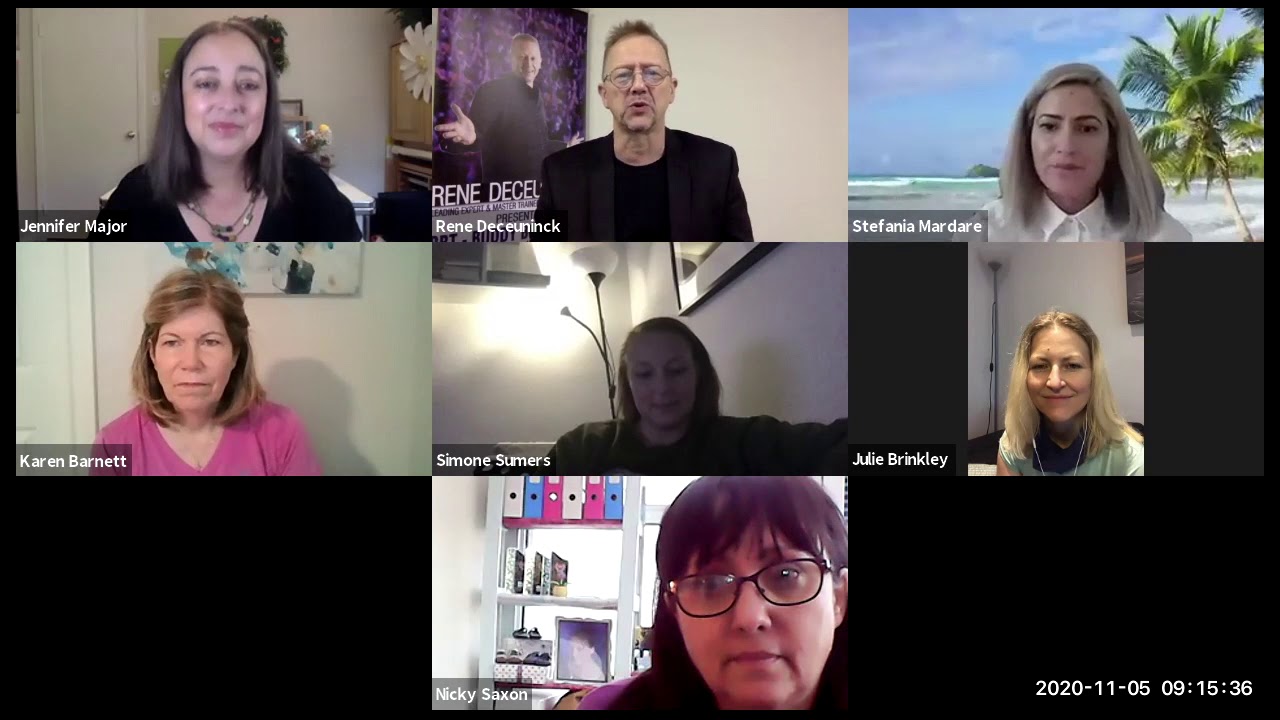
Body-language expert Rene Deceuninck and organizer Jennifer Major discuss how clutter affects your mindset and body language. Jennifer shares her Lego time-blocking system for productivity, and they explore how decluttering your space and mind changes how you show up physically and make decisions.
Chapters
Jennifer, would you like to introduce yourself to, to our participants?
Sure, I would love to. Thank you. So I'm Jennifer Major. I'm the CEO of Cultivating You, and I am a professional organizer and coach. I've been doing this for 17 years, came out of a background in human resources. And really just love helping all people. Most of my clients tend to be women, but certainly not exclusively, and really helping them to, to organize their time, their space, and their energy so that they can have a better life, a better business, and do what they want to with their lives. So that's, you know, that's time management, that's dealing with clutter in their space, and all those things that suck your energy.
Wow. All right. All right. Myself, I'm coming out of the world of body language. I've been teaching for the last 25 years. I started on the 5th of October, 1995 in Belgium. In 2015, took a decision to start a new company in London. And why London? London is the center of where, from my perspective, to do business worldwide. Nowadays I'm teaching body language on a world level. I went to Iran, to give you an idea, Iran, Thailand, Australia, Americas, I mean, a bit everywhere. And what I do is I teach the secrets, the knowledge, and the benefits of body language, what you can do with it, how it serves you in all kinds of ways. Is this in business? Is it your relationship, your relationship with your kids? Body language is a global language However, watch out for cultural things. I mean, if you do thumbs up in India or in certain parts of India, you better run very fast because it's very offensive. And last time when I was in Iran in February, I did that, I said that, and there was a lady, she says, "Can I say something?" I said, "Sure." She says, "In Iran too." So, you know, there's differences in cultures. However, body language is a general language, a global language, and I've been teaching this now after 25 years, uh, a bit everywhere. I mean, and the reason of this, um, webinar— and I— we met Jennifer. Where did we meet, in fact? Was that the online networking group?
Yeah, it's all through Simone. Online networking.
And I— besides my body language company, there's a 5% left that is— I'm collaborating with Tony Robbins, Anthony Robbins. That is a very long story. I'm gonna spare you, I'm gonna save you the details, but I'm collaborating with Tony all over the planet and doing previews for Tony. And what I learned from him is that, and that was inspiring, that was inspiring me to ask you, Jennifer, to do this webinar, is that what I learned from Tony is that clarity is power. And if you know what you want, why you want it, you create clarity and you create power. But then you introduced me to a system that you have that is really interesting in terms of that clarity that will give you power. And maybe if you can share some of the basics, what you're doing.
Absolutely. So I'm guessing you're referring to my Legos.
Yeah, absolutely.
So I am becoming famous now for my Legos. So in fact, I got referenced yesterday on a webinar and I wasn't even there. So one of the things that is so key to, to managing your stuff, to managing your time, to managing your energy, all of those pieces, is, is understanding how to manage your day. Obviously you want to be mindful of what comes into it, and I talk a lot about having the foundation for decision-making, which is your values, your, your priorities, and your function. And that can apply to your closet, that can apply to your time, that can apply to everything. Right, so what do you value in that space? What do you value on your calendar? And that's what really should show up there. But once it's there, you've gotta figure out how to deal with it. And the old method of time blocking is really based on a very, probably 1980s, 1990s model of sitting in a nice corporate suite and you've got a secretary sitting outside who can, you know, block your calls and block people from coming to see you, and, and you can really just have that focused time. I don't think any of us lead that life now. And so it's, it's got to be a little bit more modular, a little bit more flexible. And so that's where I talk about my Legos. So I, and I used this originally many moons ago with my daughters, and, and it's stuck in it, and it resonates with with clients too. So, and so use this with your kids, use this with whomever. So you can look at this and say, okay, well that's a 15-minute block, that's a 30-minute block, this is an hour block, right? So because 2 of these, or 2 of these are this, 2 of these are this, right? And so it's a great way to really visualize time. And one of the things that we do so often, when we're, when we think of traditional time blocking is we think, okay, well, I've got this hour here that I'm supposed to be working on, let's say my emails for the month or whatever it is that you're supposed to be working on. And then an opportunity comes up, a call runs long, you know, a truck runs into your front yard, whatever it is, right? And all of a sudden this block can't happen here. Traditional time blocking says, well, either ignore all those other things and, and continue to do this, or this now just goes in the trash. Well, that's just crazy because you put this on your, on your day for a reason. So that means that then it just has to move. So maybe it just has to move down, or maybe it has to break into two blocks to be able to fit into your day. So it's not about, well, I can't do this, so I have to throw it away. It's about continuing to honor that that block existed to begin with and it was important. So where can you move it? And so that may mean like, okay, well, now I have to move this little 15-minute meeting, see if I can move that up. You know, that was maybe I needed to update my accounting stuff, so that I can move, that's internal, right? And so now I have room and I can put that there. And so now that can line up again, and then the stuff that threw me off here, there's room for that. You also really— you don't want to fill up your day. Like, you don't want this to be completely full of Legos, right? You, you want to have some time to have this, that flexibility to, to have that opportunity for a call to go long that's going really well, or to have that pop-up meeting with somebody that, that just presented themselves in your DMs, or how— whatever the case is, right? A friend calls and says, hey, come have a coffee with me, even if it's a virtual coffee, right? You want to have the time and flexibility to have that in your schedule. And if this whole thing is full of Legos, if this is your day and it's all full, that doesn't exist, right? And then something else that was important has to get tossed out. It also means that you can set blocks. So you may say, you know what, I'm going to set an hour block every day to do something for me, and I'm not going to plan it. And if y'all got questions as we go, certainly drop those in the chat because we want to hear from you throughout. But, you know, you plan, plan blocks of time that are unplanned, right? Like, I used to joke when I was in in university that, that, like, I was— because I was super Type A at that point, you know, before I had children, and, and, and I was a business owner, and, you know, and everything was just so— and my friends would joke that I had to put it on the calendar to be spontaneous. So from 2 to 4 in the afternoon, now it's time to be spontaneous, right? See, Julie can totally feel me on this. And if that's what you have to do, that's what you have to do. And sometimes you have to do that because you've got a lot of different pieces and, and it's important for you to just block out that time. You know, I'm going to go take a walk, I'm going to do something that's not work, I'm going to do something that's not cleaning the house, whatever it is. Yeah, so that's, that's, that's my crazy Lego time blocking method.
All right. So it's in fact that system that will create some clarity. And it's that clarity that will give you that power, isn't it? It's just know what you're doing, where you're doing it. And I suppose you can use different colors like orange and red, and you don't have to stick to the green and yellow and blue and light blue and dark blue?
Absolutely, yeah. I mean, when I did it with my girls, I— we had a big Lego board, and they had, they had colors for school, they had, you know, for actual school time, they had colors for homework, for extracurricular activities, for family, all that kind of thing. And you can kind of line it out, and you can even do that to kind of create a template for your day. Right, I mean, if you think about a template as a way to say, okay, every Monday morning I'm gonna have what I call my CEO time. That's time that I don't take client appointments, I don't have one-on-ones, I don't do anything else generally, and that's just my quiet time that I do creative work. I update my accounting system, I send out my invoices, whatever that is, right? And that's on my, you know, that's part of my template. And so that can help you lay out that day and that week in a way that, that works for you, so it doesn't feel like your days are kind of haphazard. And in the land of a pandemic, yeah, I mean, speaking for the ladies, Renee, you may, you may feel this too, but like, you know, like there are days where I don't want to do the makeup and the hair and put on real clothes., right? And so those are my CEO days, right? So I, you know, like I do my speaking things or where I'm going to be recording videos and things like that, like a lot of times on the same day because it's already done. And then there are other days where it's not done.
So yeah, exactly, exactly. What I recognize in the Lego system that you're mentioning is what I use in an Excel file. You know, I got an Excel file and you get up in the morning at 5 o'clock and, and you do some meditations and praying, and then at 5:30 or whatever time you take for that, you go, you do your things in the, in the shower and the bathroom, and then from there you get your breakfast or you go to do some fitness or whatever. However, these blocks, if you block them in a Lego system, which is a very good thing and good tool, I guess, because if I have to go into my Excel, I have to open up my computer, I have to do this, I have to do that. Okay, you can say you can print it out, but you can't move the colors if it's printed. So I think that Lego thing is— I'm gonna definitely try it out. And why would I like to try it out is because if you take that blue block that you use, for example, for social media, and you didn't come to do your social media, you can take it and put it somewhere in the afternoon where you take a break and use that for your social media. But then when you put it on a Lego, it's a fascinating thing if you ask me. You can play with it, right? And that is the— yeah, the visual thing that you have is, is, uh— now if I would relate that to body language, which I, which I will obviously do, is that when you have clarity, you got power. And it's that power that brings you in a certain state. And you do have to know that in, in, in— when you write something on a piece of paper, there's a grammar involved in it. If, if you read a book, there's a grammar involved in it. The language for deaf and blind people there is a grammar involved in it. Body language has no grammar. Body language is based on how you feel, and it starts with your thinking. What do you think will produce a feeling, and it's that feeling that will produce a certain body language. It's that body language that will be, um, be transferred to another person or another thing, and they will absorb your body language subconsciously, and that will be processed and come back to you And then you go like, wow, the outside world is a reflection of myself, how come, right? But if you know that we got a conscious and a subconscious mind, and the conscious mind, in the word of conscious, is what's happening in the moment. If you taste something, if you taste like chocolate or mayonnaise or tea or coffee, or it doesn't matter what you taste, or salt and pepper, that has a certain feeling. That's in the moment, that's conscious. If you listen to something, we're speaking here, and for those who are listening, this is conscious. When you touch something, you burn your hand and go like, that's conscious. And speaking is conscious. So the transferring of data is 40 bits of second, 40 bits of data per second that we transfer when we speak. Nonverbal communication goes through the subconscious mind. So we have the conscious and the subconscious mind, and 40 million bits of data will be transferred through the subconscious, including your nonverbal communication. So the conscious and the verbal and the nonverbal enters the brain of that other person, gets processed, and comes back to you with an answer. That's how it works. But if in the first place you have to declutter— to come back to you, Jennifer— you have to declutter your brain Otherwise, you'll create a different feeling, and it's that different feeling that will create a different body language that will be processed through another person on a certain frequency with a certain energy. Does that make sense? And, and, and that's why it's so important. I mean, the combination of, of, of our, uh, subject is, is amazing. I mean, get decluttered because you'll produce something in terms of body language that will attract certain people towards you, or you're going to push them away from you. Does that make sense? Does that make sense, Jennifer? I mean, would you like to add something to this?
Absolutely. Well, and you were talking the other day, um, I can't even remember, we've been in too many things together recently, so I can't remember what it was. Um, you were, you were talking about how you were, you were with a client and you were asking her something and, and she wasn't responding real well. She was sort of, eh, not really non-committal, and you could tell that her brain was you know, 12 years away. So when you've got that to-do list going in your head and it's, it's not captured somewhere, where you— when you've got that mind clutter, it absolutely impacts your body language, it impacts your ability to make decisions, it impacts your way to interact with others well. I mean, you know, I mean, my— I did an experiment in my house this last week where I didn't like I'm generally the one who does the dishes even though I cook. And I didn't do them for 3 days and they just sat there like magic, right? The magic, the magic dishwasher fairy and the sink fairy did not come. And the longer they sat there, the more irritated I got, right? Because there was this clutter that wasn't getting cleaned up. But then that then, you know, came through And my husband's like, what's wrong? You know, like, what is making you so angry? And of course, like, in the big scheme of things, dishes are minor, right? But it was, you know, it was that, it was that clutter that was just continuing to grow. And it absolutely impacted my emotional way of functioning in our home. And it impacted for sure my body language because I hadn't even said anything. When he asked what was wrong, right? It was all nonverbal. And so, although, I mean, it was— to be fair, I mean, you would— I'm pretty transparent when it comes to that kind of thing, so you probably would have been able to tell from across the airport. But, um, but it absolutely impacts everything, you know. So the, the more clear our spaces are, the more clear our minds are, the more we feel good about what's happening on our calendar. It, it protects our energy, which— and all of that just feeds back into to those emotions and how we interact with others.
Absolutely. The example you're talking about is a very amazing example. I mean, in terms of body language, you read the signs. One of my sentences is that become a mind-through-body reader and see what's never being said. So become a mind-through-body reader means read the body signs and you'll actually read what's going on in the mind. And then after which is pretty obvious, see what's never being said. And what I mean about that is that there's certain ways of looking when you ask questions. And if I would ask you a question about your trip to Egypt last year, for example, which you probably didn't do, I don't know, or you did, but if you, let's say you suppose you would have done it, you've been on a holiday to Egypt, you will probably remember things and look up left. If I would ask you a rational question about your agenda for next week or the business or whatever, you would probably look up right, which is a normal thing. Construction. This is a memory, this is a construction. And, um, but when people look left down, right, for you guys right down, that means, uh, Stefania, it's the other way, the other way, but down. That means you are having internal dialogue. That means you're thinking inside your head. So you look left down As you look at me, I might be right down, right? So what happens when you— your personal sight left down. That means that when you do that, you are thinking about 1,000 different things. You know, I'm gonna be late home, my husband is gonna be a bit angry with me because dinner is not ready, I have to pick up the kids from school, oh, the plumber has to come because the washing machine broke down, and there's like 1,000 things going on in your head because women do that far more often than men. Men don't care. But women are like thinking about a thousand things and doing a thousand things almost at the same time. And we don't just— we don't care. I mean, that's a man versus woman. And there's a beautiful book about it, Men from Mars and Women from Venus. But the thing is, is that when you do that, I will ask you a question and you are answering my question in a very slow tempo because you're looking that way. Way down, I will smash my hand on the table and say, bang, what are you thinking about? And I had that experience in Brussels with a lady, and she says, how do you know? And I said, I've been coaching 25 years, by the way. I know what I'm doing. She's, oh yeah, I was thinking about this and this and this and this. But she answered my question in a very slow way. And that is when you are not decluttering your mind Jennifer, when you're not decluttering your mind, you got like 1,000 things to think about. There are systems for that, the Lego, but you also got a paper agenda. I have a very small little one always in my pocket here, always write down the little things that I have to remember that day, or I have to remember next week or the week after, or monthly. I write them down. Once I'm in my office, put them on the computer, done. I learned that from, from, um, how was his name again? Onassis. You know, there's a movie about Onassis. It's a 3-hour movie about the family Onassis. And the older Onassis, he always had that little notebook in his pocket, who owed him money, what to remember, and a little thing, like, how you call that, like a little pen. And that little notebook, always he had it there. And each time something popped up, and then on the night, on your night table, right, you put it there as well. So you wake up in the middle of the night and you have to remember, you say, "Oh, I can't forget this in the morning." Write it down. Don't take your phone. I mean, write it down. The written word is far more powerful than putting something in your phone. And there's that clarity again that will give you that power if you declutter. And the example I just gave you about internal dialogue, we all have that. People ask you a question. I mean, is there anybody that doesn't? That never had that experience. I mean, we all have it. Somebody asks you something and you're thinking about 1,000 different things. Absolutely. That's an amazing example of somebody who has a lot of things going on in their head. And yeah, and can you completely declutter? I guess you can't. I mean, 100% declutter, but 80% would be a great— would be a big thing, right?
Well, absolutely. And here's the thing is what you see in the magazines, what you see on the TV shows, are staged. They're not real life. They're not how those people are living. That's literally a staged snapshot. You know, I, I saw a, a photo the other day of this beautiful pantry, and a friend of mine joked that like these people must just eat seasoning because that's all that was in this pantry, right? All that was in the cupboard was just seasoning. And the reality is they have another cabinet that they didn't take a picture of that has their boxed goods and their canned goods and all their real food, right? But everything, you know, I'm a big fan of things being in beautiful containers and being labeled and being consistent. Absolutely, it helps your mind have less clutter. You know, I mean, the Marie Kondo method is about having that less clutter visually. Every time you have words that are in your line of sight, your mind is reading them. Whether consciously or not. And so having, having that consistency is great, but, but don't hold yourself to that standard of what you see in the magazines and the, and the shows. It's, it's there for inspiration, not for what, not for what you should look to achieve. And you can have a super organized house, right, in a snapshot. You can have a super organized workspace and office and business in a snapshot. And things are going to get chaotic. And that's okay, because you've got the system in place to pop it back together. And that's what, that's what being organized is really about. It's not about it all being neat and tidy all the time. It's about having the system to where you can pop it back together and you can flow through it as you go.
Would you agree what you think about on a daily basis is what you get?
Oh, absolutely.
Yeah, absolutely.
And I totally agree that women have way more tasks in their heads than men, which is its own separate conversation, of course. But that's a different—
that's a different webinar, right?
But that's also why most of my clients are women, because they're the ones who are needing and wanting to get things more organized so that they can manage that better. Yeah, because I mean, and I mean, I even hit that wall yesterday because I've got all of my work stuff, which is like a big launch with like 4 different pieces in it that's going on. I've got 2 house projects. I've got 4 things for my daughter medically. I hit the wall and I was like, oh, we need folders, and literally made a folder for everything. Even though I don't do a lot of paper, I just needed a folder. I needed a place where things could land. So it just, I mean, that's just how we function. And so you've got to figure out a way that works for you. Let me see, Simone, what's your best advice on finding balance between having things out that inspire you and avoiding that it becomes clutter? I love that. So I will say one of the, one of the words I'll change in that though. Is the word balance, because I believe that harmony is better than balance. Because if you think about balance— let me find something here. So if you— I'm gonna use my phone as an example. So, you know, balance is, you know, one side— you think of a teeter-totter, right, or seesaw. One side's up, one side's down. Well, that's, that's not the life we want to live. You know, I want things that are in harmony. I want things that are on a running average. Right? So in terms of what you have out and what you don't, it's got to be what feels good to you, and, and it's got to be based, again, based on those values. You know, like, if you want a very minimalistic house, then that's, that's going to inform those decisions, right? If you want something that's eclectic and full of beauty, then that's going to inform that. And within that, like, you may say, you know what, I really want it streamlined, or I really like it full. Again, it's up to you what, what works, you know. I mean, we love vintage glass, and so I've got shelves full of it in my living room, and it's— they're technically full shelves, right? But I organize them, of course, by color because then that makes them not seem like a lot of individual pieces, right? So it becomes kind of this spectrum of color versus like just this like smattering of, you know, Skittles on the floor, right? So it's really about what you want out of that space and what feels good to you. And And, and just try it and feel it, and if it's, if it's not working for you, then shift it, right? I mean, nothing's permanent. So does that, does that help, Simone? And y'all feel free to unmute and ask questions too.
Yeah, but what I meant earlier by what you think about is what you attract reminds me of the story of, um, Wayne Dyer, the late Dr. Wayne Dyer, that said, uh, there's 4 ways of ordering ordering strawberry ice cream. And the 4 ways, the 4 different ways of ordering strawberry ice cream, the first one is you get out of your chair, you go to the shop, and you just buy it. That's the simple one. The second one, you send one of your children. That is called slavery, right? The third way of ordering strawberry ice cream is a more intriguing way, is that you're out, you're outside at a restaurant, sitting outside on the terrace, and then you're thinking about, hey, wouldn't it be great to have some strawberry ice cream? And someone taps you on the shoulder and they say, hey, excuse me, sir or ma'am, is this your strawberry ice cream? And you go like, whoa, wow, this is, this is, this, wow, this is crazy. And you can't wait to get home to tell everybody that, you know what happened this afternoon? And we all have that experience that we think during the day, we think about somebody that lives on the other side of the country and you didn't see them for the last 2-3 years and you can't stop thinking about them during the day.. And all of a sudden the phone goes off in the evening and who's on the phone? The one you've been thinking about. We all had that experience, I guess. I mean, happens. I mean, but it's the same with your body language, what you send out, even on a subconscious level, what you send out is what you get. And it's the same with cluttering. I mean, I remember I had a lot of stuff in those days and I had a trailer and I got this and I got that. I can't get rid of it. You know, it's from my grandma. This is from my granddad. This is from my We got like, I had like soft, soft stuff. I mean, too much. And one of my daughters came to me, she says, Dad, I got a present for you. She gave me a book from, and you already mentioned it, from Marie Kondo. And I read it, I was like, wow, this is amazing. And the one tip I remember is that put the stuff that you don't use on eBay, Yahoo, it doesn't matter where, sell it. But before selling it, take a picture as a memory. And that's what I did. And I had some beautiful stuff and I said, you know what, I'm going to give it a new life to somebody who buys it from me because I'm not going to give it for free. They're buying it from me, there's value to it. I'll take a picture. And now today I have lots of my stuff is just gone. I sold it. I mean, there's certain things that I don't sell, but most of the things are sold. And I've got the pictures and I go, wow, in those days, look at this, look at that. I mean, and the memory is there, but it's not in your way. It's decluttered. And, and if you have that decluttering in terms of your thinking, and you know that there's 3 ways to order strawberry ice cream— I told you there's 4 of them. Number 4 is that you, you, you synchronize with a thought and then you manifest it. And I guarantee you, I manifested so many things in my life, ending up with all these people on stages all over the planet I manifested it. And when the student is ready, the professor appears. So when you're ready for it, you'll get it anyway. Don't worry about it. But the first thing to do is to synchronize and manifest with the thought. So remember the strawberry ice cream. And I do that with my body language too. When I, when I, when I express myself with a certain body language, sometimes— normally it's always natural, don't worry about that, always natural. People ask me, what should I do? What should I do? I have an interview. Well, what, what kind of body language should I use? I said, be you. Don't fake it. Don't fake it. Because if you fake it, you create a certain energy, and that energy will arrive in the brain of that other person. And even if that person doesn't know nothing about body language, their gut feeling will say like, yeah, something's wrong. No, something's wrong. Something, something is not correct here. And that is what we call the gut feeling. Um, so if you want to fake it, try it out, but I wouldn't do it. Be yourself. And I don't know why I'm saying this to you, but about the fourth way of ordering strawberry ice cream— so manifest things and, and, and manifest body language. Okay, sometimes I use body language that I manifest something by sending out a certain body language. I use my, my verbal and my non-verbal in a certain way, and things are happening. I mean, but always make sure that what you put out there, even if you say I'm going to use a certain body language, a certain verbal that it really makes sense, because karma will get you anyway in the end. So if you do things in a bad way, don't do it. I know people that ask me the question, hey, but Rene, just a quick question between you and me, if I would do this and this and this, would I be able to get this and this and this? I say, of course, but do remember that karma will catch up with you if you do it for a negative reason. So be aware of that. But the decluttering of your mind will have an influence on your body language. That type of body language will attract certain things and certain people in your life. And some people say, why do I always attract the wrong men or the wrong women? It's always the same and always with me.
Damn.
And the reason is that you have to start decluttering. Jennifer, I think you agree on that one. You have to start decluttering your mind first, know what you want, and then make sure you produce a certain energy with a certain body language and things will come your way anyway. Does that make sense, Jennifer?
Absolutely, absolutely. Well, and I've gotten a private question, which I think is a really great, great question. Does weight affect body language? You know, does how much weight you carry on your, on your person affect your body language? I would guess it does, but only in because of how you think about yourself. Is that right?
That's completely correct. Body language will— your weight or your size or your the form that you have, or your face, how you look, what glasses that you wear, the clothing that you wear, they will all have an influence on your body language. But as you mentioned, it all starts up here, how you think about yourself. How you— if you look at, look at Oprah Winfrey, right? She's not a Barbie doll, right? And still she's a multi-billionaire. How did she do that? It starts in here, nowhere else. It doesn't matter how you look, It doesn't matter what you think, and what you think will eventually have a result in what you do on a daily basis. Are you getting up in the morning at 5, getting so excited? When I get up, when I get up at 5, I can't wait to get started, you know. God, thank you so much for waking me up this morning. A lot of people don't realize that, that there's no guarantee you'll wake up in the morning, you know. Do you know that? Do you realize that there's no guarantee? We— oh yeah, it is. Come on. I've been waking up every morning. Why not next morning? There's no guarantee. I mean, it starts up here. So if you're excited, you can't wait to get up and do your rituals and whatever you have to do in the healthy lifestyle, whatever you want to call it, and, and whatever makes you feel good, and just do it. And, and, and even if you have an oversize, it doesn't matter. It doesn't matter. I know a lot of people who are really oversized and they are very successful in life. The reason is it starts up here. And whatever people think about you— and listen now very carefully for that one and write it down— what people think about you is none of your business at all. Amen. Period. Jennifer—
Julie, there's easier said than done some days, right? Well, and, and that's where it's easier said than done some days. And we get caught up in that in our physical stuff too, right? Is my house has to look just so, or my business has to look just so. No, it doesn't. It has to feel good to you. And does it function for you? What works in my house doesn't necessarily work in your house. And an example I give of that all the time is— and it's so simplistic— is the idea of filing, right? We all have paper that has to be filed. And we have paper that we have to deal with. Some people are stackers, some people like notebooks, some people like folders, right? Some people like the little shelf things. All of them are right, but only one of them is right for you. And so don't try to fit into somebody else's mold because you see it on TV or you see it in the magazines or wherever. Figure out what makes sense for you because that's what will allow you to naturally flow. Because otherwise, when you— when you're trying somebody else's mold, then— then your same patterns are going to come back, and then you're going to feel this whole shame and blame crap that, you know, oh, I didn't succeed, I didn't do it right, I didn't— no, you just didn't. You didn't do it right for you, and that's okay. And— and And that feeds everything. I mean, that feeds your body language, that feeds how you interact with others, that feeds everything.
Yeah, yeah, exactly. It's the same with religion. One says, yeah, oh, you're that religion and you are that religion. And yeah, whatever, whatever you feel that makes you feel good, just do it. Because in the end, nobody cares anyway. Believe it or not, nobody cares about you. If you think people are caring about you, forget it. The only person that should care about you is you. Yeah, and then that, Julie, that's exactly— I mean, it's the only person that should care. I mean, there's a bear, a brown bear on the edge of a wood sitting on a picnic table, a brown bear, and there's a— there's written above his head, Muslim, Catholic, Buddhist, Hinduist, they all taste like chicken. Got it.
Oh Rene, I love you.
The only thing to remember is to do what, what minds you. I was with Robert Kiyosaki. I mean, I don't know if everybody knows about Robert, Robert Kiyosaki, Rich Dad Poor Dad and things. I was with Robert and he said, mind your own business. Mind your own business in the first place. And by business, I don't mean literally business. Mind your own life. Who are you? Who's your partner? Make sure you take care of yourself first. We all know the story about sitting in an airplane, and when things go bad, you have to do this and this and this and that, and then the mask comes out and you have to put it on your face first before helping somebody else. It's the same in life with everything. Mind your own business, mind your life. And when you do that, people might follow you, and if they don't, it's because they're not ready for you. It's as simple as that. And, and when people— when you, when you focus on what you want, in the end, as I, as I mentioned before, if you focus on what you want, your thoughts will create an energy, and that will attract the same energy towards you. What you put out there will come back to you. So if you put out like, hey, oh, I'm not feeling good, I'm bad, oh my God, my, my, my— oh, my finances are not good, I'm gonna get angry, right? You're gonna get more of that. Don't worry about it, you're attracting it. However, if you say, hey listen, I know next year I'm gonna do this, my plans are this, my, you know, da da da da da. The reason that people, a lot of people, a lot of leaders in this industry say, have a board, a vision board, there's a reason why they say that. Because 9 times out of 10, things will happen. I dreamt for so long about a Mercedes S, huge car, amazing car, luxury car, Big engine in it, when you push the pedal, you get a big smile on your face. And I dreamed about that car for so many years. Today I'm driving it. I'm even thinking about the Aston Martin, the V12 engine. I'm literally crazy going about it. I want it, I'm gonna have it anyway. And if I don't have it, who cares? Nobody. You should do it for one person only, and that's minding your own business, right? And that's for every single person now joining here, and for the ones who are gonna look, watching the replay, Remind yourself like, hey, you're the most, most important person on this planet. And if you take care of yourself and you do what you have to do, people will follow you. They will follow you. They will follow you anyway. I mean, Simone, and in online training is the same. If you put one post every single month, you're not going to have any money, that many followers. They're not going to buy your online training, right? It's like going to the gym. If you work out once a week and then once a month and then once a year and you want to grow muscle, forget it. I mean, I went with Tony so many times, Tony Robbins. I mean, he said, hey, Mr. Robbins, Mr. Robbins, I went to your seminar 4 days, I went crazy, I went home, I did so many things and blah blah blah, and 3 months later I went like meh. Okay, that's normal, it's complete, we know that. It's because you have to do this on a constant constant basis. On— if you're in the traffic jam in the morning with your car, my first thing, traffic jam, luxury time, me time. I put on a seminar, hey, the music I love, you know, the opera music or classic music or whatever, or rock music, whenever, depends on the state you're in in that very moment. But that's luxury time. Do this, it doesn't matter, right? But then that will bring in a certain state, and that state will attract what you actually want out of life more than you can ever imagine.
Yeah, no, I completely agree.
Yeah, and I think decluttering, the more you declutter, the more abundance in decluttering that you will attract as well. Sorry for interrupting, Jennifer. Go ahead.
Absolutely. No, absolutely. Well, and Simone asked the question, um, what's the best way to create a workspace that helps your boss lady body language? And so I think, I think so much of that is just, is, is two things. Number one, having minimal clutter so that you can have space to create chaos in your creativity and then put it back together, right? Because we've got to do that as creatives, right? And because the reality is you're not, you're not a business owner if you're not a creative at some level. And, and to have a space that just makes you feel good Right. And again, that's one of those like, don't judge by what it looks like online, right? Because somebody will, will have pictures of their really pretty— it's like everybody's got the white desk and the little laptop and that's staged. That's not real. That may even be a fake picture from Canva, right? Like, that's not really their desk. You know, mine is filled with antiques because I love having the, the stories of the furniture in my home, right? And, and so, but it's, you know, it's got flexibility, it's got, you know, it's fairly minimal, but it's— for some people this would be, this would be crowded, for some people this would be sparse, right? So it's, you've got to do what, what feels best for you because then, I mean, it's like the weight question, right? Because then it's how you're gonna feel in that space, and then that's what's gonna create that beautiful body language for you, or that, you know, like, eh, I don't feel confident in my space, I just, you know, like, hey, welcome to my coaching program. Like, no, you know, you're gonna have that boss lady body language because you feel great in the space and you've got the setup to accommodate that.
Yeah, I would add the breathing exercises before you start your day or before you arrive at the office is that, do some breathing exercises. The thing you mentioned is that I'm like this, I'm a shoulder down, I'm a head down. What are you doing is you're cutting off the oxygen. There's, there's a reason why breathing exercises are so important. If, if you're mad, sad, crazy, uh, the way you feel, there's a way of breathing. If you're happy, you will breathe a certain way. If you're angry, you'll breathe a certain way. If you're crying, you will breathe a certain way, and it's that breathing that will put you in a certain state, and that certain state will create a certain body language that will attract or push people away from you. And it's, for example, the breathing exercises— breathing through the nose and breathe out through the nose. So, so you do these exercises that we learn, like 10 times in, 10 times out, 10 times in, 10 times out. And you might feel dizzy after a while, like, oh, what's happening? The only thing that is happening is that you get oxygen to your brain and you will have clear thinking. And it's that clear thinking again that will change your thoughts, and it's those thoughts that will attract through your body language certain people. You'll attract them or going to push them away. And sometimes you'll attract the wrong people and push the good ones away, or sometimes you attract the good ones and push the wrong ones away. It depends on how do you think and how do you cut off that, that oxygen here with shoulders down, head down, up Everything cut off. It's normal. I call that— in Belgium we call that stinking thinking. The moment you have no oxygen, enough oxygen going to the brain, you start thinking, and, huh, it's a sad day, isn't it? Look outside, it's raining. Oh my God. And you go to the bathroom in the morning and you look at yourself like, wow, what an ugly— wow, what happened last night? Oh my God. And you go downstairs and the coffee is not ready. And your shirt is not ironed and you go like, oh my God, and you go to your car and get in a traffic jam, oh no, and they don't let you through and ram, ram, gonna be late. And then you arrive at the office and then somebody says, hey Johnny, how you doing? And you go like, not now, I'm not in the mood. And you got that, I mean, I've been telling this story so many times, you got that other situation, the same situation but with a different mindset, and you open up your window and it's raining and you go like, yoohoo, Yes, it's raining. I have to work anyway. Yes, yes, yes. You go to the bathroom, you go like, hey, how you doing, tiger? I love you. And then you go downstairs and the coffee is ready because there's a timer, and your iron was— your shirt was ironed the night before, so you're in time. Jump in your car, get in traffic jam. Yes, me time. Good music on, AC/DC, I don't know. And you're like, yeah, yeah, yeah. And people are like, they said, yeah, man. And then you come in, you arrive in the office and say, hey Johnny, how you doing? Hey mate, how you doing, mate?
I'm good, bro.
What the heck is going on with that guy? I mean, like, oh girl, it doesn't matter who it is, but you will attract or push away whatever you want depending on how you manage your state. And that is so important. I mean, you can have some fun about it, but it is your state. Your state will change everything. And it's again from the beginning where I started, that clarity. And what Jennifer, Jennifer's subject is, is sub— uh, it's a decluttering. That clarity will give you so much power, so much, so much energy, you know. You're gonna get out there, gonna say, hey, I can change the world, I can, I can. But it is a mindset, it starts up here.
If you say—
I mean, there's a very famous quote that says, if you think you can, you can. If you think you can't, you can't. You're usually always right. So, so Jennifer, maybe we can ask somebody from the participants who has another question. Maybe Julie, Nikki, Lincoln.
Yeah, and again, unmute, unmute and share your questions with us. Michael had a question and I'm not sure I understand it, so I've asked him for some clarification. Maybe Michael, you can come on and share the question directly. I'm guessing it's a translation between British English and American English.
I was just wondering— hello, hi— I was just wondering if you had any tips about sort of raising your state. About? Raising your state. Raising your state?
Yeah.
What do you mean by raising your state? What's the outcome you're looking for? Like if, say, you're in a low state and you want to try and get yourself into sort of more of a high-energy state. Yeah. Jennifer, do you have a tip?
Or— Absolutely. I mean, my go-to is declutter something, organize something, because it, it makes you feel in control. It gives you that— and it's a false sense of control, right? But it, it allows your brain to reset. And, and doing it in combination with something that you know makes you feel great, whether it's music, a favorite podcast, having a little dance party, whatever it is, you know, do something. Get— just get into action and, and doing something where you can just take 5 or 10 minutes and, and shift the physical being of something. Putting dishes in the dishwasher, tidying up a space, refolding your clothes, whatever it is. That's one that often works. How about you, Rene Deceuninck?
I would refer to my daily job is that I don't call it a job, it's more of a well-paid hobby. But what I would refer is that if you do some breathing exercises when you wake up in the morning and you don't feel that energy, you go like, ah, I don't know today, you know, I think it's gonna be a day like those days that you say, ah, it's not my day. When that happens, say, this is going to be the most amazing day of my life. Today is the first day for the rest of my life. I'm going to do some breathing exercises now. And you breathe in, you breathe out. So you breathe in, hold it for 10 seconds, breathe out 10 seconds. Breathe in for 10 seconds, hold it for 10 seconds. And you do these exercises, do that 10 times, take a break of 10 seconds, go back to the same system, do it 3 times. So you have 30 rows of 10 in, out, and holding it. And when you do that, you're gonna feel a change of your body. You're gonna feel a change in your brain. You're gonna feel a change in your thinking. And what would I add to it is drink a lot of water, fresh water. In the morning when you wake up, you grab that bottle and drink water. The biggest mistake I used to make— I'm not going to say anybody else makes— but biggest mistake I used to make was like the first thing that I did in the morning putting on the kettle to have my coffee. And is that a good thing? It's not gonna kill you, but if you're not feeling really in an energetic state, because that's the question, make sure to drink enough water. Let me give you a very, very short example. I was backstage with Tony and we had an amazing time, and Joseph McClendon was there as well. And Joseph McClendon is already in his 60s, and he's a colleague speaker of Tony's. They're always together in these, in these Unleash the Power Within seminars. And I said, Joseph, man, where do you get all that energy? I mean, I mean, I don't want to be rude, but your age, I mean. He says, there's a simple thing to have all that energy in the morning, at midday, at nighttime, it doesn't matter when. He says, go for green, go for blue, and shake your ass. And I said, what do you mean by that? He says, go for green, eat as much as you can, Raw green colored vegetables and green colored fruit, however, all raw, as much as you can. Drink water, still water, as much as you can, and that's for the blue part. And then have as much fresh air as you can. And the third part, shake your body, shake your, shake your ass, move your ass. That means like do at least 10,000 steps a day. If you go to that supermarket, park your car on the other side of the parking lot and go by foot. Make sure you got enough steps. Move with your body. He says, this is the only thing I do on a daily basis. Not the only thing, but one of the things I do on a daily basis is to make sure to have enough raw vegetables, green colored, or fruit, fresh water, fresh air, and move. And he says that is the most— that's the best recipe for you as a human being to have. Lots of energy, and that will micro actually change your state as well. If you do that in the morning, I mean, I would not encourage you to start eating raw vegetables in the morning, early morning where you open up your eyes. However, I have my spirulina and my wheatgrass and all that stuff, and that's not the first thing I do, but after 10 minutes I'll have it, and you won't believe how much energy that is giving you. And if we don't, if we can't make it in a natural way, there's nothing wrong to do it in a non-natural way. By the way, what I'm talking about are all natural things. The vegetables, the water, it's all natural. But you can enhance it a bit, you can help it a little bit, and there's nothing wrong with helping your system with something from the outside, right? I've got a lot of people who said, yeah, but I'm a bit depressed, and I've been depressed for a week, 2 weeks now, for a month, and it's not working for me. And I say, you know what, follow the doctor's advice. However, if you want real advice, call me. They go like, what, what do you mean by real advice? I said there are certain ways to do this without medication, but I don't want to advise you to not take any medication. I mean, I'm not going against the stream of a doctor because they can sue me in a law thing, right? But I will advise you after. We had a lady, cancer terminal, she had 2 weeks to go. She still lives today. On a different diet, all greens and raw. And that has to do with pH value of your blood, that has to do with— but I'm not going to go into deep, too deep into it because that's a different story. But it is a fact that you can, uh, you can change your state, Michael, due to the habits that you change in your life in the morning to begin with. If that makes sense, that's great.
Thank you. Thanks very much. Well, I want to mind everybody's time. Because otherwise then we're going to mess up our Legos, right? So we don't need to be messing up the Legos if we don't have to. So, so I wanted to close this out. I've dropped my information in if you want to, if you want to jump on and continue the conversation with me directly, there's a link for that too. I do have a challenge coming up to figure out how to get your time back from social media. Because it is so easy to get sucked in. And I will drop that link in and you can— Rene, I know you've got some things going on and if you want to tell them how to save the chat, that would be great.
All right, I'm just gonna check if I can share something in this box here. I'm not really a great awesome Zoomer. If I can say it like that. Zuber. So what I'm going to share here is an online training, so you can learn 24/7 where you are, what you do, who you do it. It doesn't matter, it's 24/7, it's online. The only thing you need is a device and some— and a bucket of Wi-Fi. You know, if you have a bucket of Wi-Fi and have a device, you're online. Don't take that literally, please. Um, yeah, what I would like— I'm going to share the website as well. It's a very easy one, it's myname.com. So, and for those who say, hey, how can I save this chat box because I want to save this information from Jennifer and Rene Deceuninck, there's 3 dots on the bottom right. If you click on that, you will save the chat into your computer. So if you wanted to save the chat, you want to save that information, please click on these 3 dots and you'll have it on your computer. So to finalize this webinar, I would like to ask, is there one more question from somebody? One more question, a very short one, a very little one. Is there anybody that has to say, I've got something going on, or a very short one? Everybody is silent. OK. So the information that you got on the chat box is the websites and the emails, and Jennifer is reachable also on Facebook, LinkedIn, Twitter, I think Instagram as well, Jennifer, isn't it?
Oh, so Simone just dropped something which— okay, Simone is really asking this question because this was a real question of hers. Um, so needless to say, we got on a call because that's crazy train, but it's possible. So I mean, at the end of the day, you streamline, you organize, but you— I mean, you start 10 minutes at a time. On figuring out where to, where to make some progress. Whether it's in your project management, whether it's on your calendar, wherever it is, you can do anything for 10 minutes. So, so just, you know, figuring out how to kind of categorize and sort things in that 10 minutes before you're making the decisions, that makes it so much easier. I mean, that's how we solved her 163 project problem, was we sorted it out. So That's a great question. Yeah, anything else before we wrap up?
What I do, for example, if I have a lot of things on my mind, I have a book and I write every single thing down in that book. And, and then, and it's— I can show you. I'm not going to give you any details because it's— this is one of— that's my book, right? You got these things here. I don't know if you can see this. And I've got that book. It's small, you can put it anywhere. I mean, for ladies, if you have a handbag, you put it in your handbag. It's not too big. But you do know what you— sometimes something pops up and you say, oh, I have to remember myself doing this, and you write it down. When you write it down, it's— you have new space for different stuff in your head and your new brain on the hard disk, and you can put new software on that hard disk. Um, if you keep everything in here, a lot of people say that, oh, don't worry, I've got it in here. Works for a bit, but not always. It's, uh, anyway Maybe we'll wrap it up. If you have more questions, please link with us on, on Facebook, on Twitter, on LinkedIn, on Instagram, on Pinterest. On— I'm on 24 different platforms. If you can't find me, you got a problem with your Wi-Fi.
Please, I am not— I am not on 24 platforms.
They can find you on the major ones, right? They can find you in the major ones. So I would like to thank all of you for joining us. I hope you get into some action in terms of decluttering because decluttering will create clarity, and it's that clarity that will create power, and it's that power that you need to advance far more faster than ever before. And about body language, I mean, act you, be you. Don't never ever change your body language. Don't fake it until you make it. Make sure you're well prepared before you do something. Make sure you're well prepared. Make sure you, you know what you're talking about. Make sure you have an answer ready for every single question that pops up. And if you do that, you will not have to think about your body language. It will go with the flow in a very natural way, and you will attract the right people at the right time. Um, thank you so much for attending. If you have more questions, join us on social media. And, uh, looking forward to, yeah, catch up with, uh, each one of you. And Jennifer, maybe last word, or—
No, I would, I would agree. Just thank you so much, and, and I appreciate your time, Rene Deceuninck. It's always good to be in conversation with you.
Awesome.
Y'all have a beautiful day. Thank you.
Thank you.
Bye everybody. Bye-bye.
More from Rene


What are ... The Silent Language of Connection and the Hidden Power of Non-Verbal Cues?








