Why Body Language in Copenhagen Denmark?
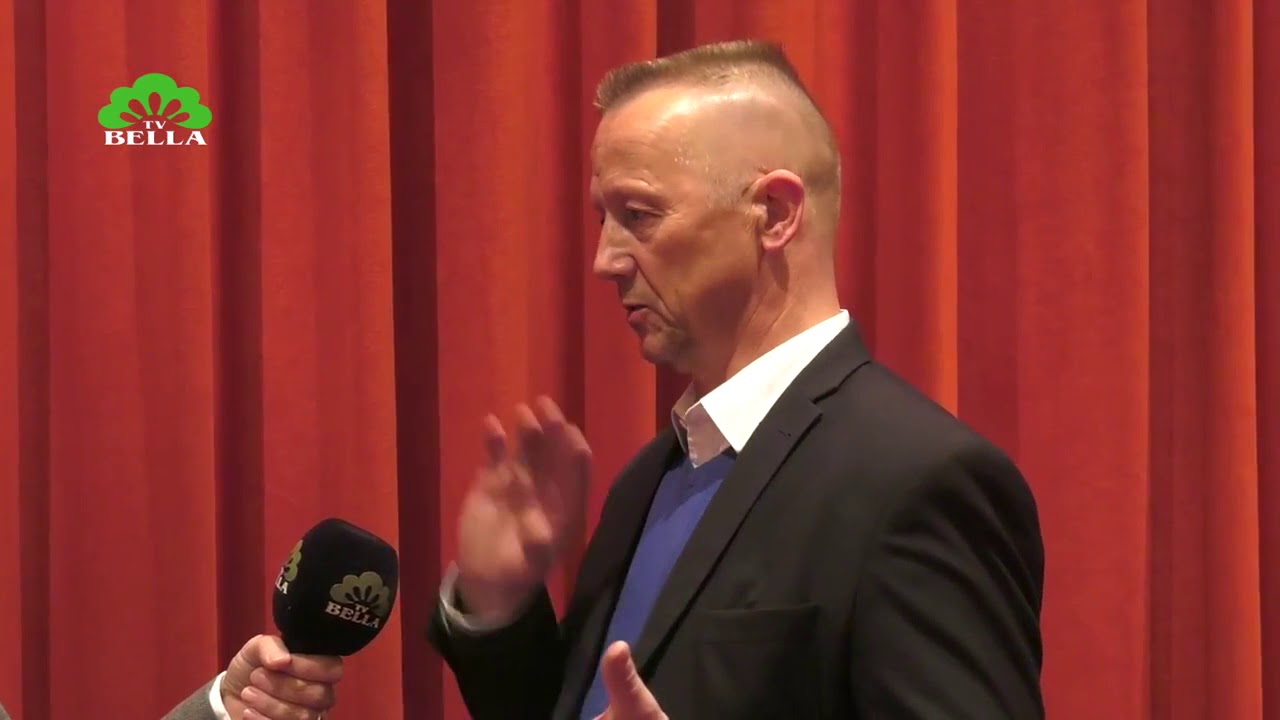
Rene Deceuninck explains that non-verbal communication accounts for at least 55% of all interaction. He covers eye-contact rules, foot orientation, handshakes, and why the body never lies. The preview introduces his full-day seminar on November 18 in Copenhagen.
Chapters
Wir haben ein laues Salon-Ellikonpo in Lietzschur. Das Hotel liegt direkt am Flughafen, das Clarion Hotel. Hier in diesem Store kommen wir zu verschiedenen Personen. Da kommen wir zu Herrn Leona und Präzision. Und daneben ist auch hier zusammen mit mir Herr Rene Deceuninck und Frau Bilgin. Herzlich willkommen! Hello Rene, and welcome to Copenhagen.
Thank you, Laura. Thank you.
And you just arrived from Belgium. Which city were you in?
I live in the region of Ypres. That's, you might say, the Flemish part of Belgium, which is up north. Direction of the North Sea.
Okay, have you been to Copenhagen before?
First time. It's your first time? First time, yeah, yeah, and it's already good.
Okay, but you will be coming back?
That's for sure, that's for sure.
Because this is a little appetizer what you're giving today for a longer course that you're doing on the 18th of November?
Yeah, that's correct. So what we're doing today is in for Speakers Club We do a kind of introduction what body language can do for people and how it can serve them. And then on the 18th, I'm coming back to Copenhagen to do a full-day seminar. It will be amazing, I promise that.
Well, I mean, we talk about our ABCs, we know how to read, and what you teach is body language. So are there more things that we need to know?
Well, it's about the human science, you know, the science behind body language is that how does the brain work. What do we think? Why do we say what we say? And how does that influence our body language? If you know that 55% at least is non-verbal communication in communication in its whole. So isn't that important, I would say, to learn how it works, right?
Welcome to Singen.
My bestest biggest club in this and let's hear some longer arms.
Welcome.
So, how are you all doing? Good! Thank you! Okay, here we go. So, how many of you know body language? How many of you? Please raise your hand.
Oh my God!
So, who is interested in this? I mean, what kind of business, what level within the different businesses are interested in courses like this?
You might say everybody who is hungry to know more, to have new results, new voices, new insights, new— it's— there's a saying that says, a quote that says that keep doing what you're doing and expecting different results is the height of insanity. So I invite everybody, even if it's a lawyer, police officer, somebody in sales, a manager, even parents who have children and they can't handle their children learn body language, you learn so much more.
But this course here is aimed at adults, right? Or, but is it a very broad audience that you usually meet?
Um, regularly I give courses for people in business, but on the 18th everybody is welcome.
Okay, but do you find that mostly men or women are interested in, in this Are they mostly men in your audiences or mostly women or a good blend of both?
There's a good blend of both. People want to know more and especially today people want to know more because life is not getting less complicated, it's getting more and more complicated. So people are looking for new opportunities, new methods to discover how they can communicate with other people, right?
Spread your arms, watch your neighbor, don't hurt your neighbor, spread your arms like this. Bring your fists together and push as hard as you can, as hard as you can. Push it, push it, just push it as hard as you can, as hard as you can. Even more. Does it hurt? Does it hurt? Okay, loosen it along the body and do like this. What does that do with you?
It's like, oh my God, right? That's called releasing endorphins.
Do you— have you ever coached any politicians?
I did once one politician in Belgium. I can't tell his name because this is something, you know, private, personal. The thing is that what I learned from politicians is that some politicians really move the wrong way, but if they use the right body language, they can get so much more results, better results, by moving the right way, showing the right side, like left side, right side, right eye, left eye to the public. But then I invite everybody to come and see the course to define or to discover how it works, right?
Because basically we would be interested in some of these learnings at a younger age. Because children, if it's only the language or the mathematical skills, sometimes things go wrong. Group work can't sort of gel. They can't really get their results. But if there was more focus on the body language and the relationships that you can enhance by also not working with this, it might be a great idea to go to the schools as well.
If people of a young age would learn body language much earlier, they would discover that body language is transmitted by subconscious mind to subconscious mind. And then that subconscious mind gives new directions to the conscious mind. Which leads to a communication to that other person with other different results. But if we know how body language works, you got complete different results. And if people, especially from a young age, start understanding how it works, that will be giving them a complete new future with complete new results again.
And I'm not going into any details, it's just to show you that we have 4 basic characters. If you do recognize the 4 different characters by asking questions to the person you're talking to. If you say, oh my God, this is an extrovert, he's active, he's fast, I should step into his world, use the same body language, you're going to create a different energy at the same frequency, and you're going to have communication beyond imagination. So the thing is that when you talk to people and you ask them questions, and you ask an emotional question, because that's the next slide, we're gonna see that after that. Look with your left eye into the left eye of that other person and ask an emotional question. You're gonna have a communication at the same level, same energy, same frequency.
If you have a rational question, look with your right eye into the right eye of that person, and you're gonna have the same frequency, the same energy.
Okay?
And he says, "Eat as much as you can raw vegetables and fruit, drink as much water as you can, get as much fresh air as you can, and instead of parking your car in front of the door of the supermarket, park it far away and make at least 10,000 steps a day." Being able to not just work or react automatically, but actually be able to rest within yourself and look at the other person and say, "Could there be something else?" happening or going on right now, and how can we influence this situation in a better way so we get better results? That's one thing that I would hope would be sort of spread around the world in a better way. So this—
what I have to add on that is that so many times we, we tell a lie, and everybody lies during the day, at least as many times. I'm not gonna put a number on it, but I know we have white lies and black lies. You know, Sophia lies and light lies. But you have to know one thing is that if you never lie, you never have to think. Because your body never lies. You can't control that. That's a piece of nature, you can't control it. So the body will never lie. Whatever you say, the body will communicate the right thing towards the other person.
So be authentic and be true to yourself and rest within yourself and learn how That can become a natural part of your way of responding to other people.
Yeah, and it's also a thing about discovering the other person, the character of the other person, and communicate with the same energy at the same frequency, and then get a communication that you say, wow, that was communication. That was like, wow, I never had a communication like that. I've never had a talk like that. And the only thing you did, you just used this, the right energy at the right frequency, and that again gives different results.
How you all doing?
My feet are even pointing towards you. Your feet are further away than any part of your body from your brain, so they are the less controllable. Remember that. So when you are talking to somebody and that person talks back to you and his feet is pointing away, says an awful lot.
Is that something that you bring into the communication workshop with body language, the differences in culture?
Yes, definitely. It is a thing that you have to know that there's 196 countries in the world. There's 6,800 languages recognized. And there's 41,000 to 42,000 different dialects in the world, and there's only one body language. So, and body language started whenever planet Earth started. There was no German, there was no Danish, there was no Flemish or English. There was body language, right? The thing is that it grew through the years, and in certain countries, there's certain things you shouldn't do, which we do over here in Europe. So certain signs with certain gestures that you shouldn't do, for example, in Bangladesh, and that you can do over here. So this is, yes, there's slight differences between cultures that you have to watch out for. But again, in these courses we explain how it works.
Is there anybody in the room that can tell me how many countries there are in the world? Anybody? 196.
How many languages do we have in the world?
6,800.
How many dialects do we have in the world? At least 42,000. Do you know how many body languages there are? Just one.
There are certain differences in certain cultures.
If you do that in Bangladesh, you better run fast. It's very offensive. Okay? So, within different cultures, you have to watch out, that's for sure.
Exactly. So traditions and ways of doing things that we feel are comfortable, as soon as you cross a border, you actually experience something different sometimes. And so again, signals and ways that we do things, as soon as you cross a border, there's a different way of understanding that.
There's a good piece of advice that I give to people is that whenever you go to a foreign country, you're not sure, go to the locals and ask them, what should I do and shouldn't I do? To be sure that you don't mess up when you— like, if you do like this in Belgium or in America, that means like it's okay, it's perfect. If you do that in Bangladesh, you better run very fast. It's very offensive.
So you have a little book of hand signals.
The book will come out hopefully by Christmas. Really? Yeah, so a new book I wrote and it will come out.
Oh my goodness, well, that's a very appropriate book.
Make sure if you shake hands with people that you don't crush them, right? And most of the time we have like a whole other series of rings, and then you shake hands with somebody, say, how you doing? Is it good? Experienced that before? Oh my god. Okay. On the other hand, make sure your hand doesn't feel like a fish.
You know, some people give you a hand and it's like, "Zoo." Okay? Give a hand that is a hand.
The other hand, last hand here, or not the last one, this hand is a hand that you give and that person, the left person, is the person that wants to dominate. Why?
They want to have the upper hand. Politicians play that game a lot. If you watch the news, you're gonna see often that people shake hands.
How are you doing?
And they're like this, and they're like this, and like this. You're gonna see it here.
So they put the other hand. What I learned— I have one politician in Belgium, I coached him for a while.
I said, listen, do it like this.
Keep it like this, but like this.
And then accentuate something and people will accept it.
You could say like, I don't see that when people do like this. No, you don't, but your subconscious mind does. And your subconscious mind works with that and produces another communication, a different communication, as if you would have done like this would be a complete different result.
The time that the men were out for hunting, you know, I'm talking about millions of years ago, and the men are the tendency to show what they have, right?
And women protect. So there's nothing wrong if you see a woman sit like this, don't look for any body language. That's a normal way of sitting for a woman. If a man sits like this, okay. On the other hand, if a woman sits like this, I got a lot of questions. Anyway.
And I'm looking forward to seeing you on stage and talking to you again. Thank you.
My pleasure. Really, thank you for the interview. Thank you.
More from Rene


What are ... The Silent Language of Connection and the Hidden Power of Non-Verbal Cues?








