The Easiest Way To Make Your First $100K Online - Ft Ryan Pineda
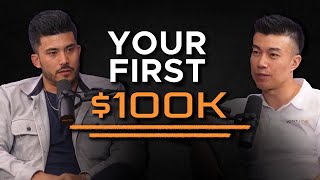
Ryan Pineda and Richmond Dinh discuss how coaches and digital marketers can make their first $100K using tiny challenges as a marketing strategy. Dinh shares his path from optometrist to life coach, and they cover scaling tactics like shadow seats and proving your marketing actually works.
Chapters
I've got a guy who has done tens of millions of dollars in the online space and he's going to teach us how to do something called tiny challenges. I'm really excited for this. As a digital marketer, tell me about this tiny challenge thing. Like, how did this get born?
Is a marketing vehicle where you get to run a challenge like a traditional challenge, but it's done one on one, five calls over five consecutive days, about 45 minutes each. Whoa. That's it.
If you are in the coaching space, if you are selling courses, if you're trying to sell anything, I think that this is going to be an interesting way to go about it that not many people are doing.
Long story short, I mean, we sold 600k offers since then and $1 million offer.
Wow.
Yeah.
What is your million dollar offer? So.
I've got Richmond Den. What's up?
What's up, Ryan? Thanks for having me.
Yeah, dude, I'm excited to learn about this. You know, I'm interviewing you, but like, I'm like, what the heck is a tiny challenge? That's good branding.
Oh, dude, it is great branding, isn't it? And the outcome after today is I think you're going to be sold and you're going to want to do something yourself.
Yeah.
That's what happened to Russell anyway.
And even Myron, I love it. So obviously I've had Guy, I've had Russell on the podcast, I've had Myron on the podcast. And they all do challenges. They all do these different things. Right. So before we get into what a tiny challenge actually is, like, what's your background for those who don't know?
Yeah, I came from optometrist. Background, the health industry. And I'm 42 now, so I was testing eyes. One or two. One or two for 10 years.
Yep. You're Asian, so you still look young.
Exactly. You know how it is.
Yeah.
And so that was my background, health industry. And so I was in a job that I didn't love. But really, I don't think anyone wants to become an optometrist when they grow up, you know, I mean, who, who wants to become a dentist? Optometrist. I guess it's rare that you actually want to become that.
Yeah.
Again, the culture is, yeah, you gotta.
Go to school, get a good job.
Yeah. Live that life. And so I wanted to get out, but I just didn't know what I wanted to do. And so I just went on this mission of searching, searching, searching. And you search by getting a life coach, by going to personal development by reading books and saying what else is out there for me. And then I fell in the whole coaching space. That's, that's how it started eight years ago.
Eight years ago.
Yeah.
Okay, so 2017.
Yeah, yeah, you got it.
So did you just attend one of Russell's events or what happened?
No. Tony Robbins was a catalyst for all of that happening. Yeah. Yeah. I didn't know Russell until probably two years in because he was affiliated with Tony Robbins, and that's how Expert Secrets got launched. And I was like, who's this Russell guy? And so I discovered Russell about 2020.
Oh, wow.
Yeah.
Yeah. I, I actually just had Dean Graziosi in here, and so he was talking about everything they're doing and, you know, Tony Robbins world, and I mean, they've both been in for, like, 30, 40 years in this space. That's crazy. But, yeah, actually, I, I, I first got acquainted with Russell. Well, not acquainted. I didn't know him, but I first heard of him at 10x in 2018 when I was here.
Yes.
And he had his famous pitch that did like, 3 million bucks.
Yeah.
So I bought, I was one of the guys, and I was like, I don't even know what I just bought. That was great.
It was such a good pitch.
It was such a good pitch.
I did sold 600k offers since then, and a million dollar offer.
Wow.
Yeah. All in. And it's been, it's been insane.
What, what is your million dollar offer?
Yeah. When is this podcast getting released?
I don't know. A couple weeks.
Good, good, good. Okay. So, so this is, I've never. Yeah.
You're like, I want to be a coach. I'm listening to Tony about being maybe a life coach.
Yep. That's, that's how it started. Yeah. Yeah. So first two years, I just, I didn't know what I was doing. Didn't know how to do content. Didn't even have social media, didn't have Facebook. But I still made half a million dollars in the first two years as a life coach. Posting organic content three times a week. Whoa.
On Facebook.
On Facebook. And because I was still transitioning out of optometry, I was, you know, what.
Is a life coach? I've never even, like, really thought about this.
Oh, there's a hundred ways to explain.
Yeah. Is it a therapist? Like, what do they do?
It's just.
Okay, this is my definition. Well, you know, I'm not life coach anymore. I help, basically help life coaches. This is what they say. Any problem you have right now, that's going on in your life, then we can help you solve it. And so it's like a therapist. The only difference is a therapist looks back at your past. A life coach allows you to look towards your future and tells you your next steps. They wouldn't really hang on to the past.
Now do like most life coaches just kind of focus on one specific, like, problem or niche. Is that how it goes down?
Well, they should, but they don't.
Yeah, I can solve anything.
Yeah.
I can do marriage, I can do hell, whatever, everything.
Yeah, yeah, exactly. They should, but they don't. Yeah, got it.
Did you have any specific niche that you worked on?
No, no, that's. That's. You did.
Yeah.
But then that's why people were so surprised on how. How I was actually getting clients, because my clients were a range of business owners, Marriage problems, confidence in their corporate career than themselves getting a promotion at a. You know, at a company. It ranged from anything and everything. Yeah, I was just, you know, that was the thing when I started. Got it.
So at what point did it transition into being really successful?
When? During COVID actually. So people like, how are you getting clients as a life coach? And how are you doing it without ads? And how are you doing it? Just posting three times a week. And I was just doing it unconsciously, but when I started, it was all about building relationships and genuine relationships and just posting. Just posting my life and what I'm doing and, you know, like, just marketing that way. I guess I became my own attractive character without knowing who Russell was and all that kind of stuff. And people just want to be like people they want to aspire to be like. They want to be around people they like. Yeah, yeah.
So how long did you do life coaching before you transition into. I guess now, two years. Like teaching life coaches how to market.
Yeah. Yeah, two years. And now we have a training company as well. We, you know, teach an NLP component and certify them, too. Got it. Yeah. Yeah.
So you're. You're certifying life coaches now, too?
Yeah, yeah, we run an NLP department.
Okay, got it. And then tell me about this tiny challenge thing. Like, how did this get born?
So to market yourself as a beginner coach, whether you're a life coach, mindset coach, sales coach, whatever it is you are, you know, you can use webinars, you can use group challenges, you can use podcasts, you can use events, workshops, all that kind of stuff. So many vehicles to get clients online. And the problem with those vehicles, when. Especially when you're Starting is that. Well, when you're starting, you don't even know your message. You don't know your offer, you don't know your niche impulse is kicking in. All those things that happen and you don't have a list. And marketing an event is really overwhelming. Who's going to show up? How do I get people to show up? And so a tiny challenge is a marketing vehicle where you get to run a challenge like a traditional challenge, but it's done one on one with you and another person. And that's it. One on one with you another person. Five calls over five consecutive days, about 45 minutes each. Whoa, that's it?
Yeah, that's. That's a lot of one on one sessions.
It is, it is. And remember, for the beginner, it removes all the overwhelm because you don't have to launch it. There's no start date. You can do it anytime. You don't have to worry about the tech. You don't have to worry about learning how to speak one to many. You don't have to worry. Learn how to sell one to many. There's no problem about filling up a room. You can have an extremely small list, but the reciprocity is so high that it converts like crazy. Like, our students are converting 6, 7, 8 up to 9 out of the first 10 tiny challenges. And so if they were just running one a week and they got a $3,000 offer and they did it four or five times a month, they could be making 10, $15,000 a month pretty easily from scratch.
Yeah. So explain to me how it works. Like, you know, it's 45 minute sessions. Do they pay anything for this?
It can be free or it can be paid, but it's like, it's like, you know, a challenge can be free or paid. A webinar can be free or paid. You know, a workshop can be free or paid. If you're starting out and you don't really have a brand, then I'd suggest do the free version.
Yeah.
Or just refundable $97. Right. Get it back at the end of the five days.
Okay. And during the five days, like, what are you going on?
Yeah. You think of a specific outcome that you know that's going to be a marketing hook or the angle. And then kind of like any challenge or masterclass or webinar, it's the same principle, but it's just done one on one. It removes all the stress and all the friction.
Okay, so why five days?
Yeah, it's a good question. Like, why Five over three or four. Because you in a town, in a tiny challenge, you do accountability, which means that every day you give homework and you need to hold them accountable to the homework. So they need to complete the homework every single day. And so they get this thing called progress. And people when they appreciate progress, that's when they make a buying decisions like wow, this is actually working. I can see it work for me. And then the sale is made. And you don't get much progress from having three days. And so you get more reciprocity, more progress. And so five days converts better. You're better off doing one five day than two, three days. It'll convert better.
And do they have to be five consecutive days?
Ideally, Ideally. But the flexibility and a tiny challenge, I mean if the schedules don't line up, you could do those five calls over a period of seven, eight days. But the sooner you compress it, the better.
And then obviously I guess at what point do you make the offer?
Yeah, on call, four or five.
Got it.
Yeah.
So you've given a lot of reciprocity.
Tons. It's crazy. Like a lot of times on call 3 they ask you what's your offer? Because I this, I've heard enough. I want to work with you long term. It's, it's insane. Yeah, yeah.
You know what's funny is I do this maybe like two or three times a year. Not, not this but a similar thing where I say hey, you know what, I'm open up my calendar 45 minute one on one call and it's a thousand bucks. And it always just like I only hold it for 24 hours. I'm like it's 24 hours. Whoever signs up, you literally book on my calendar the next two weeks and we'll fill the slots. And you know, I don't do it to like make front end money. I do it because it like finds really valuable people who could potentially be one on one people and everything else. Cuz like all of our normal programs are not one on one with me. Everything is.
With my team, with groups, with, I mean they get one on one help, just not with me, you know. And like we give them leads, we give them softwares and all this great stuff. But to work with me it's six figures. And that's for the full year of just everything we're doing. And so like surprisingly that one call a lot of times gets the deal done.
Yeah, that one call.
But I, I, I'm thinking about in, in context, I'm like, yeah, I probably if you did three or four or five, man. Well, they'd probably be really incentivized to want to go, do, go deeper.
Yeah. Well, how many one on ones do you would normally take? Cuz I got a crazy model for you to scale that. Okay.
I don't really like having a ton because I, I mean maybe I have like 10 right now.
Yeah, yeah, yeah. And then you probably sell VIP days and all that kind of stuff. You're doing anything like that.
Yeah.
So how you scale one on one coaching, a tiny challenge is, and this is what I do now for, I'll pick a person. I'll say I'm going to work with you one on one for five, five days, five calls, 45 minutes each. I'll charge 5,000 for it. So it's like a thousand a call anyway. But here's the thing. I sell shadow seats. Meaning that I say, look, I'm going to coach you five calls, $5,000 super cheap. We're going to do one specific outcome on the caveat that you allow me to have people sit in the same zoom room and watch me coach you one on one to help you get that transformation. At the end of that, I'll break down to the room what I did and then allow them to ask questions. So they're going to get the benefit of seeing me coach one on one and then they can apply it to their business. And so the last time we had 100 shadow seats. And then when you do your pitch.
Do you charge anything for those of those?
Yeah, 97. Yeah.
Oh, okay.
Got it. Yeah. And then when you do your pitch, you're pitching to 100 people, not just one. Yeah. And so if you're going to pitch like a high ticket, you can do that. We started 25k off the back of that and, and that was like extremely effective on how to scale one on one coaching.
Oh, that's interesting. Yeah, it's weird because each one on one guy or girl has totally different problems. So it's like I don't pitch. There's no qualifier. Like I, I'm not going to pitch. Like just, oh, you know, you should work one on one with me. It's like always. Yeah, I think honestly, you're good. Like I don't have anything to sell you. And then sometimes it's like, no, you really should be in our thousand a month or 2, 500amonth thing. Like you're, you're trying to do real estate. This is great. Oh, you want to, you know, do this? Well, yeah, it's we're going to have to work one on one based on where your current business is at. And I don't take anyone that's not making at least seven figures already for that because it just doesn't make sense. But.
Yeah, that's interesting to sell seats to people watching.
Yeah. Like imagine, imagine Russell's like, I'm going to, I'm going to help this person build out the perfect webinar. Five calls over five days. And if you want to come in and same zoom room and watch me do this, you can watch for $200, $500. You know, it'll be like super valuable because you actually see how Russell thinks, the questions he asks, how it breaks down an offer, how it transitions to the close and how it does a stack for that person. You're like, if you're in the same niche, you can get so much value and you don't have to pay $100,000 or $50,000. But then the pitch goes to everyone.
So what do you do to qualify to make sure you're getting the right person?
Well, number one, charging qualifies and the price you charge. But people are coachable or not. Gotta pick someone that's likable. You're gonna allow that to happen. But usually the price point is the filter and then you can go from there. When you do a one on one challenge, if you're charging for, obviously you're. I know you wouldn't take on 100k client or 6 figure client if you didn't like them or.
Yeah, for sure.
Yeah.
So you have to decide if you actually like them.
Isn't it true?
No, it is true. It is true.
Otherwise it's just, it's not worth the money all the time. It's just.
Yeah, yeah, that makes sense. Okay, so. But it is an interesting way too even to just.
Get people for like not one on one. Right. I mean like.
Yeah.
You know, I just think about how we teach, you know, wholesaling and stuff over a three day period or a five day period. And it's like. Yeah. I mean people watch together but like. Yeah, I guess if you're teaching one person one on one, it's just a different way to do a challenge.
It is. Because I really believe that future of marketing is a demonstration of competency.
Right.
Anyone can do a slick sales. Yeah.
You got your webinar and your slides and you know, you memorize somebody with feedback.
Exactly. And when they. Because everyone's out jaded, you know, everyone's skeptical. This is just A choreograph, you know, sales event or fun or whatever it is. But when they see you coach someone one on one, they're like, wow, this person's really good at what they do. I need that. Yeah, yeah. And that, and that's why it sells so well, because you're demonstrating competency.
Do you think that, that slideshows and stuff go away.
Now the market grows so big?
You know, I thought about that. We all know like people in industry, how they don't really have a good reputation, but how are they still around? Because so many people flood markets. Like even in real estate, like real estate is such a big market, but it, it just growing, it's just growing. The population grows every year and you know what I mean? So, yeah, I don't know if it'll go away from that point of view because, you know, the market outgrows it.
Yeah, that makes sense. How big do you think the market is for what you're selling?
With tiny challenges? Yeah, it's crazy. I don't know if you know Rick Carruth.
Ricky Carruth.
Yeah, yeah, yeah. So I met him at Myron's Mastermind.
I forgot. He texted me last week. He said we need to talk this week. I wonder if it was about this.
It's about this. I gave him my book. Okay. He texted me after that. A day after I finished reading it, ran his first tiny challenge, one on one.
Yeah, I'm sending him a picture message.
He'll be like, what?
Send me a voice clip. Only a couple of days ago, his first one sold a 25k offer.
Yeah, fair.
That's good. That's what for him, you know, I wouldn't charge anything less. Yeah, he did his second one and charged and sold his first 100k offer.
Wow.
His first one off the back of the tiny challenge, he just messaged me saying thank you so much because he never sold 100k offer before. Yeah, yeah. And that was. That was that. So it works in real estate. This is where I think it's the biggest opportunity is the PT space. Cause you came from an athletic background. So personal trainers, their business model is give a free 30 minute session and if you like it then you might buy 10 sessions or whatever it is for $600. Imagine like they'll have to give away 10 sessions to get one client, right? A $600 client, right. Imagine that personal trainer did a five day, one on one challenge with you over five days, 30 minutes each, and at the end of it they'll know everything about you, your Fears, frustrations, why have you tried, where have you failed, what are you willing to do, what you're not willing to do, your goals, everything like that. The reciprocity will be so high you got huge amounts of progress over five days because you don't get progress from one personal training session. Yeah, they just do that twice a week and they can sell a $2,000 program at the end of it. Easy.
Yeah, no, I agree. I, I wonder if it's the trust thing more than. Or I wonder if it's the reciprocity more than the trust. Cuz like I would just feel, dude, if I just did five sessions of it. Like I have to buy it.
Reciprocity works for sure. Yeah, yeah.
I feel guilty not buying the thing having worked with somebody for five days straight.
Exactly, exactly. Especially like, you know, that's, that's, that's the case.
Like, but it's easy to get out of it in a group setting.
Way easier. Way easier. And so the commitment level for someone actually jumping in to a one on one challenge, they're already pretty committed because they know like, they know that they can't be lazy. They know they can't slack off, they can't just turn up on a zoom call and have the camera off. They have to do the work because it's one on one. And so the commitment level is a lot higher. And that's why the close rate is a lot higher too.
Is there anything else to know with it that I mean, obviously. So you wrote this book. It just came out.
It's coming out in a couple of days time.
Okay.
Yeah.
So by the time this launches, it'll be out 100%. Where will you get it?
Tinychallengebook.com tinychallengebook.com tinyChallengebook.com Cool.
I'm, I already got it, so I'm gonna read it. So is there anything else that people should know about tiny challenges before they get the book? And you know, check you out, everything.
It is like so if you're, if you haven't made your first hundred k online, you need to, you need like, you need to run this model because for example, you know, filling up a webinar or filling up a group challenge, if you want to try to get 200 people registered, that's overwhelming for a startup.
Yeah, it's a lot.
Yeah. And 200 people registered. 20 people show up, 10% show rate.
Yeah.
Half of them have their camera off.
Yep.
You need to learn, speaking selling everything like that, you might close one or Two people from that. And then if you bomb it, you gotta wait another cycle to start again. So imagine those 200 people. You don't even need 200 people to run a tiny challenge, but you only need like three or four a month and it's so easy to get started. So I would highly suggest this is the first place to start for any person starting online. But as you scale, then you can run the shadow seat model and then do a paid tiny challenge and have people sitting in the room and watching you to scale through that. There's not much.
What was the second thing you said? Shadow Skeet.
Shadow seat. Shadow seat.
Oh, the shadow seats.
Yeah, yeah.
Okay, got it. So, you know, are you doing tiny challenges to sell tiny challenges?
I am.
Okay.
Yeah, I know it sounds funny. Well, I sell my mastermind. I. I don't really sell tiny challenges much. I sell it through a webinar.
Right, right.
Because right now, like, I mean, you know, it's such a new concept. But when I do, like at some point I would run a tiny challenge and have shadow seats on it. I'll actually coach someone one on one over five days, demonstrate competency and have shadow seats and then I'll sell, you know. Okay, if you want to learn how to do this for your business, then here's a course. Like that's going to be how it's.
Done on your webinars. Are you just. What is it? A two hour webinar where you're just selling?
Yeah, yeah, yeah. Typical Russell Brunson model.
Okay.
Yeah.
I don't know. I honestly don't even know his typical model. Like, I mean, it's funny because I. It's when I first bought, uh. His thing is 2018. Right. He's talking about the perfect webinar and.
He'S got a linchpin. Yeah.
I watched Expert Secrets and. Or I read it and I was like, okay, this makes sense. But like then I remember I ran my first webinar and nothing happened. And I did it once and I quit. And I was like, yeah, this sucks. Like this education, digital things fake. And then for two years, I didn't do anything for 2018. 20. I was. Cause I was flipping houses, I was making a ton of money.
Yeah. Yeah.
So I just didn't care. And then. Yeah, I mean legitimately for years after that. Even once I got good at digital marketing. Well, I can't even say I got good at digital marketing. I got good at content, I just got good at making content. And that led to all this organic stuff. And then I didn't really become, like a digital marketer until 2023.
Yeah.
And I was like, oh, that's a challenge. I don't know. That seems like a lot of work. Like, I just didn't want to do any of it.
And then you did a webinar every day for every week for a year or something.
And that was Last year, in 2024, I just started doing webinars every day and. Or not every day, every week. And I was like, okay, I see. Like now, seven years later, like, okay, I see why people do this.
Yeah. And I mean, it's still working.
Well. You know, the thing is, I think, and this is a good point is you can get traffic to your business in many different ways. Right. Like, so when people are like, is it a webinar? Is it the tiny challenges at the workshop? Is it the social media content? I'm like, it can be any of them.
Yeah.
Like, they all can work.
Right.
And, you know, for me, I was just focused on content, so I never had to learn all these other things because content worked so good.
Yeah, yeah, exactly. And the key is to pick one. Yeah, yeah. And then master that and then you can, you know, branch out.
But I will say I. I like the idea of this, especially for beginners.
100%.
To me, it makes sense. If somebody is willing to work with you for five days, they're buying a hundred percent.
And it's easy for the beginner, too. Like, I mean, they don't have to worry about filling up a room.
Yeah. And their time isn't valuable yet. So, like.
Well, yeah, exactly. Yeah. And they have to trade because they don't have money. They have a time. So. Yeah, but it.
What do you. I mean, what do you think about guys at scale? Because it's like, their time is very valuable. So, like.
You know, I know you said Russell's doing one. Did Myron do one, too?
And Myron hasn't done one yet. Yeah, Yeah. I think he's close to doing it. I don't know how much he would charge, but Russell did it for 100 grand. You know, $100,000. Tiny challenge.
So when. When he did a hundred thousand, he charged somebody 100k for five sessions.
Yep, five sessions. Five day challenge, one on one with him.
What did he sell?
He wanted to pitch a 250k offer, but then he ended up thinking, well, can't really be bothered anymore. So he was happy with 100 grand. So that was legit. Legit. He was going to pitch a 250k offer. It just.
He was just like, it's all good.
Yeah, that was fun. Yeah. Yeah, that was fun. And he did it twice and. But he could have pitched the 250California. I mean, he could probably could have pitched.
I mean, at that point, isn't it kind of like, you know, it's like, yeah, you're going to get five sessions with me for 100 grand. Like, yeah, that's kind of like, yeah, my time is worth 20 grand an hour.
Yep. We got five days. We're gonna. We're gonna smash out your challenge or your. Your webinar and build it all out and get it converting. I mean, it's worth it.
Yeah. I just hired somebody to do our events and it's 100K, an event consultant, and it's 100K and it's more than five sessions. It's about, I want to say, 12ish sessions. Yeah, but, yeah, yeah, no, it's like, that's what it is.
Yeah. And people love challenges. They're like, if you're gonna give, say, 12 sessions or five sessions over five months or over five weeks, and you can do it over five days in a format of a challenge, and it's framed like a challenge. People like, oh, wow, I can do that. All I got to do is block off this week, you know, get my mindset right for a challenge. I've got accountability, I've got progress, I've got homework, I've got things I need to do, and I'll just have it done in a week. And so it's. You can promise the same outcome for the same price in a much shorter amount of time. I mean, just compress this time. We're talking about mirroring, you know, it's a. It's not about how much time you give them. We just want the result faster.
Yeah.
Yeah.
And that's why I think too, like, this is why I like webinars now and challenges now, even though I never did them really too much before. It's because it's like, if I can get them to understand how this business works quick. Yeah, that's the goal. Because it's like they could go on YouTube and, like, watch my stuff and search and find and, you know, watch endless amounts of content. It's all there. But it's like, dude, if I'm like, hey, these three days, just give me a few hours each day and we're going to knock this out. You're going to know everything you need to know about flipping and wholesale and it's like, all right, that's way easier to do than searching endlessly.
Exactly. And they know the immediate next step. Yeah, but to your point, like, there's so much great content out there for free, but they just don't know how to organize it. And then you just. You.
You pay well, they get analysis paralysis.
Yeah, Yeah.
I mean, when you have too much information, it's bad.
Yeah. 100. Yeah.
You know what? One of my favorite quotes is from a pastor. His name's Craig Groeschel. He says that limitation is what fuels innovation. So when we choose to, like, add limitations to what we do, then it allows us to start thinking differently and how creative. So it's like, I'm thinking about this, and I'm like, all right, you're saying one on one. And I'm like, okay, like, how do you scale one on one as a challenge? That's crazy. But it's like, oh, well, we got the shadow seat thing. It's like, oh, yeah, that's an innovation.
Exactly.
Yeah, that's a good idea. Because now the one on one guy is still getting everything they need. Now, granted, their business and stuff isn't private anymore, but, you know, like, everyone else is getting to see that. And, yeah, I just think about it all. Like, even for me, I just. Over the years, it was always like, hey, just let them watch content. They'll come whenever they come. But now I'm like, no, if they come in today, how do we get them ready to go within a week? That's the limitation. I'm forcing. I'm like, I want them to know everything about what we do within a week. Okay, so how do we just do that? And it's like, you're now asking yourself more difficult questions.
That's a great. I love that. I love that. And that's how tiny challenge was born. It's like, how do we help someone make money fast online with the least amount of skill required? Because without them having to learn tech or speaking or one to many or anything else and, you know, with the least amount of friction. Yeah.
Yeah, that makes sense. So, I mean, obviously you've been.
You.
You have a mastermind. You've been in masterminds.
You're.
You're doing Russell's and Myron's and all these guys. What have you learned from each of these guys? I mean, I'm friends with all of them. They've been all been on the show. We've hung out. So, like, what. What do you. What has been some takeaways?
I just joined Myron's 350k mastermind. Whoa. Yeah. And in Australian dollars, it's 550k. Wow. Yeah. And, you know, it's not like.
So you're. That's his private jet one, right?
Yeah, that's a private jet one. What's the outside? It's a private jet, but you get a vip Dan. Other stuff with that.
Yeah, I know. He was telling me about it on the show. He's like, yeah, yeah. I wanted to figure out the way to fly private. He's like, I don't fly public no more. Or whatever.
Yeah.
I was like, okay, so you started a mastermind and got people to buy it. All right.
His anyway offer is so good. I mean, the private jet came from. Anyway off. He calls it anyway offer. Yeah. Now, so you asked the question of, you know, biggest lesson when I. When I dropped that. Which was, like, by far the most I had invested, because Brussels is 50k for his inner circle and he's got 150k for his atlas. And then. So the transformation.
You're in that too.
No, Decided not to go Atlas because, you know, I just.
You just dropped 350.
Yeah, yeah, exactly. It wasn't a pricing. It's more. I got more than, like, I got more.
You got a ton of stuff right now going.
Yeah, exactly, exactly. And Myron's. The thing about Myron's. It wasn't really more time commitment. It was more, I guess, how do you say, just looking for those little tweaks that make all the difference. And Myron's all about, how do I give you the value without you having to spend more time on it? And so the transformation happened when I dropped the money. That was a value. When you spend that much and invest that much in yourself, you become a different person. And it's like. It's the ultimate level of congruency. And so you just. You just feel different. You are different. And I said to Myron, myron, I've only been here for like a week, and I've really got my transformation because when I dropped it, I just felt like a different person. But long story short, I mean, we sold 600k offers since then, and a million dollar offer.
Wow.
Yeah. All in. And it's been. It's been insane.
What is your million dollar offer?
Yeah. When is this podcast getting released?
I don't know. A couple weeks.
Good, good, good. Okay, so. So this is. I've never mentioned this on a podcast, but we're getting all our ducks lined up in a row. Now got the trademarks, we got the domain, which is good. So we're launching the world's first speaking competition with a million dollar cash prize. It's called next top Speaker. Okay. And so we've got the next top speaker.com and the trademarks. And so that is going to be, you know, where they go to apply. It's kind of like X Factor is going to be like judges and you know, people in our industry who are great speakers are going to judge the panel. And so we secured a million dollar sponsorship deal.
Whoa.
Yeah.
So the winner's gonna get a million. Yep. And they're gonna just be a top speaker. Like what kind of speaker?
Yeah. So it could be in various niches or you know, it could be real estate, it could be personal training, could be health, could be coaching industry, could be personal development, whatever it is. Like mostly they're probably most of them be coaches and experts because.
Okay, can I compete?
Yeah, Russell wants to compete.
Yeah, I want to win a million dollars. Freak, man.
Like, Russell's like, I want to compete.
Yeah, I'll. Right now.
Well, Russell's probably going to be a judge, so I don't think he can. He's going to.
Yeah. Well, good. I don't want to be a judge. I want the million dollars. I don't care about being a judge.
Yeah, yeah. So that's. And that was one of the things we're like, oh, if we do this, we're going to have beginners trying to compete and we're going to have people who already know how to speak. So how do we, how do we.
Yeah, yeah, like, I'm coming in.
You can come in. That'll be, that'll be great. And plus the branding and the marketing and having the title there also just opens up so many doors for you. Just I'm, I won 20.
I am the top speaker. That's. Of the world.
Of the world, 100%. Like that's that title there. So that's what we're launching in the next couple of months. We just had to get all our ducks lined around.
So it's going to be on like YouTube or TV. Like where's it going to be?
Yeah, we haven't figured it out. Where there's going to be on YouTube, but most likely YouTube. And then we're going to build a studio and then, you know, the long term plan is it's going to be a sellable asset to probably some reality angle. Yeah.
Play.
Yeah, totally, totally.
You know, Cardone had something like that that he was doing at 10x.
Yeah. Like a speaking comp or something like that. Yeah. And how, what happened there?
I have no idea. I have to ask him.
Yeah.
But I just remember maybe a few years ago they were filming it live like on stage at 10x.
Yeah. Wow. Okay. Yeah, interesting.
It was. But I think it was, maybe it was called. Oh, you know what his was though? It was a TV show and it was the finale at 10x.
Right.
But I think it was called like America's top speaker or something.
Right, right, right.
Look into it. I don't know. I can't remember what it was.
Okay, interesting. Yeah, I'll look into it. I wonder why it stopped or.
Well, I think he filmed it, but it, you know, as, you know, like if you're going to go pitch to TV and all this other stuff, it could take a long time to actually release it.
Yeah. Okay, fair enough. Yeah, so that's, that's the goal. I mean obviously the back end of that is speaking course, you know, 5K and then it's into the 25K and you know, that's, that's, that's the back end model. So the front end model we can probably self liquidate from sponsorship deals and all that kind of stuff. But it's the back end which selling our courses and how to become a speaker. Got it.
So how many like just different niches do you guys have? Because you're talking about you got this tiny funnel thing, then you have a life coach thing and then you have like learn to speak.
Yeah. So. Well, our avatar is 0 to 100k. You know. You know, we help coaches get to the first 100k that could be in any niche, whatever, whatever coach they are, if they have not made their first one. Okay. Yet, that's what we help them with through tiny challenges. And the speaking is, it's going to be broader. It's just a broader category. I'm doing it with one of my business partners who's a speaking coach and she's already crushing it in this year, so. Got it. Yeah, she's going to be running the. Fulfilling most of it.
Got it. No, that's super cool. So with Myron, you learned, I mean you just put a boatload of money down and you're just like, all right, like when you do that, making me think different.
Yeah. Like you said, limitation creates innovation. Innovation. And so it was kind of like that. You know, when you put that much down and the first thing that goes through your mind is how do I make this back? How do I make this.
Yeah. Yeah. I gotta make this back today.
Yeah. And so there was no way we would have thought of a million dollar offer if I didn't even put down, you know, 350k. Like there's no way I would just.
Yeah. It forced you to think how to make it back.
Massively.
Yeah. When Myron was here, we were talking about throwaway offers or anyway offers or whatever it was called. Yeah, Anyway offers. And I was telling about this golf with me thing that I built and it's done lots of money for fun.
Yeah. So play golf with you. Because you're playing golf anyway.
I'm playing anyway. He's like, oh, yeah, that's great. Like, that's awesome.
How much do you charge for that? You might like.
Well, I mean, at first this is how it started. So about, man, this was like 3 years ago I started golfing and I was like, man, this is so fun. And I was just thinking when I was like. And it wasn't like arrogantly, but I was like, I bet you people would really want to come golf with me. And I was like, just think about it. You could spend five hours with me just having fun, talking shop.
Yep.
In person. Building a relationship.
Yeah.
And I'm gonna do it anyways. It's not like it's actually time out of my debt.
Yeah.
So I was like, I don't even know what anyone would pay for this. But I mean like, I was like, man, but if like someone I really wanted to learn from offered this, I'd pay a lot of money, you know?
Like you ever tried auctioning like these things?
I hadn't tried auctioning it. But like at first I was like, yeah, I would pay. Like if back at that time I was like, man, if like Grant or someone did that, like, I'd pay tens of thousands of dollars to do that. Right. And a lot of people would pay at those guys levels, like hundreds thousand plus.
Right. Imagine playing golf with Trump.
Yeah, dude. Like I would pay a lot of money to golf with Trump. Right?
Yeah. Like, I mean, wow.
So I was like, I don't know, let's just test the waters. Because whenever you're going to test something, I'm just like, I'd rather start low and just, yeah, go up. Because it sucks if you can't really go up and then drop. That looks bad. So I was like, I'm gonna do like 2,000.
Yeah.
So I did 2,000.
You would have got hundreds of applications.
There was no app, it was just buying. I'll Just so I just did one Instagram story. I was like, I don't know, I'm doing this thing. You guys can just buy it right here. It's two grand. I kid you not. I sold like 30 of them in one store. I was like, oh, from one story? Yeah. I was like, dang, dude, there's a lot of people who want to do this. So, like.
So did you have 30 rounds?
Yeah, dude, my calendar was booked.
Wow.
So I had to raise the price because it was too cheap. And yeah, today it's like 10k.
Yeah.
And which is still, in my opinion, a great deal.
And just two people. You have round four.
Yeah. So they can bring them and another person. So them and a partner or whatever. I'll bring me and one other guy. And one thing that I started doing now that is actually like super valuable is I now bring my camera guy too.
Yeah.
So my camera guy comes, he films all the behind the scenes and stuff. So we always get good clips. And all this other stuff you did.
With Myron on the course.
Yeah, like, me and Myron do it.
Such great content.
Yeah.
Anyway, like.
Anyway, anyway.
Content.
Like we were gonna do that anyway.
Yeah, yeah.
And so I don't ever promote that offer because, I don't know, it's just not super, like scalable and it's just fun.
Yeah, yeah. But, yeah, all your golf and everything, like.
Yeah, if anyone wants it.
Hit me up. Actually, I think the domain is golf with Ryan dot com. Golfwith Ryan dot com. But like, that's. We were talking about that though, because. Okay, so the reason that that also started was I joined a country club and it was a hundred grand initiation.
Yeah.
And I was like, how do I make it back? I'm gonna join regardless. But, man, I'd really like to not pay this.
Yeah.
So then I did a little golf mastermind. 10 people, 10 grand a piece. And we played for a couple of days. We, we. It was awesome. Full days event. Like, it was great. Everybody loved it.
Yeah.
I was like, I just joined this club for free. This was great.
So good. And you had fun. You loved it.
Oh, we loved it.
Yeah.
So, but. But to your point, right, when you force yourself to, like, do something different and new, you're like, as entrepreneurs.
Yeah.
How do we.
Got to make it work? Got to make it work. It's just the mindset, like, how do I make this work? How do I make this work?
Yeah, you see people do that too with cars and Myron's doing it with the plane.
Yeah, yeah, yeah. It's such a smart offer. Like, I mean, now we're doing anyway office to like. Part of my 100k offer is the one thing that stopped me from doing 100k offers was the story that I had to give more one on one time. And then Myron got me out of that. So there's no one on one coaching, but it's more. Anyway, so when I travel, like, you know, for FHL, brought two of my 100k students with me. We traveled together. And so because I'm from Australia, it's 14 hours.
Yeah.
And so they get 14 hours with me on the plane anyway. But that's more than like, you know, if they get one hour a week or four 50 weeks, it's 50 hours. 14 hours there, 14 hours back, plus staying, you know, together for three or four days. They're getting way more time.
Yeah, yeah.
It cost me less time or no time.
Yeah, you're doing anyway.
Exactly.
You live in Australia, but it seems like you're here in the States a lot.
A lot.
For all these. I mean, this is where all this Digital Market.
Yeah. 90 of our students from America as well. In the States. Yeah.
Why. Why not move to the States?
Everyone, everyone asks that. Our kids, you know, that's one thing.
But how many kids you got?
Three.
How old are they?
Nine? Seven? Four.
Okay, got it.
Kennedy, Reagan, Carter.
Okay, I have three. Fourth on the way.
Nice. Yeah, nice, nice. Boys, Girls?
Yeah, two boys and a girl.
I don't.
I don't know what the fourth is gonna be.
Ah, Keeping a surprise.
Yep.
Yeah. Cool. Cool. You have a preference?
You know, to me it's all gravy because I already got one of each. Right?
Yeah, yeah.
So like it. Yeah, two and two would be cool because then, like, you're proportionate. But I'd also wouldn't mind another boy either. Like, I'm good either way. But like, I think my optimal preference is three boys, two girls.
Yeah.
So we'll see.
Yeah, cool.
So either way, like, I. I want to have five. So like, this one is kind of like, it's an. Anyway, child, like this one can be whatever because it's the next one that's going to dictate, like, having an opinion.
Yeah, that's right. And anyway, child, why not?
Yep, yep. But I actually, you know what? If I had to give you a true preference, I would say a girl.
Just because we'd have two and two. Because what I wouldn't want is four boys and one girl.
My mom had four boys and.
Yeah. I Mean, I, I'd be happy either way. But like my preference would be if I get a girl now, then I'm guaranteed either three boys and two girls or three girls and two boys. And I would rather like have that out like that be the potential outcomes versus, okay, we got three boys and one girl. We might end up with four boys, four boys and one girl.
Yeah. Yeah, exactly.
Yeah.
And when you get four boys together, nothing good happens.
Riff raff, dude.
Yeah.
So I mean, what's your plan now? Like for, for growing your business? I mean obviously you're, you're doing this, this TV show, this million dol dollar thing. You are.
You know, you've got this new challenge model that you're pushing. I mean do you have a goal of like, man, dude, we want to get to doing 10 million plus a year, 20 million plus a year. Like what, what is your vision?
I believe Tiny challenge is at least a quarter of a billion dollar a year.
Quarter of a billion.
Because when you think about it, it's the first starting point of every person or coach and expert who wants to make money online. Like it's, it's even before running a webinar. It's even before running a group channel. It's before.
Yeah. This needs no digital expertise.
No, it doesn't. And, and so you think how big the industry is and it's just the coaching industry. Yeah, it's huge. And if that becomes the first step of every person in industry.
Yeah.
How big is that? That's huge.
Yeah.
But has to. Because it's the least friction. It's the easiest, simplest way to get started.
So you're really just going to target all the beginners with this?
100%. Yeah. Yep. Every beginner, there's no reason why they cannot do it. But every other model, there's a hundred reasons why they can't do it. And that's true because they need skills to do it.
Building a webinar is hard.
Building a group challenge is hard.
They're all hard.
Workshop is hard. Like one day event is hard. Like all those things are so much harder. One on one five day challenge, 45 minute course, anyone can do that and they can get started now. Like it's so we believe, really believe it can hit multiple nine figures from this model in just this one industry and then you can cross over to other industries as well.
I'm just curious how you think about. All right, so like, let's just say you're right.
Right.
The total addressable market is, you know, nine figures.
Yeah.
How do you go about selling to that many people? What would your plan be? How many different funnels and variations do you think?
Yeah, well, it's. It's kind of like leadership. Right. You know, and, you know, you have a lot of people on your team.
Yeah.
It's selling. Not me selling it, but selling it to industry leaders and influencers, say, well, your next step is to do a tiny challenge, you know, and, well, obviously Russell and Myron and Pedro, like, they were like, when you're starting out, do a tiny challenge or do a tiny chance. Do a tiny challenge. And if Tony Robbins gets onto it and it's like, when you're starting out, if you haven't made 100k or even 10k, do a tiny chance. If they're all saying that, then. Then that's kind of the marketing done for you. Right.
So.
Yeah. I'm just wondering at scale.
What would you suggest I do if I was to do it?
I don't know. I don't want to say it's scale, but, like, do you charge.
Like Russell and just like, the front end is great no matter what happens, and then obviously there's a back end. That's got to be the only way to do it for, like, somebody who's already established.
For sure. For sure. Correct. Yeah. For someone's already established, do it that way.
Yeah, yeah, that makes sense because I kind of already do that, but I don't do five days. It's just like, one day.
Yeah. Because you got a personal brand. Yeah. Your personal brand is so strong. And for people who don't have a personal brand.
Right.
You know, you have to build trust.
And credibility through these next five days.
Totally. Yeah. Yeah. And personal branding is where it's at, but it takes time, and you got it. You got to do the work, and you've done a lot of work to get to where you are right now. So. Yeah. Yeah.
So where do you see the coaching space going in general? Like, do you think that it's interesting to ask? Yeah. Like, where? Because as information. I've thought about this a lot. Like, information is becoming less and less valuable.
You're right. 100%. Right. And Russell was talking about this, you know, yesterday, actually, about anticipation and where the market's going, particularly with AI. You can, I dare say, if you're a beginner, coach, chatgpt can out coach you.
Yeah.
That's the truth. And why would someone buy your $2,000 course when ChatGPT can out coach you? Because you're just a beginner.
Yeah.
And so. And it comes a point where, why buy a tiny challenge course when I can just chatgpt on how to do a tiny challenge? I can probably do that.
Yep.
And so where's the market going? It comes down to personal branding.
And really, that's the conclusion.
That's the conclusion, number one, personal branding. And also.
Being a person who has access. So people. People will pay for access. And over, like, knowledge. And so because knowledge is going to be free, it's going to be easy.
That's what I'm saying. Like, yeah, the way that we thought about education over the last bunch of years as being the information, the knowledge. I'm like, yeah, people don't pay for.
That, especially not now. It becomes easier to get. And so access and personal branding, that's. That's the key. And selling experiences, like, you know, golfing days with you jets, like, people just want that.
Yeah.
And. And if you've got a strong brand and you've got access, then that's what you can do.
So what would you say? Because I. I don't disagree with you. You know, I had Tai Lopez in here a couple of months ago, and.
He was talking about he's coming back strong. Hey. Like, he's going hard.
Talking about, like, personal brands, important and AI and all these things. And. Yeah, I mean, I, I've. I thought about a lot of these things and I'm like, you know, why would somebody want to join my coaching today? Right. Like, there's so much content out there and everything else and all that. And it's like, I only see three reasons. You hit on one of them is that nothing will ever replace, like, the experience of something. Right. I mean, that's why families go into debt to go to Disneyland.
Yeah.
It's like, I saw the stat that, like, over half of Coachella was financed.
Wow.
Yeah, dude, they bought, like, half of. It was like 60 of Coachella tickets were sold. Buy now, pay later.
Wow. And I was like, wow, that's probably increasing too. Like.
Yeah. And it's like, that makes sense. You know, these people are not in good financial positions, but they're willing to do it for the experience. Like, that experience is so important to them that they'll do it. And so I think that experience are one thing. So it's like, if you're really good at throwing events.
Yeah.
There will always be a place for gatherings.
Yeah.
So, like, we. We're really good at that. You know, we do golf, we do massive events, both in the business space, the Christian space.
You Know, we, we do Mexico trips every year. Like, we do cool stuff. So I do think that that's going to be a thing. I think the second is services. So I'm thinking less about the information and more about the services that are required to implement the information. And so I think Russell was very ahead of that with clickfunnels. He's like, hey, I'm gonna tell you how to do this, but you need this thing in order to do it, right?
Yeah. And so kind of what Dan Mattel does, like, you know, just. Best way to scale is through software or tech, right? Yeah, yeah.
So it's like, if I can give people the things that they're gonna need. Okay, so in real estate, what do you need? Well, you're gonna need leads. I'm gonna give you leads. You're gonna need a CRM. I'm gonna give you the CRM. So you're going to need funding for your deals. I'll give you the funding. I'm going to give you everything you need. I'm going to monetize every part of the transaction. And you know what? Basically I'll just give you the information for free. You know, I'll give you the coaching for free. Because if you can do deals, you're going to need more leads, you're going to need more fun, you're going to need more of the services that you're going to have to pay for regardless in any transaction. So I'm really believing that services are something that's the future because those will never go away. They have to happen regardless. And so if I make my education free and I'm making money on services.
And that whole business model, I mean, the valuation of that kind of is recurring. Yeah, it's huge. It could be like 20 to 30 EBITDA.
Yeah. So I'm betting on that for my own business. And then I think the third thing. So I said experiences, services. I do think that.
I agree with what you said about access. So it's like every single person you mentioned, I'm pretty good friends with all of them.
Yeah.
You know, and it's like being able to access all of them, like literally right now, this very moment, you name anybody up there, Ricky actually text me.
Back.
I heard you sold 100k, dude. Because I did. He said, that's my boy.
So. He's such a cool guy.
Yeah, he is.
So.
And now he's a golfer too, him and Myron. But he's like, you know, it's like being able to have access to Anybody is really, really valuable. And so like, in turn, if you can have access to other people, it then helps everyone else that has access to you.
Yeah.
And so I think being a.
I.
Don'T know the best way to say this, but like, just we, we know it's true. Having connections, essentially, it's everything and, and you know, call that personal brand because they kind of go hand in hand. If you have a personal brand, it gives you access, it gives you connections, it gives you things that no one else really gets to have.
That then it's just, it, it's like, man, you know, if, if I can aggregate everyone's information, if I'm talking to Russell and Myron and Dan and all these guys and I'm hearing all these different things, I can be an aggregator of information and start to think about things very differently.
Totally, totally.
So I don't know. That's kind of what I think.
I agree.
I think social medias. I think social media is interesting. What do you think?
Yeah, well, you know, number of subscribers doesn't really matter too much these days anymore anyway.
You should have a million followers and then, you know, only get like 5,000 views on a video. You know, I mean, it's all based on attention, marketing. It's a good question.
It's a good question. Yeah.
I'll tell you what I think so. I, you know, been doing it for five plus years now and obviously it's been very good to me. It's gotten me in great rooms. It's got me, you know, great things for my business, all this, all the things we're talking about. And I think that what you said and what Ty said of like, you know what, having a brand is a super valuable thing because in the future it's like, you know, you can go out to the market and kind of like sell anything. It just is what it is. Right. Because people know like, and trust you and you know, in the end. Right. Is everything going to work out? No, that's not the case in any business. Right. I've had plenty of things that haven't worked out, but I've had a lot that have. And either way, I think transparency is like what continues to build trust, the wins and the losses. But.
I'm grateful I made the decision because now I'm at a point where I'm not like, so concerned about like just growing it massively. You know, I want it to be better. So that's not like what I'm saying, but what I am saying is, like, it's reached A point where it's like, it's kind of diminishing returns to put a lot more focus on it. Because I've kind of reached a point where it's like, great. Like, I have access and enough recognition to like, if I run an ad, people kind of probably.
Yeah.
Recognize.
So working so hard to get more organic views isn't like, the best use of my time. But now I look at, like, somebody who's just getting started, who's even great, who doesn't have, like a big following, and I'm like, man, dude, it is competitive. To try and break through today is so hard compared to three years ago. And, you know, obviously five years ago is even better. Right, Exactly.
It's probably why I did well eight years ago.
Yeah.
Like, I mean.
Yeah. Like nobody was doing it.
Yeah, exactly. Facebook Lives was a brand, like a totally brand new thing.
Yeah.
I started when Facebook Lives just came out and said, my live's got a lot of views.
Y now, no following. It's so hard. And it's like, I don't say it to discourage anyone. I just say it as the truth. It's like the way I see it going now and going forward is I used to think social media was like the new version of Hollywood where it's like, democratized. Anyone can get in. Talent will prevail. It's. You don't have to, you know, go through all these circles to get famous and be known. You could put on a camera right now, today and. And get famous and be known. And that was true. We saw it with all these tick tock stars. We saw it with entrepreneurs, we saw it with entertainers and. And, you know, like, basically made it so that anyone could be known.
But I see it becoming more commercialized in Hollywood.
And the reason I say that is because it's now like the. The standard to break through is like, pro.
Yeah.
Level.
Yeah.
That didn't used to be the case before. It was like, oh, yeah, you can, like actually.
Yeah. Without bad content anymore. No.
You have to be legit to stand out.
And then you've got to have all the bells and whistles of the. You know, everything.
Well. And you have to have the track record, like, why am I gonna listen to this guy? What's he done?
Everything.
Because I can go listen to other people who have way better content, who have accomplished way more.
Yeah.
And I only have so many hours in the day, so I would rather listen to them.
Yeah. Have you thought, like, if you started all over from now, like, today's Market.
It'd be so freaking hard.
Yeah. What's your first step to make your first hundred thousand, you know what I mean?
Like, yeah, yeah, I'm running a tiny challenge.
That's it. Market one, view one. Like, that's enough.
No, but for real. Right, but it depends on your goals. Right? So it's like, if my goal was I need to make money right now, today, then yeah, I would probably do something like a tiny challenge. If my goal was, hey, like, I actually have money and resource to put out content and try to like, really build this. Because we know that long term, wise, brand wise, like, it pays if you can make it work.
Yeah.
But it's like, man, dude, Instagram is super competitive. Tick Tock's not what it used to be. There's lots of podcasts now. Like, yeah, you got to break through the noise.
Yep, yep, yep.
It's not discouraging. It's just like, I think you reverse engineer what your goal is. So it's like, is my goal to make 100k? If that's the case, you don't need a brand.
Yeah, no, you're right. You don't need a brand.
You could just do this. It's like, if you're spending all this time to try and build your brand and break through the noise when you aren't even making money, it's like, bro, nobody's going to listen to you.
Yeah, yeah.
Like, you don't even know what you're talking about. You're trying to build a brand. You're thinking that's going to sell a product that you've never even sold. Like, none of it makes logical sense.
Yeah.
So it's like, no, I would never do that. But then again, you know, you're. This is the other hard part. And I've seen this. Let's say you're a very successful business person. You're like, well, dude, I want to make content. I want to create my brand. Like, I want people to know me because I'm very experienced. Dude, I've met billionaires who are doing this who have asked to be on the show. They have no social following or anything.
Right.
They're not good on camera, they're not entertaining, but obviously they've killed it. Yeah, Right. And I look at billionaires, an extreme example, but I look at somebody who's even made $10 million, whatever, right? And it's like, they're going to have to go learn a whole new skill set to go try and make it in this world when the reality is they're probably just better off just doubling.
Down on that, doing their thing. Exactly.
Because it's like, what's the point of doing this? Are you doing it because you want to grow your business? Well, you'd be better off just doing what you do.
Kind of like your first webinar. It's like, well, I'm already doing well.
Yeah, that was the point. And it was the right choice.
Yeah, exactly.
Yeah, it was the right choice. I'm just going to stay doing what I'm doing. This is like a headache, right. This is a distraction. So it becomes hard for people to break through who are ultra successful too, because those people don't have to do it. Yeah, they're already good.
Yeah.
So I'm like, where does, where does the new talent come from? Because newbies aren't going to break through in the biz. I'm talking business space specifically. Nobody needs to listen to anybody who hasn't done anything like on social media. Now if you're going to go be a life coach and like help somebody, like, that's a different story. But I'm just saying, like consuming content wise, it's hard to listen to somebody new. But on the other hand, these super experienced guys who are doing way more money than these online influencers, it's like, well, your content sucks. Nobody wants to listen to you, so. And by the way, it's probably not even worth your time to make this. So like I just, I'm thinking where does the blood come from? It's like has to be this in between of like somebody who's done well, but somebody who hasn't done so well. Yeah, that it's like, oh yeah, no, it actually is worth my time.
Yeah, yeah, it's really interesting. So it's kind of like the disparity between rich and poor. It's going to be disparity between like competent and not competent. Right in the space. It's, it's going to stretch really big.
Yeah. Because I mean you just see people who are like not making money. Like, well, I think, dude, if I had a brand, I'd make money. That's what everyone says. And I'm like, yeah, you would. But you have done nothing to earn having a brand.
Like they need to go back to step number one and become somewhat successful.
Right.
Like that, that's.
And get into that middle ground of that's it.
Like, you know, if they're doing health or relationship, they just spend the next two or three years becoming successful or even more successful at that thing. And Then you'll be successful as a coach. Like, I mean, that's just.
That's what I think.
No one wants to do that though. Like, you know, they just want to take the shortcut.
Yeah, I think the path would be. By the way, guys, I get nothing for doing this. Just so everyone knows. But, like, I think the path would be doing something like this, doing a tiny challenge for those who are listening, doing it just over and over again. Whatever the method is a webinar, a challenge, whatever.
Good, fast.
Sell a ton of stuff for your business, grow your business resume, work with a lot of clients, get a lot of testimonials, do this for years. And then you look up and it's like, oh, yeah, no, I have a seven figure business. Like, here's what I did. Here's how it's like, all right, cool. Like, let's listen to what you did. Like, that's cool. You actually have track record now.
Yep. 100. 100. And that's kind of like what happened when I was a life coach. It's like, well, I did really well. I wasn't even trying to sell it, but, you know, I just did really well. And then people like, how did you do well? So I was in that kind of middle ground, like, like you said.
That's where I think that, like, most people are. Because even too, here's what I've noticed as well. There's a lot of people coming on the middle ground. And I would say that was me too. I was in the middle ground where it was absolutely worth doing social media. I'm not, you know, I wouldn't 100 millionaire or billionaire or anything. Right. So it was absolutely worth it. But I've noticed that there's been people who like, joined in the middle ground a decade ago, a guy like Patrick, but David, for instance, you know, when he first started doing social media 10 years ago, 15 years ago, I mean, he wasn't like all that, you know, like he had just like, I don't even know if he had just started his brokerage or anything, but like, he definitely was not, like, killing it. Yeah, Social media definitely enhanced his ability to go recruit agents, scale it, everything else. Then he has a big, massive exit, you know, a decade later because of social media.
Yeah.
And it's like, okay, that makes sense. Like, you know, I can see for myself anyways, like a path of, like, using it to become one of the guys.
Yeah, yeah.
That, you know, we're talking about.
Yeah.
And then once you have that and you're a Guy like Patrick, where you're now in politics and you're influencing massively in, in those ways now, it's like, okay, I could see how this path works.
That's where attention's going. Yeah, yeah.
So that's interesting.
You know, as we, as we kind of wrap up here, what are your thoughts on just like, coaching in general, like, with what coaches need to do to be successful? Because there's a lot of people watching this who are, you know, brand new coaches or they, you know, maybe they're, they're real estate guys who want to start coaching or other guys, like, what do they need to be? Like, what don't they know? Because people just think you print money because you just sell.
What they don't know is what most people don't tell them. You said, metaphorically speaking, like their breath stinks, you know. You know, you know, it's like, you know, just go work on yourself. You know, work hard on yourself. And when I say that, I mean, like, you know, your mindset and stuff. I mean, like, get actual results in your own life and do that because most people, like most brand new coaches out there, like, you would never ever want to buy from them, but no one's going to tell them that. So you go, go work hard on yourself, whether it's in your relationship, your health and all that. Like my first coach, Scott, said, the world does not need another fat, broke, divorced life coach. You know what I mean? And there's too many brand new fat, broke, divorced life coaches. Wow. And so I guess when I was a life coach, I wasn't fat, I wasn't broke, I wasn't divorced. You know what I mean?
Like, thus you were successful.
Yeah, well, yeah, you know, you know, I had strong values, a person of integrity, all that kind of stuff. So really work hard on yourself. Not saying to be perfect, but work hard on yourself. And if it means spending two or three years doing that and getting your stuff in order, you know, then, then go out there and start because that's, that's the beginning. So many, there's so many broken people getting into space because they think it's easy, but it's, but it's not. So the easy path is the hard path.
And it goes back to what I, I was just saying for like a lot of these newer people or people who have had temporary or, you know, I don't know, just recent success, it's like, dude, still nobody wants to listen to you. Like, your track record is what makes people want to listen to you.
Yeah. And I say, like, you know which first 100 testimonials is you. Like, you are worth more than 100 testimonials.
Like, oh, yeah, look. I should look at you and be like, yeah.
Yep.
I would like to. I would believe. Or whatever, you know, for. If I want a fitness coach, if I look at Jagged Bear, be like, dude, like, yeah, I would like your physique.
Yeah. Yeah. What's that guy, Ashton Hall? You seen his stuff?
Yeah, he's got something.
He's killing it. That's.
I would buy whatever he's selling.
100. Yeah, that Saratoga water. Like, I want to try that now. Like, whatever he's drinking, that'll get me.
To 10 million followers. I'm down. I'll dunk my head and put a banana on my face. Like, whatever.
I don't know if that works. You think that's a.
His skin looks good. I would do it. Who knows? I literally thought that. That. That's, like, a thought in my mind.
And this is how people got the result.
Yeah. I go, he's putting a banana on his face. I've never heard of that. But his skin looks really good. Like, maybe there's something to it. I haven't Googled why he does that or anything, but, like, because he has good results, I would consider.
And you haven't seen a testimonial of his because he is the testimonial. Right?
Yep.
Yeah. And so that's why work on yourself. Like, you are worth over 100 testimonials, and you become your biggest testimonial. You're. You'll never worry about clients again.
Yeah, that makes sense.
Yeah.
So where can people get access to you? You know, if they want to work with you? Learn to do one of these challenges. Where do they go?
A tiny challenge book is a place to start. Like tinychallengebook.com tinychallengebook.com that's where you can actually get the copy of the book, and that's how you can get started. Otherwise, you can look me up. Richmond in pretty easy to find. But the first place is just learn this concept. Learn it. Make your first, 10, 15, $20,000. Like, just. And thank me later for it. Like, I mean, you will make money.
I mean, this book is thick. So my guess is, like, whether they buy something else from you or not, it. They'll have enough to run it. There's a lot in here.
There's scripts in there. It's frameworks. It keeps the course tight. Like, the. The problem is if you are running it without a framework, and you're a beginner, those cores could blow out to two hours long because they don't know how to keep the cause tight.
Right.
And so at least follow the framework so you can actually save time by keeping the cause tight, you know?
Yeah. Yep. And then that way, it leaves people also like, okay, we're going to cover that tomorrow.
Exactly.
It keeps the intrigue and the desire.
Totally. And, you know, respect your time and all that kind of stuff. Yeah.
Makes sense. Well, guys, tinychallengebook. Com. Go check it out. Go follow Richmond. Hope you enjoyed this podcast. We'll see you on the next one.
Peace.
More from Richmond



How To Get Your First Coaching Client Without Posting Content (Day 5/5 of The First Kiss Challenge)

How To Get Your First Paying Client Without Posting Content (Day 4/5 of The First Kiss Challenge)



How To Get Your First Coaching Client Without Posting Content (Day 3/5 of The First Kiss Challenge)


