The Positioning Advantage New Coaches Don't Know About
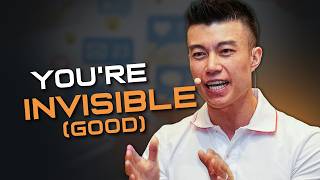
Richmond Dinh argues new coaches should exploit their anonymity to experiment without backlash. He outlines three principles: test bold ideas risk-free, reshape your identity until one sticks, and build a movement by defining a shared enemy. His 7-day plan: pick a problem you've solved, post daily with different hooks, and offer a free trial to convert early followers.
Chapters
If no one knows who you are yet, good. Because the most dangerous piece on the chessboard is not what the piece can do, but where it's positioned. Because even the pawn can checkmate the king if it's in the right position. And most beginner coaches think that invisibility is their problem. They think that they need more followers, more authority, more proof to get clients. But the truth is, you just need a better position. And your positioning will be the make or break on whether you can be a competitor with a bigger brand or not. Because when you have no brand, you. You can experiment without judgment. You can post without pressure, you can sell without reputation risk, you can pivot without public embarrassment, and you can test without backlash, because no audience is waiting to judge you on your every move. And in this video here, I'm gonna show you three plays to get an unfair advantage so you can better position yourself when nobody knows who you are, and it's about where you're placed that's gonna make the biggest difference. So the first concept I want to talk about is this. Robbers cannot rob an empty house. What does that mean? It means that if you have a house with no possessions, you have nothing to protect. That means you have nothing to hide. When there is no brand, no followers, and you have zero followers on your list or maybe a very small following, you can do a controversial post, and you can't lose any followers because you can't get negative followers, which means you can take unlimited free swings with zero downside. And it's the only time where you can do this, because as you build your following, as you build your brand, as you get to your first thousand, ten thousand, a million followers, it becomes harder to do, because now you have things in your house that people can rob. Now you have things that people can attack you on and tear you down on. But when you have nothing to steal, there is nothing to hide, and there's 100% upside. I want you to imagine this. You went to the casino, and they gave you an unlimited amount of chips that you can gamble with. And when you run out, they just give you more. And when you run out, they just give you more. And when you run out, they just give you more. And you just keep on playing the game until you hit the jackpot, and then you can cash out. And then once you hit the jackpot, then you can play a different strategy. So when you're starting out, you literally have unlimited free swings at the game. You are being gifted unlimited chips at the game. This means that when you're starting out, you can test wild offers. You can throw out an offer and just state, hey, you know what? I feel like this is worth $5,000 or $10,000 or even $1,000. You can try to outdo your competitors. You can test different hooks. You can post 10 times a day and delete all of them if they didn't work. You can test 100 different messaging angles. You can test double dozens of positioning angles and dozens of different types of points of differences that you can angle yourself on without any risk of failure. For example, if you're now I'm going to use a niche that is so saturated now. For example, you may be I'm just a general life coach, and you want to niche down to life coach for single moms or life coach for dads or life coach for professionals or life coach for optometrists, because I was an optometrist when I started. And you want to find your point of difference. For example, if you're a life coach for single moms, what's going to be your point of difference? You know what? I'm going to be the life coach for single moms who's fed up with the system of their husbands or their ex husbands gaslighting them and they were a victim of abuse. And you can go on the angle and test it out without any fear of judgment because no one knows who you are. And you can just test different points of differences again and again and again and again and again. You can chop and change because no one's watching until you hit one that lands and that's your jackpot and you run with it because when no one knows you are, you don't need protection. You need positioning and you have unlimited chips. And this is the only time you can take advantage of it. So I'm going to give you some really practical advice right now to be able to do this, because when you're invisible, you can be fast with this. So take a pen and paper out, because here's some practical advice that all of you can do when nobody knows who you are. So for the next seven days, and if you commit to this, you could win big because no one is watching. So here's what I would do. Step number one, pick one problem that you've solved in the past, whatever problem that is, just pick one. Whether you've overcome anxiety or depression or financial collapse or a divorce or victim of abuse or whatever that problem is, or maybe you're a business coach and you know how to get people their first 10 clients or the first hundred K or the first million dollars or you're in crypto trading or you're in share trading or property investment or grief coaching or whatever kind of coaching you're in. Pick one problem that you solved and then post about that daily with different hooks. Just test it out. That one problem with different hooks. For example, if I'm helping you get your first paying client online, and I've done that before, this is who we help through tiny challenges. And I wanted to test out this messaging. So because beginner coaches have so many problems and it could be imposter, it could be comparison, it could be how to get my first client, it could be how to set up my Facebook, Instagram or how to do social media or maybe how to do reels, or it might be what am I going to offer or what's the marketing. There's so many different problems I could attack, but let's just say I'm going to attack the first one which is how to get your first paying client. Now for seven days I'm just going to post different hooks with the same problem. So the first hook could be on day one. On Monday I might be post. This is how you get your first paying client without a following. I'll try that out. I'll try that out and I'll do a post and I'll show them how I'll do it. Then on Tuesday I'll do this is how you get your first thousand dollars without a following. I'll test out that hook. So first paying client, first thousand dollars. Then on Wednesday I'll try a different hook. This is how you will get paid within three days from a client that you don't need to post about. And I'll try that hook and I'll just try seven different hooks. And the cool thing is you can try it all risk free. And if you're stuck on the hooks, just go to Claude or ChatGPT or any form of AI and get them to write the seven hooks for you. But the body is always going to be the same because now you're just testing what's going to be that front end lead magnet or front end I help statement or front end messaging. That's going to work and you can post it in different formats. So step number three is post it in different formats. So you can do a reel, you can do a story, you can do a live, you can do a written post, you can do a postcard post, but just post it in different formats. And then over that week, after you've picked a problem, you post it daily, you post it in different formats. See whoever responds, see which is getting the highest engagement, see what's getting the best response from the marketplace. And if it's not getting great response, then do it again the following week. Delete all those posts and post about a different problem. Maybe it's imposter, maybe it's comparison, maybe it's a game plan to get to your first hundred K. Maybe it's how do I transition out of current coaching into current job into full time coaching? And you just post different problems and you test it out because you have unlimited swings at this game and you're literally testing out. And the cool thing about social media right now, it has nothing to do with your following. It all has to do with whether or not your message is pointed. And it's called interest media now, not social media. And so if you have a message that is pointed, the algorithm will show that message of people that want to hear it, regardless of whether they're following or not. That's the advantage we have right now. It's really, really cool. So to wrap this up, you don't need a permanent decision. You just need a temporary commitment. And when you do this, you're going to get great data from the marketplace. And you might be wondering, okay, Richmond, if I do this, if I post every day on one problem with different hooks and different formats, what happens if I get someone who engages and wants to work with me? What do I offer them then? I would highly encourage you to offer them a tiny challenge. What is a tiny challenge? Offer to work with them for free. One on one for five days. Over five days straight, five calls over five days. It's a one on one challenge. If you want to know more details on how to actually run a tiny challenge, I've got videos on my channel here on what it is, how it works and how to run one. You can look it up, but I won't talk about in this video here. That's the best way because no one else is doing it. It's flexible, it's convenient. You're just starting out, you're testing out a message and it works for both parties. So I would highly suggest you do that. Now I want to talk about the second principle, because this is going to set you up for your positioning, because you're gonna find your message, you're gonna find your problem, you're gonna find your angle. Because we need to understand that when we're starting out, our position is gonna be more important than Our power. Cause we don't have any powers. So do that first to get this baseline of where we're gonna position yourself. Now, the second principle I wanna talk about to help you better position yourself is what I call a blank canvas. So robbers can't rob an empty house. So. So you have nothing to protect. Second principle about positioning is that you are a blank canvas. What does this mean? It means that on the chessboard, it's like being able to make the first move unlimited times. If you don't like it, you can redo it. So, for example, if you get to go first on the chessboard, you may move a pawn or the horse or whatever it is, right? And you move it forward by one step or two steps, and someone moves this and. And someone does this, and then they eat your pawn and then they checkmate. You're like, oh, my gosh. Well, in this game, because you are a blank canvas and you have nothing to lose and nothing to protect, you have unlimited chances and unlimited redos and restarts on the chessboard. So if you move first, you didn't like it, you can just start again. If you move another piece, you didn't like it, you can start again. If you moved and moved and moved and moved, and then you got checkmate, you can start again. You have unlimited redos because you are a blank canvas. And this is the first move advantage because you have unlimited chips. Let me give you a real life example. So about six, seven years ago, I had the privilege of being able to go to Arnold Schwarzenegger's house. Yes, the Terminator. It was a private charity event where one of my close friends knew a connection to Arnold Schwarzenegger. And I got a private invite to his mansion in. In Brentwood, in la, which is one of the most expensive suburbs in la. And this is at his home. And they're running a charity event. And there was only about 100 people there. There was Sylvester Stallone, Sly Jason Statham, movie producers, billionaires, entrepreneurs, and there was me. And I'm thinking, okay, how did I get so lucky to be here? What did I do in my past life to deserve this? But the point is, I'm here now. When I was there, no one knew who I was. I didn't even have much of a social media following anyway. And when people ask me, hey, what do you do? I could have said anything. More importantly, how I showed up, I could have become anyone. I could have been reserved. I could have been loud. I could have been Alargan. I could have been a comedian. I could have been fun. I could have been fun. I could have been an introvert. I could have been an extrovert. I could have been anyone there because no one had any reference point of who I was because I had the advantage of a blank canvas. And so when people asked what I did, I tested out different things. I said, because I was a life coach back then and I could have said I'm a speaker. I was also an author. I did have my own book, so I could have said I'm an author. I also said, I'm a life coach. So I had so many shots to say I'm a speaker. I. I'm a life coach. I'm an author, I'm an entrepreneur. I'm an online business owner. And I could have said that so many times and just see the reception, see which one felt better. And someone said, oh, wow, tell me more. Or that didn't land. Or I didn't feel comfortable. And so I get unlimited shots because I have a blank canvas now. I never lied, I never said I'm something I'm not. But I knew that I could just be anyone I could want it to be and test out something, a part of me that I showed on the front end because I'm all those things just depends on the context and, and testing out different identity pieces. Like, I'm a speaker, I'm an author, I'm a life coach because I had unlimited shots and if I didn't like it, I can just redraw it and start again. That's the advantage of having a blank canvas. And so I'll give you another example. Okay, this is kind of like, how do I say, you know, when I. My kids just entered a brand new school, all three of them, and now we're meeting all the parents and the parents are very nice and they're like, hey, Richmond, my name's John. My name's James. My name is Peter. What do you do? And I'm like, these parents have no idea who I am. Like I said, I'm a coach and a trainer. We run a speaking training company. We help online coaches. We have an online business. I'm an entrepreneur. I could have said so many things. I'm just testing out which one lands and how I show up because I'm a blank canvas to them because they don't know who I am. And I'm just a beginner to them. And so the best way to position yourself, what does this mean for you? The best way to position yourself is this. It's not so much your. Okay, your identity, testing it out. Although that's great, it's this, it's your origin story. Because at some point people can ask, how did you get into coaching? And so even today I, I still get parents asking me, oh, how did you get into coaching? Well, how did you get into that? Or when I go to a high net worth networking event, they're like, how did you get into coaching? And then you share your origin story. Now your origin story is going to be the thing that sets you up from a huge advantageous position on the board. Because if people can relate to your story on a much deeper level, you will crush. So for example, my personal backstory is that I was an optometrist living in a household where I was not fulfilled because my parents said become a doctor, dentist, solicitor, because in the Asian culture that's who you need to BE. And then 10 years in optometry I wasn't feeling very fulfilled at all. And I wanted to do something more fulfilling. I wanted to find more purpose. And so I went to seek out what else was out there. So I got a life coach, I started studying Tony Robbins, I started doing nlp, I started doing training and coaching. And I just really, what is my purpose in life? And from that I realized, wow, I was so addicted to coaching and this personal space that I decided to leave optometry, which I was a very successful optometrist in that career, to start a life coaching business to help people break through the Asian cultural mold of their parents. Telling who, telling them who they should be. That was one of my stories. But, but I could have equally said a different part of that story. Now you have an origin story. It's just the question is, which part of your origin story do you share? The cool thing is I would share all of them early on and just keep on sharing and testing and testing and testing until you find the one that lands. I'll give you another example. This is another part of my origin story. Exactly the same era where I decided to leave optometry into coaching. So at the time where I transitioned into coaching, I had 12 properties and in a matter of 12 months, I had lost it all. Why? Because I had over leveraged in high risk mining towns and I was almost about to go bankrupt. In fact, I was negative $1.2 million down the hole and I had $50,000 left in my bank account, cash left, and I was going to go bankrupt because I could not afford to pay the loan anymore. And I just want to clear my $1.2 million debt. And so when you have $50,000 cash in your bank account and you need to go bankrupt, well, you have to spend the $50,000, otherwise they're going to take it. Now, you can't just go buy a watch or a handbag or some material thing, because they can just sell it. You can't go buy a car because they can sell it and get the money back. You'd have to buy something that they could not sell. And so here I am thinking, okay, I've got $50,000. I have to spend it all before I go bankrupt. First thing that came to mind was, you could drink, you could party, you could go to Las Vegas, blow it all. You could spend it all on your friends. You could just do crazy experiences. They can't sell it back. But you know what I did with that $50,000? I dropped it all on personal development. In actual fact, I put $5,000 on a life coach. And then life coach said, told me, do Tony Robbins. I went to Tony Robbins, put another thousand dollars, and at the end of that, he did this $15,000 upsell, which I bought because I had to spend my money. And. And now I walked back home from Tony Robbins spending $15,000. And then that led me down the path to meet this guy named Scott Harris. And he became my very first mentor. I paid $25,000 for. And now I basically spent the majority of my money all on coaching. And after doing all that coaching for 12 months, I realized that I was being extremely unresourceful with my finances. And I was buying into the story that I could not get myself out, and the only option was to go bankrupt. And I realized the only reason why I couldn't see any other way was because I was being a victim to my circumstance. And I realized that I was paying $60,000 a year, $1,000 per week, or $1,100 to be exact, into a mortgage I could not afford. And I knew I couldn't afford it. And the reason why, $60,000 a year, paying a mortgage I couldn't afford because they weren't getting any rent was a problem, was because I was only earning 120. If you're earning $120,000 a year and you're paying $60,000 in repayments, you're done. And I said, well, there's only two solutions. Go bankrupt and get rid of the debt, which I really didn't want to do because I know there's consequences of that, or figure out a way for me to earn $500,000 a year. Because if I'm earning 500 and I'm paying 60,000, then it doesn't really matter. And that's what I did. I figured out a way to earn more money by starting a life coaching business and charging and doing the work and really figuring out an offer that resonated with marketplace that started selling on hotcakes. And in the first two years, I made $500,000. And that was the beginning of my career. To this day, I still have that debt. And I'm proud I didn't go bankrupt because now I'm earning over eight figures a year in. In fact, last year we collected cash in hand over $10 million in our business. And now that $60,000 really feels like nothing. See, there's always a way. Now what I just share with you a different part of my origin story. And that's the part what I found resonated more than the optometry part. Yes, I still share bits of optometry part, but that's the part where I realized that there's always a way. And so when you are a blank canvas, you. You can share any part of your origin story and just keep on sharing, keep on sharing, keep on sharing it until the one that lands. And why is this so important when it comes to positioning? Think about it. Batman is a classic. And will there be a brand new Batman movie? Yeah, there will be. There will be Batman movies again and again. Because the origin story of Bruce Wayne, his parents getting killed in the alleyway, and then he, he went on a mission and became a vigilante to fight against crime. Spider man. Little Peter Parker, little nerd, went to school, got bitten by a spider, became Spider man to save the world. Superman. Clark Kent came from another world that got destroyed, landed here, raised by parents who loved him, and he became Superman. Wolverine. Every great superhero has a great origin story. And there will be another Wolverine movie. There will be another Superman boomie. There will be another Spider man movie, There will be another Batman movie, There'll be another Iron man movie. Because the origin story is so great and so unique. And so if you really want to position yourself against your competitors, know that you're a blank canvas and really find the origin story that's going to land because you have unlimited shots to find it. And when you find it, that's going to be your power. And you can share as many variations and iterations until one lands. A blank canvas is more powerful than a famous painting. You can't repaint The Mona Lisa. But you can create something new from scratch and that's the superpower. So your immediate next steps. I'm going to give you some action steps to really do this, okay, Is for the next seven days, okay, You've got your messaging, the problem, you've got some testing down there. Remember, no one is watching. Post seven days straight, every single day. This post here that says what you don't know about me, that's the title of the post. Now, the post could be a real, could be a story, it could be a written post, it could be a live. But what you don't know about me and share that and share that every day. What you don't know about me. Monday, part one. This is what you don't know about me. I was an optometrist. I was unfulfilled. I became a Life Coach. Day two on Tuesday. Part two. What you don't know about me, I lost $50,000. I lost actually $1.2 million in the property market. I was about to go bankrupt. I spent my last $50,000 on Tony Robbins and personal development and life coaching. Number three, what you don't know about me, when I started coaching, I was coaching in my laundry in a tiny two bedroom unit apartment because I had no money. And that's where I started. My clients didn't know. And I share that with you because you don't. It's not about how you start, it's about where you're going. Boom. Number four, what you don't know about me. And you keep on going and keep on going, keep on going. Just find the different angles about your story. And all those parts of that story happen the same time. I'll give you another part of my story. When I decided to become a coach, two weeks later, my mom had a sudden stroke. No one knew about it. And she passed away. And I had to make a decision. Is this a sign from the universe telling me that I shouldn't go into coaching or a sign that I need to go all in on my dreams and make her proud? And that's why I became a coach, to do something that I wanted to be proud of for her. And so now I've got so many variations of that and you just keep on doing it until one sticks. This is the power of having a blank canvas. Here's the third part. So robbers can't rob an empty house. You get unlimited shots. You're a blank canvas which you can share so many variations of origin story to better position yourself. This is a Third part, to position yourself, that will, in my opinion, be the most impactful part for you that you can implement straight away. And nailing this part can turn you from a nobody into having a full blown movement in a matter of weeks. And you can go viral. Because all mass movements are created. Write this down. All mass movements are created from bonding to a shared identity, shared pain, but most importantly, a shared villain. I'll say that again. All mass movements are created from bonding to a shared identity, shared pain, and most importantly, a shared villain. And so if you have an I help statement that says I help coaches grow boring, but if your household says I help beginner coaches get clients without the bs, fake guru marketing, then you've created an enemy through a shared identity. And being against something has more power than being for it. I'll give you another example. You can say something like this. I love Democrats. Now, I'm not being political, I'm just giving an example. I love Democrats. Or you could say, I hate Trump. Which one will create more of a movement? I love Democrat movement or I hate Trump movement? Of course I hate Trump movement. Because people are bonded more by a shared villain than what they want to move towards. And so when you can create a shared villain through shared pain, you will create a movement. And when you declare what you're against, what you're sick and tired of, what you're fed up with, what you are just hating in the marketplace right now, and you have a good reason to choose that enemy, you will instantly position yourself and create a movement. When I started, I positioned myself against incongruent coaches. I hated incongruent coaches. I was the life coach that ate my own cooking. I was the life coach that practiced what I preached. I was the life coach that believed that congruency is king. And I was tearing down other life coaches who were just going down the route of getting certification after certification, after certification, after certification. They could have six, six or seven certifications, but they never ate their own cooking. And so I was against incongruency. I was against fakers. I was against those who tried to be like the fake it till you make it. I was against those who just thought they had the right to tell you what to do because they had a certification, when the truth is you only have a right to tell people what to do if you've done it yourself, if you're doing it yourself. And even then you need permission. But congruency is king. And if you look at my bio, yes, I've done the certifications, yes, I've done the training. Yes, I've got the results. Yes, we've got thousands of testimonials. But if you read my bio on my page on Facebook, particularly it will read this, it says, here are my credentials. Number one, married to Penny over 20 years. But number two, it says this, My bio reads, I'm a product of my own product. I eat my own cooking. Congruency is king. Those are the universities I went to. That's my tertiary education. Graduated from. I eat my own cooking. Graduated from. Congruency is king. Double degree in I eat my own product. That's my bio. Because even to this day I stand against incongruency and fake coaches. And that's the BS guru marketing that I'm against. And when I say it like that and share it like that, and I truly am against it because I feel like the coaching space. So many people get burnt by coaches who just pretend like they know what they're doing or feel like they have it right because they did a course or watched a video or went to one Tony Robbins event and suddenly they qualified to become a life coach. It's crazy. And so can you feel the difference there? When you have something that you're against and you create a shared villain, you create a mass movement so much faster. And when you compound that with a shared pain, which you will do on the first testing, remember, you're just going to test that pain. Points, 10 points. And then you have a shared identity through the shared story of yours, that positioning you have in the marketplace will be game over. You could be the pawn on the chessboard and checkmate any player because you're positioning through this all get and leverage of the fact that no one knows who you are and you don't have a following, game over. That would be your key to success. So for the next seven days, here's some practical immediate action steps I will be posting daily for seven days. What you're fed up with, what you hate, what triggers you and see how you'll find your tribe will immediately find you. It will be incredible if you start posting what you're fed up with, what you hate and what triggers you. Watch your tribe find you and watch your positioning start to open up and people will follow you as their guide, as a mentor, as a leader, because people will be shared, will have that shared vision with you. That will be a game changer. So just to recap everything that we shared today, right now, you have three unfair advantages to better position yourself when you have nothing to protect because robbers can't rob an empty house because you have a blank canvas, which means you can choose any part of your origin story to share and you can choose your enemy, because this is important. Established coaches, they can only move slowly and they must move carefully. That's a massive disadvantage, but you get to move fast. Established brands must defend identity, but you get to create it. Established voices avoid friction, but you get to define it. So don't waste this season wishing you had an audience, because your biggest advantage is, is that no one knows who you are and that advantage expires.
More from Richmond

How To Get Your First Coaching Client Without Posting Content (Day 5/5 of The First Kiss Challenge)

How To Get Your First Paying Client Without Posting Content (Day 4/5 of The First Kiss Challenge)



How To Get Your First Coaching Client Without Posting Content (Day 3/5 of The First Kiss Challenge)




