The Science of Speaking: Dr. John Demartini on Mastering Communication & Influence
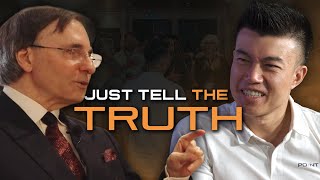
This is a transcript of a YouTube interview titled "The Science of Speaking: Dr. John Demartini on Mastering Communication & Influence." Hosts Richmond Dinh and Pammy interview Dr. John Demartini about his early life (born Nov 25, 1954), overcoming dyslexia and a childhood speech impediment, and the practices he used to learn (memorizing ~30 new words/day leading to a ~20,000-word vocabulary growth). He recounts early speaking anecdotes (teaching large informal groups, an early Hyatt Regency talk for retired oil executives, an IBM talk that led to mass resignations, elevator and restaurant 'impromptu' presentations that generated clients and networks), and shares principles for effective speaking: lead with mission (fear of not speaking vs. fear of speaking), read the room and solicit audience needs, stay within your core competence, use spontaneous/authentic humor sparingly, and iterate by treating outcomes as feedback. Practical pointers include using professional translators for cross-cultural events, leveraging short-form pitches (28-second elevator commercial), and directing listeners to drdemartini.com and his value-determination tool. The tone is pragmatic, anecdotal, and motivational.
Questions this video answers
November 25, 1954.
161 countries.
drdemartini.com.
About 30 words per day, growing roughly 20,000 words over two years.
Approximately $120,000 of business and 40 new patients in one month.
Chapters
My parents were eventually asked to come to school, and my teacher said in front of me and my mom and dad, I'm afraid your son's never going to be able to read. He's never going to be able to write properly, not be able to speak effectively, communicate effectively, probably won't go very far, amount to much in life. So I did, you know, everything I could to expand my vocabulary, 30 words a day. In the next two years, I grew 20,000 words in a vocabulary and I went from the bottom of the class to the top of the class. These are executives, they're in their 70s, that have run major corporations, the largest oil companies in the world, petrochemical companies, and you name it. And I'm now going to teach them about success. I've never had a class in public speaking. I just was a man on a mission.
With a message and a vision. You know, everybody wants to make a difference. Every speaker wants to make a difference, but you're not going to make a difference fitting in. So find your uniqueness and give yourself permission to be yourself in a world that doesn't want you to be.
Well, thank you so much and welcome back to another episode of this Top speaker podcast. And today we have such a great honor to have one of the best speaker in the world. But not just being the best speakers, but he actually spoken at more countries than anyone in the world. In fact, 161 in total. 161 countries. That's so impressive. So thank you so much, Dr. John Demartini, for being here today.
Thank you for having me.
Great.
Hello, Richard.
First of all, well, welcome to the Top Typical podcast. And this has kind of come full circle because I first met John and Dr. John Demartini nine years ago during the breakthrough experience. And he hasn't aged since. And at that point, I had never spoken on any stages before, both virtually or in person or anything like that. I think I had done one Facebook Live, and it really scared me. But I want to talk about your journey as a speaker because you're. Am I allowed to say your age? I'll try 71 now. But I believe you grew up as a dyslexic and you had a speech impediment, and now you've spoken on the most. Well, the most.
Up with that journey.
I was born in 1954, November 25th, which is coming up, so I'll be 71 in next month. And I was born in about a year, year and a half old. I found out I was not making sounds Properly. So I had to go to a speech pathologist and use strings and buttons in my mouth as a child so it just strengthen muscles and make sounds. And so I had that. I also had an arm and leg deformity. It was all turned in, so when I tried to walk I'd fall over. So I had to wear braces from about a year and a half to about four and went to a speech pathologist somewhere between a year and a half to about four.
And then I ended up having. I started kindergarten class and first grade, you know, regular elementary school, primary school. And I was found. I found there that I wasn't able to read. Everybody was, you know, looking at the big letters and pointing to letters and making sounds. And I found out I had dyslexia and I couldn't make the sounds, I couldn't get meaning and I wasn't pronouncing them properly and wasn't able to spell properly. And I went from normal reading to remedial reading to the dunce clap. I had to wear a dunk cap. Dunsc class.
And my parents were eventually asked to come to school and my teacher said in front of me and my mom and dad, I'm afraid your son's never going to be able to read. He's never going to be able to write properly, not be able to, you know, speak effectively, communicate effectively, probably won't go very far, amount to much in life. And I made it through elementary school somewhat by asking smart kids questions. Today I'm known for my questions.
And the very thing I was told I wasn't going to be able to do, I later, much later excelled in that because now I teach, I research, I write, I travel and I speak the very things I was told I would never be able to do. So I never got to thank that lady for creating the void that became really valuable to me. But I was at 7 when I was told that until 17. I ended up dropping out of school, being a street kid. And I just was sharing a picture with you just a moment ago of some buddies that I was living in a tent with back when I was 16. And the one of the guys is the guy that used to read for me. Whenever I would ask him to.
Something to read, I would ask him to read for me. He always thought it was weird, but he would read to me because I wasn't making sense out of it. I could look at pictures, I could stand on a surfboard, but reading wasn't able to be doing until I was 18. And then I Met a teacher named Paul C. Bragg, who inspired me one night at a little yoga class. And he made me believe that maybe I could someday become intelligent and be able to overcome my speaking and learning issues. And the night I was there with him, I saw myself standing in front of a. On a balcony, in front of a million people, speaking as a really inspired vision. I think I've shown you some of the picture of this, and that was the beginning of a new change in my life. I ended up.
Trying to go back to take a ged, High school equivalency, because I dropped out of school and tried to go back to school, and I failed. And I remember I was about to give up on my dream about learning to someday become intelligent. And my mom saw me crying because I'd made a 27 on my test. I needed a 72 to pass.
She saw me crying and she said, what happened, son? I said, well, I guess I blew the test. I guess I'll never be able to read or write or communicate or never mount thing never go very far in life. I guess I'll just have to go back and surf, because I was able to stand on a surfboard. And my mom said something to me that really shifted me. She said, son, whether you become a great teacher, healer and philosopher and travel the world like you dream, whether you return to Hawaii and ride giant waves that you've done, or return to the streets and panhandle as a bum, I just want to let you know that your father and I are going to love you no matter what you do. And that statement made my hand go into a fist. I looked up and I saw the vision the night I met Paul Bragg, who was the guy who was speaking at the yoga class. And I said to myself, I'm gonna. I saw this vision again. I said, I'm asking this thing called, you know, reading, studying and learning. I'm gonna mask this thing called teaching, healing and philosophy, and I'm gonna do whatever it takes. I'm gonna travel whatever distance, I'm gonna pay whatever price to give my service of love.
No matter what. And I'm not going to let any human being on the face of the earth stop me, except me. And nobody, not even me. And I hugged my mom, and I went into my room and I got a dictionary out, and I started memorizing and pronouncing 30 words a day. I wrote them out 20 times. I stated them 20 times. I put them in a sentence 20 times. So I did everything I could to expand my vocabulary 30 words a day. In the next two years, I grew 20,000 words in a vocabulary. And I went from the bottom of the class to the top of the class, and students started asking me to teach them. So when I was 18 years old, I had my first student, and I started to present to anybody who would listen to me. I didn't care. And little by little, the number of students grew. By the time I went on to the University of Houston from a junior college, I used to have classes under a tree. They'd be 100, 125, 150, sometimes 400 people a day at lunch, every day, coming, gathered around, and I started teaching. And if it rained, we went into the cafeteria and I had a gathering. And when I went on to professional school, I just kept that, kept that going. I just started speaking every single day. I took every opportunity. I didn't care if it was one person in the room. I still practiced, and I just never stopped. And that group to locally, around the city, to around the state, to eventually, most, I think only two or three states in America that I didn't get to speak at, and then eventually around the world. So.
And were there any terrifying moments speaking back then, or did you get any moments where you thought, you know, how people say public speaking is the number one fear, especially with your past growing up? Or was that just.
I, I don't have a fear of speaking. I have a fear of not speaking. Marissa But I did have it initially. I had a really funny thing, really ironic thing happened to me when I was 27. I'd already been speaking to some degree locally, but a meeting planner who heard me speak one night contacted me and said, we've got a speaking opportunity, if you could be, would be willing to do it. And I said, oh, great, what is it? She says, well, we have 75 leading executives that are retired from the oil. They used to run all the biggest oil companies. This is in Houston, Texas, which is kind of like an oil center. And they're all gathering in a meeting, and they want a speaker to talk about success. Now, I just graduated. I just opened up my office, 10 days into my office. And I had already done well in speaking by then, but I was opening up a clinical office at the time. And I thought, this is irony. These are executives, they're in their 70s, that have run major corporations, the largest oil companies in the world, petrochemical companies, and you name it, and I'm now going to teach them about success. It just seemed really backwards.
But it was at the Hyatt regency on Interstate 10 in Houston, Texas, which was real close by. So I got in my little car and I drove over to this thing, and I parked and I came in, and they led me into the back of this, where the stage was going to be the back entrance. And I looked and peeked through the curtains, and here was these oil executives.
Just sitting there waiting. These guys in their 70s, and they were like, you know, we're going to go and learn about success. We're retiring now. These are all retired executives. So I'm sitting in. Everything that I thought in my mind that I was going to present just kind of went out the window when I saw them out there. And I just like, going, this is. This is anxiety city number one. Like, what I'm going to say is going to seem trivial to these people.
And all of a sudden, four seconds before I walked up on stage, while they were introducing me, four seconds, an idea popped in my head, and I. I realized the number one fear that people have is public speaking. So I'm going to leverage that. So I got up on. I came up on the stage, and this is what I said to him. So imagine round tables, 75 people at a round tables, you know, this kind of thing. And I said, everybody repeat with me, as long as you're green, you're growing. As soon as you ripen, you're rot.
And I made them all say it. Let's all say that. And they were writing it down and saying it with me. I said, as long as you're green, you're growing. As soon as you ripen, your rot. So if you're not growing, you're rotting. If you're growing, you're tackling new challenges, and you're pushing yourself beyond former limits. So I came down off the stage and I went up to the first table and I went to one of the executives and I said, so what is your biggest challenge that you're facing today and what is it you're still working on?
And now he's. He's now in the. I. I took my fear and I gave it to him.
I passed it over to him, and he's like. And they're all. You know, some of them knew him, and they're going, okay, Charlie, let's hear your fear, man. You know, there it was like I had them all engaged in this. It's quite fun. And he had to hem and haw. And you could see when he was trying to come up with something quick and on his feet because he didn't have anything Clear. Yeah. And I went around the room and made everybody participate in that. And they all knew I was going to come to them. So they're all. Oh, my God. They're all living in a fear of public speaking. And all I'm doing is asking questions. I didn't say a speech. I never said a speech. And I got a standing ovation at the end.
Wow.
Never said a speech.
I just make them all anxious because I was anxious.
Just pass on the anxiety.
Pass on the anxiety to them. But I learned that if you help them fulfill what they would love, you get what you love. And that, you know, everybody's got a bit of an anxiety in that setting. So had some fun with it. But I realized that you'll never be in front of an audience you can't handle. All you got to be able to say is, I don't know. I'll find out.
If you think you have to know it all, then you're going to end up exaggerating and you'll get humbled. If you just go and speak from your heart and think about your mission. As long as you're thinking of your mission and not yourself, there's no anxiety. It's when you think about yourself and not your mission that you have anxiety because you're thinking about. It's all about you instead of what you're going to do to make a difference in their life.
Yeah. Yeah. These gold.
That's so powerful.
On that note, I know you've got some questions, too, like your storytelling ability, like just a breakout story. Is that something you just learned how to do? Or like, you know, or do you deliberately say, I want to become a better storyteller?
You know, I had.
A gentleman named Brian Tracy who's well respected in the speaking industry. He's very much a professional speaker. I've known him since 1986, I think. And he asked me one time at a. In La Jolla, California, which is. He lives in. He lived in Lomas Santa Fe Boulevard street in Solana Beach, California, which is just the next city over, next town over. And he. And he asked me, where did you learn how to use your body language and your hand motions and everything else you seem to be, you know, you've. You just know how to use your hands. And. And I said, I have no idea, Brian. I've never had a class in public speaking. I've never. I just was a man on a mission.
With a message and a vision, and I just didn't compare myself to other people. I just compared my Daily actions to my mission, vision and message and just targeted and focused on what is it. There's a mission that I have for the world and the body language seems to take care of itself. I don't know, I've never stopped and looked at. Did I raise my hand? Did I raise my inflection? Did I. I never knew any of those things. I just spoke from here about what was meaningful that was truly meaningful to me that I thought would be of value to them and respect them. And sometimes I would nail it and sometimes I wouldn't. But when you don't, you get feedback and then you do a little bit more research on your audience to make sure that you're gonna meet some needs. Because there's no demand unless you meet people's needs.
What about humor?
I'd be put in jail for some of my.
Yeah, I personally love your humor. I get your humor and yeah, can you talk us about the times you almost got put in jail for. Well, what was meant to be funny but it wasn't?
Well, no, I can't say I really was close to being put in jail. But I have said some things that are really on the edge and they just, they spontaneously come out sometimes. I'm not going to go over some of them now probably. But the point is that.
We sometimes have moral hypocrisies that we subordinate to that we then trap ourselves in and try to get rid of half of ourself and try to be only one sided, which is futile. And so I try to exemplify the hero and the villain, the saint and the sinner, the virtue and the vice. I try to make sure that I display both sides of myself to give people permission to be themselves instead of edit half of their life away because trying to be something they can't be and trying to. The Buddha said it really nicely. The desire for that which is unobtainable and the desire to avoid that which is unavoidable is a source of human suffering. So striving for a one sided state to look good and to be proud is a guarantee to get you humbled, wiser, to be yourself and you'll go farther. And physiologically it's to our advantage to do that. Otherwise we're repressing and whatever we repress we eventually explode and it comes out. We're forced by the clientele that we attract to make that come out. So I'd rather just be me. And some of my humor is a bit raw sometimes, but it's what goes on in my mind. So I guess I have a bit of a perverted mind sometimes.
And do you think anyone could be funny? Because using humor on stage is just a great way to engage people. But is it like, should you try not to be funny if you're not funny or. You know what I mean?
Well, I think there's. I think there's been great speakers that aren't necessarily funny, but there are great orators.
Or there's very dry humor, if there's any humor. So I don't want to say that you have to have humor to be a great orator because Isaac Isimoff, who was a great futurist and.
Wrote about 300 books and was a fiction writer and a science writer and very bright guy, I don't ever. I've not seen him be humorous. But you listen to every word he says because it's profoundly in depth and you know what he's saying. If you go back and watch a video of him in 1982, what he predicts or what's happening now, you'd. Again, he was a psychic. What he said is what's happening? And he nailed it. But there was no humor. It was very, very concise information that scared people at the time about the future, because he could see that. So I think that some people do really well without trying to be humorous, although there's no harm in it because it lightens people up and allows them to feel comfortable in front of you. But you can be a very profound presenter with very factual information and be respected. You don't want to come off as a comic unless you're a comic. You want a nice blend, occasional fun, spontaneous humor I think is wiser than too programmed humor just to be humorous because people don't take you as seriously. Let it be natural.
Yeah, Pammy.
It's just when you were talking about being respected, that's a question popped in my mind because as someone who is sometimes much younger than the audience, I think that's something that I'm sometimes struggle a little bit with. As in like you mentioned, how do I gain respect from the audience quickly? Because I don't take it for granted with me, probably less experience than them.
Yeah.
How do you.
I had a doctor, I mean, I practice as a doctor and I had this gentleman who was probably late 60s come to my office and I happened to be in the front office where the receptionist was, because my receptionist wasn't there on a Saturday. And I was just in my office that day. And this gentleman comes in and he says, is the doctor Here I had a white coat on with my name on it, Dr. Demartini.
But he says, the doctor here? And I said, yes, I'm Dr. DeMartini. How can I help you? He said, no, seriously, is the doctor here? I was 27 years old, and he said, no, seriously, is the doctor here? I said, I am the doctor. He says, seriously, can you please get me a doctor? And so I turned around in a circle and came back and then put my hand out and I grabbed and I said, I'm Dr. Demartini. How can I help you? And he was, you know, he couldn't fathom that somebody so young looking would be the doctor. He didn't believe it. So in my early year in practice, I would feel sometimes intimidated because I was trying to impress, and I would then overkill with knowledge or information or whatever to try to prove that I was, you know, worthy of being paid. And then I realized that if I'm thinking about me and worrying about me and what I look like or sound like or whatever is not as powerful as if I show that I care about them and their outcome. So I eventually realized, I said, we can sit and dilly dally around about whether I look like a doctor or not, but I'd much rather be of service to you than. So if you could tell me what's going on. If I can't help you, I will find somebody to help you. But if I can help you, I want to help you. And I just moved it back onto, what is their need? And I found it that when they saw that I sincerely was adept at helping them fulfill their needs, they didn't care. And they never asked, what are your credentials? I happened to graduate in the top of the class, and I had honorary things like that. Nobody's ever asked me about that. They don't care. They want to know, can you help me? And the people in the audience want to know, can you make a difference in my life and help me achieve what I want to achieve? If you come across with clear intention on doing that and not think about yourself.
You'Ll go farther. I think that's why you'll get respected and don't go outside your core competence.
You know, I read as much as I could and as many things as I could that could help in human behavior. But I only know what I know. And if I get away from what I know, it shows, and I stick to what I know and let what I know grow. Start with what you know and let what you know grow. And then as that Expands your audience is going to expand with opportunities, but stick to what you and know your. As Buffett says, know your competency. I have. Sometimes people ask me to speak on different things. I said.
I really believe that it'd be wiser to call so and so I think they're more in line with that. If you would like this and this and this and this, then I would be the speaker. But if you're wanting that, then I think it'd be wiser to go with that. And they said, well, we do want you. Can we. If we modified the speech and let you speak on that, would you still come and speak and I'll go, yeah. And then I'm not trying to have to be somebody and be second at being somebody else instead of first being me.
And did you have that experience where you did try to go out of your core competency and it didn't work out or something happened?
Oh, yeah, I tried that a few times. And I mean, I'm a good student and I can study and I can devour material and I can learn and that's. And I can present. But I'm also knowing that, that I'm outside what I'm inspired by. So I'd rather make sure it's something I'm inspired by. I can't inspire an audience if I'm not inspired by the presentation. When you can't wait to get up in the morning and be of service to people, people can't wait to get your service. That's the bottom line. So I'd rather stick to what I am inspired by and what I really know, which is human behavior, which has been sort of summarized as human behavior. Now, that's broad and I get to cover a lot of ground on that. But that's area because sometimes they'll say when you do something on, you know, marketing or sales, I can. But there are people that are. They've spent 40, 50 years on marketing and sales. I think they know more than I do. And I can tell you what I've done and I can tell you what I'm doing and I'm delegating that.
I delegate a lot of stuff, but that's not my area of expertise.
So I better speak about the human behavior side, about cultural differences in all the countries you've spoken at do's and don'ts, taboos, religious beliefs, everything.
Well.
Most the time, instead of me trying to learn the same thing multiple times by studying different languages, I figured I'd just use specialist. And now with the artificial intelligence now there's down under 2 second delays between a translation, so you can say something and it can almost simultaneously translate publicly. I just did it the other day in Japan. It was quite astonishing. I mean, the translators, I don't know if they're going to be in business soon because it's translating in almost instantaneously. But what happened is when I was in some countries, the translators knew the cautious and sensitive areas of the culture. And if I said something that was on the edge, they would tweak it to make sure it would match because I wouldn't know. And so I would rather have professional translators or something that would be a professional translation service. So I can have a little bit of a leeway on that. Otherwise you don't, you know, Like I was doing a. I was speaking to 43 million people on a podcast radio show. This is about five years ago, and it was a big. It had a big reach. And I was telling a story about something that happened in Australia and there was a. Down here in Australia, when you get drunk, you get pissed. That's the term.
Yeah, that's right.
That's a term. And I didn't even think about that. That's not the appropriate term on the show. And they can be.
Punished on the show because it's a live show and you can't use those. It sounds like a cuss word. So I said, well, the guy got pissed and they thought. He got angry. And you said a word and they literally deleted that word out on the spot. And it wasn't. It was one of those little things you just don't. I didn't think about it. I thought, I'm just using a real slang construct from Australia. It's a normal thing that people say. The guy was really pissed. I've seen it even on your tv. But there it was inappropriate. So you learn a few of those things and you don't forget it. I didn't forget it. I go on that show again. In fact, they literally pulled me out during one of the breaks and said, we can't say certain words. I said, you might want to send those out to your guest. So we know. Like they did in Tehran with me, because I'm not gonna know.
How do you turn a situation around when, like, unintentionally, you've lost the audience because of something and then you still got half an hour to talk or an hour or a whole day. Like, how do you wing back the audience on that?
I think you got to pay close attention. If you have your eyes Closed. And you're not looking at the audience. They're. They're offering you feedback every second. You have to be conscious of what their, what their body language is doing. If they're engaged and they're writing down notes and they're participating and they're nodding and they're, they're leaning over and you can see that they're engaged in it, then you have the audience. Or if you're inspired and they're inspired and there's people in tears of gratitude for the, for an inspiring presentation and you got them engaged. But if they're not engaged.
I don't have any problem saying, I obviously am not hitting a topic that's making sense to you. I've been asked to do this topic.
I sometimes have asked the people to write down the number one thing they would love to have addressed in this presentation and pass it to the front. I've done that many times. And what I find people are interested in is not always what the presenter, the person that's organizing is trying to project. Sometimes the individual's not doing their homework and they're projecting a need. I had that happen in IBM. I spoke at IBM to 400 people from IBM. And I get up on stage and I said, how many of you can't wait to get up in the morning and go to work for one of the greatest companies in the world? This is back in the 80s. And no hands went up, except one. The regional manager right in the front row had his hand up and he didn't even look behind him. And there was not one other hand up. And I hit the microphone. I said, can you all hear me? Yeah. Yeah. How many of you can't wait to get up in the morning and work for one of the greatest companies in the world, IBM?
Blank. So the lady in the back that was asking me to speak had given me a topic that she thought was appropriate to salvage and make sure she looked good, but not necessarily what the company needed. And so I got off the stage, walked down the aisles, a narrow aisle, packed room, and I said.
This topic is not what I'm going to do. I may never get asked to come here again, but that's okay. What I see in this room right now, what needs to be done, is something completely different. So the name of my talk now is Crap or Get off the Pot. I just changed the title. I got really blunt. I said, if you're not inspired to be working for IBM, you're costing your life, you're costing the customer, you're Costing the company. I said, so when I get through today, you're going to make a decision. Are you on board or off?
75 people out of 400 people gave their notice that day.
Wow.
And did I ask you to come back?
So the lady in the back who asked me to come and speak didn't, couldn't even look at me. She was supposed to take me to lunch. She didn't. After I spoke, she didn't want to live. She was worried about her job and she thought she'd lost her career and job because of what I was saying. And I had that room absolutely on fire by the time I was finished. I mean, they were on fire because they had made their decision and they're going to go on their own because I said, it's costing you your life. You're not, you're, you're, you're, you're living in survival, not thrival if you're doing that. So when I got through, I had to get my own way back to my office. My transport wasn't there, I didn't get lunch, went back and I thought, okay. But I knew in my heart that what I said was solid and going to be useful for this company. But what I was asked to do was not, not it. They had a real issue there.
The regional manager was engaged. And when I got through, the 75 people gave their notice. Two weeks later I got an envelope. They had mail in those days, you know, envelopes and, and stamps. This right before the, the fax machine came out, this is how far back it was. And I got an envelope and my assistant got it in the mail and saw IBM and she heard what happened and she said, do you mind if I stand here while you open that? I'd like to see your face. So I opened up this envelope and it was the regional manager that wrote it. It says, Dear Dr. Demartini, thank you, thank you, thank you for your presentation at IBM. We are on fire.
The people that we had considered laying off gave their notice. You saved us a fortune in outplacement and we have now we're hiring people who want to work for IBM that are inspired by where we want to go. And we soul searched and looked at what direction we were going to do and you woke us up and we are on fire right now. Thank you for what you did. When I got that letter, that lady that hired me got a promotion, came back and personally came and thanked me and she said, I left that that day, went back to my home. I assumed I was Going to be fired. I assumed that was the end of my career. I was soul searching think what it was. And I came to the realization that I want to work for IBM. I don't want to lose this job. I'm not going to let this go. And she came back on fire. So I really believe that coming through with integral integrity, with an authentic message that you really sense your audience through may not be liked by all people, but it'll be respected.
Powerful lesson.
Powerful. This is incredible. And then what you mentioned, like this is what you mentioned earlier, right? Stay in your lane, your competence and read the room and give what they need.
I knew what I said would be solid.
And I realized that I was letting somebody else determine what my speech was about. Now I know that if somebody gives me a title like that, I either try to edit the title or I mention the title. Then I go into my speech.
I mentioned the title briefly, but.
I'd rather inspire him than I would.
Try to fit in. Everybody wants to make a difference. Every speaker wants to make a difference, but you're not going to make a difference fitting in. I got to share a story that this will be pertinent. I'm in Atlanta. I'm at the National Speakers Conference.
And I'm with having lunch with Brian Tracy, who's very well respected in the speaking industry.
And we took a while to get our check from the restaurant and had a delay in getting our food. So we got to the next class a few minutes late and we had to sit in the back, literally in the back wall.
And this guy gets up. There was a spokesperson for Michael Nesmith who was talking about mega trends at the time.
And he was saying that these are the trends. And if you want to go and be in the market, you need to be able to go in these directions. And everybody's taking notes. Go, I need to be here. I need to be here. I need to be here. And Brian whispers in my ear, he says, do you believe that? I go, no. He says, this is ridiculous. I said, I wouldn't do that. You have to be true to what your skill is, that you can't wait to learn and become very knowledgeable about your area and deliver quality stuff. Stuff. And present it in a way that means something inspires people. I don't want to go jumping around based on the fleeting. I don't want to be a fad. I don't want to be a cla. I want to be a classic, not a fad, not even a trend. I want somebody that stands the test of time. And so Brian got up, walked down the aisle, walked in front of the speaker Wyatt is speaking, reached up and requested his microphone. Grabbed the microphone from the guy he's standing, and the guy's up on a little podium about a foot high, turned around, and he says, if you follow what this man is doing, you will destroy your career.
He says, Dr. Demartini and I were in the back, and we were saying, this is not solid. This is not true. So the guy turns around and says, I was asked to do a presentation by Michael Nazmith. He wasn't able to be here. I had the same internal conflict about what I was supposed to say and what I really would believe. So, Brian, thank you for saying what I was thinking, but I was afraid to do because I was doing it out of respect of what I was told to say instead of what I really, in my heart, feel is essential to say. And Brian had the integrity to. He cared enough about that audience to make sure that audience didn't get misled.
Very, very inspiring. And he was respected in his field. Still is to this day.
Wow.
Now, I don't say go out of your way to just, you know, disturb another speaker. That's not what I'm saying.
The iPhone's watching. Is going to go up on stage.
I'm not just going to grab microphones and doing that.
Get extra security. If you.
Look, I. I got to share a funny thing. There is public speak. One day I was in a hotel, and I.
Heard a big convention off to the side. I was in a restaurant, and there's a massive convention. People were everywhere. There were, like five or six thousand people in this small room, and they're all inside. And I curiously. Because, you know, whenever I'm in a hotel and I see big speaking events, I'm curious just in case I can meet somebody that knows me or, you know, networking. So I went in there, and I peeked in the door, and there was a speaker up there. And it was just about the time when the next break was coming. So I did something very unprofessional.
I got three chairs and I stacked on top of each other, and I stood up on top of the chairs because what I heard they were saying. I really felt that my message would be even more valuable.
So when they had the break, they all came out, and I was standing on these things, and I did a presentation as people were coming out. It was packed, and they're going, who is this guy? Who is this guy? Well, a guy from the speaking thing. He said, who are you? Are you speaking here? And I said, no, but I really would love to. I got a speaking opportunity because I did that.
Oh, gosh.
So I'm not saying do that either, but I've done some kind of outrageous.
And then you're saying before, you're not a good marketer. That's great marketing.
Well, I went to a restaurant with J.J. goldman & Co. Public relations company. I hired a public relations in 1982 to help me on radio, television, newspapers, magazines, and media stuff. And we were going to have lunch at Tuxedo Charlie's Restaurant. Remember the place? And I was pretty enthusiastic and engaged. You know, when you're grateful for what you do, you love what you're doing. You're inspired by your vision, you're enthusiastically delivering it. You're certain about your message and you're present. You're going to go places. And I was in that zone talking to them about what we want to do and getting the message out. And as I did, there were two people sitting at a table that started to listen in to what I was saying to them because I have a tendency to have my voice carries. So they listened in. When I saw them listening in, I included them in the presentation. And then another two over here and another two. And then a group of four started turning around and listening. And I thought, this is fantastic. This is an opportunity for me to get an audience with just by having a conversation with somebody at a restaurant. So I kept every. As more people were engaged, I eventually stood up and I started to move through the tables and talk to everybody. And the whole restaurant stopped. Who is this guy? What's going down? Everything else, the waiters stopped. They're all listening. And I thought, this is amazing. I've got a perfect opportunity. I don't even have to worry about promoting a seminar. I can do it live in any restaurant around the world. And I had this manager come out and said, that was really amazing. What you said was really engaging to everybody in this restaurant. You stopped him. And I said, it wasn't intentional. I didn't even know I was going to do that. It just happened organically. I said, well, if you ever want to come back and do that again, that was really good because people were applauding at the end. This is really engaging. You really added to our experience. Well, a lady from another one called.
La Quiche Restaurant, I think it was called, came up to me and said, here's my card. I own La Quiche Restaurant. If you ever want to do that. At my restaurant. Please come and do that. That was inspiring. So I realized that I don't have to go out and promote an audience. I can just find an elevator and pack an elevator. I can go to a bathroom and pack a bathroom. I can go to a restaurant and start speaking. And if I'm willing to be ridiculed or opposed or whatever, challenge or whatever, that's okay too. But I always say when people gather, I come to share.
And that was that opened up. I did elevator seminars I got known for. I did $120,000 worth of business in one elevator in one month from doing elevator.
Seminars. What's an elevator.
Seminar? Well, my office is on the 52nd floor of a tall building in Houston, Texas. I'm the longest tenant there. I've been there 39 years. And the very first time I got there, I was in my office.
By myself with one assistant. And I came down the elevator and there was a lady on the elevator and she was in the far corner and I was in the far corner. And the elevator could hold about 20 people. It was an express elevator. And I thought, that's interesting. And then I decided, I'm just going to wait here and hold the door and let it packed fill up an elevator. And then I thought of a 28 second because I timed how much the elevator took to get from 52nd. Four downs took 27, almost 28 seconds. I'm going to do a 28 second commercial.
So I held the elevator until it was packed, and then I got on last facing everybody. And I said, hi, I'm Dr. John Demartini, everybody's chiropractor. I was a chiropractor at the time. And speaker. And I said, everybody repeat with me. Bone out, irritate nerve, cause problem. Bone in, relieve nerve, restore life. The power that made the body heals the body from above, down inside out. That's it, 28 seconds. And I'm everybody's chiropractor. And I handed cards to everybody as they were leaving that thing. And people were laughing and going, who in the hell is this guy and what is this crazy thing? And I ended up getting $120,000 worth of business, 40 new patients from that elevator in one month. And there are some people that go, I'm not even getting on with you again.
They go, I've been through it, I know what's.
Coming. I'll take the.
Stairs. Well, he didn't take the stairs. They just waited for another elevator. There were other elevators. Well, there was a guy that came on the elevator one time named Sandy Viless.
And Sandy Vilas was there listening to my presentation and he had written a book or wrote a book called Power Networking on networking. And he asked if he could interview me to go in that book. And it's still in that book. You go look at Power Networking Sandy Viless, you'll find it. And there's a story about this crazy guy that was doing elevator seminars and how he did his $0.28 second commercial. Well, I ended up doing a professional speaking presentation at Marianne Bryant's Interior Design center in Houston, Texas for only 17 people. Sandy came there and brought Thomas Leonard. And we mapped out for public speaking their dream. And they both had fear of speaking. And their dream is to travel and put a global business together with their speaking skills and start coaching. So the International Coach Federation, Coachville, Coach usa, all them are started by those two guys in that class as a result of that elevator seminar. All the coaching across the world came from that event.
Everybody's coaches today came from that.
Event.
Wow. Because of speaking and doing something that other people were unwilling to do.
So find your uniqueness and give yourself permission to be yourself in a world that doesn't want you to.
Be.
And does this come from just volume of speaking until you find it like sometimes people are like, I don't even know where to start. What should you.
Do?
If you have a look at what you spontaneously do, that's what's highest on your value. In the medial prefrontal cortex, there's spontaneous action potentials. And whenever you're living authentically according to what you value most, that area lights up and gets blood glucose and oxygen and activates spontaneous actions. Just like a boy who loves video games, you don't need to motivate him to do video games. He spontaneously does it. He just does it. So finding out what you are spontaneously inspired to share, what you spontaneously are desiring to learn, what you spontaneously desire to want to help people and start in that core area that you spontaneous do it. So it's efficient and effective and fluent and congruent as it's expressed. And you won't be stopped if you do that. Nothing can stop an immortal expression by any mortal.
Wow.
Carrie. I'm just speechless. I just love everything that you shared. This is like I don't hear this from anywhere else. And that's just so powerful. And I agree 100%. It's just about what you already passionate about and go deeper into it and share what you already willing to speak for free and start to Go deeper into.
It. Yeah. What's your message? Everyone with a mission has a message. What's the message? Close your eyes. What's the message you want to bring to this, this world today? That's a good.
Message. You ever give feedback on yourself, on your own speaking and like, you know, like, here's how I could do better. Or it's just you want to be like, what kind of things do you look.
For? I think that as you go through and you do speaking.
You can ask the question, you know, what worked? What didn't work today? How can I do it more effectively and efficiently tomorrow? How did whatever happened today help me move one step closer? It's feedback. It's not failure. There's no failures out there, just feedback. And the addiction to success is what makes the fear of failure. Don't be focused on the pride of success. Focus on the mission of the.
Message. Can you expand on that? The addiction of success is what creates the fear of.
Failure. Well, as long as you have this perception of pride and pleasure about achievement, you're going to have a fear of losing.
It.
And. And the fear of failure comes from the fantasy of. And the fantasy and addiction to success. I don't. I don't ever focus on success. I focus on my mission. The title success is a misleader because Keo from Mr. Keough from Coca Cola Company, who used to be on Berkshire Hathaway board, said, I'm leery of people who think they're successful. They're on their way down because they think that means they have a very small objective and very few experiences. So when you start to think you're there, if you've arrived, then you have a small destination. But if you see it as another stepping stone, I was speaking.
I had the opportunity to speak at the Marriott Marquis Hotel in New York City, right near Times square, to about 5,000 doctors one time. This is 1983, November of 83. And they asked six speakers to come up and do 20 minutes on the best of the best ideas they have for serving clients more effectively. And I had by then started to scale up my business. I did a lot of prioritization and scale up my business really quick. And so they wanted to know what I was doing. There was a guy in front of me. I'm not going to say his name, but he turned to me and he said, my father was on this stage. And when I was a little boy, I came here and I watched my father on stage. I finally arrived. I finally made it. I'm now a Success. I'm now speaking on the stage. So he had this goal of speaking on that one stage, and he now thought he was successful. He was young. He was about my age. In my mind, I was thinking, that's a very peculiar thing, because I see myself doing this is just the beginning of thousands of stages that I envisioned globally. So his idea was, I'm a success. My idea is this is another practice opportunity, another way of, you know, continue to do what I really love to do. I didn't think of it as a success. I was thinking as it's an opportunity to continue to share my message and my mission. Well, after that, you didn't hear about him. He disappeared, and my eye launched, and I got more and more opportunities, and I kept going. Because the magnitude of space and time and your innermost dominant thought will determine the evolution of your conscious experience. So how big is your vision? And so that's why I'm leery about success, because it kind of says, I've arrived somewhere. And I'm not saying, don't be grateful for all you get to do. I keep a document on gratitudes every day, but I don't think that myself as success. People interview me on podcasts, say, well, Dr. Demartini, how'd you become successful? And I say, I don't think of myself as successful. I am simply a man on a mission with a message, period. And everything I do is mainly for that objective. And it's all just a stepping stone. And I don't see it as, I've now arrived, I'm done. I'm successful, because if I get attached to that, I fear it's.
Failure.
So what's your mission, what's your message, and what's your.
Vision? To find another individual that's willing to hear.
Me.
No. I research every day. I write every day because it helps me clarify and organize my knowledge. And I want to make sure that I have original ideas that serve humanity. That's the statement that goes from my mind. I create original ideas that serve humanity. I research and write, organize and prepare so I can have original ideas to serve humanity.
So I just keep doing that every.
Day. And is there a structure to the way you write or is just whatever's coming out even makes sense or doesn't make.
Sense? Or I research information, and anytime I get a tear of gratitude when I get it, I know it's meaningful. That's been the greatest guide. We call them aha. Eureka. Insightful moments of authenticity. And everybody around the world, when I ask, how many of you had a moment when you had a tear of gratitude. You just knew that. You knew that. You knew there's something meaningful here. Every hand goes up. So I let that be my guide on what I present.
Because if I know it was inspiring and meaningful to me, I know it's authentic. It's a moment of authenticity. So if I share that with that.
And then pursue an audience that matches that, I tend to do. That's my.
Niche.
So, Dr. Demartini, if there was like, this is one of the questions I asked on the podcast, you know, if you, if you had to leave one final message because today was your last day on Earth, what would that.
Message be for everybody on Earth?
Do you mind if I just address who's probably listening? Yeah.
Don't live in the shadows of anyone. Don't be second at being somebody else. Don't put others on pedestals or pits. Have reflective awareness and put them in your heart and realize that whatever you perceive in people around you is you. And if you do, you'll connect with your audience and you'll share something that's authentic and you don't share something you're not inspired to share.
And that you're not certain.
About. And I remember you taught me that, actually, the first time I heard that infatuations lead to resentment was so, so profound. And now I'm so cautious of not putting people on a pedestal. But I'm also cautious when people, like, look up to you and like, ah, you.
Know. Yeah. Because they put you on a pedestal, they're blind to your.
Downsides.
Yeah. And they're going to find it. And then because of the expectation, anytime somebody expects something beyond what it is, they're going to be resentful and sorrowed. So I'd rather calm the expectations down. That's what Charlie Munger used to say. Get your expectations down, buddy. Get real, get grounded. He was joking one time when they asked him about what's the key to relationships? Says get your wife to have very low expectations.
But what that means is now you can live beyond, you can appreciate because it's living beyond your expectations. When I was doing an investing, I still do.
I read the Intelligent Investor, Benjamin Graham, and I calmed down my fantasy expectations and I set more realistic expectations based on the intrinsic value of what real companies actually achieve based on multiples of the gross domestic product. And I basically got more grounded, more clear. And so I had my expectations here, and that's allowed me to consistently meet or beat those expectations because of that. But if I Set a really high fantasy. I'm volatile and I'm unstable. So I'd rather set realistic expectations based on the intrinsic value of what I'm, what I offer and what I'm striving for. If I do, I have a more stable dynamic. I'm not as volatile. Because if you're volatile, you think you're successful, then you think you're failure, you think you're successful, you think you're failure. Those are distractions from a real clear.
Mind.
So how can people reach out to you? Like if someone's is the first time someone's heard of you or they're new in your world, but what's their next step if they want to learn more about what you.
Teach?
I just tell people, go to my website, drdemartini.com and just let.
Your intuition follow and find out where it takes you because you could be on there for quite a while. There's a lot on there and there's a value determination process. We were at lunch just an hour ago and a lovely lady came over and said thank you for the value determination because a lot of people have used it. And that's a really eye opener. Because what you think is important and what your life demonstrates is important may not be the same. Find out what your life really demonstrates, your life is committed to. Because I can go and ask 5,000 people, how many of you want to be financially independent. Everybody put their hands up and their legs in the air, but how many of you are? And it's small percentage. So what people think they want, what they actually live to fulfill, are two different things. And that's why I have people go and do a value determination to look at what their life objectively demonstrates, not what they subjectively fantasize. Because fantasies can lead to the vacillation, but real objectives are.
Obtainable.
That is so powerful. I mean, for those who are watching this, I have done a lot of different courses. Dr. John Demartini's courses is one of the few that got me thinking the most. And the more I digest, the more I think the more I found is true because it's so well researched and so, so, so deep. So I really appreciate everything you shared today and for the last few years from what I've learned from.
You. Well, thank you. Thanks for the interview. The great.
Sa.
More from Richmond



How To Get Your First Coaching Client Without Posting Content (Day 5/5 of The First Kiss Challenge)

How To Get Your First Paying Client Without Posting Content (Day 4/5 of The First Kiss Challenge)



How To Get Your First Coaching Client Without Posting Content (Day 3/5 of The First Kiss Challenge)


