The Truth About Personal Branding For Beginner Coaches (Nobody Tells You This)
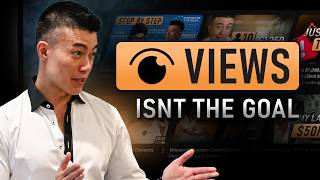
In this live training, Richmond Dinh debunks common myths about personal branding for new coaches, emphasizing that a brand is not about follower counts or viral posts but about the perception and endorsement of industry leaders and ideal clients. He explains why a strong personal brand drives downstream business benefits such as higher conversion rates, premium pricing, and easier sales. Dinh outlines three major branding mistakes—chasing followers, prioritising virality over competence, and building a recognizable but low‑quality reputation— and warns that these errors can label a coach as a scam, especially in an era where AI can deliver free coaching advice. He introduces the "Tiny Challenge" model as the fastest way for beginners to gain competence through intensive one‑on‑one sessions, and maps brand development onto a maturity curve (unknown → bland → category‑1). The talk stresses the urgency of building both competence and recognizability simultaneously because AI‑driven competitors will soon dominate niches lacking strong brands. Practical tactics are shared, including a DM script for podcast outreach, leveraging intimate live‑training time, and using multi‑platform content (YouTube, Instagram) to amplify reach. Real‑world case studies illustrate how coaches across diverse niches have generated six‑figure revenues using Tiny Challenges. The session concludes with calls to action: subscribe to Dinh’s channels, obtain his free‑plus‑shipping book, and apply the presented frameworks over the next 12 months.
Chapters
Most coaches think that building a personal brand means posting every day, going viral, and aiming for that elusive million followers benchmark. But doing just that could corner you into being perceived as a scam. So in this video here, I'll be sharing the right way to grow your personal brand as a newbie coach and the wrong way, which you need to avoid at all costs. Because personal branding isn't about followers, it's about what someone feels when they hear your name, and that's it. So in this video here, I'm going to be sharing with you an actual live training I did for my paying clients on how to grow a personal brand when nobody knows who you are and you're starting out from scratch. This is the very first time I'm doing the secrets to personal branding, particularly for a newbie coach. And, and so I'm excited for you guys because this is going to be the insurance for your coaching business. I'm going to share the reasons why. I'm going to share reasons what branding is, what personal branding is not, and more importantly, I'm going to give you a pathway to be able to build your personal brand over the next 12 months. So first of all, I'm guessing you're here because you realize to some degree that this is ultra important. How many of you are here because you realize personal branding is ultra important? Everybody write this down: your entire business, everything is downstream from your personal brand. Everything is downstream from your personal brand. Your whole business becomes easier if you have a personal brand. Selling becomes easier. The engagement and content will double, triple, 10x if you have a personal brand. The amount of DMs you have will 10x if you have a personal brand. You'll be able to close deals better and easier if you have a personal brand. Your conversion rates go up if you have a personal brand. Your prices go up if you have a personal brand. People make a pre-decision to buy your stuff before they even jump on a call with you or a tiny challenge you if you have a personal brand. Everything is downstream from your personal brand, and that's why it's worth focusing on. So in today's agenda, we're going to cover a couple of things. So first of all, welcome back. I'm glad you guys are back, which is really, really cool. How many of you are going to my 3-day business boot camp, which is kicking off in a couple of days' time? Just show of hands if you're already registered. Wow, look at the room! If you're not yet registered, go ahead, type in the chat screen, what is he talking about? Not registered, I don't know what this is about. If that's you, if you're not registered, let us know. Kind of want to gauge how much of the room is not yet coming to my 3-day event that I'm hosting in a couple of days' time where we go deeper into personal branding. All right, most of the room is— what is— okay, some people, one person. What is Marshall? What is bootcamp? You're in for a treat. So today's agenda is a couple of things. Number 1, what is a personal brand and what is it not? Why is it important and why is it a must right now? The 3 biggest mistakes with personal branding, and if you avoid these at all costs, you will blow up your brand. Most people are either not growing their personal brand or they're doing it wrong, which is making it worse. And they're wondering why they're getting crickets on their content. They're wondering why they're not getting clients. They're wondering why no one's listening to them, even though your advice may be really good and really solid. And it's like, wow, my best friend loves my advice, but how come no one online likes my advice? Is my best friend lying to me? No, they're not. It's just because we haven't built a brand around the way we position ourselves in the marketplace. Secrets to building a personal brand starting from zero without a following, and you want to do personal Q&A with me. I'm going to hang back and do some Q&A. So what makes me qualified to teach personal branding when I don't have a million followers? And that's the biggest misconception. So I'm going to go through a few things on what makes me qualified to share with you on why personal branding and what I'm about to share with you today. So obviously in the last 12 months I've been interviewed by some of the world's biggest podcasts. Last year I was interviewed on over 30 of the top podcasts around the world. Russell Brunson has also forwarded my book, Tiny Challenges. I'm guessing all of you here have my book. If you've got my book, hold it up to the screen. Forwarded by Russell Brunson. Who's got my book? Yes, very cool. You guys are awesome. All right, I'm also now officially business partners with Russell Brunson and Kaylee Chew in our Next Top Speaker project. I was speaking on some of the world's biggest stages, both live stages, also the largest marketing event in Brazil, which is late last year, and also virtual stages including Funnel Hacking Live. And most importantly, we've helped thousands of students— not hundreds, but thousands of students— launch and grow their coaching business all through tiny challenges. We sold thousands of copies of our books just this year alone. Every year we get 50 of these awards, and we're about to give out another 15 of these awards in a couple of days' time at my 3-day event. And they all started out in your chair— no name, no brand, no list. But what makes a personal brand if it's not followers and it's customers? I want to give you the first concept is here. When you have industry leaders edifying you and vouching for you, then you know you've got a personal brand. That is the first thing. So even if you got 1,000 followers but industry leaders saying, yep, they're the GOAT at that, or they're the boss at that, or they're the expert at that. Or even you've got 10,000 followers, it doesn't matter. If you've got a million followers, 10 million followers, but industry leaders are not shouting your name, then that's not a personal brand. And so this may— what I'm about to share with you feels uncomfortable for me to share with you because I'm not a braggy type. I come from a very humble family. I was a very, like, very strict upbringing being an Asian student, and I was never allowed to ask questions at home. I never allowed to report, like speak back to my parents. In school, I stayed quiet. I followed all the rules. I got high school dux. I had to study hard. Like, that's me as, as I was growing up. And so to even share this with you makes me feel a bit uncomfortable because I don't like to come across as braggy. I grew up in a poor family. I was broke when I was 32. I lost everything. And I'm a broke kid that now has come into a lot of financial abundance. And so if it sounds braggy, that's not my intention, but I need to share this to you because this is important. This part is really important. Okay, so please do not misunderstand what I'm about to share with you because this was me 9 years ago. And fast forward today, we got the biggest industry names edifying the work that I'm doing through Tiny Challenge, including Pedro Adair and Russell Brunson. I'm telling you right now, this framework is going to be the hottest new thing because this is the easiest, simplest framework to actually get started online. This is like one of those powerful, simple, easy ways to get started right out of the gate. I wish I would have thought of this 10 years or 20 years when I was first getting started. I think it's the easiest, like the least stress, least fear-inducing way to get started. This is so brilliant. I'm just upset that I didn't think about this first. And Ryan Pineda. Oh, but for real, right? But it depends on your goals, right? So it's like if my goal was I need to make money right now today, then yeah, I would do something like a tiny challenge. Christina Rowe, who owns the largest Facebook group for women entrepreneurs— most of you probably even in this group— who's watching, whether you're watching now live or a replay, grab this book because it's amazing. And you've got Russell Brunson's endorsement, the king of marketing, right? And if Russell's behind it, which I know personally he is because I see him in the inner circle raving about Richmond Dinh, uh, you know, He knows what you— you can't even dispute his marketing. I mean, like, you know, he knows what works, and he saw that in this formula. All right, and I don't know if you guys know who Taki Moore is. He was one of my first mentors, and he just did a sales letter recently and how he's helped some of the biggest names through the industry, including Alex Hormozi and Alex Charfen, have been through his programs. But here's a little video that one of my clients sent me. He's like, wow, Richmond Dinh, he put your name on the list. So this is from Taki. I don't know if you can see that there, but big names like Dan Martell, Todd Herman, Mark Kajak, Ryan Dice, and then my name was in the mix there. So he's seen me, that person. I'll show you one more so you can see. So that's from Taki Moore. And then also we've got some of the biggest names as testimonials. So this is Ricky Carruthers, one of the top real estate agents in America right now, 400,000 followers. Basically, if you're in the real estate space in America, you know who he is, and he's become one of the testimonials as well. What up, dude? So, um, I did the Tiny Challenge. Uh, I had 2 people that did it this week. I did 2 one-on-one challenges, um, and you know, just to see what was up. And both of them bought. So one of them bought my $25,000 Inner Circle, which I've never sold before. I created it, um, and one bought that. The other one bought the $100,000 coaching program. So I did two— my first two, I sold a $25,000 and $100,000 coaching program. So bro, and I'm excited. So anyway, I just want to say thanks, man. Yeah, yeah, really, I don't know. I'm like you. I wasn't even aware I could sell a $100,000 program, you know, until I really thought about it after talking to you guys. So thanks, man. And I wanted to let you know. So hope you're doing well. Let me know if there's something I could do for you. So that's from Ricky Cruith and this is from Russell Brunson which I've never shared in front end public. I've only shared it within our paid communities is when after I did the podcast with him, he was so blown away by the Tiny Challenge and this is the voice clip he sent me asking me to help him out with his Tiny Challenges because if you listen, because in his words, "I want to be your perfect case study." That's what he says in this clip here so listen to this from Russell Brunson. Hey man, hope you're doing amazing. First off, so great seeing you last week and dude, you got the wheels in my head spinning like crazy on this 101 Challenge. I think I'm gonna do one. And so I'm gonna try the $100,000 version of it and hopefully I get 1 or 2 people say yes and then we can use that as a case study as well but I'm curious if you could send over any of the frameworks, how you structure the days or day 1 and the pitch and all that kind of stuff. I'm gonna try to model it as close as possible so I can be your perfect case study. That'd be amazing. All right, thanks, man. So that's from Russell Brunson, and then he launched his tiny challenge. He did 2 of them, made $200,000 for it as a perfect case study. So that's from Russell Brunson, and this is from Marianne Golden. Really got— I said, well, let me see if I can like create an offer that's remotely similar to this. I did it one time, and that one time that I did it, it literally made me about $700,000. Wow. So that being said, the concept that I'm talking about for those of you who want to know, Richmond Dinh has created this concept called the Tiny Challenge but before he starts talking about the Tiny Challenge— All right, so that's from Moran Golden and so I share that not to brag but I share that because most people who are teaching personal branding right now are getting it wrong and because this is such an important topic, if you get it wrong, you'd rather not even work on it because getting it wrong means that you're making it worse for yourself. And so if you're not intentionally building your personal brand, then sometimes that's better than doing it the wrong way. Does that kind of make sense? Because then you're just negating all the hard work and you have to go backwards. And so I'm going to give you a framework that has allowed us to build up that brand in a very short amount of time. And I only focused on personal branding around about 18 months ago. I've been hyper-intentional. Okay, 18 months, like I said, I am going to go all in on personal branding, and I'm going to share what we did in the last 18 months that's worked for us. So big disclaimer, this is not get rich quick. Please use these frameworks to help you make money, help you get paid in your business. Do not pass it off as your own. Give me a thumbs up if you guys are okay with that. I want to make sure you guys are cool with that. The only caveat is just take action on everything I share with you today. That's the main thing. So what is personal branding and what is it not? You guys are in for a treat. Okay, so what is a personal brand and what is it not? First of all, it's not having a big following. I want to be very clear on that. Escape the trap of chasing followers. Chase customers. When you chase followers, you fall in the trap of comparison. You fall in the trap of producing things that get views rather than get clients and gets loyal fans. Views does not mean loyal fans. Having a message that's on point equals loyal raving fans. So what is it really then? It's about being highly regarded by industry leaders. I would rather have zero followers but industry leaders are saying, yep, Richmond Dinh Dinh's the guy for that, than have a million followers and no industry leaders saying they're the guy. So if you're help— if you're trying to learn from someone who's saying grow a personal brand but industry leaders are not edifying them, then that's a big red flag. Does this make sense? Show of hands. So this is what a personal brand is, first of all. What is it also not? It's not having viral posts with millions of views. It's having your ideal clients and customers as the people that engage. I would rather 200 of my ideal clients engage and say, that was so valuable, that was so awesome, tagging people and sharing it, than having a million views. And so if you go to my socials, you'll be like, Richmond Dinh doesn't get a million views on each of your posts. He doesn't even have over 10,000 Instagram followers. His YouTube channel is still tiny, but you should read the comments. The comments that people putting, particularly on my YouTube and my Facebook, it's like they are saving my post like crazy because they're all my ideal clients. And that's how we were able to generate $10 million cash collected last year with a very small following— 80,000 followers total in between our Facebook group, Instagram, YouTube. 80,000 followers, it's a very small following. I know, I know a lot of people have millions of followers who can't even make a million dollars, and we've made $10 million with 80,000 followers. That's 125 $125 a follower. And if you do the maths, if all you did was got an extra 15 followers a week at $125 a follower, you will be making $100,000 a year. Just trust my maths on that. So that means if all you did was get an extra 2 followers a day at $125 a follower, you will be making $100,000 a year. That's the maths on it. 2 to 3 followers a day. And so if you chase the customer, not the follower, you will make money in your business. So it's not producing viral posts, it's definitely not being the loudest coach, it's being the one that people quietly whisper to saying, "You got to check out this guy or this girl." It's not about having a niche or even niching down even though yes you do need to niche down but even having a micro niche or a tiny niche is not going to build your brand. What it means is you just need to have clients that will defend your views. So every person here, you probably have some views and philosophies that maybe are contrarian or maybe that might get some judgment, but you need to have views which your clients are willing to defend. For example, and that's why we launched the Underdog Academy because we wanted to help and support the underdog, but also one of my biggest viewpoints about culture and society right now, and I'm very passionate about, is how to help the coach, the beginner coach like you guys escape the blue world. When I say escape the blue world, what do I mean by that? We are raised, and this is how I was raised, and we're taught that if you study hard, you get good grades in school, you go to uni, get a great education— doctor, dentist, solicitor, lawyer, engineer, whatever the education is— finish uni at 22, graduate with a 5-year degree, PhD, master's, whatever the case may be, work in a very stable job, earn about $150,000 per year, maybe $200,000 as you climb, buy your first property before you're 30, pay off the mortgage down to your 45, and then when you can afford a second property at 50, draw some equity out, buy a second home, a unit, and put money into your 401k or your superannuation. And then by the time you're 65, the government says, "Thank you for forced saving with us. Here's your money back so you can live in retirement at $1 million," which is not even enough. And they say, "You cannot touch your money until you're 65 or even 67 now in Australia because we want to take your money to invest it." Oh no, we did such a bad job. Now your money's less. Or they say you can't touch it, but then during COVID they say all of you can take it out now. And I did everything right and I still ended up broke and depressed at the age of 31. How many of you have done everything right and you realize that doing everything right does not get you to where you want to go in life? Who's ever done that before? Because you're sold in the blue world. You're sold in this blue world. The blue world is not designed to help you win. It's designed to help you become a cog in the wheel of the government and economy. That's what it's designed to do because the longer you stay in the workforce, the more taxes you pay, the more you put in your 401 or your superannuation, the more you buy property and stay in the mortgage for a 30-year term, the more it keeps the economy going. They don't want you to be an entrepreneur. Is this all making sense? Right, and that's what I'm passionate about, but I know it's super controversial, but that's what I'm passionate about. And that's what I truly believe, that there's no way to better freedom than becoming a coach or an entrepreneur in the world we live in right now. And I can see how many of you guys agree. Hell yes, thank you for that. 100%. So that's what I mean by having a viewpoint that your clients will also defend. It's not having concise messaging, it's having a movement that you're chasing and moving that you're creating. So it's more than a message, it's a movement. And that's why we created the Underdog Movement. It's not having a rags-to-riches story, it's having how many origin stories have you personally created. It's definitely not having a number of clients that you have in your— like, I've got 1,000 clients, I've got 100 clients, I've got a million clients. It's do they pay a premium for you? A direct correlation to how strong your brand is is how much someone is willing to pay and what's the most expensive thing you've sold. And for us, we've sold over a dozen $100K offers and 2 $1 million offers. And you can only do that when you have a strong brand. Is this all making sense? Show of hands, right? And that's a direct correlation. The more someone is willing to pay for you is a reflection of your brand and nothing else, because they don't get— they arguably don't really get more for paying more. They get the brand. For example, reason why Hermès can sell a handbag for $20,000 is not because the handbag performs better than a bag from Kmart. It's because it's got the brand. The reason why Chanel can sell a bag for $10,000 is because the brand. The reason why LV can sell a bag for $5,000 compared to Kmart for $300 or $200 or $100 or $50 is because it's got the brand. And so the brand is a reflection of the pricing. And if someone's willing to pay a premium price, it means you've got a stronger brand. There's a direct correlation there. Is this all making sense? I want to make sure this is super clear. So this is what a brand is not. This is what a brand is. And finally, it's not about being famous and recognizable. This is the most important. It's the feeling someone gets when they hear your name. If you guys want to screenshot this, you can screenshot it, you can take a photo because there is no workbook. It's the first time I'm doing this event here, but we didn't create a workbook for it. So that's what you need to focus on, is the right-hand side, not the left-hand side. And that's how you build a brand. When people are— when people in this area are highly regarding you and talking about you, when your ideal clients are the ones that engaging, your people are quietly whispering about you, your clients defend your views, you have a movement that you're creating, you have created so many origin stories, people pay a premium for you, and you have a positive feeling when someone hears your name, then that's when you have a strong personal brand. Let me give you an example of a weak brand or a bad brand. If you have a bad brand, when someone hears your name, they feel yuck. They feel like, ugh, I can't stand that person. How many of you have a company or brand or someone you've dealt with, maybe it's a restaurant or something where you're like, nah, I'll never go back there again? Who's ever had that experience, like a terrible experience? It's like, nah, destroyed the brand. So when you hear about that, you're like, nah, I'll never buy that again, I'll never say that, I don't want to even hear about it. You kind of get triggered by it. That's a bad brand. Now the next step from a bad brand, which is not as which is not as bad but it's still not great, is when someone hears your name and they're like, "Who's that?" You're a stranger. You're a no-name. They have no feeling towards you. In fact, when they have no feeling towards you because they don't know who you are, the feeling is naturally skepticism because, "Mm, I don't— I've never heard of him. I'm a bit skeptical now." One up from that is when they've heard your name to some degree. They've heard it quietly in the background. They've kind of seen you around and then there's some sort of level of trust but it's very safe, it's very bland. But their most powerful brand is not only when they trust you but when they feel proud to trust you and that's a Category 1 brand. That's the level you want to get to when someone feels proud to trust you. Not that's trusting you but they feel proud to trust you. If you think about Apple, there are people out there, I don't know if you guys are here, is anyone here would die for Apple? Anyone? Haha, I knew it. You know, there are people here who are not just love Apple but they're proud. They're proud Apple fans. That's where you want to get to where your clients and your followers are proud to follow you. So why do you need to build your brand now more than ever? And this is going to— this part here I hope, I hope it wakes a lot of you up because for the sake of your future, for the sake of your coaching business, if this does not wake you up, then I don't know what will. And I'm truly concerned for your future if this part doesn't land in. In 1981, a moment of singularity hit. The world changed when the personal computer was released commercially to the world, where people could have this in their home. How many of you would agree that this changed the world, the trajectory of where the world is right now? 100%. In 1995, when the internet became available to the world, then that was a next moment of singularity where the divergence of the future of the world completely changed because of that. So how many of you agree? Show of hands if you agree. Everything changed. There are moments in history of singularity where that one event created a massive fork in the world and people got left behind, or people pivoted and adopted with the change, and it made the world better if you kept with the change. Then in 2022 This came out November. How many think AI was a moment of singularity? Show of hands. 100%. We are in the thick of it right now. So singularity isn't coming. It has already come. It has already come in the form of AI because this is the scary fact right now. If you don't have a brand, if you're a beginner, if you're a no-name coach, which we have to start out that way, of course. Like, you have to start from zero, you have to start somewhere. And you've got a $1,000 course, a $5,000 course, a $10,000 course, a $500 course. Let's just say you're a parenting coach. Here's the wake-up call that you all need to know that no coach will tell you because that it's not in their best interest to tell you. And this is why right in this call here, I have nothing to sell you. There is nothing for you to buy, and that's why I want to be very direct and firm with this advice right now. There is no reason for any coach out there to pay you $500 or $1,000 or $2,000 for your services when they can get the same advice for free, and it's quicker and it's better in ChatGPT. And that's the truth of it. I even tested it out by asking parenting advice on ChatGPT. Now, I'm all for coaching, believe me. Last year, spent over a million dollars on coaching. Over a million dollars. And I'm all for it. But now I even question can I get this advice for free on chat? If I wanted to, if my kids, if I was struggling with my kids and my parenting, I would get parenting coaching. I'm very open to it, but now there's another option out there where I may not need to, and I tested it out. Now, this is a fake problem that I don't have. I mean, I don't even have an 11-year-old. My daughter's 10, but I just was testing it out. I said, hey, my 11-year-old is starting to have some behavioral changes, and she's a girl, and she feels like maybe perhaps she's spending time with wrong friends I don't know really what to control her because I don't want to push her away. What would some empowering parenting advice be, or even empowering question that I could approach her with to move in the right direction that's going to be beneficial for her? So I asked ChatGPT this, asked ChatGPT this, rather than thinking about I should get a parenting coach. Okay. And this is a response. Very thoughtful. Seriously, most people just jump straight into control without realizing You're right, 11 years old is a big threshold. Hormones are shifting, identity is forming, peer influence starts becoming stronger than parenting influence. Wow, that's a great insight that I would have in the past paid for. Who would agree? Who would agree? Like, that's a very strong insight there. So here's the key: relationship over control. She feels safe with you emotionally. If she feels safe with you emotionally, she'll be more likely to course correct herself because she'll want to stay connected to you. Wow. Some empowering parenting advice for this stage: stay curious, not critical. Focus on asking, not telling. Affirm her identity. Coach her intuition. Help her listen to her gut feelings about situations and people. Girls often feel that warning sign. Here's empowering questions you could use with her. Hey Kennedy, when you're with your friends, Mention the friend's name. How do you feel about yourself afterwards? Wow. Hey Kennedy, when you're— what kind of people make you feel most like your real self? Hey Kennedy, if you were— Kennedy is my eldest daughter. Hey Kennedy, if you were giving advice to a young girl about choosing friends, what would you tell her? So for example, I might go to Kennedy. Hey Kennedy, if that person was with your younger sister Riri or Kata, would you like that person to be You're Riri Carter's friend. What advice would you give to Carter? Now she's coaching herself. So now I'm getting empowering questions that I could have paid thousands of dollars for from a coach. Bonus: sometimes it's easier to start these conversations side by side, not face to face, like in the car, on a walk, doing an activity. It's lower pressure. Bottom line, you're guiding her to stay connected to herself, not just obey you. If she feels seen and respected at home, she'll naturally start self-correcting when things around her don't feel right. How many of you are feeling the seriousness or getting the seriousness of what's actually happening right now? Show of hands. Right? And you're thinking, wow. Type in the chat screen, what niche are you in? And was this good, great advice? And this advice is only getting better. If I put in the same question, I dare say I'll get a better response now because it's learning at an exponential rate. Right, if you're in grief coaching, network coaching, career coaching, mindset coaching, yep, 100%, 100%. Now your ideal clients have another option that's free, fast, and better. Oh, but Richmond Dinh, I would think they want a coach because they want to connect to me, but are they willing to connect to you for $5,000? That's the option right now. Yeah, I do value connection, I do value community, I do value having someone listen to me in real time. But is it worth $5,000 to do that? No, I'd just rather just do this for free for now. Is it even worth $500? Maybe it's worth $100 here or there, but it's definitely not worth thousands of dollars. That's what's going through their mind right now. So it's very, very scary times. And here's what makes it even worse. I created a brand new course for a newbie coach that coaches single moms in under 12 minutes using Claude. I created a brand new coach, me, and I don't even coach single moms. That's not my avatar. My avatar is you guys, beginner coaches. But I thought, if I was a single mom and I wanted to buy a course that cost $2,000 online for single moms, but I knew how to create one on Claude, I can create one on Claude, and this creates a whole course for me, and I can just go through this course for free. Here's the course. It was crazy. Created in under 12 minutes on Claude. If I can do that, then it makes me think, why would I pay someone $2,000 to help me go through this course when Claude just created it for me for free in under 12 minutes and it can help me guide through every step of the way. Who's seeing the seriousness of the problem here, right? And it gets worse before it gets better. Don't worry, there's a silver lining. I ask myself this all the time: if I had started from scratch where you guys are right now today in May— May today— what would I do to grow my personal brand? That's the lens I'm going to go through with this training today. So there is a light at the end of the tunnel of what I do, but before that, I want to really double down on how serious this is. Because he's like, okay, that's cool. People want connection. Of course people do want connection. I was in Boise seeing Russell Brunson and he was running an event there and I bumped into some friends at the airport. One friend named Eric, another guy named Steve, and he said, do you want to catch an Uber together? And I'm like, yeah, great, let's catch an Uber together to go to see Russell Brunson. And in the Uber, Eric's like, check this out, Richmond Dinh, this is awesome. He pulls out his phone And he's like, hey, Tony Robbins, I'm with a group of friends right now. We're in an Uber. We're going to go to a mastermind. And can you just give me some guidance on how I can get the most value out of the next couple of days? It's something I don't normally do, but we're looking for your coaching and advice. And in under a second, Tony Robbins' voice comes on. Eric, good to hear you again, you know, in his raspy voice. Uh, great work that you're spending time with the right people. Proximity is power. The most important principle of success is who you spend time with, it's who you become, period. Great. And this is a great question too. The most important thing when you're spending time with people is make sure you leverage each other's strengths. The worst thing you can do is spend time with people just like you because you have the same skill sets, but make sure you find out what are their complementary skills to you and leverage those strengths because there's compounding power in proximity. Let me know how you go. Figure out these two things first. And here's a couple of questions I'd be asking on your peer group right now. What's working best for you? Hey, how's business going? How's the life going? All that kind of stuff. And when I heard that Tony Robbins speaking back to Eric, and it felt like it was a real conversation, and it's like, dude, that's Tony Robbins AI that is paying like subscription for whatever it is, right? And I'm like, wow, if I'm a life coach, why would I pay a no-name life coach when I can pay Tony Robbins AI? That's not even Claude or ChatGPT. Who's following this right now? If you're helping beginner coaches get clients, why would they do that when they can get Richmond Dinh AI? If you're helping funnels, why would they get you if they can get Russell Brunson AI, right? That's the seriousness of the situation that we're in right now. The silver lining is not every influencer has an AI in their niche yet, so there are some niches that still don't have their version of AI, like parenting coaching, like maybe AI for single moms. And there's still a gap for personal brand to fit that space. And in each category, there's, there's going to be the top 5. Like, it's probably going to be top 5 AIs for life coaching, top 5 AIs for parenting coaching, top 5 AIs for tech coaching, top 5 AIs for IT coaching, top 5— like, they're going to be top 5. There's space there. That's the silver lining. But there's only space there for those who have a personal brand. The only reason why they'll pay for you over anyone else or AI for free is if you have a brand, because they want to feel proud to trust you. That's the key. If they feel proud to pay $2,000, $3,000, $4,000, $5,000 to buy your stuff rather than being ridiculed for their— from their friends saying, you paid $5,000 for a parenting coach? You're an idiot. You could have got that for free from AI. No one's going to pay for your stuff if there's no pride associated with that purchase. Whereas if someone said, you bought a Chanel bag? Oh my gosh, you bought a Chanel bag. Oh, I'm so jealous. People get jealous when you can buy something like that. Of course, some people are like, well, look at you, look at you. But the point is, they're getting jealous. Because you bought a Chanel bag. No one will say to you, why you're— some people will, but most people won't be saying you're an idiot for buying Chanel bag. They'll be like, man, I'm so jealous, because you're proud of the purchase and the brand carries the pride. Who's following this right now? And so the only reason why someone would buy you if you build a brand that not people trust, but build a brand that people are proud to trust. So the big question The big secret, how do you build a brand that people are proud to trust? How do you build a brand that people are proud to trust? This is how you do it. So a personal brand, when you know you've made it, is a brand that people are proud to trust. There are two things that you want to think about when creating your brand. The first thing is how competent are you? Are you really good at what you do, or are you not good at what you do? Meaning that, are you bad at what you do, or you actually just starting out, you don't know how to do it? Because competency gives you your reputation. If someone buys a product and it doesn't work, then that's not going to be good for your reputation. If someone buys a product and it works, it's good for your reputation. So competency matters in personal branding because it builds reputation. And when you're starting out, you're actually not competent. Some people are worse than not competent— they're actually really, really bad at what they do. They are so bad at what to do. But that's the first component. The second component is how recognizable are you? So are you really recognizable or are you not recognizable? Meaning when people hear your name, they're like, "Oh yeah, I've heard of that name." Or when people hear your name, "Who's that name?" So the worst kind of brand is when a lot of people know who you are but you're really bad at what you do, and so they buy your stuff only to realize you are bad at what you do, and then you get labeled a scam because you are. That's the brand you don't want to have. I'd rather no one know about you because then no one can buy your stuff because you're that bad. But if you find a way to go viral— this is what I mean— if you chase followers, if you chase virality, and you chase being recognizable but you haven't built up the competency which you can't if you're chasing this, then you'll be labeled a scam because people will try to buy your stuff only to realize that you're crap and they'll slag you online. Now I'm really proud to say that in the 9 years I've been doing this, and you can look this up online, I've only had 4 bad reviews on those sites like, you know, Reddit and all that kind of stuff. 4 in 9 years, 4 bad reviews, which I think is pretty good. I don't know, is that good or bad? Who would agree? Like that, to me, that's pretty phenomenal. And the last bad review was done like 3 years ago, and the one before that was 6 years ago. People want to review. And then I probably had like 1 or 2 social media posts of someone like slagging me out, and I'm like, wow, okay, it didn't feel good. But when I look at it, wow, 9 years, thousands of students, and that's the amount of bad reviews we have. So if you're recognizable and you chase virality but you're not good at what you do and people buy your stuff and going to your program, going to courses, you're going to lose your name fast because you'll be labeled a scam because you are. Is this all making sense? Okay, so that's— we don't want that. The next level, which is better than that, is okay, no one knows who you are and you're not that good yet because you're just starting out, and this brand is what we call unknown. So this is an unknown brand, no one knows who you are. It's like, who's that? But the feeling someone gets here is they're skeptical, because when you don't know who that person is, naturally you're going to be a little bit skeptical. And that's okay. I'd rather people not know you if you're not good than people know you if you're not good. Does that make sense? Because going from scam and reversing that brand is very hard. Like, once you get labeled this and you've burnt people, it's very hard to come back to Very, very hard to come back to. I'd rather you be unknown and still be figuring out your frameworks and being good at what you do and no one knows who you are. That's a better place to be in because you can build from that. But that's not where you want to stay because if you stay here, then AI is just going to replace you because no one wants to pay $1,000 for this person here because they can just get it for free on AI. And also AI is more competent. Making sense? Cool. So the next level is, okay, you're really good what you do, you build your competency, you get great, you do all the dirty reps, you do all those coaching calls, you run those tiny challenges, but you're still unrecognizable. And this is what we call a bland brand, where it's like, you know what, it's kind of— if there's some awareness there but not that much, it's very bland. People do have some degree of trust here, they do feel safe because you're good at what you do. There's some word going on the street about, okay, this person's awesome, but not many people still— most people like, ah, I kind of heard of them but not really. But it's much better here because you're good at what you do. And so you've maybe got 10 testimonials, you've got 15 testimonials, you've got 20 testimonials, and they love you and you do great results for your clients, but no one knows who you are. You are the world's best-kept secret. But when we move into being good at what we do and being recognizable, we then become the category one brand. That's when everybody knows who you are and you're really good at what you do, and the reputation builds because more people know who you are, the more people realize how good you are, the more people have realized how good you are, the more they tell other people, and you become this ultimate flywheel of results. And then you blow up, and people say, oh my gosh, that person blew up overnight. Who said that before? Like, you just blew up overnight. Oh my gosh, you were no one and now you are blowing up. It's because they hit this here by going from here to here, here, the right way, and not starting here. And so the pathway to freedom, to building your personal brand, is to start here and then move up there in that order. So question, go ahead, type in the chat screen, where are you on this curve right now? Let's get a measure, let's get an, like, a score, you know. Are you here, which I'm guessing most of you are, which is okay, we all have to start there. Or are you here where you're like, I've been coaching for a while now, I've got a lot of corporate background, I've been coaching for the last 20 years in my current job, I'm just transitioning because I want to work for myself now, and you've done a lot of hours, maybe you've done 50 Tiny Challenges, like you're pretty good at what you do, you've done a couple of hundreds, like you know this, you're trained in this, like you, you've done all the training, you're good at it, but no one knows who you are? Or are you maybe like breaking through here? So go ahead, type in the chat screen, let's get a gauge of the room here. Where are you guys? Are you kind of unknown? Are you kind of a bland brand? Or you're Category 1? I know, and I appreciate honesty too. Unknown, bland, unknown, great. Very cool, very cool, very cool. Cool. So then, here's the key. Here's the question. How do you go from here to here? That's the question. So, you need to do it together. You need to build this while getting recognizable at the same time because you don't have the luxury of time to spend the next 12 months just getting good because the race will be over then. You need to get good while being recognized at the same time. So how do you do this? So after investing over $1 million last year, this is the biggest thing that I've learned and it's this principle here. And I know many of you have been to my trainings, have heard me say this before, but I want to say it again. People always give you their time before they give you their money. Always. People always give you their time before they give you money. But there's 3 measurements of time. Not all time is created equal. There is intimate time— oh, sorry, intermittent time. So that's very sporadic. So they may be watching a story here, a reel here, a piece of content here, a PDF here, and over a course of a month they maybe watch an hour of your stuff, but it's just been drip-dropped everywhere. It's been very intermittent, it's sporadic, it's here or there. So they could spend an hour here and they get to know, like, and trust to some degree, but the next level of time is when it's intentional, where they actually watch a 30-minute clip of yours, whether you were interviewed on a podcast or you had a YouTube thing or a 30-minute training, or maybe they sat in an event like this where it's like Wow, I experienced— and they watch a replay— like, I experienced about 30 to 60 minutes of him intentionally sitting down. And so 60 minutes here is way more valuable than 60 minutes there. In fact, 60 minutes here is like spending 5 hours here. They could watch 5 hours of intermittent time. They see your stuff here, your stuff there, a minute here, a minute there, 20 seconds there, 5 seconds there, 15 seconds there. They read a post here, adds up to 5 hours. Or they could just spend 1 hour here of sitting down and watching a podcast or YouTube or sitting in an event or training like this. But the highest value of time is when it's intimate. And intimate time is a live training like this. So right now, this is very intimate time even though it's group but I can see Sue, I can see Art, I can see Holly, I can see Andy, I can see Emery, I can see Daphne, I can see Jose, I can see Deb, I can see David, I can see Wendy, I can see Sarah, I can see Tori. I see all of you here and it's very intimate time like this is an actual live training. We have 100, 213 people on this call right now. It's very intimate. An hour spending a live training like this is like 5 hours of them, of you watching me on YouTube. It's like 50 to 25 to 50 hours down here. You can see the power of intimate time. What is the best way to get intimate time? Because your goal needs to be, how do I have them consume more of this time with me to build my brand. Tiny Challenge, because it's one-on-one time. 5 calls one-on-one will be like them watching 20 hours to 50 hours of YouTube of you, which is like watching a couple hundred hours of down here. This whole concept about posting 5 times a day on 5 different platforms, if you did one Tiny Challenge, you'd equate to doing down here 5 times a day on 5 different platforms. Who's following this right now? And for that reason, then you don't have to overwhelm yourself with content, but you start to build a movement. You start to build loyal fans who defend your views, and you start to build your brand because then you get good fast. The fastest way to become competent is just to put in the hours. But what's the fastest way to put in the hours to become good at what you're doing? It's clearly through a tiny challenge. That's why if you've done 10, 15, 20, 30 tiny challenges, you would have done your version of 200, 300 hours of personal one-on-one coaching. And you can do that many tiny challenges like Tracy Clark. She got to $0 to $130,000 in about 6.5, 7 months. In the first month, she did 22 tiny challenges. 22. That's 110 one-on-one calls. And so she went from not knowing what to do to 110 one-on-one calls in a month. And then a couple of months later, she had done about 60 to 70 tiny challenges. And so about 6 months later, she got good fast, and she made $130K from it. And so the fastest way to get competent at what you do as a journey to building a brand is clearly— and this is not biased— it is 100% doing a tiny challenge. This is why tiny challenges gets you paid fast without the friction, without you learning how to speak, without you being on camera, without the tech and all that. But also it builds your brand without you even knowing it because you built the first component, which is getting good fast. Is this valuable so far? Is this useful? Cool. So after you get good fast, how do you get recognized? How do you get recognized? I'm going to give you guys the DM script that I use to get on most of the podcasts that I got on. You guys want that? Who wants that? Who wants that? And I'm going to DM it to you as if I actually DM to the person. So you can pull out your phones and DM me podcast script. You can DM me on Facebook or Instagram and just DM me, "Podcast script, Richmond Dinh Dinh, please." I'm going to send it to you. I'm going to send the actual script. And I'll say, once you hear the script, you'll be like, "Oh." There's going to be some credibility pieces in there, and the credibility pieces are this, what you're competent in. Cool? So if you pull out your phone, DM me, "Podcast script," I'll send you that script. Let's pause for a second. What's been most useful? What's been most valuable so far? Has this given you an eye-opener on the right way to build your brand? First and foremost, like, that's the focal point. You want to be recognized and you want to be competent. If you're not competent and you're recognized, you'll be a scam. There's no going back from being a scam. So then when you're not competent, you're not recognizable, you're unknown but then from here to here, you become a bland brand, but from here you can move your way up by getting recognizable because you're good at what you do. And when you can do those things at the same time, in 12 months' time you will have a brand where everyone says, oh my gosh, you blew up, when in actual fact you didn't because you did all the hard work in the background to get you there. There is no such thing as an overnight success, and an overnight success always takes years in the making. Who agrees with that? Who would agree with that? An overnight success takes years in the making. So what's been most useful so far? Great that you've gone against the scamming approach. Yes, yes, yes, yes. At like, if I, if I was doing this training 3 years ago, I would say, yeah, just spend the first 12 months getting good. But now we don't have a choice because AI singularity has happened. You have to get good and recognized at the same time. Now it was like, yeah, get good and then get recognized. No, no, no, get good and recognized. Get good and recognized. Get good and recognized. Get good and recognized because there's no time. In 12 months' time, if you don't have a brand, every, every main coach that has a brand will have their own AI and you will get out-hired by them. Is this all making sense? Like, that's the reality of it. You will get out-hired by them unless you have a brand that people are proud to buy. Otherwise, they'll get shame associated with buying you and say, you just got ripped off, who's that name? Who's that no-name you just bought for $5,000? You could have got it for free from Claude. And they're going to feel shame. Whereas it's like, oh, you just invested in Richmond Dinh or Dan Martell or Taki Moore or Ryan Dice or Tony Robbins. Oh my gosh, I'm so jealous. Now I know why you bought the Chanel handbag because I'm jealous because that's a strong brand. That's the association you want to have your customers have when they buy your stuff and you don't want any shame associated with it. I guess I would have got one-on-one focus. How long is the TC? Hey, maybe you haven't been to one of my Tiny Challenge masterclasses, but I'm going to share with you on how you can learn about— yeah, get my book. Craig says get my book. Thank you, Craig. Craig doesn't get any commissions. My book is free, just got to cover the shipping anyway. It's free, just cover the shipping. Cool. So on that note of Tiny Challenges, if you're— okay, so the person that asked about Tiny Challenges, Tiny Challenges, In case all of you— who knows what a Tiny Challenge is? Show of hands. I'm pretty sure all of you know what it is. Cool, cool. It works for any niche in any category, just in case you don't know. So I'm gonna go around the room. Darlene has made 6 figures. How much exactly was it, Darlene? $125,000. $125,000 from Tiny Challenge. She was trying Discovery Calls before that, and now she's officially a 6 Here you go, coach. Give it up for Darlene. Crazy. How much did you make from Tiny Challenges? $112,000. $112,000 from Tiny Challenges, starting from zero. And how has that changed your business and your life? Well, it changed everything in my life because I went from earning zero, zero, zero to being able to earn $22,000 in one month and then scale to $100,000 in 5 months. Wow. Wow, wow, wow. Denise, how much have you made? $156,000. $156,000. From Tiny Challenges, and she coaches tennis players, and she doesn't even know how to use a phone. Yeah. All right, who here has made $10,000, $20,000, like a smaller amount? Oh, we got hands. Okay, Mary. Mary, let's get you standing up at the back there. Mary, how much have you made through Tiny Challenges? $17,000 last month. $17,000 last month? Wow! Who do you serve? I help women with fatigue to experience vitality through their gut health. Women, fatigue, vitality, gut health. Amazing! Give it up for Mary. Monica Hill, all the way from America. Yes, good to see you. You hug? All right, how much? About $14,000. $14,000 through Tiny Challenge. This is like the easiest way to get started Anyone else? Let's do one more. Ellie, let's go! I made more than 10K just last month. More than 10K just last month? And you've tried other methods, other programs, all that kind of stuff as well? Very good. How much is your program? 5K. And she helps— you say it. Yeah, I help business leaders to speak basic Chinese in 29 days and help them to hold confident conversations in 90 days. So cool! This is so cool, guys. Get on with these guys. All right, so that's some case studies on tiny challenges. What niches are they in? Then every niche possible. Like, Richmond Dinh Dinh, that won't work for me. How do I get good fast? Tiny challenge work with me? There has not been a niche I have not seen it working. And every niche I mean, I put in my own AI and say, how would you build a tiny channel with this? Because my AI is more consistent than I am because my AI doesn't get tired. It doesn't have to present for a whole day. It just— if it just got out of an argument with your wife, it's still in a good state. It doesn't— you know what I mean? Doesn't deal with crap during the day. And so Qigong coaching, women, autoimmune disease conditions, introverted professionals, learn Chinese, queer agents, accountants and bookkeepers, business owners with back pain, life coach, Gen Z men, brain fog coach, HR managers, dentists and hygienists. And if you don't know too much about tiny challenges and you want to go deep in tiny challenges, You can subscribe to my YouTube channel. I have deep dives on tiny channels in there. I also have other trainings on my YouTube channel as well. What I'm going to insert in my YouTube channel now is things that I'm teaching today, like how to grow a personal brand for a newbie coach. That's going to be content that I'll be dropping in my YouTube channel consistently, is how to grow a personal brand for a newbie coach. So if you have not yet subscribed, subscribe to that. And if you haven't been following me on IG, you can subscribe to my IG as well, or follow my IG. The difference between YouTube and IG— YouTube has about 30 45-minute long-form videos. And if that's too long for you to watch, I basically do the same content on Instagram, but they're like 60-second videos. So that's just more consumable. If you want a bite-sized piece, then you can go to Instagram. So make sure you follow my IG as well. Okay, I trust that was super valuable for you. If you'd like to learn how to get good fast, to build your competency when you're starting out with no experience, I have a video on my channel called What Is a Tiny Challenge. Now, if you already know what a tiny challenge is but you're still uncertain on how to actually run a successful one and you don't have my book yet, you can buy my book. It's free plus shipping. I'll drop the link below. The book also comes with my audiobook included as well. So if you don't yet have it, I'll drop the link in the comments below. That being said, keep believing, never settle. I'll see you on the next video.
More from Richmond



How To Get Your First Coaching Client Without Posting Content (Day 5/5 of The First Kiss Challenge)

How To Get Your First Paying Client Without Posting Content (Day 4/5 of The First Kiss Challenge)



How To Get Your First Coaching Client Without Posting Content (Day 3/5 of The First Kiss Challenge)


