What To Say When a Client Says "I Can't Afford It" (They'll Stay With You For Life!)
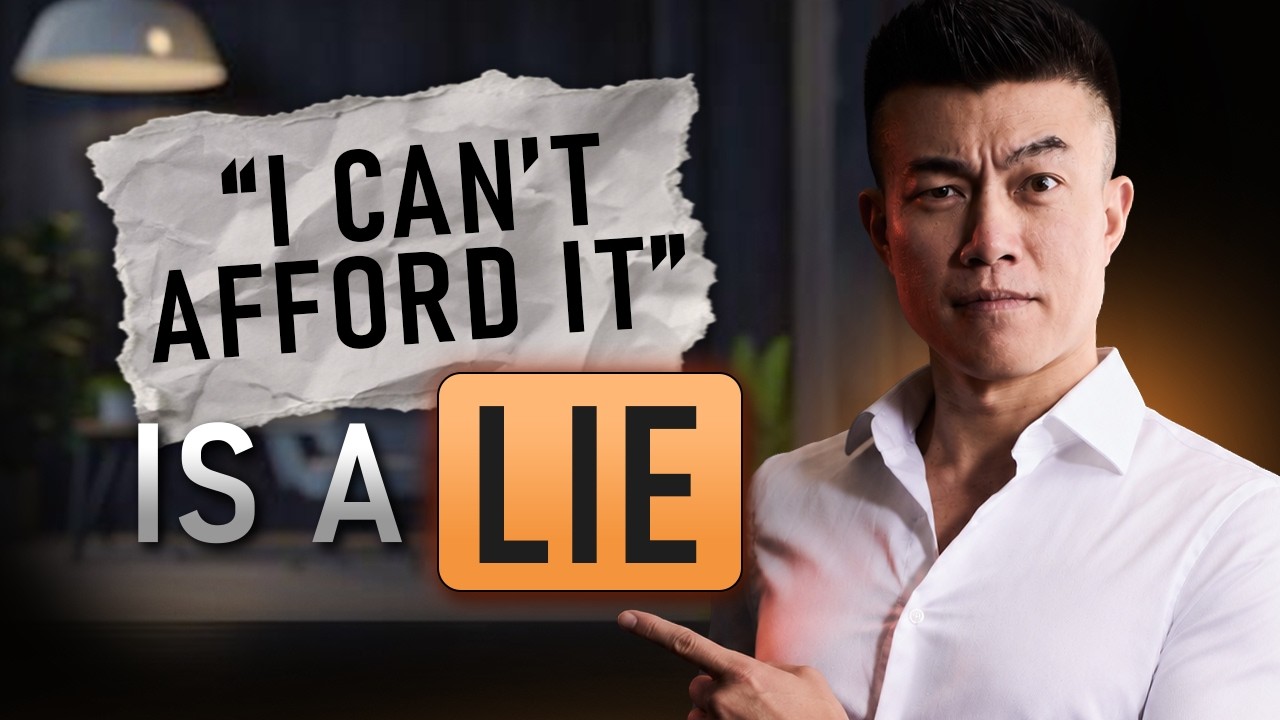
Richmond Dinh argues that "I can't afford it" is never about money. The real fears are borrowing and what failure means for your reputation, plus personal rules about savings. Ask "If you borrowed the money and it didn't work, what would you be most afraid of?" to find the actual objection.
Chapters
There is no such thing as a money objection, and in this video here, I'm going to prove it to you. And no, this is not one of those sales training videos where they teach you on how to reframe and manipulate the words that your prospect is saying. So for example, when they say, "Oh, I can't afford it, I don't have the money," well, that should be the reason why you jump into the program, because you don't have the money. Don't do that. They've heard it 100 times before. That is so lame. Or when they say, "I don't want to get into more debt," and you say, "Oh well, there's good debt," and there's bad debt. Is this a good debt or a bad debt? Because you should invest in good debt because that is the thing that makes you money. Don't say that. Or what if they say, oh my gosh, I'm so broke right now, I don't have the money. And you ask them, hey, what if your daughter or son got held ransom and you had to come up with $1 million tomorrow? What would you do? Don't do that. Not only is it cringeworthy, but it misses the entire point of what we're talking about. Now, the I don't have the money objection is going to be the most common and the most frustrating objection that you'll ever get. And this is hard, especially if you're reliant on them saying yes, because by them saying yes, it's gonna allow you to pay your bills. And you may be stretched thin right now, and you may have got no after no after no after no after no, and you're just at the point where if you get one more no, you're probably gonna want to give up. And so I totally get it, because in business, you're reliant on them saying yes for you to profit. You're reliant on them saying yes for for you to make money. You're reliant on them saying yes for you to pay your bills, and that's why you got in business in the first place. But for some reason, this is an objection that you're struggling with. Now, I'm not pretending to be a sales guru, and believe me, I don't want to get into that field. I've just been very intentional of understanding what is actually going on when someone says to you, "I don't have the money," "I can't afford it," "I don't want to get in more debt," or a version of that. And today I'm gonna break it down for you in real actionable steps, but more importantly, by the end of this video, you will understand the real objection, and most importantly, you'll know how to navigate this objection so that if you— if they still say no, they're gonna love you and the trust will be so high that when they do come up with the money later on, they're gonna think of you. That's ultra important to preserve the relationship, or you're gonna be able to handle the real objection which is the game. And that's when you can truly transform them and provide a breakthrough that no one else has ever been able to do, and you'll create an instant loyal raving fan. So anytime someone says to you a version of, "I don't have the money," or, "I'm broke," or, "There's not a single cent in my bank account," what they're really saying is two things. The real objection underneath this is, number one, they're really saying that You know what? They may not have the money, but if I borrow it, whether it is from the bank or get into more debt or ask a friend or ask their father or ask their mom or sister or brother or just find a way to find the extra $1,000 or $2,000 or whatever the price of your program is, if they borrow it and it doesn't work, then they're equating a meaning that they don't want to deal with. For example, because right now, let's be real, it is relatively— and I'll say this cautiously— it is relatively easy to find money, especially if you're selling a $1,000 or $2,000 course. Like, that's pretty easy. Now, I get if you're selling a $100,000 program, that's a bit harder to get, but getting money for a $1,000 or $2,000, $3,000, $4,000, $5,000, even up to $10,000 course, it's pretty easy these days, whether it's from an institution or from a friend. Even if you borrow from them before, it doesn't really matter. Now, I'm not encouraging you to borrow money. This is not what I'm saying. The point is they're just afraid that if they borrow it and it doesn't work, then what does it mean about them? Oh my gosh, you borrowed money again and didn't work. You're a complete failure. You're a nobody. You're not good enough. Or if they borrowed money from their father or their mother and it didn't work, then they're going to get scolded and told off. I told you to stay out of this coaching business. I told you not to do this. Like they're just, they're just so concerned that if I borrow it and it doesn't work, then what does it mean? And I don't want to deal with that. So we need to deal with the underlying cause, which is the meaning they are associating to what if it doesn't work. If I borrow the money and it doesn't work, then now I'm a complete failure and I have to give up. Because let me share this with you, most of you watching this right now either know of someone or it may be you that have borrowed money for a house and you have a 20-year mortgage or maybe your parents have a 20-year mortgage and the reason why people borrow for a house because they don't have the money. Otherwise, I'll pay for it upfront. But the reason why they borrow and they're not afraid that it won't work is because most of the time traditionally speaking property values go up. And so they feel confident in their decision that if I borrow it, of course it's going to work. So I don't have to deal with the risk of it not working because I know that generally speaking, if I hold the property for long enough, then it's going to work. So I don't have to deal with the meaning of it not working. I know that if I borrow it and hold it for long enough, then it means I'm going to make money. But if they were feeling very uncertain about the property market and they want to borrow money for a property and it didn't work, they wouldn't borrow it because they are afraid that if it didn't work, then what does it mean about them? It means they may go bankrupt, and if they go bankrupt, then it means they're gonna lose everything. If they lose everything, it means their wife will leave them. So how many of you can see that it's not the money objection? They're just afraid if they borrow for the first time or the second time or the tenth time and it does not work this time, then what does it mean? And so we need to dig down to this story here, and that's how we help them build a transformation because the majority of the time this story is not true. So here's the question: how do we get down to this part here? You simply ask this question, and you may want to write this down because this is the power question. So you get to the end of the conversation and say, Richmond Dinh, I want this program so much, but I can't afford it right now. I don't have the money. Say, "Totally understand, tell me more." Ask that question there. That is such a powerful question. Tell me more. Tell me more. "Well, I've maxed out on 5 credit cards. I've already asked my dad. Trust me, I've tried to become resourceful." Got it, okay, I totally understand. Question, just curious, if you were to find a way to borrow the money and it didn't work, what would you be most afraid of happening? If you did borrow the money and it didn't work, what would you be most afraid of happening? That's the question. And they're going to tell you, "Whoa, well, if I did borrow the money and didn't work, I'd be afraid that I'd be kicked out of my home and I couldn't pay my next month's mortgage and I'll be living on the street. That's what I'm afraid of happening. It'll mean that my family suffers. I'm afraid if I ask for money one more time, from my husband and this time it didn't work and I didn't make it work, my husband's gonna leave me. It'll mean I'm gonna be a washed-up single mom and I don't want to have that happen. It means if I borrow the money one more time and ask my friend or get into debt, then I'm gonna freak out because I just don't want to be indebted to my friend anymore because I feel like I owe her or him so much and then it's going to ruin the friendship and make it awkward between us because we've been friends for 20 years and I don't want to put that wedge between us and I just cannot do that to myself because I love my friend so much and I'm afraid and I'm really afraid if I do that then my friend will leave me and I'll be all alone. Heavy. When they tell you that, what do you ask them? Wow, thank you for sharing. Tell me more. Tell me more. Tell me more about your husband leaving you. Richmond Dinh Dinh, we fight all the time. I wish I found you sooner. We fight all the time and I think he's lost faith in me. And to be fair, I think I've lost faith in myself, and I don't know what to do anymore. We got down to the truth. That's when you can transform them, and that's when you can take the conversation in so many different ways about providing extra support, holding their hand, whatever the case may be. But now can you see that when they say, "I don't have the money, I cannot afford it right now," and if you try to reframe them, "Well, that should be the reason why you jump in," or, "There's good debt and bad debt," like when you use one of those BS stupid reframes, you never get down to the truth of the meaning they are considering if it didn't work. And most of the time, it may not be true that their husband is not going to leave them. It may not be true that they're going to be on the street next week. Did you know it's actually very hard to bankrupt someone? The government makes it very hard for institutions to bankrupt you because the government doesn't want people being bankrupt. And so it is a long process to even get someone bankrupt. How do I know? Because I almost went bankrupt, and it's very hard for someone to try to bankrupt you. So most people think they're going to live on the street next week if they don't pay this month's mortgage. It's actually not going to happen. It's not that easy. So that being said, I mean, I'm— again, I'm not saying you should borrow money. I'm not saying that. I'm saying that we've got to dig down to the truth. And most of the time, if someone thinks their husband's going to leave them, that's probably actually not true either. The husband is just scared that their wife or their spouse or whatever the case may be is being manipulated into a decision that doesn't serve them. Or the husband's just scared that if the person succeeds, then what does it mean about them? Or the husband's just scared that the person is just doing the wrong decisions all the time and making irrational decisions and putting the business and putting the family at risk. Like the husband is scared about something and we can find out what their husband or, or wife or whatever it is, is really scared about. That's when you get down to the true objection and that's when you transform them. Imagine on a call you talked about that level of depth about their deepest fears of what had happened if it didn't work. You want to have them for life. And even if you end that call and you weren't able to resolve the deeper part, they're going to walk out saying, wow, that person really cared about me. This is how you handle that first one. There's a second reason why people may give you the money objection, and here's the second one that most people miss. It's the one I missed for many years until I had this aha moment and breakthrough, because at the time of this video, we have over 250 coaches in my $30,000 mastermind. And in my $30,000 mastermind, Point 1, it's a $5,000 deposit to get in. And at the end of the application form, we ask the question, should you be accepted into Point 1, do you have the minimum deposit of $5,000 ready? And there's a tick box saying Yes, I do, or no, but I'm willing to figure it out. Now, 250 current members inside my Point One Inner Circle. You know how many of them tick the box, I don't have the 5,000? Over 200. Over 200. It's a $30K mastermind with a $5K buy-in. They tick the box saying they don't have the money. And that's when I realized there has to be another reason when they say that, because people have a rule, a rule that says this. It says, I actually do have the money, I actually do have about $5,000 savings or $10,000 or $20,000 or $50,000 or $100,000, but my rule is I'll never go underneath that amount because if I do go underneath that amount, it's my oh crap number. Then what does it mean? They are making a meaning out of that if they go underneath that number, and so they will tell you if that number is close to where they are right now, and if they invest in your program, it means they go underneath that rule or that number. They're afraid that they're not going to have enough in case an emergency happens, or they're afraid that someone is going to judge them, or they're afraid that they're going to feel guilty for a particular reason. I'll give you an example. I'll give you an example. So some people may have $10,000 savings. They said, "If I go underneath that number, I'm gonna panic because what if I lose my job? I need 3 months of income just to survive." Or, "What if things, prices go up? I need some buffer because I'm just in case." Or, "What if we go to World War III? I need this extra cash here just in case something happens." And it's like their safety net. And so when they reach their safety net, they will tell you, "I don't have the money." And sometimes they'll even believe it themselves that they forgot they had that $10,000 stashed up in a savings account or a different account that they had never seen for a while, and they forgot they had it there, but to them it means zero. And they really believe it means zero because they will never go down that number. I'll give you another example. When my mum passed away, she wasn't wealthy. She left me and my 4 brothers a very small inheritance. She had this home, a little bit equity in it, and I ended up with about $60,000 between 4 of my brothers, about $60,000 each. So not that much. I didn't touch that money for 2 years. That was when I started my coaching business, and it would have been really beneficial if I touched it to invest in my business to grow. In the hardest times when you're starting your business is when you're starting out. I didn't touch it because I felt so guilty that if I use my mom's money and she didn't approve, that'll mean I'm a bad person. It'll mean I'm a bad son. It'll mean I'm reckless and irresponsible. So that money I never touch. And any time I wanted to buy something or invest in something and I was close to that number, that $60,000 that she gave me, I would say, I don't have money. I don't have it. Do you have any money, Richmond Dinh Dinh? No, I don't. I don't. Because I had a rule that I could not touch my mom's money until I had a breakthrough. And the breakthrough moment was that my mom would want me to spend that money on myself at some point in my life. Imagine I went through my whole life and I still had my mom's money and I never touched it. I think she'd be pretty pissed, you know what I'm saying? And then, and it's not like I was spending on anything reckless. I, I don't, I don't have an addiction problem. I don't have a gambling problem. I don't, like, I don't spend excessively on anything that I deem irresponsible. I'm not a luxury guy kind of person. As you know, all my videos, I'm very basic. I don't— I'm not into expensive cars or anything like that, you know, like, I'm not that kind of guy. And so the money I want to spend on is personal development and business and reinvesting myself and my family. And those things are good, but I felt so guilty because I wasn't approved. And how could I ever get approved with my mom when she wasn't here anymore? So I created a rule that I can't touch it. So people have rules and they may literally have the money in the bank account, they just forgot about it, or they have a rule that says I can't touch it because if I go underneath that amount then it means I'm a bad person, or it means I'm, I'm going to freak out and I can't survive, it means something happens. I'll give you another example. Widows, like for example, we have many widow coaches in our community and when their husband passes away and leaves the widow with $50,000, $100,000, or the house, or whatever it is. Some widows maybe sell the house because there's some memories in there that they want to move on, and they end up with $100,000, for example. They would never touch it because they are afraid that they are dishonoring their late husband if they touched it, especially on things which they think are irresponsible, because they have a rule that says, if I touch my husband's money on this thing, that means I'm a bad wife. And I don't want to walk around feeling like a bad wife. So now can you see that there's no such thing as a money objection? They're just afraid if they borrow it, what does it mean about them? Tell me more. Or they do have the money, but they created a rule in their mind that I'll never go below that amount or never touch that because it means I'm I'm dishonoring my husband. It means I'm being a bad son. It means I'm being reckless. It means that if world collapse, that I might never handle it because I won't have enough of a treasure chest. And I'm gonna freak out and I'm not a good person when I freak out and I don't wanna put my family or myself at risk for that. And I saved up my whole life for this. I'm not gonna touch that. I'll never go below $10,000. And they live their life, their whole life, never going down that road. And you think about it. Like if I didn't have a breakthrough with my mom's money, Imagine I was 80 years old and I still had her money. Not only would that money be worth way less because of deflation, it just— because I had a rule. Make sense? And so how do you get down to this objection here? You ask them. You simply ask them, now, John, is it because you don't actually have the money Or is it because you maybe have some savings but you have this rule that if I go underneath those savings or touch that money or trust that church address, that something else might happen? And I want to assure you, this is a safe place. And if you don't want to tell me either, that's okay. Don't push them to tell you. Most people don't want to tell you they have this because they don't trust you enough to feel safe to reveal their cards to you. Like, if you ask the average person on the street how much cash they have in your bank account, you're not going to tell them. Because you think they're gonna— you're gonna rob them. And that's why in my Point One application, most, most people don't say they have the $5,000 because either they feel like they have a rule that says, oh my gosh, if I go down that, I actually don't. So they say they don't have money, or they're afraid, I don't want to reveal my cards because I don't want to be vulnerable. So if they are in a safe place and you've created an environment for them and you ask with the right tone and say, hey, just kind of curious, is it because you actually don't have any, or is it because you have some sort of treasure chest that you're afraid that you never ever touch? I'm just kind of curious. And they say, yeah, actually I do. I do actually have some savings, but I cannot touch it. And you ask them, tell me more. Tell me more. Tell me more. You know, my mom left me $60,000. I haven't touched it for 2 years. I'm so afraid that if I blow it on something ridiculous and reckless, I don't want to disappoint her. I know she's not here. I don't want to disappoint her. Tell me more. Tell me more. I miss Mama. I never got a chance to make her feel proud. And I just don't want to do anything that's going to make it worse. And I want to make sure, I want to make sure that that money that I spend, that she left me, makes her proud. And I'm really afraid that if this doesn't work, I just blew it on something that didn't work. Tell me more. I know logically this makes sense, and you're my person, and I've been following such a long time. I just don't know. Well, Richmond Dinh Dinh, how can we set it up in a way where we this is a safe decision for you and that you can make her proud and that we can make it work. You know what, maybe I'll start on that payment plan. That's low risk. And maybe I'll start on this thing, or maybe I'll do that. And then you just coach them through it. The majority of the time They're actually going to coach themselves through it. You just need to hold space. And this is not a video on how to coach them through this part here, because that's getting into deeper coaching skill sets, which maybe I'll do a video on. I mean, actually, if that would be valuable for you, on how to actually coach and do an intervention with someone when they get down here, because now we're not even dealing with an objection, we're dealing with a deeper fear and deeper concern. I can do a video on that. There is actually a framework that I created called the 5 I Framework on how to create a breakthrough for anyone on any limiting belief in under 5 questions in under 15 minutes. So I could do that for you, but that's not the point of this video. The point of this video is to share with you that there is no such thing as a money objection. It only comes down to 2 things: if they borrow it and it doesn't work, what does it mean? Well, if they break a rule, that step one, step two, then it doesn't work, then what does it mean? That's what they're really worried about. And if you can get down to this level of depth, you will create a beautiful transformation or a deep level of trust or bond with that person that even if they do say no and you don't close the sale, they're gonna love you for the rest of their life. And trust me, they'll come back. Or you'll be able to handle this like a pro and solve the real objection. And now they're gonna walk out with no more fear or no more story holding them back, but feeling empowered to move forward with working with you because you're the only person that could get down to this level of depth to empower them. And that's why I hate it when every other sales trainer out there says, "You just need to reframe them," or, "They manipulate you," or, "They try to push you," or, "They try to say use this magic script." Coach the person. And I learned that as an optometrist for 10 years, that there's a person behind the patient. 20,000 eye tests I did, and it could be easy to say that a patient is just a number, but there's always a person behind the patient. There's always a person behind the objection. When you do that, especially when you're starting out and you don't have a list, That's how you grow. That's how you build a brand. That, my friends, is how you handle the real money objection. And I hope that this video here has really demonstrated the promise of me proving to you that there is no such thing as a money objection. If this was valuable, share with your friends, hit the follow button, but more importantly, comment below what you love the most. And also, have you seen anyone teach this before? My bet is you've never seen anyone, especially real high-level sales gurus, share the depth of what I shared with you right now. And I need this message to go out there to as many people as possible because I believe that if more people coach like this, more lives will be changed, and as a consequence, you will get paid faster, better, and have clients that you will love working with who spend more and stay with you for longer. That, my friends, is the end of this video. If you want to learn more on how to generate leads in your business and get clients, I do have an 8-hour lead generation course that I uploaded on my channel here called Leads Now, how to get leads now. So if you just do that search, Richmond Dinh, how to get leads now, you'll find that full 8-hour course on here on how to generate leads in your business. I also have another video of how to attract people with money and why maybe sometimes you keep on attracting people that actually don't have the money, even though the money objection is not the real objection. But sometimes some people attract people that that actually don't have the money, and some people attract people that actually do have the money. So I have a video on that, that might be super useful as well. You can find it on my channel, and the video is called How to Attract People with Money. So I trust this is useful and valuable. Keep believing and never settle.
More from Richmond

How To Get Your First Coaching Client Without Posting Content (Day 5/5 of The First Kiss Challenge)

How To Get Your First Paying Client Without Posting Content (Day 4/5 of The First Kiss Challenge)



How To Get Your First Coaching Client Without Posting Content (Day 3/5 of The First Kiss Challenge)




