Rikard Steiber (MTGx) at Startup Grind Stockholm
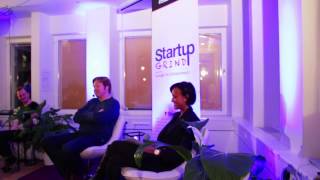
Rikard Steiber traces his path from early programming through Procter & Gamble and Google to founding MTGx, a media company entering early-growth markets. He discusses MTGx's channels and digital services, partnerships with startups, and how founders survive through passion and persistence.
Chapters
My name is Tatiana and I'm working for company called Amadeus. So we're working with search and travel.
Well, I'm here actually to get some inspiration from people that got startup already and succeeded with their ideas in this practice. We're going to welcome Noura, who's a good friend of mine and she's going to be the host of tonight's Fireside Chat with Richard for Rica.
Tell us about school. Did you think school was important?
Yeah, I think one of the reason sent me because computer games, because I was sitting at home and writing letters because I wasn't very, very, very good. But I was probably not very interested in school. I played a lot of role playing games, didn't have fantastic grades. I remember in Gothenburg the kids picked on me and they liked hitting me and etc. And then for some reason we moved to Warby and the west coast of Sweden. And then you basically when you. When you change jobs or school or location, you get a chance to rebrand yourself, right? So you're in this box and now you're in a new setting. You know that no one is going to pick on me anymore, which means that anyone tried to do that, I'll push back. And then you get different kind of confidence and also you get a different kind of respect. And that sort of fueled that self confidence that I probably didn't have before. So in Verba people didn't push me around. But I think that, you know, school. I had an easy life in terms of picking things up. I didn't really care. But I think that I went to Chalmers and Handels. So in the late 80s it was very popular to have cross science educations. So Tverwit and Skopje bilingual. So suddenly you couldn't just be a business school student or an engineer. You had to be like a computer economist. So you had to study one year at Handels, one year as an engineer, and then you should sort of pick your path. So I studied something called Sustiemetskopline, which was sort of information technology, very fluffy, fluffy bunny kind of thing. And I actually at the time had already started my first software company, Solbexdota, which basically made software for. We did it for Stattol, you know, in those days in the 1987 when you rented videos, you actually had to rent the video as well, because people didn't have videos in those days. So it was called the movie box. I'm not kidding. So you rented the movie box and the video which was this big. And then my software basically printed out the invoice. But it also kept track on which movies people rented or not, so that the guys in the store could basically send away the ones that didn't work. And then we did some other computer software. So I started programming very, very early. And I think I picked it up probably when I was 15. I started teaching software program. It was like BASIC and Pascal and Assembler. We were hacking these games for Commodore Vic schuge and commodore 64 and obviously opte and ZX Spectrum and all these, like, early computer things.
Did you do this by yourself?
Sorry?
Did you do this by yourself?
Yeah. I think Solvix thought it was interesting. I had a partner in crime called Jurgen Warborn. We were partying most of the time, and for some mysterious reason, he's like Bori Mestar. He's like the mayor in Barbay today, which is like unbelievable. I hope he becomes like the president of Sweden, because then I could, you know, I could get everything. I mean, I know so much stuff about the guy that would be fabulous. But anyway, so at Sharmesten, at one of these bus stops, I. I fell in love with this girl Anika, who's my wife now. We've been together for 25 years. For 25 years. And if she was here, she would tell me that it has been such a smooth ride with no problems whatsoever. But anyway, she was a super student, which I wasn't, and she went to Industel Economy, which was the most prestigious thing, and she graduated as sort of number one. And then she went in to do a PhD in innovation management. So clearly much smarter than I am. But she. She motivated me to actually pick up studies. And I met another friend called Stefan Lindholm, who was the guy from Handels, you know, the smart guy who had suits when he was studying and Thai. And he said that there's something called the Junior Chamber of Commerce. You have to join. And then to join you have to make one of these projects. And the project was to look at MBA educations around the world. And then I discovered, shit, I have to get an mba. I mean, I'm a computer nerd. I have to get into business. So I applied for a couple of schools. I got into Stabbocone in Italy. And I realized that when I got there, I thought that if these soccer guys, the Swedish soccer guys can go to Italy for a season, play some soccer, they learn Italiano, no problem. I could do that as well. What I didn't realize was that everyone who went to that school, they had already done Handels and they were the top schools from everywhere in the world. And the only reason I got in was that I was on this little quote of 10% of people who were like elite bicycles persons or like computer nerds or they were like a tennis, you know, pro or something. You got. I got in on this quota, which means I didn't know shit. And they had already done handles. I didn't know what marketing was at that time or like finance or. I had no idea. But I had put my grandma in the pawn shop because. And sold like everything. As I remember, I sold my CDs to my wife, which she occasionally tells me, because we truly didn't have any money. So I was kind of motivated. And to understand this, the school where people have other scholarships that are seriously rich, they would say, ah, it's better to study at the French Riviere over the weekend. And I was like, do you want to come? And I was like, no. It was like not happening. But. So I was motivated. But I graduated number one in the class. I got a gold medal, my mom was crying and voila, there you go.
And afterwards. Afterwards school?
Yeah, after school. So you're there and then suddenly I am like my friend Stefan Lindorm. I'm also having a tie now because I'm from stabukone talking to McKinsey. I'm talking to all these different companies and they basically came to school. So this was in 1993 and a finance guy was speculating against the Swedish currency and the interest rate in Sweden at this time was 500%. So like Sweden was like in big trouble. If you had loans, that was not a good thing to have 500% interest rate. But I got a job with Procter and Gamble and first I got a job in Rome and I tried to convince my now wife to go there, but she was tall, blonde, thin, with long hair. And people didn't take her seriously. They just looked at her ass, essentially. So she didn't think that that was a place she could make a career because people didn't take her seriously. So got a job in Stockholm and met Michael Grenis, who's also here today, who I started a company with later on, but Procter and Gamble. I worked with diapers. I knew everything about diapers. I was proud to work with diapers. My friends in the bar, I would tell them about these micro absorbent things we have in diapers. And if someone said that Libera was a better diaper, I would get furious because that wasn't true. Now I know much more about diapers and what a shitty visit it is. So anyway, so when you have kids, you learn what it's really about. But I got into. I learned about marketing essentially at Procter and Gamble. I was there for two years and. And I realized that it's a great company, It's a great school. They teach you everything. And what's interesting with Procter and Gamble and these big companies is that it's built like a pyramid structure, which means that your boss had your job before you and their boss had their job before you. So it's basically I was running marketing for Pampers for Sweden and Denmark, which, like a job you wouldn't give to someone who doesn't have a clue about marketing, but just because you have this structure where your boss had it before and before. So it's sort of an up or out sort of structure. So it was a very great school. I learned a lot about marketing, but then I realized that maybe diapers isn't my Life. So at TLE at the time, this is in the mid-90s. This is sort of early Internet days. And Telia wanted to build a multimedia department. So multimedia was the hot thing. And this is the year when Swedish politicians said that Internet is just a fluke and it's going to pass. People think it's hot, but it's not. So I got a job with Telia to start a multimedia department because I knew marketing and sales a little bit. And then I had technology background. And multimedia at that time was CD ROMs. It was multimedia kiosks and video conferencing over PC. So that is what we sold at Tele at the time. And then what happened is I got dragged into this whole Internet boom. So I was one of the few people at the time who knew about the Internet, knew about multimedia. And America Online was having a. Its splash in the US at the time. So, of course, all the smart people in Scandinavia are thinking, america Online, what should we do here in Scandinavia? Scandinavia Online. So Telenor and Shipstadt and Tilia basically started Scandinavian, which was basically selling access and also starting a lot of online services. So that was very interesting. And just to give you a feel for at the time, how many here? Remember Alta Vista? Yeah. So everyone. Okay. So we saw, just to understand how bad we were at the time, we saw that this search thing, this search thing is really, really hot. And in AltaVista guys, they were smart American guys, so they told us, well, you can have it for free. You can have search in altavista in the Nordics for free. No worries. You just pay us a little bit every time someone search. Just a tiny, tiny thing. And then, you know, you're going to show banners and you're going to make money from those banners. And that money is going to be so much more than what we're going to charge you guys. So we're going to give it to you. That didn't work very well. So of course, you know, banner advertising in 1995, that wasn't that mature. And of course people started searching like crazy. So of course we lost a lot of money. And then someone. And then we had Norwegians in the management Shipstead. Brilliant guys. But then they came. We'll build our own search engine, Kvasir. So I think actually it's still there somewhere in Norway, in Bergen, I think. Where? Lillehammer or something. But it didn't work well. So what's interesting with the journey is that we started basically a lot of Internet services. Some of them are still around. Maybe Bilweb or Riesver, they started classifieds. We started gaming services. Some of them worked really well and are sort of still around. Some of them were far too early. I remember one deal, one deal we had was. We got a deal with. I think it was Sanskaspiel or something. And then we got a deal with Aftonblade Sports and then said, well, they basically offered us we could be the exclusive partner to do betting online together with content from Aftonblade, because we had shipstep. And then the management say, no, we don't think that sports betting is going to be big online, so let's not do that.
And I'm interested in knowing what made you leave this part, leave this world and go to Google.
Oh. So basically after Scandinavia, I started strategy consulting company with Michael Grenes, who's here, and some other people. And we had a fabulous ride. We started off with venture capital. They thought of us because we were going to revolutionize digital TV, web TV. What happened was that this was in 99. You're invincible. People were thinking that WAP would be the best thing since sliced bread. So. But that all sort of fell down. But what saved us our consulting company was basically that we hired a guy, Martin Tavios, who's the CEO of Avanza bank today. He came from SAS Eurobunes. He knew how to build relationships over the Internet. So even if people didn't want to do.com anymore, they want to build relationship over the Internet, both to sell, but also to customer service and create Loyalty online. So we built basically a big thing for Nokia. But anyway, so I did that for seven years and if you're CEO of a strategy consulting company for seven years, you are meeting three to five customers every day and typically like CEOs or just below. So if you meet three to five customers every day for seven years, you meet a lot of people and you do a lot of selling. And I think when we got our first kid, I realized that I'd done a lot of selling. I didn't want to be a consultant for the rest of my life. I want to do something different. So I went on paternity leave for eight months and I was a latte pappa latte papa. Are guys who don't really have a job go drink cafe latte with their friends and then talk about their ideas that probably they're not going to do. And I remember at the time, Carl Klingberg, he told me that there's this company called Lunarstorm, it's big social media stuff, you should talk to them. I was interviewing to sort of run Lunastorm at the time, this was in 2006. And then a headhunter called me, said, well there's this company in London called Google, they need someone to run marketing for all the products in Europe. And I was like, hmm, what should I do? And I was seriously considering both of them. But I got into Google and we were moving to London. I had a young daughter at the time, found this fabulous place in the central London just by the water, one of those big glass buildings next to a park next to the daycare. I could walk to work in London. No tube, no nothing. It was perfect. And then a month in, my wife told me, rickard, we talked about London but we never actually agreed. Ok. So I told my boss that we have a problem. And luckily they were highly motivated. I didn't say desperate, but highly motivated to have someone for this job. They looked for someone forever. And there was a Stockholm office at Google so I could do Mondays and Friday out of Stockholm and then the rest in London. So if anyone is thinking about commuting between Stockholm and London for two and a half years, I wouldn't recommend it. When the airline hostesses knows your name, it's not a good thing.
Ok, so let's talk about mtgx.
Yes, let's talk about mtgx. So hand up here, how many know what MTG is? So some. Oh, very good. Yeah. When I, I didn't know that much about MTG when I, when I joined, so I looked up. And I found out that actually MTG has 60 branded TV channels across 36 markets. We're on four continents. We have over 100 million people watching our content. And we're like TV operator, but like via Sat and via Play. But also we're reaching, like, millions of people through other operators like cable. So in Russia, for example, we're reaching some 80, 90 million people through other players as well. And then we have production companies. So I think we have some 28 companies in 16 countries who are producing content. And then we have lots of digital services, we have radio. So it's a big media media company. What's really interesting there is that the company is big here in the Nordics with TV3, 6, 8 and things like that. But actually we're investing in Eastern Europe and Russia and in Africa. And the idea here is that you go in really early in the market and you build a strong position. So in Eastern Europe, it might be, I don't know, three to five years too early, and in Africa might be five to ten years too early. But if you go in early, you can build a strong position. So when a Big Mac and company costs as much as it does downtown Stockholm, voila, then you have a strong position. So we're investing early on. And then also what we realized, and actually the new CEO who joined last year, Jurgen Madsen, he's like a Danish soccer coach, and he probably realized that he needed a slate over there or a big sort of guard for the goal, so he put me in. And one other thing he does, which I really like, is that he goes on a road show, which means that you go to 10 countries in three days, and then you meet the extended management team in every country, and you talk a little bit of what's going on, and you get Q and A, and then you think 10 countries in three days and meetings. So it's kind of that kind of trip. But one of the things I learned, I did this the second week I was there, and then I learned what MTG is all about. So I asked people from TV channels, what is it that MTG does? And I asked people from satellite or from radio, from production companies. They all said different things. But I realized that what we actually do is that we connect people with the things they love the most. So it might be sports for some of you with the Olympics, or it might be movies, it might be music, but it's some kind of entertainment. And the reason you watch this is because you love it. And we've been doing a great Job of connecting you through broadcasting one to many or through radio one to many. But now the world is digital, so there are opportunities to have much richer experience where you can basically share those experiences with your friends or you can meet new friends who share your passion. So my job now as CDO PASSWORD Chief Digital Officer is to basically, how can we take this great media group into the future to become a digital interactive media group? So that's the job now. So we have, we're starting everything from video on demand services, to new music services, to things in gaming and esports, to second screen services, to commerce services, to new ways to experience verticals like food or fashion. And we do that on our own platforms, but we also invest in other platforms like Splay, which is the leading YouTube network here in Sweden, for example. And the reason we're here at SAP 46 is that we figured out that we don't have to invent all these new services ourselves because there's a bunch of talented people, there's a bunch of startups here who would need our help to get those services up and running. So when I was in California, I met a lot of these startups that were pitching to Google and now I find that I'm at mtd, I'm pitching to startups. And the pitch is essentially that if you are this Californian dating company who has this new mobile social video dating service, I can take that service to Nordics, Baltics, Eastern Europe, Russia, 10 new markets. Because I have the shows, if it's Paradise Hotel or, you know, whatever relationship programs there are, I have access to the audience who need love and I have access to the advertisers who want to reach that audience. I have production companies who can do a new dating show related to, so I can accelerate that startup into New York, but I can do that in music, in sports, in gaming, etc. So what we've done is that we partner up with startups like yourself here, but we do this in London, we do this in Manchester, we do this in San Francisco so that we when hopefully you have this great idea in sports and we have Champions League, Premier League, Olympics, everything, you will think of us as a potential partner to accelerate your startups. So that's how we fit into this thing. We want to help accelerate your startup ideas. And then also we have a billion dollars in the bank and no loan, so we can invest some money as well. So that's the pitch.
And what about your personal life?
My personal life?
You mentioned Annika earlier and she has a doctorate degree.
So my wife, she's super successful. She's a PhD in innovation management. She basically advises companies to become more innovative. And she just releasing a book called the Google Model. She studied Google, she looked at Spotify, she looked at Facebook, she looked at different companies. So she's doing a lot of lecturing and sort of strategy consulting. So there's busy lives. We have two young daughters, four and eight, and it's difficult to make this work for sure.
How do you balance your life, work and you're both curious?
I'm not sure we do that very well. But yeah. So a day works that I'll take the kids to school in the morning and then do work and then try to go home and have dinner and then put them to sleep. And then hopefully we have no work or we work and then no work during the weekends. So that's most of the weekends at least. Yeah. But I think the people who know me, I like, I probably like unconsciously work all the time. And typically as an entrepreneur, as a startup person, you feel that you're like one with this thing. And that was one of the things I didn't like being running a strategy consulting company because if you're selling all the time, then you start selling on your free time as well. So you sit with your friends and say, ah, so you have a problem. Let me help you with it. I was like, stop. So you want to have your own time. But I think that the key to success is being sort of authentic and doing things you really love to do. And if you do that, then you eventually become very good at it and then it's worth it. And then I think that's the key thing. And then you can do a little extra work because it's not really work, it's like something you like to do. Are you nodding now? You're nodding now. I can see that. Good.
It's all about the connections and the X factor.
Yes, the X factor.
The X factor. And how will you attract the best people to mtgx?
Yeah. So I learned very, very early on that the best people want to work for the best people. So, you know, I don't think that a lot of developers were thinking to join Modern Times group, you know, a year ago, but if you hire the best people from Google. So I had Anil Hanji, he's here. He ran M and A for Google for many years. If you hire people from top people from Facebook or from Spotify or from some of these companies, then people get noticed. And then if you deliver Cool stuff. If you put out the latest video on demand services, second screen stuff, some social commerce things, and then you sit here at sub 46 and talk about space, well then people think I don't really know what they're doing but it seems really exciting. So I'm going to check it out and then I got you. Right. And then you're curious and that's all you can say. Then you need to deliver.
Yeah, that makes sense.
But anyway, so mtgx, it's basically mtg, but it's people with the X factor. X factor meaning people with special talent. X being sort of the variable in the equation that radically changes the outcome. So getting people who can actually make it happen. So those are the ones we're hiring.
And what about your survival skills?
My survival skills?
Yeah, as an individual, but also as an entrepreneur.
Yeah. I was thinking if this MTGX doesn't work, I'll do raw stand up comedy. I think that's, that's what I figured out today. I was like, shit, there's a plan B. So yeah, surprise. No, I think, I think that we're just talking the break here. I think that, you know, I'm sort of plus 40. Some of you are like wannabes, I'm part of the used to be. But you realize, you realize that I still have no idea what I want to do. You're still on this journey. So don't despair if you don't know what you're going to do because you never will be. And once you figure it out, you're just going to say, ah, there's something over there. So the key thing here is that the smarter you are, the less likely you are going to do a startup because you're too smart. So you're figuring out, you're over analyzing things. So we're just talking to someone in the break here. It's like, just do it. You just have to do it and trust in that this is something you really think is fun. And if you really think it's fun, eventually you become very good at it. And if you become very good at it, you know you're going to make some money out of it somehow. You may not have figured it out right now, but you will. And yeah, so that's. So I remember when we started a strategy consulting company called Didiscope, we were going to do interactive TV in 1999 or something and me and Michael Granis who's here, if we would look at the business plan now, you know there wasn't like anything correct There nothing of that in that plan happened, really. And yeah, so you just have to jump and then you'll figure it out. And if you have the right people, the superstars, improvise, adapt, overcome, you'll make it. If you have the wrong people, then you'll fail.
But how did you find your way out of trouble?
How did I find my way out of trouble? Out of trouble. So actually I had a guy just now, this week telling me that he wanted to do a startup. And I think that one of my survival skills, he said that Rickard, when there is a tsunami coming, you're the first guy on a sort of a surfboard. And I think that having this ability to always look positive and always see opportunities when it's like really, really difficult, I think having that skill I think is important. And I think because if it's really, really difficult, that's great because it will be very hard for everyone else as well and then you're more likely to succeed. So I think it's having that kind of attitude and I think also pushing through because if you really, really like what you do, then you're going to persist when it's really hard and then not everyone is going to do that, but if you do that, then you'll come out on the other end. I think the worst thing is probably when you don't have money, that's tough because gives you limitations. So I think there were some situations where you're sort of close to bankruptcy and I think that's very, very hard. And after women in technology, actually there was a good friend of mine, Christopher, he went bankrupt with one of his startups, which is like really hard. How do you do that? How do you get out of that? And he told a trick how to manage it. Are you interested now?
Please tell us.
So. So he basically said, I pretend that I'm not me anymore and that I'm this imaginary friend sitting on the side looking at me. And then I'm thinking, if I was that guy, what would I do? So you distance yourself from your own situation to be a little more objective and not get sort of caught in the emotional trauma that you're in. And actually it turns out that this is like a doctor Phil kind of technique where you actually can, you know, so when you're having economic distress or, you know, your boyfriend, girlfriend just broke up with you, or they hate you at work, just pretend it's not you and you're this imaginary friend and you can give yourself advice. So that's how you do it.
And just the last thing about passion. Why is passion that important to you?
Yeah. So I wanted to show this Steve Jobs clip. So maybe if we can roll down the curtain there, I'll talk. So. The thing is that there are a couple of things that are really important to be successful. And I do think that if you're really passionate about something, if you're, like, a little bit crazy and you really want to make something happen, then you'll persist, then you'll succeed, then you learn the things that are needed.
Well, so we're hosting tonight's event, which is Cyber Star cdo. And we're here today to sort of give a view to the startup community, who we are, all about, what we do as an investor, as a media partner.
More from Rikard


Commuting Through Clouds with Rikard Steiber, Investor & Board Advisor, Jetson Inc. - #FII7 Day 2


MWC Keynote: "The Dawn of VIVE REALITY" by Rikard Steiber President Viveport and SVP VR at HTC
Rikard Steiber (Viveport & SVP Virtual Reality, HTC Vive): Expanding the VR Ecosystem
Rikard Steiber, VIVEPORT, HTC about Silicon Valley Open Doors Conference SVOD2017


Rikard Steiber (SVP, HTC Vive) Virtual Reality – Perspectives on the Road Ahead