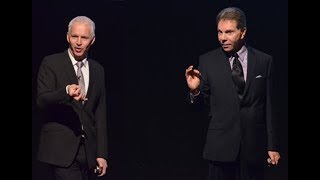
Robert Cialdini and Steve Martin explain how influence actually works: it's not about changing minds, but changing behavior. Three universal motivations drive decisions: wanting efficient choices, needing approval, and protecting self-image. Reagan and Clinton succeeded by aligning with audiences on shared values, not through speech content alone.
Chapters
[No speech]For me, influence is the ability to change someone. Without change, we can't lay claim to influence. And there are various kinds of change we might be interested in. We can change beliefs, we can change attitudes, we can change perceptions. But it seems to me All of those are in the service of changing behavior. So that's what Steve and I love to talk about: small changes in one's persuasive approach that produce big changes in the behavioral outcomes of that approach. There's a trove of information, 50 years plus of systematic information about how we can move people in our direction. What is in its infancy is the extent to which the public knows about it. The important thing now is for the scientists to get out of their laboratories and out of their offices and into settings where the people who have paid for that research, the public, get to know what we found with their money.
The overwhelming majority of successful influence strategies gain their influence, their power, because they appeal to just one of three universal motivations. And so, you know, one thing a business person can do is recognize these motivations. They are: people want to make decisions in as efficient and effective way as possible. They want to make decisions that affiliate and gain the approval of others. And they want to make decisions that allow them to be seen in a positive light. So anything we can do to make a small change to a message or request that appeals or triggers one of those motivations is going to increase our effectiveness, going to increase our influence.
Two U.S. presidents who have had that quality of being able to sway audiences as a result of their oratory, how they have structured their messaging to move people, one was Ronald Reagan and the other was Bill Clinton. So it wasn't what they were saying that was so important, it was how they said it. And in both cases, what they were able to do was unitize themselves with the audience. The audience saw them as demonstrating the extent to which they were at one with the audience, which reduced defensiveness. If a messenger, if a speaker, if a communicator can honestly convey the extent to which they are at one with their audience, common backgrounds, common goals, common values, the audience resistance drops significantly and people will come on board.