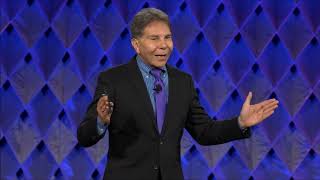
Robert Cialdini explains how people look to peers for guidance when uncertain. A simple wording change in an infomercial boosted response dramatically, and marking menu items as "most popular" increased purchases by 13–20% in a Beijing restaurant.
Questions this video answers
360,000 units
13–20% increase in purchases
We said when people are uncertain, they don't look inside themselves, they look outside for answers. Well, one of the places they look is to authorities, but the other place they look is to their peers, people just like them. There's a woman named Colleen Stout who is the infomercial queen in this country. Colleen has written the most effective infomercials of all time. She wrote the infomercial for the Nordic track glider system. Great big, expensive piece of exercise equipment. You might have one in an attic or a storeroom somewhere because that InfoMercial sold 360,000 units in the first month. So Colleen knows how to move people. But even Colleen was shocked by one small change she made in her infomercials that produced a skyrocketing of response. In every infomercial, you'll hear there is a call to action line that that reads, operators are waiting, please call. Now. Colleen changed three words to if operators are busy, please call again. What you're telling people that they're going to be inconvenienced if they try to access your product doesn't make marketing sense, but it makes psychological sense. If you think of the two images, operators are waiting, they're filing their nails, they're twiddling their thumbs. But if operators are busy, it means a lot of people just like you have thought this is a good choice to make and calls skyrocket. Okay, so what's the implication for you? What we know is that in terms of consensus, people follow the lead of many others and similar others. Let me give you a study that makes this point. It was a study that was done in Beijing, China, which shows you the cross cultural reach of this idea. Owners of restaurants put little asterisks next to certain of the items on their menu and each one immediately increased 13 to 20% in purchases. So what did the asterisk stand for? It wasn't the usual, this is the specialty of the house or this is the chef's choice for this evening. If you've ever read any of those Kitchen Confidential, you know what the chef special of the evening is? It's what was left over from the previous night and he needs to unload it. No, the asterisk said, this is one of our most popular items. And immediately sales jumped 13 to 20%. Even though there was no actual change in the dishes. Even though this was an entirely costless practice. A small, big. Even though it was entirely honest. And it's almost never employed. We never see that. We see one of those other kinds of things. Here's the implication for you. You all have most popular options. You all have most popular choices. You all have most popular payment plans. Simply telling people that they are most popular reduces their uncertainty. They get off the fence, they get off the sidelines, and they get into the game.