Cofounder Relationships, Content & Money with Rob Moore of Progressive Property
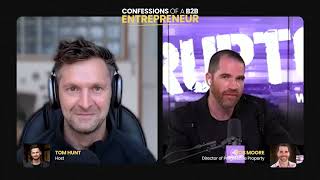
Rob Moore built Progressive Property from a 2008 book into a multi-million-pound training business with cofounder Mark, splitting roles between property investment and education. He now focuses on financial literacy content across YouTube, TikTok, and LinkedIn, believing banks aren't safe for wealth and money is a tool for leverage. Respect, shared vision, and clear role division keep the partnership strong.
Chapters
Rob, welcome to the show.
Thanks for having me.
So my audience is, is the B2B entrepreneur type, and I was spending some time yesterday evening and this morning working out what to discuss. And there's two areas I think, that I think would be awesome. First is that the building of the training company, which I believe is the UK's largest property training business. Is that correct?
Well, I think it is, but I'm biased. Yeah, I recall a few years ago knowing who the biggest company was and knowing what their turnover was and knowing when we usurped them and overtook them. So, okay. Yeah.
Yeah, I think we can say definitely, we're definitely the best. So I just wanna dig into that journey a little bit. What was your role throughout the timeline of the company? Obviously now you own it and I don't think you're doing much day to day, but that probably wasn't the same for the whole time.
Yeah. So I met my business partner Mark 18 years ago and we both started selling property to other people for another company. We figured out fairly soon that the overseas off-plan new build stuff wasn't anywhere near as good as the local older grimier but more real value property worked better, better yield, better cash flow, lower risk. So we started doing that ourselves, buying for ourselves and selling spare deals onto other investors. Doing both of those two businesses, year one, year two, lots of people kept coming to us saying, how are you doing this? Two local lads. Young, buying a lot of property, everyone talking about you. How do I do it too? And it, when enough people had asked me, I just said to my business partner, Mark, we need to write a book. So then I could just give them the book or they can buy the book. It's just easier. And I didn't know that that would mushroom into 19 books that I've written now and how big the training businesses are, which I mean, our best year was about 25 million in sales. We're not quite there this year just because it's been a bit harder since lockdown, but we're not far off. And that all just started with, you know, writing the first book. So my role became more and more about teaching, training, education, and building the training businesses. And Mark's role became more and more about buying, managing, financing, owning the real estate side of our business. We have 300 and almost 350 that we own. And then another, we have about 1,150 in total that we manage in our management company. So, you know, my business partner's role is mostly management development and the running of the property, the brick and mortar property business. And mine is more the training, the speaking, the content creation, and the running the training businesses, which, you know, when we started, we were doing everything together the same. And then we realised we were getting in each other's way and there was duplication of tasks. There was no leverage. So we separated the roles and of course went like that.
Got it. So he was almost doing R&D as well for the training business because I guess he was learning about property, passing that wisdom to you, and then you were implementing that in the training programmes.
Yeah. Well, Mark had already had a few years' experience before me, and so he came ready-made with a small portfolio and some knowledge. Then I like just plugged into him and downloaded his brain within 9 months. And in that first year, we'd Bought 20 together and then in the next year we bought another 30. So 2 years in, I downloaded his brain and I had a few dozen properties under my belt. So then I built my own credibility and experience for sure, because I would never teach what I don't do and what I don't know, because I think there's a lot of people doing that and that separates us. And, but over the years he's been way more operational and tactical in property investing and management. And my training's more grown out into business and entrepreneurship and social media and all the stuff I now do day to day.
In the training business, would you say you are better suited at the, like delivering the programs and the sales and marketing side or like the ops and the organizing of the company?
Oh, way, way better. The strategic, the, content, the delivery over the operational tactical. Yeah, my business partner is very good with legals ops. He's very detailed. He gets excited over saving money. I get excited over generating money. He says, well, when you save a pound, you save the whole pound. When you go and generate £10, we pay most of that in tax and we've We've got a little bit left and he makes a good point. So I have to generate £10 to his £1 saving. But you know, we worked out pretty early on that we are very different and complimentary. I think it's important to have a similar vision, but a very different set of skills. And yeah, we have that. We, we, we, we don't really have much duplication of what we enjoy doing other than business itself. We both love business itself. We both love investing itself. But within that, he doesn't like sales or marketing at all. I love it. He doesn't like speaking on content. I love it. He wants to share nothing and keep everything a secret. I want to share everything and keep nothing a secret. Both have their upsides and downsides. He gets stuck in the detail, which is great if you're going through some legal case or you're writing a system. It's terrible if you're launching a new business. So, you know, over the years, I like to think we've learned from each other and also appreciate each other's skills.
What, apart from having this complementary skill set, what would you say is the key to having a long-lasting co-founder relationship?
Oh, yeah, there's a lot to this. So the first thing is I think you need to respect them because I need to be respected and to respect the people that, you know, I'm close to. And I earn respect every day by trying to be the best that I can be. So respect them, which means they've probably gotta be good at their job. Them respect you, which means you've gotta be good at your job because a lot of people want to be respected but don't wanna do the work it takes to be respected. So that's the first thing. Um, the second thing is, uh, I, I think you've gotta know how to deal with conflict well. And, um, sometimes we avoid it, both of us in our different ways, and that just pushes the can down the road. In the early days when we had conflict, it would've built up and we'd be a bit emotionally charged with each other, and that's not necessarily productive. And now I'd say he's a bit on the harder side than me, but I think we manage conflict quite well. We've not really had needed any third party to arbitrate in between. Or mediate in any way. I think you have to have some written agreements and some unwritten ones. You know, so we have shareholder agreements and we have contracts, which is really important. But the unwritten ones are if there's an impasse, whoever has the strongest opinion on something, the other one will go with that. Or whoever has the most knowledge in that area, the other one will go with that. And that's an unwritten rule. So if we've got a property-related specific investing property-related impasse, I'll put my opinion across. But if we can't agree, I'll go, well look, you know, you might know more about this than me, so we're going to go with you. And I think that's held us well. I think you've got to want to grow. And importantly, if you've got a similar vision, if you've got a similar vision, then you're always moving towards the same thing. And that dissolves a lot of conflict if you're going in the same direction because you have less conflict.
What percentage of your time would you say you're spending on the training business at the moment?
Oh, a lot more than I, than when I wrote Life Leverage. Tom. So on our own life leverage, I was pretty much retired and travelling the world, and my son was one of the best golfers in the world. And that was a great, that was a fun, great time in my life. Life has seasons. Everything goes in cycles. There was no lockdowns. There was no 70% of what you earn and spend in tax. There was no sort of wokeism or, um, snowflakey sort of, um, work culture. I'm not saying that is everywhere and I'm not saying that is everyone, but there's a lot more of that than there used to be. So business has got, for my training businesses, it's got harder. The real estate's doing really well. I mean, the training business is still doing well, but we have to work more and harder for the same or less. And, you know, talent acquisition is really hard. So at the moment, I'm probably 70% of my time in the training business. Whereas I would say in years gone by, it's been in inverse that less than 30% of my time was in the training business.
Got it. Yeah, because the second part of this chat, I want to dig into the social and the content game. And so I'm actually super excited to understand how you're able to create this amount of volume and quality at 30%. But let's go quickly, final point on the training business. So what are like the highest leverage things you do in the business at the moment?
Well, the most important thing I do in the business is to predict the future for the business, whether that's strategy or vision or mission. That's the most important job I have to do. 'Cause if I've navigated it through 18 years almost, I want to navigate it through another 18 or navigate it through a sale before those other 18 or whatever the outcome is. The next most leveraged thing I need to do, and I do do, is maintain partnerships and collaborations. Because one of the reasons, you know, I don't do 365 training days a year is because I have partners and speakers and trainers. We do 900 training days a year. Obviously, you can do the maths. There's only 365 days in a year. So that's the next leverage task. And then, you know, talent acquisition and development. So, You know, they say you're only as good as your weakest team member. That's not quite the same because when you've got 100-odd staff like we have, you can get away with having a few weak links, but your senior team, you know, you need a good senior team. And so, you know, that's been disrupted a bit. Just because it's in marketing where we are, it's hard to find really great talent because what we do is quite specific. It's not, just go and headhunt or just go to a recruiter and find 25 of them. So, and marketing's the most important function of pretty much every business and most people don't understand how important it is. So yeah, they're probably the most leveraged tasks I do and just energy transfer. You know, if I walk into, I have the ability because I am the founder and I'm, I've got quite good energy. I have the ability to go into an open plan office with, 100 people in it and lift the energy of 100 people up, which also means I have the ability, should I not be in control of my energy, to drain it as well. So I see my job every day as someone to increase the energy. It's really important.
On the strategy piece, I'm trying to make it tangible. Like, I, I totally agree that's the most important, but apart from just being in the industry for 18 years, is there anything else that you do to like stay on top of the trends and try and direct the business? In the right direction.
Yeah. So I'll look at the up-and-coming competitors. Back in the day, I was the up-and-coming competitor, so I could, I had a lot more people to chase and look after. You know, people say, yeah, it's hard to get to the top, but it's harder to stay at the top. And that is for sure the truth. So I look at the up-and-coming ankle biters and, you know, I have to remove my ego and go, what are you maybe doing better than us? Even though we are the best. and, and make sure that I'm balanced in figuring out what they're doing, number one. Uh, number two is I like to look at other industries and see what I can be inspired by in other industries, whether it's art or music or, um, you know, other sort of entrepreneurial, dynamic, disruptive industries. Obviously, you wanna look at where the world's going, what people are needing, what their problems are. Obviously, AI is a big direction that the world is going in. Right now. And, you know, what's gonna be the next strategy that I can teach and do that's gonna make a lot of money for me and my, and 3 million odd followers that I have. And, you know, what's gonna be the new disruptive technology that's gonna make life faster, easier. Staying, I'm really having good relationships with my competitors as well. I remember interviewing a billionaire a good few years ago and he said, I just kept all my competitors as friends, very unassuming, very non-threatening, just got to know them and then bought them all out over the next 10 years, you know, in a very sort of like, it's sort of quite unassuming, humble guy. So I like to keep everyone in my industry who's a competitor or in it close and try and maintain those relationships. And then just make sure that you're growing yourself personally. Like, if you're not growing, how's your company going to grow?
Totally agree. This is actually an awesome jump-off point to the, the second half. I found that when I started creating content myself, I do learn a lot about from guests and from people commenting on LinkedIn, etc., about the outside world. And that is probably something that's helping you because I know you're active. So I want to go right to the start of the content creation journey, which I think we've already discussed, which was that first book for the property training. Business, right? Progressive Property. Was that the first piece of like personal branding/content you created?
Yeah. Property Investing Secrets in 2008, because back then, we, Facebook was so young. No one, we hadn't got on it and no one in our industry had really. So it was Google Ads, building your email database. So it was just all communicating via email. Uh, so yeah, writing that book and selling hundreds and thousands of copies bought hundreds of, hundreds and thousands of new clients. In terms of a personal brand, um, I was actually very early on Facebook and YouTube. I just took a few years where I didn't take it seriously enough. Um, otherwise, cuz I think I've got maybe nearly 600,000 subscribers on YouTube across my two channels. I mean, I'd have millions now if I took it seriously in those middle years. And in fact, my Facebook's just about to hit half a million. And, you know, like I said, I got in quite early, but I had a few years where I wasn't really focused on it. And in the last, same with LinkedIn actually, my LinkedIn's blowing up all the time now. And I'm just thinking, imagine if I'd have stayed consistent on that for, you know, 15 years. And there's a big argument for slower and steadier rather than, you know, a bit up and down.
Is the primary upside from the personal branding content creation driving leads to Progressive Property?
Well, I actually, initially it was only to drive leads to our business and people don't believe this about me, but it's true. So I'll just tell you, but, uh, I, I'm not naturally extroverted. I learned it and I learned to bring good energy. When I'm being interviewed or when I'm doing content. And I learned to leverage social media because it's free marketing and free lead generation. And it was just cheaper than Google Ads. And it was an effective, disruptive way to generate fast growth. And I'm up for fast growth. So I'll do whatever it takes. If something came in that was twice as fast and better than social media and I didn't enjoy it, I'd learn it and I'd do it. Because I want to be successful. It just so happens that social media is still, still a big thing. So initially I got into YouTube and Facebook only to generate leads for business. And then in 2016, I wrote Life Leverage. I launched my podcast Disruptors, and I semi-retired. I think it was about the second or third semi-retirement, and I've had a couple since. And I've traveled the world and I thought about, you know, where am I gonna take the training businesses and, I know what I'll do. I'll develop a personal brand separate to the training businesses so they're saleable, it's scalable, it doesn't rely on me. It was all the stuff you learn when you're an entrepreneur from Work the System and The E-Myth and all, you know, you're not supposed to have your personal brand tied in and entrenched into your business brand. Although I think that might change now because Tom Ford sold for $1.2 billion, sold his name. And, you know, look at Jake Paul and KSI. They've got massive personal brands and they're building all these massive companies off the back of it. So maybe I was mis-sold anyway. So I then decoupled my business brands, um, from my personal brand, started doing disruptors and interviewing guests and going off on a few tangents and, um, experimenting and building my own individual following, not just Progressive Properties. And then I had a lot of freedom, but probably was a bit distracted if I'm honest, Tom. And then in lockdown, the game changed, but I jumped on Clubhouse really early. I became one of the top followed people in the world on Clubhouse. But unfortunately, just as I hit, what, quarter of a million followers, then it sort of caved in. Then I had another year, launched TikTok. I got that quite big. And then the last sort of year, I've gone back to my roots. A lot of my content now is to generate leads, business, and interest on my businesses just because it's a different business world to what it was.
What are the other businesses apart from the training company?
I guess I have a property management firm that has 1,150 properties under management. I have two training companies, Progressive Property, Progressive Success. We have our podcast and media agency, Disruptive Media, which I am the top creator that the agency has. We have about 200 other creators, YouTubers, podcasters, and we have various property companies that we own jointly with Mark and I or, or other partners. We have Network franchise. So Progressive Property Network and Progressive Business Network, which are event franchises. We have a couple of other sort of more quiet companies under the radar. I think at one point we had 14. I think we probably have 12 active companies at the moment. Yeah.
Got it. And so if we have 70% of the time in Progressive Property and then the remaining 30, Well, what chunk of that is on content creation versus, I guess, you need a bit of time to manage the other companies?
Yeah. So, uh, maybe 70% in the training businesses. There's two. Um, 20% would probably be 15% maybe in content creation across all my media. And then 15% would probably be on my podcast Disruptors, which is also on YouTube. In my content is some Disruptors. In Disruptors is some of my content because there's repurposability there. And in the content is, you know, my daily LinkedIn posts, my daily Facebook Lives, my daily writing that I do because I'm always writing a book. Yeah.
What's the, what's the book that you're writing at the moment?
I'm writing 5 different books at the moment. They're, they're all related to money and they're, and they're sort of linked, which is why I feel like sort of writing them together sort of works. My most recent book that I wrote is called Money Matrix, and then the Audible version will be out soon. And that was my 19th, but I've decided to specialize more on money-related content. So at least the next 5 books till I'm at least 50, which is in 4 and a, 4 and a bit years, will be money related.
Why is that? Is that a topic that you gravitated towards, think is a big challenge?
Yeah, I think the world is lost financially. There's terrible financial education in the system. Most people are struggling because of increased inflation, cost of living, food, electricity, debt, The system doesn't want you to know how money really works because otherwise it can't then get tax and interest and compliance from you. I feel like it's a subject I can really specialize in. I feel like I know it well. Became a millionaire 15 years ago, a deca-millionaire 11 years ago. So, you know, I've got the backup CV, if you like. I've done a lot of research and into a load of billionaires. And probably if I'm honest, if I'm giving myself critical feedback, Tom, I've probably been a bit diverse and a bit thin. Like, I don't really like niching myself, but I understand that, you know, Robert Kiyosaki or Dave Ramsey, for example, you know, they've kept it around investing and money and they're huge. And, so that's, they're the space I'm going for. 'Cause you know, those guys have been doing it a long time. They're quite old. I mean, I'm not young, but I'm a lot younger than the pair of them, 30 years younger than them. So, you know, I'm coming for them.
And I think it aligns well because that topic, someone who's interested in that would likely be interested in either of the two training companies.
Yeah. I mean, if you want to make money, you're going to need to know how to make money. You're going to need to know how to start your own business. You're probably going to want to build multiple streams of income. You're probably going to want to learn how to invest. So they work together. Yes. Which is important because what would be the, point in me talking about health, um, unless I'm an expert at it, which I'm not, and then not have any health-related businesses as an entrepreneur. What would be the point?
It's almost like you planned this. Um, the, uh, let's try and dig into a little bit of money knowledge. If, if focus on the, on an entrepreneur, uh, maybe a B2B entrepreneur, not that that, that might not make a difference, what is an important, like, money belief or misconception they may have that would be useful for them to know?
All right. I'll, I'll give you, um, a tactical one and, uh, a, um, a more personal one. So a tactical one is you have to know that banks are not a safe place to keep your money. Banks are a for-profit a mega corporation whose purpose is to maximize shareholder value. And those shareholders are billionaires. And when you really think about that, everything changes about how you use your money. So that would be one.
And then— So just to dig in a bit on that. So then are you suggesting that I should do something else with the company funds or my personal funds apart from put them in a bank?
So even a company that doesn't have your best interests at heart can be useful to you. Insurance companies don't have my best interests at heart, but they can be useful to me and I might need them. So I'm not saying take all of your money out of the bank, whether it's personal or company. I'm saying question if that's the best use and storage and exchange of your money. So for direct debits and standing orders and bills, general living for the company and for you personally, banks are pretty convenient. Convenient, they're fast, and they're commonly used. But for savings, savings go down in value. For storing, it's a terrible place to store your money. For investing, it's an even worse place. So yeah, if you've got surplus company funds, whether it's retained profits or working capital, at least have it in the S&P 500 or the FTSE 100. Or at least take, maximize your tax release each year into, you know, invest the maximum you can into your pension and into your personal ISA. Have some in physical like gold and silver. Don't just blindly leave it in the banks where you're taking the risk and they're getting the reward. Okay. And then on a, on a personal level, but this is personal, micro and macro, is you've got to know what money is. So if you know what money is, you're able to use it better. If you know how an engine works, you can fix it. If you don't, you can't. So you need to know this. Money isn't right or wrong, good or bad, evil or virtuous. Money is neutral and it is an effective tool for leverage. It's an effective tool for storing and exchanging value. A hammer is an effective tool for hammering in a nail. It's also an effective tool at smashing someone's skull. It works both ways depending on how you use it. And if you're smart, you'll learn how to use the tool well and use it as a great lever. So remove all judgment and fear and imposition and upbringing and religion and dogma and, you know, loaded emotional beliefs. Money's just a tool. And what I believe money is, I'm evolving and improving the definition, I believe, of money. An economist will tell you money is an exchange of value. I believe money is an effective store of energy, time, and value. Which means if you put your time into something and receive money for it, that money is storing your time. But if you put a lot of time into something and you get low money, it's a low storage of your time, therefore an unfair exchange. So if you can figure out how to create high value with low time, You're storing high amounts of money in low amounts of time. And if you can put really high energy into storing money, that'll be a high amount of money stored. So people don't know this, but, um, grain was a form of storing— is essentially a form of money back in the day. A granary is a store of grain. And grain was a great store of energy because you could harvest it today and you could store it for the next harvest and the next harvest in case there was a lean harvest. So grain was essentially a way to survive tomorrow based on what you harvest today. Money's the same. Money is taking what you earn today and storing and saving it for tomorrow. But a lot of people are exchanging 10 hours a day for £10 or £20 an hour, which is not a good exchange of time, energy, or value into Money. Anyway, there's some things to think about.
There we go. Yeah, I wasn't expecting the money content. I am interested in your goals and motivations now because presumably or clearly you have enough cash to probably not work again if you wanted to, but you're still, it seems like going pretty hard both for the business and on the content. So I'd love to just understand like what are you trying to achieve? That sounds bad, but I think you know what I mean.
Yeah. So my personal mission is to help as many people on this planet get better financial knowledge. And I'm 45 plus VAT, a little bit older than 45, and I'm only 18 years into maybe a 70-year mission, maybe an 80-year mission. Just because I have no enough money to live my lifetime, my kids' lifetime, maybe their kids' lifetime. What am I gonna do if I do nothing? Just probably become a professional troll. I would just annoy people. What do you do? You know, what made you wealthy is your passion, your energy, your inspiration, your enthusiasm, your time, your life. Why would you stop it just because you've got money? Like, I'd rather start again be able to do what I'm doing and you take all my money away, then stop everything I'm doing but keep my money.
Oh, literally, you'd be happy to start from zero rather than stop working.
Well, yeah, because don't forget, if I'm 45 and I'm planning to live till I'm, say, 95, that's 50 years left. So I've got more than enough time to make all the money back and I've got all the knowledge to make it back. So I'm probably getting it back in half the time. But if you took If I kept all my money but had no purpose, no drive, no work, no motivation, what the fuck am I going to do? Like, that's a slow, torturous Chinese water torture death, which I don't want.
Okay, Rob, final question. Please tell the story of how your child achieved a hole in one at 3 years old.
Yeah. So my son got his first hole in one aged 3. And he was about 100 and something days younger than what I could find was the youngest person to get a hole in one. So unofficially broke the world record for the youngest person to have a hole in one. I took him down the golf range age 1, and we were playing golf in the living room age 1. We were playing golf in the garden age 1. He was drilling 200, 300, 400 balls a day down the range. And I got him down pitch and putt as soon as he could hit the ball far enough. Like, he's— when he first went to pitch and putt, um, could he reach the greens in one? Yeah, I think he just about could with like a 5-iron or something. Um, and it wasn't long before he was getting— he's had a— he had 8 hole-in-ones by age 8, and then he quit. Well, he still plays golf, but he, you know, like, he played in the He was the youngest entrant into the British Championships, age 5 in the under-6s, in the Worlds, the under-6s, age 5, played in them all. But he didn't like the competition. He's quite introvert, my son. So in the end, I was like, it's not good for him. And so I had to, because it was a lot driven by me. I mean, we had some great times and I think he did enjoy greater part. So, but he was driven by me, and as soon as he was old enough to have his own choice, it's his choice. So I have— it has to be about him then and not about me. But yeah, like, he got a hole-in-one age 3 because he'd hit thousands of balls down the range already.
Epic. Well, Rob, thank you so much for coming on. Specifically that, that money wisdom that I didn't think we were going to get, which I think is definitely a topic that people don't really talk about. And people need to learn more about, in my opinion. We're gonna link to everything below. We'll link to all the books, which specifically the money ones, we'll link to Disruptors and the training businesses. Anything else we should mention or, or link to?
I mean, if you search Rob Moore or Rob Moore Progressive, you'll find all my socials. I'm active on all of them, not Snapchat, but I'm very active at LinkedIn. My LinkedIn's blowing up at the moment. I do 5 Facebook posts a day. I do a lot of my, I do a lot of bit ranting on Facebook about the system. Obviously all my books on Audible as well as Amazon. I mean, you know, I try and be annoyingly everywhere.
You are.
Good. If I'm annoying you, I'm doing my job. Yeah.
Rob, thank you so much for coming on.
Thanks, Tom.


