Rob Moore Talks Money | MONEY Book | Progressive Property Podcast
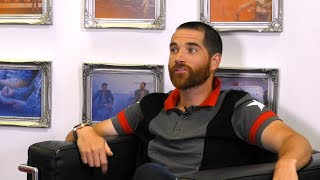
In this episode of the Progressive Property Podcast, host Peter Jones interviews property entrepreneur, author and community leader Rob Moore. Moore explains how his new book Money was born from a crowdsourced decision‑making process with his online community, and why that approach de‑risks product development. He recounts his personal financial transformation from £50,000 of consumer debt in 2005 to a net‑worth of multiple millions and a portfolio of roughly 720 UK properties held jointly with JV partners. Moore outlines his core philosophy of a "money mindset": understanding money as a neutral flow of value, transcending cultural taboos, and aligning self‑worth with net‑worth. He differentiates good debt (used to acquire income‑producing assets) from bad debt, shares his "golden rule" for leverage, and details practical steps for raising capital – building a compelling value proposition, showcasing social proof, and leveraging passion and relationships. The conversation also touches on political and tax changes (e.g., Section 24), how entrepreneurs can adapt by shifting to HMOs, serviced accommodation or commercial conversions, and why Moore views wealth as a societal right that enables greater contribution. Throughout, he stresses the importance of continual learning, the common traits of historic wealth‑builders, and the four gifts of money: making, spending, talking about, and giving it away. Listeners are directed to pre‑order the book on Amazon, Audible or iTunes.
Chapters
Hi, I'm Peter Jones, chartered surveyor, author, and property investor, and this is the Progressive Property Podcast. And I'm absolutely delighted today to be joined by a man who needs no introduction, but I'm going to give him one anyway. A man who owns both in his own name and with his JV partners about 650-odd properties now. A man who's at least a double world record holder and who at the last count had written, was it 7 best-selling books?
I think it's— but on Thursday it'll be 9.
Well, we'll come to that. So yes, okay, so it must be 8. So the co-founder of Progressive Property and Unlimited Success, Mr. Rob Moore. Welcome, Rob. Hi. Great to have you here.
Thanks for welcoming me and inviting me to the podcast.
It's a pleasure, it's a pleasure. Now, I pick up the sense that you've been slightly busy recently. You've been out and about doing a little bit of a tour of the country.
Yeah.
What's that all about then, Rob?
Well, I try not to stay too busy, as you know, and I retired from speaking a few years ago when we had many trainers and speakers coming through Progressive, and I wanted to get out of their way. But as my new book, Money, comes out Thursday, 27th of July, I did a little bit of a comeback tour, I suppose, a bit like a rock band. They get in their 60s, you know, and they come back for one final tour. So yeah, I spoke at Knightsbridge, Mayfair, some beautiful venues around London. I went to Bournemouth this week and yeah, just to answer people's questions about money because I'm on this kind of charm offensive at the moment where I really want to get through to people that money's good and money can have a positive impact in your life and you know, you can make money and make a difference. You can be happy and make money and all the taboos and the dirty word nature of money that we have in the UK. I kind of want to just get people to get over that and embrace all the great gifts that money brings.
Right. So I was very interested in the way that you actually decided to write this book because you kind of crowdsourced the title or crowdsourced the subject, didn't you? Tell us a little bit about that. You presumably had several choices you could have gone for in terms of what you're going to write about next, but you Put it to a vote.
Yes.
Of the community.
Well, I see my purpose on this planet is to serve people, to educate them on all things money related. And of course that started in property as I, you know, 10 years ago when I got into property and it's got wider and wider and more generic and able to reach more people. So it went from property to sort of life leverage, which is about time and life management and outsourcing and now about money. And so if I want to serve my communities, fans, followers, subscribers the best, The best way to do that is to give them what they want rather than to try and force-feed them what I want to give them. So actually, I wanted to write this book on money about 3 years ago. I've been doing an 11-year research study on money essentially, and about 3 years ago, this was the time I wanted to write the book. And I approached the communities, my Property One and Unlimited Success One, and I said, hey look, I've got 9 books in me. I had at the time about 9 book ideas. About 15 now. And I said, which one do you want me to write? And I gave them the concepts, uh, and, um, 3 years ago they said this, this, and this, which basically became Life Leverage. And second was money. So I parked writing the book for money because I want to give the community what they want from, from their point of view, to serve them. From my point of view, it's much less risk to my business and my ability to sell and earn money, uh, if I give people what they want. And if they've told me what they want, I should be smart enough to give it to them. This time round, it was the money one. So yeah, so basically, what contents do you want? What are your problems and challenges? What should the title be? What should the subtitle be? What format do you want it in? And the great thing about that is I know when I launch it, people have already told me they want it, so I know that it's going to be well received and it's going to be very relevant to them. And I, I mean, we— it's— that has a name, it's called crowdsourcing, as you said. And I really believe that's a way to de-risk business, to de-risk making money, to de-risk growing your brand. Because after all, it's very risky to spend a lot of money researching, developing, creating a product or a service without knowing that there's a market for it. And many businesses have failed because they've got a product or a service that they think that people want because they want it. But if you decorate macaroons, that's your niche, there might not be that much of a market for that. So you need to go and find that there's a market first.
Yeah, and that's one of the great things about being part of the Progressive community. Not just for you, but in a sense all the community members could do the same thing. Yeah, get opinions, get help, get inspiration, whatever it is that they need.
Yeah, well, anyone who, say for example, wants to create a product or a service in property like deal packaging, or, you know, they want to work out how to best approach vendors or estate agents, they just go— you can just go on a community and ask How would you like this to be done to you? Or how would you like me to present this? And essentially you're getting a mirror is reflected back on basically the solutions to your problems as someone selling or creating products or services.
Yeah, absolutely. So this book, you say it's been 11 years in the making. You've been researching this for 11 years.
Yeah.
So you must have started roughly round about the time you started Progressive.
Yes. End of '05 was my eureka moment, I suppose.
Okay.
And what are we now, mid-'17?
Okay, um, yeah, so tell us about that journey of researching money for 11 years, and has your view on money changed over that 11 years?
Right, in 2005 I got myself in a bit of a hole, so I was about £50,000-odd in random consumer debts, credit cards, car loans, etc. I was an artist struggling to make money. Um, I really felt that like there was art and then there was money in business, and they were completely different worlds of which I didn't want to be a part of the— I didn't want to sell out, you know, and I just didn't want to be commercial. I wanted to be artistic, and I was artistic and skint. And then my dad had a nervous breakdown in his pub at the end of 2005, and he'd always raised me to be an entrepreneur, and he'd always given me a good upbringing and a positive outlook on money. Because a lot of people, they've had parents upbringing, especially in Britain, where the culture is, oh, don't talk about money, and money is hard to come by, and money doesn't grow on trees, and Oh, you know, apparently there's a high percentage, like more than 50%, I believe. He said the exact numbers in the book, um, of partners who haven't told their other partner how much they earn.
Wow.
So more husbands and wives than not have never shared with their husband or wife how much they earn.
Wow. Right.
Why wouldn't you?
Yes.
Um, so it's a very anti-culture thing. To be against money. And, um, and then I got into property and then into entrepreneurship and business and personal development and writing and authoring and creating training programs. And, um, I turned my life around financially, um, and, you know, made tens of millions of pounds since. So I, I'm one of the few people who's experienced both equally because some people are wealthy but they've been wealthy their whole life. Some people are skint, they've been skint their whole lives. And I've experienced both. And you know when they say, well, money doesn't make you happy? Well, I've been skint and I've been rich, and I can tell you what makes me more happy, and it's definitely not being skint.
Yes.
And the main cause of divorce is financial worries and arguments in a relationship. So there's a lot of misinformation about money out there because most people are poor. So if statistically, I think 0.0016% of the population are millionaires, so therefore 99.998 94% or whatever are non-millionaires. So statistically, the voice of the masses, of the 99.998%, they have a louder voice than the handful of millionaires. I mean, there's actually about, I believe, 15 million millionaires in the world, but there's 7 billion people. So the problem is, just through numerical statistics and the voice of the masses, most of the sound bites, the information in the world, is from poor people. About money. Because you don't want to learn from a poor person about being rich. So yeah, so that 11-year journey was getting into my worst financial position, having a life-changing moment where I was like, this can never happen again, I've got to turn it around. I relied on my parents so heavily. They employed me, they put me through school, through university, they paid for it all, and I'd become dependent and juvenile and reliant on my parents. And you don't, you know, like when, when that's all you know, that's all you do. And it took for my dad to be really ill and to be hospitalised for many months for me to have to stand on my own two feet. And I think it only took a few short years for me to go from the debt to being, you know, the net worth millionaire. And, you know, along the way I probably had ups and downs and good and challenging relationships with money. And I went from very humble to maybe a bit cocky to back to humble and But the reality, the sustained reality is that the more I focused on money and learned about money and read about money and studied about money and served other people and made money, the more fruitful my life has become. And you know, like, you can't go and serve a load of people if you're skint, because for you to be able to serve people, you need to take time out of focusing on yourself to focus on others. Like, we're doing this podcast and we don't charge for this podcast, so this is Of course, we've got benefits. Hopefully we build our brand and, you know, we get reach and exposure. But ultimately, we have to be able to finance this time somewhere else to be able for you and I to be here.
Yeah.
Because if we didn't, we'd have to work instead. So we've become financially able to finance free time. And then free time is where we give to others. So if we want to help other people, we need free time. And that's financed by a capitalist system and by money and making money. Yeah, um, yeah, so that, so that, that's the journey really. Yeah, um, and, and I've just come to kind of zen all of the negative stuff around money. Yeah, you know, like for example, I had a lot of guilt around charging for my art, and now I believe in fair exchange. And fair exchange is an equal balance between value and my fees. And as I serve more, my fees go up. And then as my fees go up, more people want me, um, because there's a higher social proof or perception of value. So they're both linked, but my net worth can't go up and my fees can't go up unless my self-worth goes up. So in that journey of becoming more wealthy, my self-worth went up. As your self-worth goes up, your wealth goes up because you say no to low-paying clients or freebie seekers, and you say yes to high-paying clients. You attract more high-paying clients and you have the confidence to ask for the referrals and to promote yourself.
I think that's a brilliant insight, and I think it's something which perhaps a lot of us tend to overlook, is the relationship between self-worth and net worth. And as you say it, it seems very obvious. And one of the things which strikes me about you, having known you for about 4 years, is you do seem very comfortable around being a multimillionaire. You're not at all embarrassed or apologetic about it. But you have come from those very humble beginnings as well. And as you say, your relationship with money has probably been a bit up and down. Yeah. Been through the cocky, been through the humble. But now you're at a place where I'd I have to say you look very comfortable with it.
Thank you.
And presumably that's a reflection of how you feel about yourself.
Yeah, it probably is. Ultimately it's down to a self-worth. Now when you've made some money, your feeling of worth around money increases. And because we're in a capitalist system where money is the universal mechanism of exchange of value, a high self-worth around money probably gives you high standing in every other area of your life. So, um, yeah, you know, like, I must admit, when I first made my first million, um, I didn't really want to— like, the word millionaire, sometimes it has negative connotations. And, um, but like, if someone's a good cricket player, tennis player, an architect, doctor, dentist, they're not scared to say they're a doctor, a dentist, they're an architect, or whatever. I have made tens of millions of pounds. It doesn't make me a better or a worse person than anyone else. It just means I've made tens of millions of pounds. Why should I be embarrassed about saying it? In fact, it's often a test of my self-worth, because if I don't say it, I'm minimizing who I am for fear of rejection by critics, trolls, haters, and other people. But it's true.
Yeah, yeah. And perhaps one of the other many benefits of being part of the community is we can actually talk openly, whereas perhaps in another environment you might feel a little bit reticent about talking about this kind of stuff and saying you're worth millions. Yeah. Which is a sad reflection on society, I think, for the reasons we're talking about.
Yeah.
But there we are, that's the world we live in and we have to make the most of that and hopefully not let that drag us down.
Yeah, and this charm offensive I'm on is basically to say let go of your baggage around money because it's not real. It's society and media influenced. Because, you know, if you think about it, if you get rid of all the noise of society, media, and judgment of other people, which are probably— and family, you add that in— those 4 things are probably the biggest influences on how we feel about ourselves. And you take all that away, do you want a shit car or a nice car? Do you want a really tiny house that's pokey or would you like a really nice house? Do you want to go on nice holidays where you can afford to take family with you or do you want to go down Butlins and have accommodation with the cockroaches? You know, like when you peel it all away, I think we all want a better quality of life. Now for some people, a quality of life might be to be able to finance by £60,000 to £150,000 a year. And that's totally okay by the way, you know, like, You don't have to make tens of millions because there's downsides to making tens of millions. People will nick it off you. You know, you're noticed more, you're judged more, and you know, can you handle that? So it's not really about an amount, but it's just, you know, you don't have to feel guilt or shame or fear of being judged. You should just be who you want to be, financed by the amount of money that you want to make. And then, A lot of people, you know, they want to give to others and they want to help others. Well, the easiest way to do that is to have a load of money.
Yeah. I mean, we talk a lot about having a money mindset. Would you say that's part and parcel of that? I mean, what is a money mindset and how does one get the right money mindset?
Yeah. Well, one of my public speaking coaches had this quote and he said, the skill set without the mindset will leave you upset. And I feel like that's the truth. Because a money mindset is essentially a good understanding and relationship emotionally, intellectually with money. So it's an understanding of how the universal laws of money works. Like money works best when flowed. The currency is the Latin derivative, the word means flow rather than hoarded. And money is representation of an exchange of value between people. It's a transfer of energy and power passion and enthusiasm. It's, it's a liquid way of representing our creativity and resourcefulness. You know, this is all what money is. And what society thinks money is, is greed, power, you know, manipulation, all those kind of things. But money is nothing other than the exchange of value, products, services, identity, meaning, creativity, etc., between people. And I mean, in its current form, it's now polymers. It used to be derivative of cotton. It used to be stones at the bottom of the sea, or grains, or coin, real, you know, precious metals that then got debased, which created inflation. Before that, before money was barter, where we'd exchange products and services because we didn't have a universal mechanism of measuring them. And in the future, it'll be cryptocurrencies and electronic transfers. And, you know, who knows? And I'll go into a lot of detail about that, yeah, in the book. But really, I think a money mindset is Understanding what money is and transcending the meaning. So one of the commonalities of the richest people in the history of the world have ever lived in the last 6,700 years that have been able to be researched, um, one of the commonalities of the richest people in the— on the planet was that they understood what money was and they transcended its meaning. I.e., they didn't think it was good, they didn't think it was bad, they didn't think it was evil. You know, this stuff that the money or the love of money is the root of all evil. Well, they transcended all of that and they realized It was a current universal mechanism of creating and exchanging and measuring value and worth. And people who really understand what money is and how it works, and that, um, it's— money isn't you, it's amoral, it's neutral, but it functions and behaves and performs through you. So the emotions and beliefs and identity you have around money becomes money. And then the emotions and beliefs you don't have are the scarce resources that you, you don't have in money. So if you believe that money is the root of all good, you will use it to fuel charity and you'll use it to invest in businesses. If you think it's the root of all evil, you'll hoard it. You won't give tips, you won't give it to charity because you think they're going to waste it. People, the world will see you as a hoarder. It's called The Paradox of Thrift. The world will not give you more money if you hoard what you've got. Hey, I could talk forever about it, but essentially, you know, like if you wanted to be, if you wanted to be good at yoga, or if you wanted to have good health, you'd learn about diet, you'd learn about spirituality. And so it is with money. If you want more money, you have to learn about it. And that's why I wrote the book.
Well, that was the question I was going to ask you, because if I was listening to this podcast, I'd be saying, I hope Peter asks him, how do you get more of it? Because if we're going to talk about money, the obvious question is Rob, how do you get it? So how can I get more? How can you get more? Okay, so how can our listeners get more?
Well, obviously you need to listen to the book when it comes out. Um, and there, you know, I don't just want this one to be a pitch for the book, but, um, in this 11-year sort of research project up to releasing the book, um, I have listened to or read hundreds of books about money. And one of the problems I found was that there's so many different books about money. There's the spiritual ones, the divine ones. There's one called The Divine Laws of Prosperity by Catherine Ponder. Then there's the real sort of dry textbooky ones. There's Milton Friedman and there's The Economist, you know, where it's very dry, but it's sort of systematic and fundamental of economics. Then there's a sort of business opportunity, you know, how to make money fast, the get-rich-quick quickie types. Then there's the mindset ones like The Millionaire Mind by, by T. Harv Eker, etc. And there seem to be all these niche books around money. And so the problem I guess my book is looking to solve for me in my research study, but also for everyone watching, listening, is I wanted there to be one book where everything about money, the story, the psychology, the history, the emotions, the beliefs, the strategies, the tactics, the future, um, the rules, the laws, everything in one book. That's why it's 160,000 words. That's why it's 16 and a half hours.
Yes.
Um, so yeah, so you, you need to get into that. But ultimately, if I could, if I could take 16 and a half hours and summarize it, how do you make more money? Number one is you have to understand the laws of money, how money works. Number two is you have to create something of value that people want, that they need, that they'll pay for. Number 3, you have to work on your own self-worth, whether it's belief, proof, you know, going back through your past around money and parenting and sort of exercising some of the demons of your past so that you can approach your market with confidence and sell them this stuff you've got. And then when you've done that, you have to provide that service and give great value. And the more valuable that thing is to society, the more money you'll make. And then it's sustaining that as you grow and going through growth and challenges and disruptions. That's essentially how you make money.
Yeah. Okay, cool. Now this is the Progressive Property Podcast, so I thought it might be quite good if we actually bring some of the questions around to property. Sure. Hopefully be very helpful for our listeners. So one of the things I think which I see quite a lot when I'm training masterclass, for example, is the fear around money, fear particularly of taking on debt, whereas of course with property, property is very much a debt-driven activity. So what would your advice be to anybody who's listening who perhaps wants to get involved in property, wants to do some training, but they're thinking, do you know what, I don't know whether I could live with the uncertainty of having all that debt hanging over me?
Okay, well, I think first off is defining the debt. You know, you've got good debt that creates assets, and you've got bad debt that depreciates and is a liability. So I have a golden rule on debt: I only get into good debt. So, you know, no— um, oh, okay, that's not strictly true because let's say I'll finance some of my cars, but I'll make sure that it's cheaper to finance through finance than it is using the cash. So either golden rule, you only take on debt to invest in assets, or if it's the cheapest method of finance at the time. Because I've got, you know, if I buy a Ferrari and it's £230 grand, if I put £230 grand cash in, there's an opportunity cost of the £230 grand, whereas if I can get it on finance and pay £1,800 a month or whatever, what, you know, which is— and rates are low, so I'm getting a low cost of finance— I might do it that way. So, you know, weigh that up. Um, but ultimately assessing good debt versus bad debt and then only using debt for assets. Now, once you understand leverage and compounding, I think it removes your fear of getting into debt because ultimately when you get into debt to invest in assets, you're not actually getting into debt. You're getting into credit by using debt to create an asset that has equity. Now, as long as you don't over-borrow, over-gear, or buy assets that, you know, don't appreciate or don't produce income, then you're fine. And also when you study the richest people currently investing, especially in property, it's the debt that they use that creates the leverage that buys the asset at 4 or 5 times the debt that creates the income and it increases the return on capital. Because if you put £100,000 in property and you've got gross £8,000 a year, you've got a gross 8% return. Whereas if you only had to put 20 grand in and you get 8 grand a year, you've got about what, 30% return on your actual capital.
Yeah.
Yeah. It's also quite old fashioned, isn't it? Well, don't ever buy anything unless you can afford it. So it's quite a generation beyond me, my parents and their parents as well. We never buy anything unless we can afford it. But actually financially from an investment perspective is often the least smart move to use your capital because that capital could be used elsewhere. So you could buy something with cash and then all that you've done is got a low return on the cash that could have been leveraged for a better return.
Yeah, absolutely, absolutely. I like the way you've put that, that it's actually creating a credit and not a debt. I think that's, that's so true, but it's something which is so easy to overlook if you're just focusing on the debt.
Yeah, well, it depends what you look at. If you've got a million quid's worth of mortgages and two million quid's worth of property, you've got one million quid's worth of equity. Your net worth is £1 million. Or you could have no debt and one property for £100 grand and your net worth is £100 grand. So as long as the debt is matched by the equity, and because if there's a lot of debt and a very thin amount of equity, and then you obviously have fluctuations in the market or your income dries up, you have a problem. So as long as the debt is matched by equity, but you know, if you study the richest people, that's what they're doing, they're leveraging debt.
Yeah, and they put so much of their money in property.
Yeah, and it's the same for business, isn't it? For business rates, sells shares in the business, they're leveraging debt.
Yeah. Now, one thing you just said then, which I think is also very crucial, so I want to sort of explore this a little bit more, is that it's not smart to deploy your capital. In other words, it's much smarter to use somebody else's capital if you can. And you and Mark are masters of doing that, using other people's money.
Yeah.
And it's something which we talk about in Progressive quite a lot, that the money is out there. But realistically, how easy is it to actually go and find the money? We say it very glibly, don't we? The money's out there. All you need to do is go and find it. All you need to do is ask. I know that you've done quite a lot on Facebook about how to raise JV finance, but just as a sort of a quick summary, what would be the main tips for anybody who's listening to this thinking, well, how do I actually get hold of that money? Yeah, what should they be doing?
Okay, so money is attracted and represents a value exchange. So the easiest way to raise more money is to create a great value proposition. So in property, for example, if you've done plenty of deals, then that's social proof into a value proposition. You've got what, 60 properties?
70, yeah.
Okay, so 70. So, you know, that, that gives me a perception of a value you could create to me because you've done it 70 times. Um, you could, if you find a great deal Now, all of us property investors always say you find a great deal and you'll find the money because it creates a value proposition. Or you're passionate and you inject energy into me and you enthuse me and inspire me. And I can see a hope and a future for myself and the money that I think I can make. And that's a value proposition or an exchange of energy. So really what we're doing, and I don't want to get, and that can sound a bit ethereal when I'm just saying, Well, it's a value exchange or a value proposition or an exchange of energy, but that's what it is. People will invest in you, whether it's a business or a brand or a sponsorship, or whether it's, you know, to JV in a property. If I believe what you can do for me, then money goes your way. So it's getting other people to believe in you, your value proposition, your deal, your ability to solve problems, your vision, your passion.
So for anybody who's out there listening to this and thinking, well, property is just for rich people, that would partly blow that away. But I mean, how would you answer that if somebody said to you, but Rob, you know, property is just for rich people, I could never do property, I could never afford it, how could you actually do that? How could I do that? How could I do property if I haven't got any money?
Well, I mean, I was £50,000 in consumer Debt.
But you're a great example, aren't you, of how it can be done?
Yes, because, you know, plenty of people say, are you, you know, you can't invest in property with no money or other people's money, it can't be done, you need deposits, blah blah blah. Well, when people say you can't, what they normally mean is they don't know how. And, um, the way I did it was I got myself out to events where property people frequented, and I met interesting people who were on the journey ahead of me, and I infused them with my passion, belief, energy, relentlessness, commitment, whatever, and had strengths where they had weaknesses, and they had strengths where I had weaknesses, and forged relationships. And, you know, Mark Homer was my first, and still to this day my current business partner and JV partner.
Yeah.
And he had business experience and some money in the bank to buy a few properties cash, or even more with deposits. And what he saw in me was someone who didn't have any knowledge or experience yet, but he looked over that 'Cause there's passion, energy, enthusiasm, commitment. Yeah, so if you haven't got the experience yet, what you need is the resourcefulness, the creativity, the passion, the enthusiasm. If you think about every startup in Silicon Valley, they've got no money and they're going on a finance raise. And they've either got a great business model, like, wow, this is amazing, or the founders are enthusiastic and passionate. So they're either investing in the model or the person. So from a property investor's point of view, it's not money that you need to attract money. It's passion, enthusiasm, or a good deal, or a good model, or a good business.
Yeah. Well, you're certainly a great example of that because 10 years ago you had zero properties. Now you've got what, 650-odd with JV partners?
720, I think.
720, there we go. Do you feel greedy amassing a portfolio of that size? No. Or are you okay with that?
I'm okay with that. I'd like more. I don't ever want to stop because I mean you can look at it on the one hand that it's greedy because I own, co-own, or manage 720 properties. But I mean there's 185,000 people and about 65,000 houses in my goldmine area, my local area. So I own 720 out of 65,000. It's not even 1%.
Yeah.
Or is it 0.1%? I've got, you know, I'm jet lagged still. It's small. I'm not even going to get to 5% of the properties in my local area. So A, that's not greedy. The housing associations own thousands of houses. So that's number one. And if I have 720 properties under my control, I have— and because some of them are multi-lets and commercial, so I might have 1,100 or 1,200 tenants where we're providing them housing. Yeah, we might have 15 different refurb teams around the, around the, um, county that are having jobs financed by us. We generate millions of pounds in VAT and corporation tax and national insurance, millions and millions and millions of pounds with the the business, we pay you the business rates. So we're increasing the economy significantly locally with increasing our own economy. Um, so no, I mean, my friend Andreas Paniotto had £6,000, I think it was, buy-to-let. Um, so greed is a perception imposed by other people. Yeah, mostly.
Yeah. And that's the mindset thing, isn't it? And the haters and the naysayers out there, they forget all of those benefits that you've just listed. That business provides, and property is a business. So do you think property is still a good thing to be putting your money into, one's money into, our money into? Well, are you going to carry on?
Yeah, I mean, we don't stop buying. We just bought, I think it's about 80,000 square foot building that we're developing into, might be 65, it might even be 80 or 90 flats on all the floors above the commercial unit. So we're doing it every day. Our bread and butter is property, and we did property before we did business and, um, other— the other models that we have. Since 1088, property has gone up about 10%. The total value of all the land in and property in the UK in 1088 was about a million pounds. Um, and, um, now a million pound in central London might get you a 2-bed flat. Um, so my property has consistently proven that it's gone up and up and up and up and up and up and up and up. And if I think— I think if you have a long-term view, you'll see that property will continue to go up and up and up and up and up. You've got a real supply and demand issue that we've got a hugely growing population and nowhere near enough housing. So most things work financially if there is undersupply, you know, and over-demand. Anything from an Apple iPhone to a limited edition watch to, you know, a brand new car, brand new Ferrari that comes out, to properties that are being put on the market. It's supply and demand.
Yeah, totally agree with everything you're saying. There may be some people listening at the moment though who are looking at the way the political winds are blowing. For example, we've got Section 24, which is restricting mortgage interest relief and all that kind of stuff. And landlords and investors have never been very popular with the politicians. That can probably only get worse. Does that bother you? Are you worried about what the future may hold in terms of the way—
I'm excited about what the future may hold. I'm really excited about it. And I think the story of Uber is probably the best analogy that we can use here. There's a brilliant audiobook which you should listen to after my money one, and it's called Upstarts, and it's about really disruptive businesses like Uber and Airbnb. And the whole Uber thing basically happened where initially the concept was ridiculed. And then there was huge resistance from the governing bodies, you know, the local councils, boroughs, the local, obviously, taxi firms. And the founder of Uber was known for being very aggressive and disruptive and basically fighting lawsuits time and time and time and time again to be able to have a license to have a taxi service. And then all the old school taxi drivers were all campaigning against it and being— feeling like they were victimized and taking a victim mentality, that they were getting unfairly treated, that there was some kind of entitlement that, you know, the black cabs should rule the place and trying to veto their business instead of focusing on service. Ultimately, Uber is a better quality service than a black cab, or at least it was. I think black cabs are now stepping up, and taxi firms are stepping up. Um, but that whole story to me encapsulates business, which is business changes over time and areas and industries get disrupted. And if you get lazy or you get reliant or, um, you know, entitled, you're going to get disrupted. And if you become a victim to all the changes, you're going to lose. Whereas if something happens to disrupt your particular industry, which if you're in any industry long enough, that will happen. If you look to increase your service, solve the problems, find new business models, then you rise to the top and all of your competitors are the ones that are going, oh, I'm not doing property anymore because of the tax changes. I'll give you some examples. If you're worried about single letting, the tax changes, then get into HMOs and increase the yield or get into serviced accommodation or or package deals or whatever. You know, if, if you're a black cab taxi driver and you think it's over, go and get a small lease, get a nice little E-Class Merc, and go and work with Uber and Lyft and these companies, and, and go where the prevailing wind is going. Um, the, the thing I know about politics and government is, um, no decision today is ever necessarily set in stone, and they could easily come back on some of those decisions and you get some tax changes that benefit you and you get some tax changes that don't benefit you. That's the way it works. So no, I'm not really worried about it. I mean, we moved into commercial conversion and bigger deals, A, because we wanted to leverage our time better. Like the deal we're doing right now is the equivalent size of about 75 of our single lets, you know, square foot-wise. So it's a better leverage of our time. But also we saw a few years ago that the returns were slightly thinning on the single lets. They were still all right, but there was all these tax reliefs on the commercial conversion, like the removal of the Section 106 and the affordable housing, which used to make it more difficult. The relaxation of the planning, really only needed permitted development and not full planning. So we can all bitch and moan about, oh, you know, the government this and the politics is and Brexit this and the taxes over here, but we're just looking at the one-sided view. What about all the tax reliefs they've given us over here? As an entrepreneur, as an entrepreneur, there's so many tax reliefs. We get to pay our tax last, whereas every employee has to pay their tax first. Like, if you're an employee, you see a piece of paper and it's got your tax on it and your National Insurance and your student loan, and it comes off and it's like up to half your money. You never even see it. As an entrepreneur, we take all the money in, even the VAT, which we get to borrow for a few months, and then we can offset all these expenses. And if we're smart and work out what they are, and we can reduce our tax bill. So, you know, I think the government and the powers that be, the politicians, whoever are controlling the system, they do great things. You know, also a limited company means we can limit the liability to our company and not us. So that incentivizes us to take risks that we wouldn't otherwise take. And people forget all this stuff and just bitch and moan about that. So, you know, I'm not anti-government, I'm not anti what the politicians are doing. And also none of them are better than the others, and they all make promises, and then when they go into power Well, actually, you know, you look at it and you think, oh, they made all these promises and they didn't deliver on them. But the reality is it must be bloody hard to make anything move in the system with all the bureaucracy and the red tape and the controls.
Yeah.
So, um, that's why I love being an entrepreneur, because if single lets aren't quite working, stop moaning, go and do serviced accommodation or something else.
Yeah, yeah. No, I totally, I totally agree. So what's the best decision you've ever made around money?
Um, To borrow a lot of Mark Homer.
Yeah, I thought you were going to say that actually.
Probably the best one.
Bit of a leading question, I thought that was going to be the answer.
Yeah, and to learn about it and to honour it and to respect it.
Hmm, well you're certainly a student of money, aren't you, if you've been studying for 11 years.
Yes, it's one of my most favourite subjects.
Okay, so what's the sort of the biggest takeaway that you've learned about money in your research for the book?
Man, that's, um, I don't know if I've got one biggest one. Um, I did— there's a chapter in the book called, um, The Titans of Wealth, and it's lessons from the titans of wealth. So that the richest monarchs, the richest billionaires, capitalists, you know, leaders of armies through the last 6,700 years— I researched the commonalities of all of them to try and pick out, okay, so the richest people in the world, what do they all do to become the richest people in the world? And one of them was that whether through divine belief or in more modern times just volition, they believed they had a right to wealth. You know, it was their right.
Yeah.
Um, and a lot of people don't think they deserve money or that it's their right. Um, but I believe it's everybody's right to be wealthy. No one was born in society to fully consume and to live life in poverty. Because to survive as a species, we need to produce for each other. You know, I need to produce information that educates you. You— some people need to farm food, some people need to create goods and services. We're interdependent. All the things that we need to survive— clothing, sustenance— needs to be provided by other people. We need to— we're interdependently providing for each other. Now, society rewards producers, and consumers who consume, whether it's through debt or just living off other people, that they're the ones that are most likely to be evolved out of society because they're not needed. Um, and so wealth is a great part of that. So what you generally find is that the people who become the most vastly wealthy produce the most for humanity and humanity generally tends to look after them as long as they don't abuse the power. You know, look at how the world perceives Richard Branson, look how the world perceives Elon Musk, look how the world is now perceiving Bill Gates because he's become a philanthropist. Many of the greatest universities in America and in England and the greatest libraries were set up by capitalists such as Andrew Carnegie and Vanderbilt. So yeah, you know, it's everybody's divine-born right to be wealthy because when you're wealthy you produce more for society and therefore you help our species evolve, survive, and thrive.
So if it's our divine right to be wealthy, is there enough to go around?
Well, I believe there is, but it depends on whether you have a scarce or an abundant view on money. Now, if you work out all of the cash, stocks, bonds, um, stored, um, assets, gold, anything else, um, money, um, and you divide that by the population and then you times that by about 25 exchanges, there's more than enough money on the planet for us all to be millionaires. So I would say that yes. Now, even if there isn't enough money absolutely for everyone on the planet to be be a millionaire. Money doesn't work like that. So a lot of people think that money is a one-transaction thing, but if I had a £10 note in my hand, that's only worth £10 if I receive it— if it's printed, I receive it, I'm the first one to touch it, and then I stick it under the mattress, and then that £10 has a value of £10. But if I then give it to you in exchange of product, and then that gets exchanged 10,000 times or 100,000 times or a million times, then that £10 has a value of £10 times the number of exchanges, which is how you work out GDP.
Yeah.
And I did a— it's interesting actually that a £5, £10, £20, £50 note all have different numbers of average exchanges, which is quite interesting. And when you multiply all of that, then there's, I don't know, exponential trillions and trillions and trillions and trillions worth of money.
Yeah.
So yes, there's more than enough money for us all to be very wealthy.
Yeah.
Now what happens is a lot of people perceive that the greedy hoard the most of it and the poor, uh, unlucky, and it's unfair and they don't have their fair share of it. But the reality is money doesn't judge other than to be attracted to those who know how to manage money. So the richest people in the world that have survived and sustained and not transiently done what Enron did, you know, or Madoff did, because there can be the illusion of value like someone like Madoff or the company Enron. And so for a while they'll create wealth because it's a perception of value. But as soon as that perception is just a perception, not reality, society pulls it back in. So, you know, sometimes people would argue with me and say, oh, well, there's loads of people who screw people over and make a load of money. We'll measure someone 10 years, 20 years, 30 years, 40 years, because anyone can be poor for some time or rich for some time, but can you sustain wealth for a long period of time? And you look at people who've sustained wealth through a long period of time And they have observed, mastered, and implemented, you know, the rules of money, which is creating a product and a service that people want, getting fair exchange so that I actually sell it to you and don't give it away so I can sustain a profit margin, and then scaling that to hundreds, thousands of millions of people, and then reinvesting some of the profits into the product to create a better product, like iPhone 3 and then 4 and then 5 and then 6 and then 7.
Yeah, absolutely. And The interesting thing is that a lot of those people, not all of them because some people are born into money, but a lot of those people, yourself included, actually have come from a position of no money.
It's actually easier to be self-made than it is to manage second or third generation wealth. Yeah. So there is more wealth now in terms of millionaires and billionaires is self-made than is non-self-made, and that's a recent change. So 30, 50 years ago, most wealth was inherited wealth. You know, the highest percentage of millionaires or billionaires through inheritance. But, um, you know what, it's much easier to learn the process of making money and going through the struggle and becoming a millionaire than it is just to receive millions. And because if you receive millions, you don't receive the knowledge, the education, the learning, the history, the hustle, the challenge, the difficulties of how to manage it. And, you know, you will not make more money until you learn to manage what you've already got. Yeah, sorry, I interrupted.
No, no, no, that's absolutely fine. It's a brilliant chat, Rob. I don't know whether it's more fun to make it, spend it, or talk about it.
Yeah, maybe I would say make it, spend it, talk about it, and then give it away to causes that are valuable to society and make you feel inside whole, that you're adding value and leaving a legacy. I'd say they're the 4 greatest gifts about money.
Yeah. Time unfortunately has flown. Yes, it's flown by. I can't believe we're already at the end of the podcast.
Yes.
So I want to listen to the book. Where do I get the book?
Okay, so I don't know what specific date this is coming out. I guess the book should be live by the time this comes out, but you get it on pre-order anyway. But if you go to Amazon, yeah, or Audible or iTunes and just search money or money and then my name, Rob Moore, You'll find it. It's got a black cover with a gold crest. It says money at the top. It's my favourite subject. And you know, I put a lot of love and time and effort and energy and enthusiasm and research and study into hopefully writing a book which can really change not just an individual's mind, but the world around how money is perceived and your relationship with money. So you can go and make a lot more without the guilt, the shame, and contribute more to your family, to your society. Yeah, so get it on Amazon or Audible or iTunes.
Yeah, and I love the title. It does what it says on the tin, doesn't it?
Yes, yes.
Money by Rob Moore. Yeah, fantastic. Yeah, Rob, it's been fantastic having you here today. Thank you for that. Really enlightening, very inspiring as ever. And this has been the Progressive Property Podcast. I've been Peter Jones. If you have any ideas for a future podcast, or if you have any questions, get in touch through the community, go onto the Facebook group, or send me a PM through Messenger, and if it looks like a good subject, we may well cover it in a future podcast. So, till next time, here's to successful property investing.


